Anna Maria Luczak

video, sociaal-maatschappelijk, sculptuur, performance, keramiek, installatie, film

Anna Łuczak is a visual artist, performer and film maker from Łódź, Poland. She lives and works between Rotterdam and Berlin. Through her projects she explores subjective, fragmented and intuitive approaches to collective histories and their influence to daily life. In 2018, together with Erika Roux, Marta Hryniuk, Nick Thomas and Sophie Bates she has co-founded WET (www.wetfilm.org) Rotterdam-based production and distribution cooperative for film, video and artists' moving image with monthly online screenings.
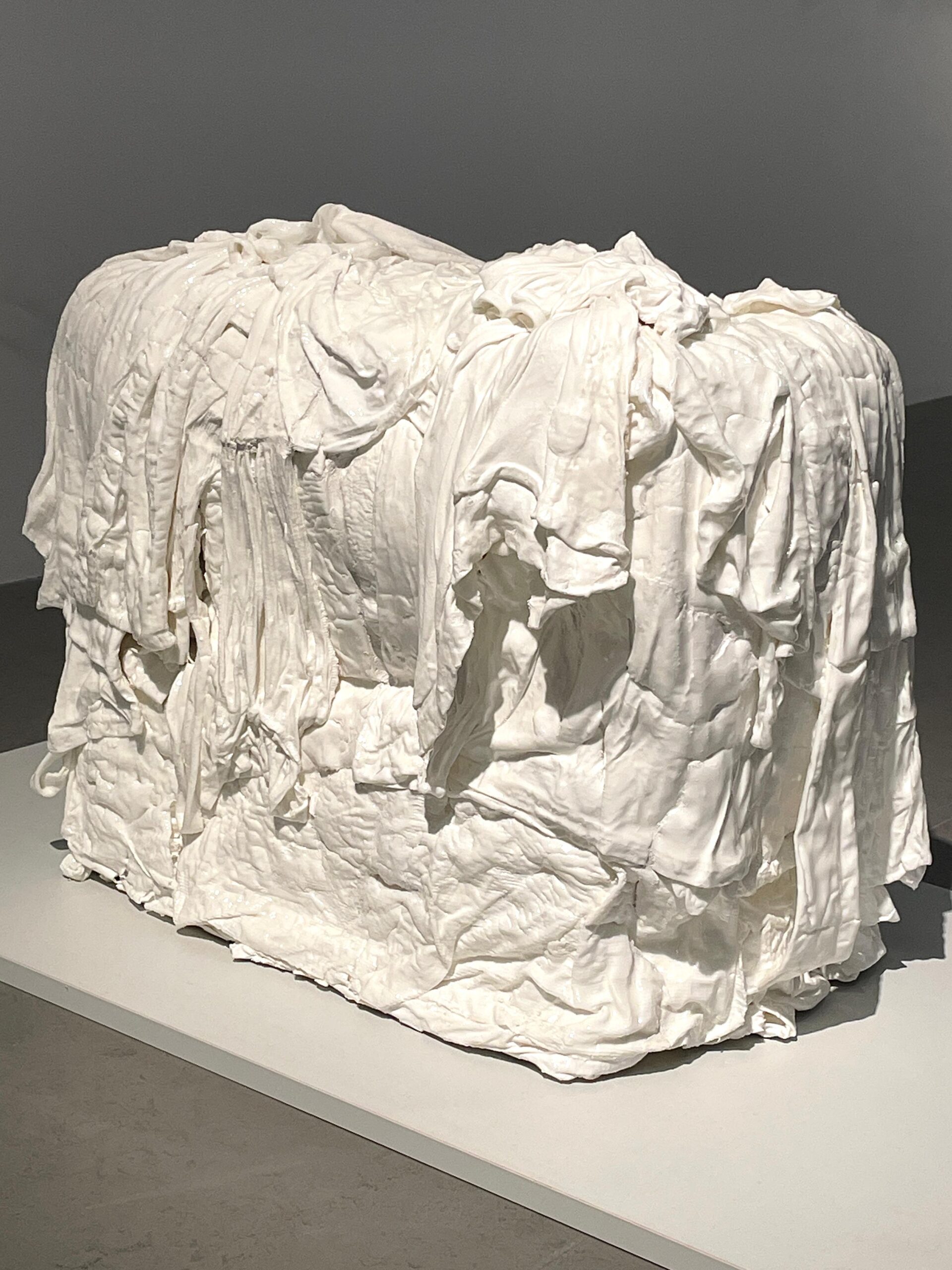
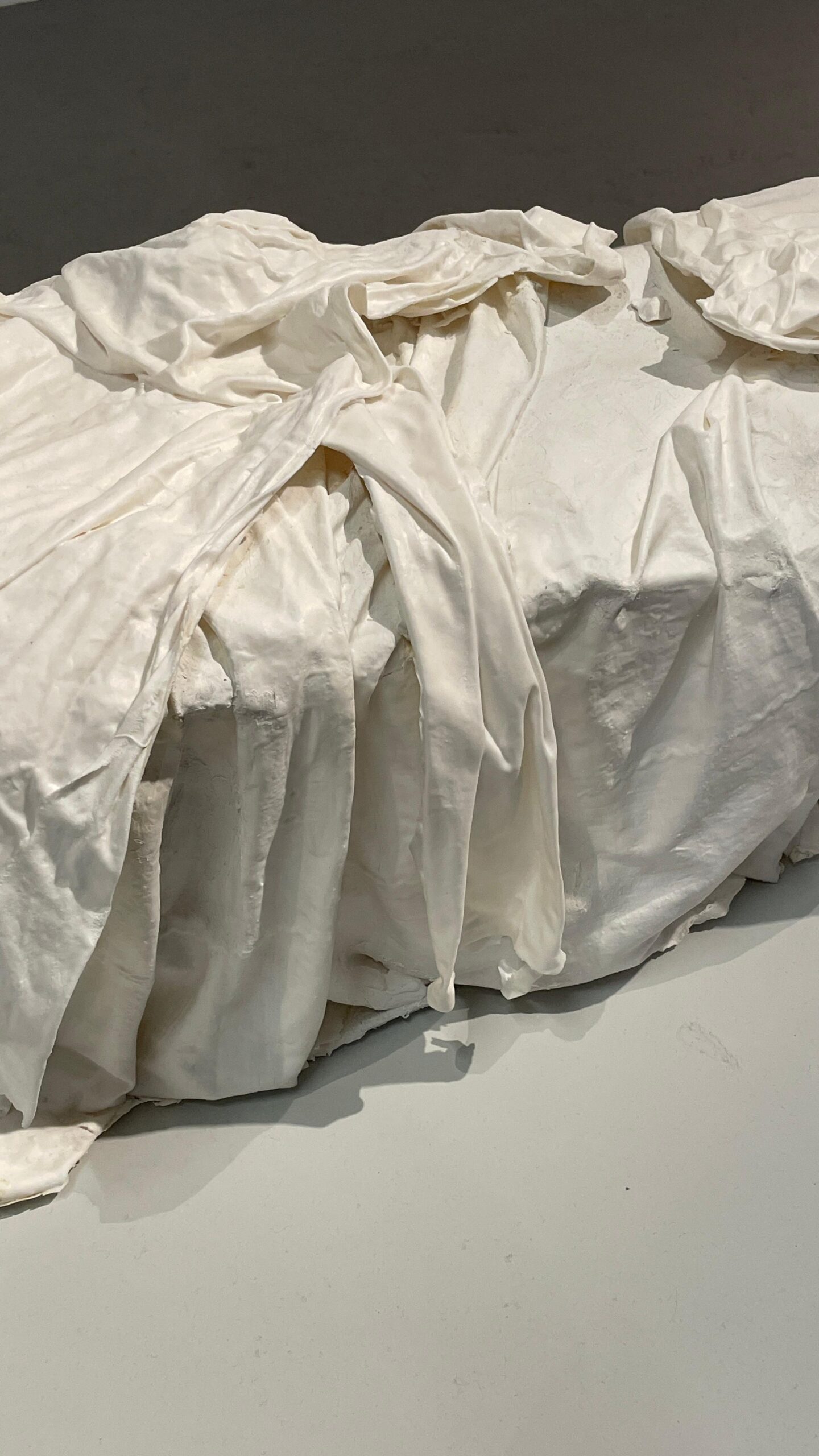
Traces
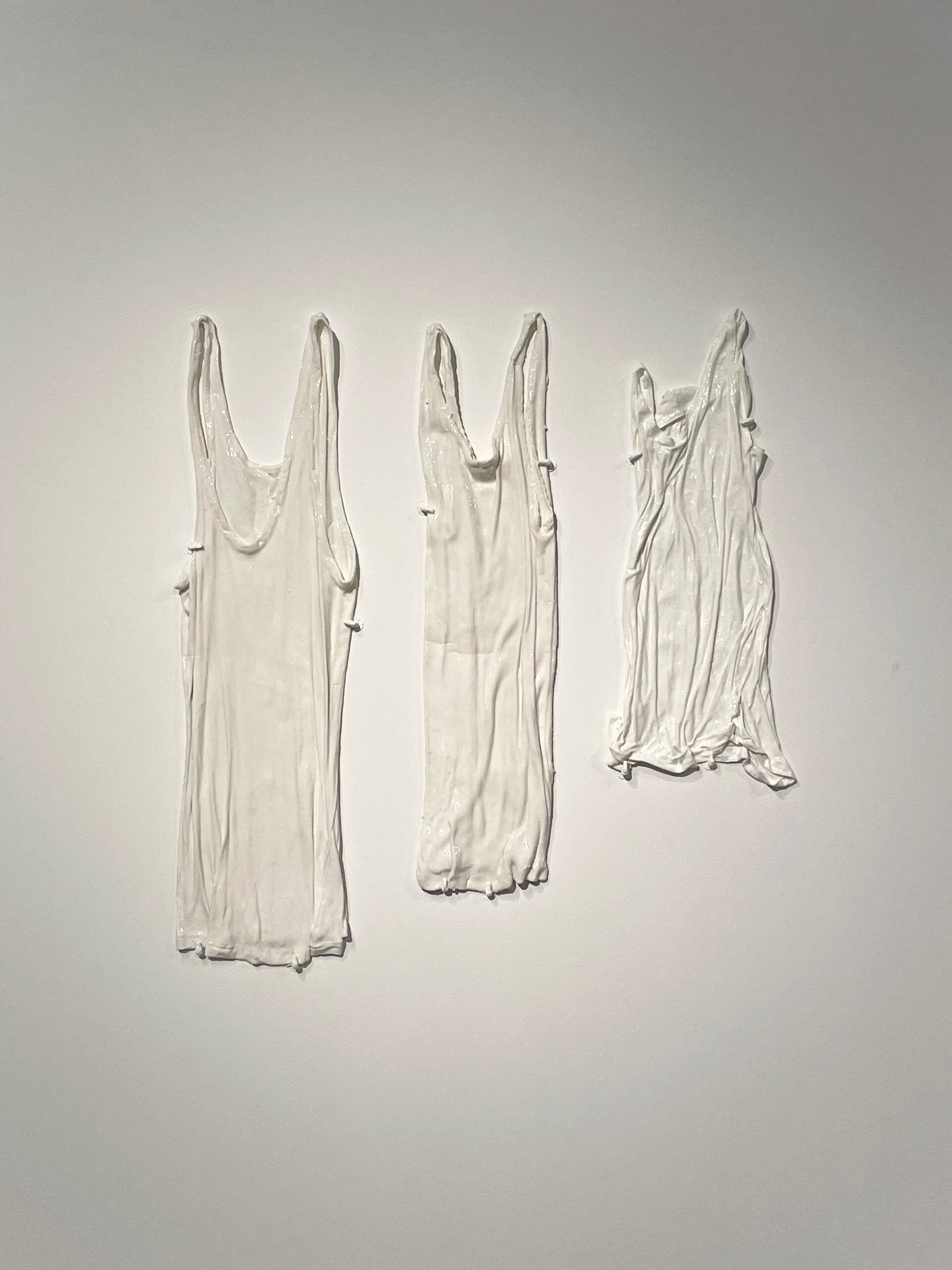
Traces - Traces (Luggage) Deconstruction/Reconstruction,18th International Triennial of Textile, Central Museum of Textiles, Łódź, PL porcelain, glazed and unglazed Mont Blanc, fired at 1250C curated by Marta Kowalewska and Bukola Oyebode Westerhuis photo: Hagen Verlager The work is informed by my experience of growing up in 1990s Poland, among the collapsing textile industry of Łódź. As a product of Industrial Revolution, Łódź experienced prosperity and rapid development, becoming one of the largest textile centers in Eastern Europe in the 19th century. Industry in the city experienced a sudden collapse after 1989. Factories employed mainly women, who struggled with almost complete luck of labor rights. Today, Łódź glorifies its industrial past, often denying the memory of the very difficult working conditions that were the reality of life for most of its inhabitants. The installation emerges from this tension between industrial memory and lived experience. Produced from workwear sourced in second-hand shops across Eastern Europe, it reflects the mobility of the contemporary working class, whose movements across borders leave material traces that circulate long after their immediate use. Frequently originating from Western Europe, these garments embody both the precarity of labor and the persistence of worker's bodies as the most enduring legacy of industry. The work assembles disregarded jackets, underclothes, and “baggage” containing garments – drenched in Mont-blanc porcelain and fired at 1250 degrees Celsius.The sculptures are a form of reflection on the status and meaning of the archive, as well as the transformations to which memory is subjected.
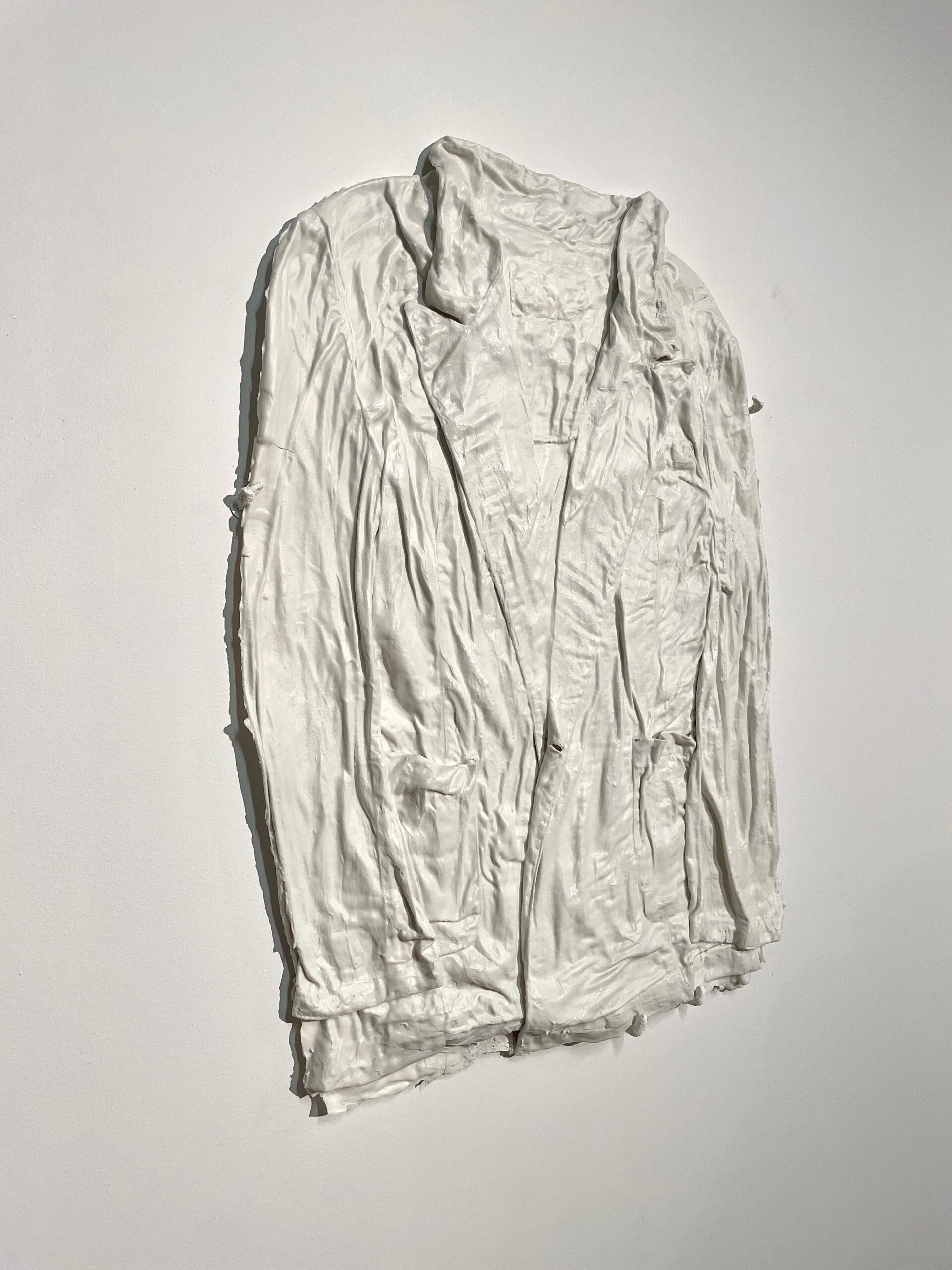
Traces (Jacket)
Traces (Jacket) - Deconstruction/Reconstruction 18th International Triennial of Textile, Central Museum of Textiles, Łódź, PL porcelain, unglazed Mont Blanc, fired at 1250C curated by Marta Kowalewska and Bukola Oyebode Westerhuis photo: Hagen Verlager
Traces (Luggage 2) detail
Traces (Luggage 2) detail - Deconstruction/Reconstruction 18th International Triennial of Textile, Central Museum of Textiles, Łódź, PL porcelain, unglazed Mont Blanc, fired at 1250C curated by Marta Kowalewska and Bukola Oyebode Westerhuis photo: Hagen Verlager
Traces (shirt 1, 2, 3)
Traces (shirt 1, 2, 3) - Deconstruction/Reconstruction 18th International Triennial of Textile, Central Museum of Textiles, Łódź, PL porcelain, glazed and unglazed Mont Blanc, fired at 1250C curated by Marta Kowalewska and Bukola Oyebode Westerhuis photo: Hagen Verlager
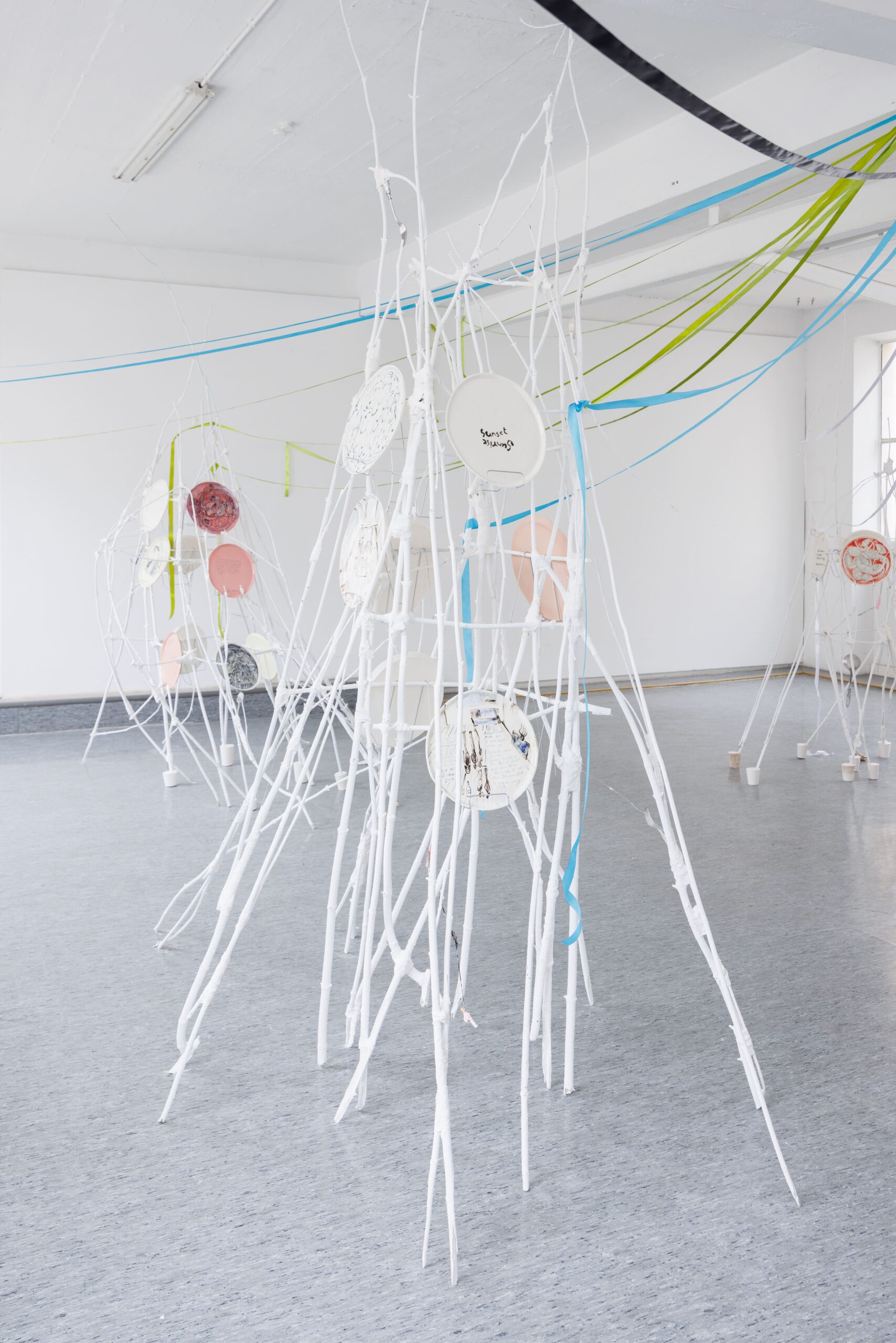
Brutality of Spring
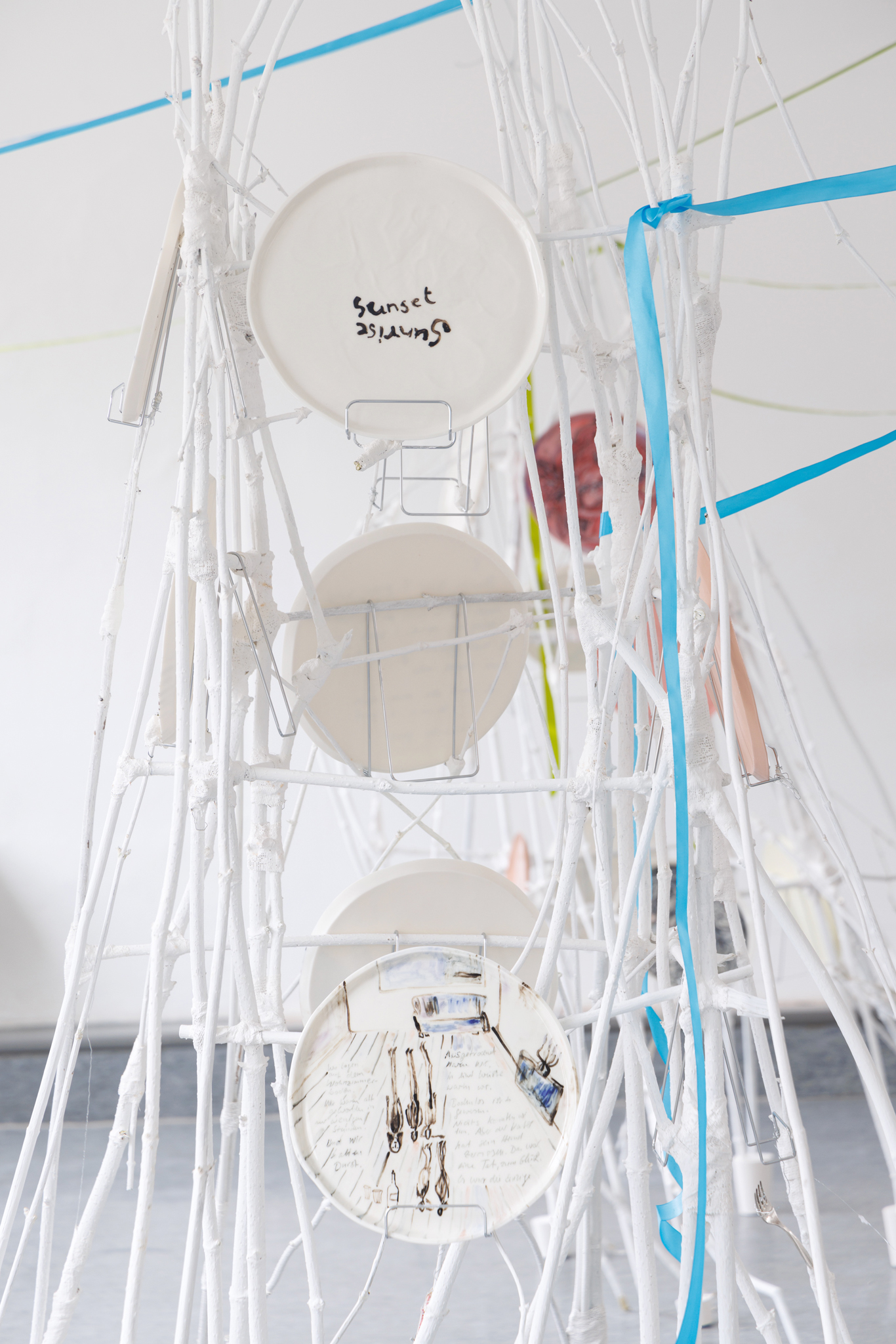
Brutality of Spring - Lothringer 13, Munich, DE, 2024 collaboration with Sophie Schmidt porcelain, glazed, wood, white paint, cutlery, ribbons, cosmetics. curated by Magdalena Wiśniowska photo: Thomas Splett Installation featuring porcelain formed around narratives of the female body, reproductive abilities, transformation, and death. Spring is often understood as a time of renewal. Associated with new life, awakening after winter. In many traditions it is celebrated with the symbols of fertility and rebirth. Through shared research, personal stories, memories, conversations and exchange with Sophie Schmidt, Munich based painter, we looked beyond these common associations going deeper into cultural history. Through images, texts, sculptures and words we channel this moment in a year, when we are not ready to perform, to be productive, to be joyful, and yet the world is filled with a sense of urgency, calling for action with full force of bloom and transformation. The installation is drawing inspiration from the aesthetics of “kapliczka”—a wayside shrine found along nearly every road in Poland, both Catholic and pagan in nature. These shrines, often adorned with colorful ribbons and typically dedicated to the Virgin Mary, serve as places of prayer and reflection.
Brutality of Spring
Brutality of Spring - Lothringer 13, Munich, DE, 2024 collaboration with Sophie Schmidt porcelain, glazed, wood, white paint, cutlery, ribbons, cosmetics. curated by Magdalena Wiśniowska photo: Thomas Splett
Vanitas Fair
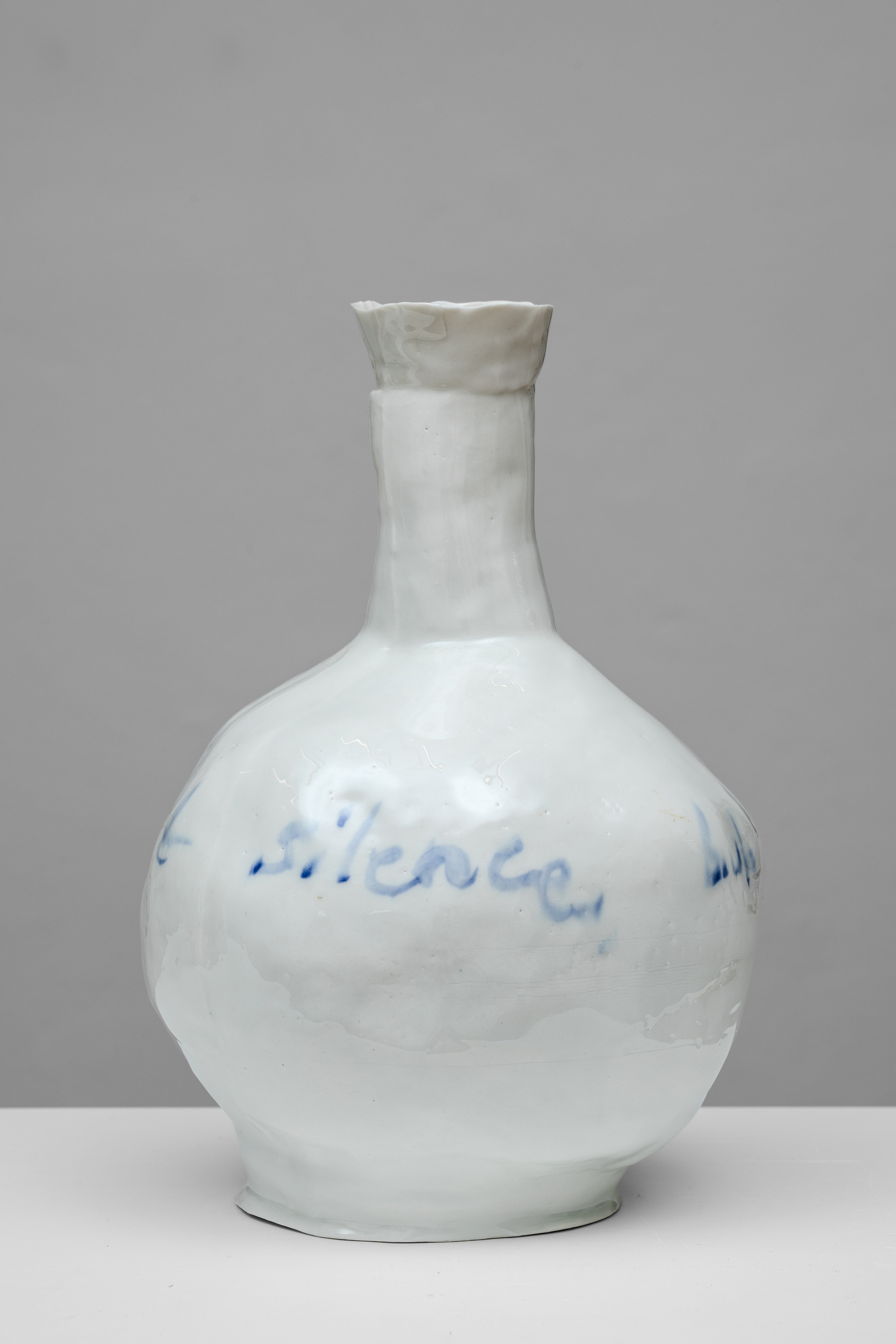
Vanitas Fair - Galerie Anton Janizewski, Berlin, DE, 2023 glazed porcelain, edition of 40, group exhibition, curated by Griesbach Auction house photo: Julian Blum Series of vases and vessels (hand made copies of Kraak ware, Chinese export porcelain produced mainly in the late Ming dynasty, 1627–1644). Cobalt blue inscriptions are fragmentary quotations from texts by Olga Hohmann and Jan Kozlowski around the question of value. Vanitas Fair was shown as part of an exhibition that brought together emerging artists with iconic positions of the 20th century—including Pablo Picasso, Joan Miró, and Otto Dix—framing questions of value and originality within a broader historical and artistic lineage.
Fragments (installation view)
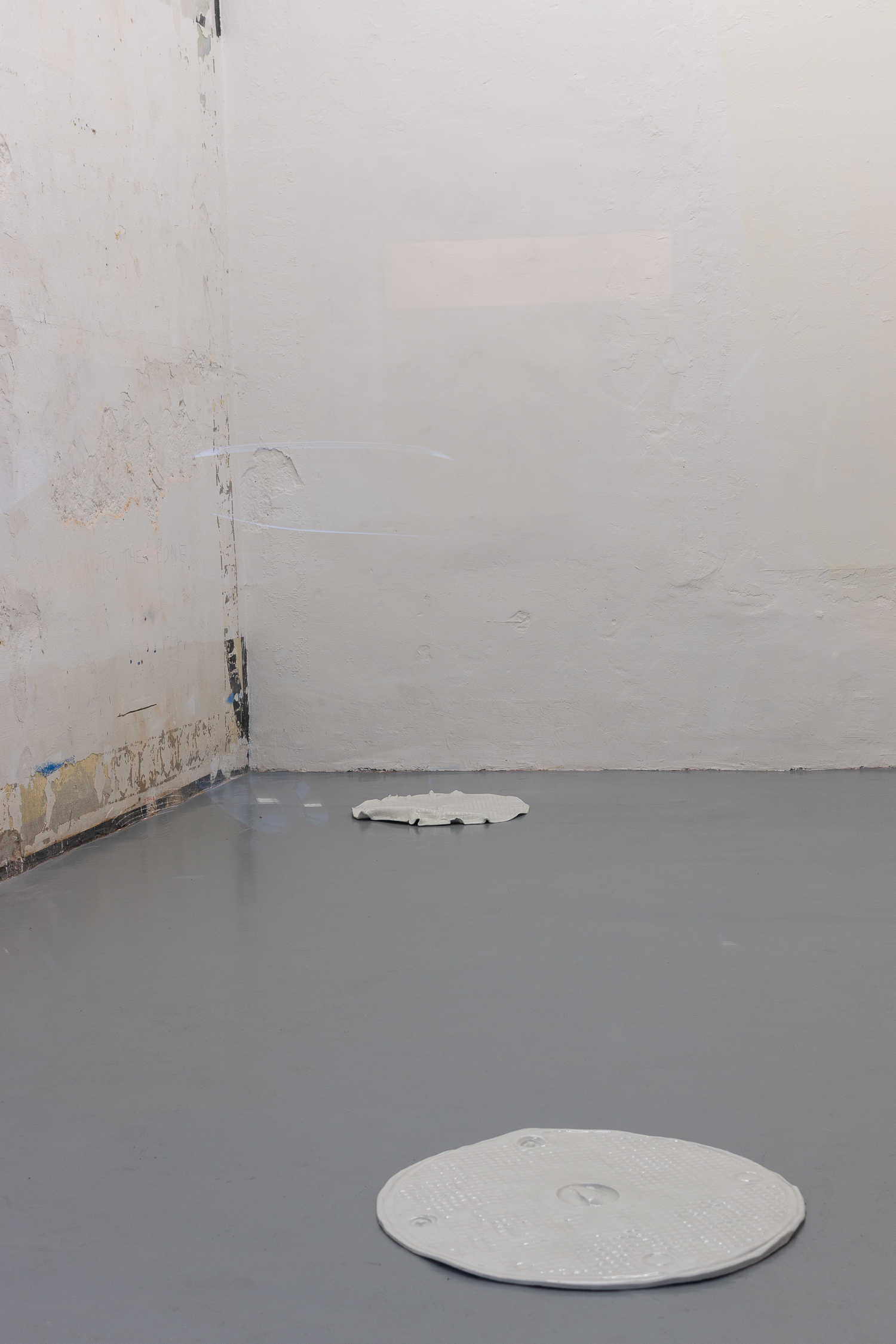
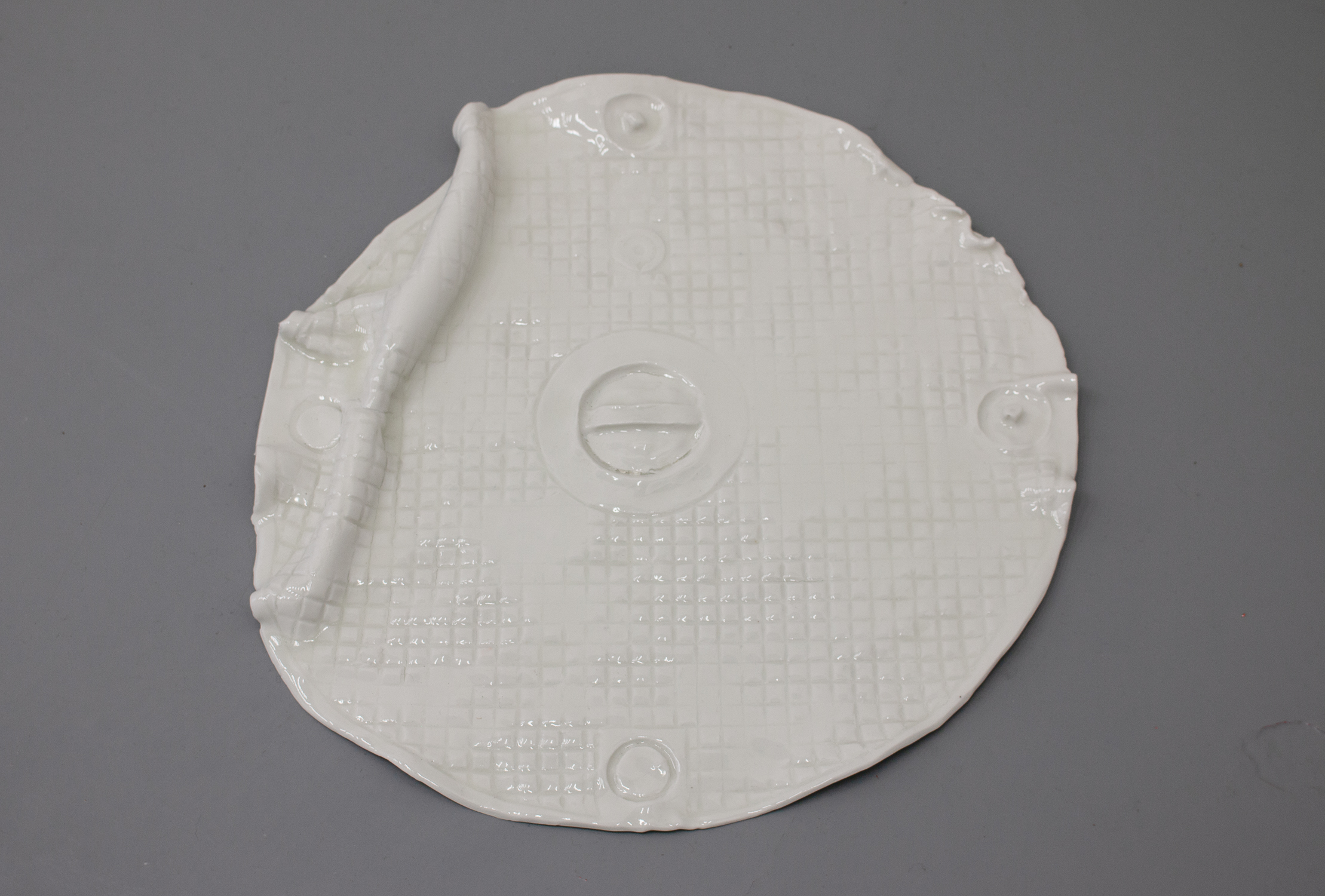
Fragments (installation view) - Milch Strasse 4, Munich, DE, 2023 glazed porcelain group exhibition, curated by Berthold Reis photo by Jakob Forster This work draws its conceptual and emotional resonance from Andrzej Wajda's Kanał (1957), which depicts the final stages of resistance during the Warsaw Uprising. The sculptural series commemorates those who hid in the sewers of Warsaw during the Second World War—among them, the artist's grandmother, Jolanta Małecka (alias Ruda Kaczka). Porcelain casts of manhole covers evoke the tension between surface and depth, remembrance and forgetting. They allude to histories buried beneath the city—traces of resistance, generational trauma, and the spectral persistence of the past within the urban fabric.
Fragments (detail)
Fragments (detail) - Milch Strasse 4, Munich, DE, 2023 glazed porcelain group exhibition, curated by Berthold Reis photo by Jakob Forster
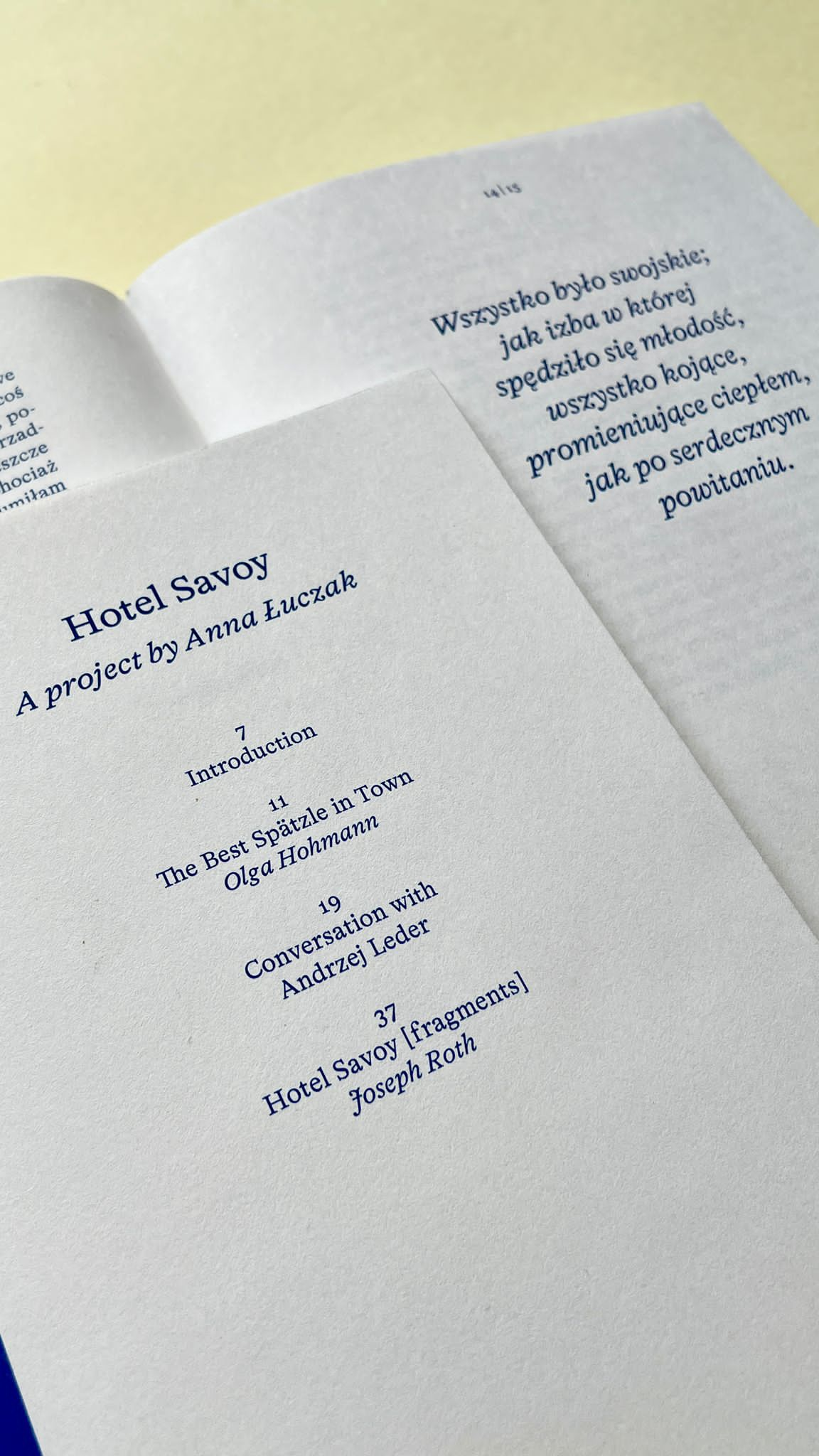
Hotel Savoy, WET, Hillevliet, Rotterdam, 2022 - publication Hotel Savoy —alongside the video installation it accompanies—is an attempt to symbolically ‘get inside’ the 1918 novel Hotel Savoy, by the Austrian writer Joseph Roth. It is also an attempt to enter the hotel itself, described by Roth in the book, and filmed by me in the present day: the choice to depict the same place from a distance of a hundred years allowing me to see the parallels between the two realities. The novel is an elegy for a Europe which was disintegrating and aggregating into small nation states, in which the author could no longer find himself; Roth did not see himself as an Austrian Jew, but as a citizen of the multicultural Habsburg Empire stretching from Vienna to the edge of Russia. On his way back from the front of the First World War, Roth stayed at the eponymous hotel in Lódz, my home town, and encountered the flotsam of Europe at its most existential.
Hotel Savoy
Hotel Savoy - Edited by Olga Tyszkiewicz. Rotterdam, Netherlands: WETFilm. 2022 Designed by Hagen Verleger. Offset print publication (edition of 300).

Communal Luxury

Datum:
Locatie: De Player
In samenwerking met: Wet Film, Piet Zwart Institute

Communal Luxury was a three-day intensive workshop in the Player, which asked the question: what would truly collaborative filmmaking look like? Organized by WET FILM for the MFA students of Piet Zwart Institute

http://wetfilm.org/2020/11/24/communal-luxury-workshop/

Video Idiom

Datum:
Locatie: Łódź Film School Cinema
In samenwerking met: Festival of Four Cultures

Video Idiom, a summer school led by WET FILM at the Four Cultures Festival in Łódź

http://wetfilm.org/2019/05/04/festiwal-czterech-kultur-lodz-pl-film-workshop-summer-school-september-2019/

Peach @W139

Datum:
Locatie: W139
In samenwerking met: Sabrina Chou, Hunter Longe, Ghislain Amar, W139

For the duration of one month, W139 was PEACH — the apartment and artist-run space normally located at Grondherendijk 9b, Oud Charlois, Rotterdam. The exhibition offered a personal look upon the community and ethos of PEACH. It was an explosion of the domestic. Both a physical caricature of the original apartment, highlighting the qualities of familiarity and intimacy found in a home, as well as a continuation of Peach's role as host.

https://w139.nl/en/event/peach-2/
Deze kunstenaar heeft nog geen toekenningen.