David Maroto

wetenschap & techniek , Spoken word , schrijven , Publicatie , proces , performance , muurschildering , Media , Literair , internationaal , interactief , installatie , Experimenteel , Educatie , Conceptueel , beeldhouwen , Autobiografisch , Artistiek onderzoek

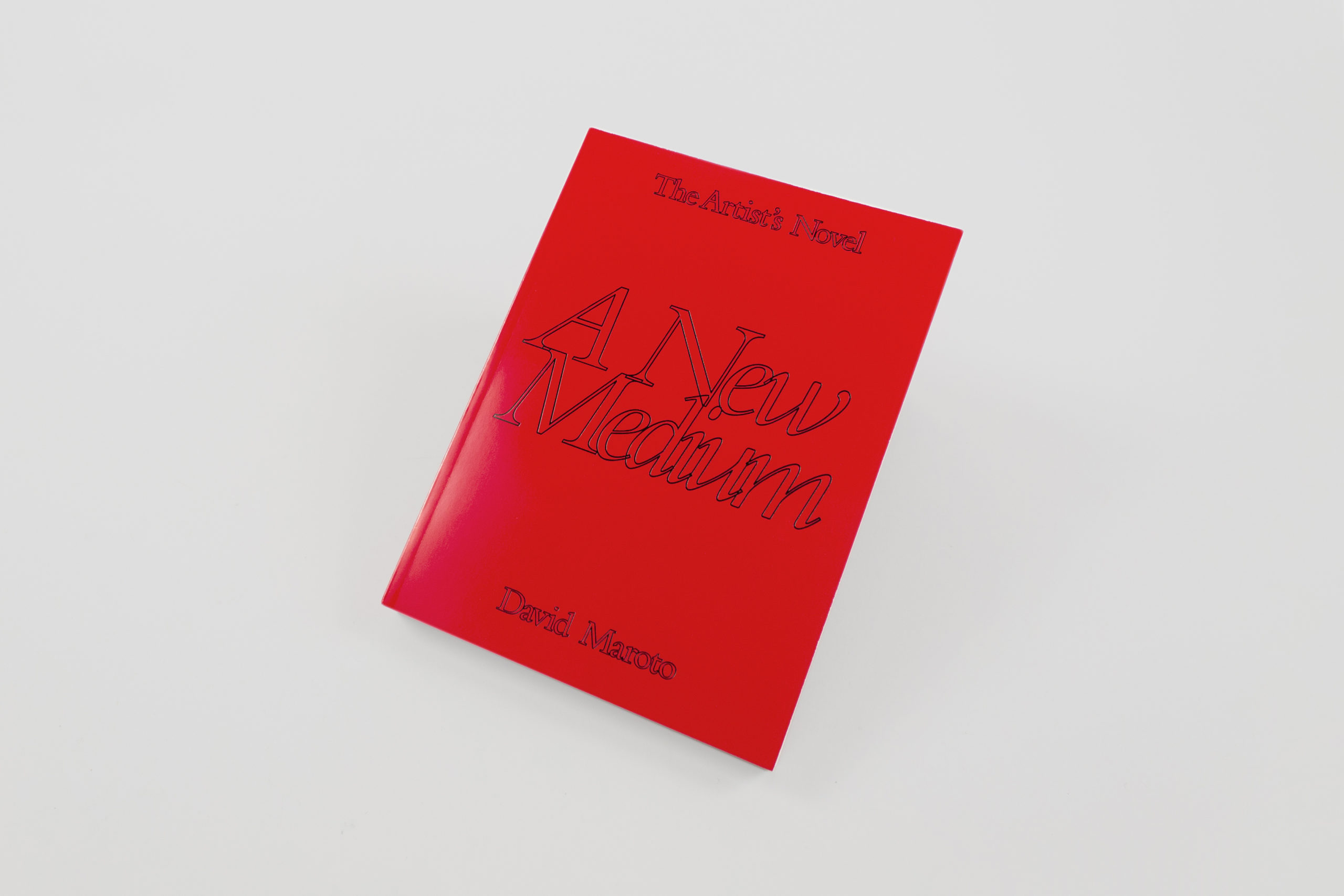
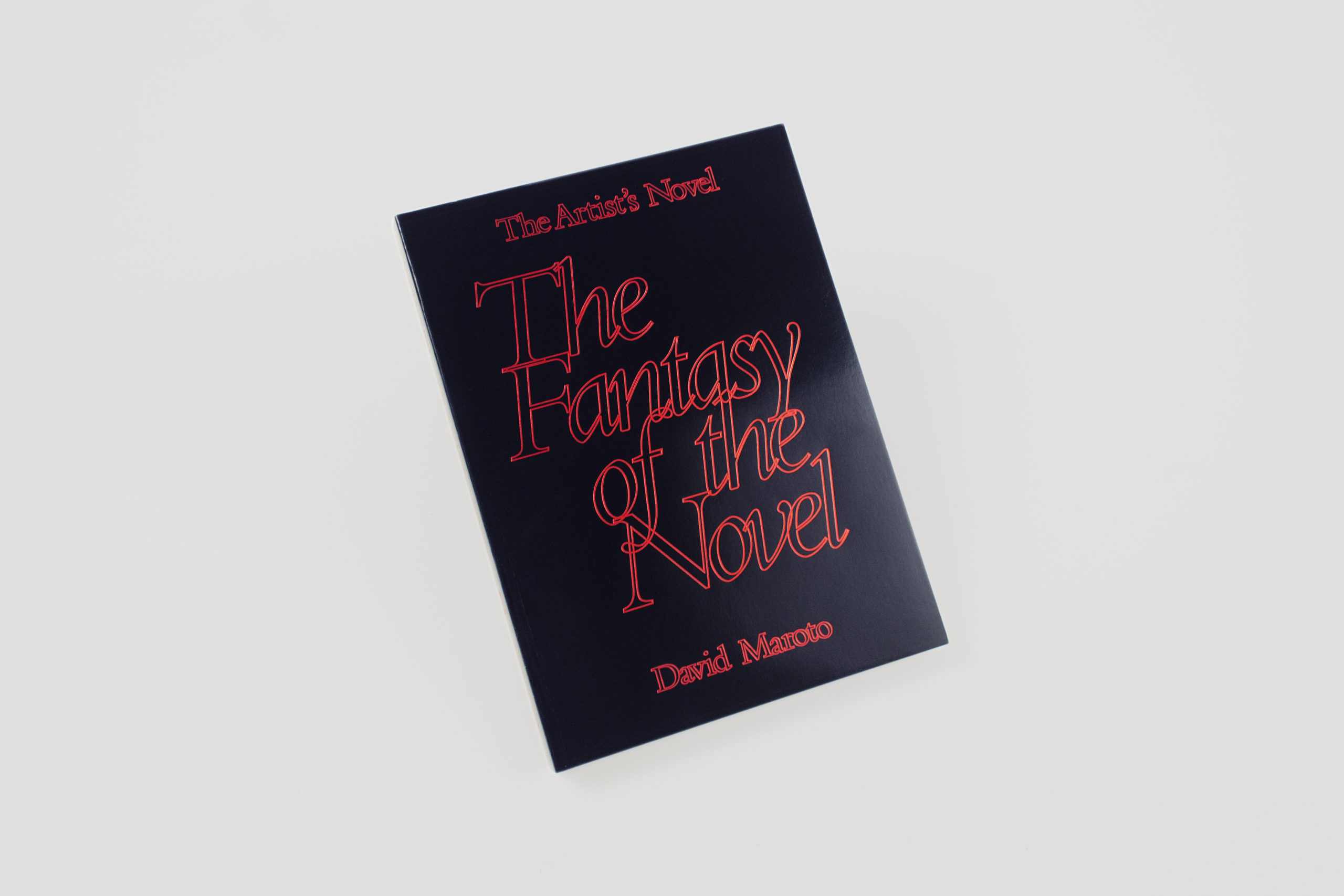
Ik ben een beeldend kunstenaar en PhD aan het Edinburgh College of Art, met een onderzoeksproject genaamd 'The Artist's Novel: The Novel as a Medium in the Visual Arts' (gepubliceerd in een tweedelige uitgave door Mousse Publishing). Mijn artistieke praktijk is sterk interdisciplinair: installatie, beeldhouwkunst, tekening, muurschildering, performance. Mijn werk richt zich op het verkennen van schrijven als een vorm van artistieke productie, waarbij artistiek onderzoek een centrale rol speelt. Ik presenteer mijn werk vaak in performatieve installaties die de handelingen van lezen en schrijven verkennen in hun sociale, historische en fenomenologische dimensies, terwijl ik de fundamentele relatie tussen schrijven, kunst maken en spreken onderzoek als vormen van communicatie en het bewaren van toekomstige herinnering.
I Shall Be Dead but I Shall Have Lived
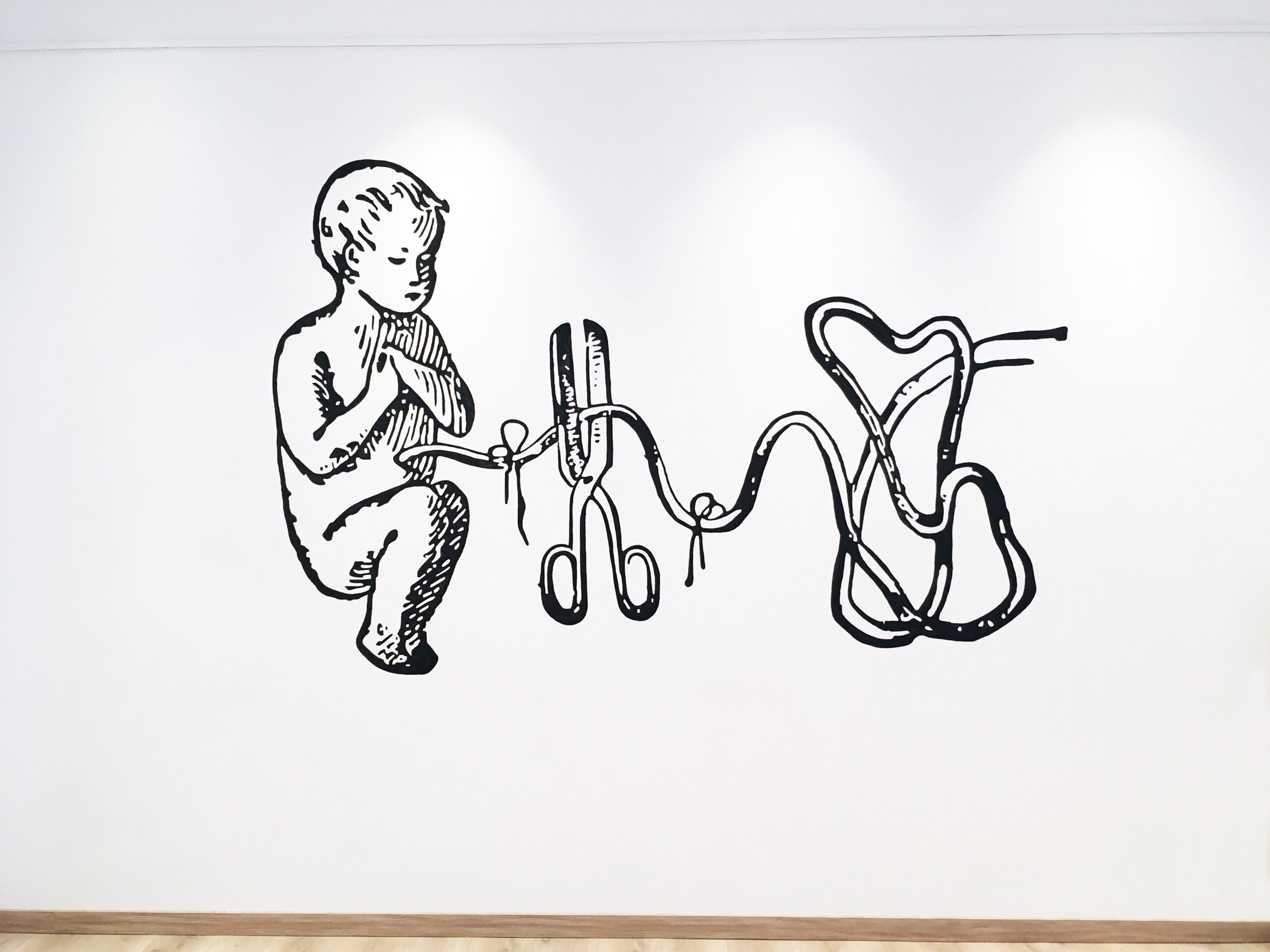
I Shall Be Dead but I Shall Have Lived - 'I Shall Be Dead but I Shall Have Lived' (2024) consists of a collection of mural paintings and drawings on paper and tablets, articulated in two installations in the spaces of the Embassy of Spain in Belgium. The works displayed are imbued with a reflection on posterity, understood as the desire to resist oblivion, to produce a mark that will endure and can be read long after the author has disappeared. The collection alludes to notions such as art, death, and writing as they have been conceived since the distant past. Delving into arcane knowledge, each work interrogates the question of what time is and what to do with the time we have left to live.
Heads
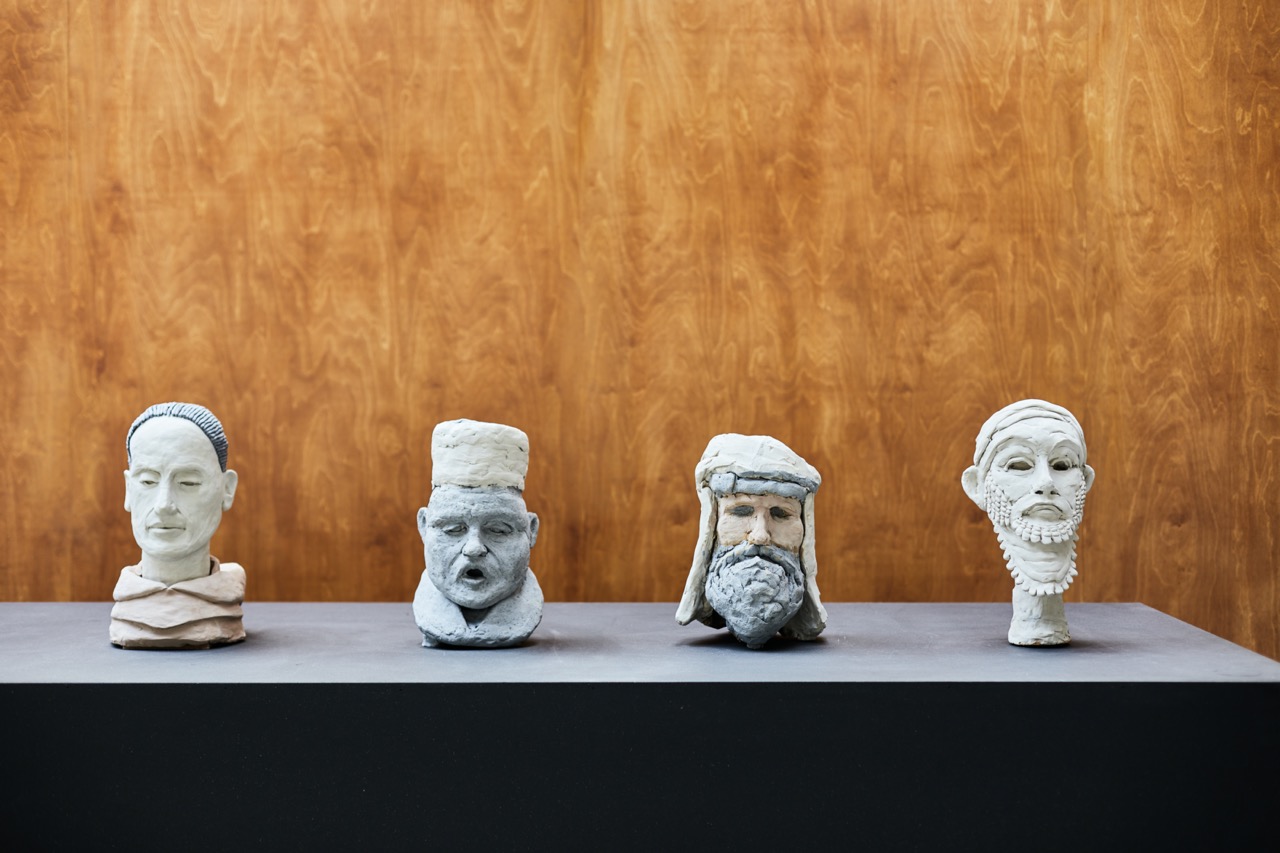
Heads - Series of sculptures, unbaked clay, 50x30x25 cm each approx. (2022–ongoing). Each sculpture represents a historical character: Irish Medieval Monk, Ottoman Imam, Zoroastrian Priest, Eblaite Librarian. They can become activated as props of a storytelling performance that narrates key episodes in the history of reading and writing, possession, and performative processes that, against all odds, have been taking place for hundreds of years. The series keeps growing, to a total of 16 Heads.
Prop Cards
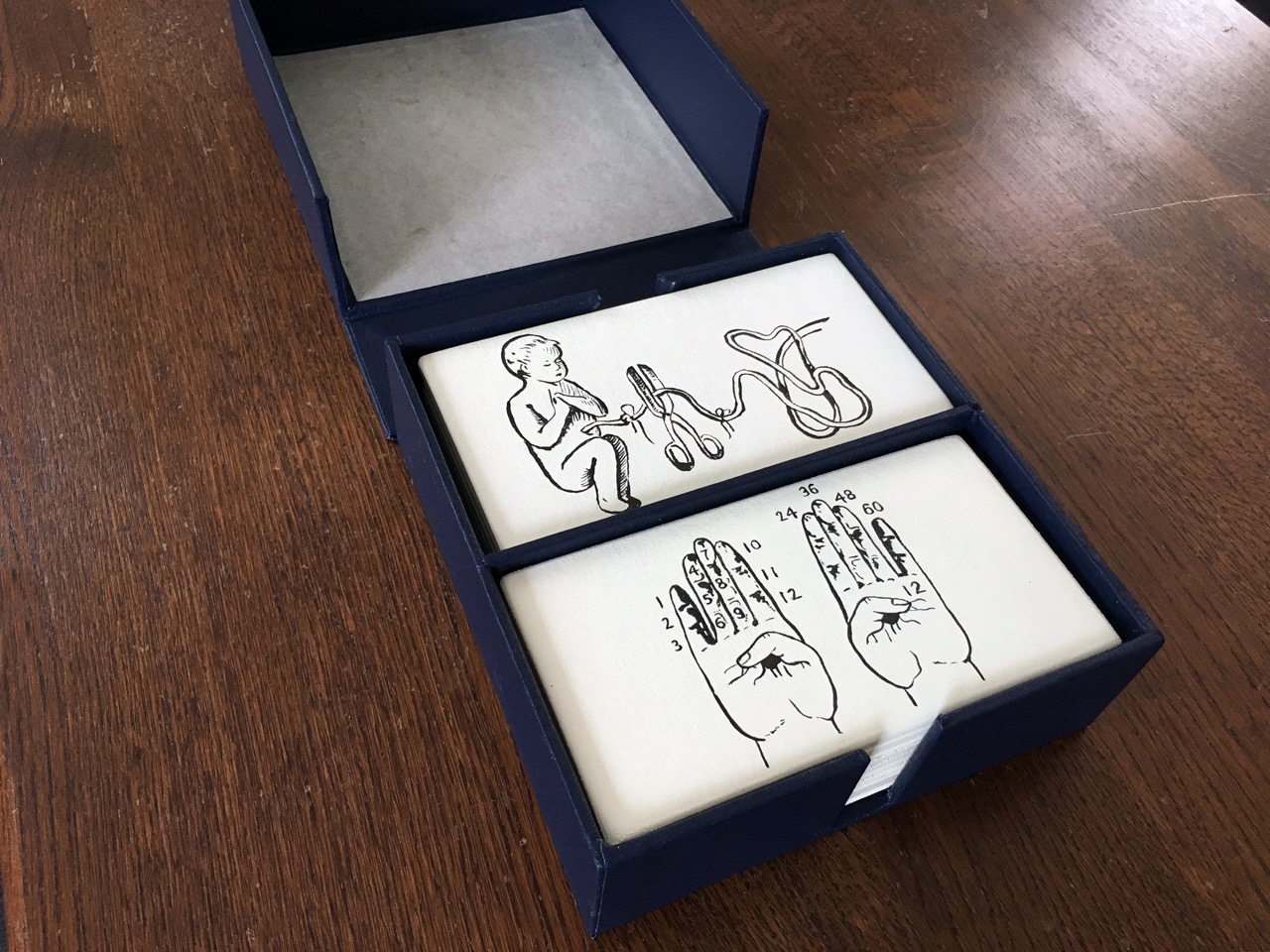
Prop Cards - Set of cards (2024): Indian ink drawings on painted cardboard, 9 x 17 cm each. Tablets with handmade drawings applied with a very fine brush. They can be activated as props of speech-based performances. The total number of Prop Cards is 22, like the major arcana in Tarot, and like the letters in the Hebrew alphabet. They are not a direct version of Tarot, but I like the idea that they resonate with it, as they function very much like Tarot, as a machine for imagination. Each card has a story attached, which is the result of my research on the origin of writing and literature, on posterity, and future memory.
Not All of Me Will Die
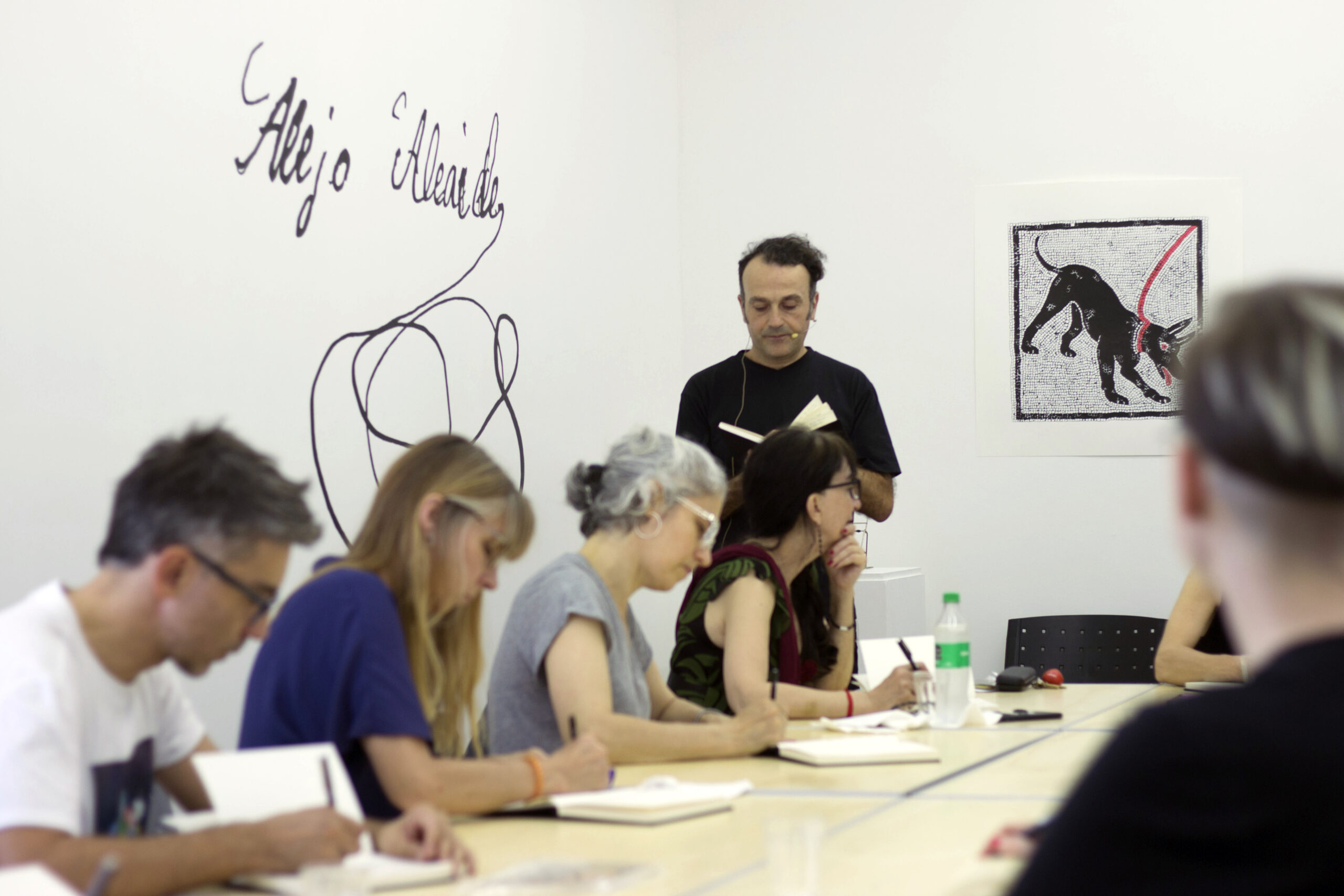
Not All of Me Will Die - 'Not All of Me Will Die' is a fictocritical novel, a reflection on death, memory, writing, and the desire of posterity. It narrates the investigation on my grandfather’s extrajudicial execution during the Spanish Civil War, and my efforts to identify his body in the mass grave where he is still buried. It tells about a history of violence and how it is embodied in personal experience and family history – often repressed in silence from which memory must be restored. It is published by means of a performance, during which I dictate the contents of the novel to the participants. Following this pre-Gutenberg method, the novel is published and distributed in as many copies as people take part of the performance. Each participant receives a blank book to write in. At the end of the performance, they will have acquired their own handwritten copy, both unique and equal to the others at the same time. 'Not All of Me Will Die' has been performed at the following venues: 17 April 2021. Index, The Swedish Contemporary Art Foundation. Stockholm, 10 copies. 17 June 2021. Galerie La Box. Bourges, 7 copies. 29 January 2022. Het Wilde Weten. Rotterdam, 10 copies. 2 December 2023. Vigil Gonzáles Galería. Buenos Aires, 12 copies. 27 January 2024. Marres, Huis voor Hedendaagse Cultuur. Maastricht, 11 copies.
Not All of Me Will Die
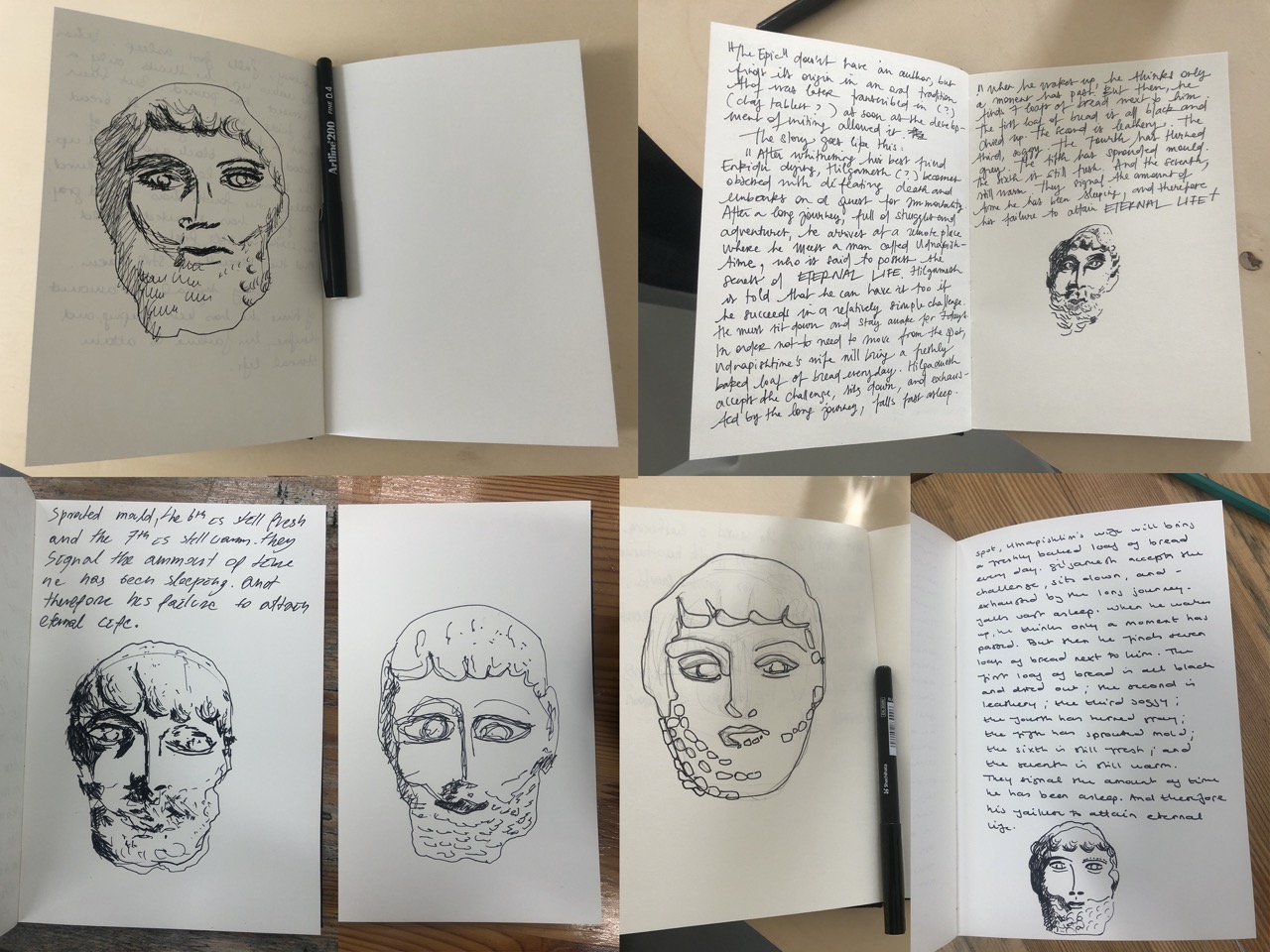
Not All of Me Will Die - 'Not All of Me Will Die' is a fictocritical novel, a reflection on death, memory, writing, and the desire of posterity. It narrates the investigation on my grandfather’s extrajudicial execution during the Spanish Civil War, and my efforts to identify his body in the mass grave where he is still buried. It tells about a history of violence and how it is embodied in personal experience and family history – often repressed in silence from which memory must be restored. It is published by means of a performance, during which I dictate the contents of the novel to the participants. Following this pre-Gutenberg method, the novel is published and distributed in as many copies as people take part of the performance. Each participant receives a blank book to write in. At the end of the performance, they will have acquired their own handwritten copy, both unique and equal to the others at the same time. 'Not All of Me Will Die' has been performed at the following venues: 17 April 2021. Index, The Swedish Contemporary Art Foundation. Stockholm, 10 copies. 17 June 2021. Galerie La Box. Bourges, 7 copies. 29 January 2022. Het Wilde Weten. Rotterdam, 10 copies. 2 December 2023. Vigil Gonzáles Galería. Buenos Aires, 12 copies. 27 January 2024. Marres, Huis voor Hedendaagse Cultuur. Maastricht, 11 copies. In the picture: the same page produced by different participants.
Cave Canem
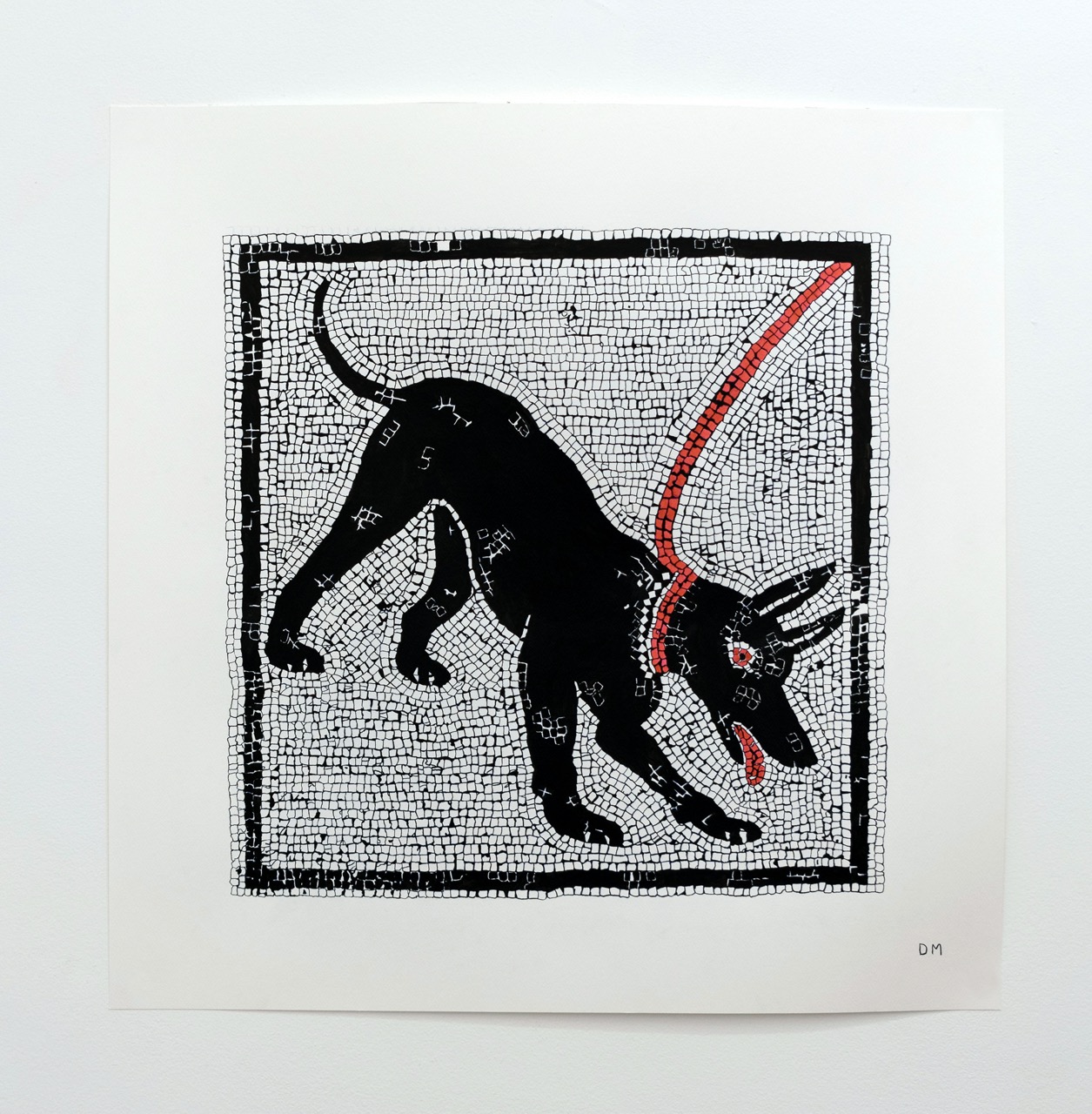
Cave Canem - Ink on paper, 75x75 cm (2023). Taking a Pompeii mosaic as a model, the drawing process replicates the very same technique of putting a mosaic together, tesserae by tesserae. The idea is that the viewer can ‘see time’ when looking at this piece, and think of the author as a medieval monk that has spent many hours, many weeks, to complete the work.
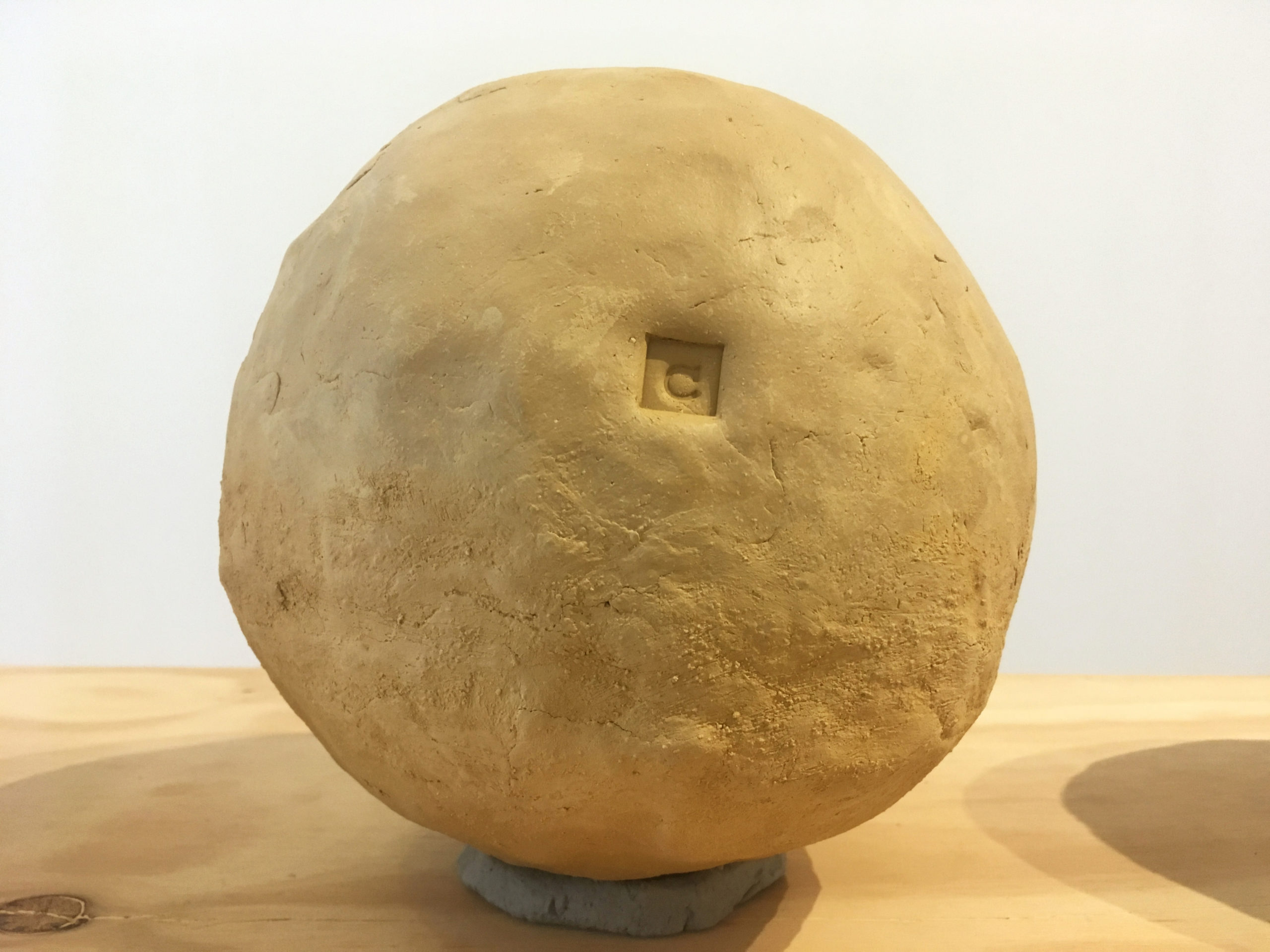
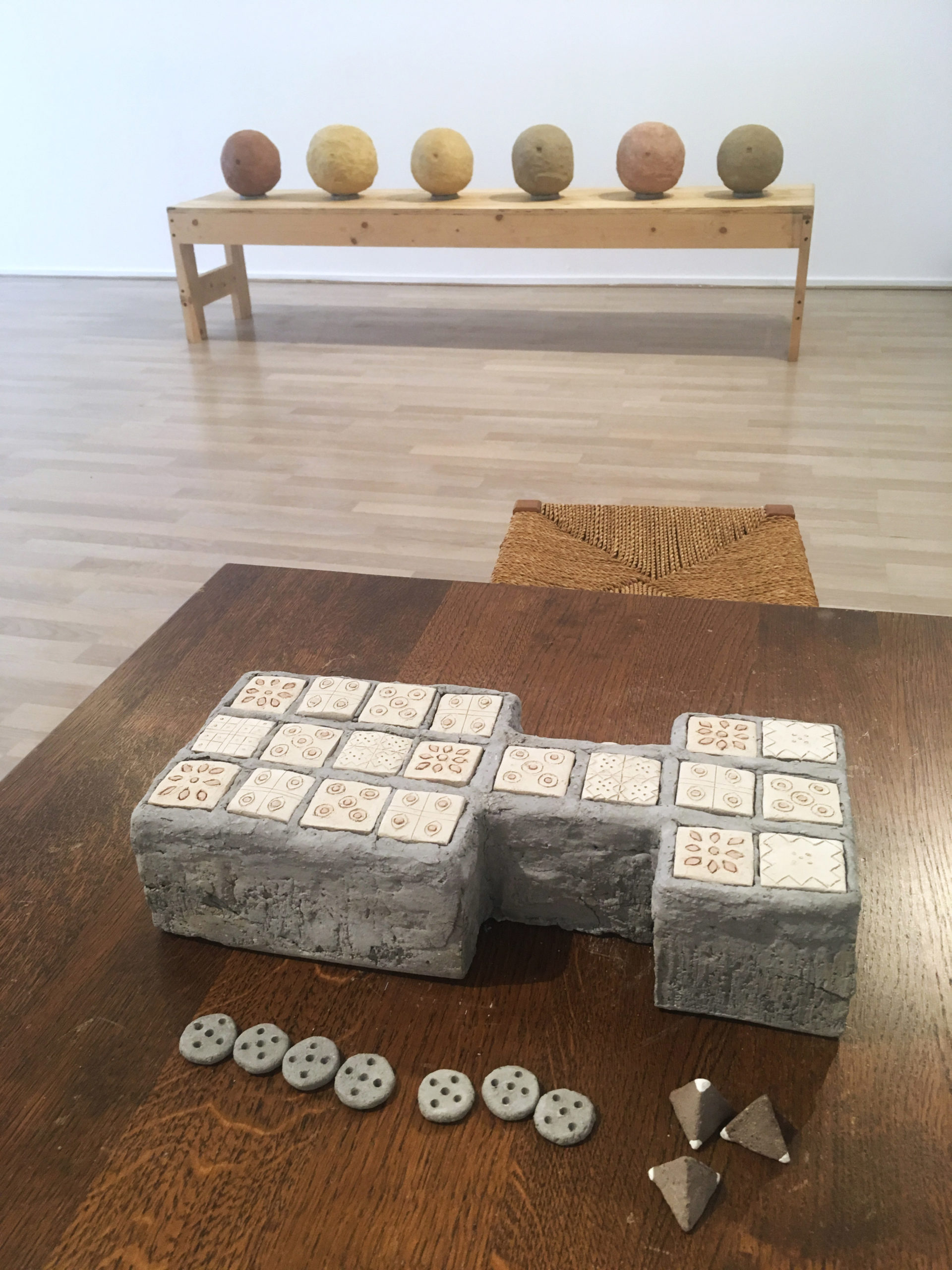
Bulla - Unbaked clay, 22 cm diameter, (2019). This is one in a series of 6 hollow clay balls containing secret objects and personal mementos. The creation of these Bullas is based on a proto-writing technique developed in Ancient Mesopotamia in 8000–3000 BC. The fact that the clay is not baked enables the object to retain a certain potential performative moment in itself: when in a possible future it may crack open, revealing its content. This moment may never arrive or arrive after my death. The question about interpreting the reason why this object was placed there will inevitably arise, opening the way to multiple interpretations, none of which will be correct.
The Royal Game of Ur - Unbaked clay, 45x25x10 cm (2019). The Royal Game of Ur was popular in Mesopotamia 5,000 years ago, being one of the oldest board games known to humanity, and was rediscovered in the ancient city of Ur, in the 1920s. I made a replica for visitors to my Secret Gallery to play it, bringing back from oblivion a game whose popularity dwindled about 2,000 years ago. It remains surprisingly fun and sophisticated.
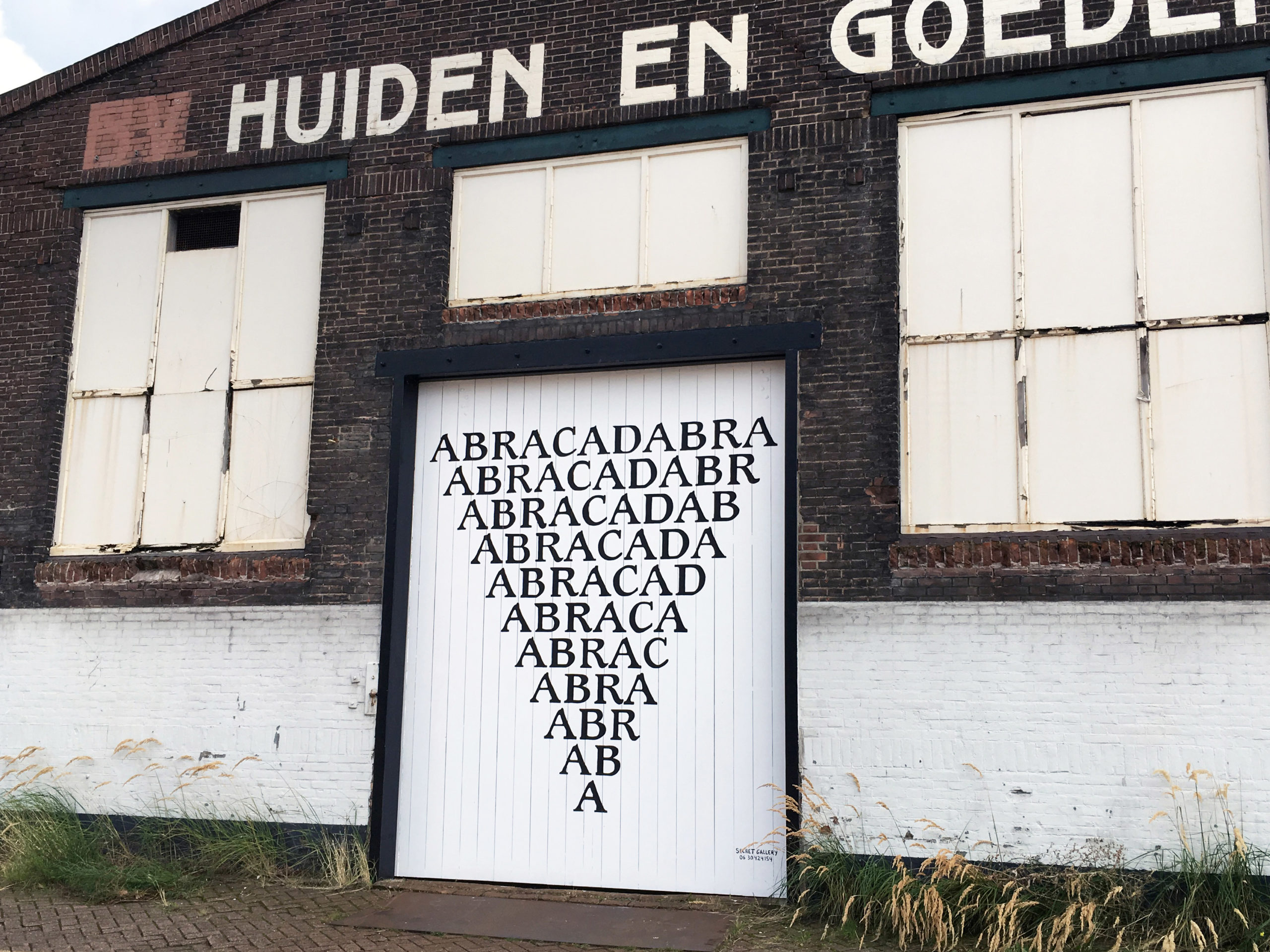
The Writing Is on the Wall - Wall painting, 380x300 cm. AVL Mundo, Keileweg 18, Rotterdam (2019–23). ABRACADABRA. We are used to hear it as a magic formula, but its origin is uncertain. Roman physician, Quintus Serenus Sammonicus advised to inscribe ABRACADABRA in amulets as an incantation to be read out loud in order to spell malaria. It was read line by line, so that the diminishing length of the word corresponded with the process of the receding illness. ABRACADABRA means something like 'I create as a I speak'. Indeed, the whole point of the incantation is that it must be read aloud: all you need to do to transform your inner voice to an audible performance is reading aloud. Reading out loud implies shared reading, and the writing is on the wall for everyone to see.
The Book Lovers
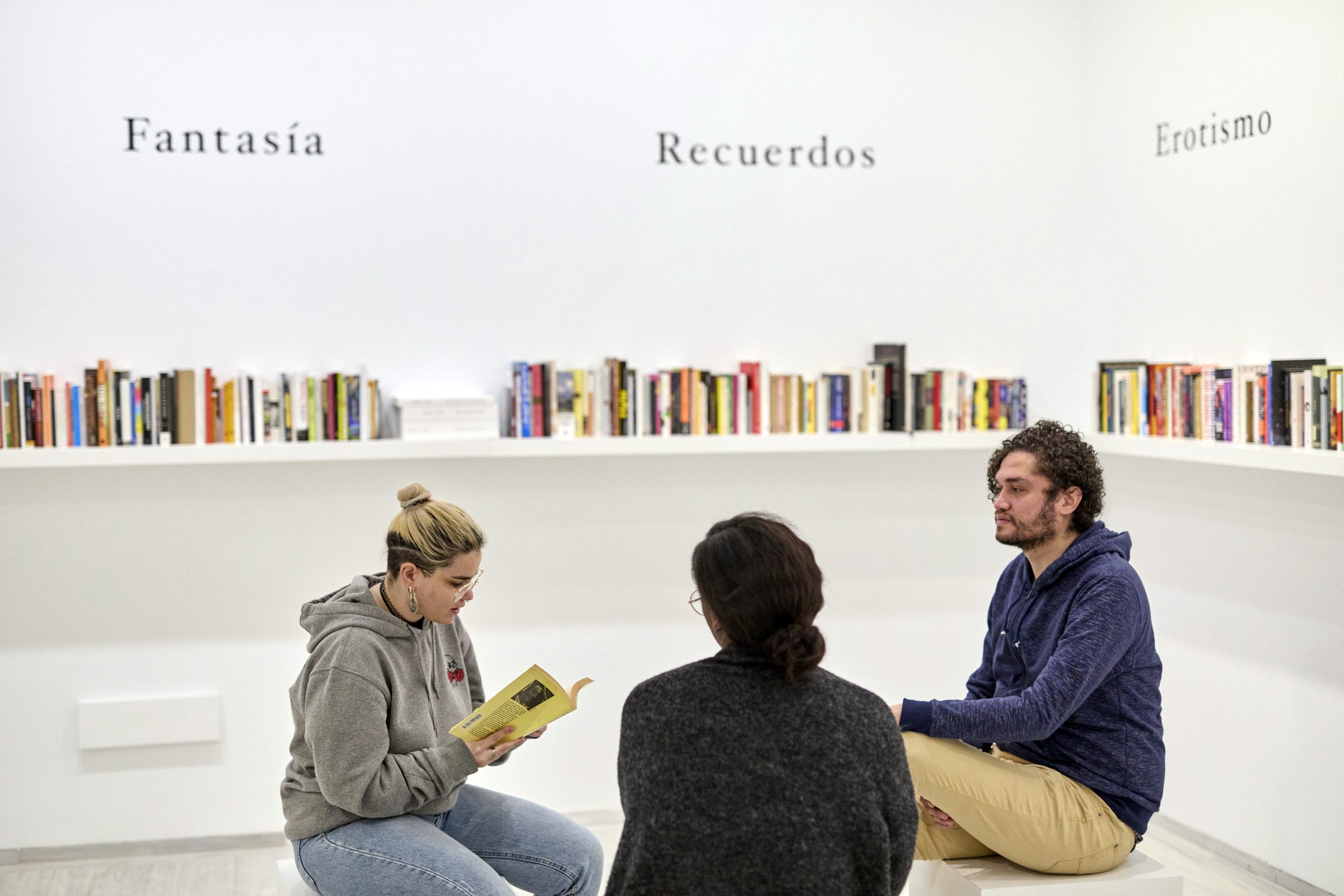
The Book Lovers - The Book Lovers is a research project on the artist's novel that I carry out in collaboration with curator Joanna Zielińska. The central question is how a literary genre such as the novel becomes a medium in the visual arts, exactly as video or installation could be. In recent years, an increasing number of artists have begun to integrate their novels as a fundamental part of their visual art projects. Surprisingly, there is a lack of research on this subject. With The Book Lovers we are intending to create public awareness of this silently widespread artistic trend. As its cornerstone, we created a collection of artists’ novels (with more than 660 titles) with a parallel online database (both supported by the M HKA in Antwerp), and complemented it with a series of exhibitions, performances, and publications, which has enabled us to engage with a host of international institutions.
The Artist's Novel: The Novel as a Medium in the Visual Arts / Part 1: A New Medium - Why do artists write novels? What does the artist's novel do to the visual arts? How should such a novel be experienced? The Artist's Novel: The Novel as a Medium in the Visual Arts finds its momentum in the current international art scene, where the debate about the hybridisation of visual arts and literature is becoming increasingly prominent. In recent years, there has been a proliferation of visual artists who create novels as part of their wider art projects. They do so in order to address artistic issues by means of novelistic devices, favouring a sort of art predicated on process and subjectivity, introducing notions such as fiction, narrative, and imagination. In this sense, it is possible to speak of a new medium in the visual arts; yet, very little is known about it. This two-volume publication is the first to explore in depth the subject of the artist's novel. Part 1: A New Medium aims to elucidate the pressing questions posed by the emergence of a new artistic medium with a theoretical approach to a number of key case studies, which critically examines the different ways contemporary artists have employed the artist's novel. The intention is not to fix a definition of what the artist's novel is, but rather to situate it within the broader field of the visual arts in the hopes of sparking a much-needed discussion about a practice that has long been ignored by the main critical strands in art discourse.
The Artist's Novel: The Novel as a Medium in the Visual Arts / Part 2: The Fantasy of the Novel - Why do artists write novels? What does the artist’s novel do to the visual arts? How should such a novel be experienced? The Artist’s Novel: The Novel as a Medium in the Visual Arts finds its momentum in the current international art scene, where the debate about the hybridisation of visual arts and literature is becoming increasingly prominent. In recent years, there has been a proliferation of visual artists who create novels as part of their wider art projects. They do so in order to address artistic issues by means of novelistic devices, favouring a sort of art predicated on process and subjectivity, introducing notions such as fiction, narrative, and imagination. In this sense, it is possible to speak of a new medium in the visual arts; yet, very little is known about it. This two-volume publication is the first to explore in depth the subject of the artist’s novel. Part 2: The Fantasy of the Novel is a research project in the form of a novel, which examines the process of creation of an artist’s novel that came about through five episodic performances and an exhibition. The protagonist is in the position of a detective who tries to understand the conditions under which an artist decides to write, and how such a thing is possible within an artistic setting. His discoveries appear in the form of clues that connect all the different layers of the research.

Deze kunstenaar heeft nog geen toekenningen.