Esmée Bruins

sculptuur , Publicatie , Objecten , fotografie , Diaspora , Archieven

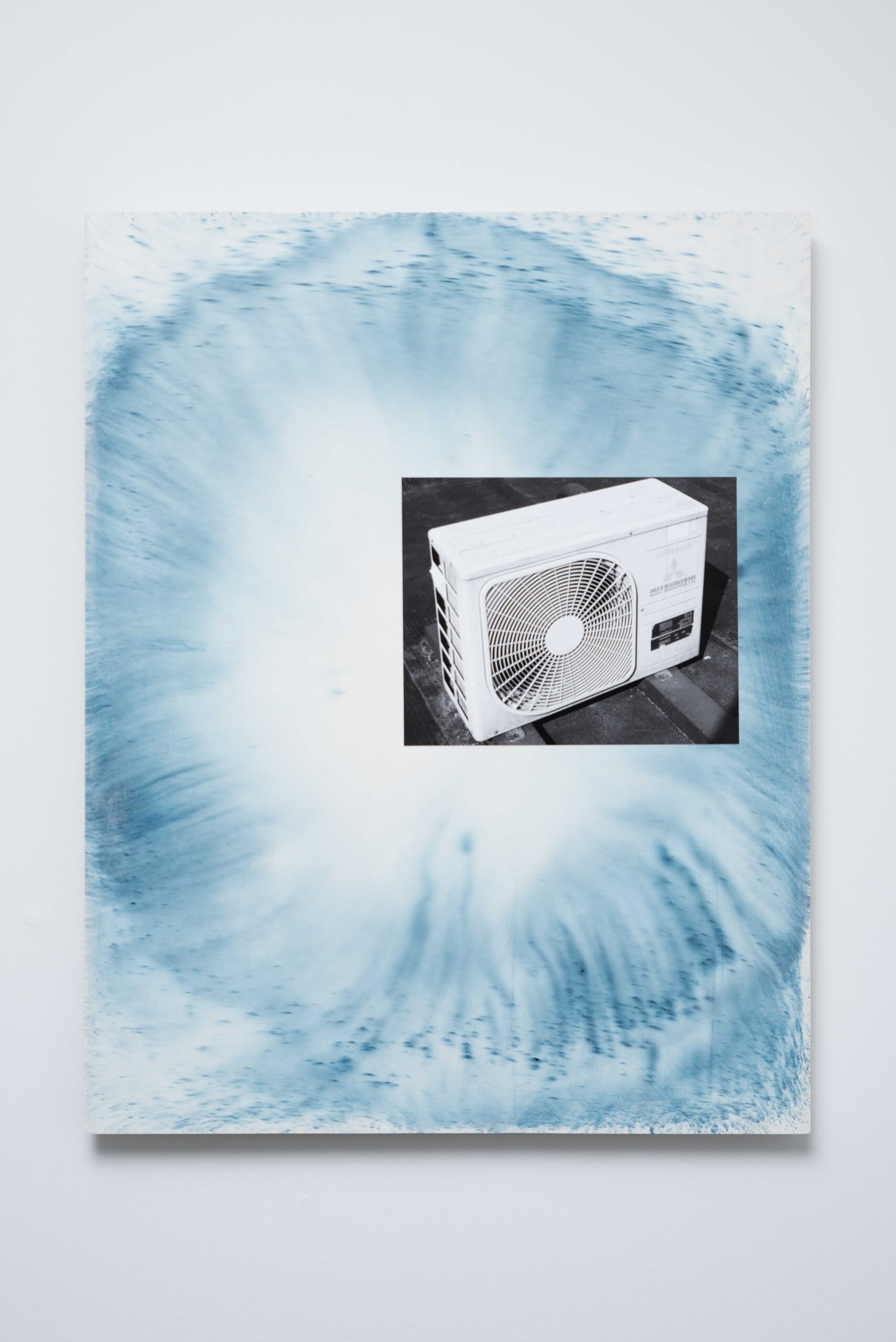
Zich ontvouwend als een inventaris functioneert het werk van Esmée Bruins als een doorlopend, veranderlijk archief dat de inhoud van een huis weerspiegelt. Deze inventaris draagt herinnering, afwezigheid en de echo’s van geërfde stilte in zich, en reikt verder dan het louter catalogiseren van objecten of materialen. Geworteld in een geschiedenis van ontheemding en oorlog, verkent het werk het snijvlak van verleden, heden en toekomst, vaak via dat wat onuitgesproken of ongezien blijft. Materialen en media worden op een vloeiende manier ingezet, waarbij foto’s schilderijen worden en stapels transformeren tot installaties. Door non-identiteit en in-authenticiteit te onderzoeken, creëert Bruins’ werk een kritisch discours rond structuren van identiteit en ontheemding. Een spel tussen negatief en positief is aanwezig, direct verbonden met fotografie en indirect tot uitdrukking gebracht via begrenzing, isolatie en ritme. Centraal in het werk staat een visuele en conceptuele wisselwerking tussen aanwezigheid en afwezigheid, gevoed door de taal van de fotografie maar daar ook voorbij reikend. Deze elementen bieden een stille logica die het werk onderbouwt.
Time is here, and disappears again
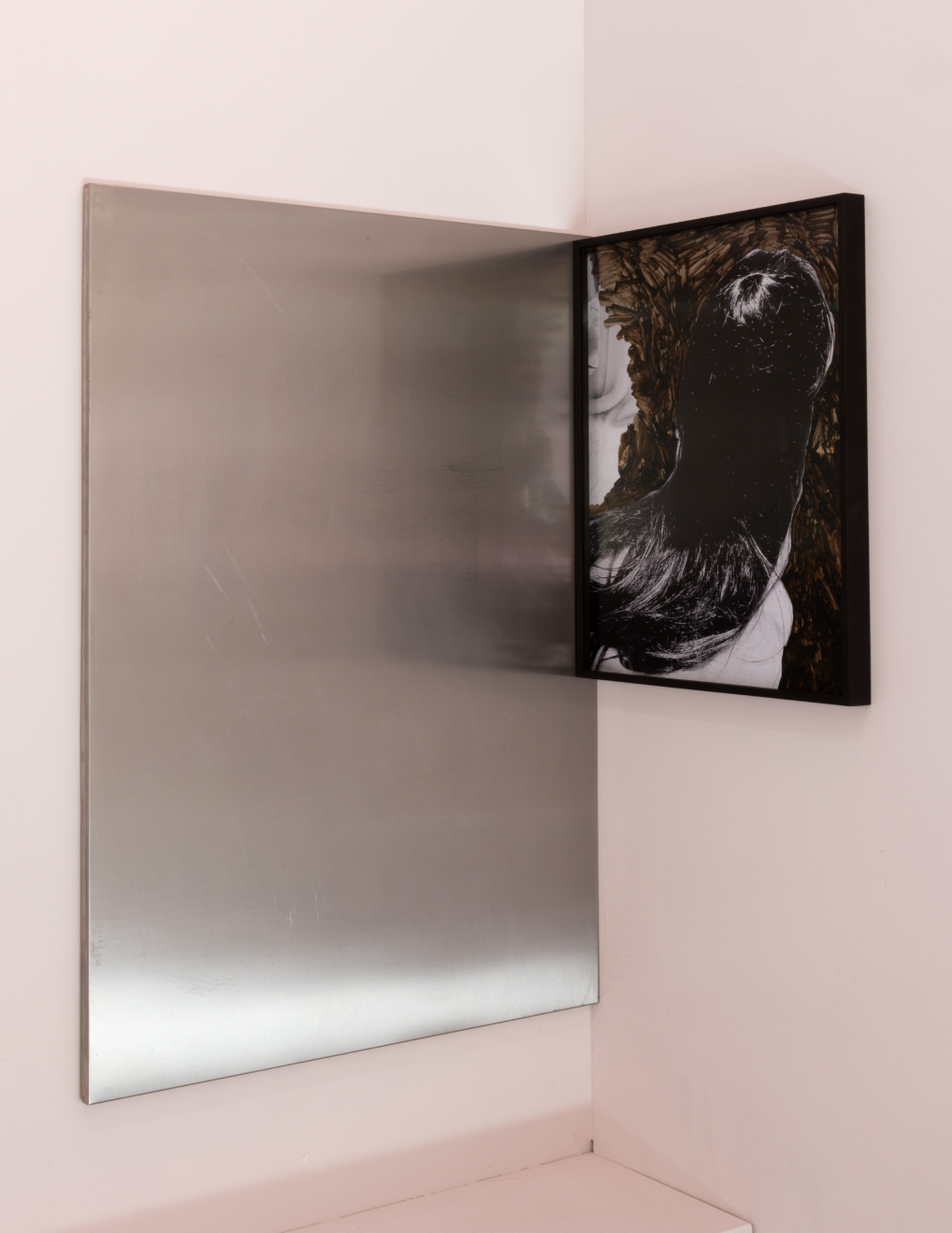
Time is here, and disappears again - Unfolding as an inventory, the work of Esmée Bruins functions as an ongoing, shifting archive that mirrors the contents of a home. This inventory holds memory, and absence, and it extends beyond the simple cataloguing of objects or materials. The work navigates the intersection of past, present, and future, often through what remains unsaid or unseen. A play between negative and positive is present, directly linked to photography and indirectly expressed through containment, isolation, and rhythm. Central to the work is a visual and conceptual interplay between presence and absence, informed by the language of photography yet extending beyond it.
I feel so brown and beige, yellow and red
I feel so brown and beige, yellow and red - Esmée’s work is photographic in origin but has developed into a very multifaceted practice during her education at Rotterdam’s Piet Zwart institute. Besides photography, her work now includes sculpture, painting, text and installations. She uses all these media to create very personal inventories, arrangements and ultimately an expanding archive of often mundane, homely items and settings. Objects and situations that are prone to be overlooked but that carry – when seen in relation to each other – unspoken political and emotional value. By making selections within this ever expanding and subjective archive, she is able to express histories that were carefully swept under a heavy carpet of silence. That what you see is of equal importance to that what you don’t see. A central thesis in her practice and one that she expands to the domain of identity. She describes how the construct of one’s identity can be shaped by unseen trajectories, unspoken histories and strong but unexpressed forces. Displacement and in-authenticity are defining factors in the shaping of identity, as much or even more so than their more truth adjacent counterparts. What happens when new information invalidates or even erases part of your sense of self? Esmée Bruins uses the notion of an archive as a system for a new, more fluid way of uncovering histories. Not a chronological sequence of facts but a more open, narrative approach that finds space for meta cognitive reflection on the generation of (personal) histories. (Text written by Emiel van der Pol-Engels)
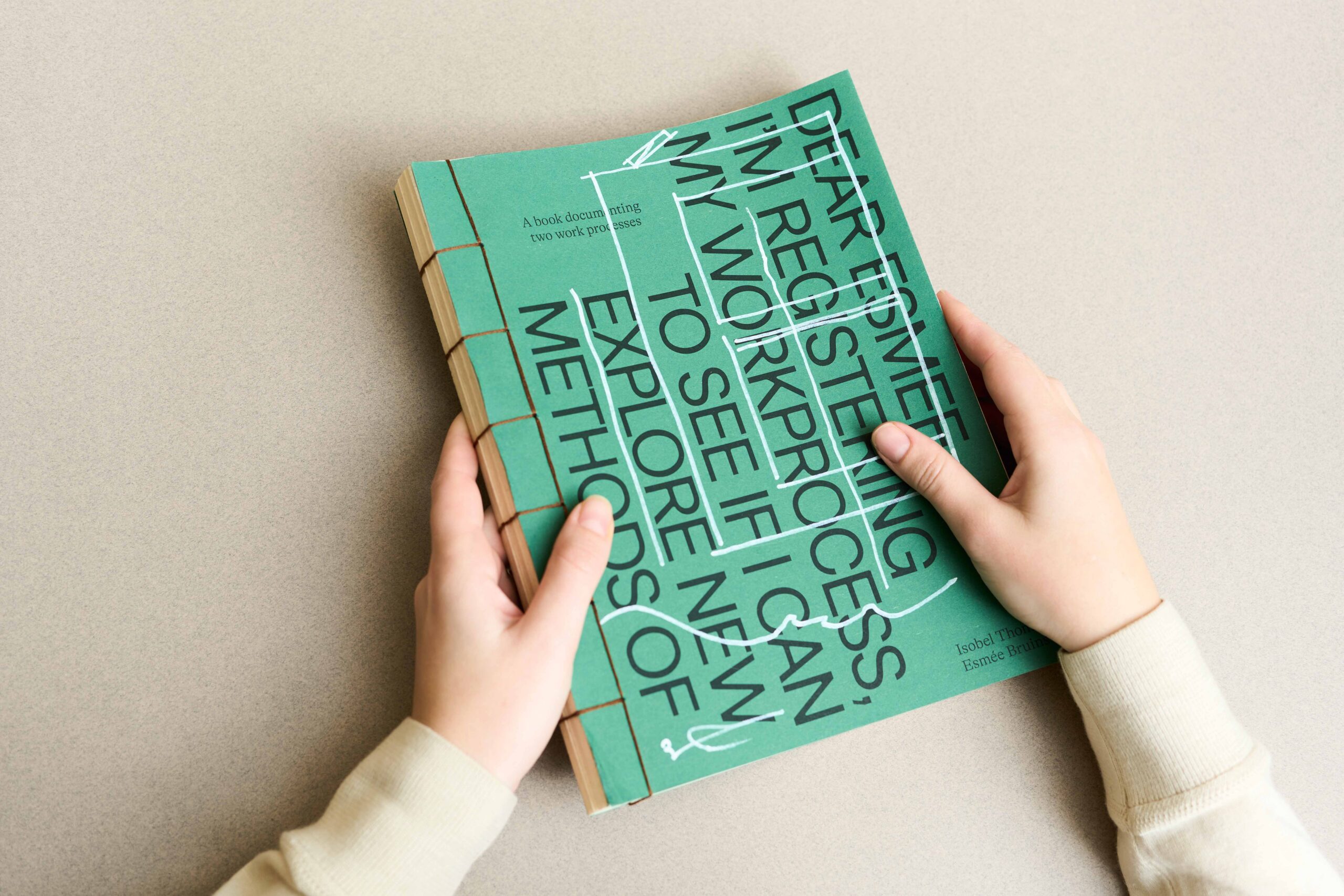
Dear Esmée, I’m registering my workingprocess, to see if I can explore new methods of working. What
Dear Esmée, I’m registering my workingprocess, to see if I can explore new methods of working. What - Initiated by Isobel Thoms, both Isobel and me converse through the mail about our practice and process. In this publication there is a record of written discriptions of works (in becoming) and ideas, and photographic material relating to these works and the studio.
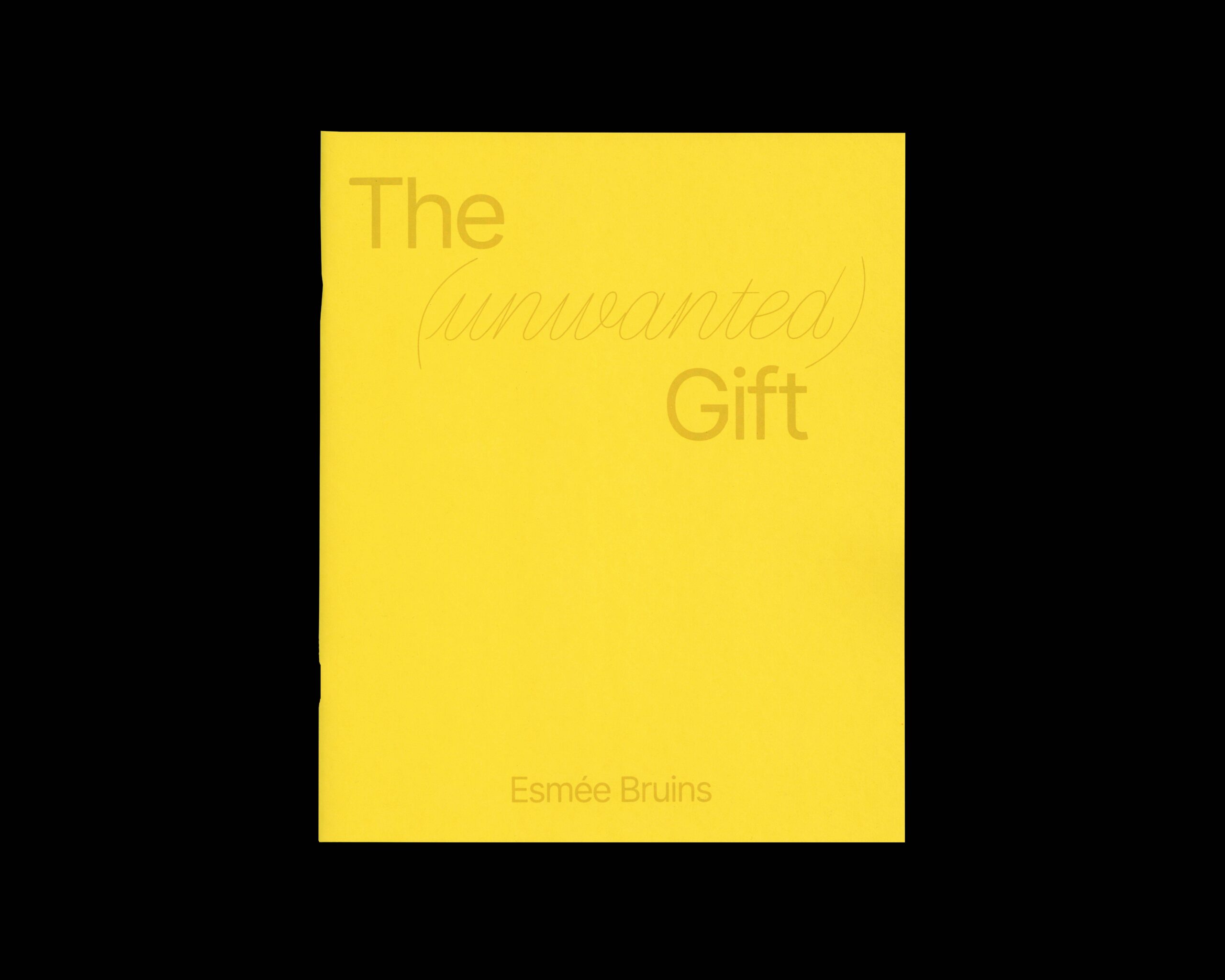
The (unwanted) gift
The (unwanted) gift
The (unwanted) gift
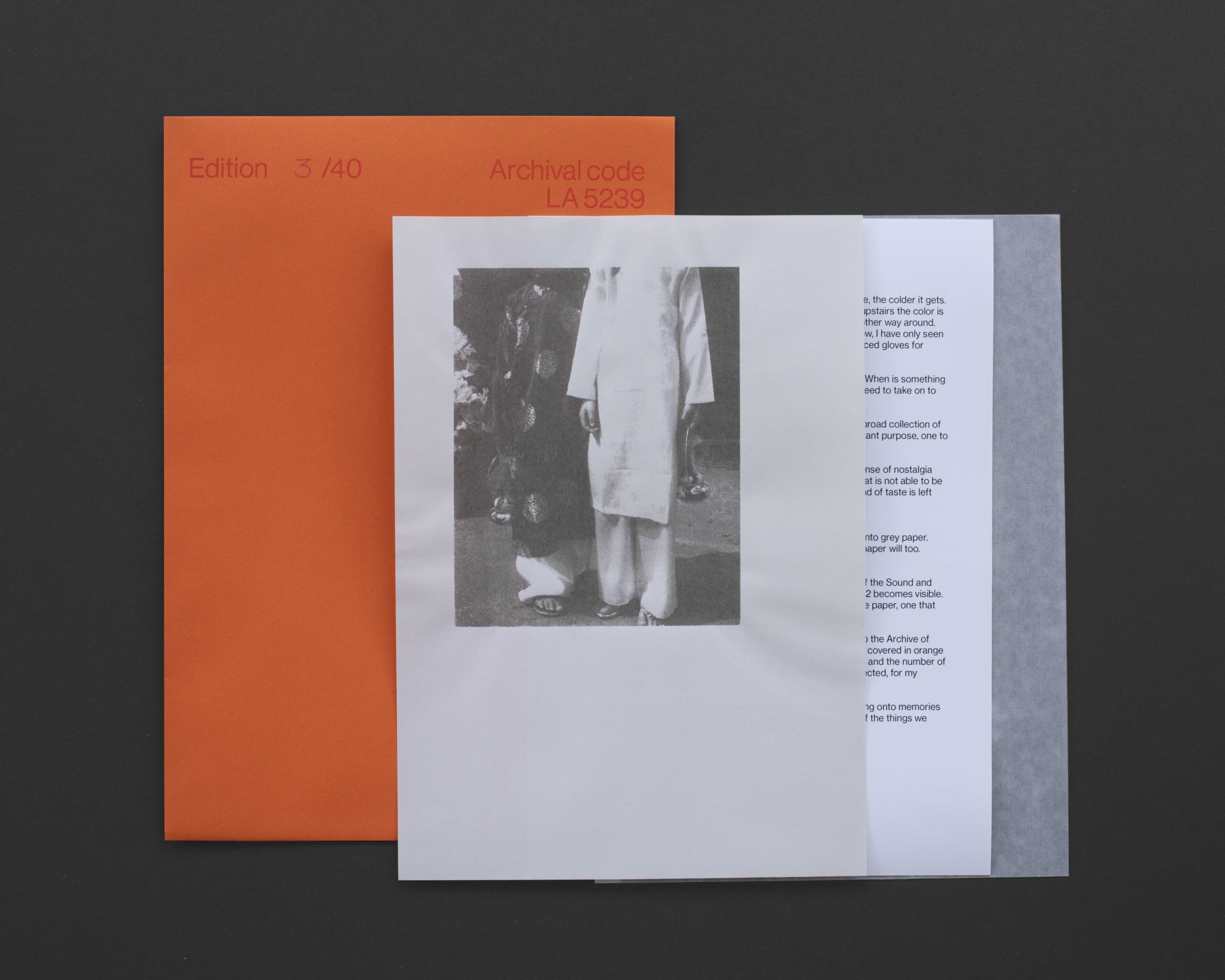
The (unwanted) gift - This publication is a visual essay displaying images in multiplicity, taken over the course of two years. The images display everyday-life scenes photographed with a mobile phone. In addition, there are two letters discussing the topic of photography, family, and inherited memory.
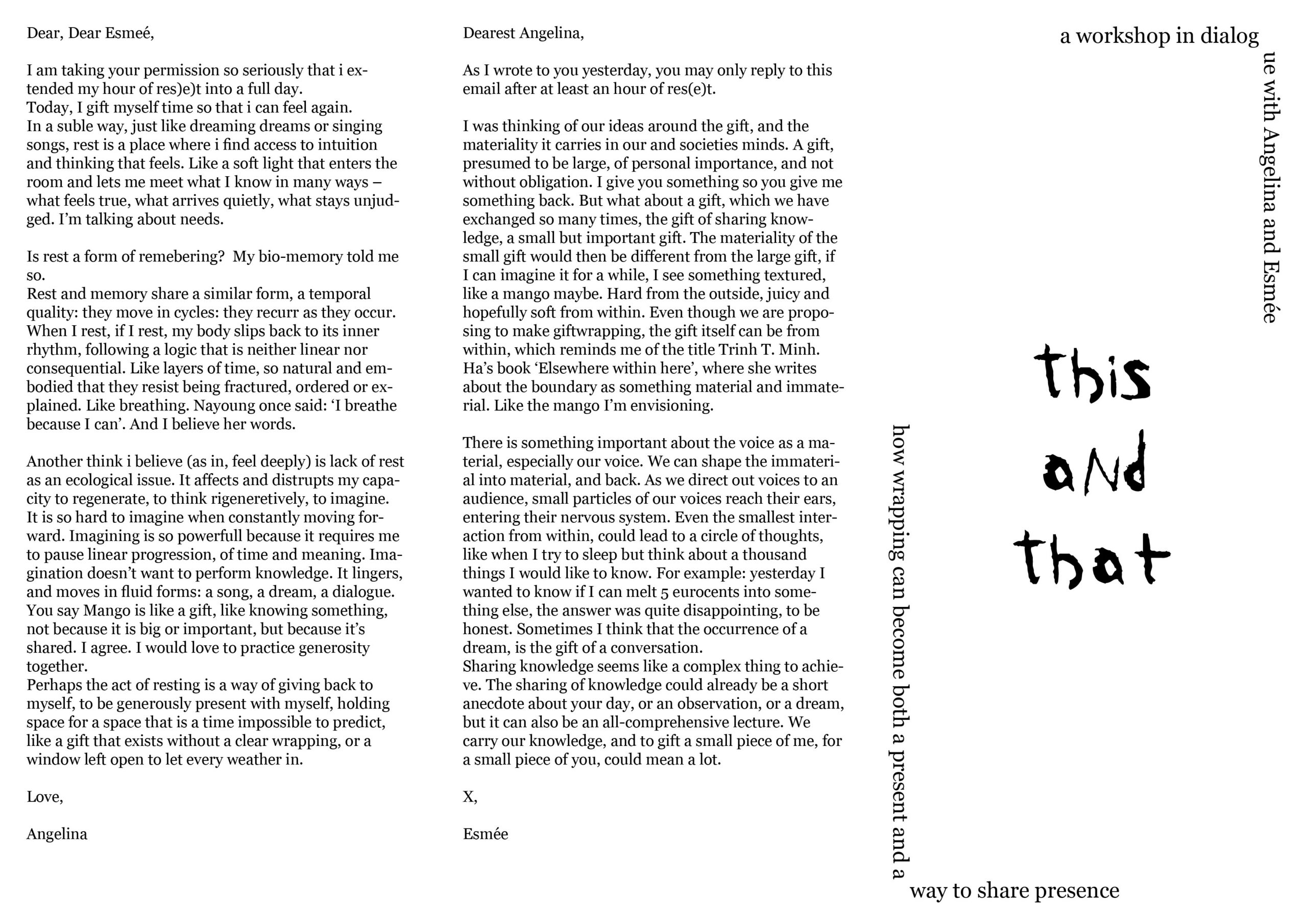
This and that
This and that - Workshop in collaboration with Angelina Nonaj on gift giving and gift wrapping.
Notes on image-making
Notes on image-making - Photography is often seen as a direct representation of reality. This assumption is challenged in the works by artists Esmée Bruins and Noah van de Wetering. In the exhibition, they show new works based on the (photographic) image as representation and memory. This is expressed in various materials and different techniques, in which the transformation of the image is always central. Both makers' approach to images stems from their education in photography. First look, then frame, and then print. Photography has an inherent connection with reality, without an existing image there is no photo. In this manner, it often serves as a representation. This expectation is deliberately interrupted in the exhibition. Photography serves the work. Together with other techniques that can be discovered in the work, it refers to a first observation and to the act of making. Duo exhibition together with Noah van de Wetering.
Repeatedly elongating the breath of a memory
Repeatedly elongating the breath of a memory - The room is cold, we are underground. The more underground we are, the colder it gets. Every hallway has another color, I have seen orange and yellow, but upstairs the color is purple. It seems like the cold colours are in the warm areas and the other way around. I suppose I expected the room to smell like paper, but it didn’t. For now, I have only seen radios, video cameras, television show memorabilia, and carefully placed gloves for touching the objects. How would I describe this place without mentioning it as an archive? When is something considered an archive, and what steps does this involve? What do I need to take on to archive a piece of, maybe art? When collecting videos for my sample pack, I was fascinated by the broad collection of videos, images, and objects. All once archived after serving an important purpose, one to inform, to educate, to record, to wonder, or to experiment. Looking at fragments of film that take us back in time, displaying a sense of nostalgia or maybe even melancholia. What does it mean to hold something, that is not able to be held? To chew on something, but not swallow, nor spit it out. What kind of taste is left behind?
Two windows opening inwards
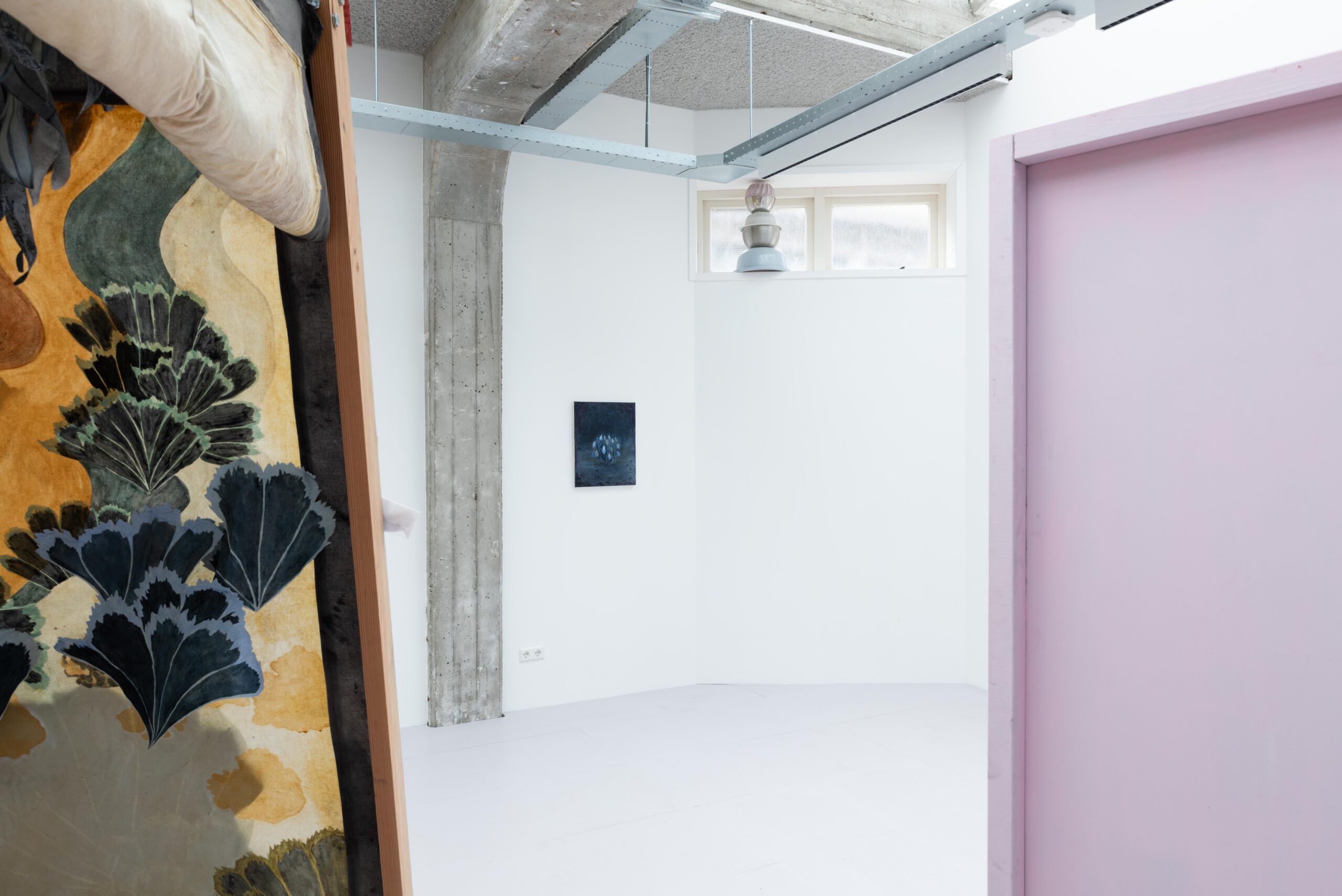
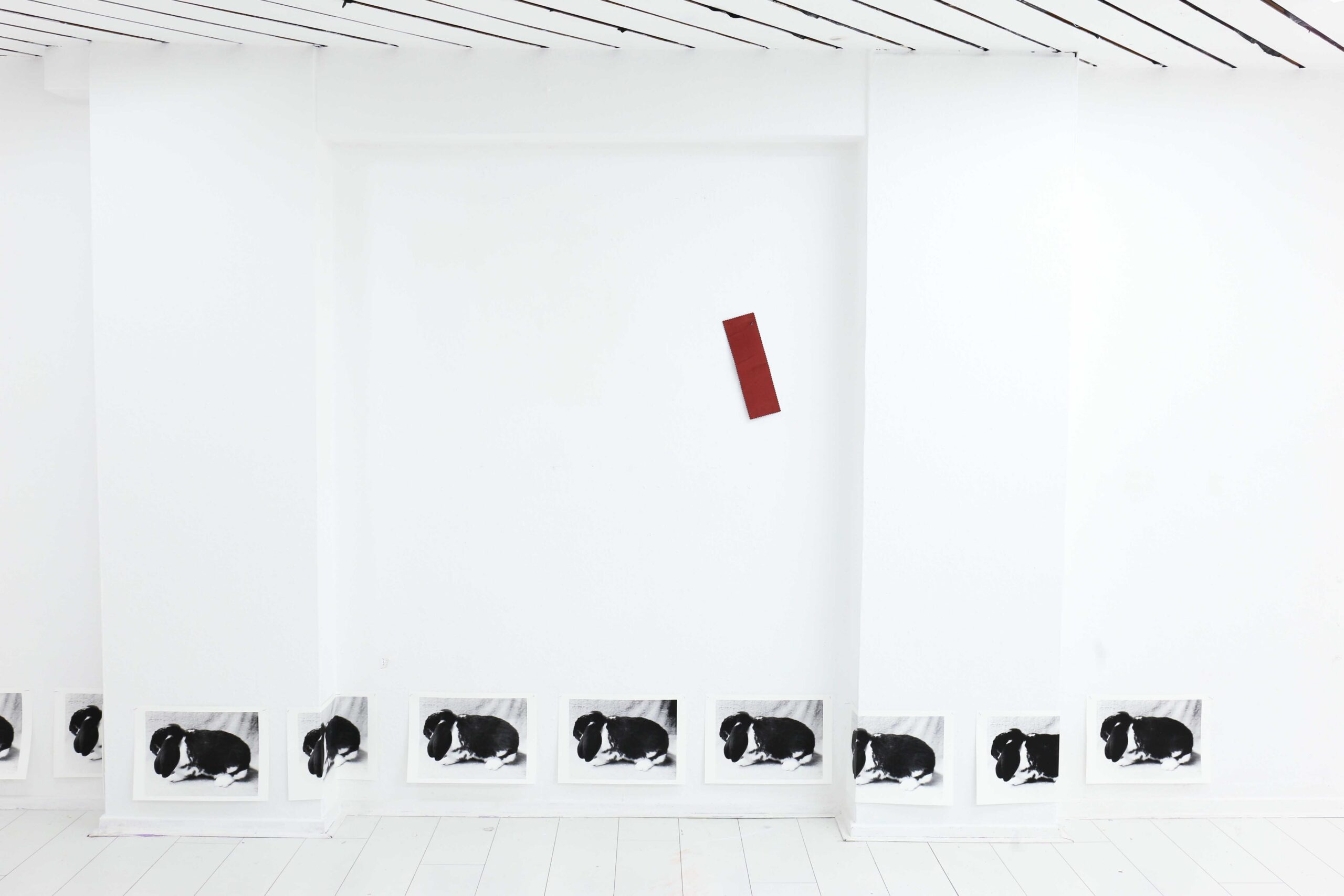
Two windows opening inwards - All of our memories are fragmented. We don’t truly recall the full experience of these moments but we link each fragment to another fragment to create a cohering memory. It’s only after critically looking at our full memories and noticing these (often visual) fragments that we’re able to truly look at the fragments by themselves. What do we see? Are these fragments like photographs, immovable and frozen in time? We can try and find an answer in the exhibition “Two Windows Opening Inwards”, where each work explores fragments of important memories of Esmée’s youth. From certain visual icons such as the Rabbit she once kept as a pet to more abstract material research about sun markings on curtains. Every part of this exhibition reminds me of existing scenes in regular day-to-day life. The kind of scenery we’d not even notice unless linked to important memories. Some fragments are rigid, resulting in works made from plaster, and some are more fluid which naturally navigated the memory to textile work. In this exhibition, it is necessary to look carefully. To not miss any details and to wonder about the qualities of the materials in use, because they refer to memories in a similar way as photographs. Separately, these works are part of a collaborative system of memories. Each work itself explores a different memory but when exhibited together form a whole. As an overwhelming sense of nostalgia or perhaps a way to process the experience of growing up. Text by Noah van de Wetering
Nothing Seemed Out of Place
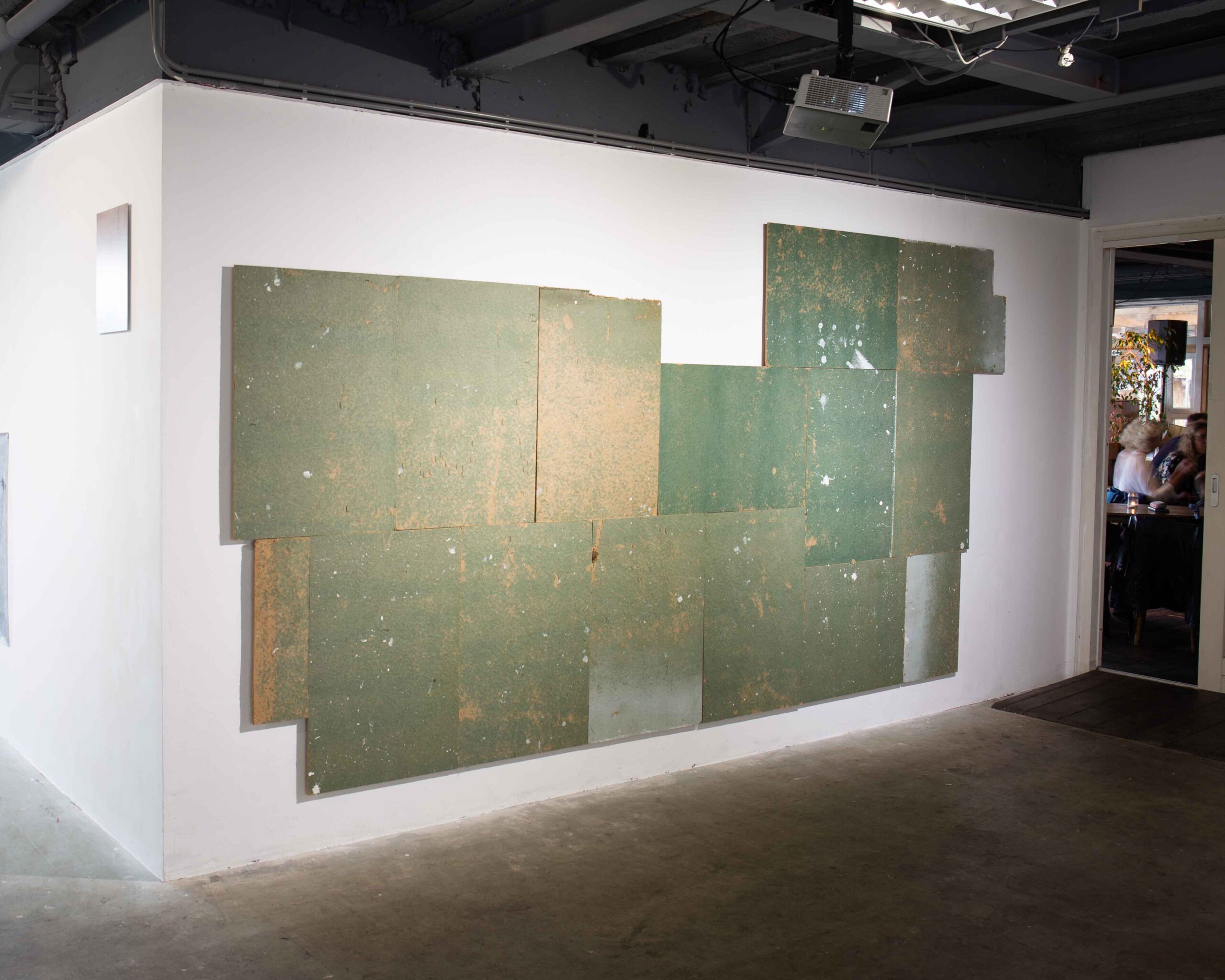
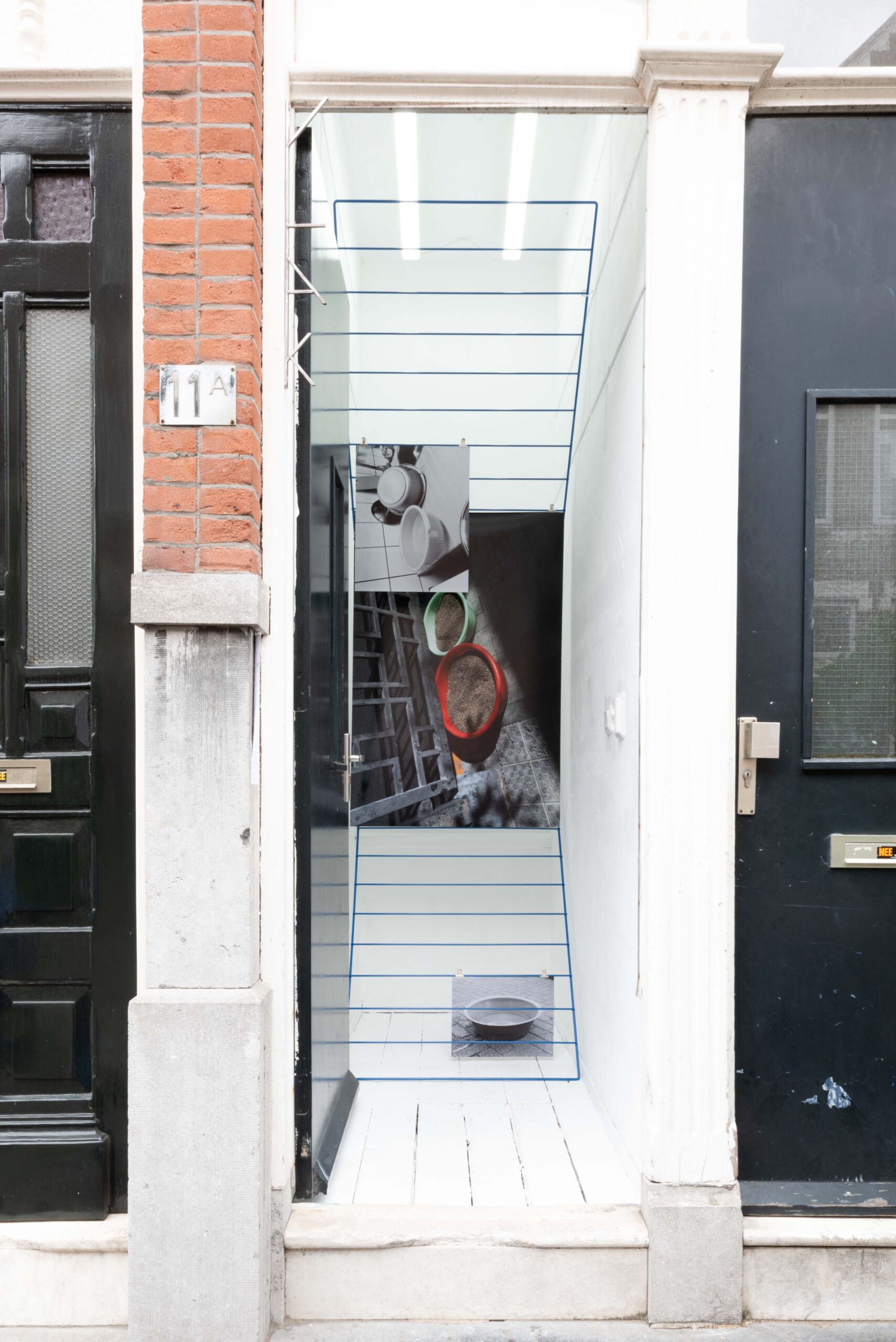
Nothing Seemed Out of Place - The exhibition ‘Nothing seemed out of place’ brings together two artists who dissect structures, whether that is a building or public space. An alternative construction or rather re-construction is brought into place, using different methods. An observation of traces and fragments of maps. Collecting outside views, bringing them closer. To bring together, to rethink, to rearrange. A collection of memories, either captured in (found) material or in a photograph. The work of Esmée Bruins shows a construction of found material displaying their spots and stains. Stains and spots symbolising memories, stringing them back together. Photography is used as a tool, mimicking the process of collecting, which is a never-ending process of adding and reordering. Anna Reerds' work is about the spaces that we as humans have constructed, whether these are buildings, public spaces or interiors. Our surroundings can say much about the people that occupy them. It is mainly the imperfect, mundane and ordinary spaces that Anna is drawn to, for these places reflect our wishes and ideals as well as our shortcomings. Anna shapes her ideas about our construction of space into photography, film or scale models, that she often edits and layers to create new images. We recognise things in her work, but something is off. Duo exhibition together with Anna Reerds
Mapping Artifacts: Unidentified Evidence
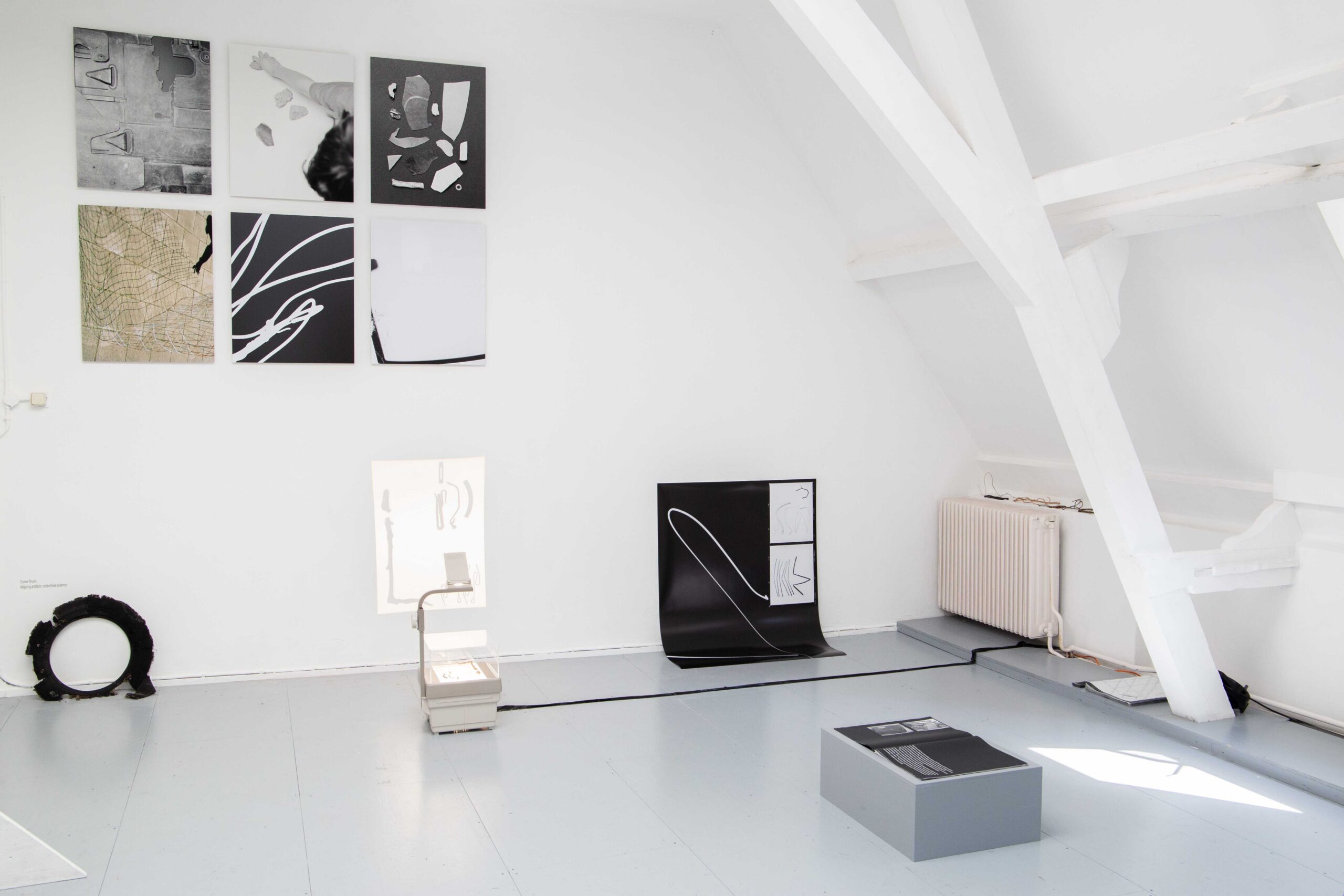
Mapping Artifacts: Unidentified Evidence - Mapping artifacts: unidentified evidence is a process in which I investigate my close surroundings, based on a collection of objects found within this surrounding area. Repeated acts of collecting, arranging, and documenting lead to an investigation into establishing an event, one of which I only find the fragmented remains of. Incidental artifacts and lost fragments form an image of human actions. They are in a phase of rejection, neglect, and destruction, I interrupt this phase by removing the artifacts from their context. The contrast between the original site, the artifact itself, and its strictly framed representation is emphasized. This representation serves as a 'reconstruction' of an event that has taken place. That same 'reconstruction', which is a collection of interventions, is again an event itself. The project was exhibited in Fotodok, AG (Academie Galerie), and received a nomination for the Keep an Eye stipend.

Master Fine Art graduation exhibition

Datum:
Locatie: Tent

In deze expositie zijn werken tentoongesteld ter afsluiting van de master opleiding van de studenten aan het Piet Zwart Instituut.

Deze kunstenaar heeft nog geen toekenningen.