Jack Eden

Taal , sculptuur , schrijven , printen (2D) , Objecten , Literair , LHBTIQ+ , internationaal , Geschiedenis , Conceptueel , beeldhouwen , Artistiek onderzoek , Analytisch

Jack Eden (b.1989, UK) is an artist translating our understanding of materiality into the language of sculpture. Often shaped by mathematical principles including the golden ratio or Euclidean geometry, Eden's sculptures focus on basic form to enhance the aesthetic, physical, and conceptual possibilities of materials. Eden studied at Plymouth School of Art (2009) and graduated from Oxford Brookes University with a First Class Honors degree in Fine Art (2012). He now lives and works in Rotterdam, the Netherlands.
Translucent language
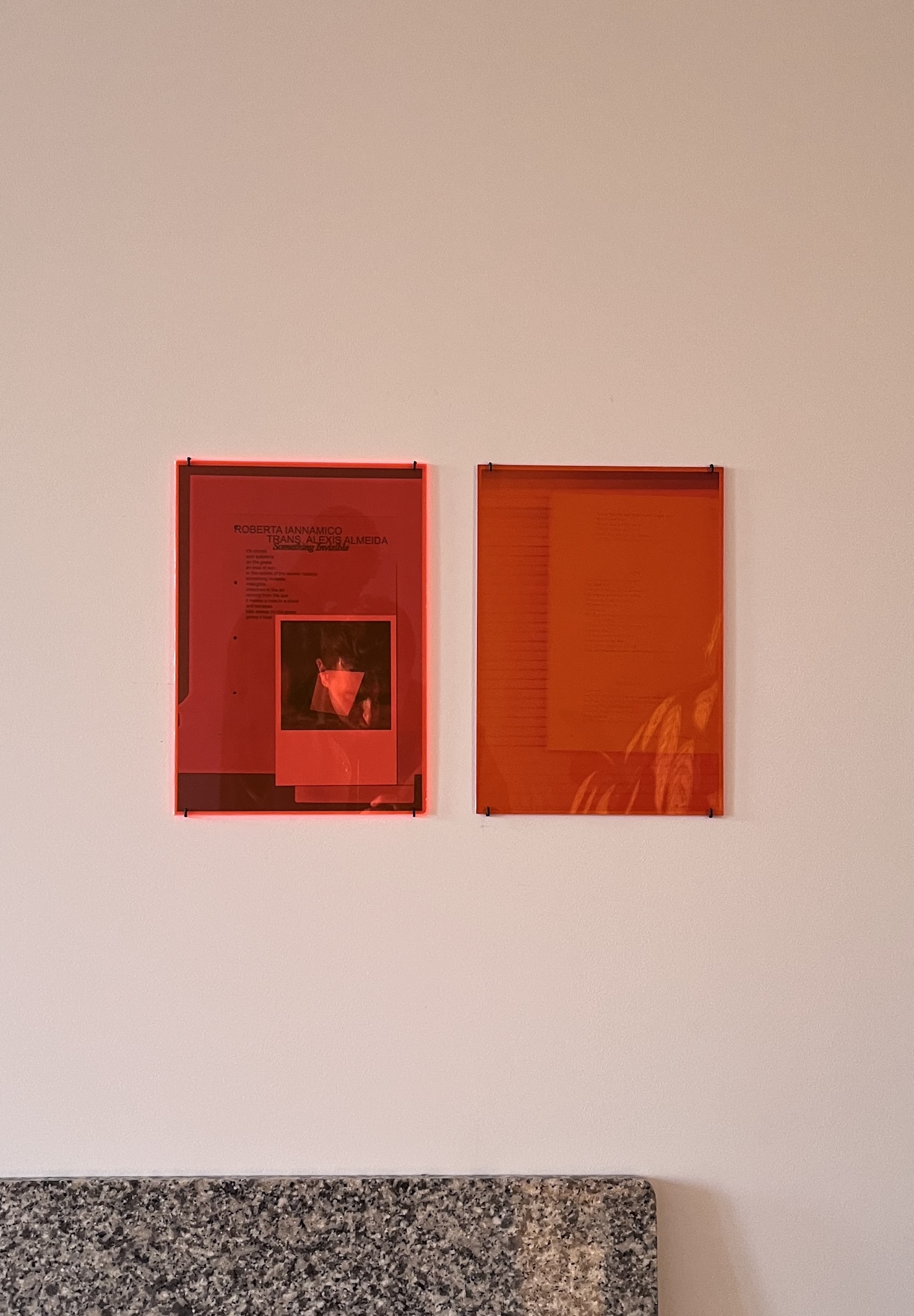
Translucent language (2024) - Between transparent and opaque there is translucence, a condition of not being see-through but still allowing light to pass. Translucent language uses this state to loosely present the debris of texts, drawings, mathematics and research that build up behind a finished artwork but which are never actually seen. These are reproduced and presented behind frosted plastic and lighting gels to reduce the communicability of content and aesthetic, creating a barely comprehensible 'translucent language'.
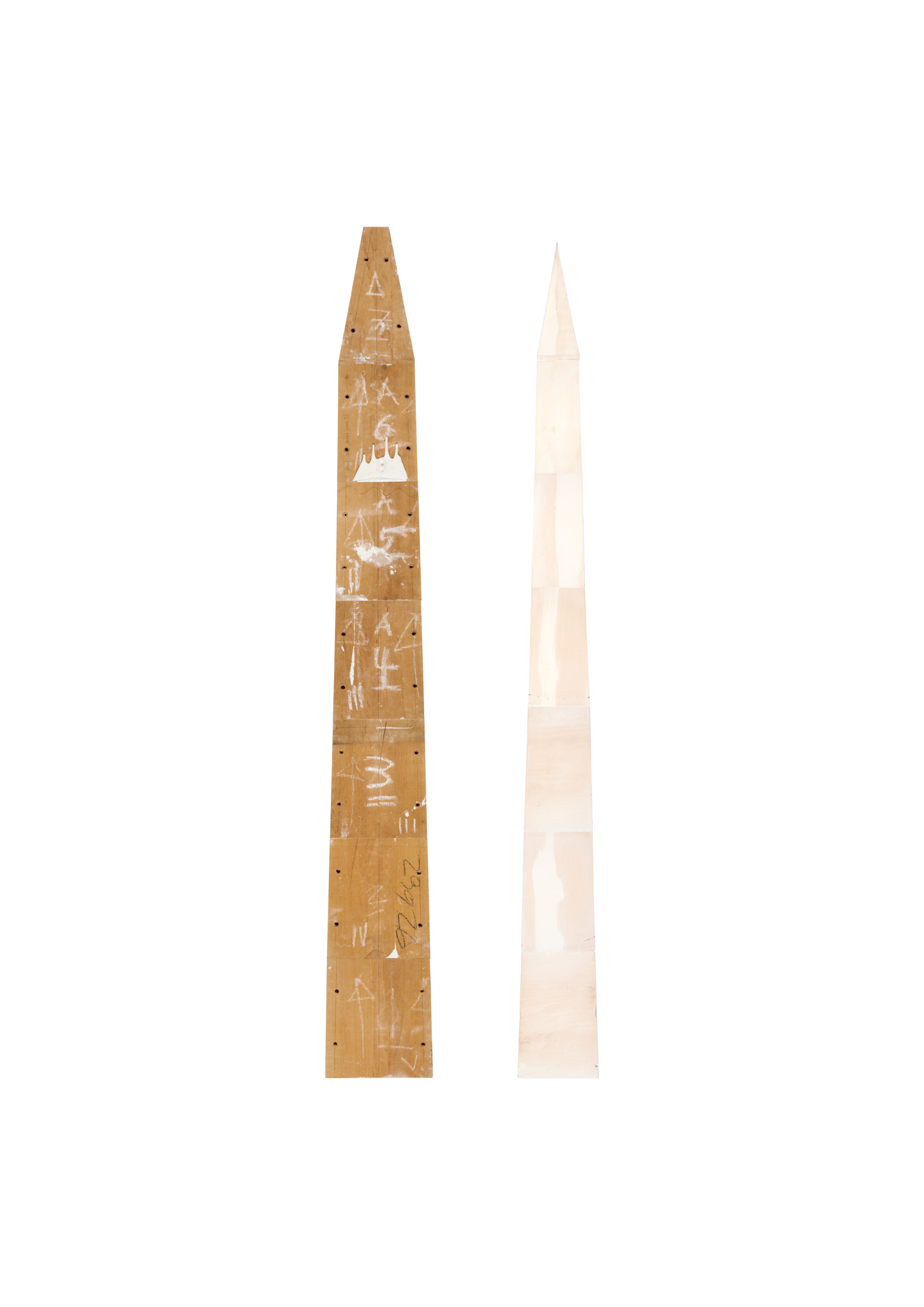
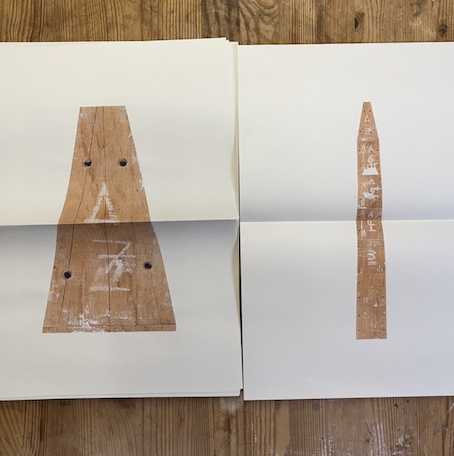
Unfinished obelisk edition (2024) - A limited edition print series of Unfinished obelisk is available with 1:1 scale photographs of the first seven plaster casts and the alder-wood moulds that formed them, as well as an expanded text on the obelisk's relationship with language, materiality, death and love.
Unfinished obleisk (2023) - An obelisk is so shaped because it is a sculpted ray of sunlight. Ancient Egyptians created them in pairs with the exception of the singular Lateran obelisk, now the largest example still standing in spite of its collapse and eventual reassembly four metres shorter. In a quarry at Aswan, southern Egypt, is a cracked and incomplete obelisk that was abandoned owing to fissures destabilising the granite from which it was carved – its pyramidion never reached the sky, instead remaining part of the earth. Unfinished obelisk is an incomplete sculptural translation of both monuments, scaled from their celestial 32 metres down to an anthropic 1.88 metres. From this, construction drawings were developed for a cast plaster obelisk and alder-wood mould whose seven parts hint at a mathematically ‘perfect’ obelisk – the diagonal across the base being perfectly equal to one seventh of the total structural height. These divisions also serve to fracture one funerary monument into multiple sculptures, commemorating one death in a divisible memorial whose constituent parts always retain a fundamental relationship to one another and to one whole. Unfinished obelisk consequently eschews stability and monumentality in favour of something more imperfect and far more human.
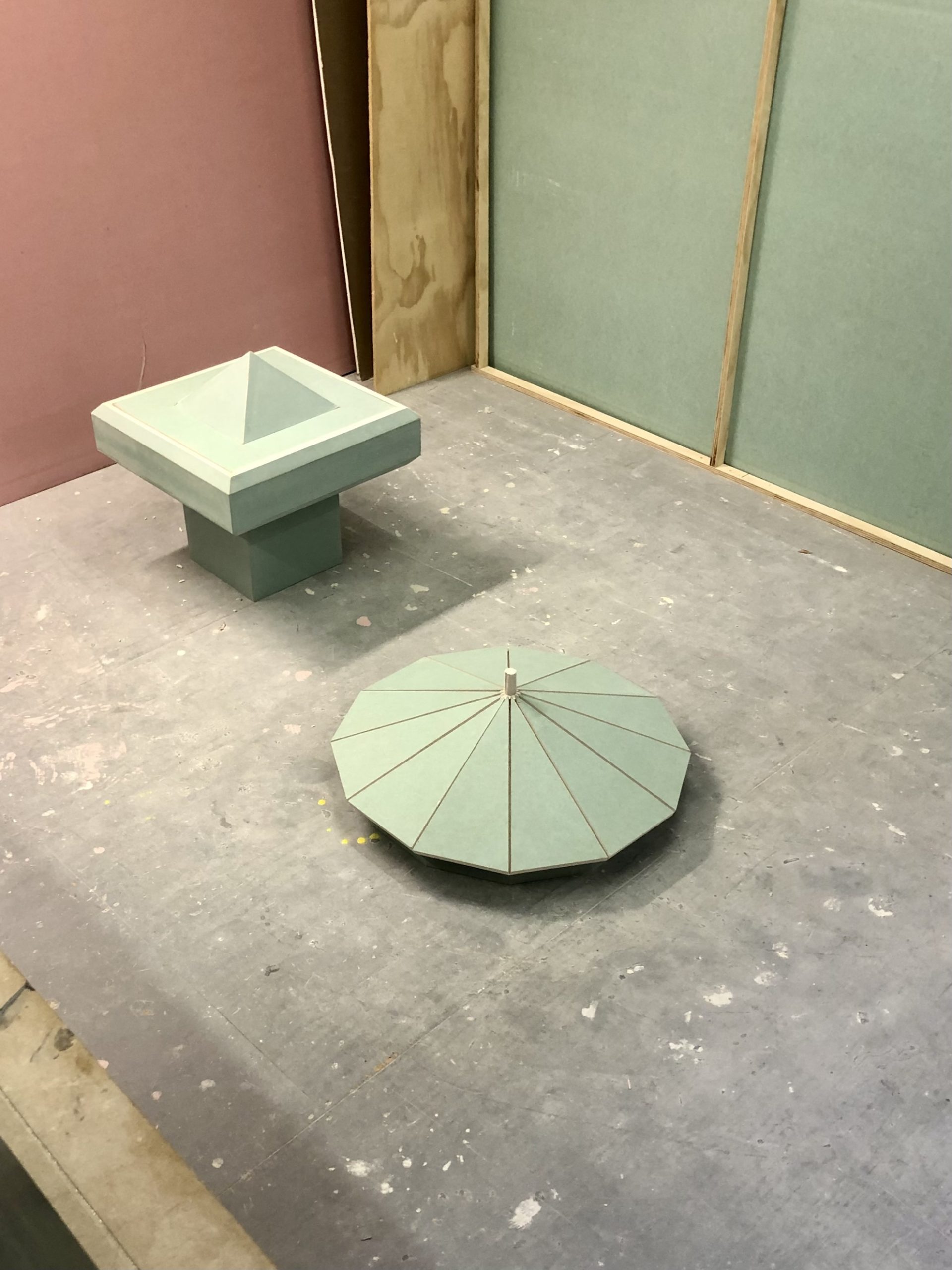
Dak (2022) - This latest series of sculptures borrow the geometry of roof objects – vents, apertures, skylights, steeples and the like. These are things that exist semi-hidden, glimpsed from street level, seen in part, their functionality often cloaked with ornamentation. The sculptures Jack makes in response are a fraction of the size and are constructed from plasterboard – readily available and utilitarian – but like these roof objects it’s a material that is not necessarily meant to be seen. However, these sculptures aren't created to draw our attention to roof objects, or to celebrate them, nor are they a comment on society’s apparent lack of observation. The artist is instead interested in understanding materiality and process as a journey. What can be discovered in these acts of translation? Conversely, what becomes lost?
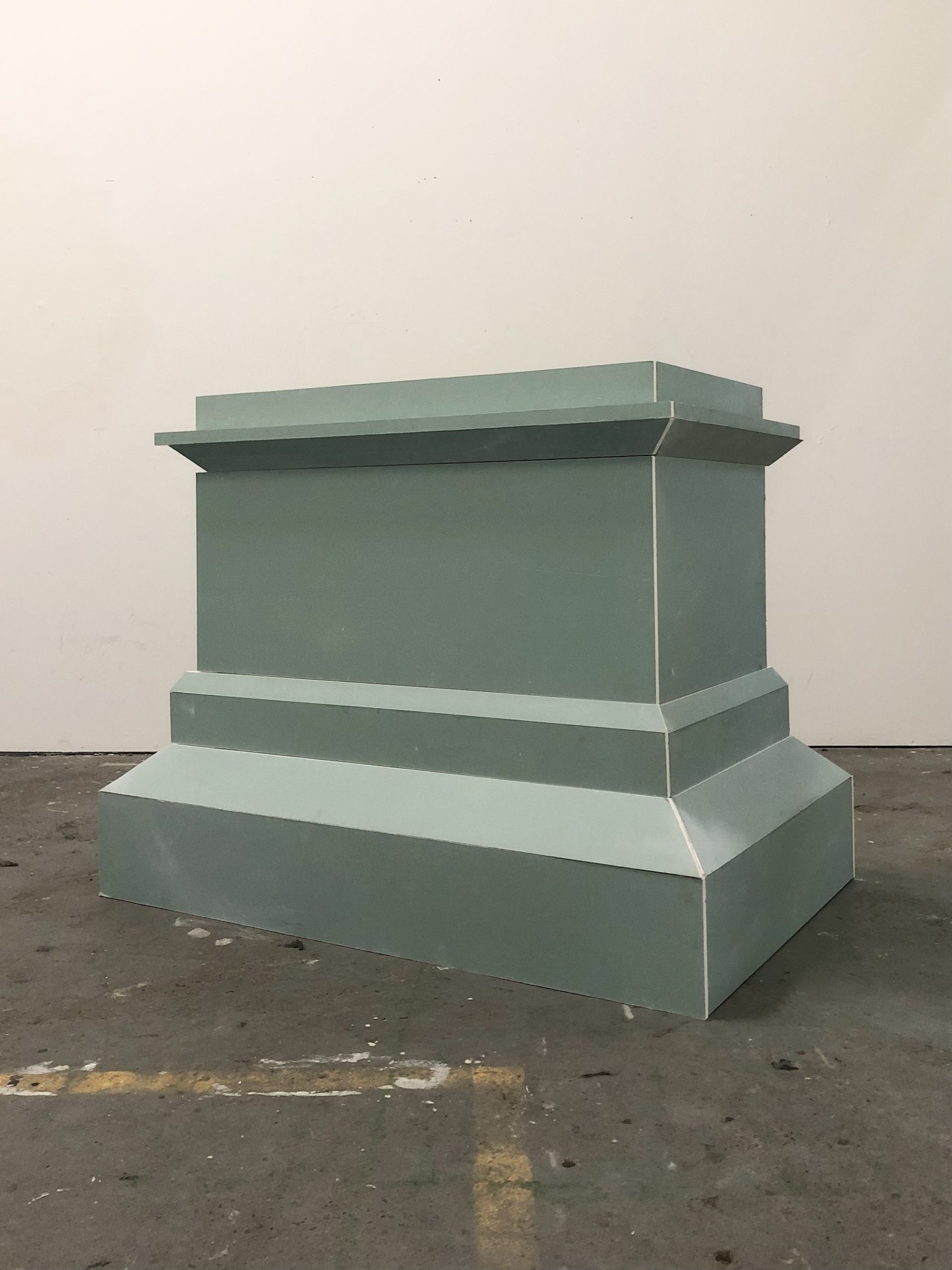
Plinth for no one (2022-24) - This series is a manifestation of ongoing research into the physical and aesthetic characteristics of the pedestals on which we publicly elevate hegemonic culture. The plinth is defined by its subservience to its supporting object, from ornate stone plinths commemorating historical figures – chiefly heterosexual white men – to painted MDF cubes for displaying contemporary art. An unadorned plinth is therefore a contradiction – some are consummated by a programme of sculptural additions, while toppled statues leave behind empty pedestals as potent symbols of progress. Responding both to extant examples and new interpretations of sculptural pedestals, Plinth for no one asks what value these ubiquitous objects have when they stand alone.
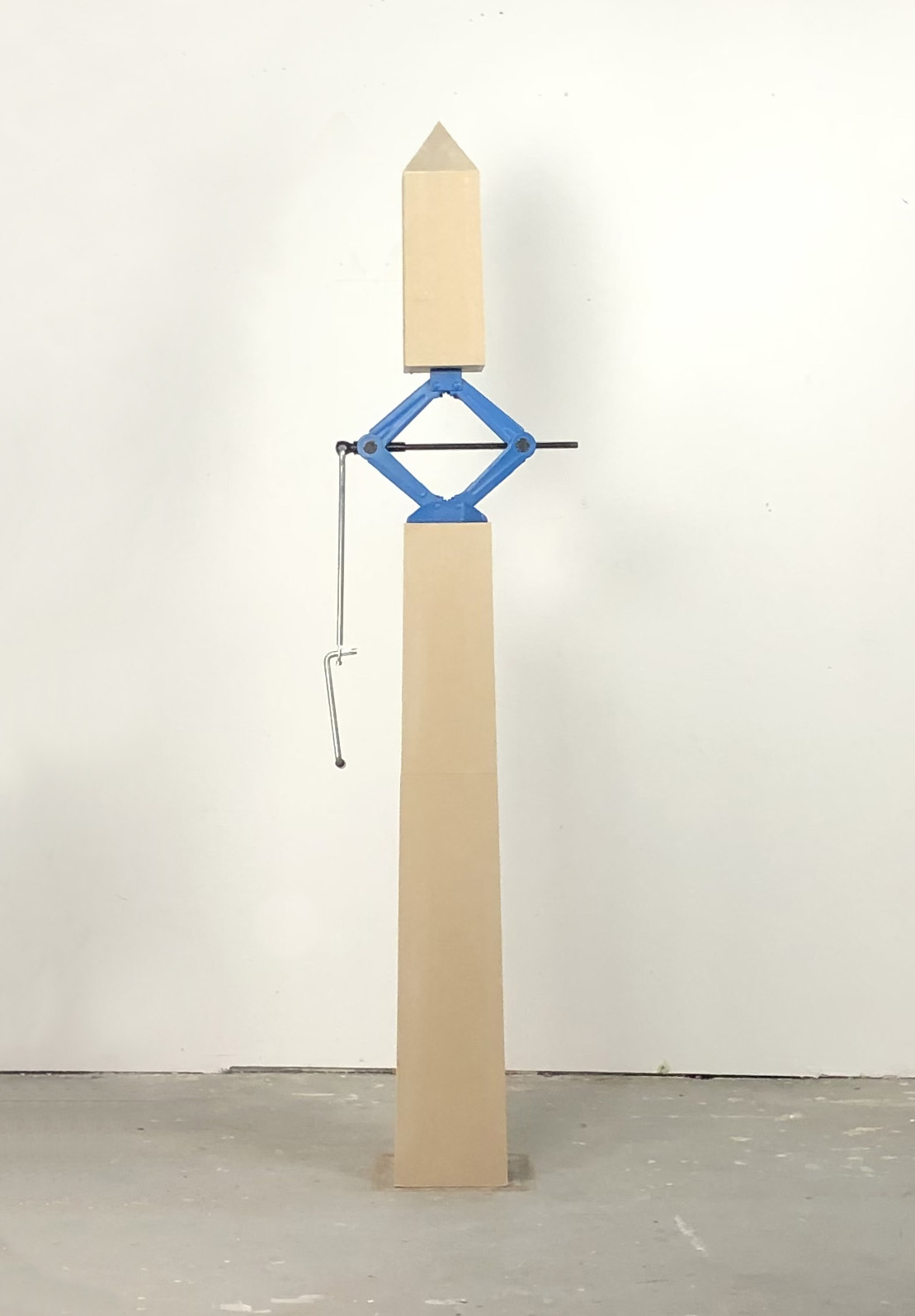
How Tall is Goethe (2017-21) - Responding to the painting Goethe in the Roman Campagne, this sculpture explores the problem of objectively documenting human stature. Corrupted by perception, ego, idolatry, celebrity and masculinity, it would have been impossible (even in 1787) to create an accurate image of the famous German writer Johann Wolfgang von Goethe. Using the dimensions of an ancient obelisk in Rome, this plasterboard monument precisely measures Goethe's commonly perceived height – 166 cm. Bisected with a scissor jack used for elevating heavy objects, the possibility of increasing and decreasing scale remains ever-present but problematic. As the sculpture becomes taller, its proportions become distorted – similar to the way Johann Heinrich Wilhem Tischbein painted Goethe with two left feet and awkwardly twisted hips.
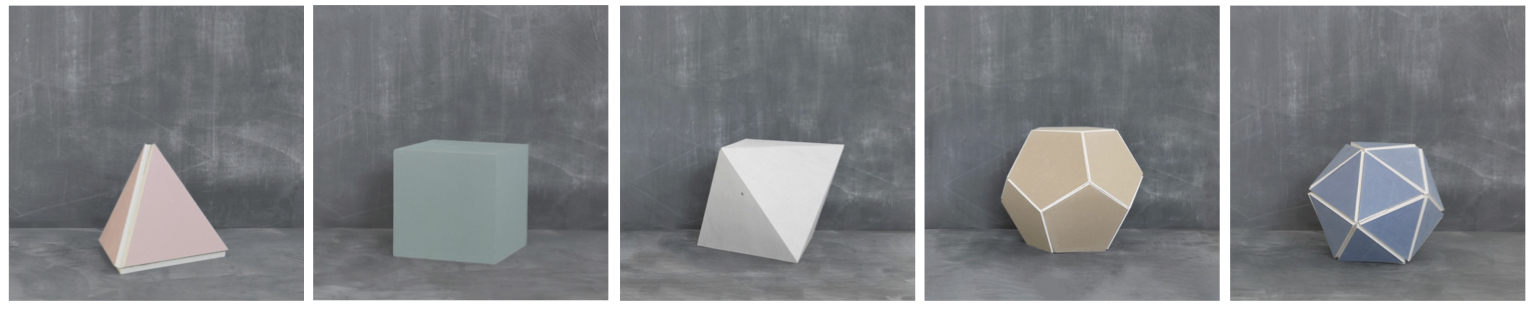
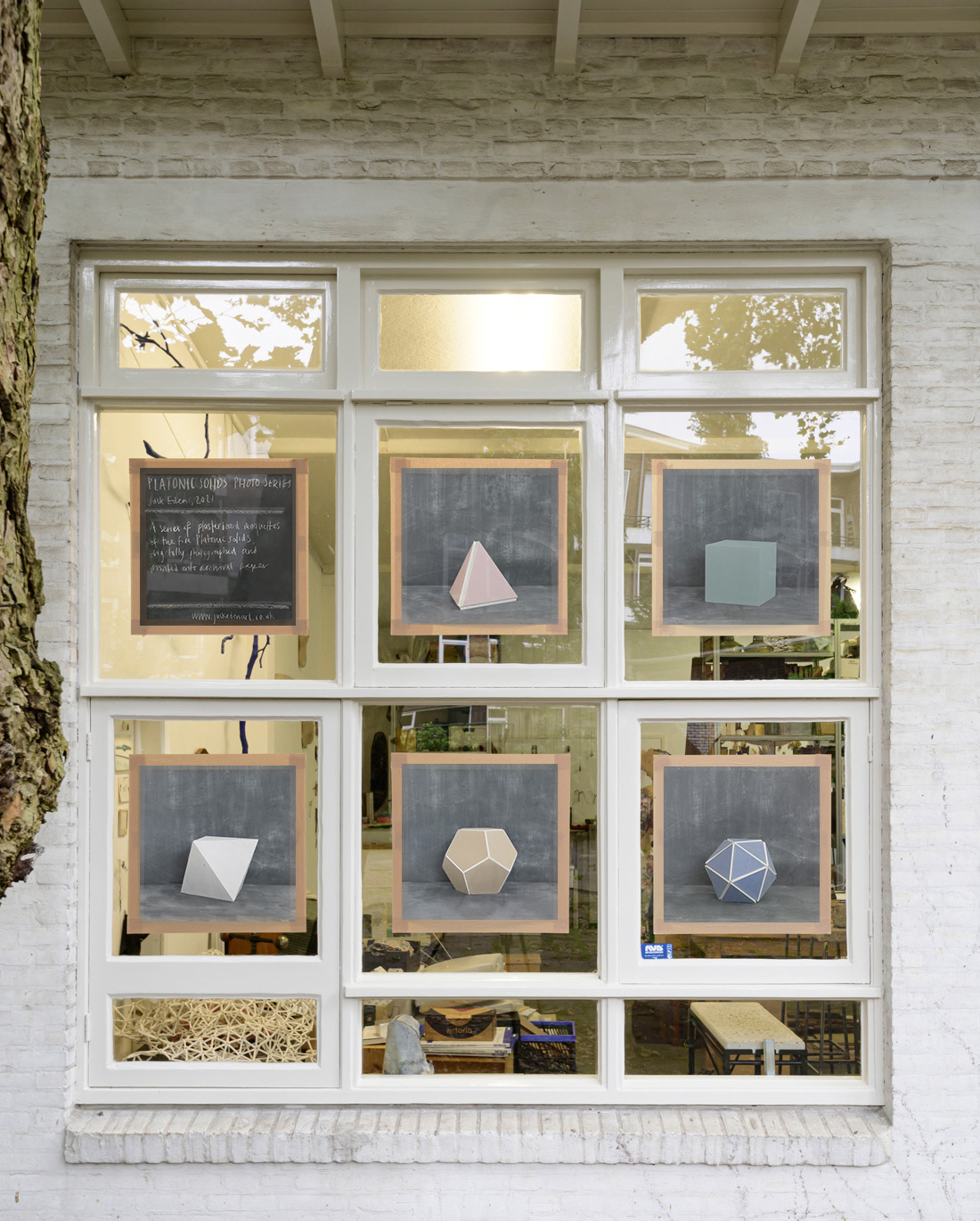
Platonic solids photo series (2021) - These photographic prints depict the Plasterboard Maquettes for the Five Platonic Solids, a series of 'plaster casts' of the polyhedra thought by Plato to be the elemental building blocks of our universe. This experimental plasterboard sculpture series was then photographed against the chalkboards used to calculate their construction. The sculptures and photo series alike draw the absolute into the indefinite, depicting forms of theoretical perfection hewn in imperfect reality. Each digital photograph is inkjet printed onto 50 x 50 cm archival paper and signed in a limited edition of 50, available to buy from Jack Eden Art.
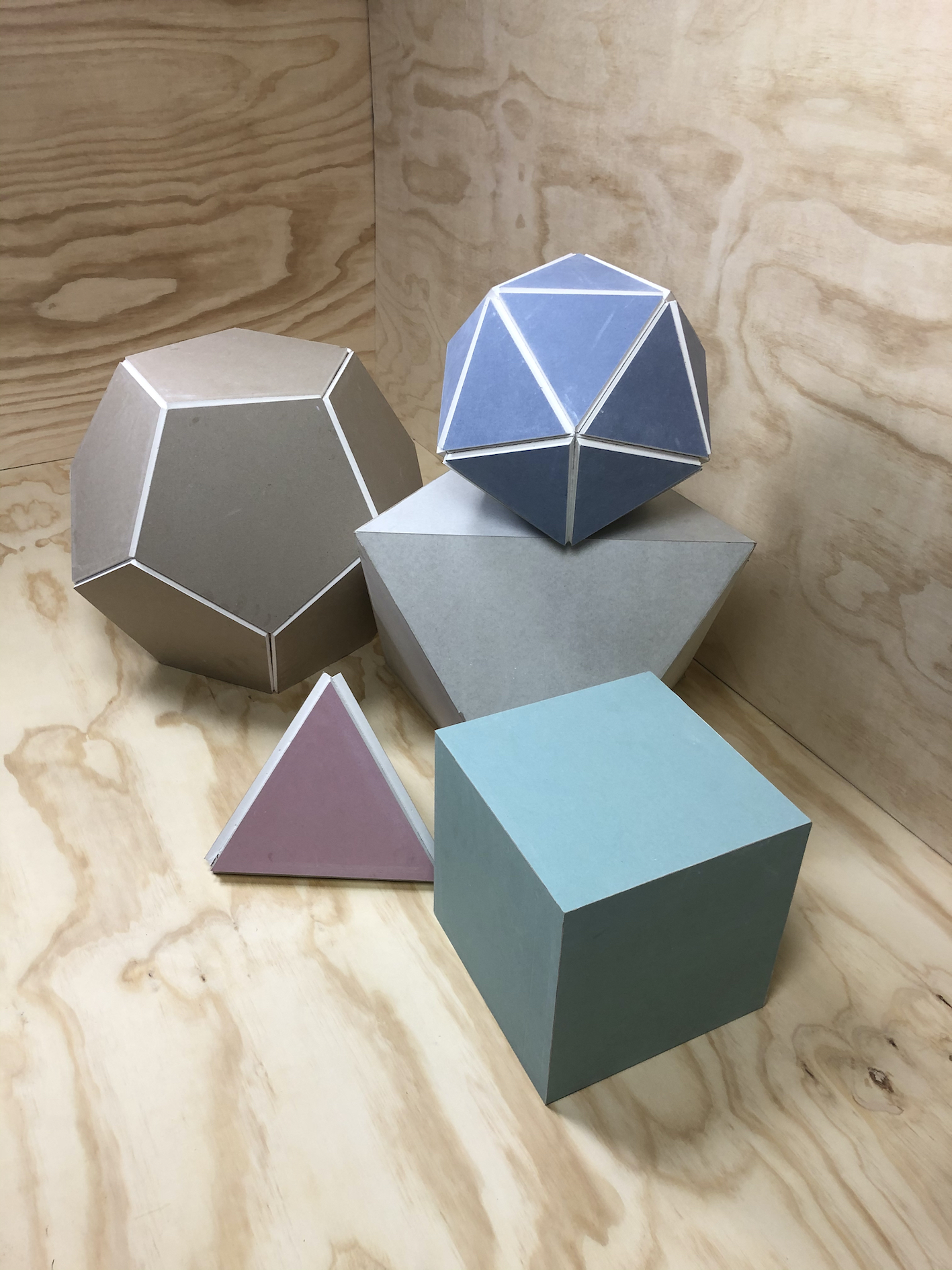
Plasterboard Maquettes for the Five Platonic Solids (2020) - Thought by Plato to be the elemental building blocks of our universe, the Platonic solids are a series of five three-dimensional shapes defined by unalterable mathematical relationships. Created in the first coronavirus lockdown of 2020, these sculptures illustrate the stability that mathematics represents in the face of precarious and mercurial notions of time, life, and work. Despite shifting realities, the Platonic solids remain constant, unchangeable, and irrefutable. Expressing both solidity and fragility, each 'plaster cast' was created from commercial plasterboard – a more literal building block in the contemporary world.
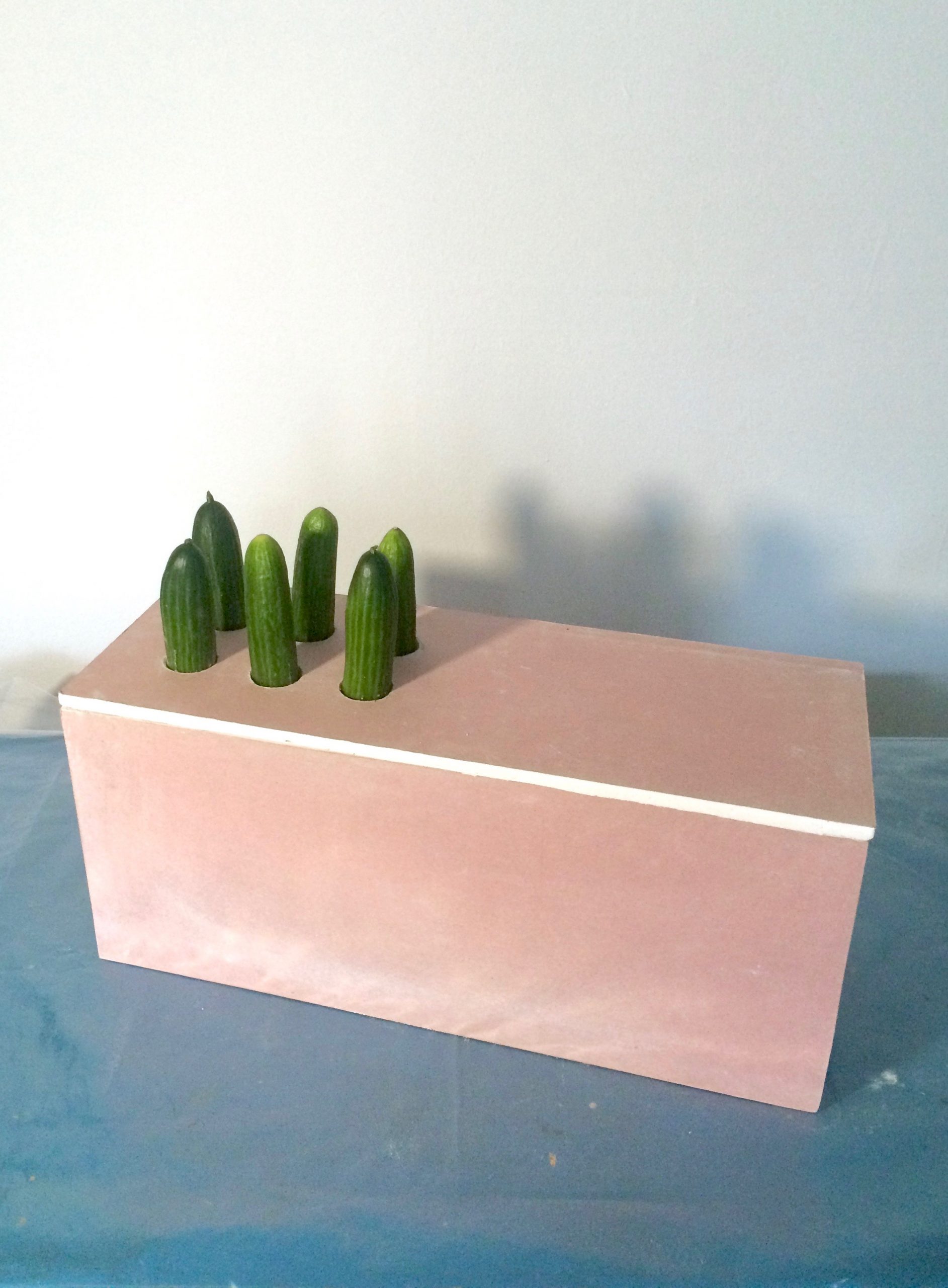
Plaster Casts (2017-present) - This ongoing project is a reaction to the resurgent popularity of marble as a contemporary sculptural material. The accessibility of antique marble statuary increased with comparably cheap replicas cast in plaster, and this series likewise began by translating contemporary sculptures in sheet marble into 'casts' made of plasterboard. This photograph shows a reworking of a sculpture by Kaspar Bosmans, itself inspired by Paul Thek. Bosmans' original work is a small, boxy sculpture of mitred marble slabs with a drawing of a fox on the sides and six eggs projecting from the top. Its playfully irreverent transliteration into pink plasterboard (with projecting cucumbers) negates any intrinsic material value, creating a new and unique sculptural object.
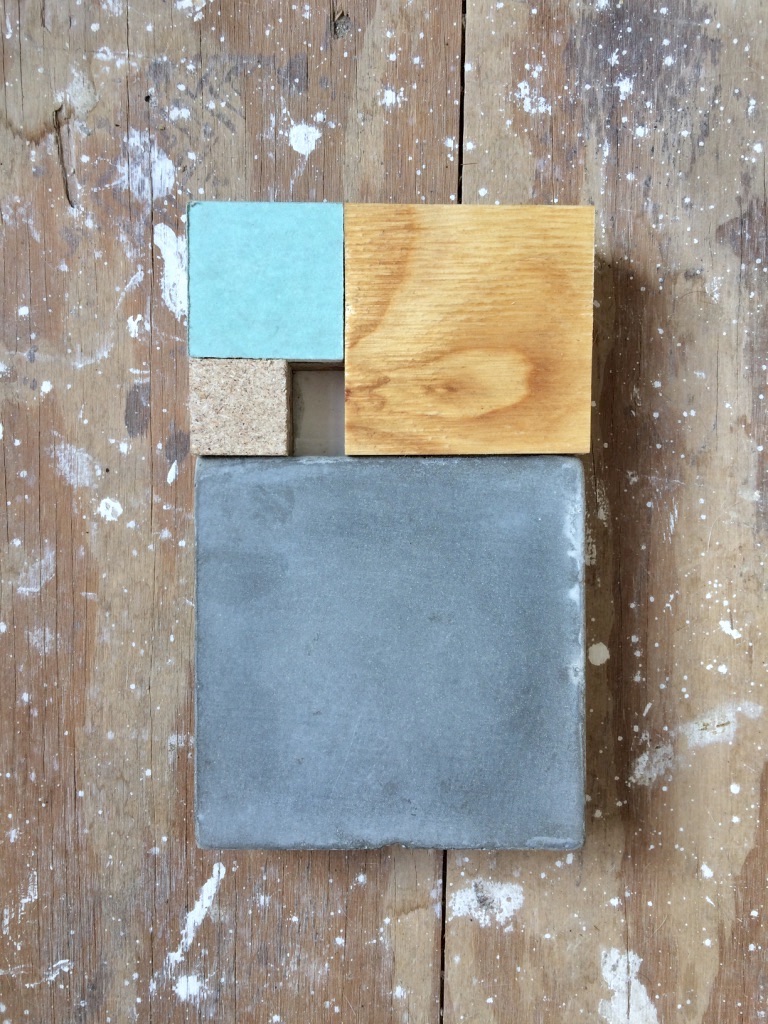
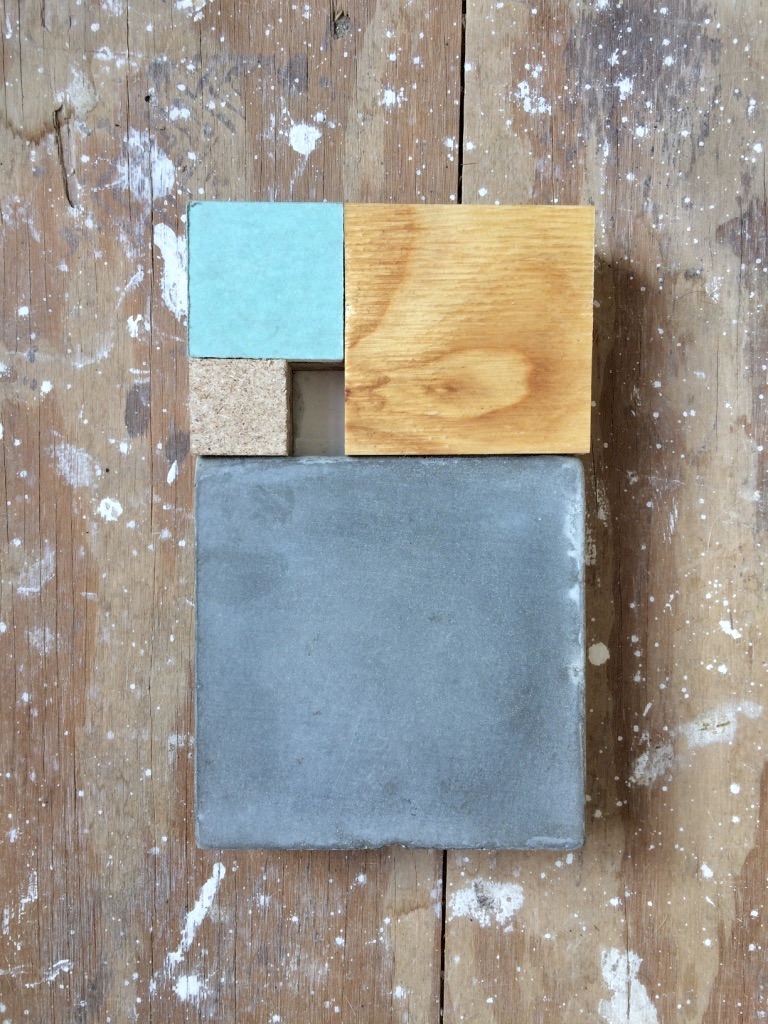
Phi (2017) - Created for a charity exhibition of A5-sized works, this sculpture is a translation of theoretical mathematics into physical form. The Greek letter F – transliterated as phi – symbolises the golden section, the ratio of 1:6180 that creates visual harmony throughout art and nature. This mathematical principle creates a series of tessellating squares that catalog four of the key materials from the last four years of sculptural practice – chipboard, plasterboard, plywood, and cement. This artwork was part of the One Size Fits All charity exhibition organized by Arts at the Old Fire Station, Oxford, 2017. For this show, artists were invited to exhibit and sell an A5 artwork to fund collaborations with the arts centre and Crisis, its partner charity working with homeless and vulnerably housed adults.
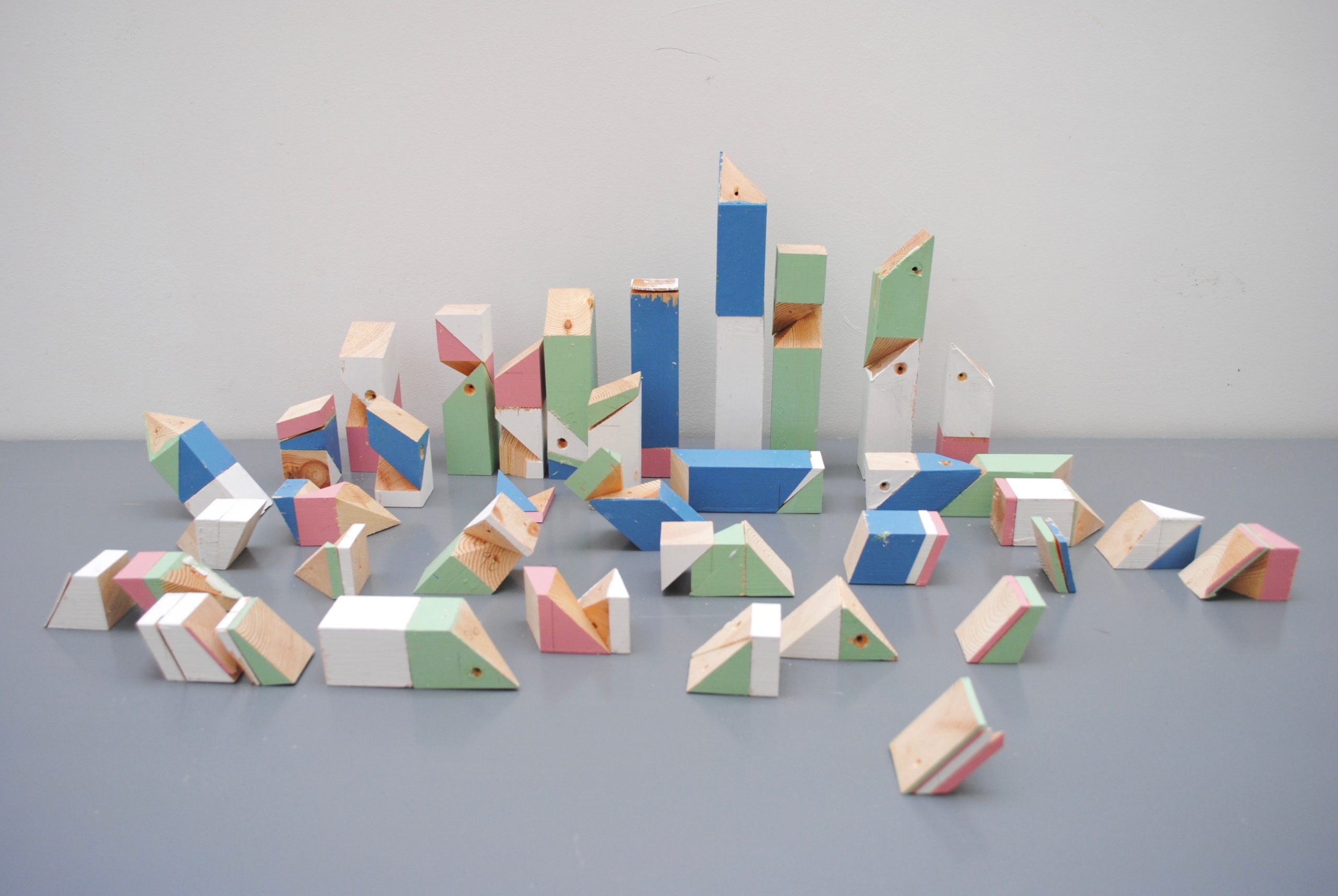
Two By Two Twice (2015-16) - This studio project utilized and consolidated scrap wood left over from the HUE sculpture series, part of the last exhibition before the artist relocated from Oxford, UK to Rotterdam, the Netherlands in March 2016. These objects were progressively reconfigured and photographed before being cut down again and again to form new constellations until all that remained was dust and documentation. More information on the HUE sculptures and other projects undertaken before relocating to the Netherlands can be found at www.jackeden.art

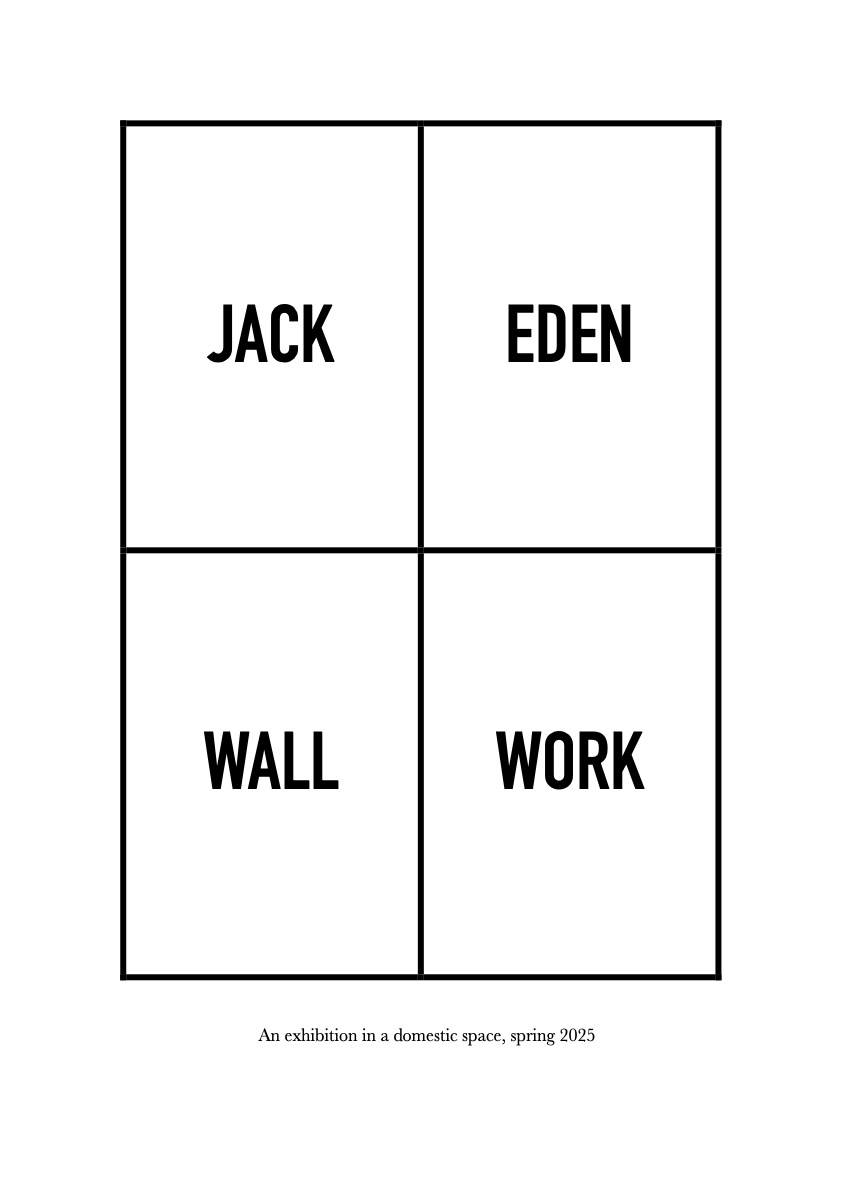
Jack Eden Wall Work

Datum:
Locatie: Private residence

A sculptor's exhibition of wall-based work for a domestic space curated by London-based curator Matt Retallick
https://jackeden.art/wall-work

Platforms Projects art fair

Datum:
Locatie: Kapnergostasio
In samenwerking met: Tupajumi Foundation

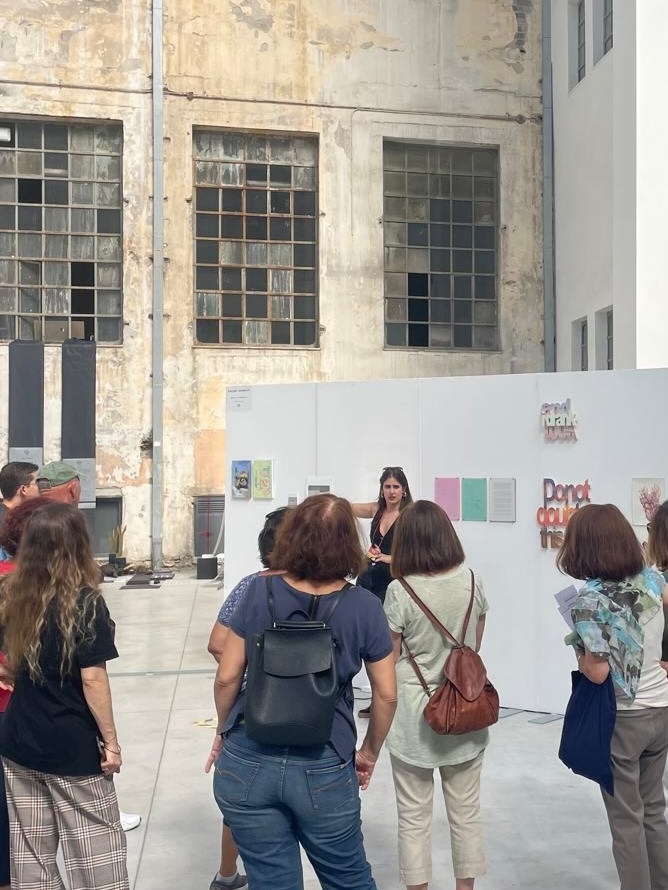
Platforms Project is an international exhibition of the independent art scene presented every year since 2013. The objective of Platforms Project is to map artistic action as it is produced in the context of collective initiatives by artists who join forces in seeking answers to artistic questions by creating the so-called platforms.
https://platformsproject.com/

Project Raamwerk

Datum:
Locatie: NE Studios

In autumn 2021, 16 guest artists and 11 resident artists at NE Studios displayed artworks in the studio windows as part of a 24-hour public exhibition. For this, I exhibited my Platonic solids photo series (2021) alongside a chalkboard text panel.
https://www.nestudios.nl/kunstenaar/jack-eden/

Publieke Werken

Datum:
Locatie: Maastunnel

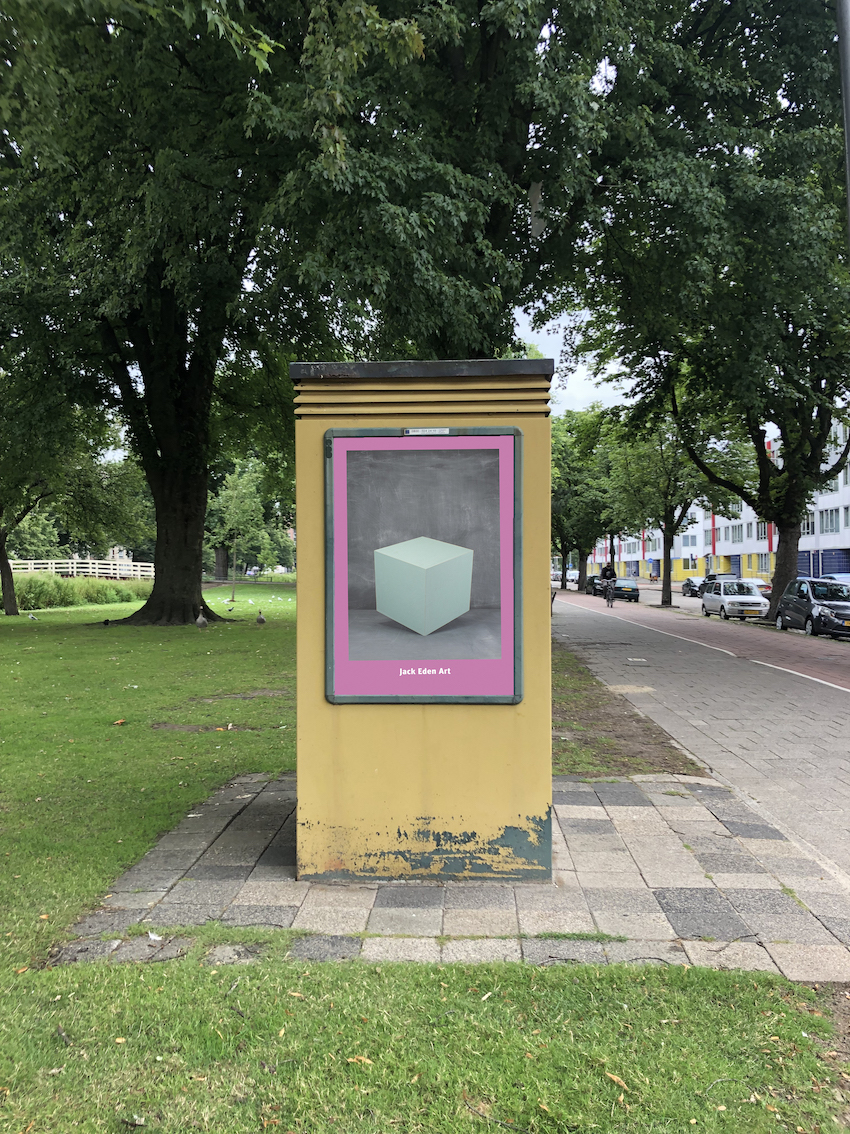
As part of Publieke Werken, a public poster exhibition, my cube sculpture from the series Plasterboard Maquettes for the Five Platonic Solids (2020) was shown on advertising boards around Rotterdam. Tilted forward on its axis toward the viewer and set against the background of the chalkboard used to calculate its volume, the poster was bordered in a bright fuchsia pink and exhibited in the Maastunnel and around the city.
https://publiekewerkenrotterdam.nl/

One Size Fits All

Datum:
Locatie: Arts at the Old Fire Station

This exhibition invited artists to exhibit and sell an A5 artwork to fund collaborations between an arts centre and Crisis, a charity working with homeless and vulnerably housed adults. For this, I created Phi (2017), a sculptural translation of the golden section, sold on the opening night. See also https://jackedenart.co.uk/phi

https://oldfirestation.org.uk/exhibitions/one-size-fits-all/
Deze kunstenaar heeft nog geen toekenningen.