Katayun

zine , textiel , tekenen , schilderen , riso-print , residency , performance , omgeving , LHBTIQ+ , Educatie , Diaspora , Dekolonisatie , Community , Archieven

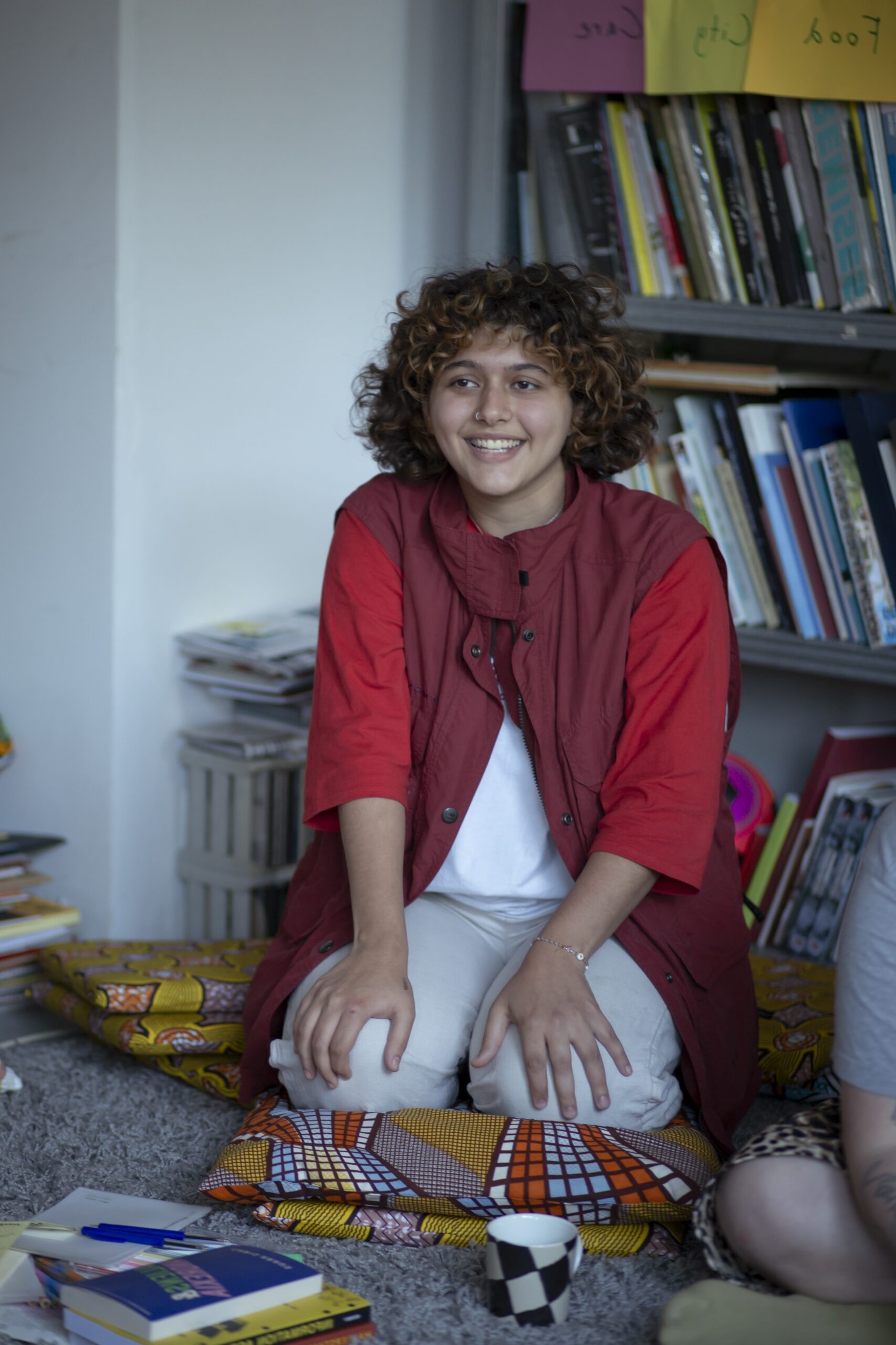
I am a drawer, mixed-media artist and community facilitator from Mumbai, India, now based in Rotterdam, the Netherlands. My work revolves around bringing people together to create, learn, and explore together. I am is passionate about education and keen on initiatives that merge art with learning and community. I work collectively within SPIN collective exploring themes of publishing, gardening and collective care.
SPIN collective
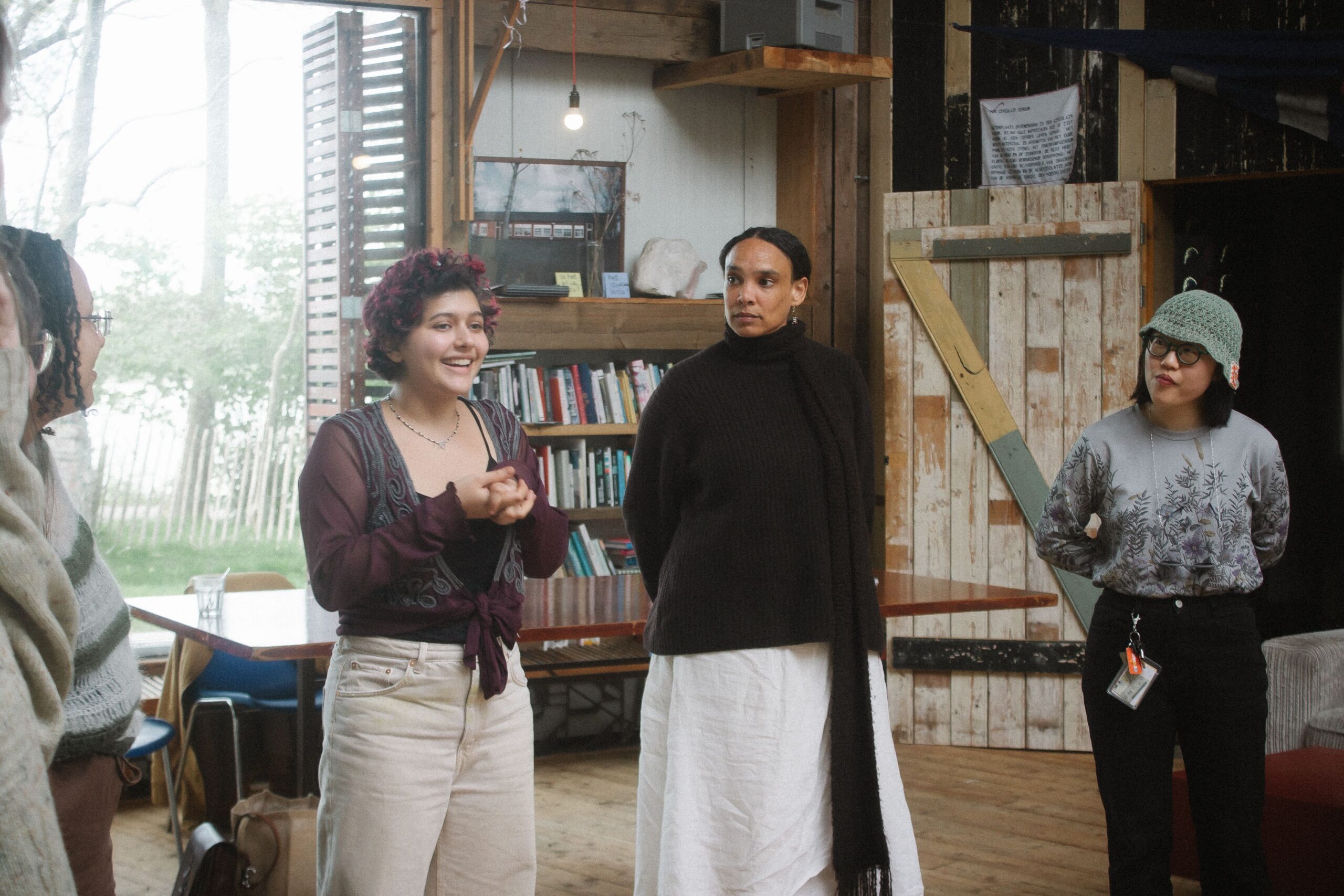
SPIN collective - SPIN is an artist and social justice collective engaged in community building and with a passion for self-publishing constituted by Juliette Douet, Katayun Taraporevala, Carla Arcos Mathon, Julia Wilhelm and an extensive ecosystem of collaborators, groups, and spaces. We focus on collective study as a liberating practice for building community through sharing resources, skills, materials, and knowledge. SPIN explores autonomous ways of being through publishing, gardening, archiving, organizing and learning together. SPIN began as a student-organized collective based in Rotterdam from the Willem de Kooning Art Academy (WdKA) in 2019, the collective worked on creating an alternative curriculum, filling gaps in the educational program. Now, after moving out of the university, SPIN takes care of a garden in the Zuiderpark, Rotterdam, the Learning Grounds Garden. This is the home base for our research.
Programming and Producing at Learning Together for a Shared and Just City,  Afrikaanderwijk Coopera
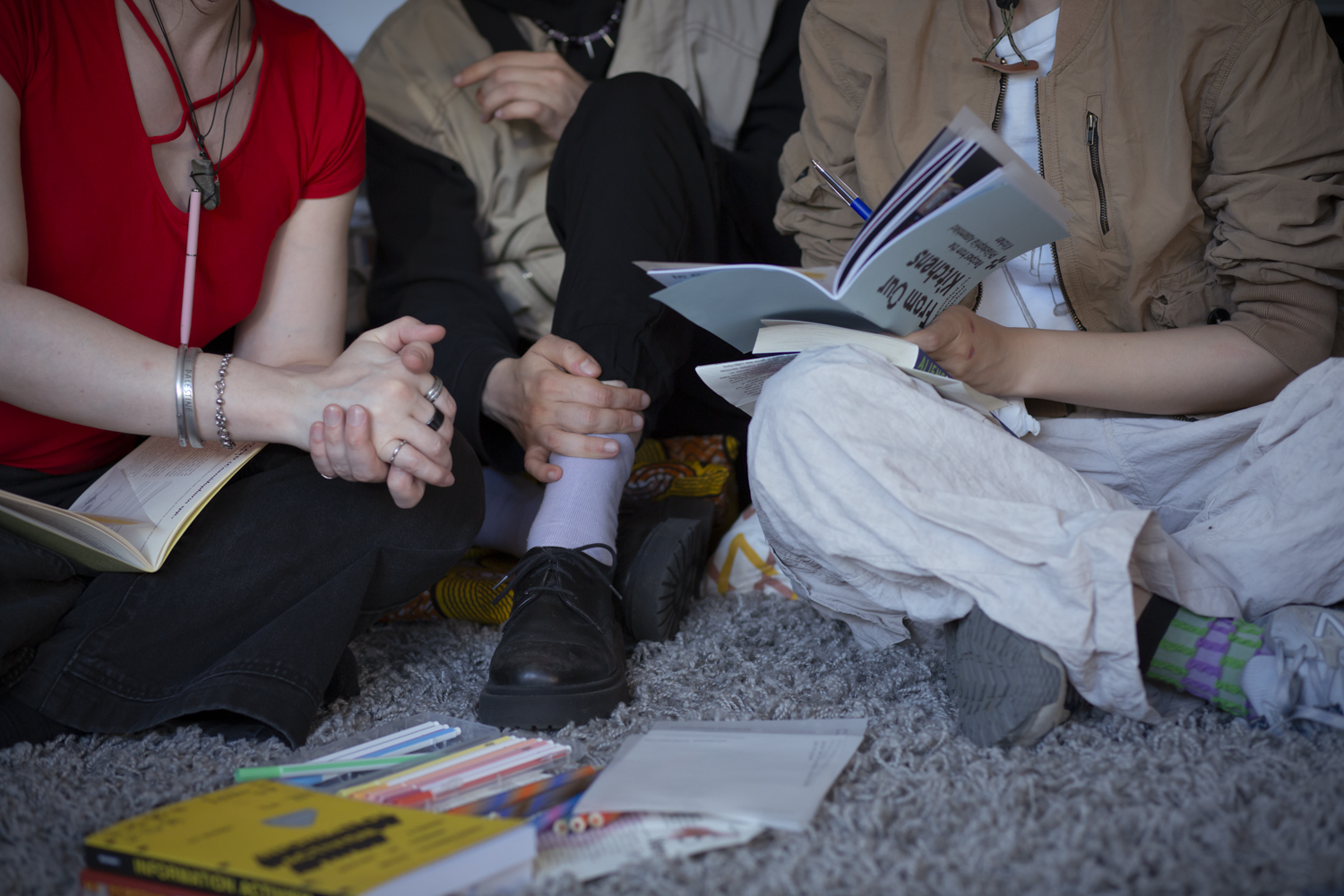
Programming and Producing at Learning Together for a Shared and Just City, Afrikaanderwijk Coopera - Reading Room of the Future #01 was an intimate, small-scale gathering hosted at the Social Practice Library & Archive in Rotterdam, exploring queer approaches to archiving, knowledge transmission, and care. I programmed the event together with Senka Milutinović, working closely with Chaeyoung Kim and Masha Zotova. The session invited participants to engage with forms of queer knowledge that circulate through bodies, food, gestures, and lived experience, rather than through formal or extractive archival methods. Drawing loosely on Jack Halberstam’s concept of scavenger methodology, the gathering treated the archive as a relational space, one to converse with, respond to, and gently alter. Through shared activities, facilitated exchanges with the archive, and communal food, participants collectively explored how queer stories might “stain” the archive and expand what is allowed to be remembered.
queer migrants eating
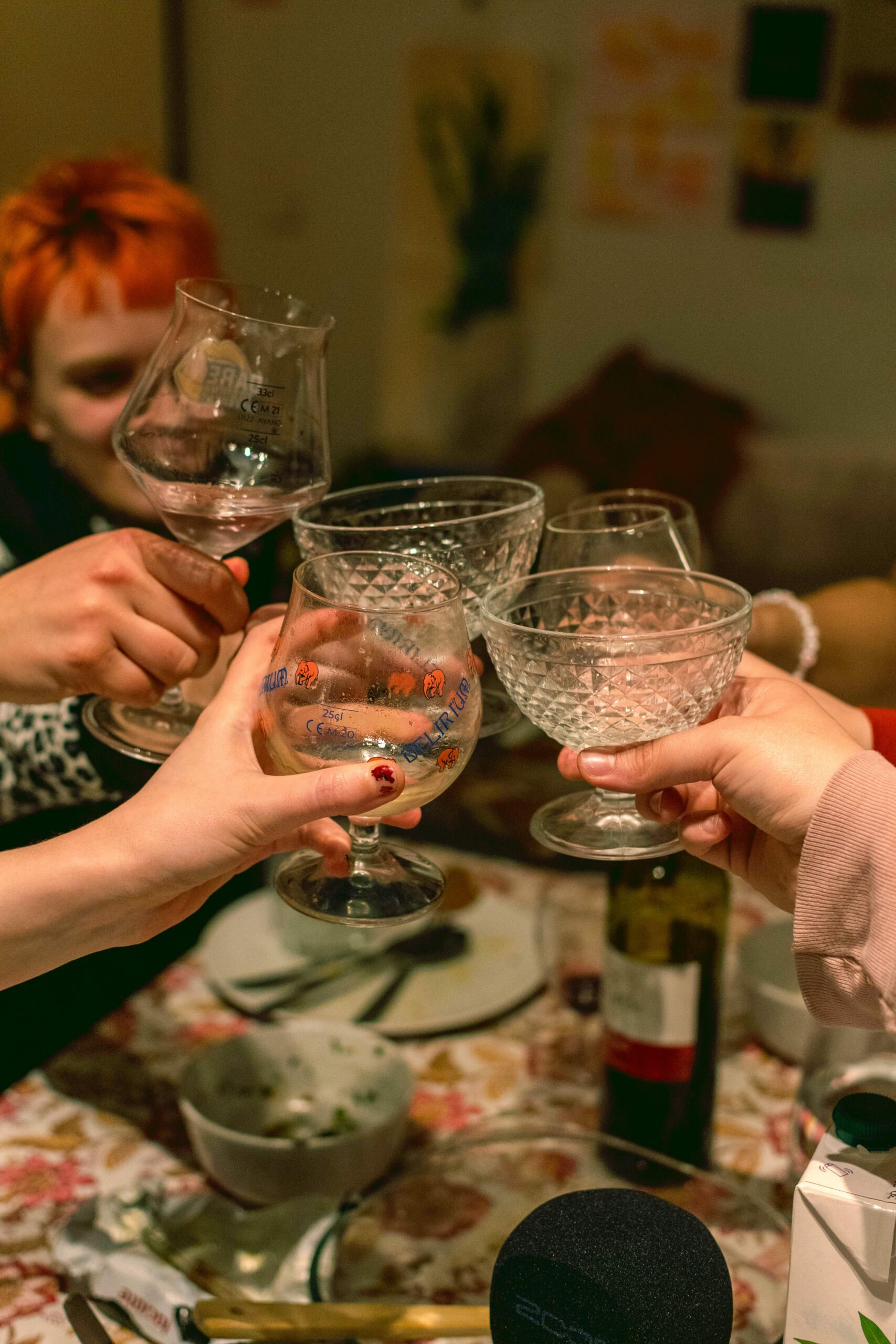
queer migrants eating - I initiated and organized more than ten community dinners for and with queer migrants in and around Rotterdam. The project emerged from a lack of accessible, affirming spaces for queer migrants to gather and build community. Through hosting public dinners, the project uses food as a tool for care, hospitality, and belonging. The gatherings functioned as spaces to explore the idea of ​​queering food, from collaborative jam-making sessions and cooking with unfamiliar vegetables to sharing meals shaped by participants' diverse cultural and queer migrant identities. Beyond the meals themselves, the dinners created moments of reciprocity and connection, where hosting was shared, friendships formed, and strangers became chosen family. The project asks how food can reframe relationships between identity, migration, and belonging, while demonstrating the power of collective hosting as a community practice.
Queer Migrant Tablecloths
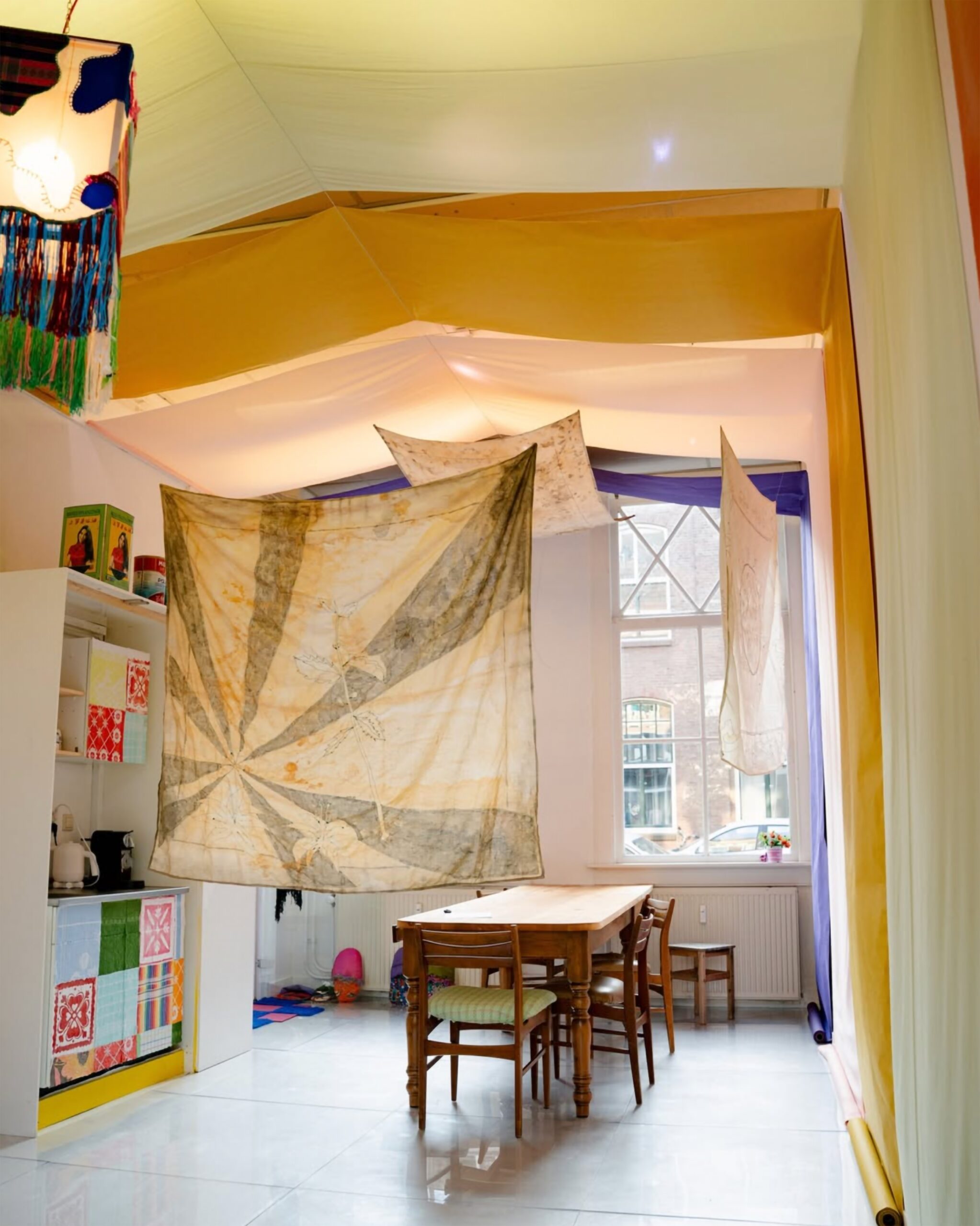
queer migrants' tablecloths - The queer migrant tablecloths are a series of naturally dyed unique tablecloths I am designing and making as gifts for the participants of the queer migrant dinners. Each tablecloth is imbued with gratitude for those who shared their stories, laughter, and support during these gatherings. It is a token of appreciation, a tangible expression of thanks to each individual who contributed to the warmth and solidarity of our shared space. As I continue to weave together these conversations and connections, each subsequent tablecloth will serve as a testament to the power of food in belonging and togetherness within our diverse community of queer migrants. The tablecloths are occasionally shown in exhibitions as a way of getting funds to do more dinners.
Programming and Producing at Learning Together for a Shared and Just City,  Afrikaanderwijk Cooperat
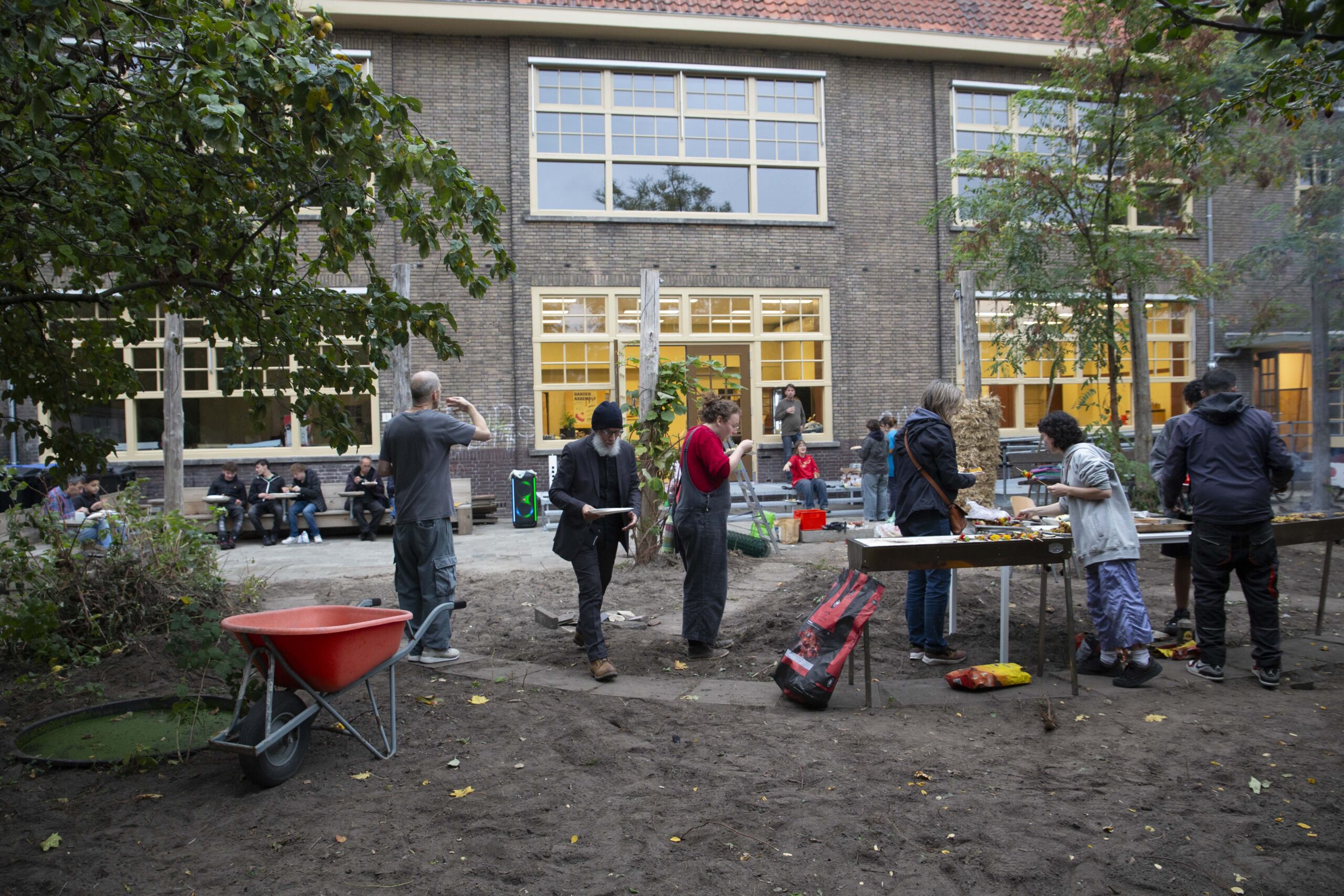
Programming and Producing at Learning Together for a Shared and Just City, Afrikaanderwijk Cooperat - The Garden Assembly was a two-day community event at Cultuur & Campus Putselaan in Rotterdam, developed as part of the Studio Programme Collective Learning for a Shared and Just City by the Afrikaanderwijk Coöperatie. I initiated, programmed, and produced the event, inviting SPIN as the hosting collective. As a core member of SPIN, I carried out most of the curatorial and organisational work, shaping the programme around gardening as a collective practice of care, learning, and neighbourhood engagement. The first day was an invitation-only assembly for neighbourhood gardeners, focused on knowledge exchange and shared challenges. The second day opened to the public with workshops, shared food, children’s activities, and a film screening, using the garden as a site for collective learning and community building.
Maardewân, A Study Of A Shared Meal, u? le guess who festival, 2024
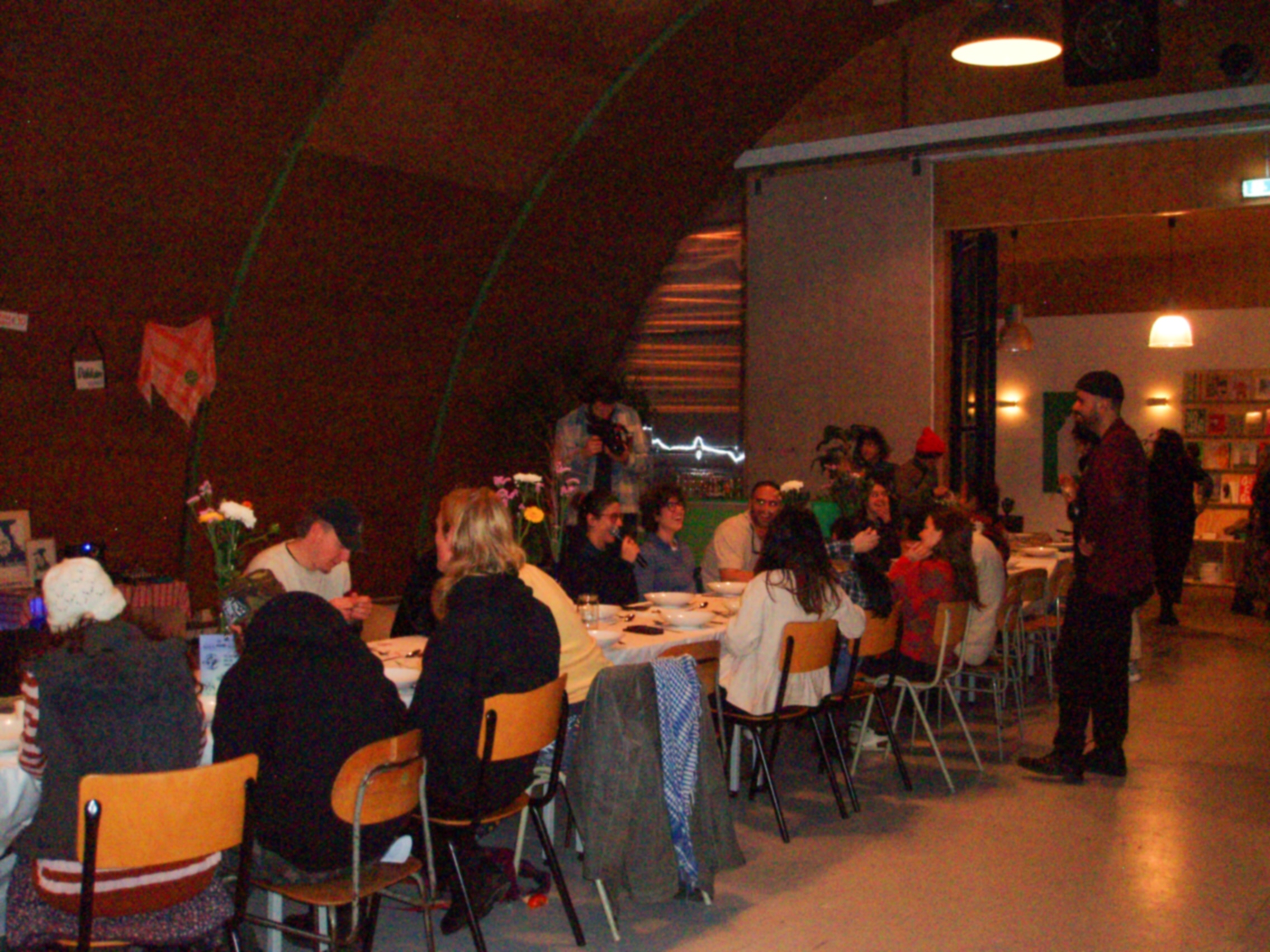
Maardewân, A Study Of A Shared Meal, u? le guess who festival, 2024 - A Study of a Shared Meal was one of the events taken place at the 2024 U? Festival in Utrecht. The gathering was a manifestation of the collective Maardewân, consisting of artists and community members, Başak Kırıcı, Cem Altınöz, Dafni Melidou, Dicle Gülşahin, Ezgi Aktuğ, Katayun Taraporevala, Kıvanç Sert, Metincan Güzel, Omid Kheirabadi, Tuba Kılıç. Together we aimed to transform the act of having a meal into a collaborative, participatory experience. Inspired by Harney and Moten’s concept of “study” as collective practice, the event explored commensality, sharing food, space, time, and labour, through improvised and artistic activities. The program invited everyone to contribute, whether by preparing food, setting the table, engaging in conversation, or simply enjoying the atmosphere. The resulting meal embodied mutual support, collective learning, and resourcefulness, reflecting the resilience of creative migrants navigating new environments.
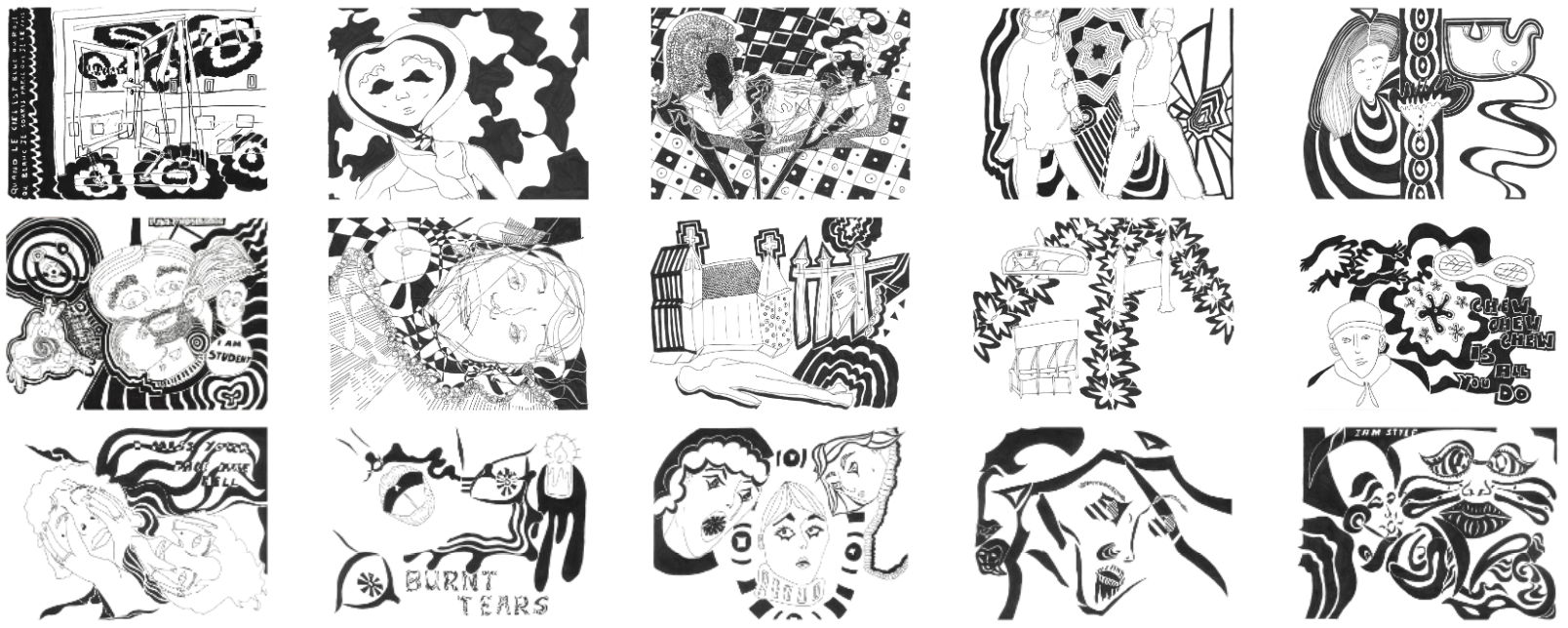
places that live in the mind, 19 editions, 2021-2023, Ink on Paper, 210 x 297 mm
places that live in the mind, 19 editions, 2021-2023, Ink on Paper, 210 x 297 mm - “places that live in the mind” is a project that found its beginnings a long time ago in 2020. The idea of this project was to use bold shapes to tell a story, particularly to talk about social issues. After creating two or three drawings, I dropped the project. I felt that I was forcing a story into every drawing. The project reignited in August 2021 with the drawing Faces on Train. Over the last year, these drawings developed into a sort of journal, documenting parts of my day and the feelings I experienced. Each drawing has a specific memory in my mind. It has now become a sort of ritual to sit with my friends and family and talk to them about the drawings they like, sharing with them where I was that day and how I felt.
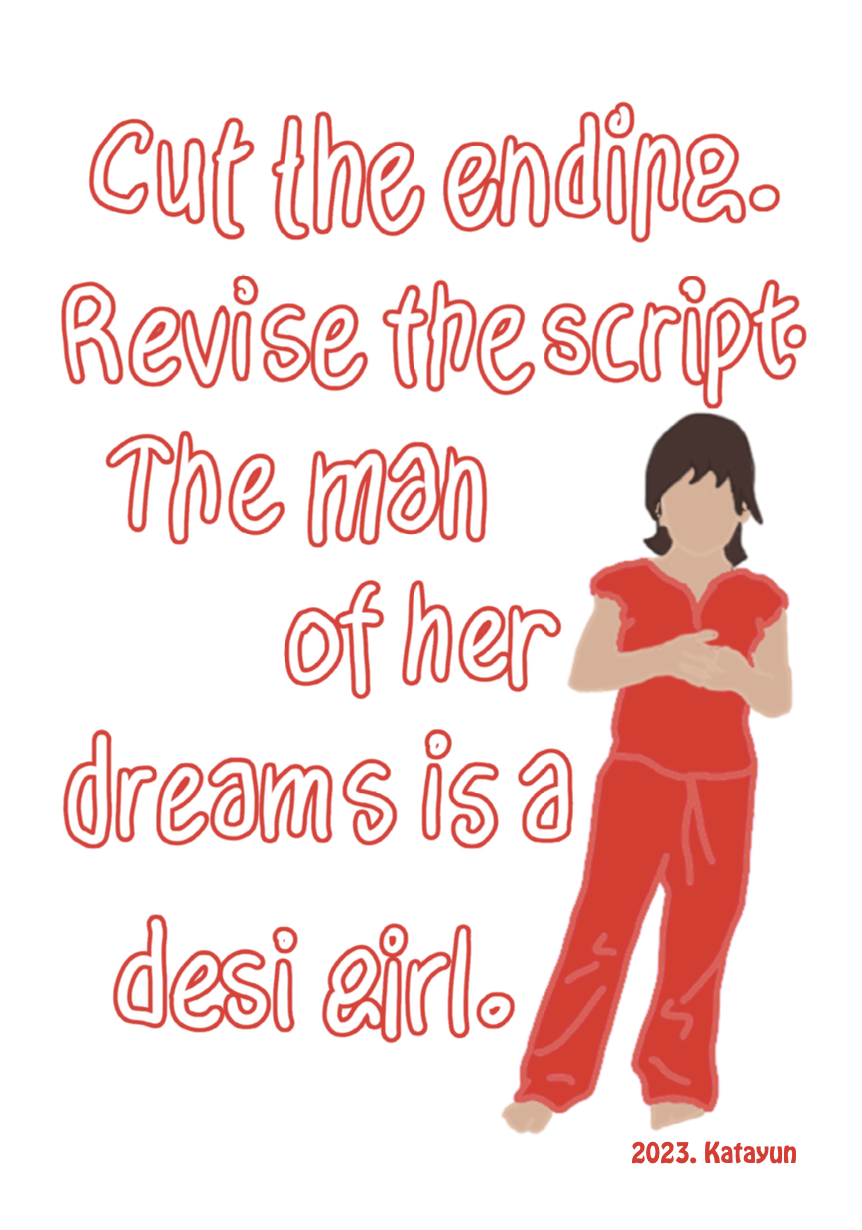
Cut the ending Revise the script, The man of her dreams is a desi girl, 2023, Zine, 148 x 210 mm
Cut the ending Revise the script, The man of her dreams is a desi girl, 2023, Zine, 148 x 210 mm - This zine is the culmination of a research project about the assumption I grew up with that queerness was not for me, an Indian girl, because it was only for people from the West. It includes a letter addressed to my homophobic grandmother, a fictional roundtable that explores views of queerness by different people in India and the beginning of my queer Indian archive. The zine is accompanied by a video essay in which I read my letter and wear a sari for the first time as a proud Indian gay woman.

Public Engagement Trajectory, MaMa Rotterdam

Datum:
In samenwerking met: MaMa Rotterdam

As part of MaMA’s Public Engagement team I develop research-led approaches to accessibility and inclusive programming in contemporary art spaces. My work focuses on threshold visitor experiences, contributing to the programming of Kunstavond and exploring how audiences encounter and enter the institution. I am also part of MaMA’s educational learning trajectory and contributed to the development of 100% Hedendaags, MaMA’s educational course, supporting more accessible and community-centred work.

Deze kunstenaar heeft nog geen toekenningen.