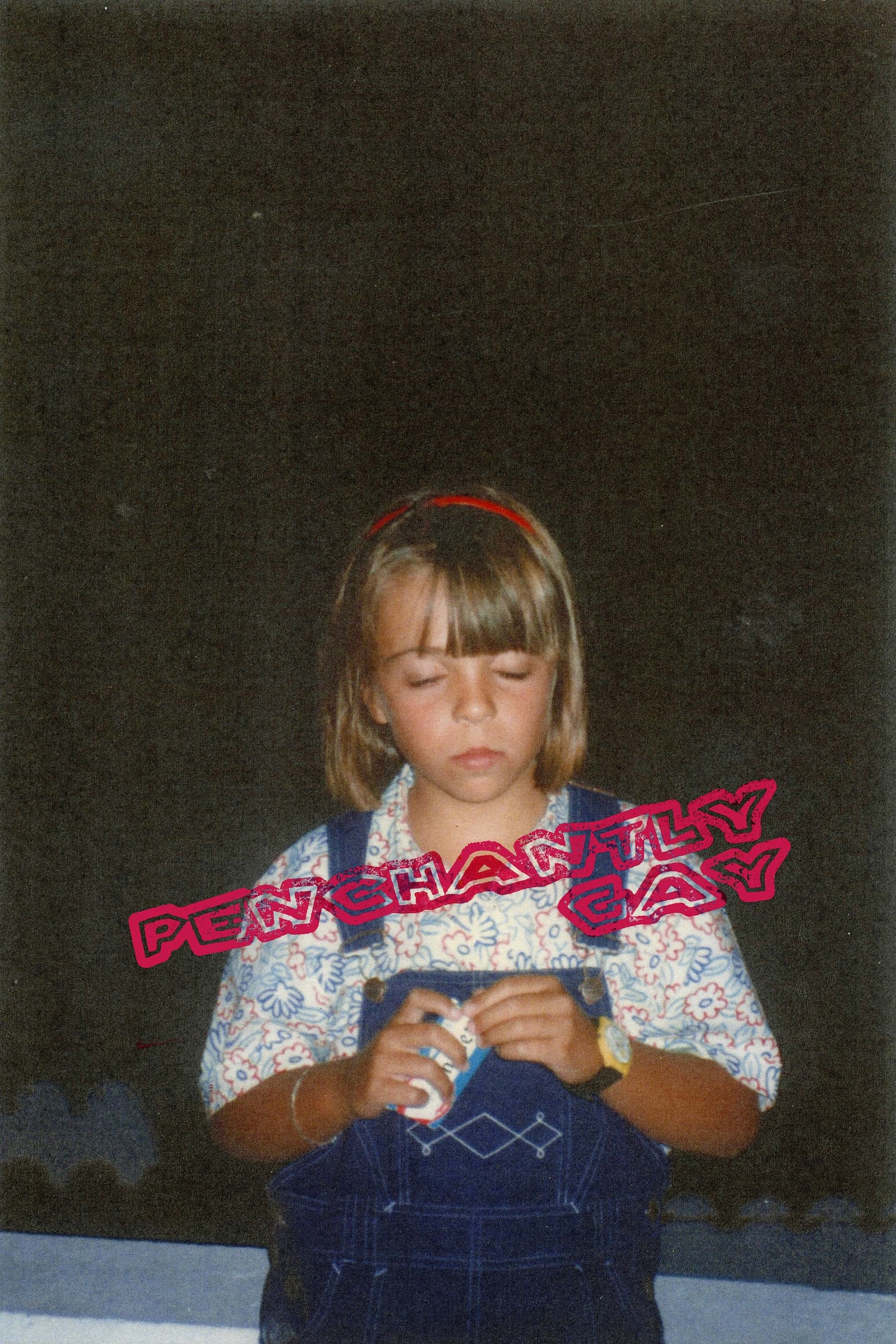
Mariana Aboim

publieke ruimte, Gender, Autobiografisch, Artistiek onderzoek

Mariana’s practice-led research investigates the affective and embodied materialisations of long-
term endurance of cisheteronormative structures. Mariana uses a recorded [spoken] word
component that exercises speculative non-fiction as genre, articulating what she calls material
intangibilities to challenge the tendentious ways in which the corroborability of experiences is still
dominated by western centred frameworks. Mariana conducts her investigation through an
assemblic production of moving and still image, deploying methods that allow working with the
viscerality of affect on practice-based approaches to what it can mean to draw theories with fine
art [rather than about fine art]. Mariana further proposes how exploring nonconscious semiotic
affective processes through ‘practice’ reveals paths working towards absent non-hetero futurities
being materialised in the present.
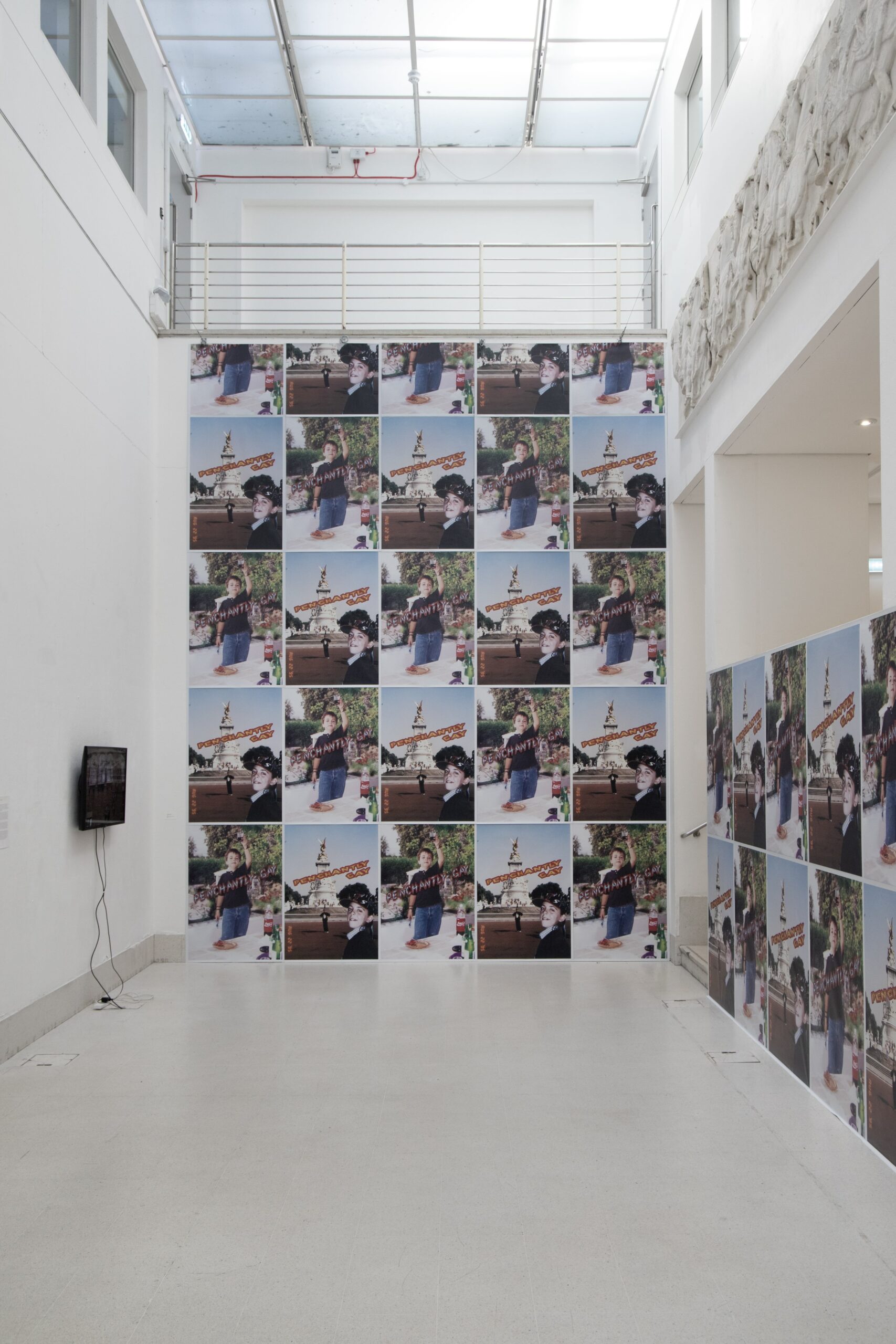
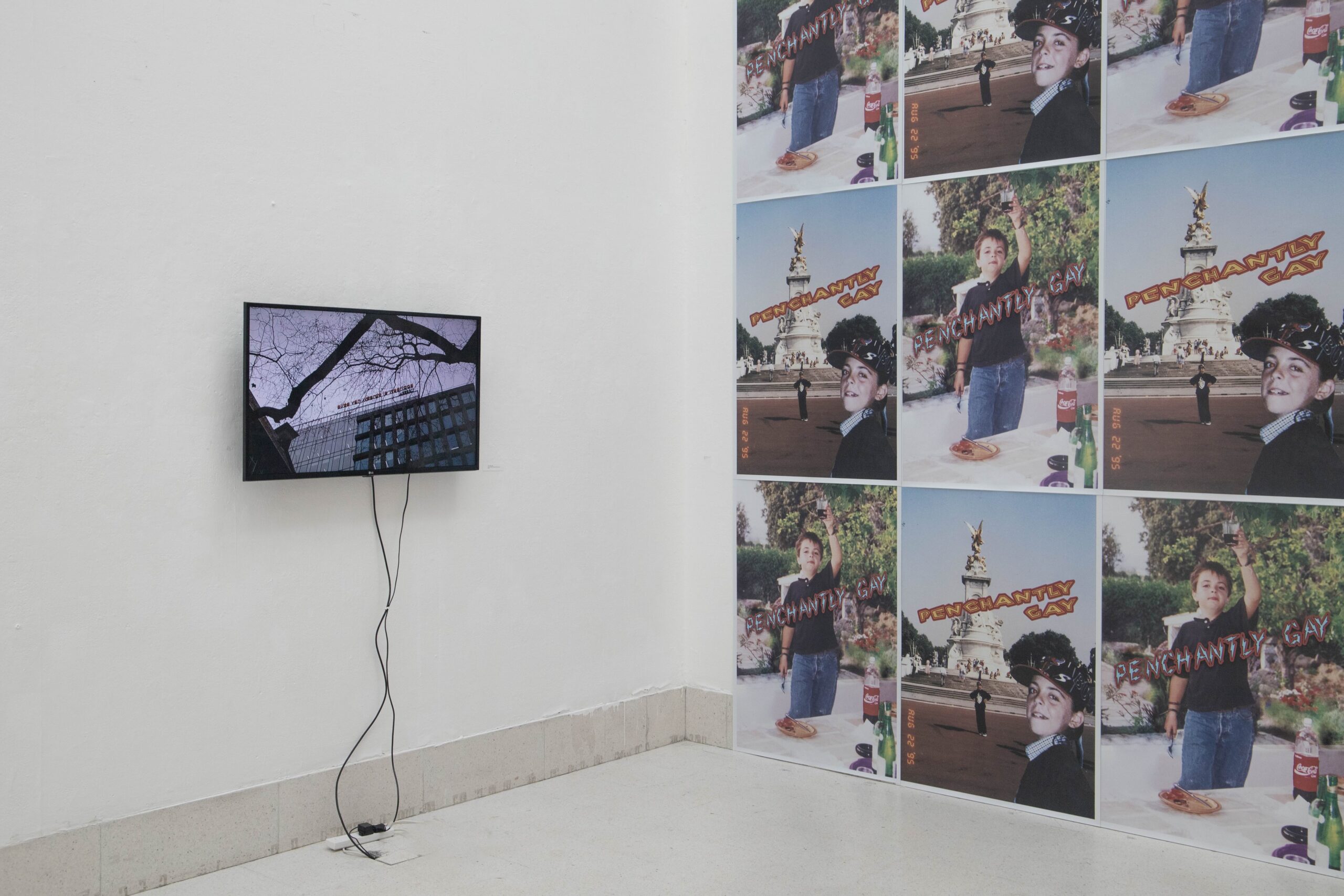
Penchantly gay! London
Material Intangibilities, London, 2024 - Viva exhibition - PhD defense For more see: https://marianaaboim.hotglue.me/PgLondon
Material Intangibilities, London, 2024
Material Intangibilities, London, 2024 - Viva exhibition - PhD defense For more see: https://marianaaboim.hotglue.me/PgLondon
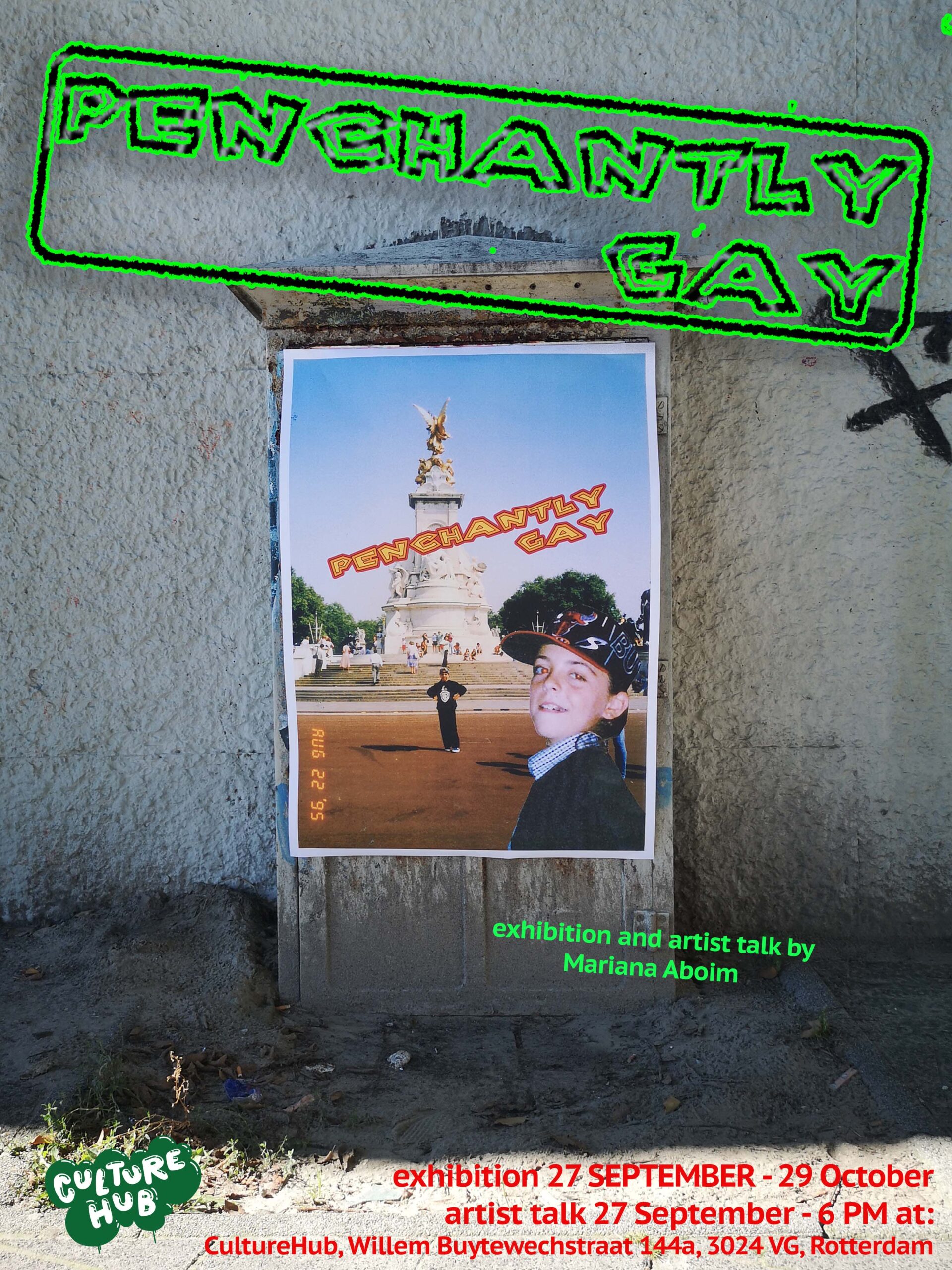
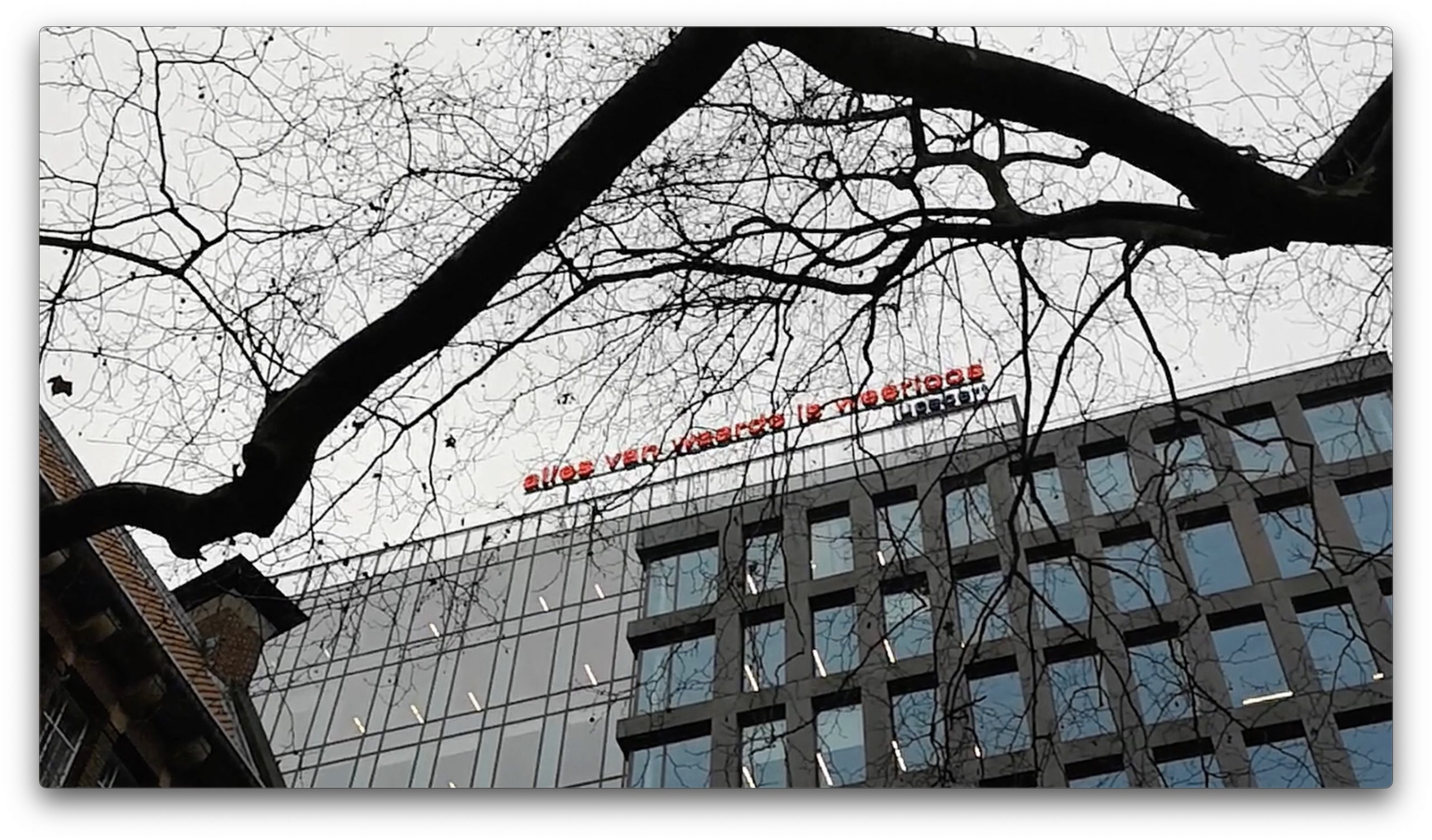
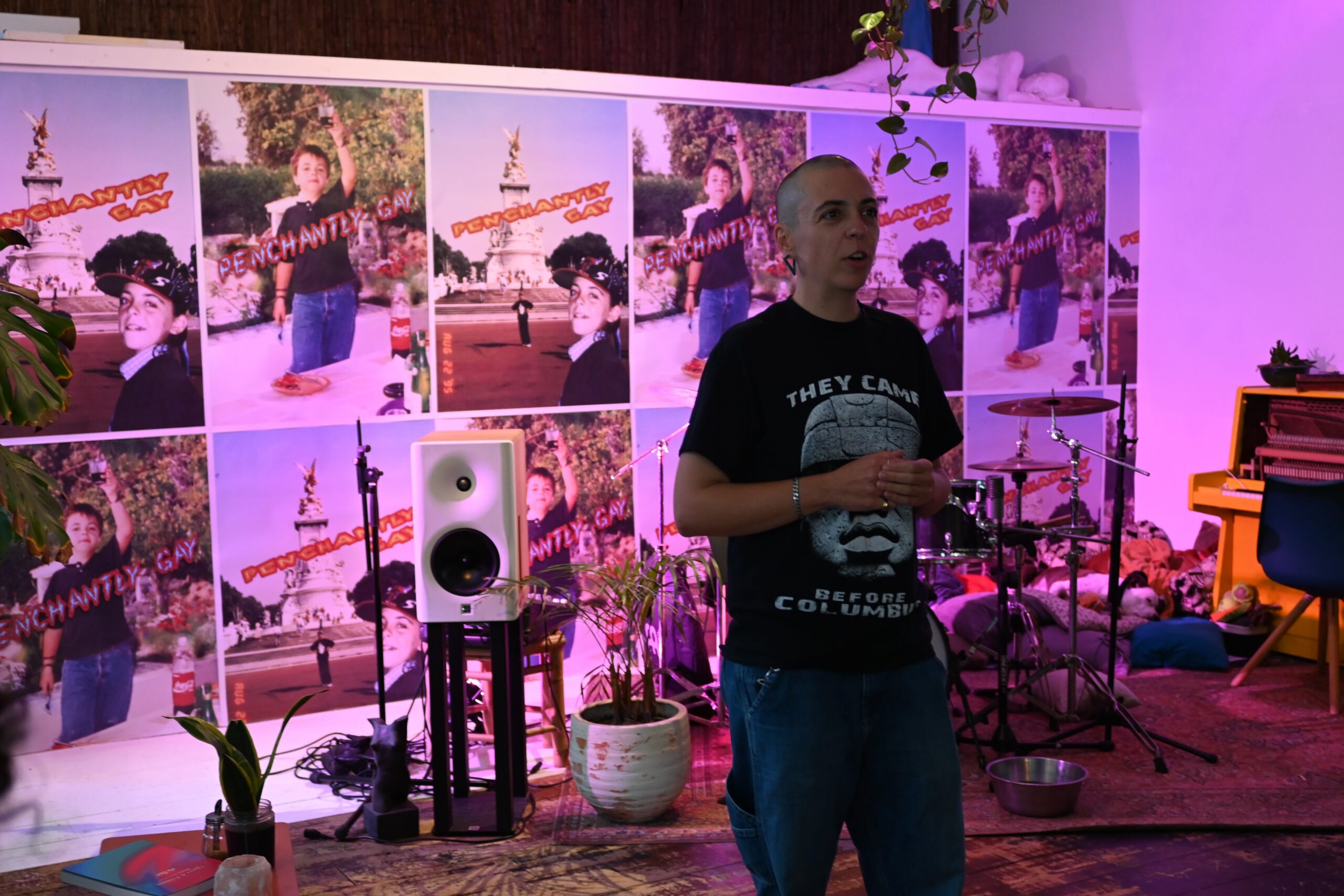
Penchantly gay, Rotterdam, 2023
Penchantly gay, Rotterdam, 2023 - Public talk at CultureHub, September, 2023
Penchantly gay, Rotterdam, 2023
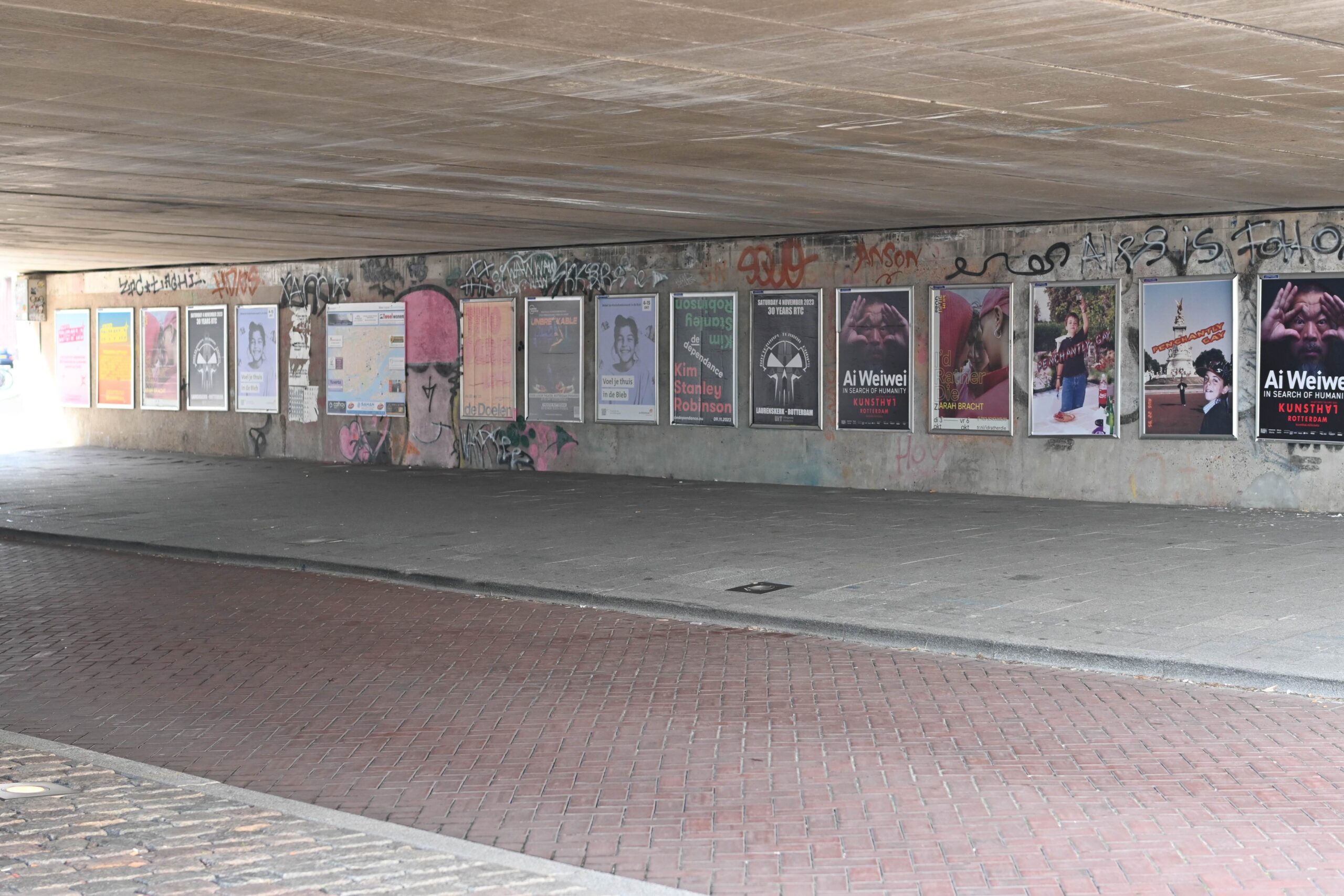
Penchantly gay, Rotterdam, 2023 - Documentation of public intervention. For full documentation please see: https://marianaaboim.hotglue.me/PgRotterdam
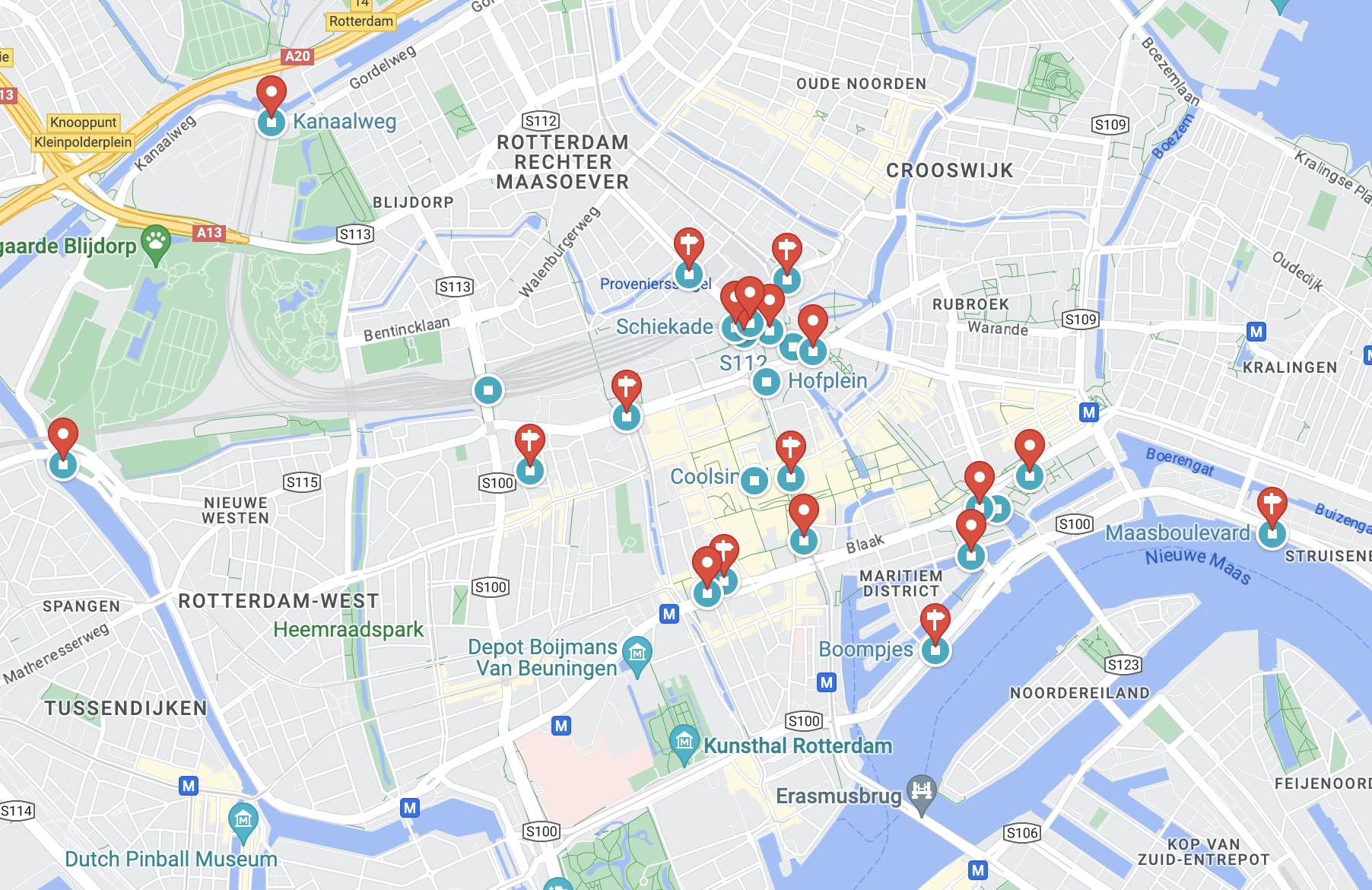
Penchantly gay, poster location - Rotterdam, 2023
Penchantly gay, poster location - Rotterdam, 2023 - For full documentation please see: https://marianaaboim.hotglue.me/PgRotterdam
Penchantly Gay, Rotterdam, 2023
Penchantly gay, Rotterdam, 2023
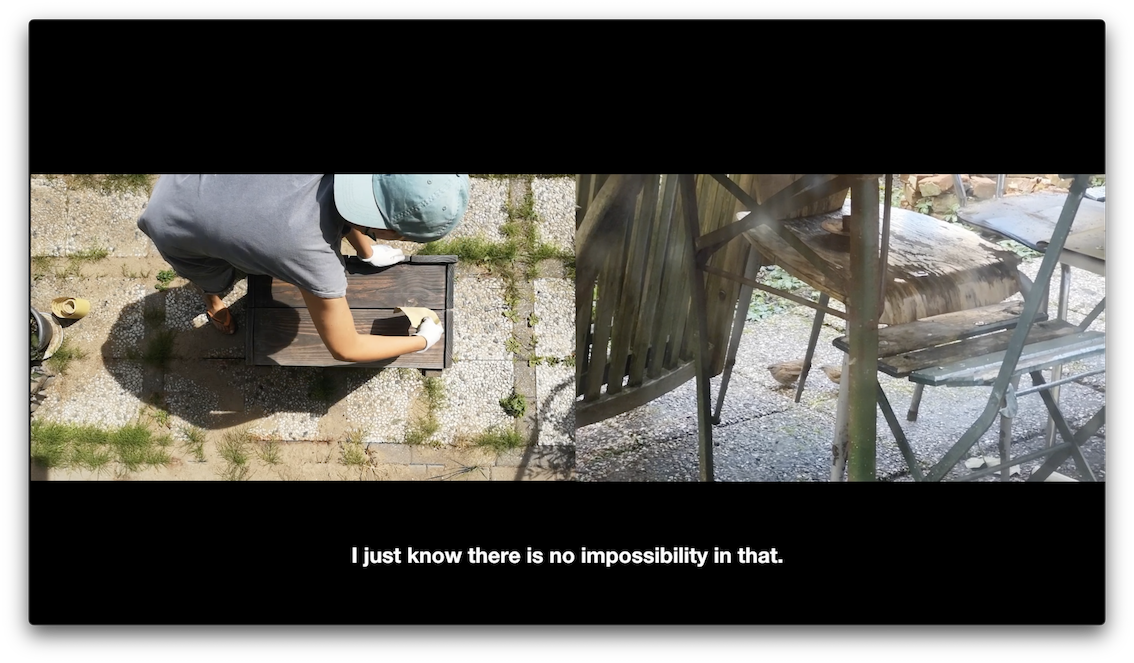
Patterns, video, 15:42, 2023 - Patterns is a two channel video that works through repetitious encounters with white cisheteronormativity. Here, I focus on some of the learned habits of my own body when for-sensing the approach of, and dealing with hostile situations; I point at the way normativity pathologises that which [those whom] do not submit to its standards; and I confront the allegedly ignorant, yet presumptuously condescending attitudes enabling the continuous injury of certain bodies. Insistent stubbornness of white cisheteronormativity opens the wound further, it pinches the muscle knots with heinous insistence, never dissipating, and suggesting threats to anything that might become a challenge to its comfortable ruling. After all, strategies of intimidation are not new... Recovering, is beyond ways to balance injury and repair — resistance to supremacist intentionality is continuous — making thus healing an ongoing process that is part and parcel of surviving normativity. The format of this video retains reuse, reorienting and repurposing in ‘assemblic’ production of moving and still image, and it is through those approaches that I simulate real time confrontations, and reorient the focus point throughout the film. But it is in the positioning, sequence, and rhythm that an almost live tempo of coming in contact with that which catalyses one’s affective response can occur, allowing for the viscerality of affect to be amplified beyond the screen. Patterns further points at the constant expectation to be complicit with, to silently endure, the behaviour of those who perpetuate unequal power relations. These expectations put the responsibility on those who have to endure normality, rather than underlining that learning mechanisms for those inflicting harm are imperative. The offended needs to get used to white and cishetero ignorance, the offender needs to acknowledge their ignorance and not necessarily do anything else [basically it is all a waste of time and energy]. The silent perpetuity of these gestures, what I call propagation of 'form' throughout my research, are ‘small’ utterances, ‘small’ manifestations that lead to very material consequences, and which can easily be traced back to supremacist strategies and intentionalities.
The knots on my back, video, 8:25, 2022 - The knots on my back explores how one’s nonconscious makes meaning through the body by describing the affective process one goes through. I describe what is happening in one’s body when it tenses, creating a narrative by reading descriptions on how the body develops muscle knots. These descriptions can be found in all sorts of health websites, from Mayo Clinic to medical news today; parts of this video were written using information from Harvard Health Publishing.16 I describe these affective and embodied processes while giving focus to the ‘artwork’ displayed on those buildings; I emphasise the consequences, the embodied repercussions of enduring constant confrontations with oppressive structures put in place to sustain governance through white-western heteropatriarchic ideals. To work against these ideals, whether that work entails exposing racist and sexist behaviours passively occurring under institutional eyes, or having the endurance to deal with random exposures of one’s non-normativeness [as if ‘we’ didn’t know], all this work has consequences that are not tangible, not visible, not perceptible at a universal level. Getting back to the state of calmness equates to “I sympathise with you, but...”, and if the injured one does not accept the ‘but’, then there is no agreement, even if that same ‘but’ nullifies, dismisses, and ignores the injured one’s pain.
Where the fuck are you looking at?! video, 0:40, 2021 - Wtfayla allows exploring a tempo that is not possible to explore in writing only. The rhythm affects differently, the expression, the emphasis put in each sentence mirrors the type of situation I might have been in. Can I even say “wtfayla?!” Even though this short piece comes across as a joke, a ‘funny’ work, it is in fact more of a desire. I wish I could say wtfayla more often, but I can’t because the consequences of it might be threatening to me, they might lead to problems ‘bigger’ than having to endure someone else’s ignorance. Wtfayla expresses what Xine Yao calls unfeeling, a refusal to be affected by the certainty with which cisheteronormativity imposes itself upon me. I refuse to be made uncomfortable by normative-ignorant gazes and thus say Where The Fuck Are You Looking At?! — which concurrently amplifies how the possibilities of living beyond these oppressive structures inevitably lead to more equal relationalities. I do this as an exposure of what it entails to endure white heteropatriarchic structures, although as a white person I can only expose white privilege and white ignorance, and not what it entails to experience the white heteropatriarchic efferences of it. Endurance centres the effects of being tired. This particular short film contains much of what I do with/through my practice: it is a space where I am allowed to be tired of explaining — I don’t need to explain, it is a place where I can say ‘fuck you’ in multiple ways, and say take it or leave it in terms of who gets to be offended by what; it is a method through which I can communicate material intangibilities.
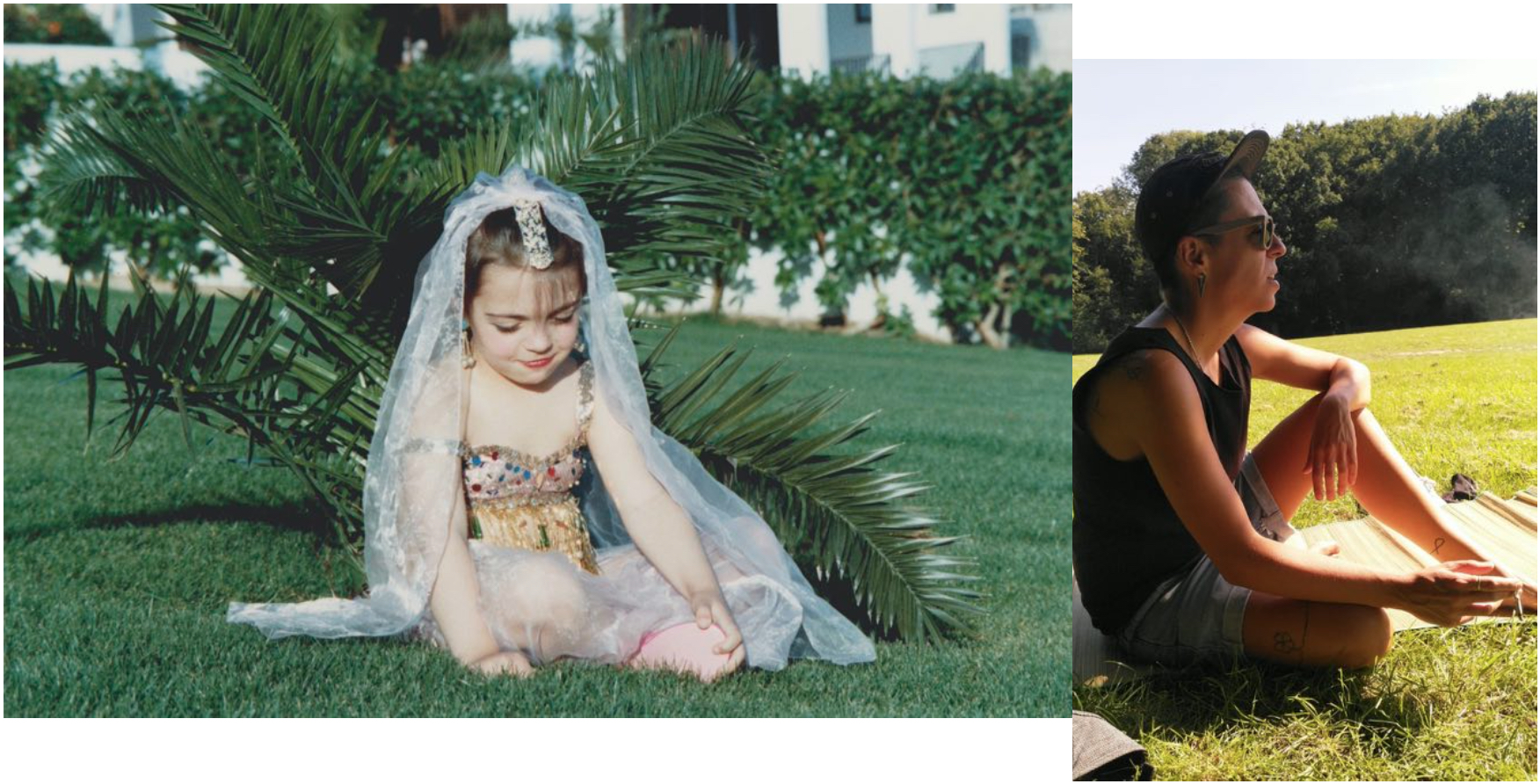
A Faggot Dyke Anthology, video, 13:17, 2021 - A Faggot/Dyke Anthology is a compilation of memories from the age of seven to roughly 35. My concern was to find out when was the moment I first became consciously aware of the way people in my surroundings [strangers] projected their confusion regarding my sex. This was on the 28th of May, 2020. The date is important in order to specify the time required for my methods of composition, processing, accepting, until I could finally understand and share the work. On the 28th of May I was confronted three times with what I embody: my comfort with who I am, and the passer-by[s] ignorance and curiosity towards what I am. On that day I grabbed an A0 page — hardly fitting and thus spilling over my kitchen table, where I chose to write my remembering[s], and I began to cry before the pen touched the [symbolically] large page. I spent the month after trying to piece a puzzle of dates and geographies, clothing and hair cuts, street names and company, in order to be accurate in my composition, and as to reflect what had happened, and when. At the end of July, when I went to Portugal to visit my family, I looked at as many family albums as possible and scanned the images that could help clarifying my potentially tendentious memories — the pictures in the video are from the day when the stories I’m telling took place. It was only by mid September that I typed the A0 page. It was horrifying. The stories were painful to read, they contained too many curse words, and it felt like it was poor quality writing for a ‘PhD artwork’. The editing process was long, the audio took several takes, and the tone changed as Faggot/Dyke gained shape, its first draft was ready in early December 2020, an acceptable to share version was ready mid January 2021, and the final (so far) version was ready by mid March. I thought ten months was too long to make a 13 minute video, but then I realised I am just being conditioned by the same patterns of measurability that I attempt to contest throughout my work. I will point at what this work enabled in terms of method and practice-led theory after describing the works done concurrently throughout the past year. [Reflection: I don’t know what happens in autumn and winter, but in spring and summer people stare more (February 2021)]
Affective Assemblages (research abstract) - Feminist, queer and decolonial practices have been providing critiques to white-western patriarchic knowledge systems and their hindering of social justice (da Silva: 2007, 2016, 2019; Hartman: 2012; Jackson: 2020; Wynter: 2013). Through my practice-led research I build on the concept affective assemblages to rethink how form — the production and reproduction of patterns — travels, spreads, diffuses in efferently multiple and afferently unpredictable ways. I draw on thinking frameworks put forward through investigations on nonconscious cognition (Hayles: 2017, 2019), queer aesthetics (Macharia: 2019; Musser: 2014, 2018), Linguistics (Yao: 2021), and semiotics (Kohn: 2013) to inquire how form is processed, propelled, and absorbed consciously and nonconsciously; to propose how immaterial factors enable agential capacities individually and collectively; and to speculate on how ‘meaning’ is imposed, inflicted, and embodied. In my practice, memory is a time travelling vehicle through which I revisit previous experiences, it is a mediation between consciousness [present] and nonconscious cognition [embodied memory]. Mapping my own embodied memory in tandem with the semiotic processes tied to identity formation, I recognised a similarity in the afference of sensations across moments of protesting, resistance, and confrontations with cisheteronormativities — I have termed the complexity of sensations involved in these moments ‘material intangibilities’. Operating under a fine art methodological framework, I use moving image, archival photographic compositions, and writing to create speculative non-fictional narratives that explore how the immateriality of affect is manifested through and on the body, whilst concurrently exposing the difficulties of speaking of that which is immaterial without being averted and undercut by the tools still sustaining the ‘master’s house’ (Lorde: 1979, 1984). I speak of the endurance of cisheteronormativities and the injurious consequences they expose. However, in cross-mapping sensations I identify a form of raw relationality, a mode of interaction operating outside white, cisgender, heteronormative, and patriarchic frameworks (da Silva: 2018). Raw relationality is a putting-into-practice what dismissing oppressive ideologies can encompass, and I argue that this undoing of normativities inevitably unfolds queer and decolonised utopias. In implementing a practice-led approach to knowledge production, my work speaks of experience through what is physically explainable, rather than personally observable, proposing alternatives to pre-established perceptions of embodiment through what I am calling nonconscious semiosis of affect: processing meaning through embodied knowledge and experience. I foreground bridges to affect theories made possible when thinking with practices and discourses that de-center western thought; and I suggest how exploring nonconscious semiotic affective processes through practice-led research reveals paths towards [absent] non-hetero futurities being materialised in the present.
PhD

Datum:
In samenwerking met: Hogeschool Rotterdam, University of Applied Sciences / Royal College of Art, London

Mariana Aboim has a background in Sculpture, street activism, Art Education, and she obtained a PhD from the Arts and Humanities department at the Royal College of Art in London, United Kingdom.

https://marianaaboim.hotglue.me/
Deze kunstenaar heeft nog geen toekenningen.