Melek Bahce

video, textiel, sculptuur, proces, Media, Literair, installatie, film, Figuratief, Experimenteel, Design, Conceptueel, Audiovisueel, Artistiek onderzoek, Analytisch, Abstract

As a filmmaker and visual artist, I am fascinated by the spaces where reality and the surreal intersect—where mythology, memory, and identity blur and redefine each other. My work explores the fragile threshold between being and becoming, inviting viewers to confront transformation, self-awareness, and the mysteries lurking beneath the surface of existence. I am drawn to reflections—both literal and symbolic—as portals to deeper consciousness. Mirrors, echoes, and repeated motifs appear throughout my films as metaphors for identity and perception. Through surreal storytelling and meticulous visual design, I aim to create immersive experiences where the familiar becomes strange, and the intangible is rendered palpable. Darkness, for me, is not an absence but a presence; it breathes, shifts, and communicates with a language of its own. In Ethereal Echoes, I crafted a cinematic universe where puppet characters journey through a dreamlike landscape, confronting their own existence within a world where the physical and metaphysical merge. Puppetry, with its duality of life and artifice, became the ideal medium to explore concepts of identity, transformation, and the delicate interplay between control and freedom. The film's haunting, otherworldly atmosphere reflects my fascination with creating spaces that feel both tactile and ethereal—where sound and movement resonate beyond the visible. Pinar delves into themes of grief, connection, and renewal, set against the shifting landscapes of Cyprus. Here, the beach becomes a liminal space—an ever-changing threshold between land and sea, memory and present, isolation and connection. I am interested in how human encounters, even fleeting ones, can leave profound imprints on our identities and perceptions. Through naturalistic yet poetic visual language, I seek to capture the subtle, unspoken moments that carry emotional weight and transformation. Ultimately, my work is about engaging with the unknown and inviting audiences.
Beyond The Rest
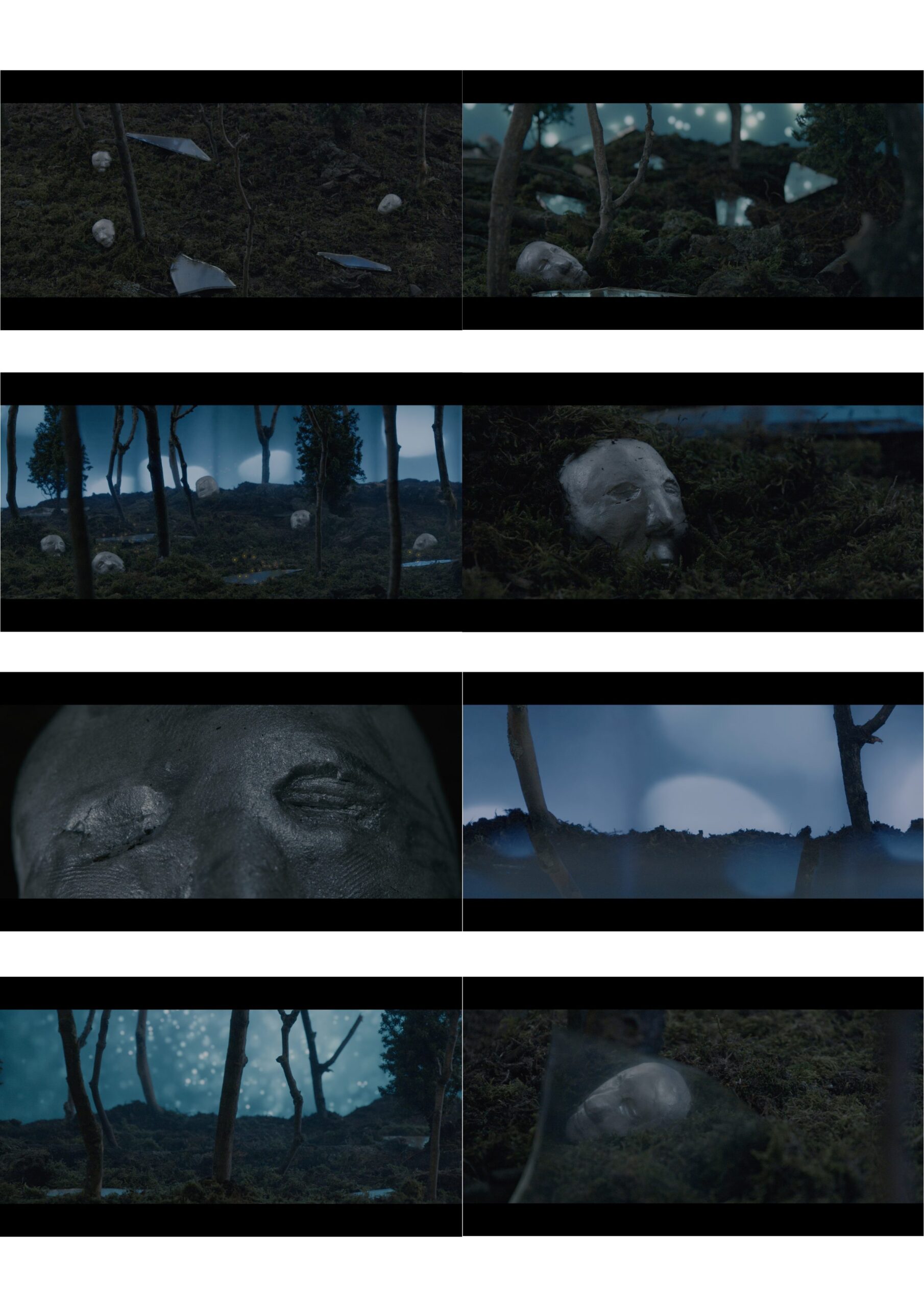
Beyond The Rest - This film is an exploration of the invisible threads that bind us to the natural world—an attempt to give form to the forces pulsing just beneath the surface of what we call reality. It is a cinematic offering, a quiet ritual, and a meditation on the living presence of the Earth. Through this piece, I seek to remind us that nature is not inert, not a resource to be extracted or a backdrop to be admired from a distance. It is conscious, responsive, and alive in ways we have long forgotten how to perceive. In the surreal forest I’ve envisioned, the boundaries between the real and the unreal dissolve. The entities that emerge—obscure, face-like forms—are not merely watchers. They are not intruders or ghosts. They are born of the land itself: extensions of soil, bark, root, and wind. They carry in their shifting forms the memory of the Earth’s breath, and in their quiet presence, a forgotten rhythm stirs. They do not sing in words, but in resonances—low, harmonic hums that bypass the intellect and go straight to the body, the bones. These are not voices seeking to be understood but felt. Their presence speaks of an ancient communion—a language older than speech, woven from vibration, sensation, and silence. To encounter them is not to witness a fantasy, but to be drawn into a truth we once knew intimately: that everything is interconnected, and everything responds. This idea is not presented with didactic certainty but offered as a lived, sensory experience—a whisper, a breath, a pulse. Visually, the film leans into an eerie serenity. The camera lingers. Darkness is not treated as void but as a presence thick with intention. Here, shadows are alive. The forest is not a setting—it is a character in its own right: aware, breathing, observant. Its silence is not empty, but filled with potential. It does not merely frame the action but actively participates in the unfolding mystery. Trees creak, moss expands softly, air thickens with a hum that isn’t quite sound. I chose to keep dialogue sparse, allowing the language of vibration and gesture to speak instead. In that space, I hope the viewer does not just observe the film, but enter it—to become still enough to listen with more than just ears. As night falls, the edges of the familiar dissolve. The forest shifts into a dreamlike expanse—luminous yet dim, haunting yet comforting. Trees stand like sentinels, their bark glistening as if breathing. The air grows dense with an unseen presence. Within this charged atmosphere, the entities emerge, watchful yet gentle, their eyes holding centuries of memory. They do not act; they attune. Their arrival does not announce itself, but ripples outward like a stone dropped in still water. Drawn by an ancient rhythm that transcends intention, they begin to hum. It is not a performance. It is an offering—a vibration carried on wind and root, leaf and stream. A resonance that merges with the distant rustle of creatures, the soft crackle of decaying wood, the murmur of flowing water. In this space, music is not composed but uncovered. It rises naturally from the very ecology of the moment, as if the land itself were remembering how to speak. This harmonic field dissolves the illusion of separation. The supernatural is revealed not as an outside force, but as an ever-present dimension of the natural. Time folds inward. The boundary between inner and outer, body and landscape, human and more-than-human, becomes porous. The forest does not perform for us—it invites us to remember that we are already part of its ongoing ritual. In this liminal state—where past and present overlap, where silence becomes symphony—something stirs. A message, not delivered but felt. The Earth listens. The air listens. The land remembers. And perhaps, so must we. The forest breathes in unison with its silent watchers. A fragile harmony is offered—one that exists not in dominance or control, but in mutual recognition. This is a gentle call. To wonder.
Ethereal Echoes
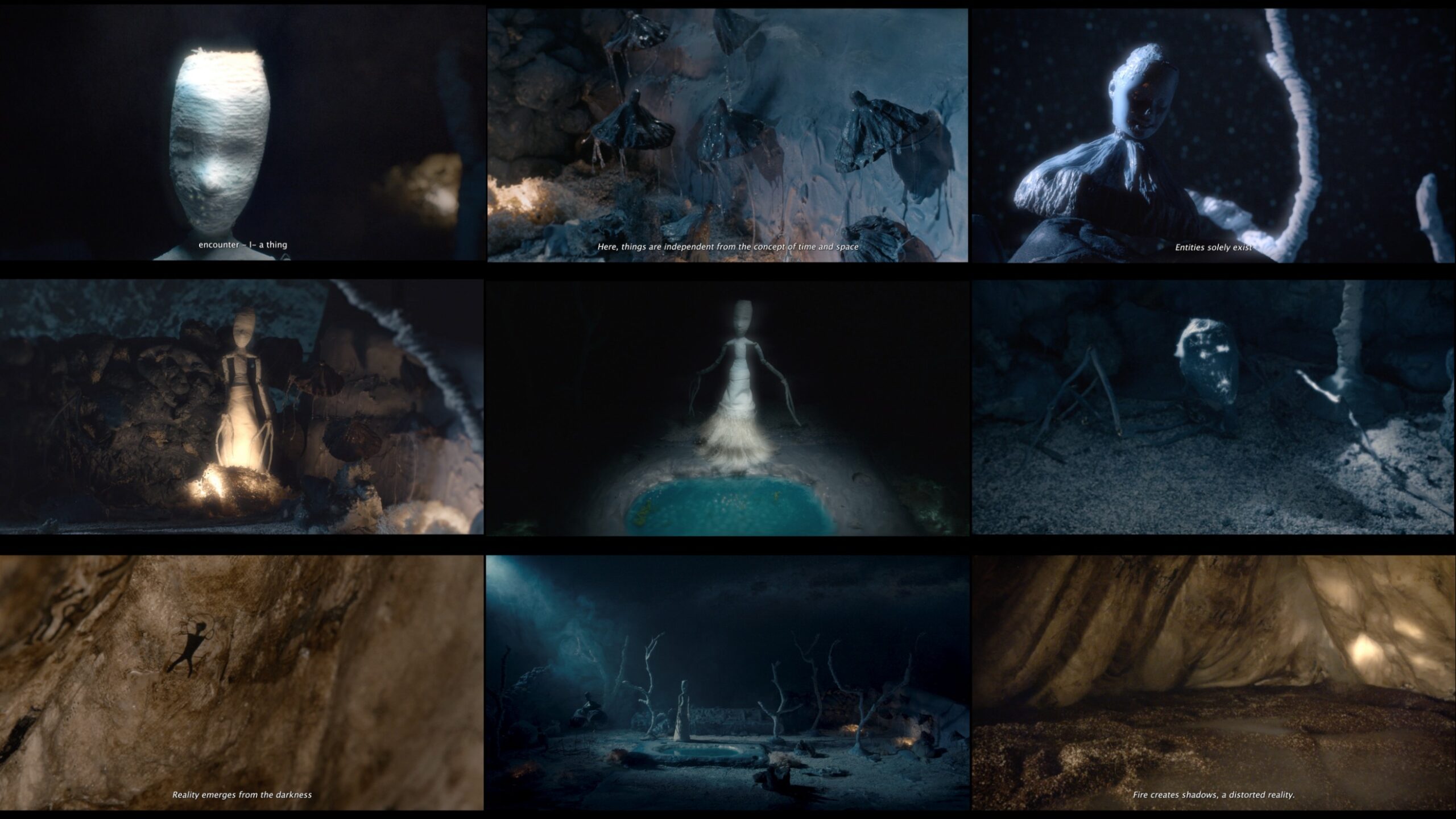
Ethereal Echoes - Ethereal Echoes is a poetic meditation on identity, self-perception, and transformation, set in a surreal, mythological world where time stands still and existence flows in cyclical silence. Through the tactile medium of puppetry and miniature set design, the film weaves together philosophy, dream imagery, and visual metaphor to explore the fragile threshold between being and becoming. The story unfolds in a realm inhabited by timeless entities—beings who have never seen their own reflection. Because they lack this encounter with the self, they have not developed individual identities, egos, or even a sense of mortality. They simply are—existing without the burden of self-awareness, floating in a metaphysical stillness where there is no death, no birth, only continuation. But everything changes when one of them unexpectedly catches sight of its reflection. This moment becomes a rupture—an awakening. For the first time, this being sees itself as separate, singular, and real. With this recognition comes the formation of an identity, and with identity, the onset of existential consciousness. It begins to question its reality, its origins, and the world it had previously accepted without thought. The once-eternal space around it begins to feel heavy, layered with meaning and unbearable presence. In this spiraling awareness, the being is confronted with the absurdity of its own existence—much like the prisoner in Plato’s Allegory of the Cave, who glimpses the blinding light of truth after a lifetime of shadows. Unable to reconcile the weight of this new consciousness, the being ultimately chooses to annihilate itself—marking a paradoxical return to silence. Its journey from stillness to awareness, and back into oblivion, is a symbolic arc reflecting the cost of seeing too much, feeling too deeply, and knowing too clearly. Ethereal Echoes takes this internal, philosophical journey and renders it in a richly symbolic visual language. The film is constructed around the aesthetics of the uncanny—textures that feel at once organic and otherworldly, movements that blur the mechanical and the alive. Puppetry became the natural medium for expressing this world, as it carries within itself the paradox of animation and stillness, life and artifice. The miniature sets—meticulously crafted—create a cosmos that feels vast despite its scale, echoing the interior landscapes of the characters themselves. Reflections—both literal and symbolic—form the central motif of the film. Mirrors and echoes act as portals to self-awareness, catalysts for transformation, and ultimately, harbingers of disintegration. The world of the film is imbued with haunting stillness, where time folds in on itself and myth bleeds into memory. Each scene becomes a quiet ritual, an offering, a moment suspended between recognition and release. With Ethereal Echoes, I wanted to dissolve the boundary between the physical and the metaphysical, the visible and the invisible. This is not a narrative driven by conventional plot but by emotional and philosophical movement. It’s a cinematic universe where mythology and identity collapse into one another, where every frame carries the weight of an unspoken question: What happens when you see yourself for the first time—and cannot bear the answer? At its heart, Ethereal Echoes is about the echo that follows the awakening of consciousness. It is a film that listens to what lingers after identity is born, and what shatters when we try to name ourselves. It is an invitation to step into the unknown, to dwell in the space between light and shadow, and to hear what reverberates beyond time.
PINAR
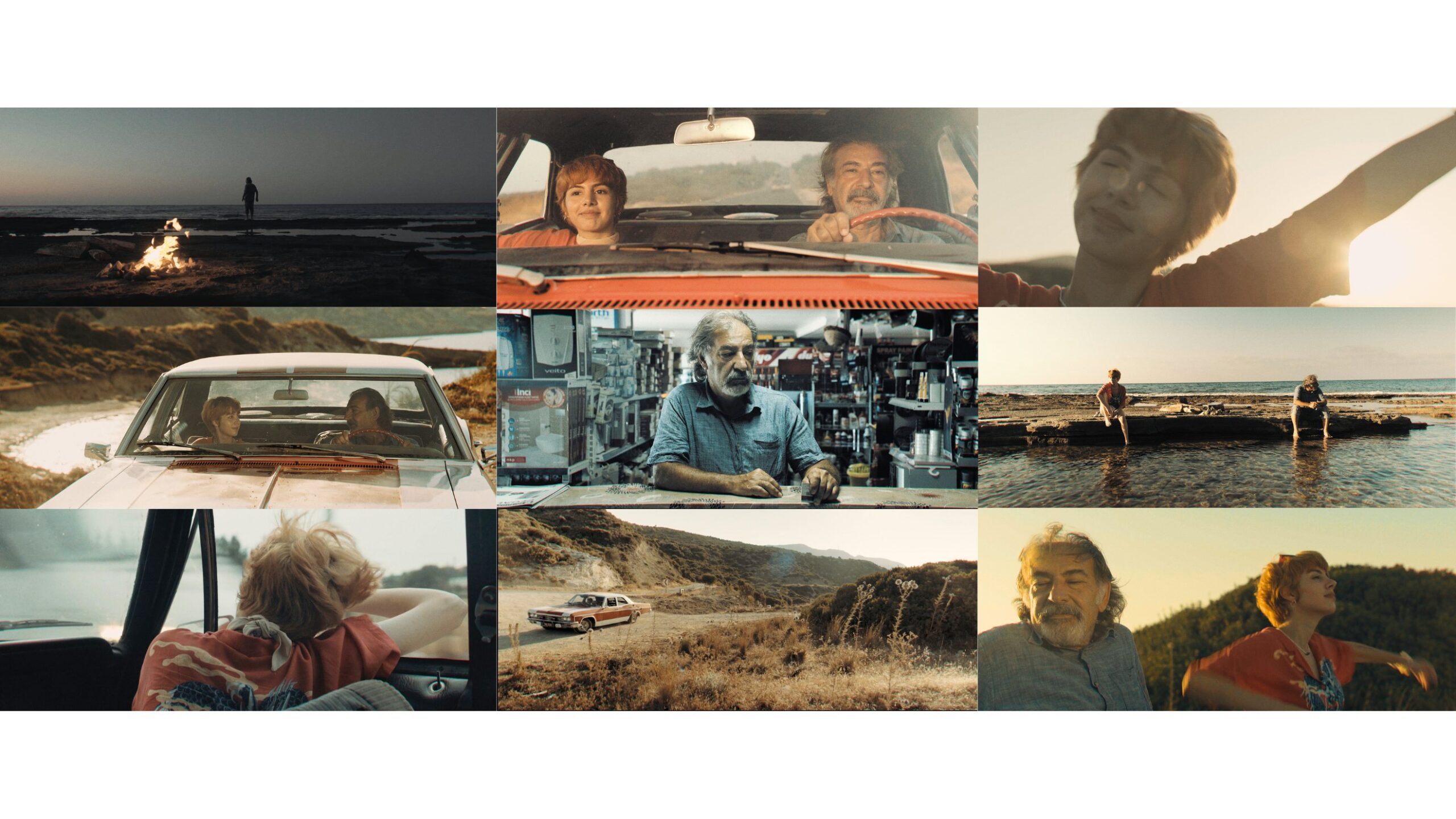
PINAR - At its core, this film is an intimate meditation on grief, human connection, and the unpredictable ways in which chance encounters can awaken something long buried within us. Set against the sun-drenched landscapes of Cyprus, it follows Evren—a 60-year-old man quietly suffocating under the weight of loss—and a spirited young woman in her early twenties who seems to move through life with reckless, almost defiant freedom. Their meeting is not merely coincidental; it is a collision of two souls at opposite ends of experience, each carrying a void the other has the potential to touch. Evren is a man haunted by the loss of his daughter. Life has become muted, a routine stripped of color and meaning. He walks through the world numbed by grief, unable—or unwilling—to reengage with its beauty. She, on the other hand, is all instinct and momentum: impulsive, free-spirited, and unanchored. Their worlds should never have intersected. But on a quiet day by the sea, they find themselves side by side—two strangers alone on the same beach, silently observing the horizon. The beach, a shifting boundary between land and sea, serves as both a literal and symbolic space in the film—a liminal zone where past and future, loss and hope, isolation and connection blend. It becomes the stage for their brief yet transformative interaction. As they speak—sometimes hesitantly, often through silence—something begins to stir in Evren. The warmth of the Cypriot sun, the rhythm of the waves, the woman’s unexpected presence: all combine to ignite a subtle reawakening. I am drawn to the quiet, in-between moments that reveal the deeper layers of human experience—the glances, the stillness, the pauses pregnant with emotion. This film lingers in those spaces, where grief softens and something resembling hope begins to take root. It explores how we carry our losses, how we conceal our loneliness, and how the presence of another person—no matter how brief—can offer a mirror, a rupture, or even a lifeline. Visually, the film blends naturalistic and poetic elements. I want the Cypriot landscape to speak as much as the characters themselves—the dust, the sea, the texture of light. The film’s aesthetic is warm yet heavy, using restrained compositions and ambient sound to reflect Evren’s emotional state. As his internal world begins to shift, so too does the visual language: shadows give way to warmth, distance gives way to closeness, silence gives way to breath. The young woman’s energy is never romanticized but rather presented as something raw, unpredictable—like the sea itself. This is not a story of healing in the conventional sense, nor of resolution. It is about what happens in that liminal space where something broken quietly begins to move again. It is a reminder that meaning often emerges not through grand gestures, but through fleeting moments of connection, honesty, and vulnerability. Ultimately, the film is about the fragile, beautiful tension between despair and hope. It suggests that even in our darkest seasons, life has a way of pulling us toward the light—sometimes in the most unexpected of ways, through people we never planned to meet, in places we thought held only silence.
What the Body Remembers
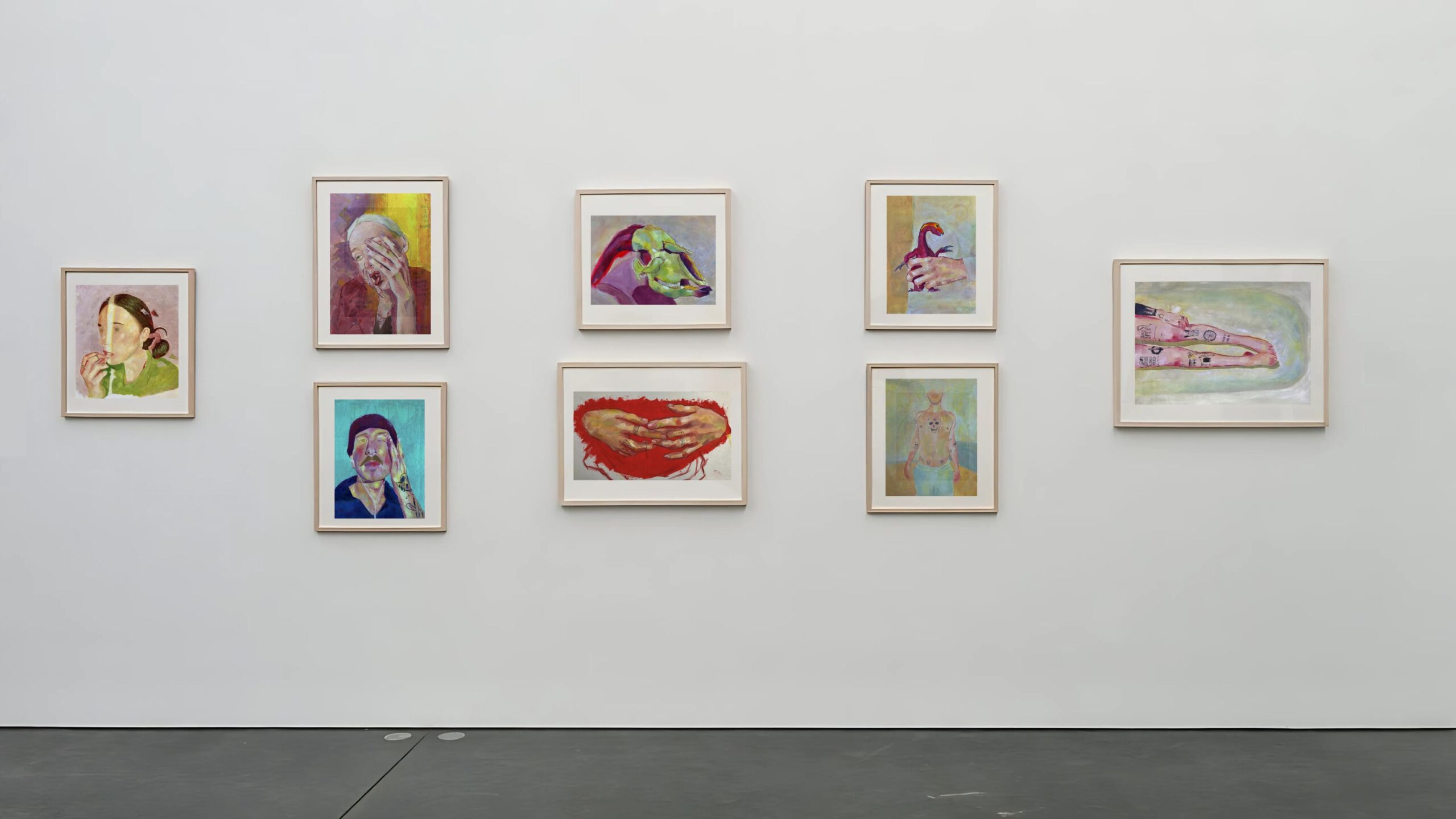
What the Body Remembers - This collection explores themes of identity, vulnerability, bodily memory, and transformation. Each painting—while diverse in subject matter—is unified by a raw emotional texture and a quiet, haunting tenderness. The compositions frequently linger in liminal spaces: faces half-lit or obscured, hands hovering mid-gesture or folding inward, bodies marked with symbols, eyes averted or entirely absent. These elements suggest a suspended state—neither here nor there—inviting the viewer into the psychological and emotional terrain of in-betweenness. Throughout the works, there’s a sense of a subject in the process of becoming, breaking down, and reshaping. Some figures seem fragmented or partially erased, as if caught between memory and presence. Others are defined by tension: the physical gesture of holding, resisting, or reaching. This visual language mirrors internal processes of grief, self-examination, and change. The imagery seems to resist fixed meaning—it’s elusive, poetic, and deeply symbolic. The color palette plays a vital role in shaping the emotional atmosphere. Muted pastels and soft, flesh-toned hues are interrupted by sharp contrasts of red and green, creating moments of both sensitivity and rupture. It’s as if the subjects are exposing something beneath the skin—something inherited, emotional, or ancestral. Motifs such as the stitched red form, the torso bearing drawn-on symbols, or the elongated, tattooed limbs recall ritual, trauma, and cultural memory. These bodies speak not only of personal experience, but of something carried across generations, silently inscribed onto the skin. A quiet introspection runs through the entire series. Many of the figures avert their gaze, cover their faces, or lack visible eyes altogether. This recurring motif suggests a refusal to be fully seen, or perhaps a delicate act of negotiating one’s visibility. These choices are not about absence, but about protection—about holding one’s interiority close. The viewer is invited not to look at these figures, but to witness them—on their own terms. This exhibition is a meditation on what it means to exist in flux, to carry memory in the body, and to transform through the act of remembering. It asks: What do we hold? What holds us? What do we hide, and what breaks through? Rather than offering clear answers, the paintings create space for lingering questions, inviting viewers to inhabit the complexity of being human—raw, ruptured, and always in the process of becoming.

Art Director

Datum:
Locatie: Studio
In samenwerking met: Independent.

Worldbuilding & Narrative Space in Filmmaking This workshop focuses on how to build immersive worlds and narrative spaces that enhance storytelling. Participants will explore the role of set design, material textures, and visual elements in creating environments that shape characters, themes, and emotions. We will discuss how to use physical spaces and subtle details to communicate story and mood, and participants will apply these concepts through hands-on exercises to develop their own projects

Deze kunstenaar heeft nog geen toekenningen.