Onzijn by Marianne Goudswaard

wetenschap & techniek, uitwisseling, tekenen, Taal, spiritualiteit, sociaal-maatschappelijk, schrijven, schilderen, samenwerking, proces, omgeving, Objecten, natuur, mens, internationaal, Geschiedenis, fotografie, Experimenteel, Ecologie, Diversiteit, Conceptueel, Communicatie, Audiovisueel, Artistiek onderzoek, Analytisch, Abstract

In the Netherlands, eleven is called the “crazy number” because it can only be divided by itself and falls between the perfect number ten and the holy number twelve. Eleven is the odd one out; it represents deviation. In Japan, this concept is described as the elusive beauty of imperfection. On the border between beautiful and ugly, the frayed edges, that’s where images become interesting.

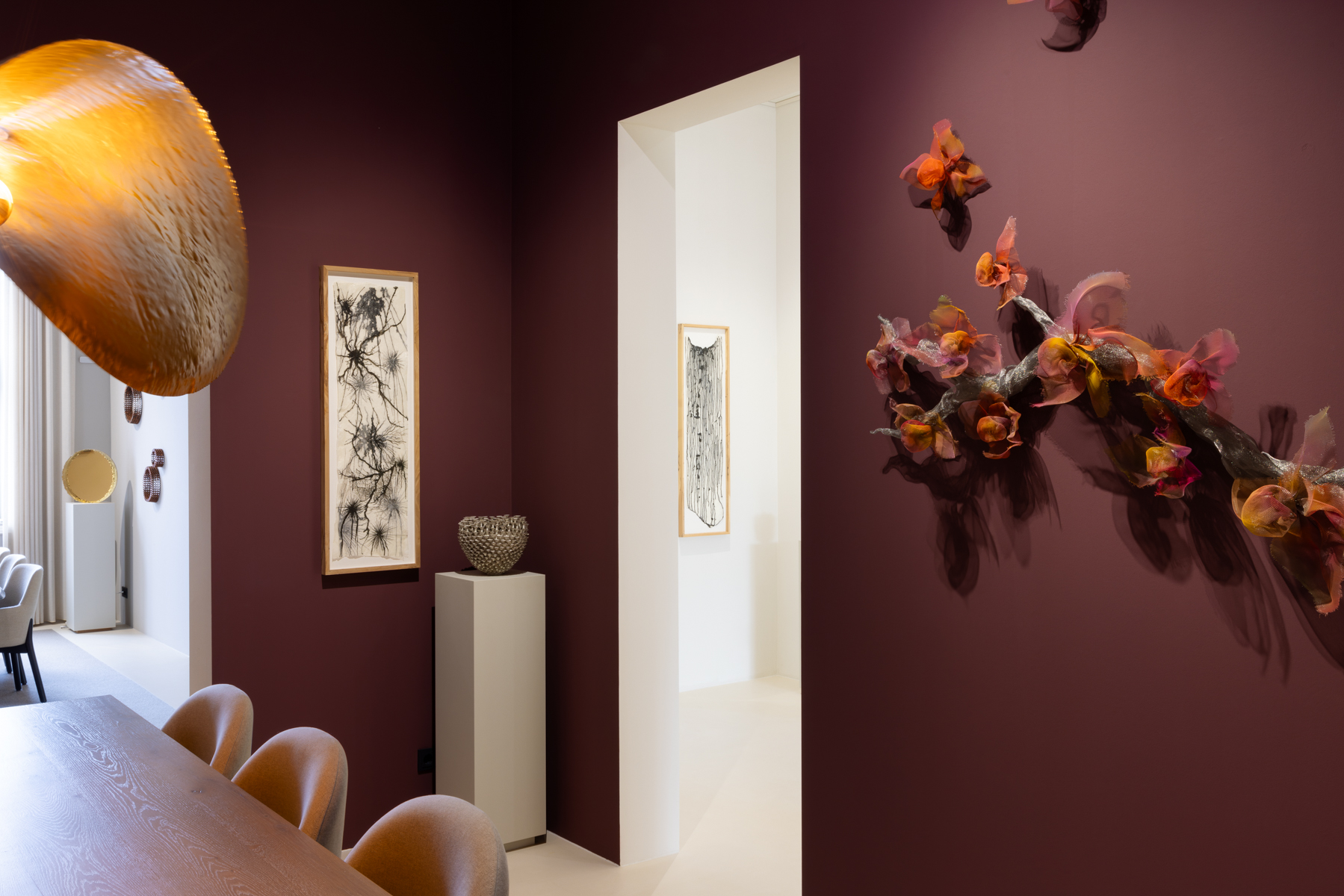
ONZIJN by Marianne Goudswaard is an art collection consisting of photography, drawings, three-dimensional, and digital works, created in series of eleven. Imperfection and vulnerability are central themes. Each piece emerges intuitively, responding to previous works and photographs. Delicate materials such as thin tissue paper, eggshells, leaves, mushrooms, and feathers embody this fragility.

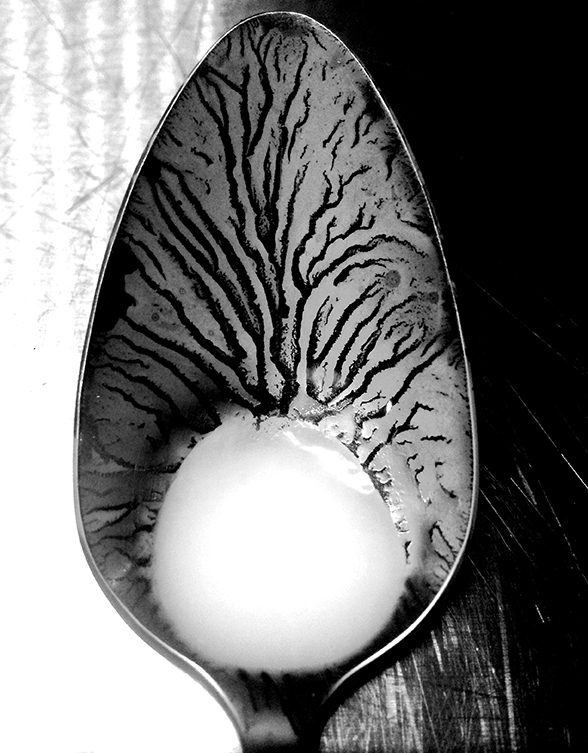
When a tree encounters an obstacle, it doesn’t stop. It grows underneath, around, or over it, always finding its way. My work emerges similarly. I crumple the paper, creating an unpredictable canvas with which I collaborate. From the chaos, patterns bloom—that echo, river deltas, mountain ranges, airflows, the veins of a leaf, the lines in our hands, or tree branching. The language of nature, captured in delicate silk tissue paper.

The process of creating these natural patterns is fun, and relaxing and develops in an organic flow. The goal is to deepen understanding of nature, her patterns and processes —learning from both the natural world and the work that spontaneously emerges within this flow. To have no clear-cut idea in advance creates rest and space, which gives enormous creative freedom.
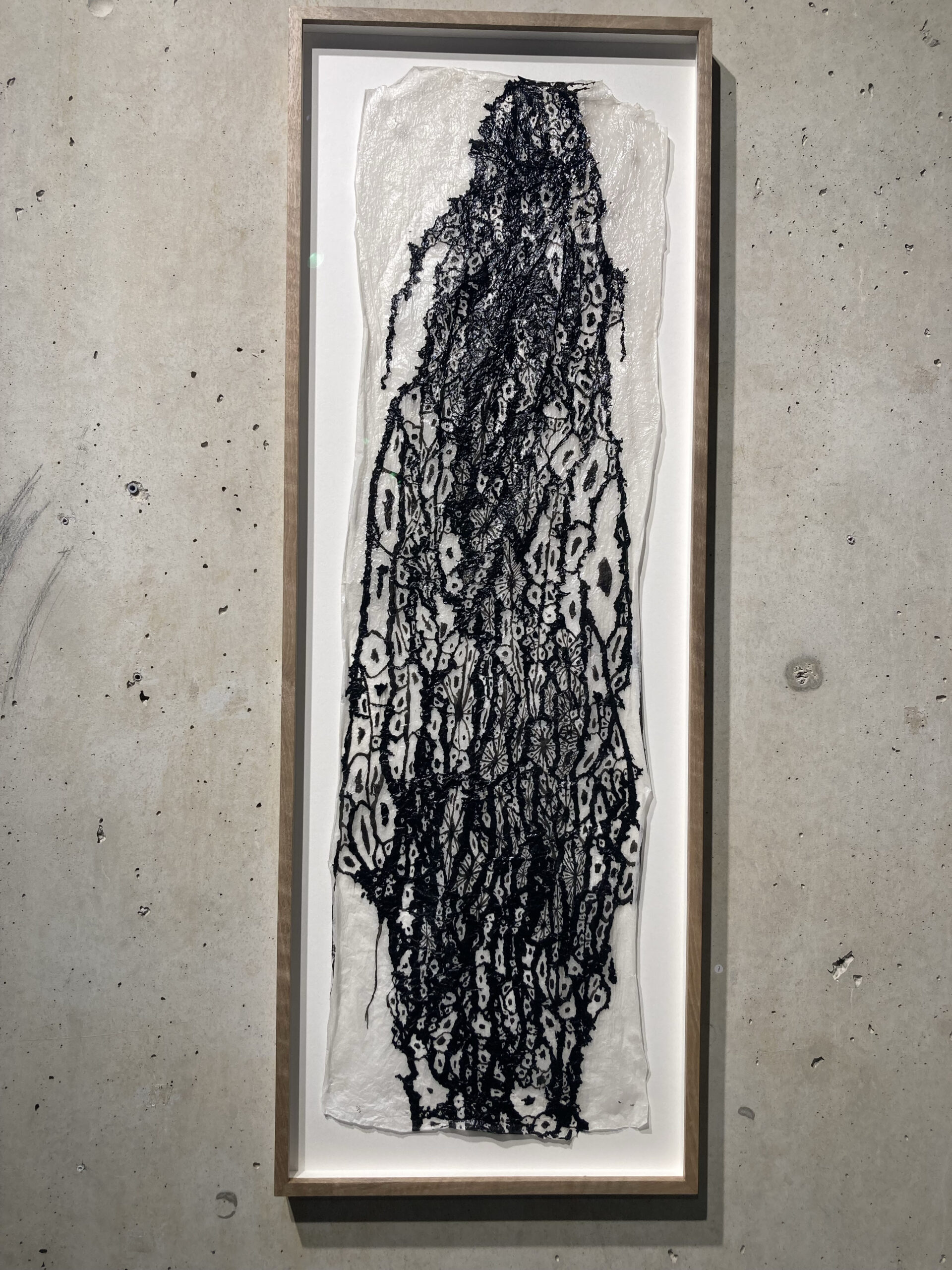
#1.10 .2022 ELUSIVE BEAUTY  black ink on silk tissue paper,  framed in dutch durable walnut
#1.10 .2022 ELUSIVE BEAUTY black ink on silk tissue paper, framed in dutch durable walnut - This work emerged spontaneously through experimenting with ink, letting it flow in opposite directions, playing with gravity. In a way, it felt as though the work created itself. The black ink found its way across the crumpled paper; I guided the process and intuitively complemented the pattern. The aim is to reveal what is already present, allowing the work to arise organically and thus come closer to the genesis of natural patterns. For me, it is a way to explore, unravel, and better understand patterns. The beauty of such patterns is elusive in nature. What makes them so compelling, and what role do art and aesthetics play in our lives? In recent years, much research has been conducted into the effects of art on our well-being. This already resulted in a 2019 publication on the subject by the World Health Organization (WHO). In Quebec, doctors even prescribe visits to the Montreal Museum of Fine Arts, which have been shown to improve well-being and accelerate recovery. By experiencing beauty, art plays a role in health and healing. In this way, the arts are becoming an even richer and more valuable resource than previously thought. The Lancet Medical Journal recently announced a major study coordinated by the WHO and the Jameel Arts & Health Lab, aiming to further explore the links between health and the arts. This project, which will serve as a global foundation for policymaking, is expected to be published in 2025. Music: Ala – Joep Beving
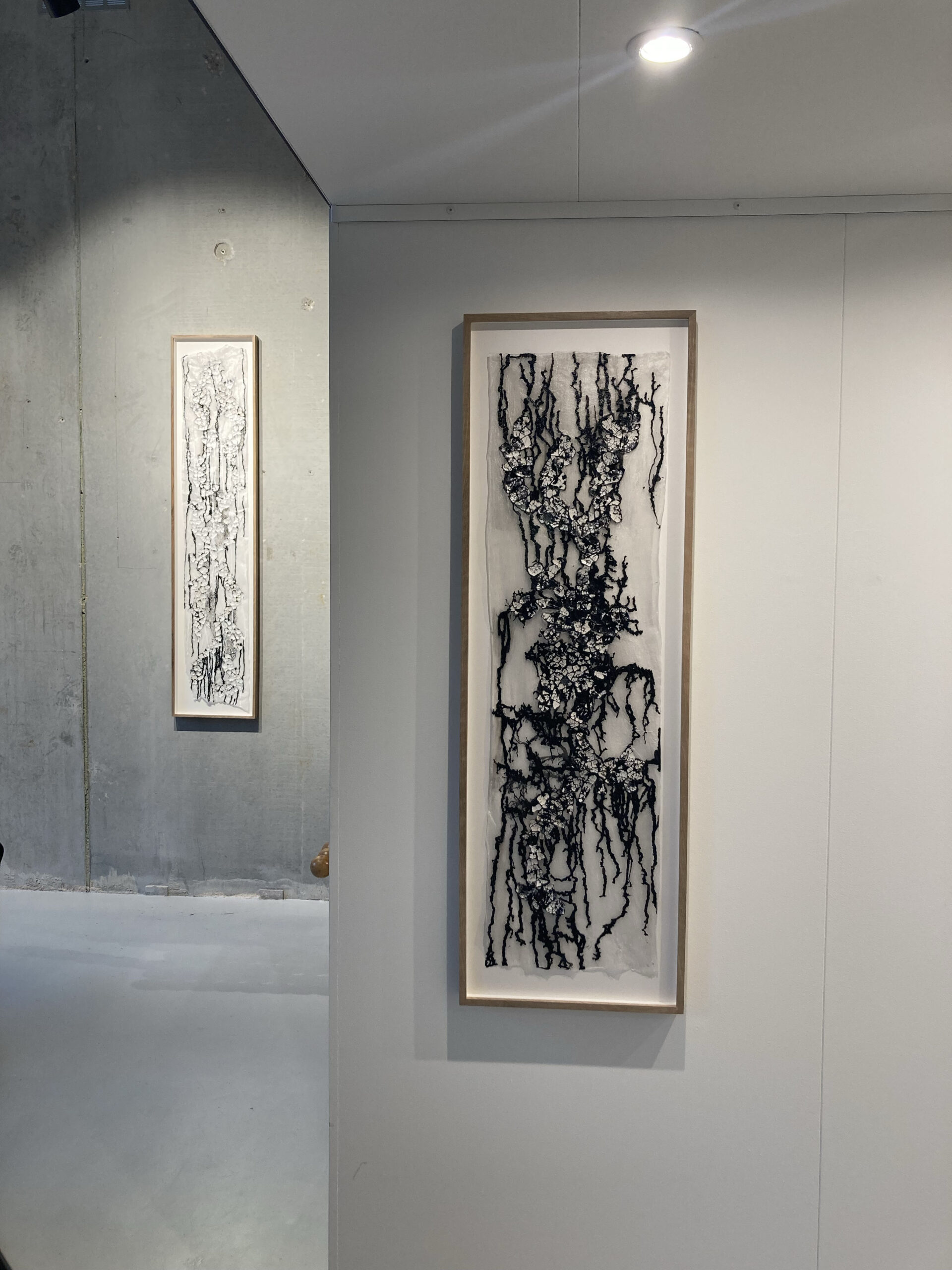
#2.3.2022 RESILIENCE eggshell and black ink on silk tissue paper  framed in Dutch durable wa
#2.3.2022 RESILIENCE eggshell and black ink on silk tissue paper framed in Dutch durable walnut - This work is about the resilience found in both humans and nature. We often perceive organic patterns as beautiful because of their harmony and complexity. Everything that lives is made up of cells; plants, animals, and humans all consist of them. The moment a cell divides, a pattern immediately emerges. Patterns are therefore an essential part of the origin of all life on Earth. They are interconnected, work together, and contain millions of years of knowledge about how to survive under changing conditions. Can we harness this ancient knowledge to reactivate nature’s resilience and create a healthy planet with flourishing ecosystems? An inspiring example in the Veluwe convinced me of the potential that organic patterns hold when we allow them into our environment. In March 2023, NRC journalist Wouter van Noort joined forest ranger Remko van Rosmalen and reported on a hopeful experiment in the Veluwe. By once again allowing the water to meander freely through the landscape, the ecosystem began to recover with surprising speed. The stream was no longer confined by straight dams, dikes, and canals. Instead, the flow of water was allowed to find its own path and curve naturally through the area. Within just eight years, this resulted in a healthier ecosystem, greater biodiversity, and improved water quality. The forest now functions like a sponge: it retains water during periods of drought and absorbs it during heavy rainfall. By letting water follow its natural course, the resilience of the landscape was activated and the ecosystem restored. For me, this example is proof that organically formed patterns serve a purpose and a function. Their form is not based on chance but has evolved over thousands of years to sustain and allow ecosystems to flourish. Could we apply this principle in more places to help restore nature? Music: Quatre Mains – Deus In the back: #2.5.2023 BLOSSOM eggshell and black ink on silk tissue paper framed in Dutch durable walnut / 70% art glass 28 x 135 cm It is surprising to work with the same materials and witness how a piece emerges under your hands, evoking a completely different atmosphere and emotion than earlier works. This work is about the awakening of nature. The gradually formed pattern speaks of budding, blossoming, and unfolding. It expresses the tender force of spring in a soft, undulating movement. From a distance, the form appears as a whole, but as you move closer, more details and refined patterns reveal themselves, creating variation and new ‘moments of looking.’ In spring, nature comes back to life through invisible processes underground. This network, often referred to as the Wood Wide Web, consists of tree and plant roots that, together with mycelium (fungal threads), exchange nutrients and communicate with one another. It is a complex system of patterns that cooperate and support each other, achieving balanced growth and flourishing by continuously adapting to changing conditions. Together, they are more than the sum of their parts, allowing the whole to thrive and unfold.
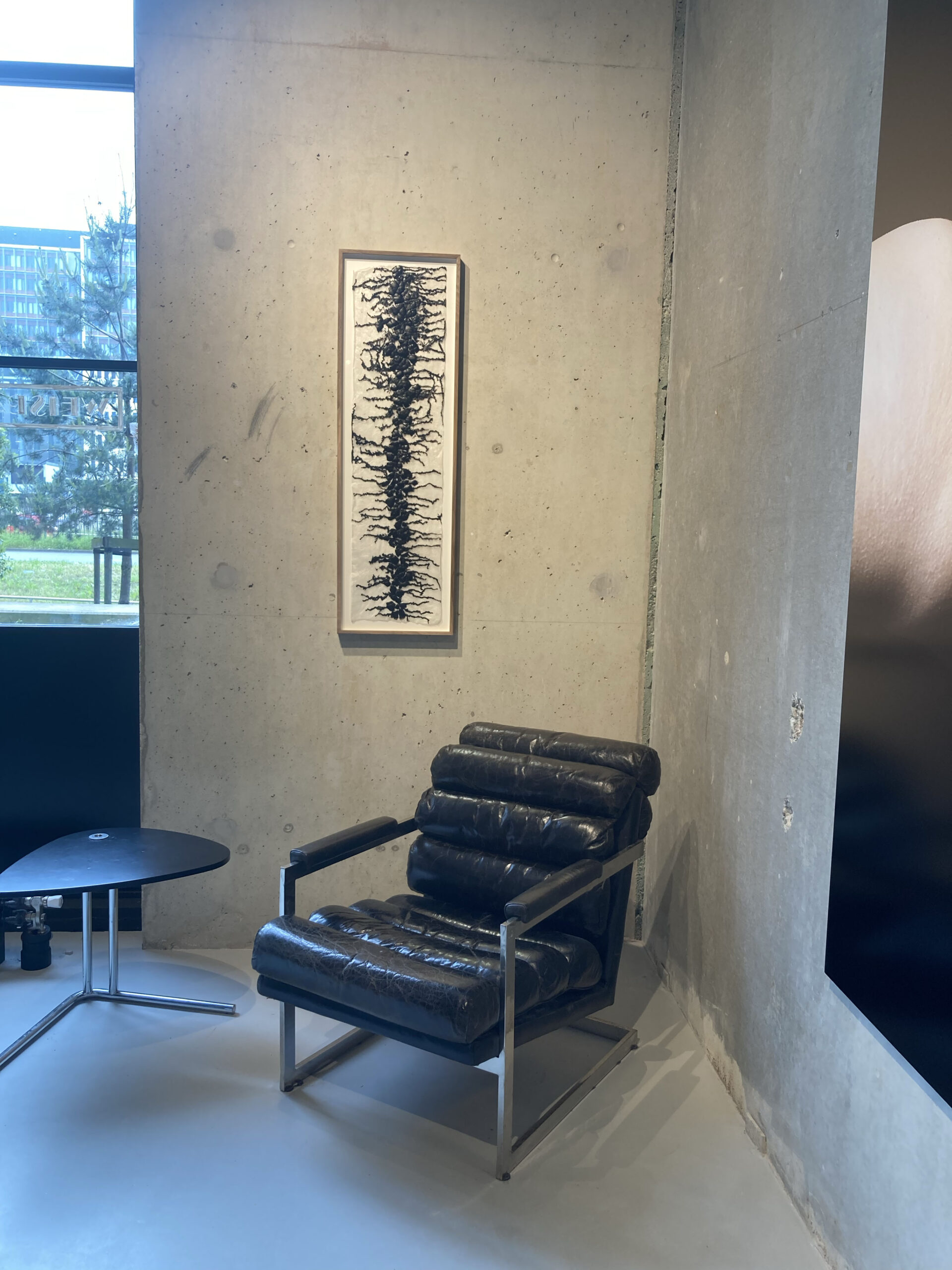
#2.4.2023 SPINE  eggshell and black ink on silk tissue paper  framed in Dutch durable walnut
#2.4.2023 SPINE eggshell and black ink on silk tissue paper framed in Dutch durable walnut - ‘SPINE’ symbolizes our inner source of strength. It is a power we all possess, helping us in difficult situations or when making challenging decisions. The work came into being swiftly and with focus. All the elements fell into place, and ‘SPINE’ immediately stood firmly and powerfully on the paper. Beyond a backbone, associations with a centipede, a scorpion, or a mysterious natural force in the film DUNE are not far-fetched. Music: Cello Suite No. 1 in G – Mischa Maisky
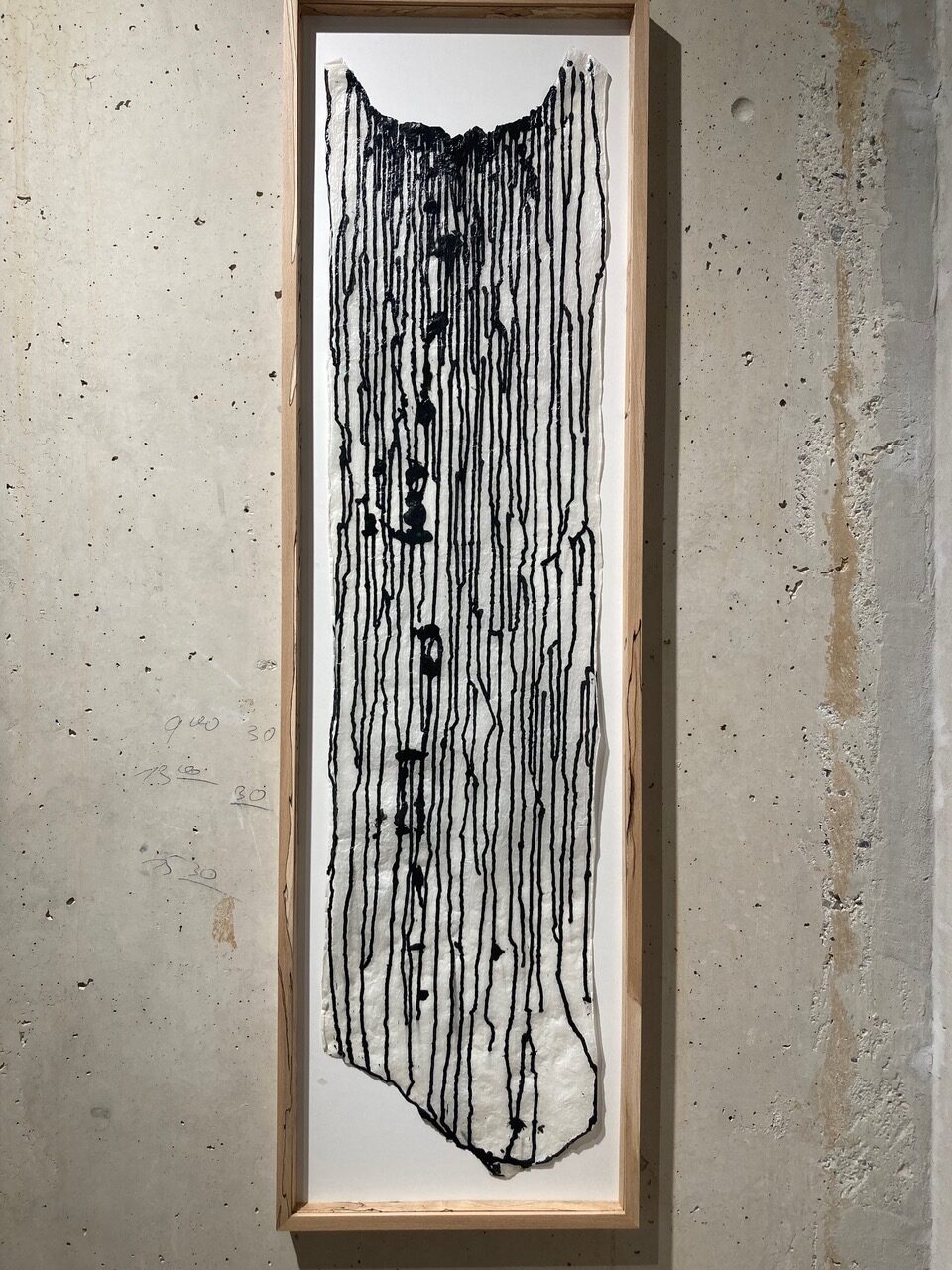
#1.1.2021 PURKINJE
#1.1.2021 PURKINJE - Purkinje is my first experiment with ink on delicate silk tissue paper, loosely inspired by sand patterns and the drawings of Santiago Ramón y Cajal from the book A Beautiful Brain. I was struck by how much the patterns on the beach resemble structures found in our brains. This discovery fascinated me and became the starting point for further exploration of patterns in nature. Purkinje cells are neurons found in the cerebellum and play a crucial role in coordinating movement. This work is titled “PURKINJE”, yet leave room for interpretation. Some see a waterfall, or plastic bag which flowsinto the ocean as pollution while others catch a glimpse of a flowing silk evening gown… Music: Stillness of the Mind, Abel Korzeniowski. *Santiago Ramón y Cajal (1852–1934) was a pioneering neuroscientist who, along with Camillo Golgi, received the 1906 Nobel Prize for their work on the structure of the nervous system and the brain. His groundbreaking drawings of neural patterns remain influential to this day.
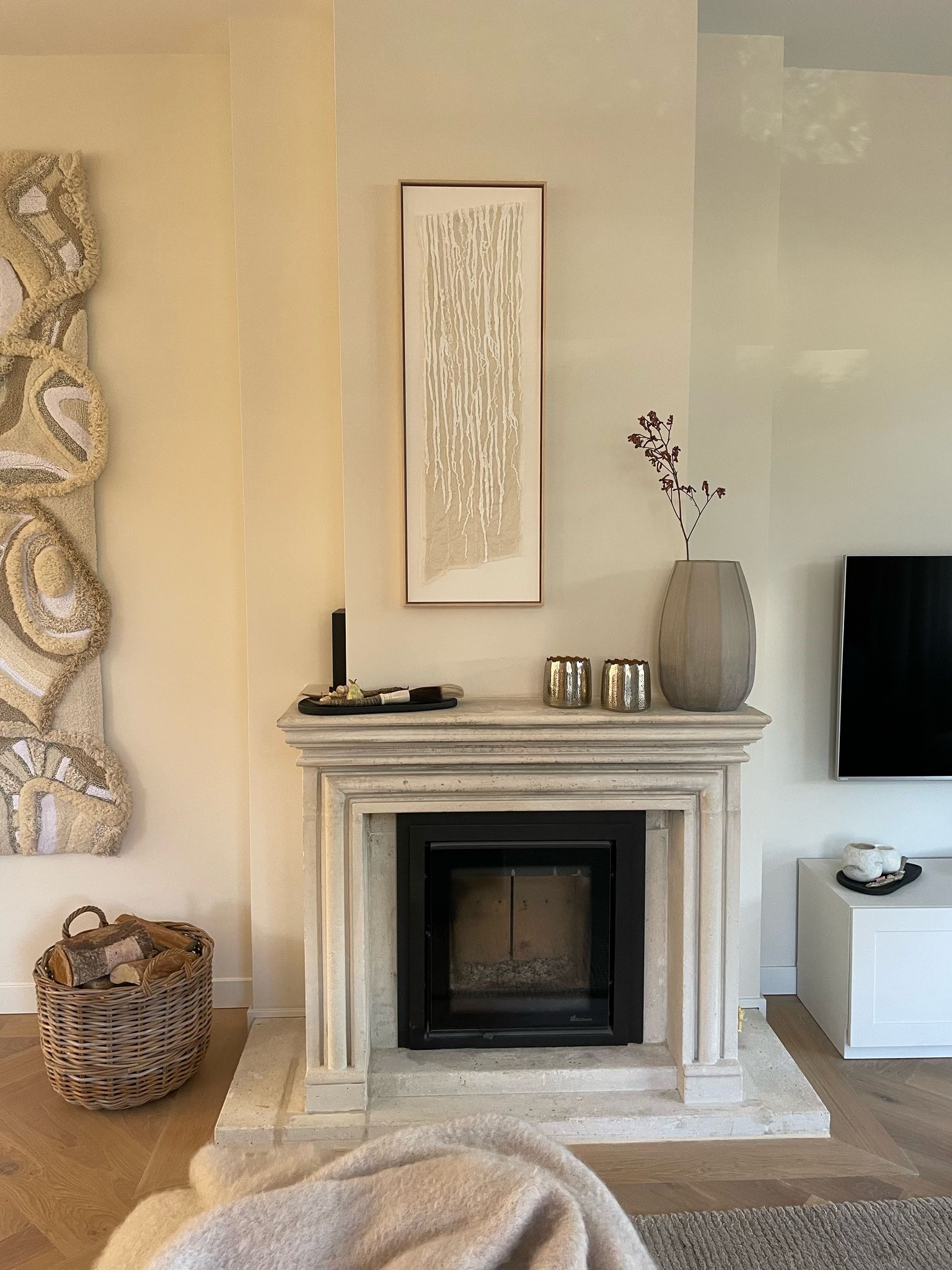
#1.6.2022 ZILT
#1.6.2022 ZILT - Zilt A drop falls on the earth, rolls like a tear, further in the brook, rises to a river, cascades into a waterfall, towards salty seas. White drops flow fluent in irregular patterns, embodying the rhythm of unpredictability. They represent elusive feelings, dreams, and longings while evoking purity, clarity, and renewal. The interplay of shadow and light reflects the delicate balance between fragility and strength, sorrow and healing and brings spiritual awakening and hope forward.
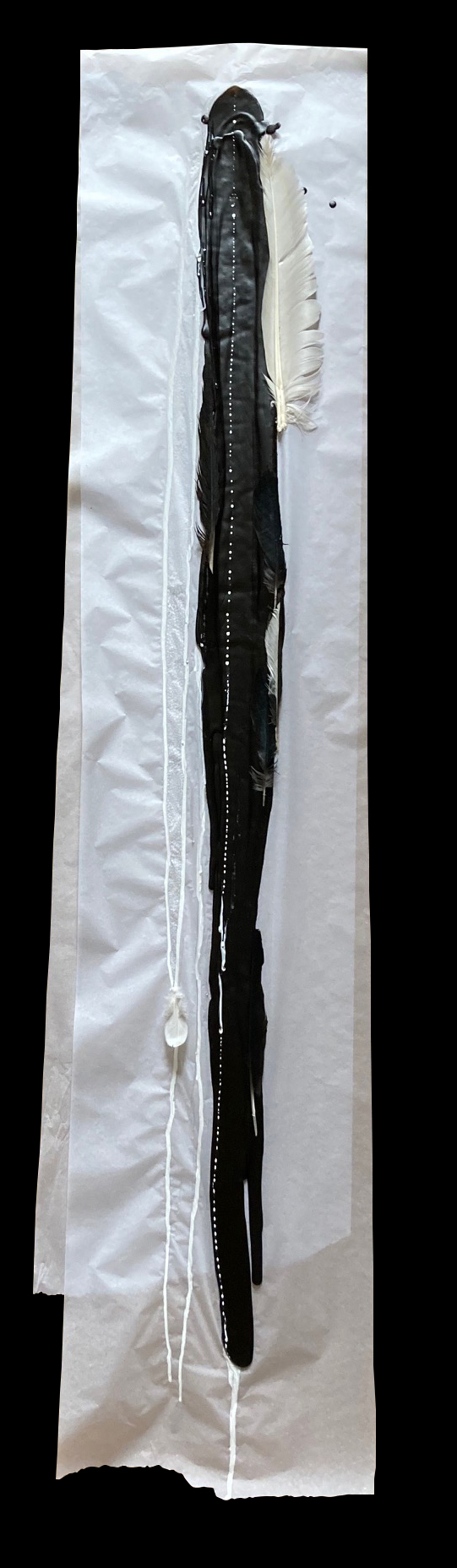
#2.6.2023 EVE  wax, white ink, leaves and feathers on silk tissue paper  30 x 145 cm
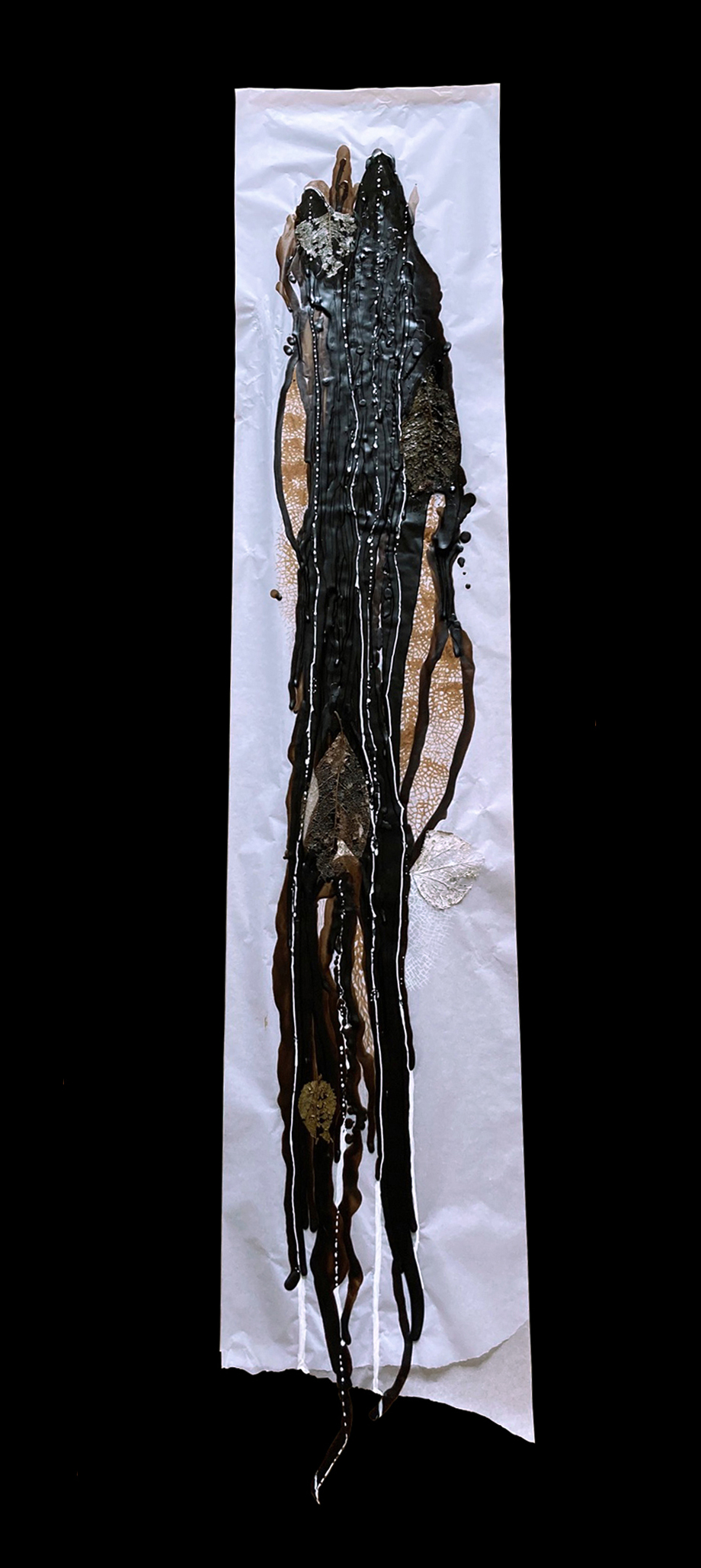
#2.6.2023 EVE wax, white ink, leaves and feathers on silk tissue paper 30 x 145 cm - wax, white ink, leaves and feathers on silk tissue paper 30 x 145 cm EVE & ADAM were part of the finalist exhibition for the 19th edition of the Arte Laguna Prize. The finalist selection was made from 10.000 artworks submitted from 80 countries. From these, the jury selected the works of 240 artists for the finalist exhibition at the Arsenale Nord in Venice. Eve and Adam were selected by the jury because of their originality, artistic quality, and relevant message. Like a modern chef, I collect leaves, feathers, mushrooms, branches and everything to 'my taste' in my direct surroundings to use in my work. Eve is about Mother Earth, giving and nurturing life. About female and spiritual wisdom. My youngest sister who is a mindfulness teacher and psychiatrist told me once if you find a feather on your path this shows, that you are on the right track. A feather brings luck. Also, feathers play an important part in various Indigenous cultures. They were used for aesthetic reasons, but also for spiritual reasons or showing the importance of their role or bravery within their community. Today we need the knowledge of these Indigenous cultures because they stay in touch with nature and share their valuable knowledge with the world today to improve our environment. The feathers in this work are in honour of Indigenous people for their relentless effort to protect the Amazon, for example. In honour of Maori in New Zealand, fighting 150 years for their Whanganui river to be protected by law to have the same rights as humans. In 2017, they succeeded, and the story is beautifully captured in the documentary. 'I am the river, the river is me'. Showing that when nature is not healthy, we as humans cannot be either. To take care of nature is to take care of ourselves, as we are part of nature. 'EVE' is part of a diptych and belongs with the work 'ADAM'.
#2.7.2023 ADAM
#2.7.2023 ADAM - wax, white ink, leaves and feathers on silk tissue paper 30 x 150 cm ​​​ ​ The diptych EVE & ADAM embodies the female primal force, the wisdom of Mother Nature (Eve) and the male strength, and energy of creation (Adam). The works aim to demonstrate that both feminine and masculine energy, along with wisdom, strength, and diversity, are equally important and necessary for a balanced world. By incorporating feathers and leaves, are the works a honour to Indigenous cultures and their deep knowledge of and connection to nature. The pieces mirror cooperation found in natural patterns and call to recreate healthy ecosystems together. Feathers play an important part in various Indigenous cultures. They were used for aesthetic reasons, but also for spiritual reasons or showing the importance of their role or bravery within their community. Leaves are symbolic for growth, hope and resilience. Today we need the knowledge of these Indigenous cultures because they stay in touch with nature and share their valuable knowledge with the world today to improve our environment. The feathers and leaves in this work are in honour of Indigenous people for their relentless effort to protect the Amazon, for example. In honour of Maori in New Zealand, fighting 150 years for their Whanganui river to be protected by law to have the same rights as humans. In 2017, they succeeded, and the story is beautifully captured in the documentary. 'I am the river, the river is me'. Showing that when nature is not healthy, we as humans cannot be either. To take care of nature is to take care of ourselves, as we are part of nature. 'ADAM' is part of a diptych and belongs with the work ‘EVE'.
#2.2.2022 BOOM BOOM
#2.2.2022 BOOM BOOM - black ink on 2 layers of silk tissue paper / framed in durable dutch beech 70% UV art glass / 28 x 103 cm BOOM BOOM Electricity sparks my brain, shocking me, shaking me, like lightning in the sky, messengers of thunderstorm? BOOM BOOM Electricity sparks my brain, connecting synapse to synapse, my thoughts flying like fireworks, bursting into light.

THERESIART 13 - Group Exhibition

Datum:
Locatie: Art[s]Gallery
In samenwerking met: Simone Jansen

Group exhibition with 18 artists in the beautiful Gallery of Simone Jansen which is her home too.

https://www.artsgallery.nl/the-estate-noordwijk/
Deze kunstenaar heeft nog geen toekenningen.