Rana Hamadeh

wetenschap & techniek , schrijven , Publicatie , performance , Netwerk , Media , interactief , installatie , Gender , Geluid , film , Experimenteel , Educatie , Digitale technologie , Dekolonisatie , Audiovisueel , Artistiek onderzoek , Archieven

My operatic practice blurs the boundaries between art, theatre, and exhibition-making and tests out different models for collective thinking and study. My longstanding projects evolve in sequential chapters, manifesting as large-scale sound compositions with complex networked media designs and machinic interactions, audiovisual installations, stage sets, performances, texts, and conversations. My work is dedicated to an ongoing scrutiny of the epistemologies and technologies of justice. To this end, I examine tropes of violence that find their genealogies in the linguistic, legal, and theatrical infrastructures that shape our understandings of justice.
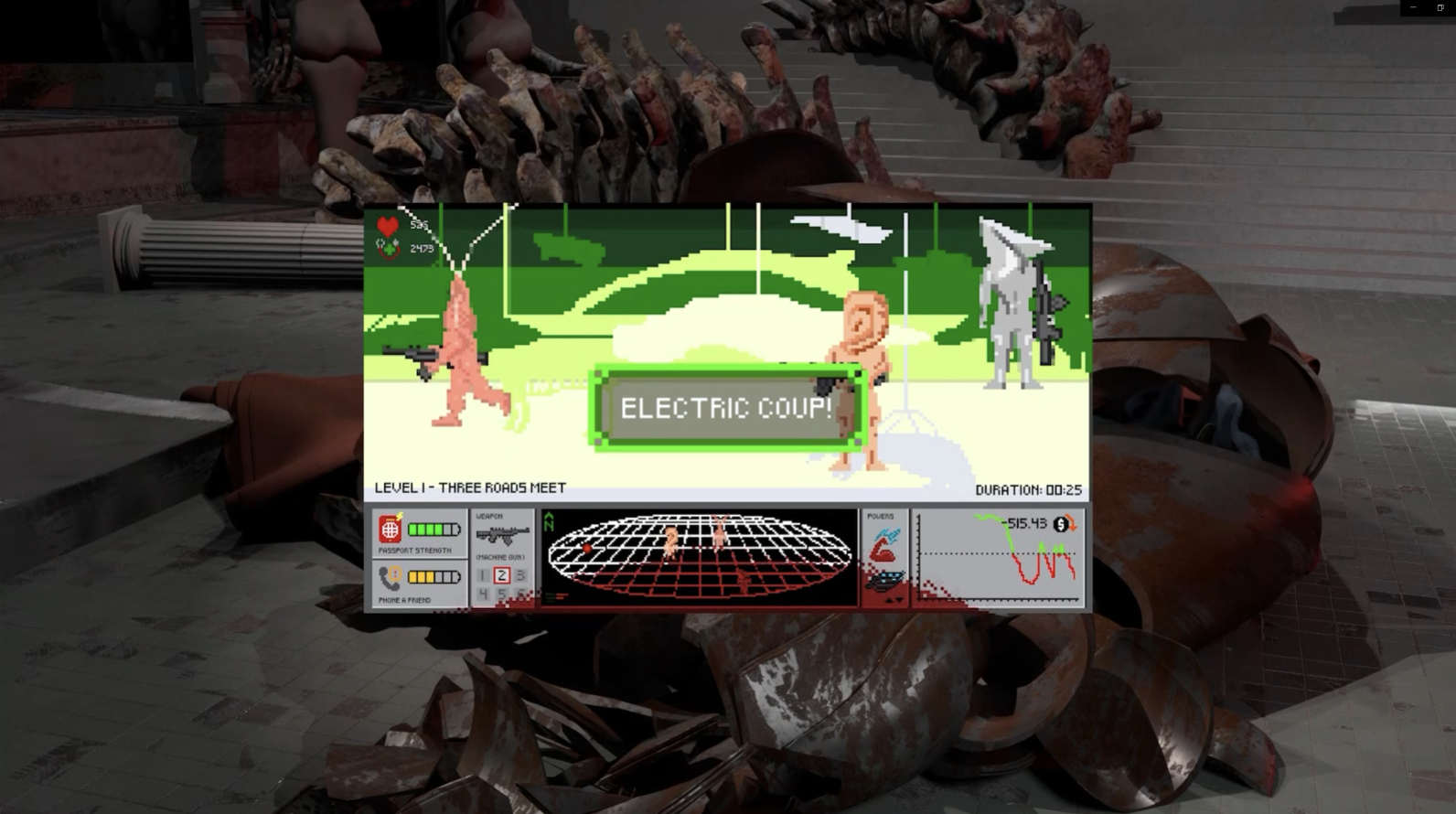
Standard_Deviation II
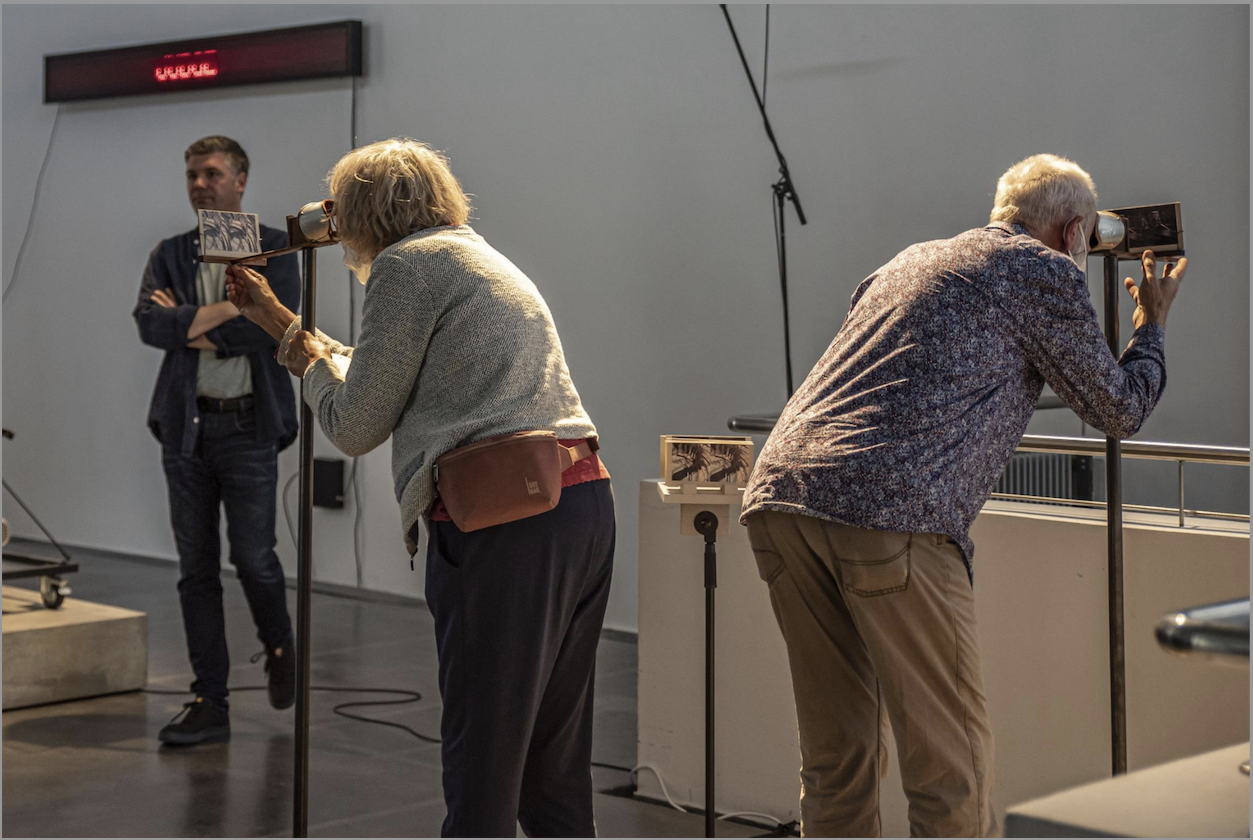
Standard_Deviation II - Solo Exhibition - Haus für Medienkunst (Oldenburg): Standard_Deviation II is a large-scale time-based sonic, visual and networked media installation composed as a one-hour unfolding sequence. Its first full realisation was commissioned by Edith-Russ Haus (currently Das Haus für Medienkunst), Oldenburg, extended across seven spaces and two floors. The work can be reconfigured in relation to other architectures while retaining its score and compositional logic. Taking the cinematic-theatrical world of Standard_Deviation I as a point of departure, this work develops an expanded theoretical, compositional and technical system from the original film. The exhibition presents a new iteration of the film without projecting it. Rather, it redistributes its cinematic operations through the architecture. A cacophonous sound composition and networked-media system form the work’s backbone, carrying the audience from one space to the next while live machinic operations trigger, interrupt, modulate and reroute the composition’s playback. Duration and montage unfold through the movement of the audience and the live activity of the system, while stereoscopic viewers and lenticular lightboxes bring the depth and implied motion of the 3D animation’s scenes into physical space. The audience thus moves through a film whose image is dispersed throughout the building, with sound, light and machinic action assuming the sequencing otherwise performed by the screen. Where Standard_Deviation I conducts a reading of Oedipus Rex, the Sophoclean tragedy functions in this chapter as an infrastructure. Its structures of inheritance, repetition and the production of destiny organise the relations among narratives, rooms, networked media and voices, generating a recursive spatial and narrational logic. At the centre of the exhibition is the Dutch Toeslagenaffaire: the childcare-benefits scandal in which thousands of predominantly lower-income and racialised families were wrongly accused of fraud through algorithmically structured welfare governance. Statistics relating to the scandal are spoken and converted into modulated speed of a reel-to-reel loop, then returned as rhythm, distortion and physical sonic pressure. The work traces the displacement of bureaucratic judgement towards what Hamadeh calls a “procedural machinic conscience”. One apparatus carrying this inquiry combines a self-playing grand piano, organ-book machine and computer developed within Hamadeh’s longstanding project The Ten Murders of Josephine. Reconfingured here within The Destiny Project, the apparatus brings its earlier inquiry into writing, voice, testimony, proxy, prosthesis, encoding and property into the recursive structure of Oedipus. As the system listens to, interprets and re-encodes its own output, the composition becomes increasingly unstable and intense. This feedback passage between sound and text produces affective forms of deviation and excess. Across the installation, self-playing Midi- and CV-controlled instruments and devises (including frame drums, a reel-to-reel loop, a dot-matrix printer, vertically and horizontally rotating leslie-inspired speakers, microphones etc.), alongside a spatialised PA system, manipulated voices, and a telephone network intervene live throughout the sequence, leading the audience through cacophony, narration, near-silence and trance. Sound functions as score, architecture and dramaturgical force, directing attention while allowing bodies, data, voices and machines to read, misread and recompose one another.
Standard_Deviation I
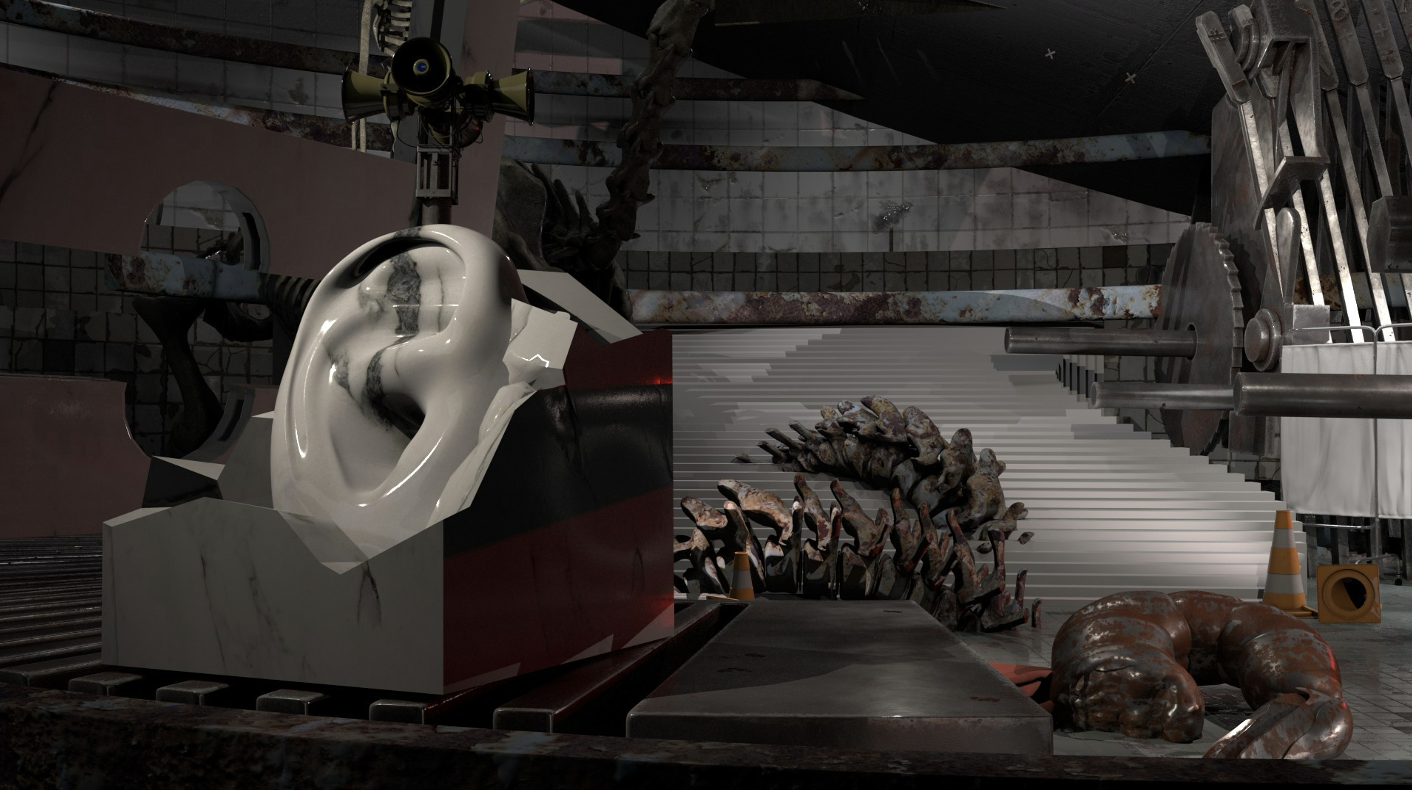
Standard_Deviation I - Standard_Deviation I (2021-Ongoing) Audio-Visual / Theatrical Installation / Solo Exhibition at Secession (Vienna) Vimeo Link: https://vimeo.com/642334068?fl=ip&fe=ec Standard_Deviation I is an audiovisual and theatrical installation composed of a twenty-two-minute 3D and 2D animation, a six-channel (loud and engulfing) operatic composition, a dot-matrix printer printing the work's libretto and DMX-controlled light. The work ventures through Sophocles's famous tragedy Oedipus Rex. Rather than re-narrating the misfortunes of Oedipus, King of Thebes, whose grieving journey of self-discovery unfolds at the height of the Theban plague, it conducts a reading of Sophocles's play itself: that is, a reading of Sophocles's figuration of tragedy. It examines the tragedy's inner workings as a machine: an extended technology of endurance through which prediction, desire and action become entangled in the production of destiny. Within the broader framework of The Destiny Project, Oedipus Rex becomes an interlocutor for thinking through the relations of prediction and agency, and for asking how deviation might be possible today within systems whose outcomes are already inscribed. The film unfolds within an anatomical theater reconfigured simultaneously as stage, dissecting room and computer-game environment. Bodily fragments, furniture and animated objects (a paper plane, a shrimp, a leg, an ear, a mouth, a plastic chair etc.) move through unstable spaces and scales. At one point, a typewriter situated on the stage becomes itself a theatrical stage inhabited by the characters. Theater is revisited within theatre, producing a recursive spatial logic. Drawing on 3D game environments and 1980-1990s 2D gaming aesthetics, the film moves between cut-scene, dream, trance, horror and phantasmagorical tableau vivant. The dramatic movements of Oedipus Rex are translated into changes of scale, space, tempo and orientation. The theater extends beyond the film. When the projected image disappears, the six-channel sound continues and a dot-matrix printer begins producing the libretto under a DMX-controlled light. Image, disorienting spatialized sound, printed language, mechanical noise and illumination become interdependent theatrical forces. This work and its expanded digital environment form the material for a developing computer game.
Standard_Deviation III
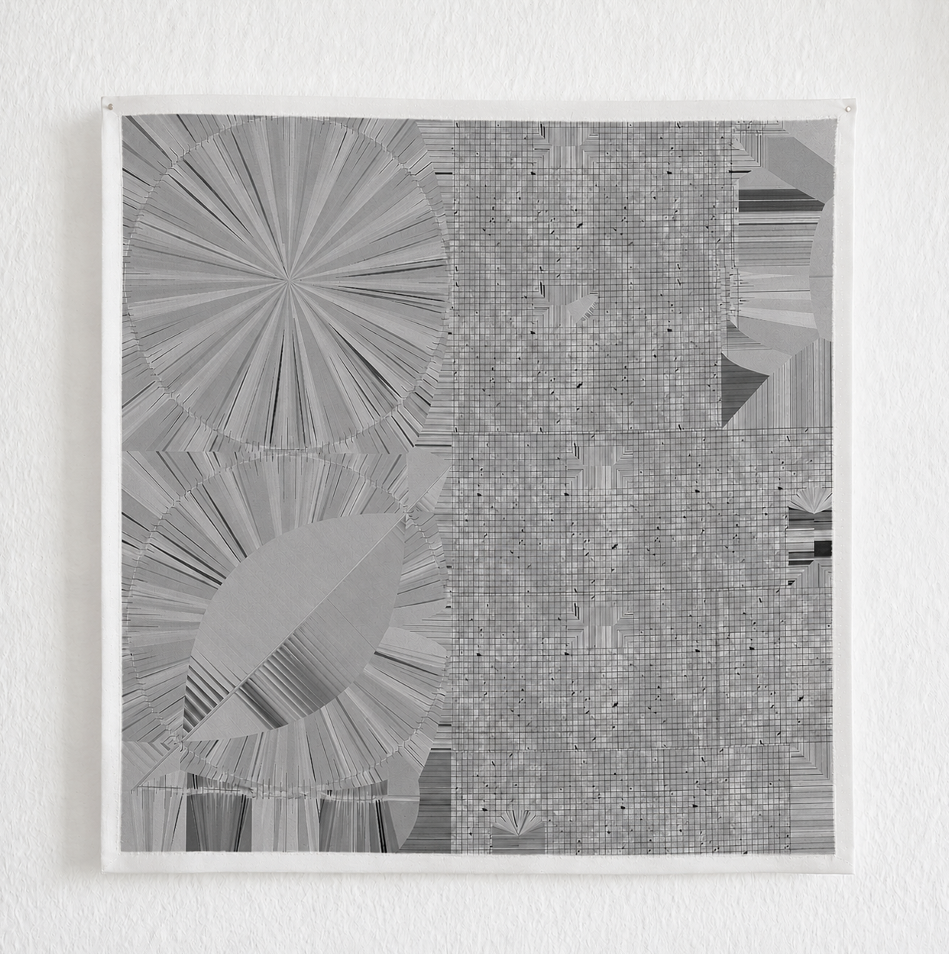
Standard_Deviation III - Standard_Deviation III (2023-ongoing) / Solo Exhibition Kunstverein Arnsberg 80 x Sublimation Prints on Silk; Wooden Maquette; Lenticular Lightbox; Text Standard_Deviation III is a series of eighty sublimation prints on silk developed from the 3D animation of  Standard_Deviation I. Presented alongside selected cinematic and optical elements from the earlier iterations, these prints produce another account of the film. The prints derive from the UV texture maps of the film’s 3D models: files whose purpose is ordinarily to disappear inside the finished image. UV texture maps are production surfaces. They are fragmented, distorted and cut apart so that they can be wrapped around three-dimensional models, allowing the rendered object to appear whole, volumetric and seamless. They are often described as digital skins, but they are not autonomous images. In this work, they are approached as translational intermediaries, mediating between flattened surfaces and volumetric form: i.e. the model and its appearance. The prints move attention away from what the film shows towards how visibility is manufactured. They visualise a contradiction internal to its digital representation: the sleek rendered object absorbs the aesthetic assumptions and technical decisions embedded in software into a seamless image, while the UV map registers them as its very form. And it is this form that the work is concerned with. If Standard_Deviation I constructs the rendered cinematic world and Standard_Deviation II redistributes cinematic operations into architecture and sound, Standard_Deviation III performs an analytic reversal of the film, turning it inside out and narrating it through the technical surfaces from which its objects were assembled. The film supplies sequence through time; the silk works redistribute that sequence across walls and rooms. The audience no longer receives a fixed cinematic duration, but assembles relations by moving, comparing and excavating. The prints ask the film to be read rather than only watched: to be encountered from the side of its archaeology, through the conventions and labour from which its visual coherence is made.
The Destiny Project: Soft Measure Fables
The Destiny Project: Soft Measure Fables - The Destiny Project (2020-Ongoing) Long-term artistic research and production framework Introduction The Destiny Project is a long-term framework initiated in 2020, under which Hamadeh develops works concerned with the production, consumption, circulation and articulation of desire across contemporary public life and its computational infrastructures. It attends particularly to the economies, technologies and destinies/destinations of (machinic) desire, as manifested in and shaped by predictive and prescriptive analytics, and questions of data and algorithmic justice. At its centre is the extended question: Can the machine strike? The principal body of work produced to date under this framework is the ongoing Standard_Deviation series. The series takes Sophocles’s Oedipus Rex as an interlocutor, reworking its narrational architecture and dramaturgical logic. Oedipus Rex becomes an operational dramaturgy through which prediction, knowledge and desire are recast in computational terms. The project considers the body of desire, its limits, folds, libidinal economies and relations to pleasure, life and death, alongside what Hamadeh calls ‘procedural machinic conscience’: the displacement of bureaucratic judgement towards predictive welfare systems, risk assessment, algorithmic adjudication and the growing use of AI within legal and military procedures. Parthenogenesis, self-similarity, fractal reproduction, scale and castration are brought into relation with computational life as a ‘paradigm of endurance’, while the project reads computation across biology, psychoanalysis, law and histories of labour and labour movements. Twentieth-century genealogies of strike increasingly inform the project’s central axis and future trajectory. Works currently in progress – code poems and diagrammatic systems – place computation in relation to repertoires of strike, asking what becomes of refusal when labour, judgement and production are organised across human and machinic agents. ////// The Destiny Project: Soft-Measure Fables (first iteration under The Destiny Project) comprises three short animated episodes produced for online streaming as part of Paranoia TV, steirischer herbst ’20. They are the first works made under The Destiny Project and the earliest articulation of what later became the Standard_Deviation series. The episodes venture through Sophocles’s Oedipus Rex by treating tragedy as an arrangement of procedures, relays, placeholders and dramatic cues. Moving between dream, trance, horror and phantasmagorical tableau vivants, each clip forms a provisional game space in which the tragedy’s internal machinery is redramatized. The Theban plague resonates with the conditions of 2020 without becoming a topical allegory. The work is concerned instead with how tragedy organises foreknowledge, action and consequence, and with how destiny is produced through the very attempts made to evade it. Made as three discrete online segments, Soft-Measure Fables retains an episodic structure: each clip enters the tragedy through a different opening and suspends its machinery rather than resolving it into a continuous narrative. The segments later became source material for Standard_Deviation I, where they were re-edited, extended and incorporated into a substantially expanded cinematic and theatrical environment. These episodes also provide the foundation for a computer game currently in development.

If Not Here, Then Where? / Making Our Home in Shared Struggle

Datum:
Locatie: BAK basecamp
In samenwerking met: Dutch Art Institute

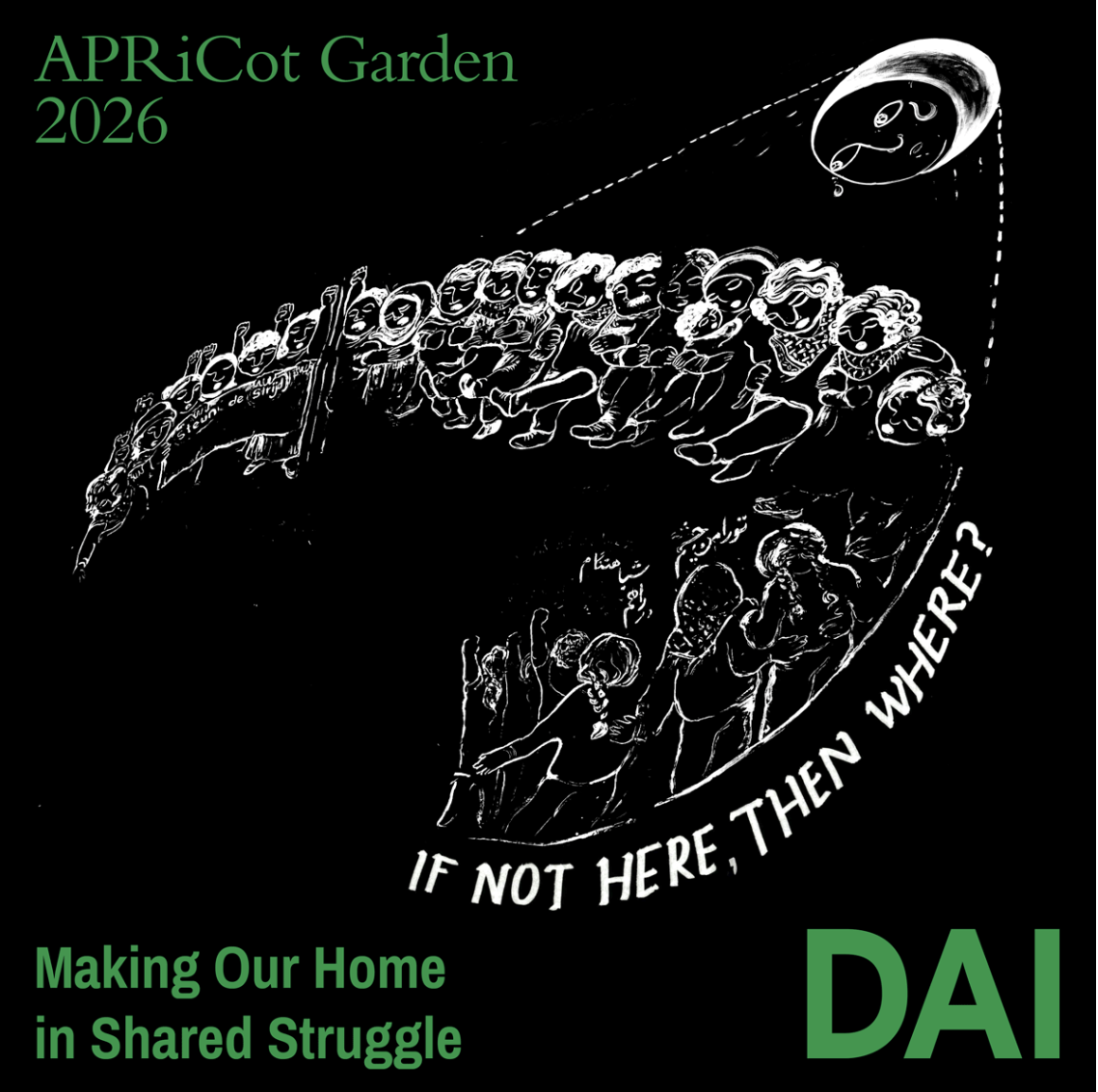
We come together to refuse the neoliberal logic that thrives on shifting systemic problems onto individual shoulders. To reject frameworks that treat the psychological endurance of the oppressed as beautiful, redemptive, or a spiritual currency; to refuse narratives that alchemize trauma into strength or offer hollow uplift. We come together to reject blind, dogmatic class-reductionism. To refuse the argument that treats race and gender as mere “distractions” or simple byproducts of capitalism.
https://dutchartinstitute.eu/page/31935/invitation-3-4-october

On The Edge of Chaos

Datum:
Locatie: Museum of Textile

How can we find our way in a world where wars, climate catastrophe, forced migration, and social crises are becoming an everyday reality? Is it possible today to think about community and solidarity beyond the simple division between “us” and “them”? The exhibition “On the Brink of Chaos” addresses these questions, inviting viewers to reflect on the present day as a a moment of limbo between the collapse of familiar orders and the possibility of new forms of social life emerging.
https://lodzwielukultur.pl/en/wydarzenia/on-the-brink-of-chaos-exhibition/

Thresholds of Control

Datum:
Locatie: Simondi Gallery

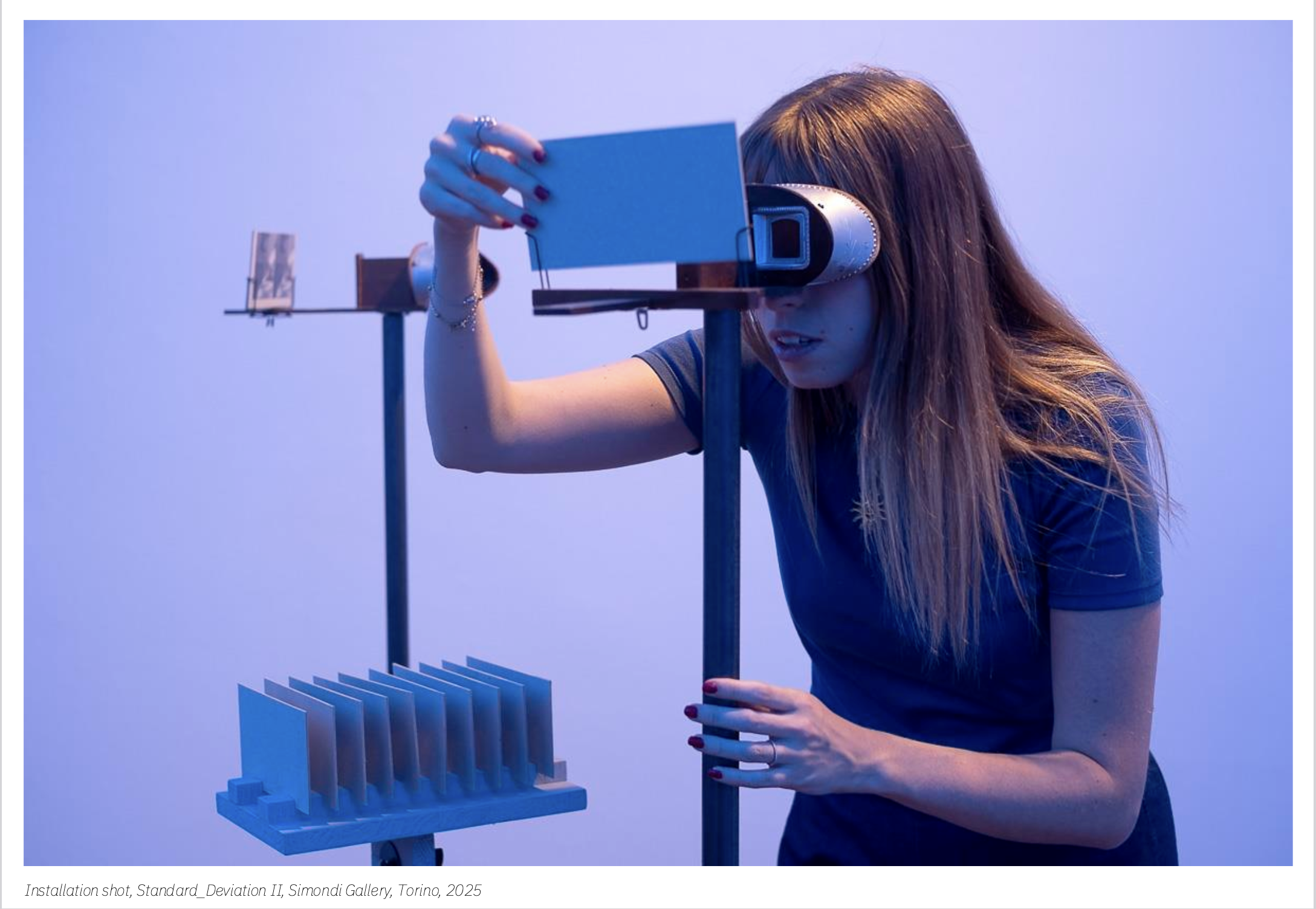
Thresholds of Control offers an urgent and layered investigation of the age of technocracy, where power is structured through algorithms, control systems, and automated narratives. In a context dominated by the opacity of technologies and responsibility has been entrusted to artificial intelligences, the works on display open up spaces for critical reflection, questioning how dreams, bodies, memories and desires are collected, archived, manipulated, and disciplined.

https://simondi.gallery/eng/exhibitions/thresholds-of-control-bodies-and-memories-in-the-age-of-technocracy

Standard_Deviation II

Datum:
Locatie: Edith-Russ-Haus
In samenwerking met: Edith-Russ-Haus

Hamadeh's solo exhibition Standard_Deviation II will occupy the entire Edith-Russ-Haus for Media Art. It comprises a new time-based sonic, visual, and networked-media installation that extends over the building's two floors, turning the exhibition spaces into one living, breathing theatrical machine. This tentacular, cacophonous installation is the latest in Hamadeh's Standard_Deviation series, part of the longstanding discursive umbrella project The Destiny Project (2020–).

https://www.e-flux.com/announcements/467255/rana-hamadehstandard-deviation-ii/
Deze kunstenaar heeft nog geen toekenningen.