Roberta Di Cosmo

urban , sociaal-maatschappelijk , samenwerking , publieke ruimte , natuur , Lichaam , land art , installatie , Globalisering , film , Ecologie , Documentair , Diversiteit , Design , Conceptueel , Communicatie , Community , Artistiek onderzoek , Archieven
Rebirth-Trauma as Performative Process
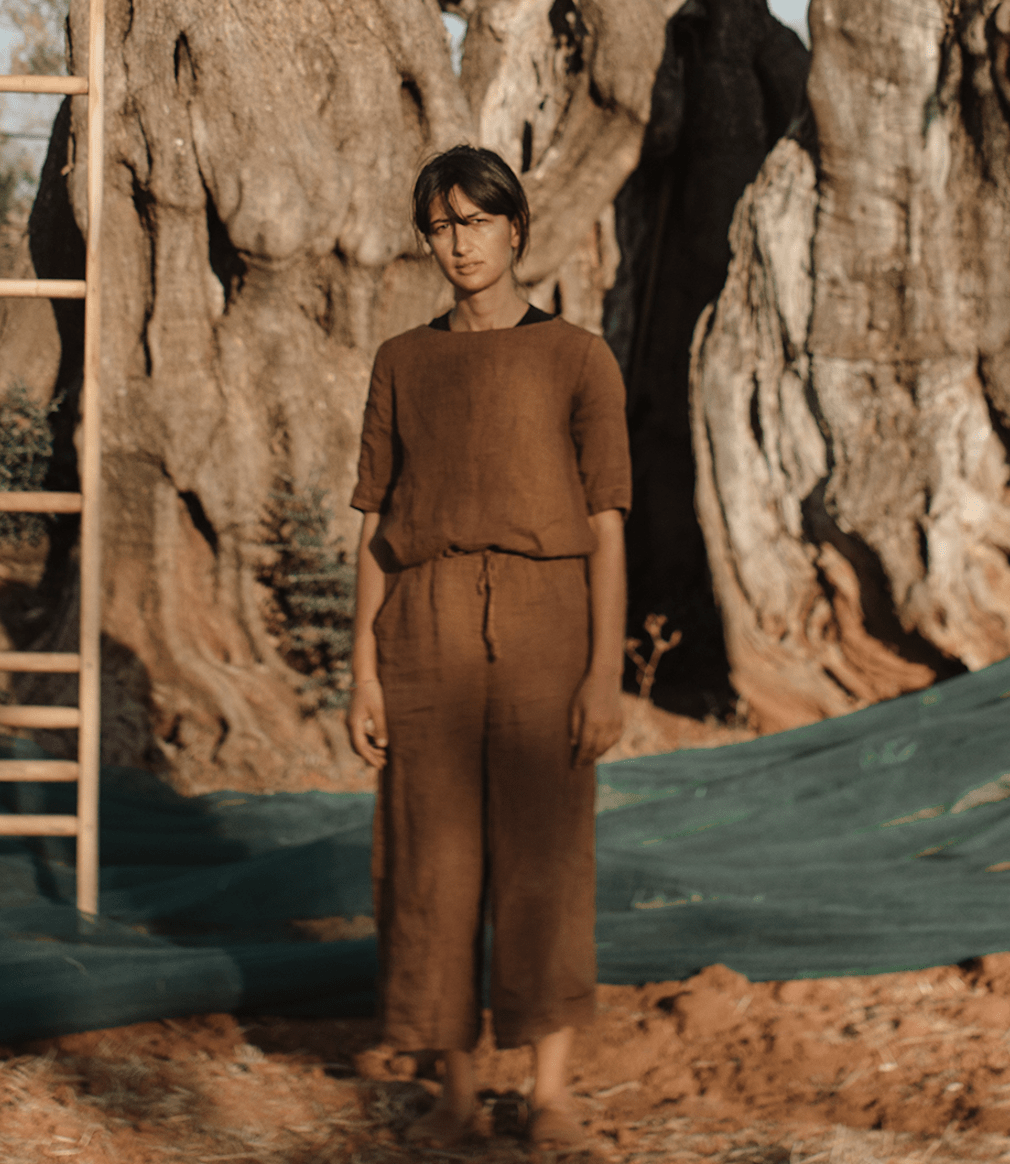
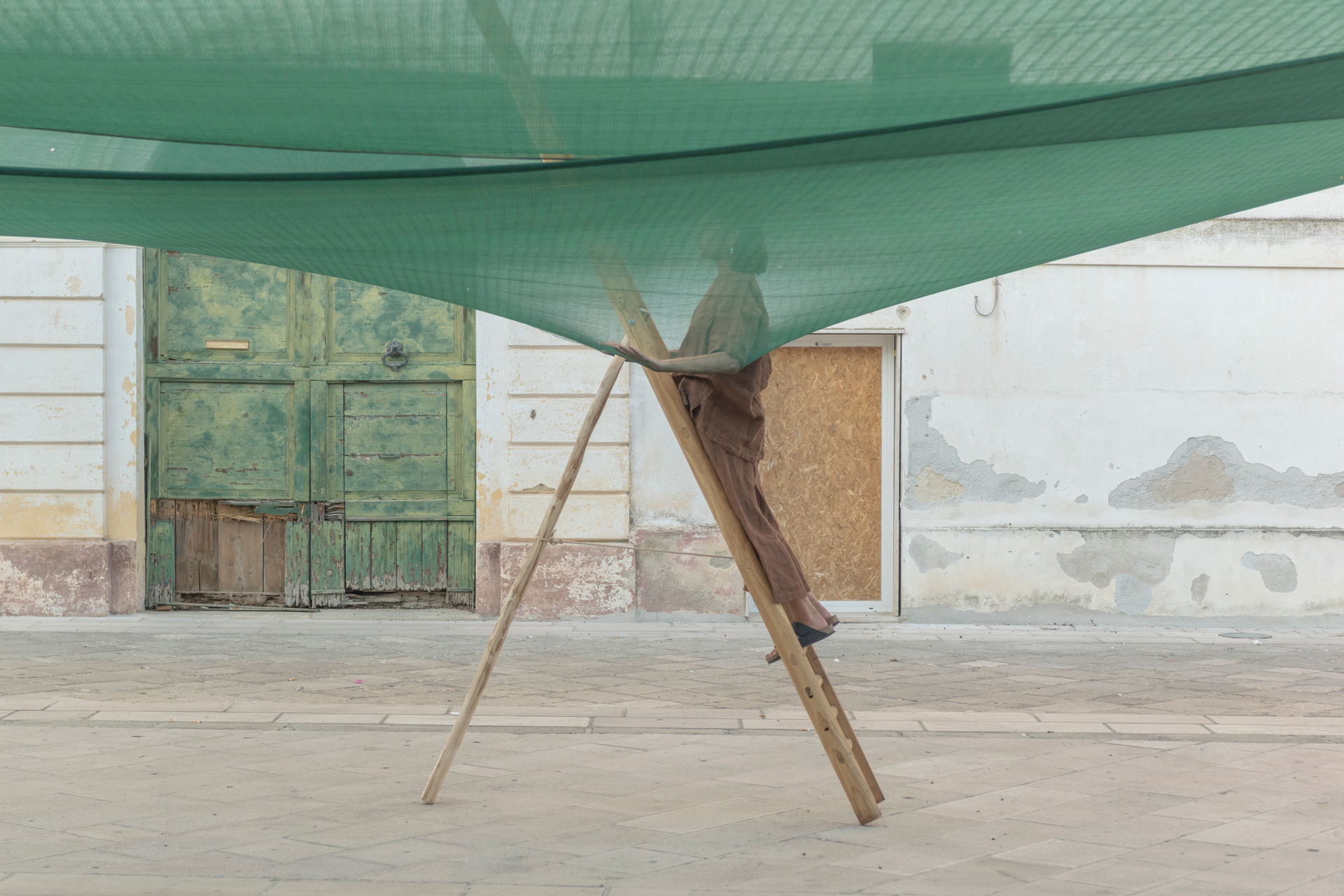
Rebirth-Trauma as Performative Process - In recent years my land has been affected by a killer bacteria, Xylella. A disease that has travelled more than 10,000 kilometres before reaching Puglia. The bacterium Xylella has found a new home in the green archetype of my culture – the olive tree. Today, scientists estimate that one million olive trees in the peninsula are infected. We're losing a familiar landscape, an agricultural surroundings part of our identity and our memory. We are losing a sense of history, a part of the family, a kinship with the landscape. We are experiencing a collective trauma. A trauma that is recorded in our memory, but has not been addressed yet by the community. What does it mean to lose the sense of a place that is part of our history? This thesis investigates how trauma can be a resource rather than a wound, how mourning can be an action that grows fruit, a generative analysis of a territory, rather than a passive look at the withering flower. It is by bringing society together that we can begin to heal the wound of communities that have watched their trees – their histories, their roots, – being torn out of their soil. In this way, the landscape is a key piece that may help unlock the secrets to the question of living with trauma. In July my journey to the south of Italy began, and I chose the city of Racale as the perfect setting for my project. Racale is in the province of Lecce and was one of the first cities to be affected by the bacteria. In Piazza, San Sebastiano is the main square of the city, and I decided to start from the central square because the whole life of Racale revolves around this place. The square since 10 years ago was the market of ladders before the harvest season. It is the place where all generations meet. From 26 July to 31 July 2020, I installed the nets, following the same harvesting rhythm, working with the usual harvesting tools and experimenting with them in order to understand and figure out different possibilities for new rituals. The ladders played an important role as part of the activation of the performance and the marking of the beginning of the ritual. Five days that, like clockwork, reactivated a harvest that is no longer part of this landscape, reviving memories that are still part of the community's identity a performance that invites a collective rethinking of our relationship with the landscape. In this way, it explores the passages related to trauma and mourning as an asset to rebirth.
Evo-A Biopolitical Cookbook
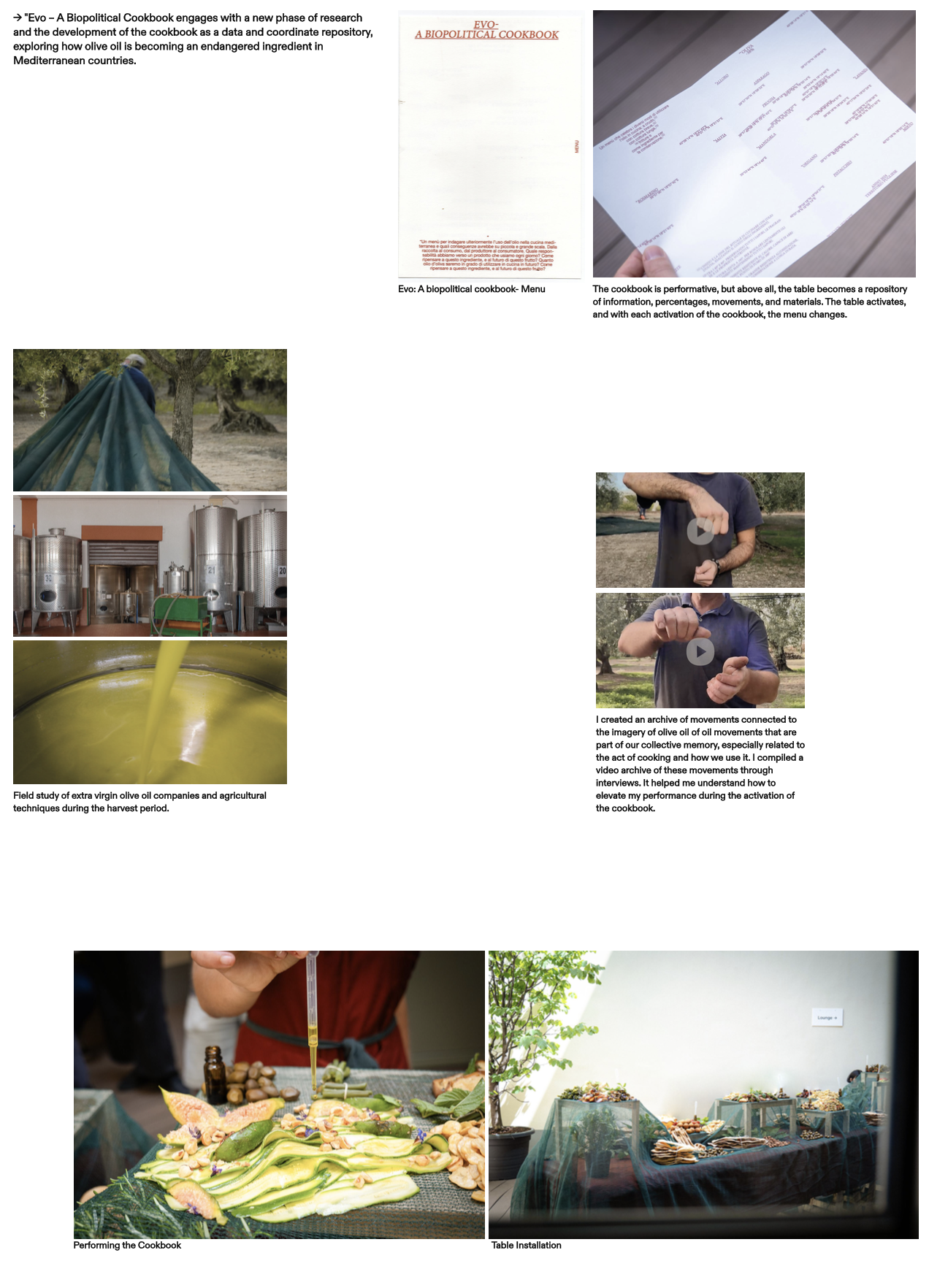
Evo-A Biopolitical Cookbook - Evo-A biopolitical cookbook is a design experiment aiming to bring oil to the table of international audiences as a cooking ingredient, a process of extraction, a product of globalization, and an endangered species but mostly kinship. In this project olive oil is both an ingredient and the subject of research; the cookbook is the final design outcome and tangible media for collecting and disseminating knowledge through the action of cooking, a process for research and experimentation with food, culture and senses collectively. Most importantly in Evo-A biopolitical cookbook, cooking aspires to unveil the politics of oil by integrating into its design traditional recipes and its geopolitical relevance. This project is speculating on the future uses of olive oil and its production. How will it change over time and what possible scenarios will be taking shape from the kitchen environment to recipe outputs? What would the oil bottle of the future be like? How much olive oil will we be able to use in cooking? Will oil be able to age like wine? How will it be stored? How will it be tasted? Evo addresses the field of design that remains close to the experience of food and is interested in climate change and its consequences. The design approach will be geo-political, using easy-to-read and common tools such as a cookbook to be able to engage in new scenarios of imagination. Since ever, food has been a token for many rituals and today, even more, thanks to the possibilities it offers to gather audiences around a table and create experiences. Evo looks at olive oil in its evolution through different periods and uses of the same; starting from the history of olive oil as a luxury ingredient (the green gold), to the moment it became a common go accessible to many, to the expanded distribution of this product on a global scale. Evo looks further, at the future of olive oil through a design lens in order to draw some new trajectories given the gathered awareness on the topic.
Present By Nature-Exploring the cosmology of a leftover land
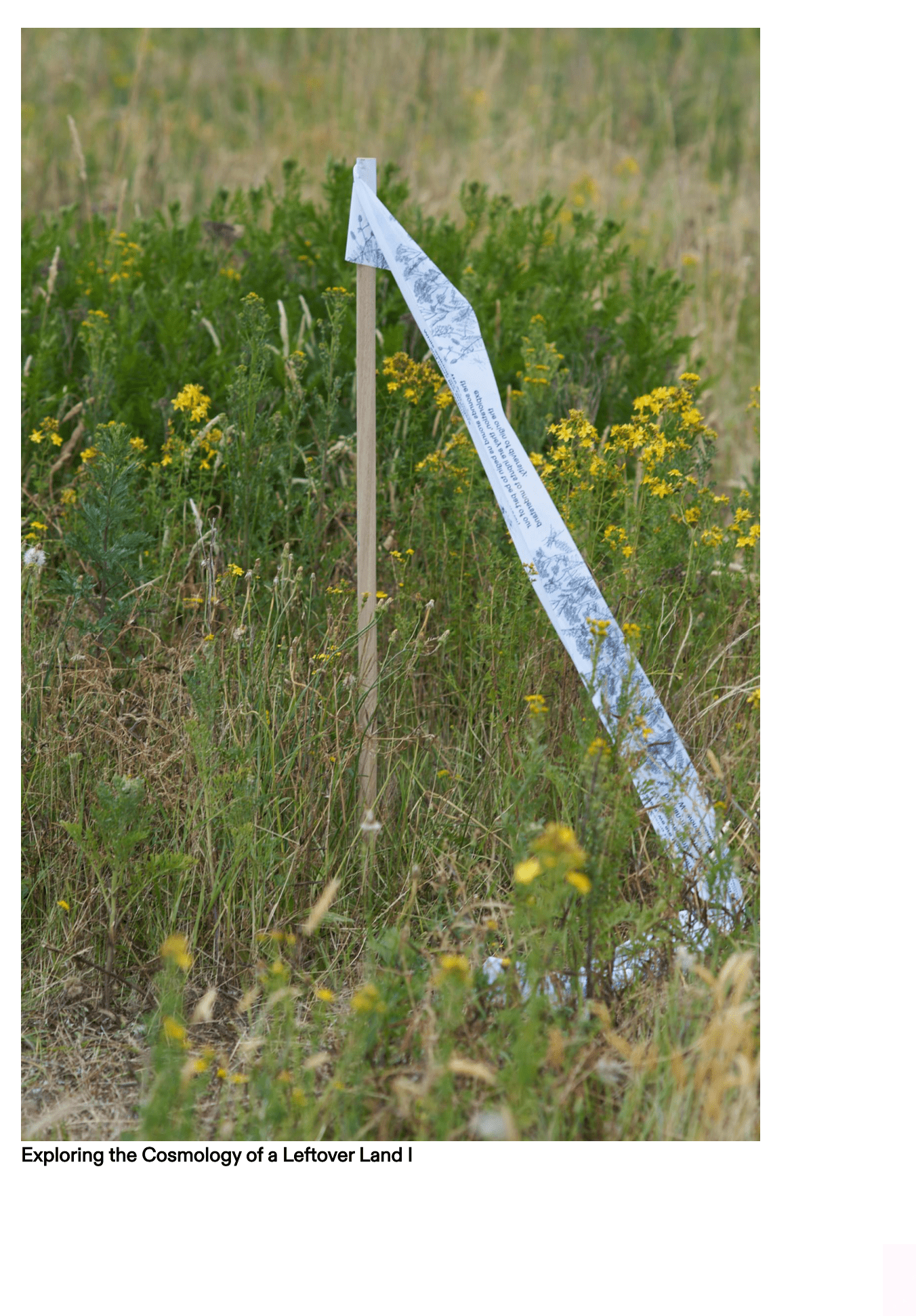
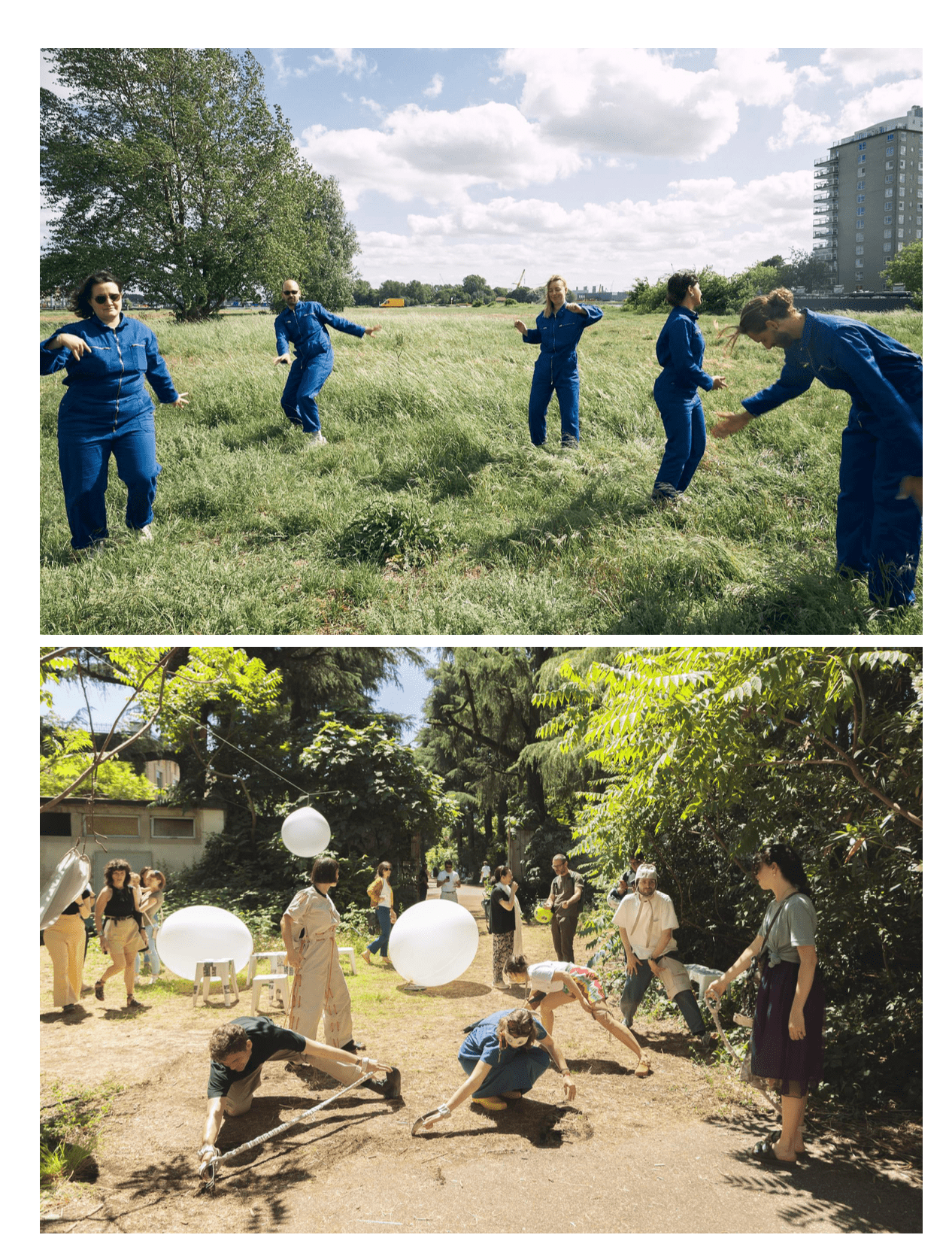
Present By Nature-Exploring the cosmology of a leftover land - Third Landscape as a biological necessity, conditioning the future of living things, modifies the interpretation of territory and enhances areas usually looked upon as negligible. It is up to the political body to organize ground division in such a manner as to assume responsibility for these undetermined areas, tantamount to concern for the future. –Gilles Clément Starting from the notion of the third landscape by Gilles Clément, we dive into the exploration of Plot 003, one island of the archipelago of leftover land of Rotterdam, and we meet its inhabitants. Throughout the three-day experience, insects and plants have been the leading voices of the participatory act in the intervention area. Plot 003 has been experienced as an open construction site where we operated with an archaeological approach. We have been carried by the textures and plant density, the number of insects and their way of moving, the structure of the soil and the movement of light and shade. Observation and proximity to the space allowed us to map how it looks today and stimulate curiosity, outlined through small acts to narrate our experience.
Geographies from the gap I-II-III
Geographies from the gap I-II-III - Geographies from the Gap is a non-verbal LARP (Live Action Role Play), that aims to give the players a physical, explorative experience. The players are introduced to the larp through a 1 hour workshop and the larp itself runs for approximately 1 hour. This larp wants zoom into the life of the microscopic world of insects and plants, exploring their ability to constantly re-adapt their ecosystem in contexts under the ever ending influence of humans. Humans live in a world. Every other species does too. According to the perspective, these worlds might be the same, perfectly aligned, or different, irrevocably dissociated. The intention is to record and collect the interdependence between the macro (zoom out) that observes the territory from a human perspective, and the micro (zoom in) that discovers the unfolding of the ecosystem/cosmology’s network, characteristic of the nature of the harbour areas. Present by Nature sets out to experience and comprehend the natural ecosystems surrounding us, parting from the human-like ideas and attitudes and learning adaptation and adaptation from the geography around us. Thanks to LARP we shift the focus from questions of where things are to how they hang together, allowing the exploration, collection and archivation while existing on the micro-scale. The game-shaped research aims to explore places where the absence of human activity has created a refuge for the preservation of biological diversity. What is “weeds” becomes here a place and a privileged element of ecological change. Starting from the notion of the third landscape, it is that we decide to follow the narrating voice of nature in those lands where it reclaims its presence. Taking inspiration from the writings about the Third Landscape of Gilles Clement, [The third landscape refers to places that have been abandoned by man, almost invisible spaces. In the third landscape we find places where the absence of human activity has created a refuge for the preservation of biological diversity. What is 'uncultivated' or what we call 'weeds' becomes here a place and a privileged element of ecological change.] we will immerge in those leftover lands to experience a collective story. Together, we will adopt the fiction of: The travellers, transporters, guardians and mediators are four groups of micro-beings living in nature. They have learned how to coexist with humans in different ways and are aware that each time the macro-space-dwellers intervene on the landscape, they will have to reclaim it back. This game plots a journey that involves decoding and re-interpreting leftover landscapes; collecting and rearranging elements, leaving behind a trail, embodying and feeding an ecosystem we belong to.
Dripping tales of the undomesticated
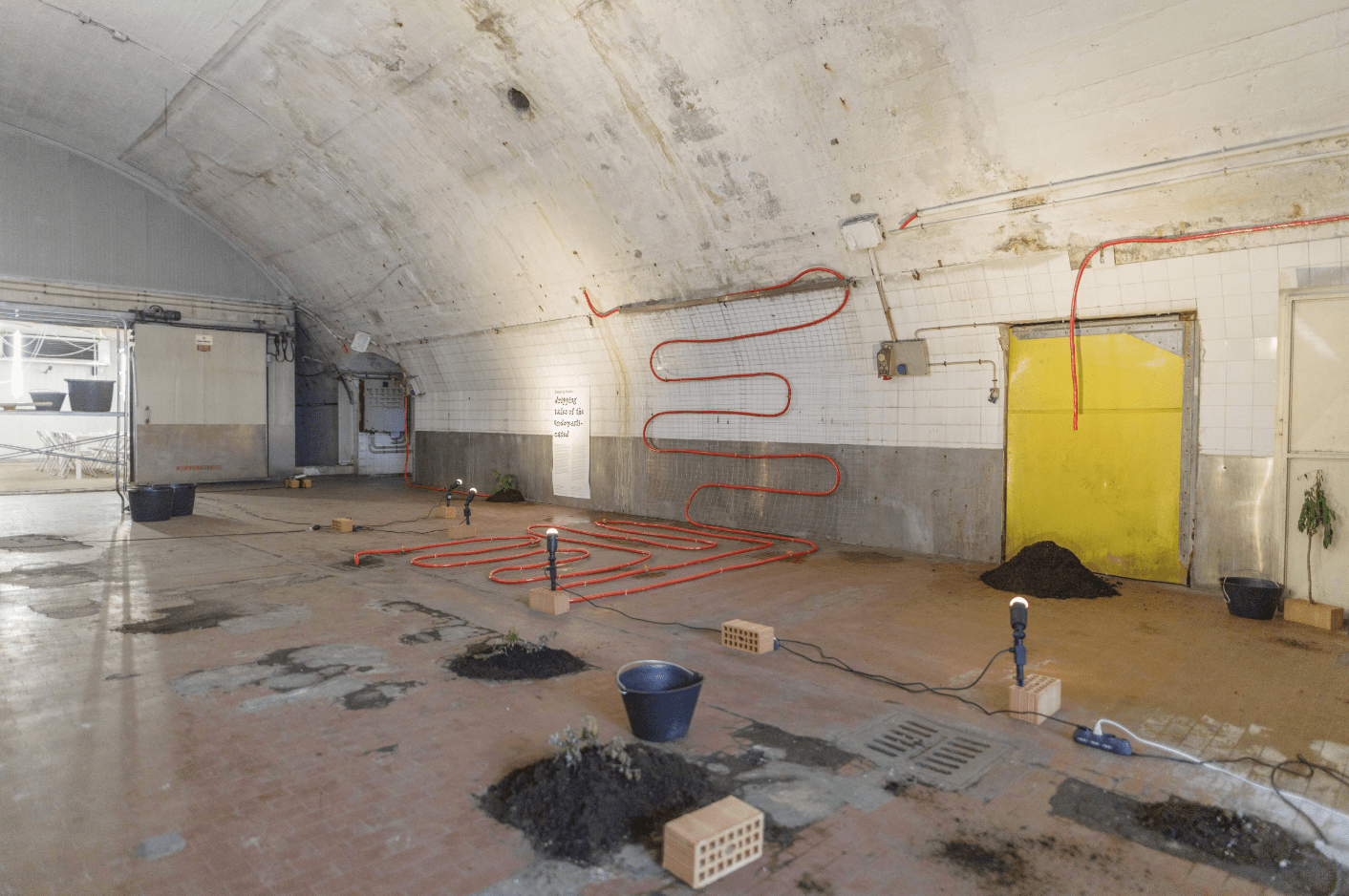
Dripping tales of the undomesticated - Starting from the notion of the third landscape, it is that we decide to follow the narrating voice of nature in those lands where it reclaims its presence. Present by Nature sets out to experience and comprehend the natural ecosystems surrounding us, learning adaptation from inadaptation. Storytelling becomes a tool for shaping and sharing the experience, whereas fiction sets the pace for collecting a repertory of traces of collaborative research-creation. The traces can be reactivated and each time is to initiate a new iteration. Here we follow the water as a guide and the infiltration as its map, to explore a space where the absence of human activity has created a refuge for the preservation of biological diversity. The intervention will unfold and emphatise the proliferation of the leakage, accompanying its flow around the tunnel and out of it, slowly discovering what this collusion of macro and micro scale can convey.
Seed Organismo
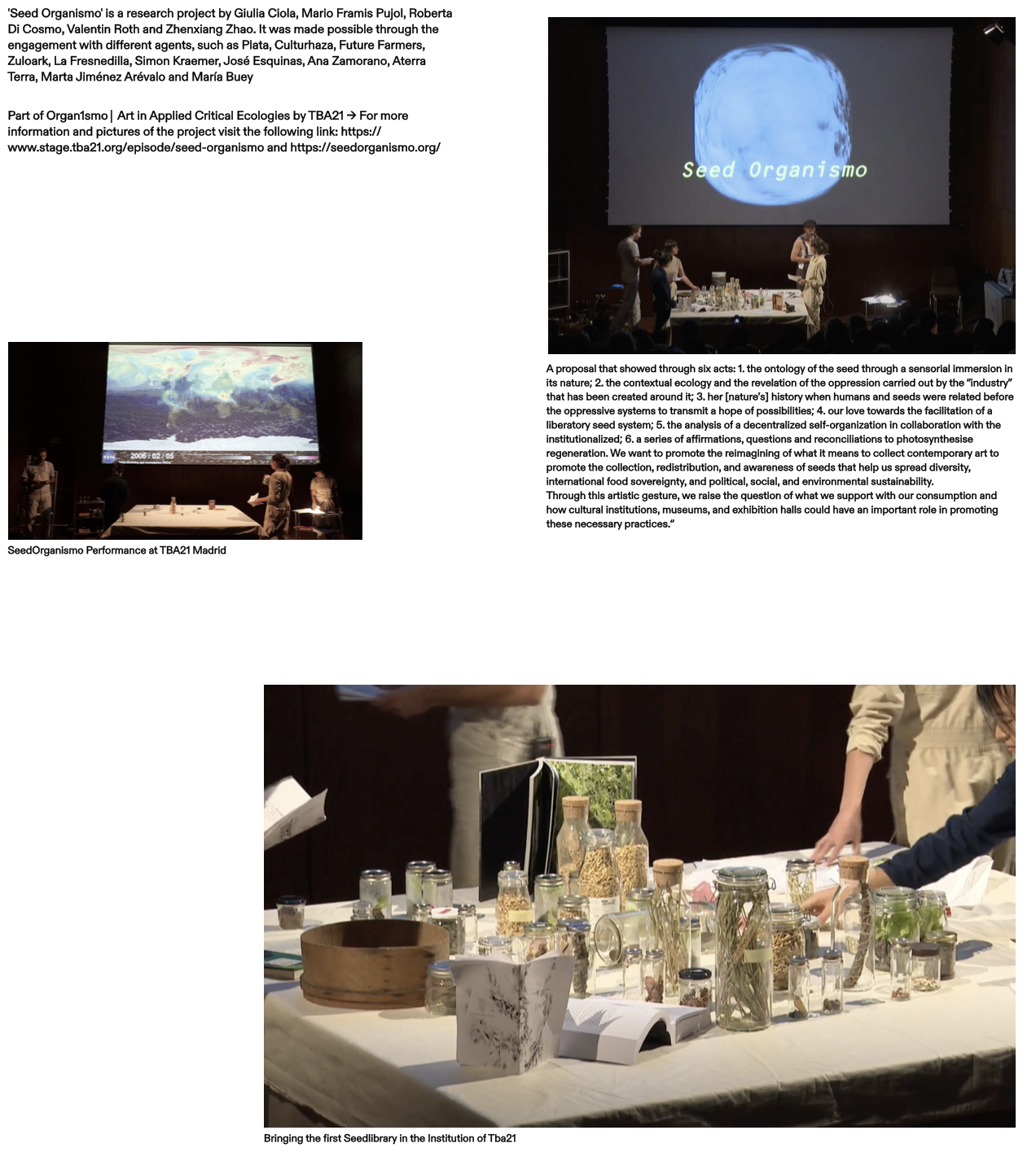
Seed Organismo - Seed Organismo is an initiative to cultivate biodiversity and uncertainty, a project that aims to generate connectivity and engage in participatory networks for the exchange of seeds and ancestral agricultural knowledge. Seed Organismo is a call to action for institutions to take an active part in these processes and strengthen links with the agroecological initiatives in the cities. The Seed Organismo initiative can manifest in different ways. On one hand, it is a digital platform that aims to connect similar proposals and seed libraries across borders. A proposal that showed through six acts: 1. the ontology of the seed through a sensorial immersion in its nature; 2. the contextual ecology and the revelation of the oppression carried out by the “industry” that has been created around it; 3. her [nature’s] history when humans and seeds were related before the oppressive systems to transmit a hope of possibilities; 4. our love towards the facilitation of a liberatory seed system; 5. the analysis of a decentralized self-organization in collaboration with the institutionalized; 6. a series of affirmations, questions and reconciliations to photosynthesise regeneration. We want to promote the reimagining of what it means to collect contemporary art to promote the collection, redistribution, and awareness of seeds that help us spread diversity, international food sovereignty, and political, social, and environmental sustainability. Through this artistic gesture, we raise the question of what we support with our consumption and how cultural institutions, museums, and exhibition halls could have an important role in promoting these necessary practices.“
Zachte Lobby
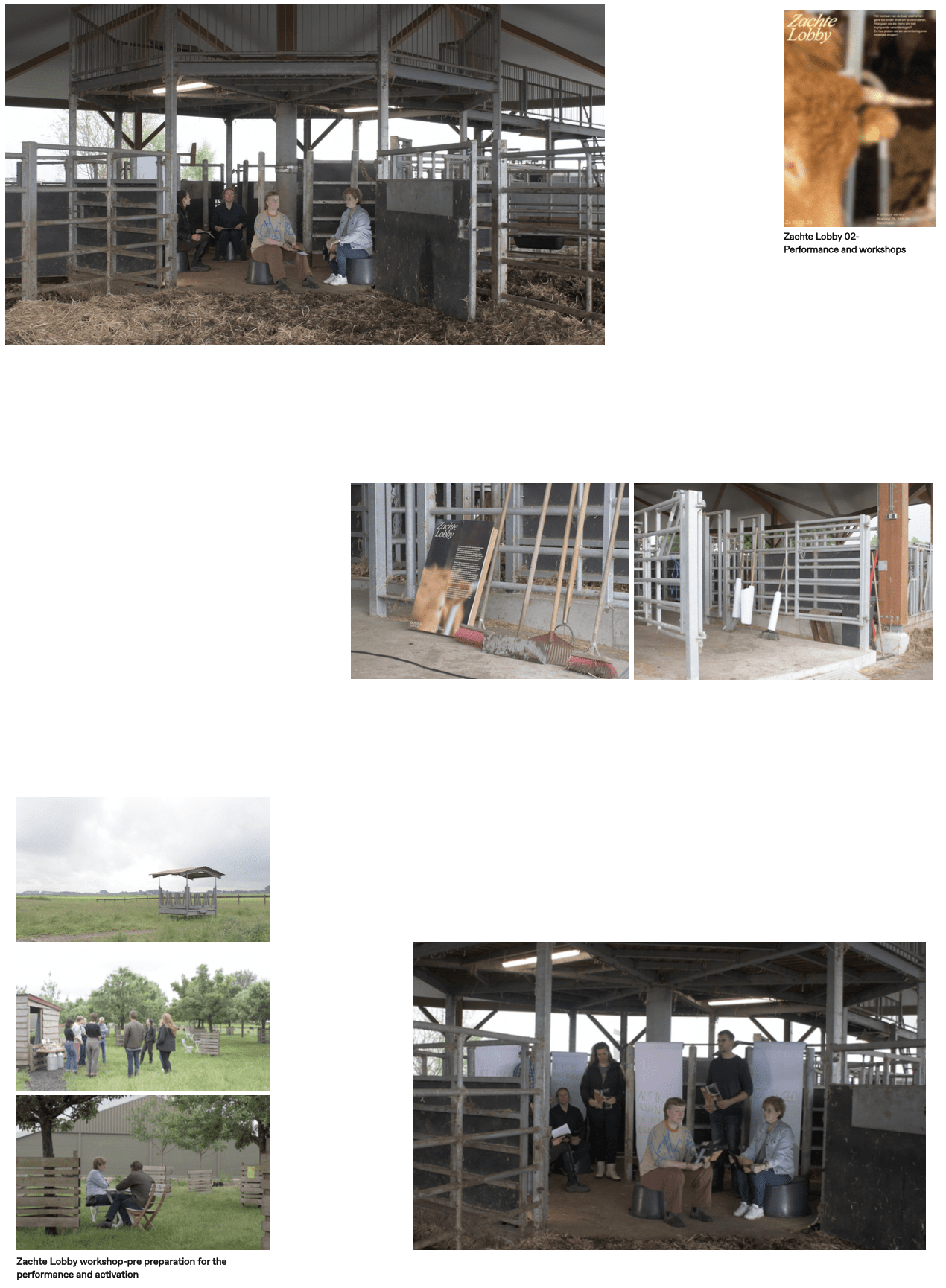
Zachte Lobby - The farmer's existence has been under pressure to change for a long time. How do we as humans deal with drastic change? And how do we as a society talk about difficult things? With the Soft Lobby, we want to make space for vulnerability and multivoicedness in the social debate. The Soft Lobby consists of a workshop and performance on a farm bringing together local farmers and local singers. In the workshop, personal one-to-one conversations between farmers and singers create the lyrics for the performance. The workshop encourages you to put yourself in the other’s shoes by literally repeating the other person's words and answering questions such as 'What do you have doubts about’'? The questions themselves zoom into the human experience of change and thinking about our futures, allowing new ‘soft’ and humane language to emerge from a conversation about change. The workshop, held in a significant space within the farm's oldest architecture, commenced with introductions to create a collective moment. Pairs of farmers and singers engaged in dialogue, responding to five questions provided. The workshop concluded with the creation of the first step in the ritual and performance. architecture, commenced with introductions to create a collective moment. Pairs of farmers and singers engaged in dialogue, responding to five questions provided. The workshop concluded with the creation of the first step in the ritual and performance. Transitioning to the Ritual and Performative Activation, participants moved to the potato- packing and sorting space, where a local audience and participants' families joined. Farmers entered holding scrolls with answers developed during the workshop, while singers, stationed at the stands, ritually sang the farmers' responses. This collaborative chorus transformed the space, providing a platform for freely sharing thoughts and manifestos on agricultural, political, and social life. The participatory act emphasised a collective voice, shifting the usual ritual into a new and insightful perspective.

Rebirth-Trauma as a performative practice

Datum:
In samenwerking met: Cooperativa Racale

Working with harvesting tools to explore possibilities for new rituals, the installation is combined with a performance that invites a collective rethink of our relationship with the landscape and the community. A performance that reactivated a harvest that is no longer part of this territory, reviving memories that are still part of the community’s identity. In this way, Roberta Di Cosmo explores how to live with trauma and use mourning as a resource for rebirth.

https://www.robertadicosmo.com/re-birth
Deze kunstenaar heeft nog geen toekenningen.