Roos Schneijderberg

sociaal-maatschappelijk, sculptuur, schrijven, publieke ruimte, mens, land art, installatie, Gender, cross-over, Conceptueel, Autobiografisch, Artistiek onderzoek, Analytisch, Abstract

Roos Schneijderberg (1977) is a Dutch multidisciplinary artist. With her highly diverse, bold yet serene works, she invites the viewers to explore their spacious inner world. Today, the essence of her work consists of introspective transformative site- and situation-specific creations, to offer people serenity, spaciousness, and self-reflection.

Her work includes land art, scenery creations, sculptures, conceptual furniture, mixed media objects, (video) installations, paintings, poems and photography. Her background in psychology and advertising paved the way for her conceptual thinking and emotion-based messages in her works. Her style is sophisticated yet bold presented with some serious lightness. Introspection, femininity, and a refined abrasive interaction between imperfection and radical aestheticism are recurring themes in her oeuvre.
THE PAIN ALSO KNOWN AS 'I REMEMBER YOU', 2025
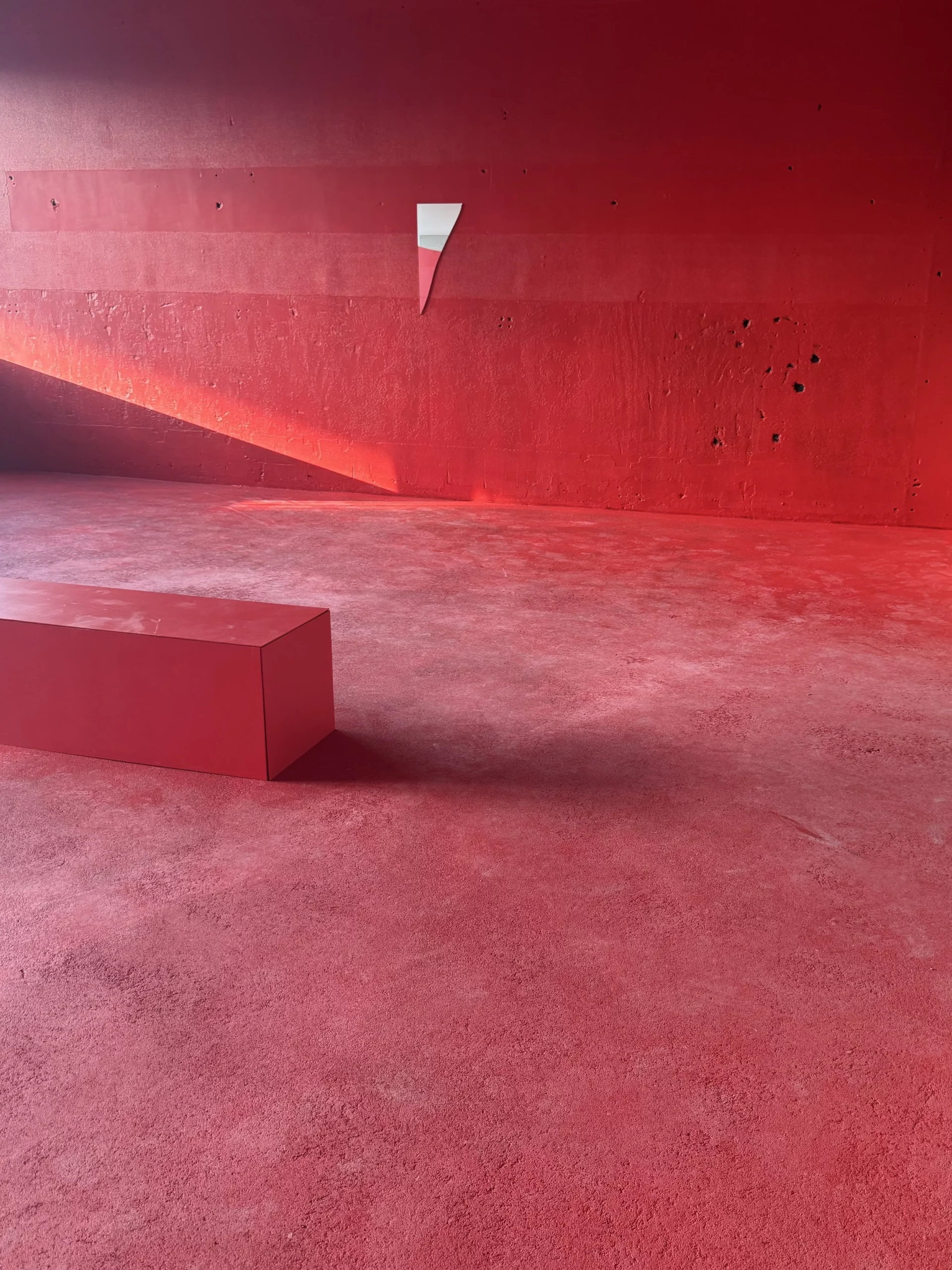
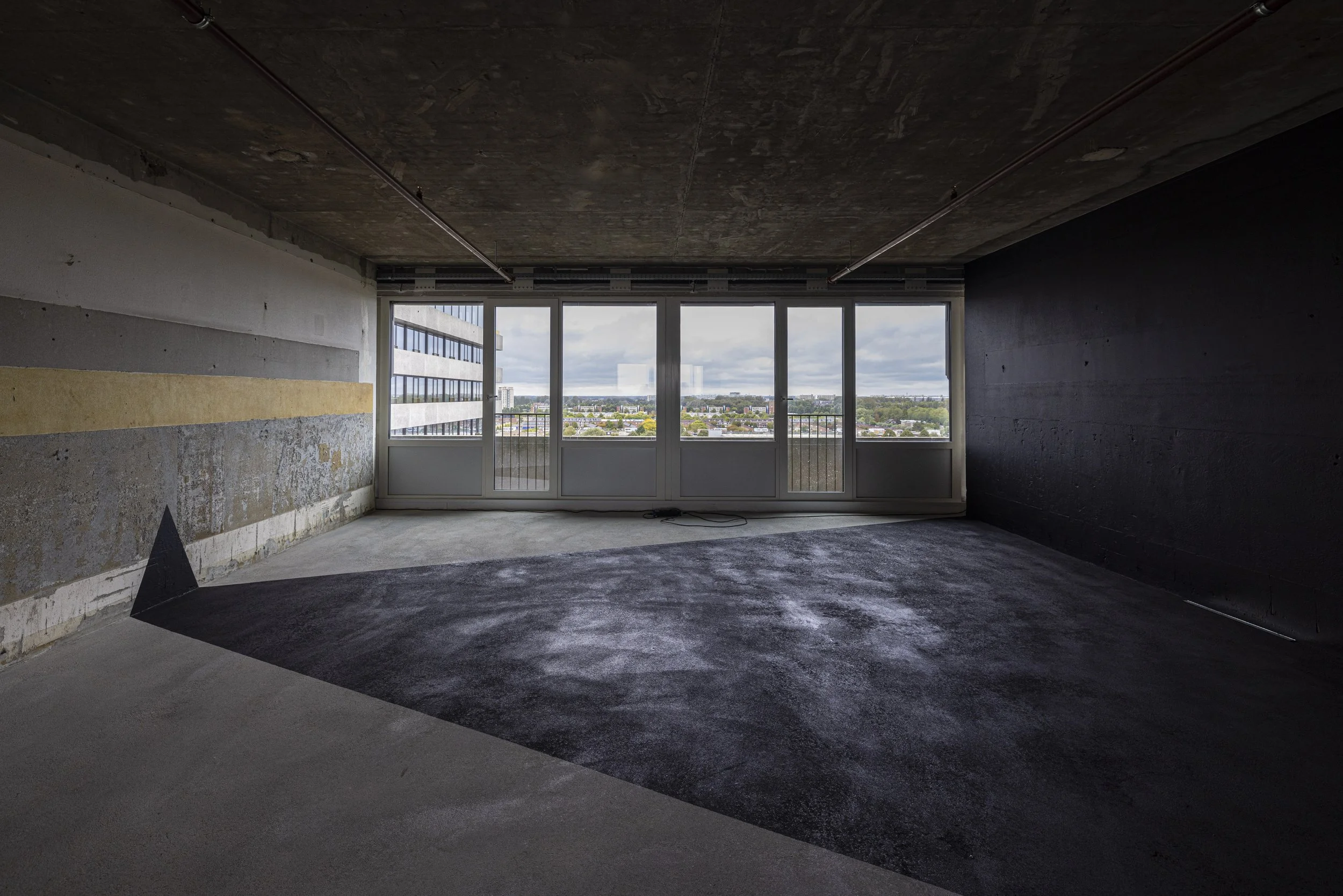
THE PAIN ALSO KNOWN AS 'I REMEMBER YOU', 2025 - THE PAIN - ALSO KNOWN AS 'I REMEMBER YOU' is an immersive, monochrome, site-specific installation - consisting of an approximately 55 m2 red-painted surface that runs across the floor and partially across two walls (like an abstract bloodbath), combined with two mirrored sharp shards, a low seating element in the center, and a background-sound playing - designed to muffle external noises and shift the focus inward. Due to its minimalism and scale, the work is no longer about the artist or the outside world, but becomes a contemplative space for the viewer. It invites visitors to enter their inner landscape and explore the places where pain resides. THE PAIN - ALSO KNOWN AS 'I REMEMBER YOU' is rooted in a personal experience of intense physical and mental pain caused by an ectopic pregnancy, however the installation transcends autobiography through its abstraction and becomes a non-judgmental, safe space that invites both solitary and collective reflection. It proclaims a universal human condition: to live is to feel pain - as to love - no one excluded. We are all formed in a womb. We are all made of flesh.  As background noise, visitors hear the reassuring sound of a heartbeat—as heard in a womb. Some may find both the work and their own inner feelings too overwhelming and prefer to keep those inner doors closed, but in doing so they run the risk of missing out on the opportunity for temporary or permanent relief and transformation. THE PAIN – ALSO KNOWN AS 'I REMEMBER YOU' was exhibited at BIG ART in September 2025 and is a continuation of the site-specific work THE EGO – ALSO KNOWN AS 'YOU'RE MINE' that was on display during BIG ART 2024. An entirely black installation that allowed visitors to experience the shadow side of themselves.
DON'T CALL ME BABY - I AM GREATER THAN YOU MIGHT THINK (2021)
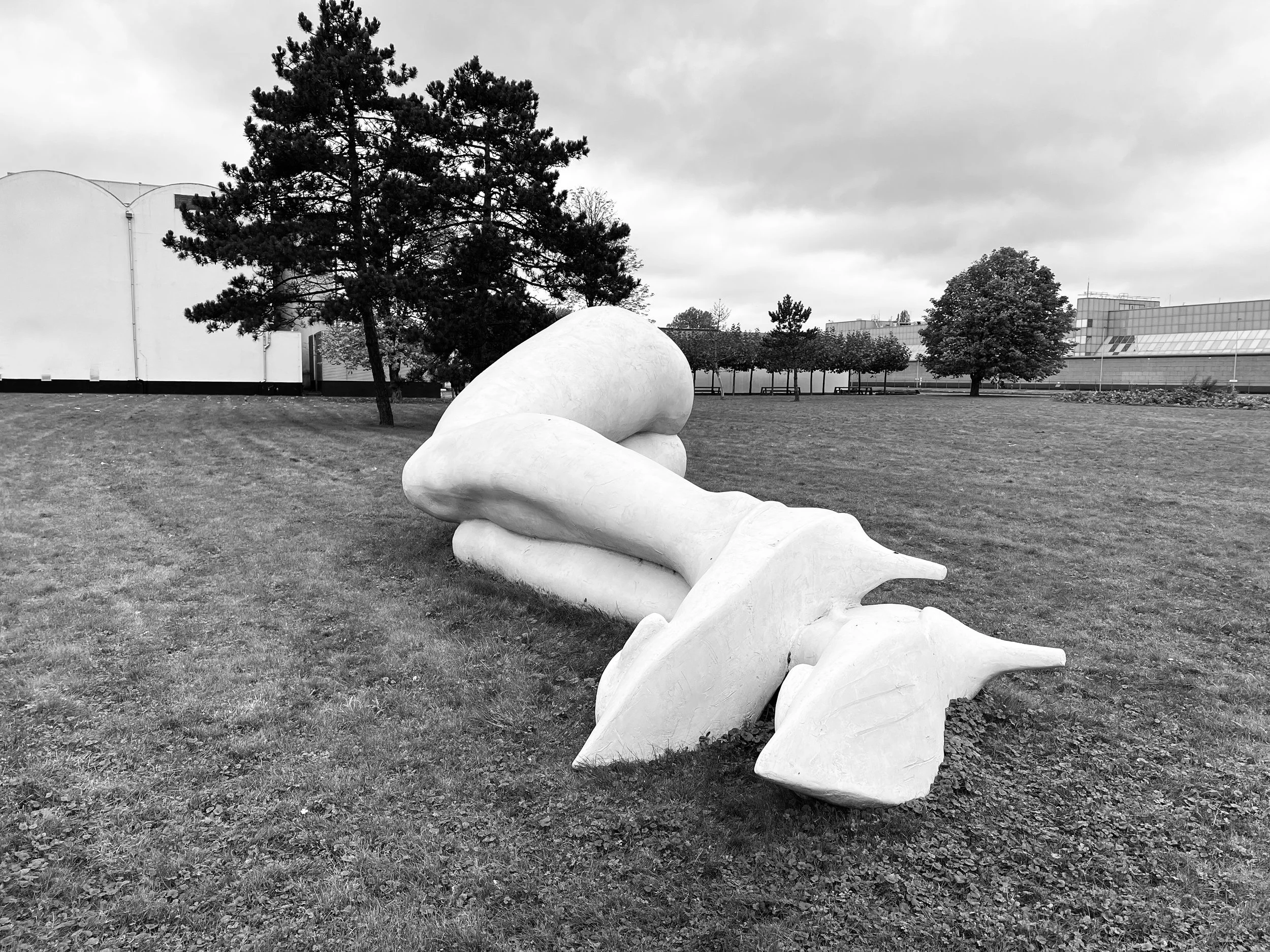
DON'T CALL ME BABY - I AM GREATER THAN YOU MIGHT THINK (2021) - Permanent outside sculpture against patriarchal society at Van Nelle Factory Rotterdam. A counterforce to phallus culture, false presumptions, verbal intimidation and society's subliminal objectification of women. W 700 cm x H 210 cm x D 230 cm
THE EGO - ALSO KNOWN AS 'YOU'RE MINE' (2024) - Shadow side of the Self
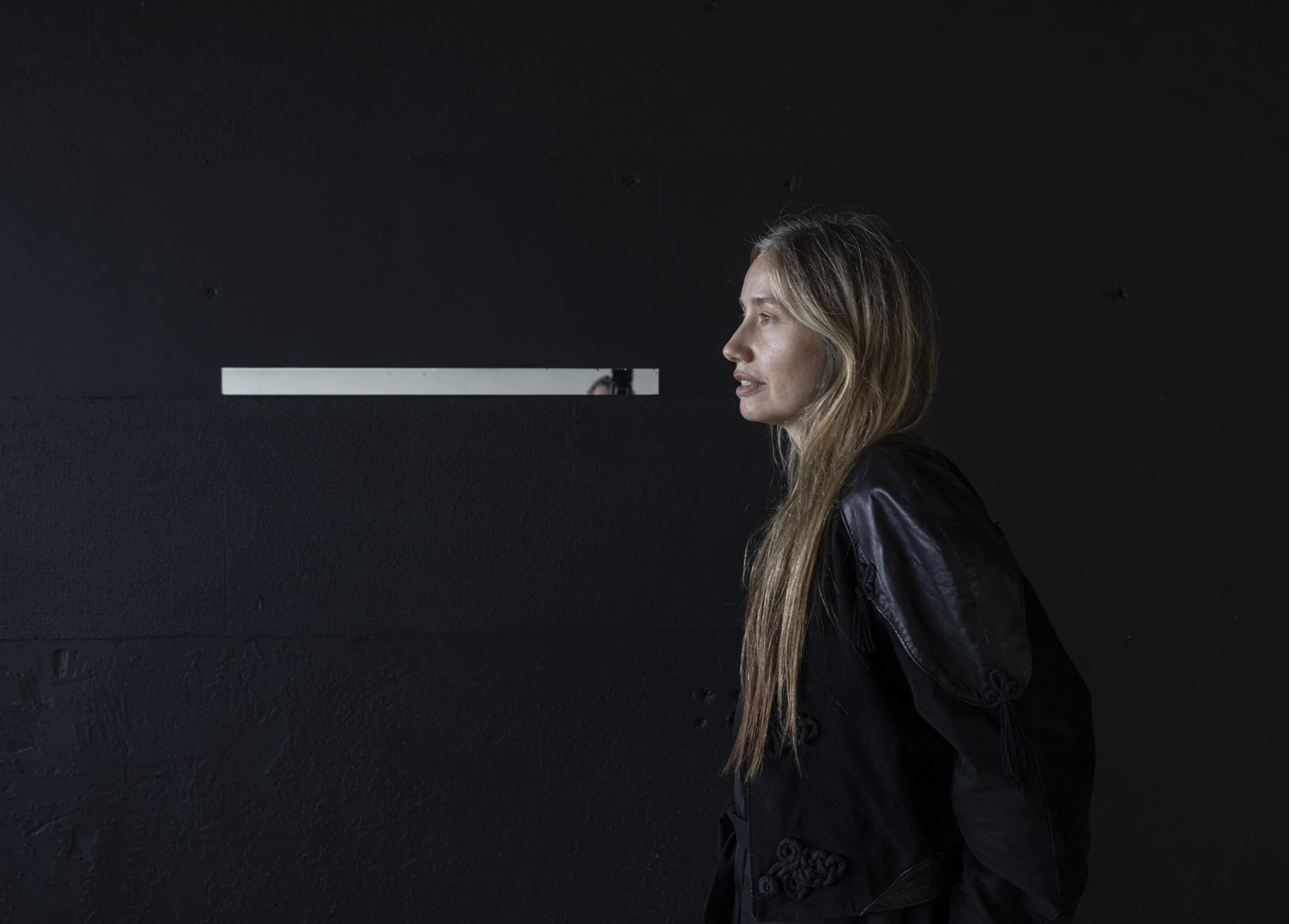
THE EGO - ALSO KNOWN AS 'YOU'RE MINE' (2024) - Shadow side of the Self - Site-specific introspective installation to, consciously or unconsciously, experience the shadow side of the self. Exhibited at Big Art Amsterdam 2024. THE EGO - ALSO KNOWN AS 'YOU'RE MINE' is simplified to the essence. Only by color, shape and size does the maker allow the viewer to experience the exploration and analysis of her inner world. Even more, she wants to make the audience aware of the inner process within themselves, by having them physically step into the shadow and feel the accompanying effect, consciously or unconsciously. ‘This work expresses what effect it has when the ego is not restrained; the dormant voice of dissatisfaction that takes away the lightness of being.’ A relatively small mirror is located at eye level to create depth in the surface and to allow the viewer to look himself in the eye. THE EGO - ALSO KNOWN AS 'YOU'RE MINE' is a continuation of her earlier power-paintings as the maker calls them. Extremely large conceptual emotion based canvases that overpower the maker and the viewer, with only a small detail in the center to maximise the color effect and to create a large void for the audience and the maker to float freely in, or is it drowning? Her power paintings recreate ‘the freedom that comes after acceptance and surrender, when the resistance is let go.’ For the first time she is now also scrapping the use of a linen canvas, applying color directly to the physical space and not limiting herself to just a front view but claiming a flared portion of the environment. The design is adapted to the space. Exhibited at BIG ART AMSTERDAM 2024.
AMAZONS AGAINST ANDREW
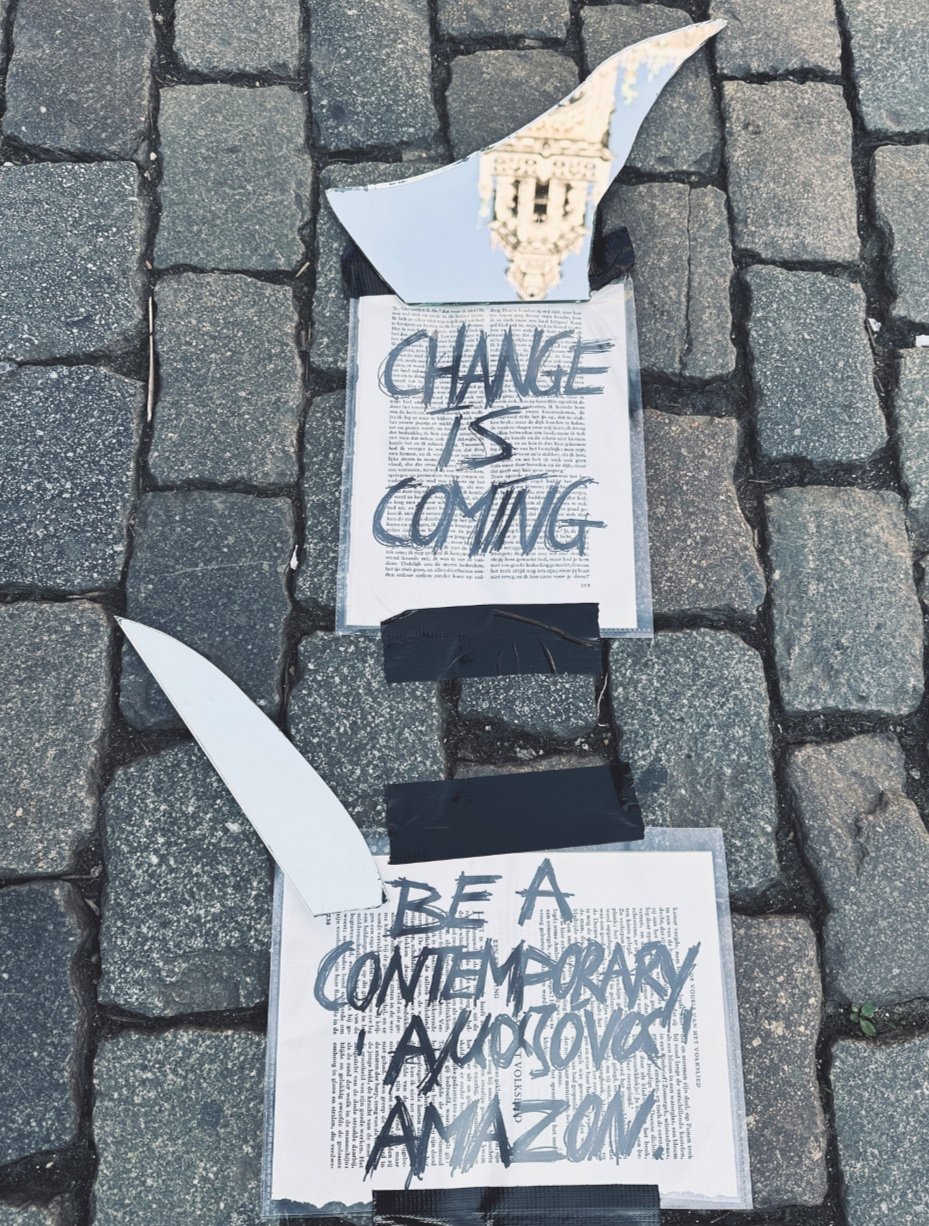
AMAZONS AGAINST ANDREW (2024) - Detail of pop-up guerrilla street art installation at Grand Place Brussel on Women’s Day 2024 - In total twenty-one feministic - targeting Andrew Tate, yet also forgiving - statements were placed on the floor in the center of the square, positioned as a battle line, symbolising the ancient Greek Amazons. Each textual statement was accompanied by a mirror shard, sharp as a contemporary weapon. Both the texts and the shards were left behind, not knowing if, and by whom, the works were eventually taken and cherished, or destroyed and discarded. On the image above AMAZONS AGAINST ANDREW statement #1 en #2.
THE BEAST INSIDE NEEDS ITS SPACE - ALSO KNOWN AS 'I SEE MY BROKENNESS'
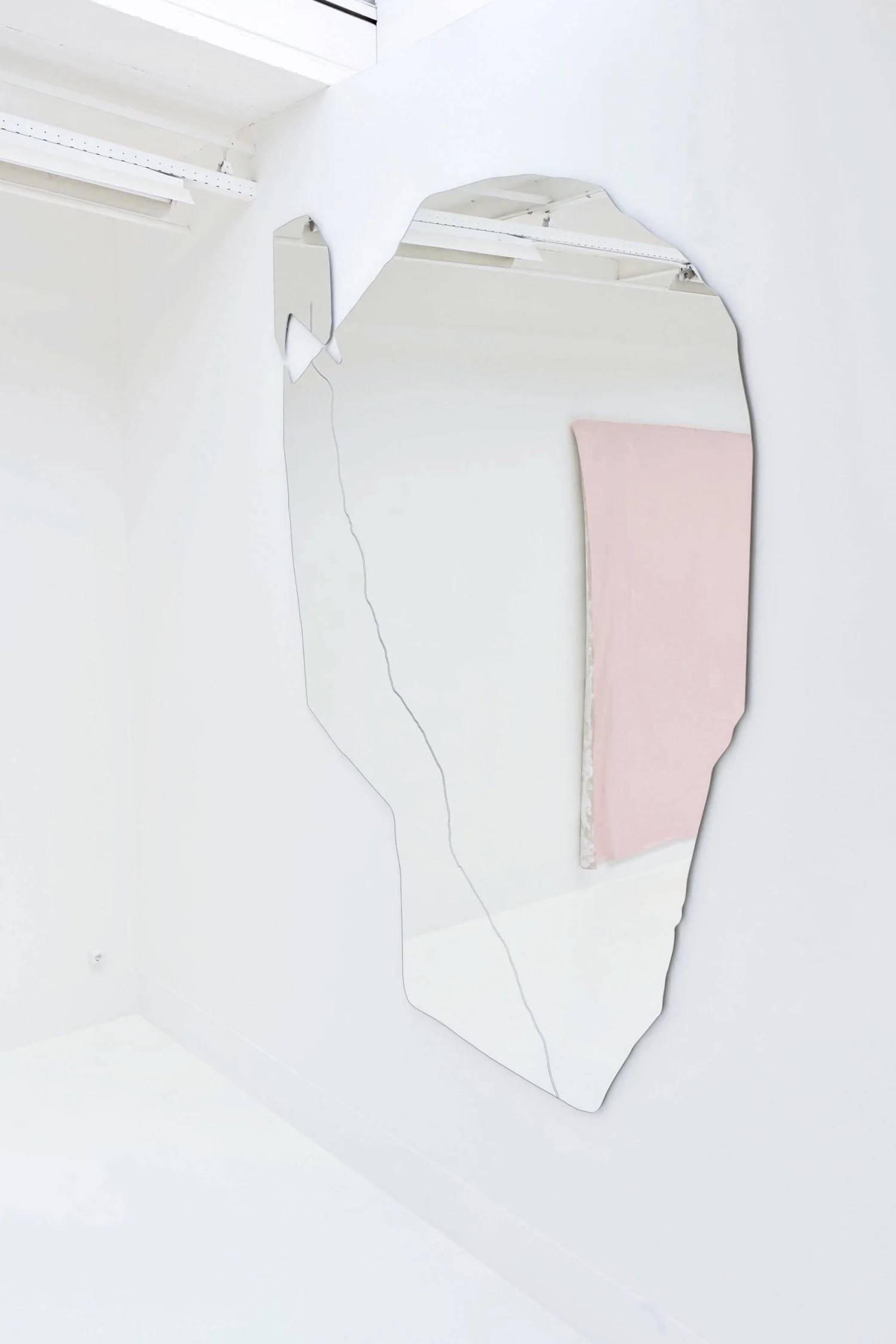
THE BEAST INSIDE NEEDS ITS SPACE - ALSO KNOWN AS 'I SEE MY BROKENNESS' - This huge mirror with intentional crack is a psychological piece about introspection, the (im)perfect self and wholeness. The capricious work wants the viewer to reflect (on) one’s Inner Self, literally and metaphorically. The intimidating yet sophistically confronting mirror invites the spectator to face and recognise the imperfection within. It lets the inner undesirable aspects of oneself, hidden deep down, to consciously come to the surface. And tests to what extent the spectator feels in ease or uncomfortable, when facing the inner imperfection. This in all transparent honesty. Is one ready to see oneself completely - by looking oneself directly in the eyes - and recognise yourself in this self-reflective, broken piece? The full you, including the unwanted parts. It is not without reason, that this huge whimsically shaped mirror evokes associations of an abstract animal head or skull. The work THE BEAST INSIDE NEEDS ITS SPACE - ALSO KNOWN AS 'I SEE MY BROKENNESS' is intentionally extremely large and - preferable - positioned relatively high on the wall to come across increasingly intimidating and frightful to the viewer. People find the work impressive, still quite appealing, but sometimes someone gets strongly touched and drawn (in)to it with the result of fierce confrontation and even crying - like an intimate therapy session. Carl Jung once said, ‘The most terrifying thing is to accept oneself completely.’ Ultimately, the message of the piece is not intended to be negative, but positively-inviting for seeing the truth, and bringing self-acceptance, and transformation. Becoming whole by allowing the hided and unconscious self - the inner beast - to come to the surface and communicate transparently with it. The work resonates with people ready for this process of Introspection. Weight in total ca. 100 kg, H 315 cm x W 250 cm x D 4 cm.
HYPERNMESTRA AND I WERE BOTH BROKEN - BUT WE WOMEN, RISE AGAIN
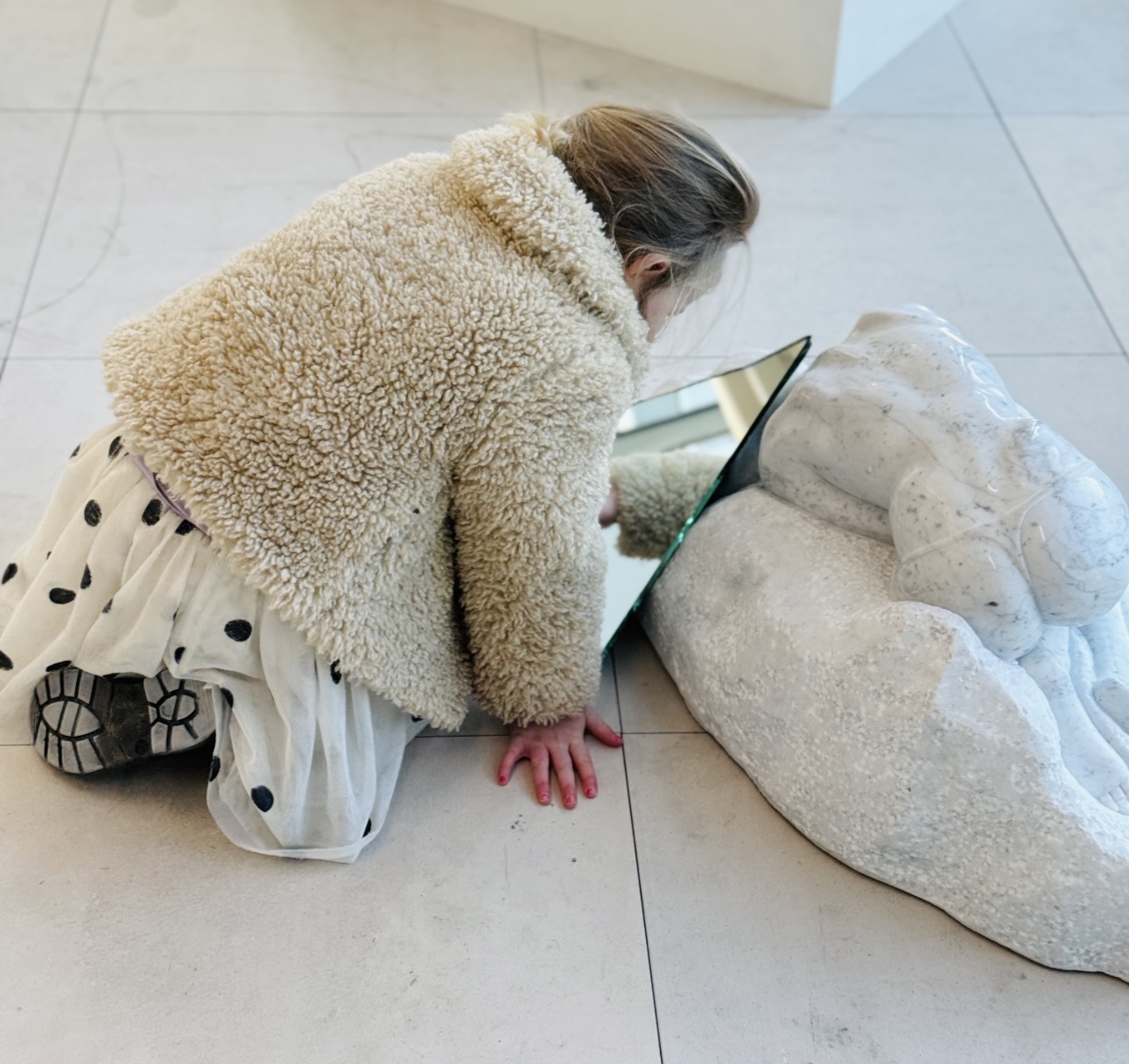
HYPERNMESTRA AND I WERE BOTH BROKEN - BUT WE WOMEN, RISE AGAIN - A mirror shard placed before Rodin’s La Danaide sculpture reflecting the transforming state of brokenness and female objectification. A notably feminine - contemporary interpretation of the original sculpture La Danaide by Rodin, enriched with a dimension of insightful introspection and current social significance. HYPERNMESTRA AND I WERE BOTH BROKEN - BUT WE WOMEN, RISE AGAIN shows a defeated woman - a modern Hypermnestra, also known as La Danaide - at the moment of despair, cringed on the floor, but a mirror shard is placed in front of her eyes making the female figure faceless and anonymous - she could be any woman today. When a spectator looks into the shard, it reflects the person’s own face. Even if one looks behind the sharp shard, the face remains hidden behind the sculpted hair and hand. This ensures the woman’s anonymity, and makes it possible for the spectator to think oneself as the one lying broken. The sculpted female figure is nearly naked - physically and mentally. The spectator witnesses the intense, emotional moment of mental brokenness, resulting in this intimate pose. A significant detail forms the sculpted panties - by which the original La Danaide sculpture is now catapulted to the present time. Contrasting associations are now giving the viewer conflicting signals, and leave room for multiple interpretations. The spectator may see a vulnerable, broken woman, and possible feel compassion, maybe recognise oneself in her. Yet the sharp cut shard symbolises - and exudes - the piercing, emotional pain. While the tiny string not only makes the work contemporary, but also emphasises the buttocks, and the sensuality in the posture. By this, the woman becomes vulnerable, and seductive desirable at the same time. The interesting question is, what will be the dominant interpretation of the spectator? The sacred marble, the highly polished back, the fine lines in the pose, the smooth shoulder blades and the wavy hair, all exude a soft streamlined energy. But, suddenly there is the whimsical - worthless - illogical, penetrating imperfect shard. Stuck into the polished image like a knife. A counterforce within the art piece itself, establishing a pervasive tension, and expressing the antagonistic, duality, and complexity for women today. The art piece is not only a psychological, and aesthetic piece, it clearly has a - moralistic - social message. It illustrates the unrighteous normalisation of female harassment, and the complex role, the ancillary dualistic, feelings for women today. Who despite all changes in society remain ‘objects of desire and seduction’ - but posses great - resurrecting - strength. HYPERNMESTRA AND I WERE BOTH BROKEN - BUT WE WOMEN, RISE AGAIN expresses the believe that pushing back men, regarding women’s safety and respect, is badly needed to rebalance society, and to create a new playing field. Like healing a wound, adjusting society’s code of conduct. Rodin’s sculpture La Danaide was deliberately chosen to communicate this message. The Greek mythological story on which Rodin's La Danaide is based, is the story of Hypernmestra. Hypernmestra was one of the fifty daughters of ancient king Danaus, who arranged for his fifty daughters to marry, and secretly ordered them all, to kill their husbands during their wedding nights. Only one daughter Hypermnestra, did not obey her father’s command, because her husband respected her wish not to have sexual intercourse during the wedding night. The fact that, this man respected the personal values and wishes of a woman, saved his life. It is this message - besides expressing women’s survival power - that the work wants to send out. Not to disrespect the boundaries of women. HYPERNMESTRA AND I WERE BOTH BROKEN - BUT WE WOMEN, RISE AGAIN is a warning to men, and a call for women to see their own resurrecting strength, as Hypernmestra after her brokenness, came to power and ruled the kingdom. H 47 cm x W 84 cm x D 39, ca 150 kg.
COME IN(SIDE) ME
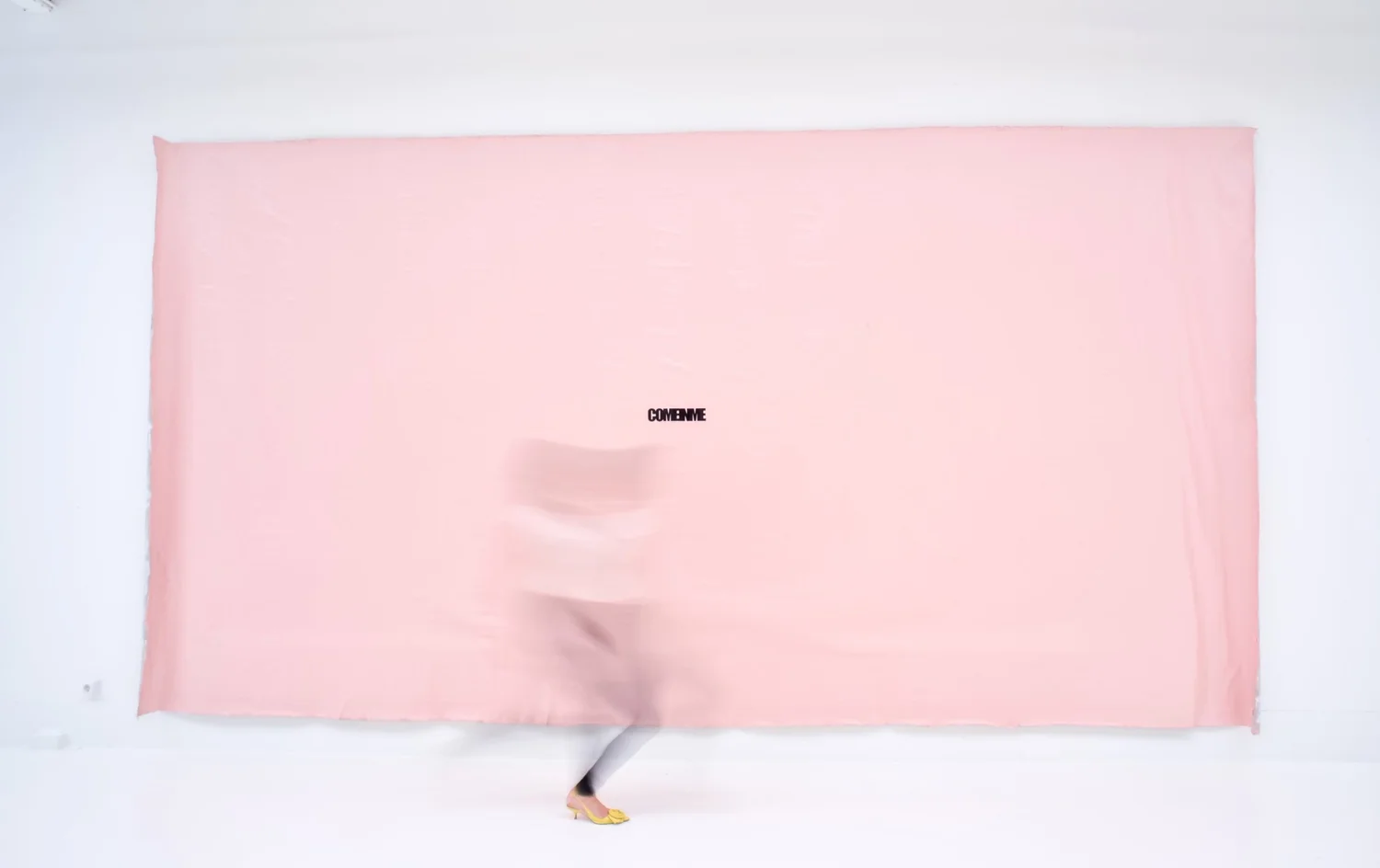
COME IN(SIDE) ME (2020) - A huge nurturing pink 'power painting' symbolising a giant womb. This grand conceptual piece is about the self, motherhood, sex and art. It is a massive pink painting which one can step into like a calming, healing bath. A loving, immersive world in which you can dissolve. COME IN(SIDE) ME forms literally an invitation, to enter a pink h(e)aven. A universal mother's gesture to carry the spectator as if you are once again a baby and can feel the nourishment and safety of the womb. The word SIDE has been omitted on the canvas, leaving only COME IN ME. The canvas thus becomes, subtle yet rebellious, a huge vulva where the viewer, can fictionally come in and surrender to. This minimalistic, huge, and soothing painting, offers a person the possibility to, for a moment, dissolve into an immersive work of art. The letters COME IN ME are placed against each other, so the spectator does not immediately understand what is written. If the text would be read and understood immediately, the rational calculating mind would too quickly label the work. The likelihood of being open for the work would thereby be reduced. By making the text illegible at first glance, the viewer does not walk on too quickly and the canvas gets the chance to do its work: refreshing the viewer’s inner self. A color study was preceded to evoke the right associations, resulting is this pink color with relatively much yellow and little white. It makes it a fleshy, warm pink and creates the most nourishing effect. The purpose of this extra-large painting is to reset the mind-set of the viewer. COME IN(SIDE) ME can be perceived as a giant comforting, perfectly-imperfect mother piece. The edges of the canvas are curled on both sides, making the bottom layer of the paint visible. The fraying and the original wrinkles of the linen are also visible. A symbol for embracing the imperfection in ourselves, in other people, situations and life itself. Exhibited at BIG ART AMSTERDAM 2023. Acrylic paint and plastic characters on linen. W 580 cm x H 305 cm x D 10 cm, ca. 45 kg.

THE PAIN - ALSO KNOWN AS 'I REMEMBER YOU' - Being present in the carnage of sorrow

Datum:
Locatie: Big Art Amsterdam 2025

Large on site introspective transformative installation at BIG ART AMSTERDAM 2025.

https://bigart.nu

THE PRESENCE OF WHO IS ABSENT - A GIRL NAMED ALEK

Datum:
Locatie: Private residence and at a cemetery

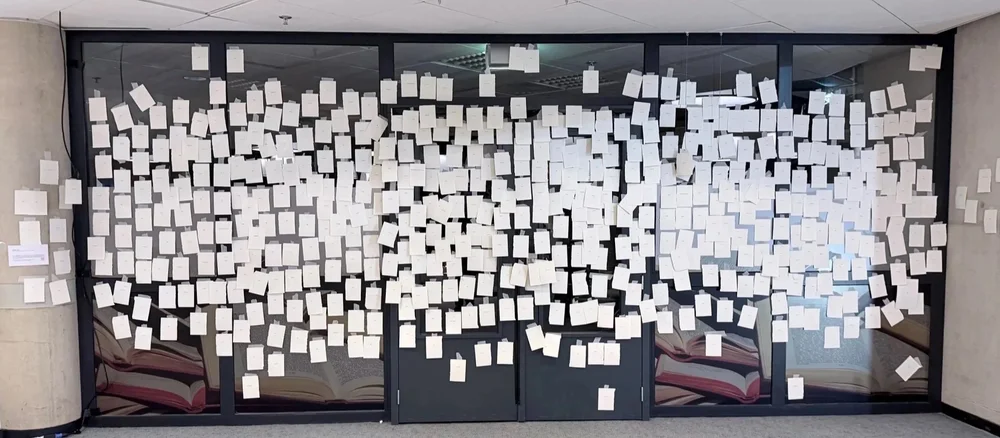
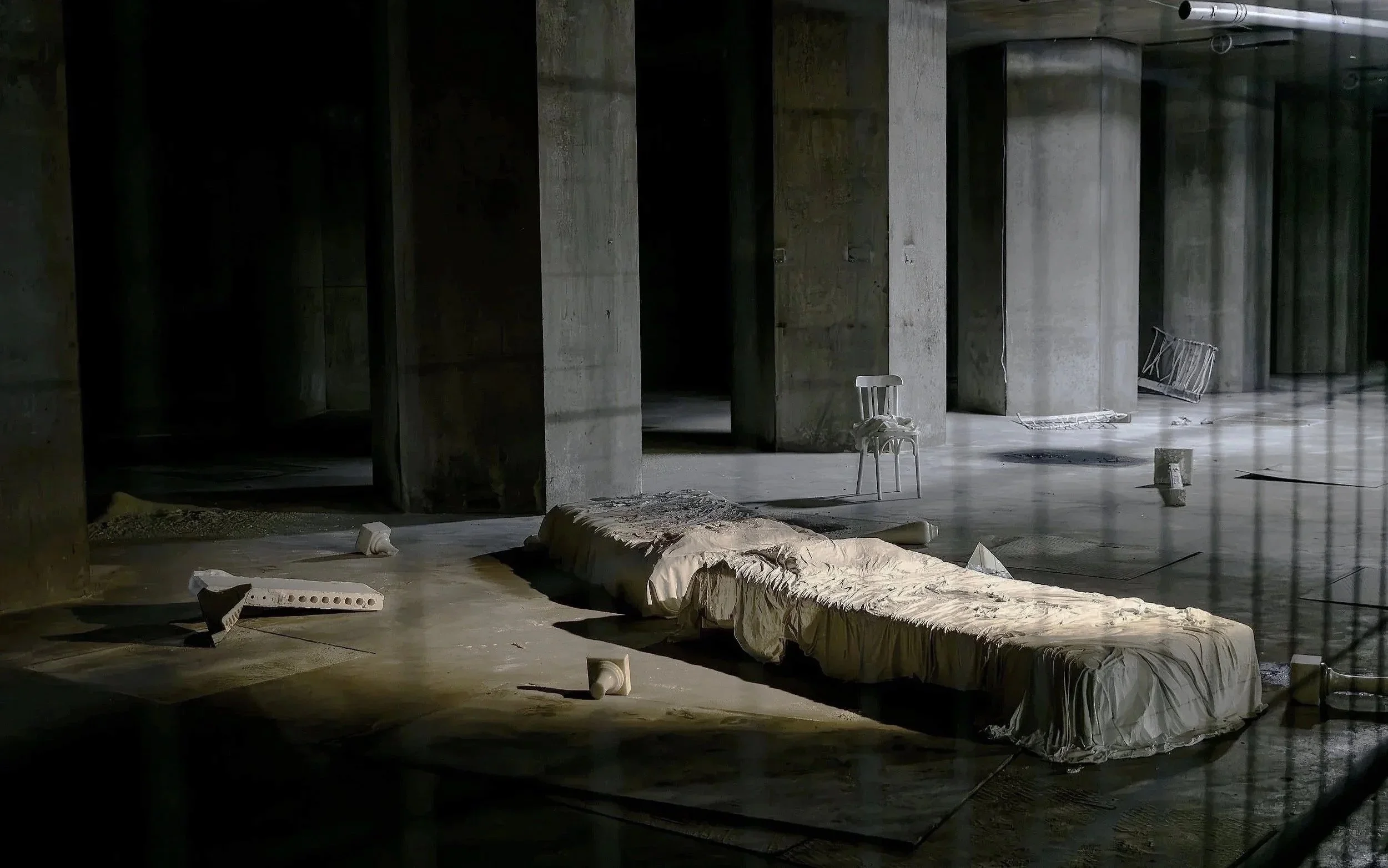
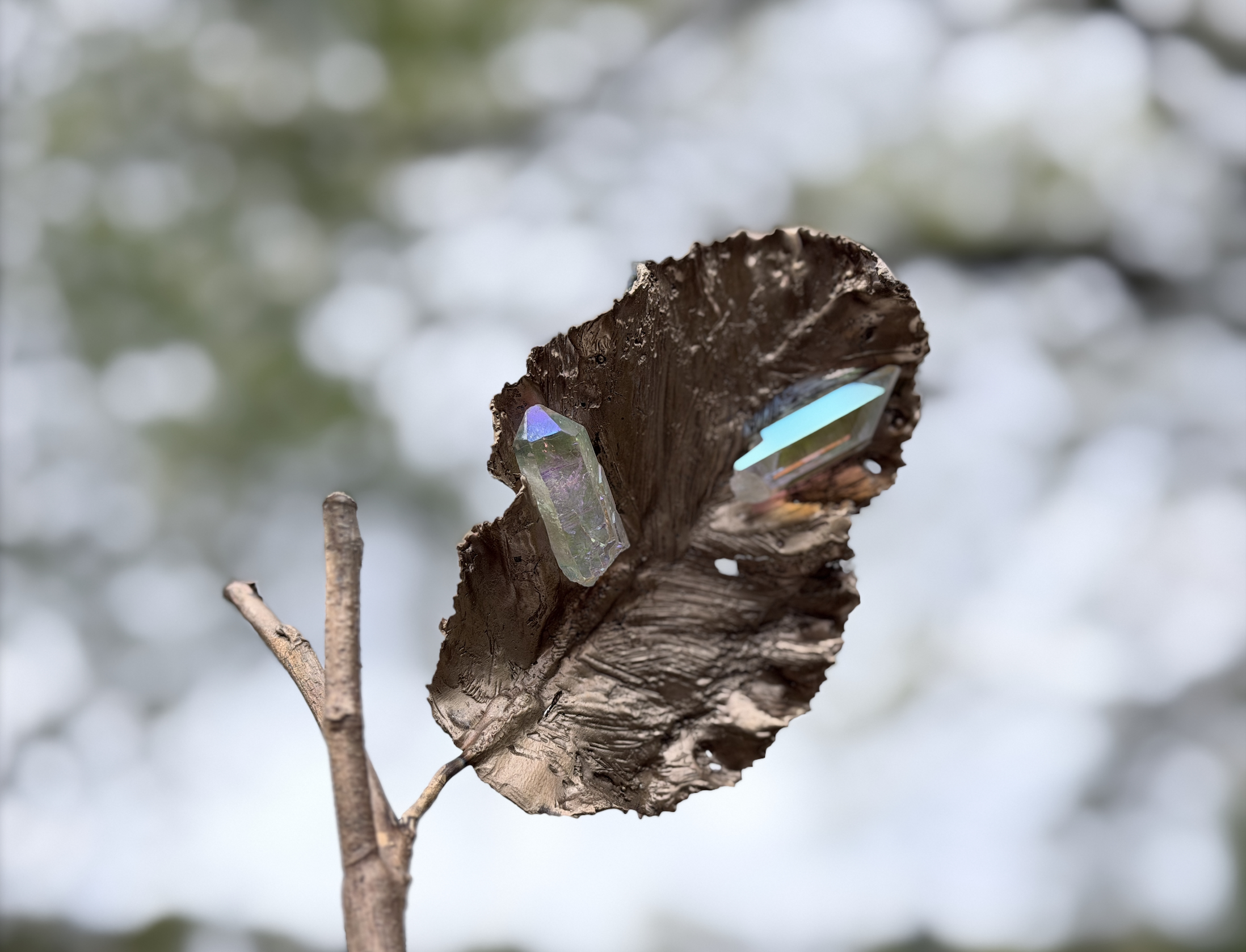
In collaboration with the Alek's parents I am designing two in concept related works in memory of Alek. One lasting site-specific creation at the cemetery where people can have an intimate moment of reflection, and experience Alek's presence. As well as one related art piece positioned at the private residence, specifically the place where Alek loved to spend time.

https://www.roosschneijderberg.com/
Deze kunstenaar heeft nog geen toekenningen.