WEEF.collective

textiel , performance , installatie , Gender , Ecologie , cross-over

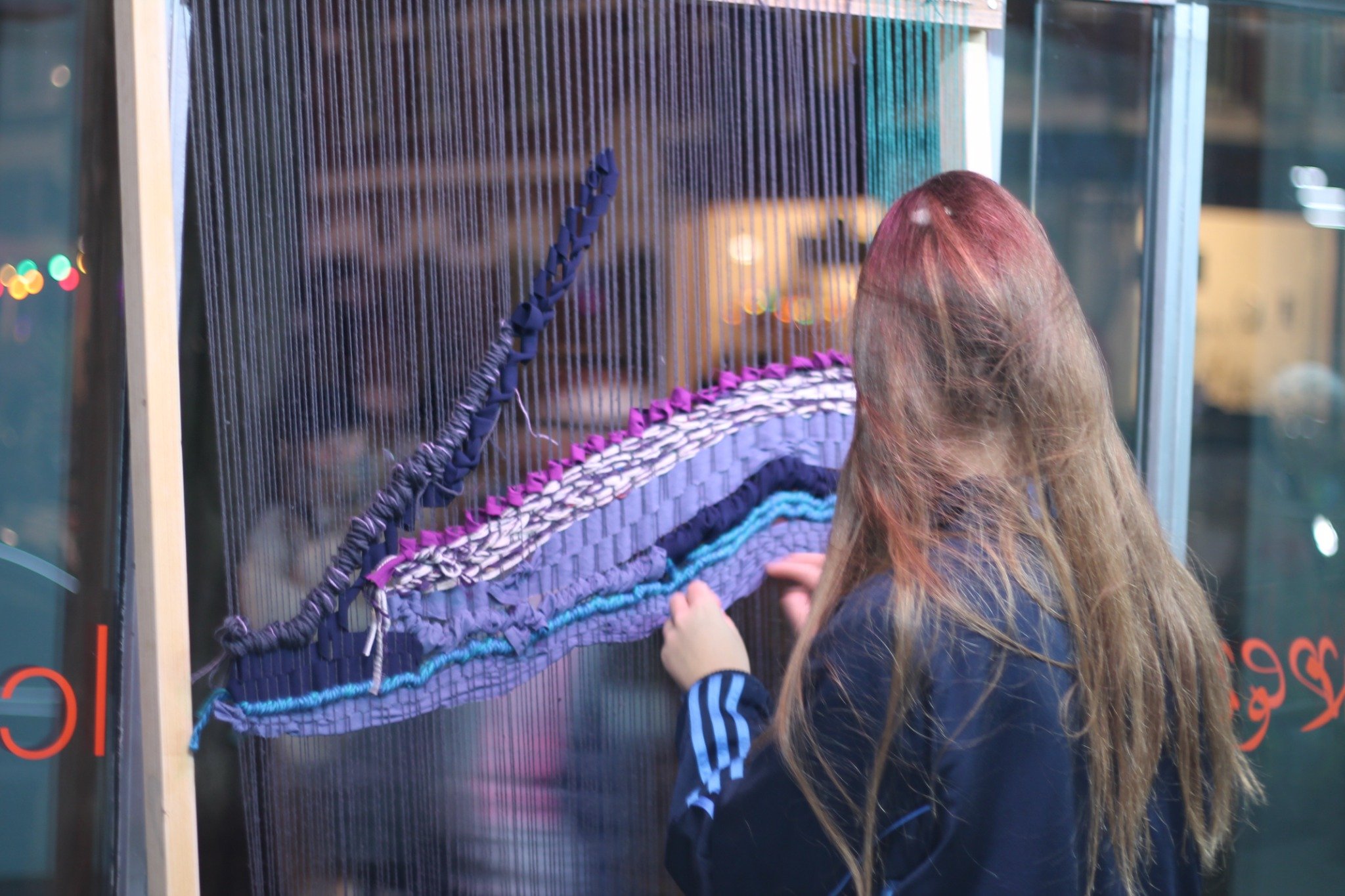
WEEF.collective is a Rotterdam-based performance and textile duo by Lieve Fikkers (Rotterdam, NL, 1998) and Hélène Vrijdag (Rennes, FR, 1996). We create time-specific and site-specific weaving performances with an ecofeminist agenda. Weaving is a disruptive and feminist act; it forces us and our audience to soften and slow down. It is our way to resist patriarchy, fast fashion and the capitalist rat race. Every performance explores ecofeminist themes such as time, transformation, decay, witches and the reclamation of myths.
A performance by WEEF.collective is a durational work where the audience is encouraged to move in the space and relate their bodies to the textile. The process is elevated as the art work; and the meticulous and slow hand craft is the driving force of the performance. In a space designed to slow down and stay as long as you want, light, music, text and movement are ways to give thematic context to the act of weaving. The feeling of these spaces can be described as a mythical atelier or a theatrical feminist work-day. The tapestries that we weave during our performances become tangible memories of the hand-made process, and are exhibited as well as for sale as independent art works. Lieve and Hélène studied Performance together at the Academy of Performative Arts in Maastricht. WEEF.collective uses ecofeminist and posthuman methodologies to embody durability as a performance and textile organization. This means we slow down all our processes: we want to be zero-waste, produce slower and less work, we want to be durable in our collaborations with other artists and organizations, we want to unlearn the result-based and phallic art-system. This is why we always work with second-hand, recycled or organic materials, learn about composting and queer ecology, interview home weavers and like to work on one project/ theme for a longer period of time.

WEEF is also open for commissions. Mail us for portfolio and info. weef.collective@gmail.com
the muse is not present
the muse is not present - Captured by QiQi van Boheemen in 2026
the muse is not present
the muse is not present - Captured by QiQi van Boheemen in 2026
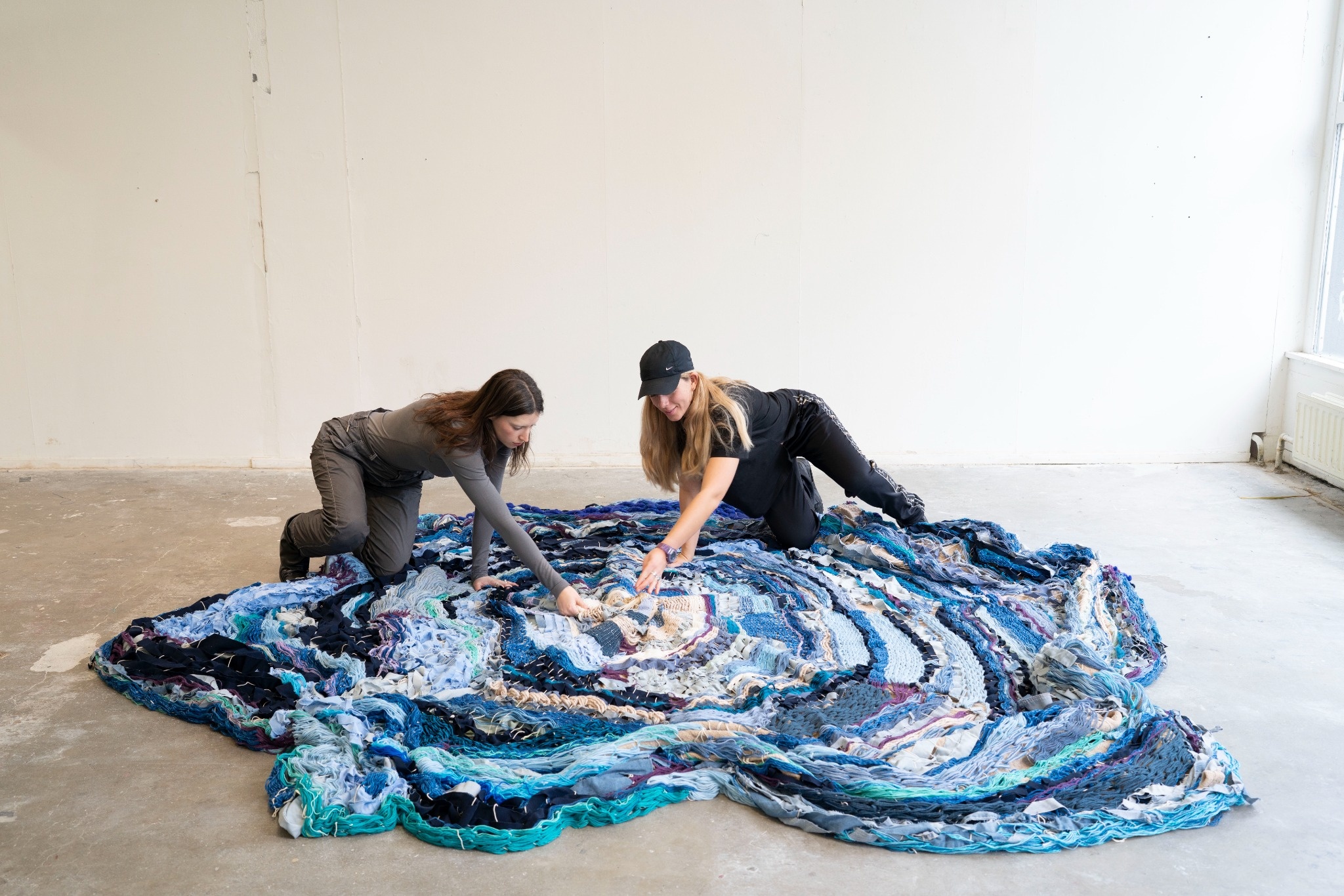
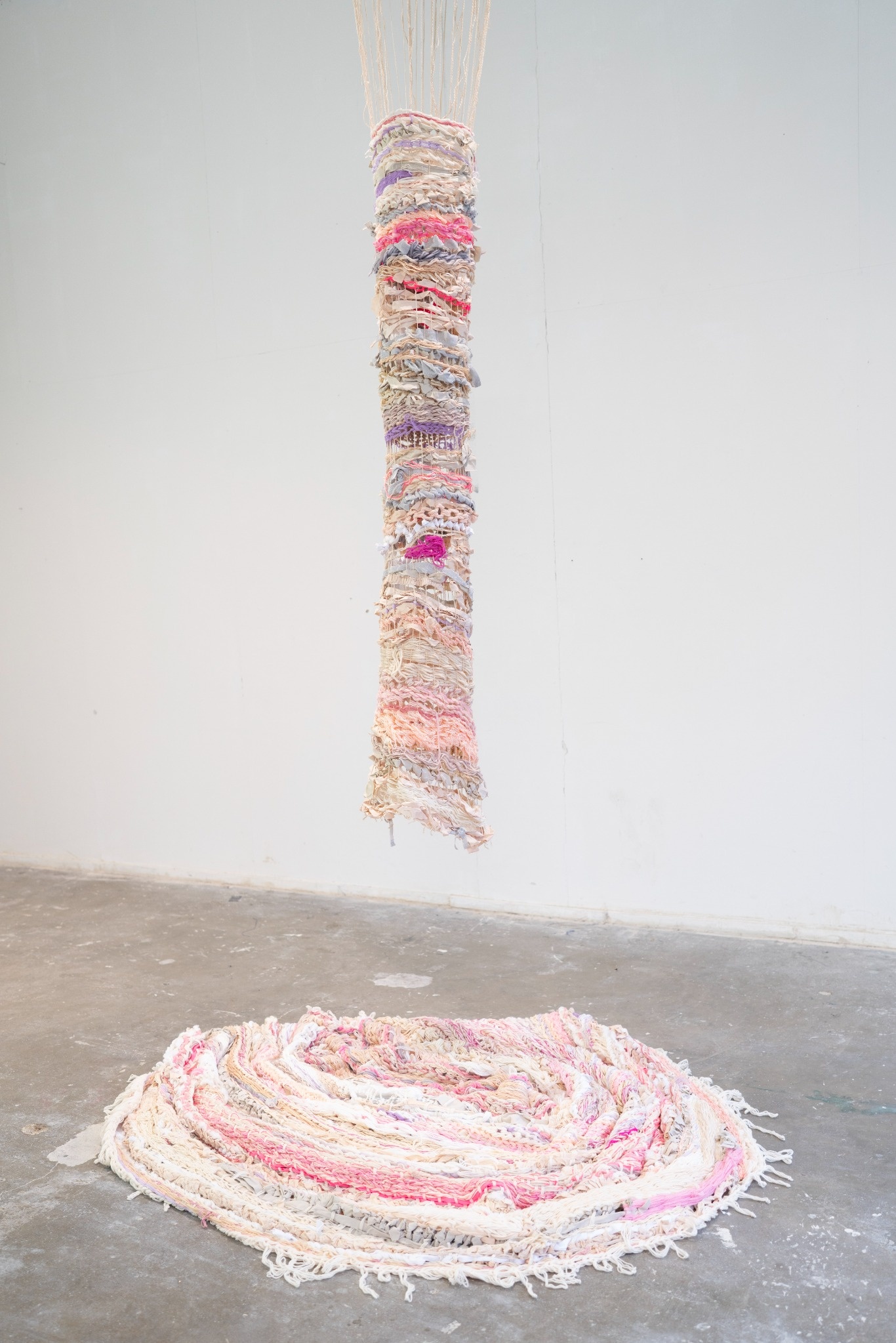
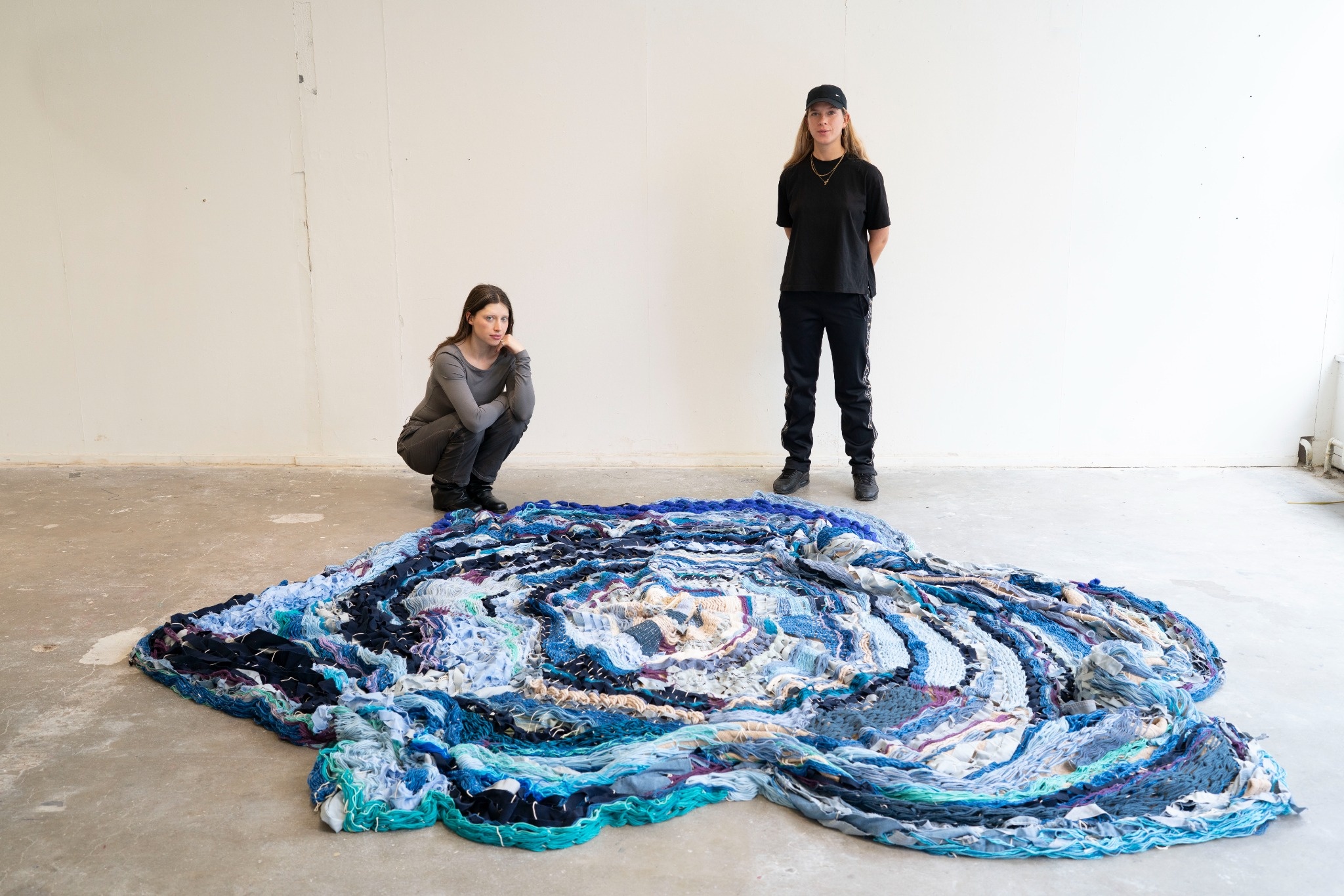
Eighty-six hours of spinning around in our cycles
Eighty-six hours of spinning around in our cycles - Captured by QiQi van Boheemen in 2026. Size: 5,00m ø
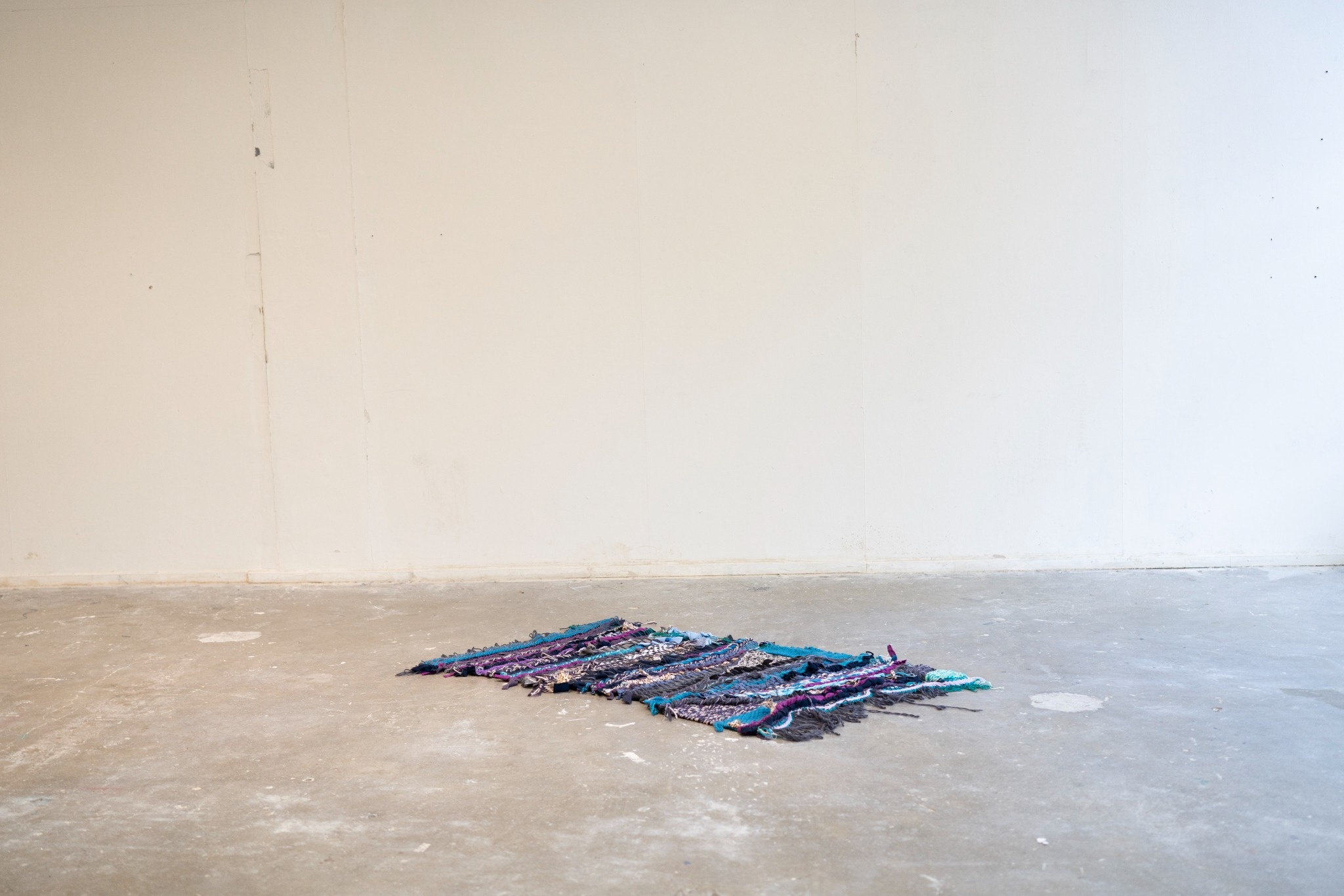
No title
No title - Captured by QiQi van Boheemen in 2026. Created during WEEF // raam 2021
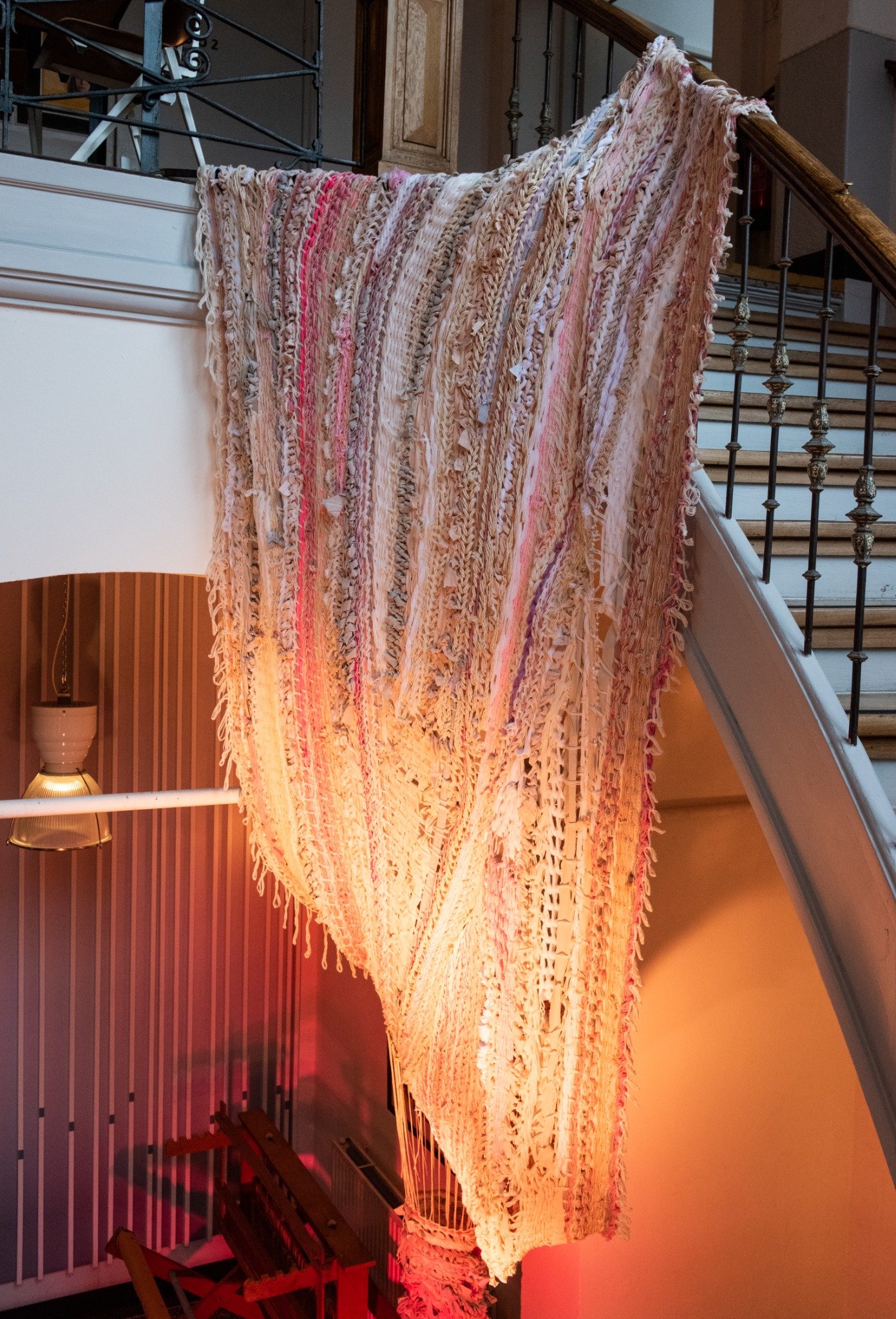
Sixty and a half hours of time goes by so slowly
Sixty and a half hours of time goes by so slowly - Captured by QiQi van Boheemen in 2026. Size: 2,00m x 3,20m
Atelier of Transience
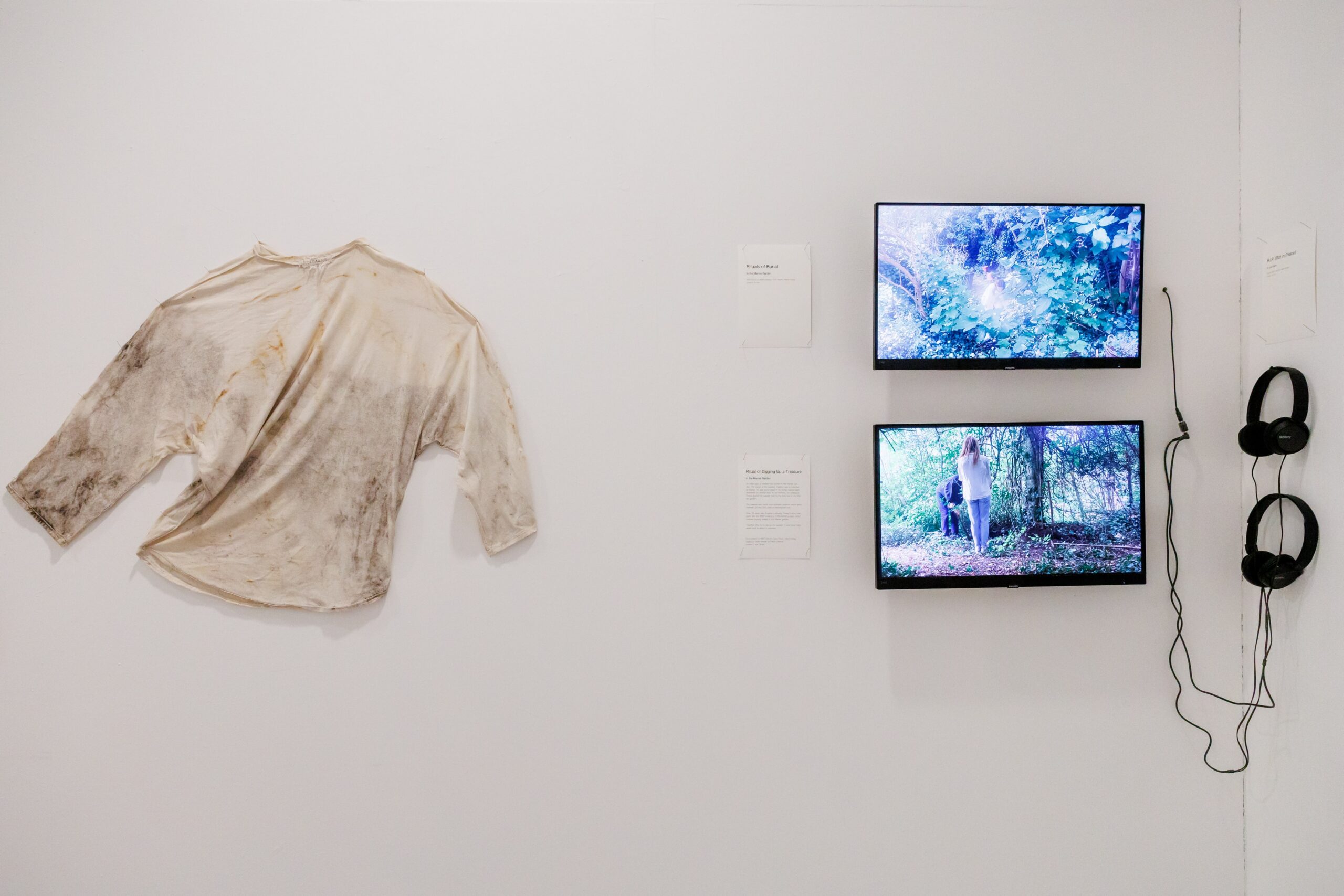
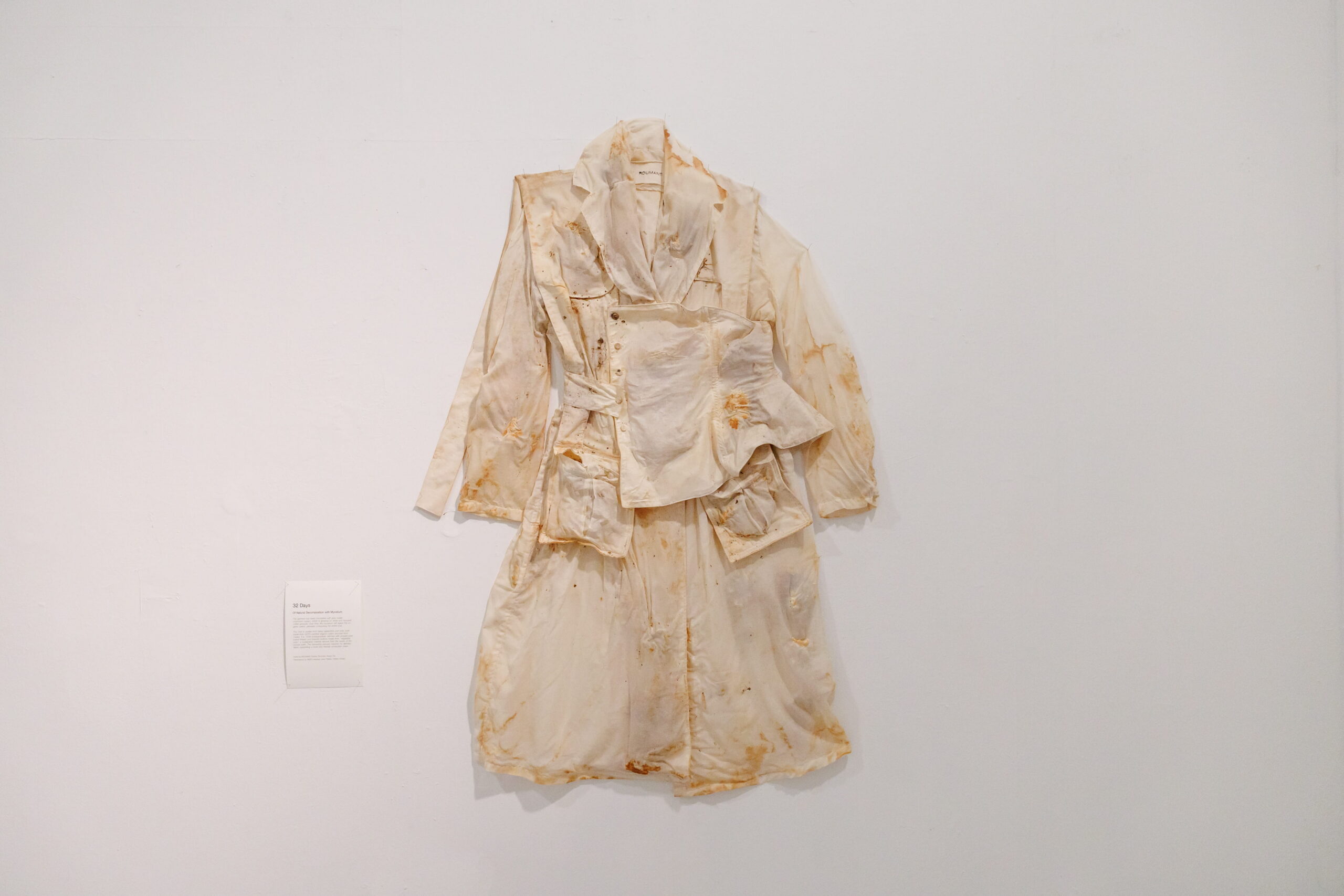
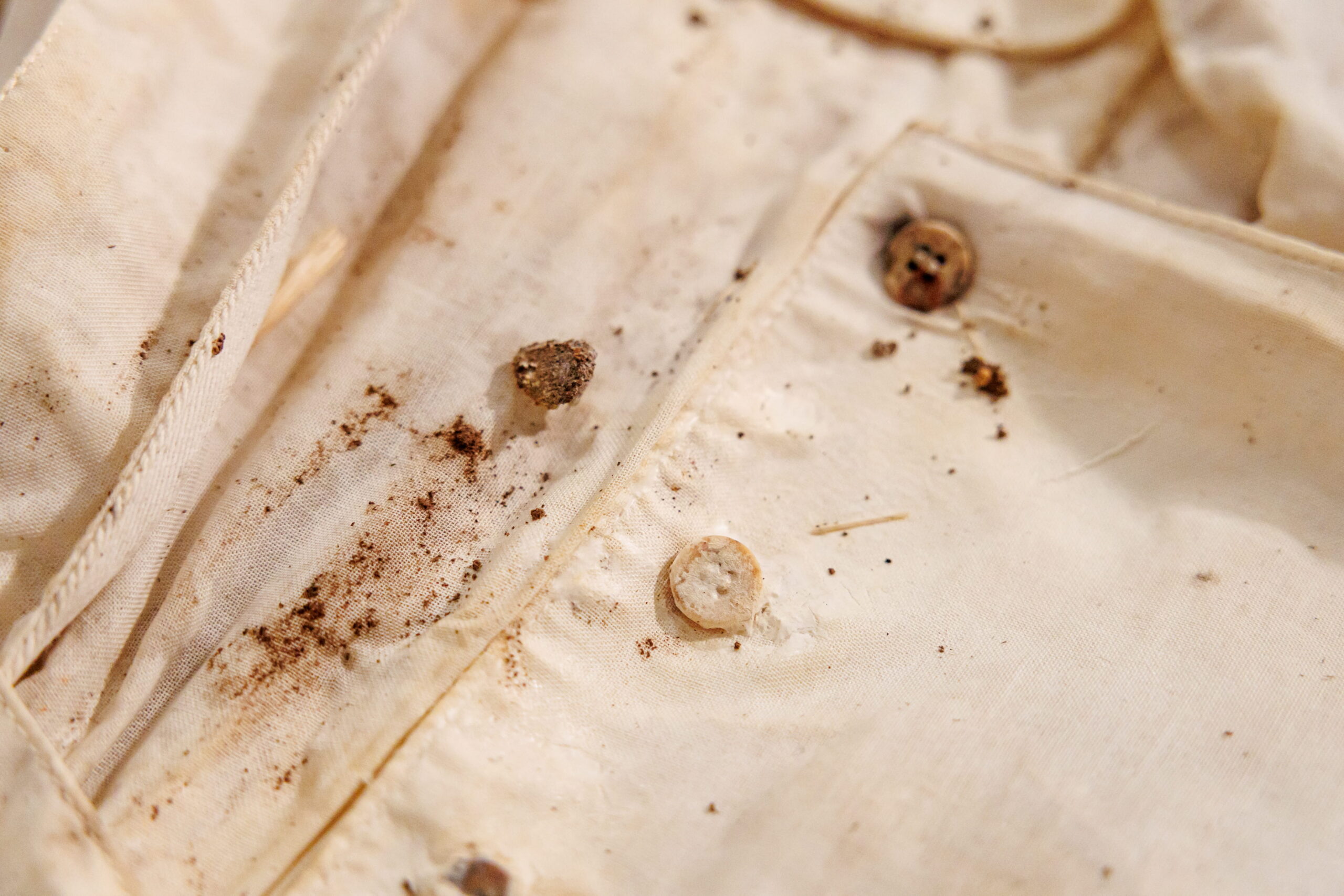
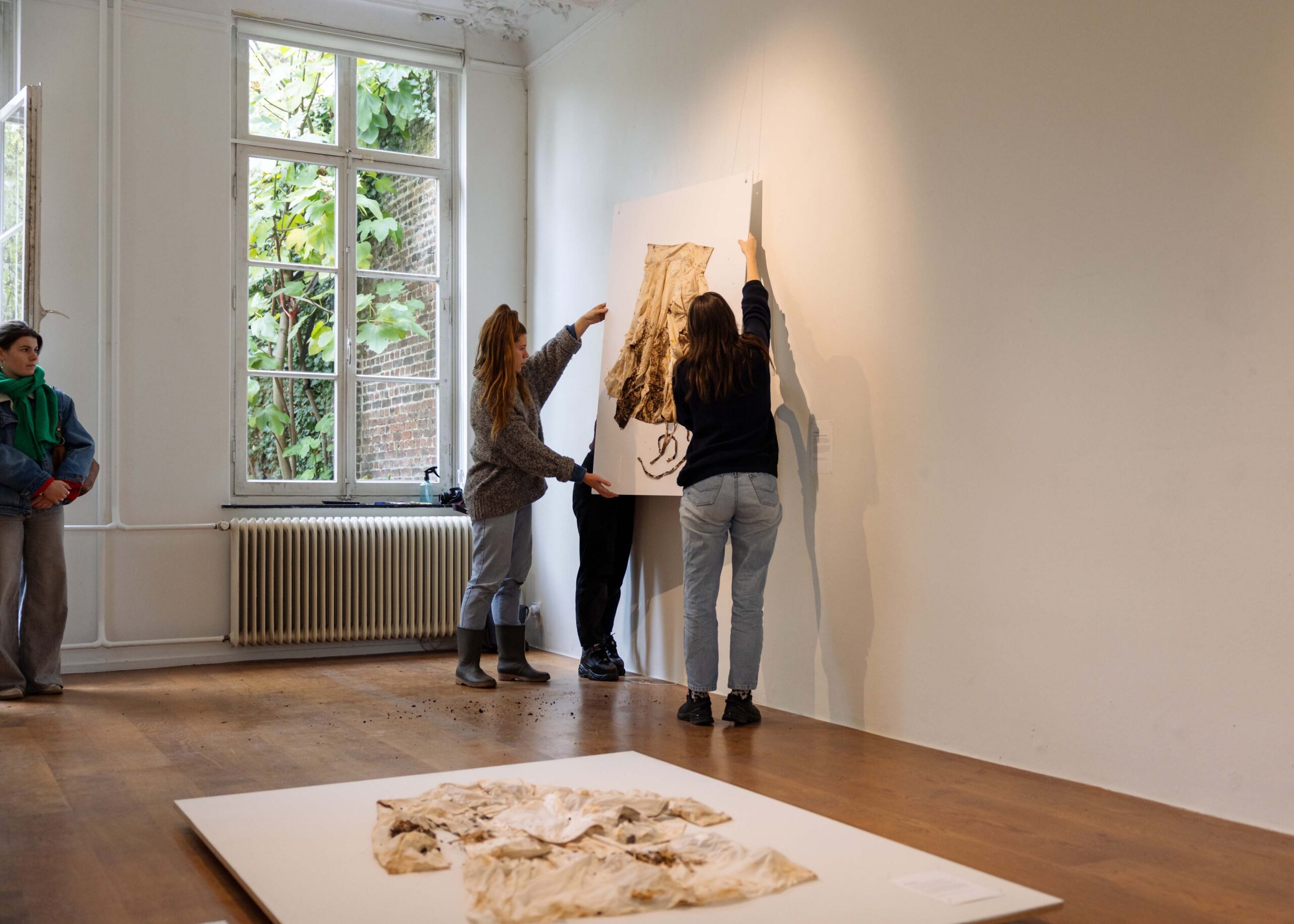
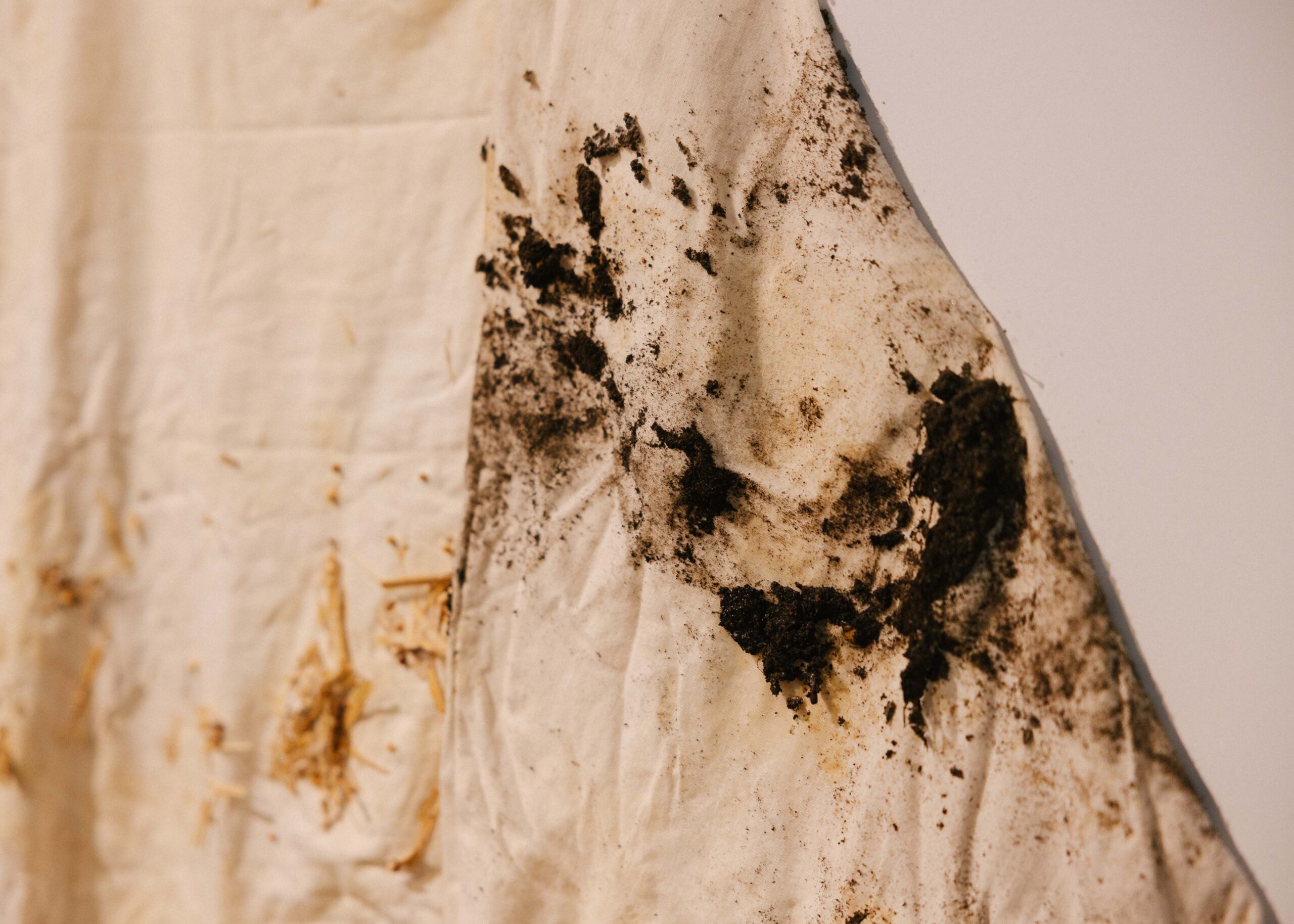
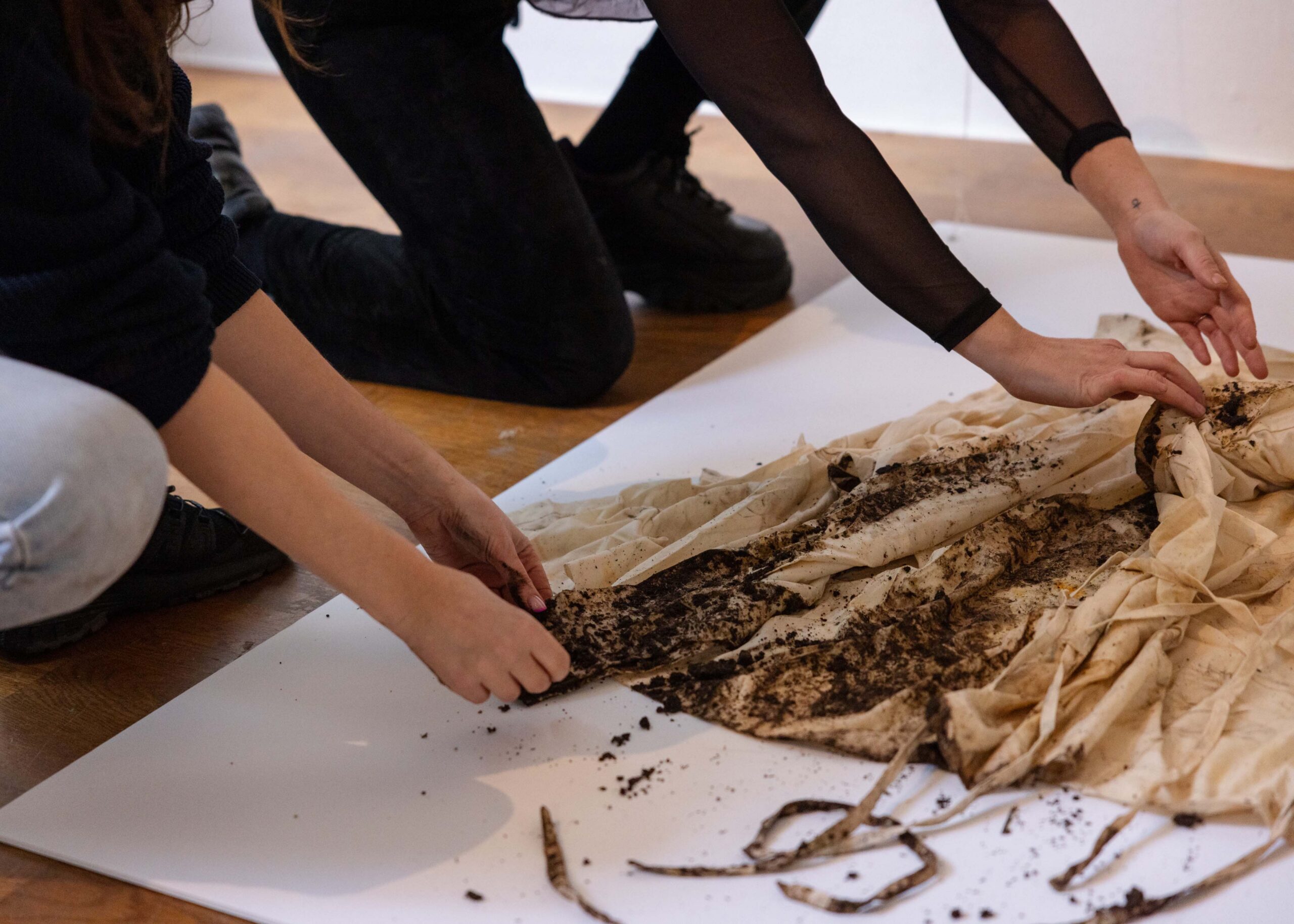
Atelier of Transience (2025) - is an artistic research surrounding the life and death of textiles. A collaboration between WEEF.collective and sustainable fashion designer Sophie Roumans in the context of an open call by Amarte x Fashionclash for the Fashionclash Festival in November 2024. Atelier of Transience was a project about transience and decay in wearable textiles, motivated by the global problems of fast fashion. We explored the idea of a garment as Undead — as a zombie on this planet, a liminal entity that might want to die, but cannot. We asked ourselves: What if clothes wanted to die? What if they wanted to disappear from the planet instead of ending up as waste? How can we de-zombify clothes, and help them decompose? Sophie Roumans designed and tailored 100% compostable clothing items for Atelier of Transience that WEEF.collective ritually buried in soil a month prior to the Fashionclash Festival. The burials were performances without an audience, held in the garden of the contemporary art museum Marres. For the opening of Atelier of Transience in Marres, we dug up these buried clothing pieces and installed the corpses/remnants as artworks for the visitors of the festival. The aesthetic properties of rot and fungus made the time of decay visible in the garments. Atelier of Transience became a mixed media exhibition combining fashion, fungi, soil, dirt, performance, video and music. Credits photography: Hermance van Dijk Exhibition at Nieuwe Vide, Haarlem (2025)
Atelier of Transience (2025)
Atelier of Transience (2025) - is an artistic research surrounding the life and death of textiles. A collaboration between WEEF.collective and sustainable fashion designer Sophie Roumans in the context of an open call by Amarte x Fashionclash for the Fashionclash Festival in November 2024. Atelier of Transience was a project about transience and decay in wearable textiles, motivated by the global problems of fast fashion. We explored the idea of a garment as Undead — as a zombie on this planet, a liminal entity that might want to die, but cannot. We asked ourselves: What if clothes wanted to die? What if they wanted to disappear from the planet instead of ending up as waste? How can we de-zombify clothes, and help them decompose? Sophie Roumans designed and tailored 100% compostable clothing items for Atelier of Transience that WEEF.collective ritually buried in soil a month prior to the Fashionclash Festival. The burials were performances without an audience, held in the garden of the contemporary art museum Marres. For the opening of Atelier of Transience in Marres, we dug up these buried clothing pieces and installed the corpses/remnants as artworks for the visitors of the festival. The aesthetic properties of rot and fungus made the time of decay visible in the garments. Atelier of Transience became a mixed media exhibition combining fashion, fungi, soil, dirt, performance, video and music. Credits photography: Hermance van Dijk Exhibition at Nieuwe Vide, Haarlem (2025)
Atelier of Transience (2025)
Atelier of Transience (2025) - is an artistic research surrounding the life and death of textiles. A collaboration between WEEF.collective and sustainable fashion designer Sophie Roumans in the context of an open call by Amarte x Fashionclash for the Fashionclash Festival in November 2024. Atelier of Transience was a project about transience and decay in wearable textiles, motivated by the global problems of fast fashion. We explored the idea of a garment as Undead — as a zombie on this planet, a liminal entity that might want to die, but cannot. We asked ourselves: What if clothes wanted to die? What if they wanted to disappear from the planet instead of ending up as waste? How can we de-zombify clothes, and help them decompose? Sophie Roumans designed and tailored 100% compostable clothing items for Atelier of Transience that WEEF.collective ritually buried in soil a month prior to the Fashionclash Festival. The burials were performances without an audience, held in the garden of the contemporary art museum Marres. For the opening of Atelier of Transience in Marres, we dug up these buried clothing pieces and installed the corpses/remnants as artworks for the visitors of the festival. The aesthetic properties of rot and fungus made the time of decay visible in the garments. Atelier of Transience became a mixed media exhibition combining fashion, fungi, soil, dirt, performance, video and music. Credits photography: Hermance van Dijk Exhibition at Nieuwe Vide, Haarlem (2025)
dsfdghg
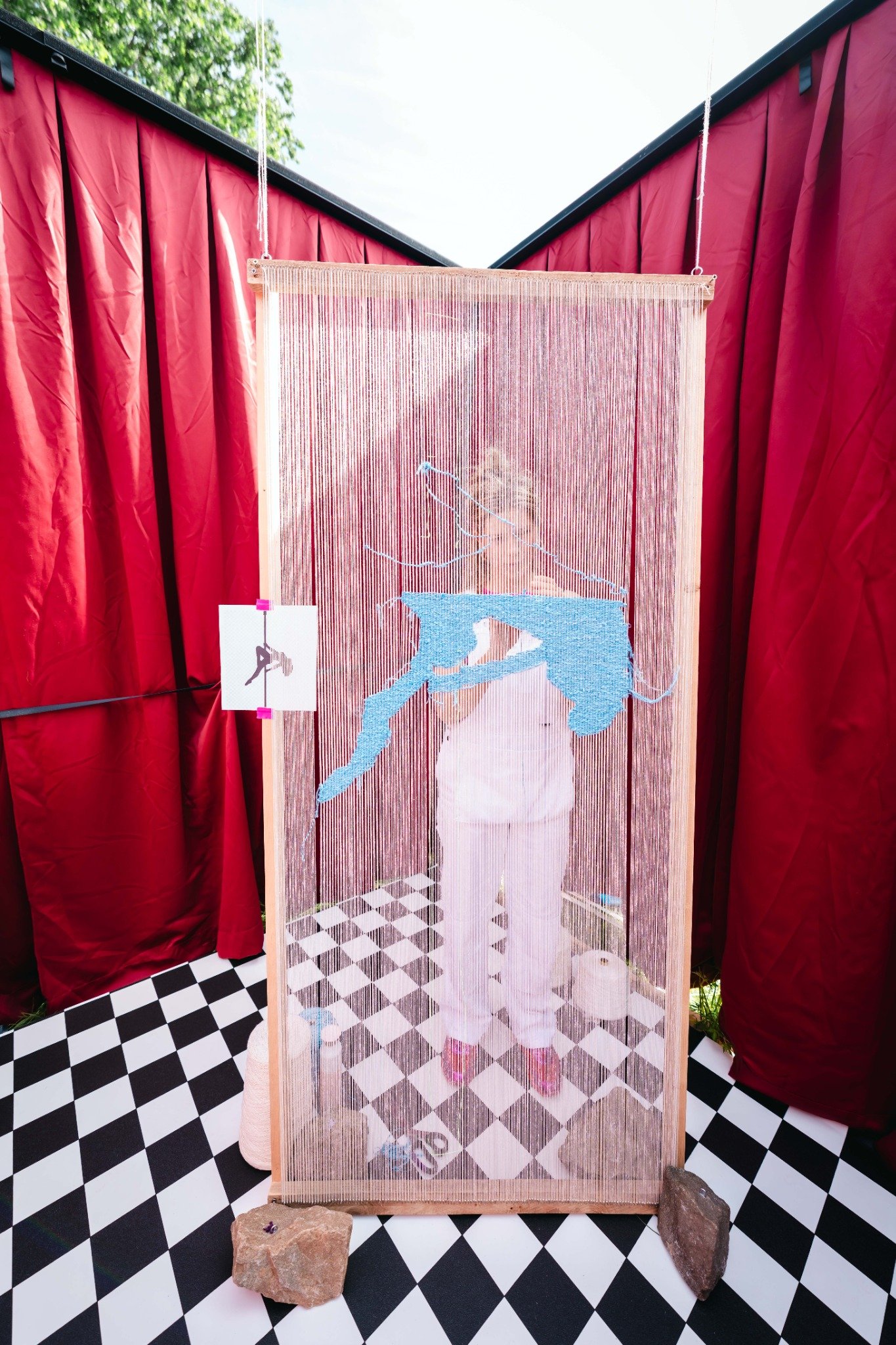
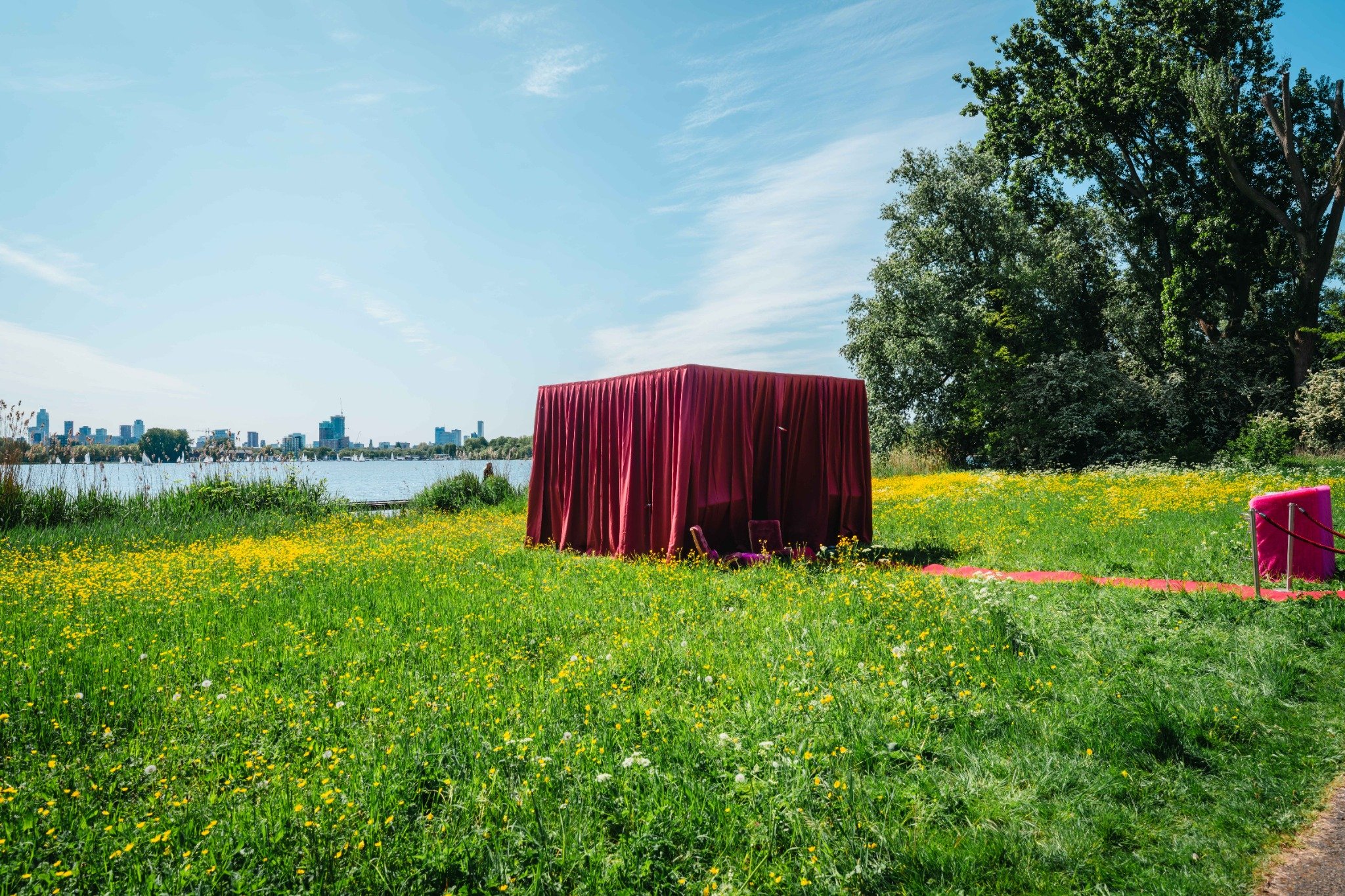
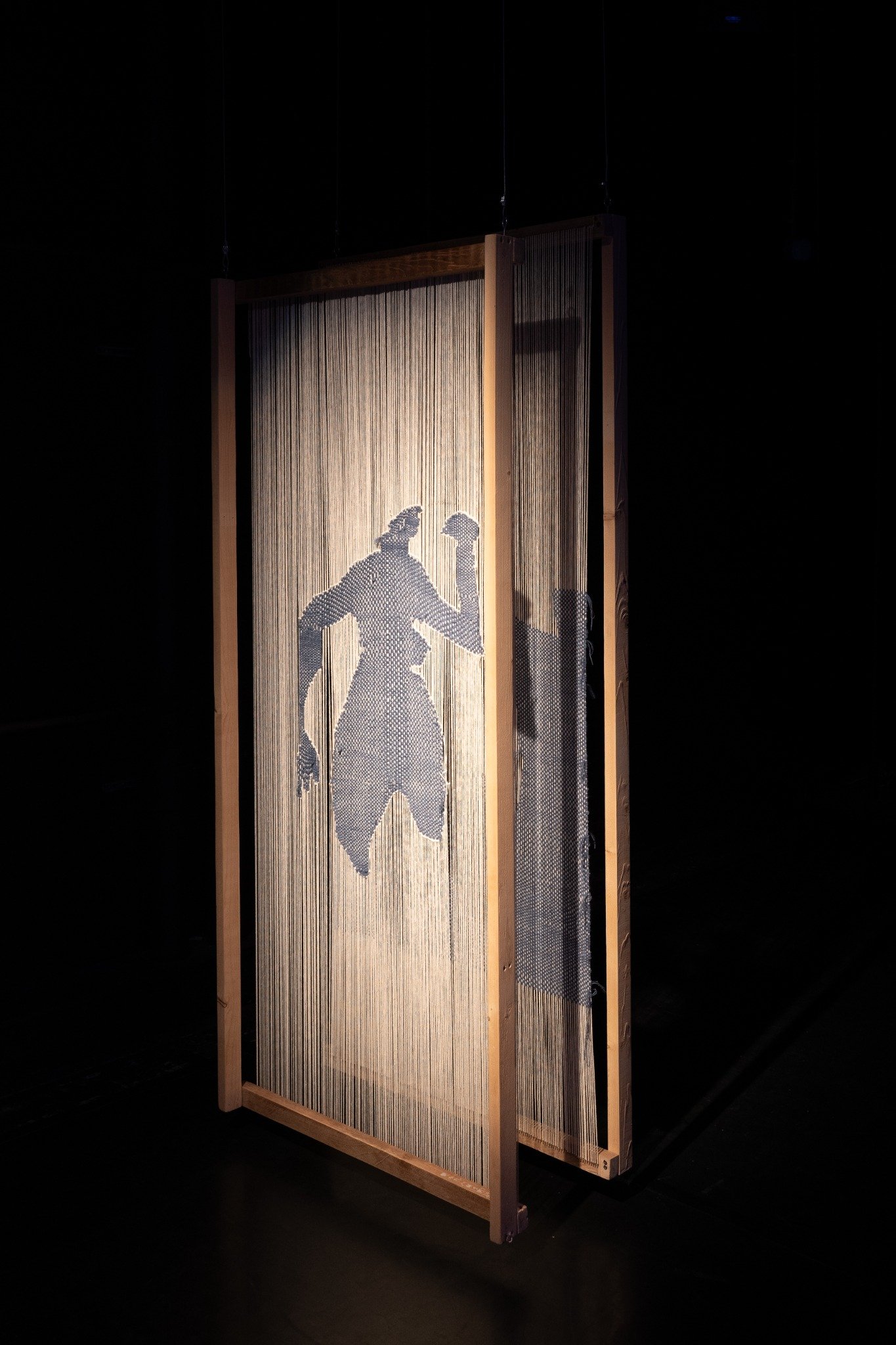
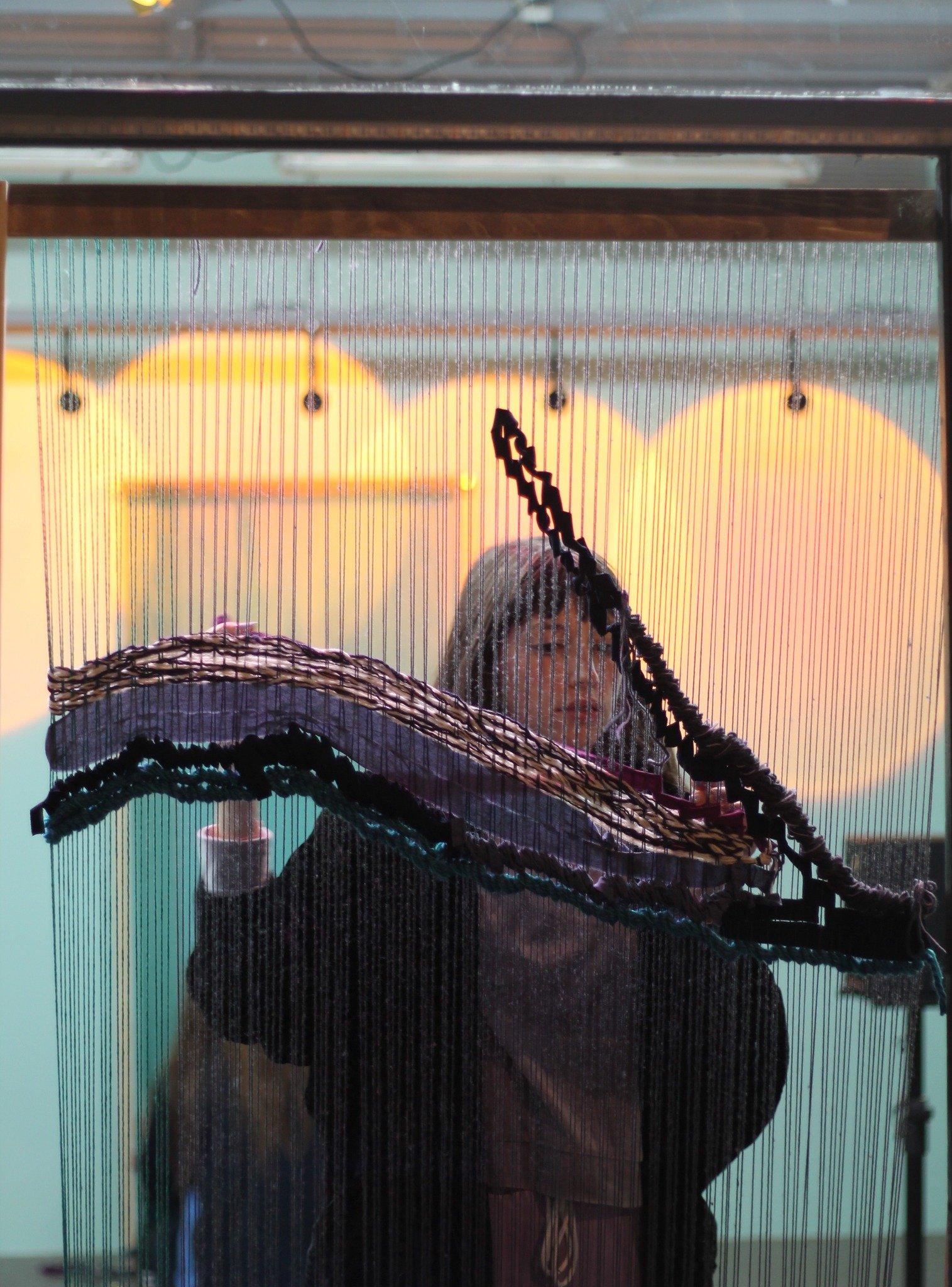
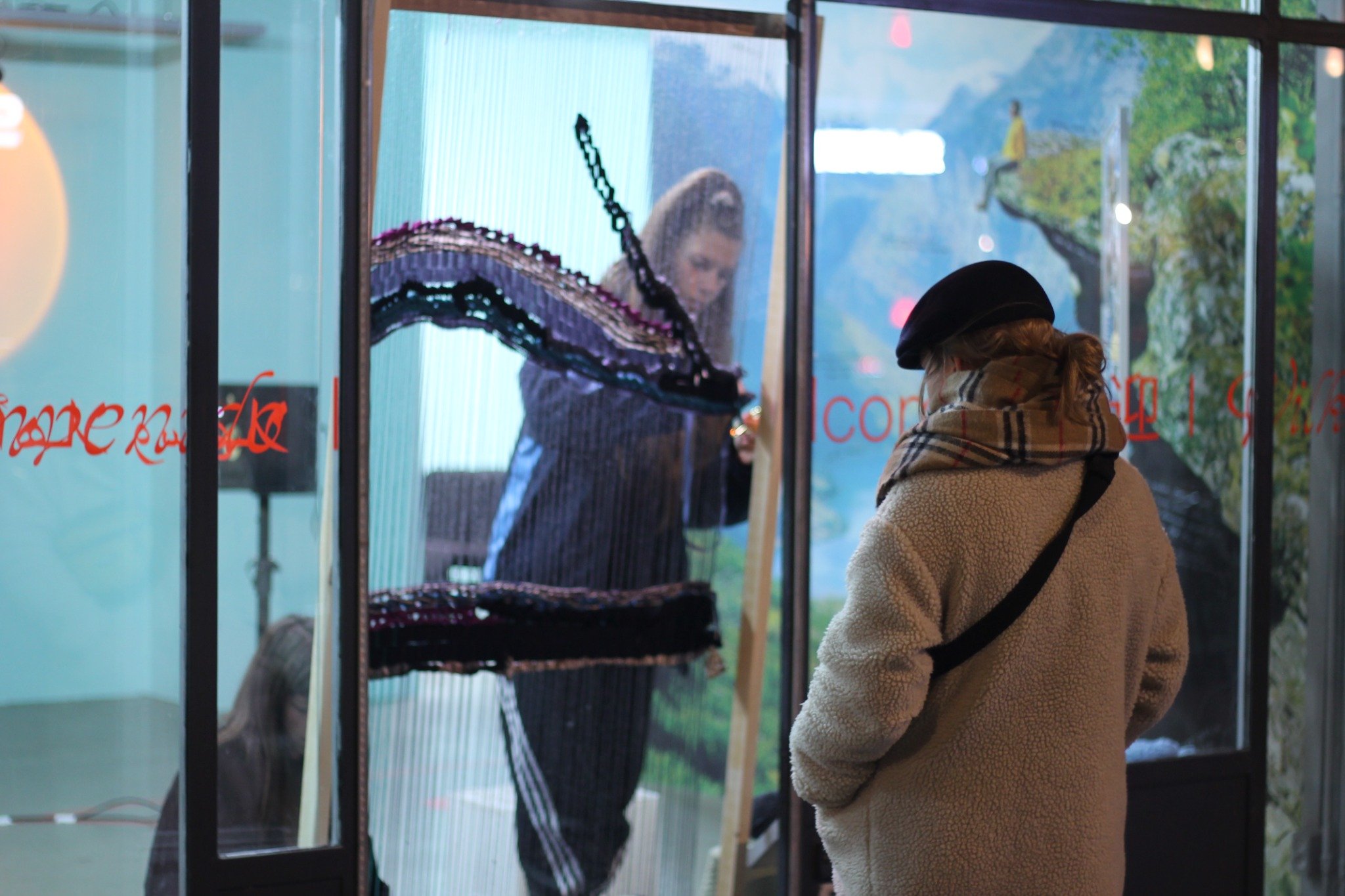
WEEF.collective @ Ode to Mona (2025) - a pop-up installation and performance. On invitation of Vrijheidswerken Rotterdam, WEEF presented an unfinished work that will later become part of the collection of the muse is not present, during Ode to Mona (a celebration of the 50th anniversary of the year of the woman). This work focuses on a pole dancer. The working process is also part of the artwork. That’s why, in different presentation contexts, we show live weaving of a new textile as a performance. The event included poetry, drinks, and performance, and invited people to come together. At the same time, Ode to Mona showed the discomfort that still exists today: women still face inequality. Fifty years after the United Nations named the first International Women’s Year, barriers and bias are still present. Ode to Mona invites people to celebrate freedom and reflect. Materials: wooden frame, (un)dyed wool. Credits photography: Michelle Urbiztondo
WEEF.collective @ Ode to Mona (2025)
WEEF.collective @ Ode to Mona (2025) - a pop-up installation and performance. On invitation of Vrijheidswerken Rotterdam, WEEF presented an unfinished work that will later become part of the collection of the muse is not present, during Ode to Mona (a celebration of the 50th anniversary of the year of the woman). This work focuses on a pole dancer. The working process is also part of the artwork. That’s why, in different presentation contexts, we show live weaving of a new textile as a performance. The event included poetry, drinks, and performance, and invited people to come together. At the same time, Ode to Mona showed the discomfort that still exists today: women still face inequality. Fifty years after the United Nations named the first International Women’s Year, barriers and bias are still present. Ode to Mona invites people to celebrate freedom and reflect. Credits photography: Michelle Urbiztondo
WEEF.collective @ Ode to Mona (2025)
WEEF.collective @ Ode to Mona (2025) - a pop-up installation and performance. On invitation of Vrijheidswerken Rotterdam, WEEF presented an unfinished work that will later become part of the collection of the muse is not present, during Ode to Mona (a celebration of the 50th anniversary of the year of the woman). This work focuses on a pole dancer. The working process is also part of the artwork. That’s why, in different presentation contexts, we show live weaving of a new textile as a performance. The event included poetry, drinks, and performance, and invited people to come together. At the same time, Ode to Mona showed the discomfort that still exists today: women still face inequality. Fifty years after the United Nations named the first International Women’s Year, barriers and bias are still present. Ode to Mona invites people to celebrate freedom and reflect. Materials: wooden frame, (un)dyed wool. Credits photography: Michelle Urbiztondo
Atelier of Transience (2024)
Atelier of Transience (2024) - is an artistic research surrounding the life and death of textiles. A collaboration between WEEF.collective and sustainable fashion designer Sophie Roumans in the context of an open call by Amarte x Fashionclash for the Fashionclash Festival in November 2024. Atelier of Transience was a project about transience and decay in wearable textiles, motivated by the global problems of fast fashion. We explored the idea of a garment as Undead — as a zombie on this planet, a liminal entity that might want to die, but cannot. We asked ourselves: What if clothes wanted to die? What if they wanted to disappear from the planet instead of ending up as waste? How can we de-zombify clothes, and help them decompose? Sophie Roumans designed and tailored 100% compostable clothing items for Atelier of Transience that WEEF.collective ritually buried in soil a month prior to the Fashionclash Festival. The burials were performances without an audience, held in the garden of the contemporary art museum Marres. For the opening of Atelier of Transience in Marres, we dug up these buried clothing pieces and installed the corpses/remnants as artworks for the visitors of the festival. The aesthetic properties of rot and fungus made the time of decay visible in the garments. Atelier of Transience became a mixed media exhibition combining fashion, fungi, soil, dirt, performance, video and music. Credits photography: Mitch van Schijndel Exhibition at FASHIONCLASH Festival, Maastricht (2024)
Atelier of Transience (2024)
Atelier of Transience (2024) - is an artistic research surrounding the life and death of textiles. A collaboration between WEEF.collective and sustainable fashion designer Sophie Roumans in the context of an open call by Amarte x Fashionclash for the Fashionclash Festival in November 2024. Atelier of Transience was a project about transience and decay in wearable textiles, motivated by the global problems of fast fashion. We explored the idea of a garment as Undead — as a zombie on this planet, a liminal entity that might want to die, but cannot. We asked ourselves: What if clothes wanted to die? What if they wanted to disappear from the planet instead of ending up as waste? How can we de-zombify clothes, and help them decompose? Sophie Roumans designed and tailored 100% compostable clothing items for Atelier of Transience that WEEF.collective ritually buried in soil a month prior to the Fashionclash Festival. The burials were performances without an audience, held in the garden of the contemporary art museum Marres. For the opening of Atelier of Transience in Marres, we dug up these buried clothing pieces and installed the corpses/remnants as artworks for the visitors of the festival. The aesthetic properties of rot and fungus made the time of decay visible in the garments. Atelier of Transience became a mixed media exhibition combining fashion, fungi, soil, dirt, performance, video and music. Credits photography: Mitch van Schijndel Exhibition at FASHIONCLASH Festival, Maastricht (2024)
Atelier of Transience (2024)
Atelier of Transience (2024) - is an artistic research surrounding the life and death of textiles. A collaboration between WEEF.collective and sustainable fashion designer Sophie Roumans in the context of an open call by Amarte x Fashionclash for the Fashionclash Festival in November 2024. Atelier of Transience was a project about transience and decay in wearable textiles, motivated by the global problems of fast fashion. We explored the idea of a garment as Undead — as a zombie on this planet, a liminal entity that might want to die, but cannot. We asked ourselves: What if clothes wanted to die? What if they wanted to disappear from the planet instead of ending up as waste? How can we de-zombify clothes, and help them decompose? Sophie Roumans designed and tailored 100% compostable clothing items for Atelier of Transience that WEEF.collective ritually buried in soil a month prior to the Fashionclash Festival. The burials were performances without an audience, held in the garden of the contemporary art museum Marres. For the opening of Atelier of Transience in Marres, we dug up these buried clothing pieces and installed the corpses/remnants as artworks for the visitors of the festival. The aesthetic properties of rot and fungus made the time of decay visible in the garments. Atelier of Transience became a mixed media exhibition combining fashion, fungi, soil, dirt, performance, video and music. Credits photography: Mitch van Schijndel Exhibition at FASHIONCLASH Festival, Maastricht (2024)
the muse is not present (2024)
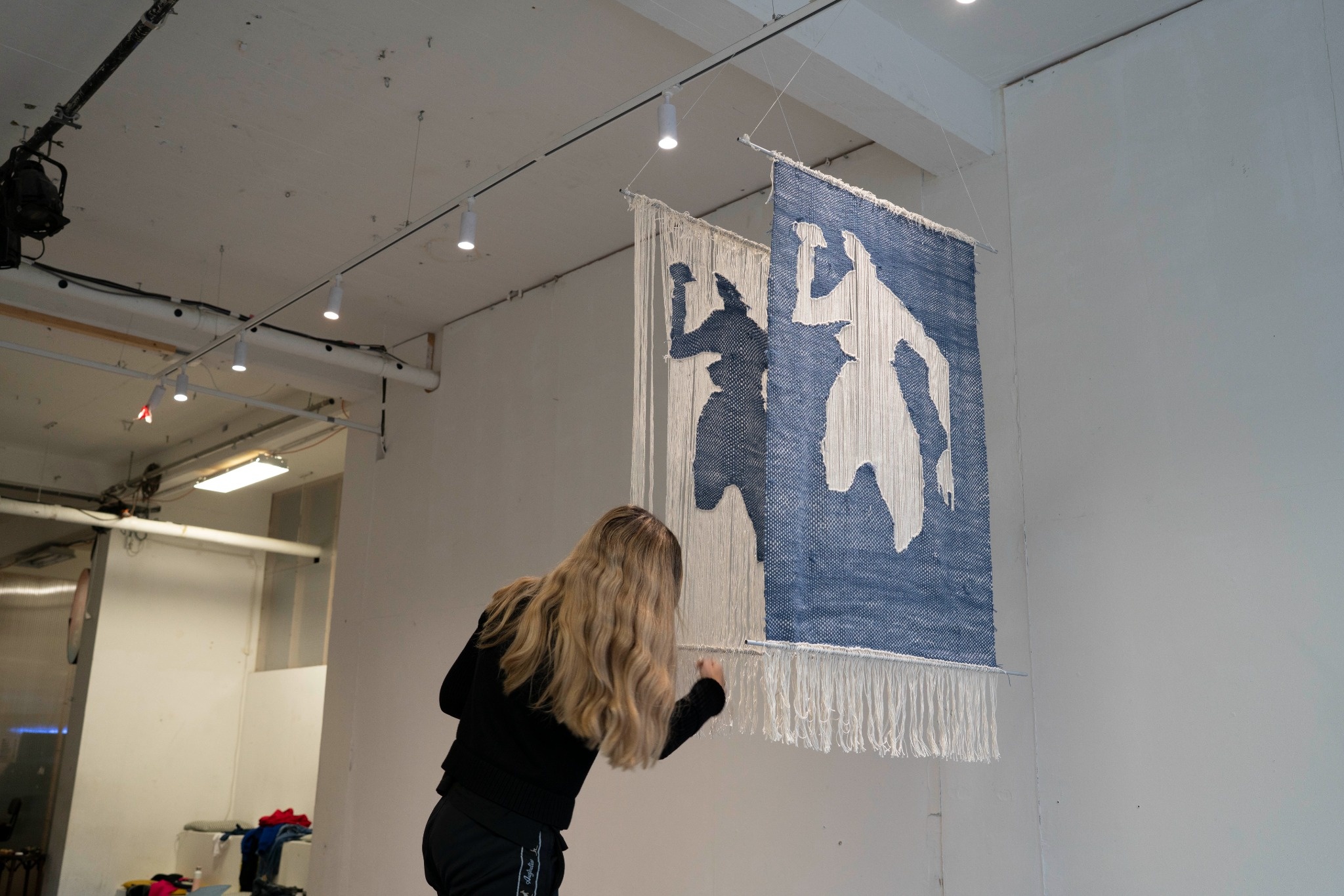
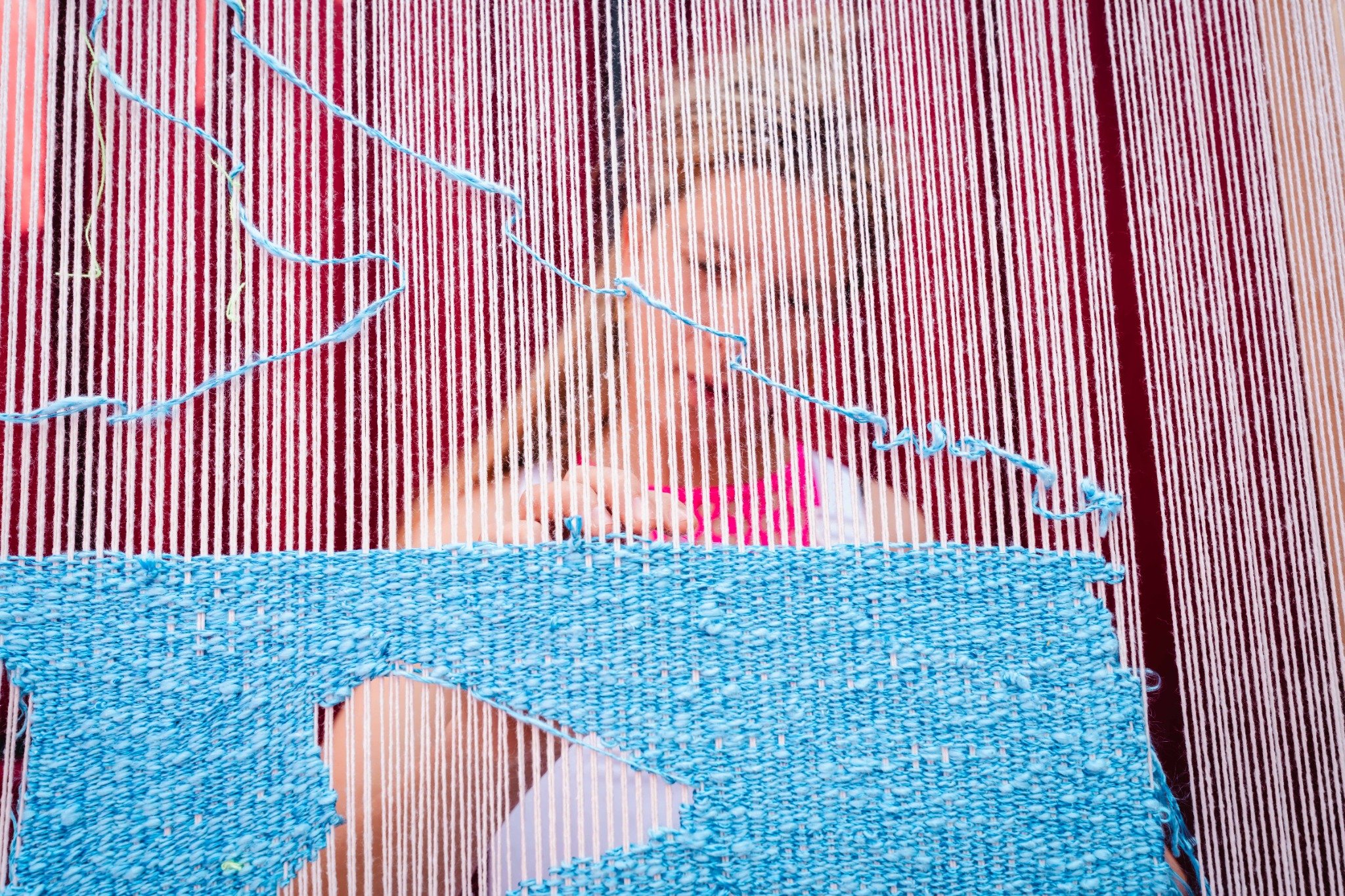
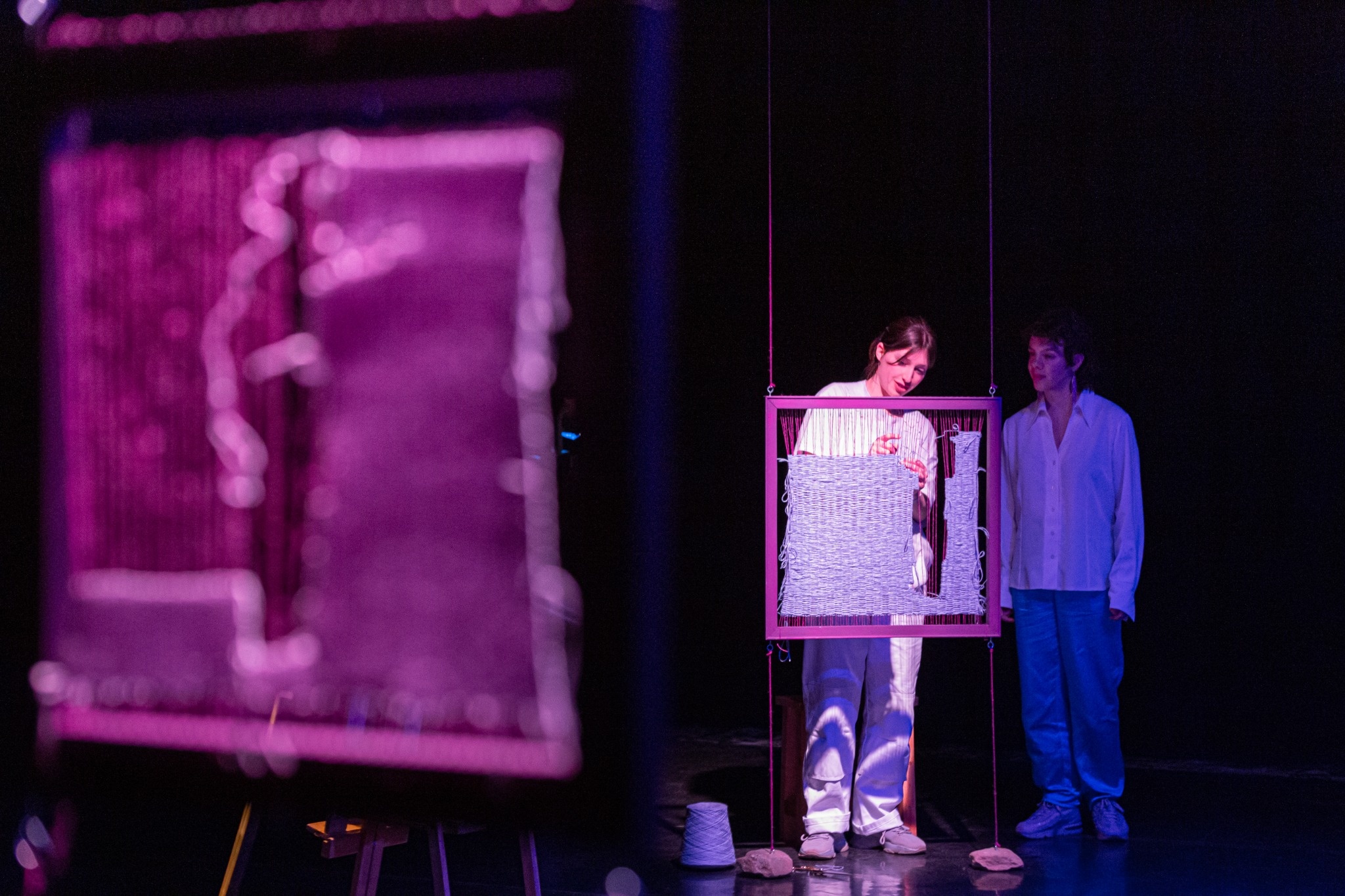
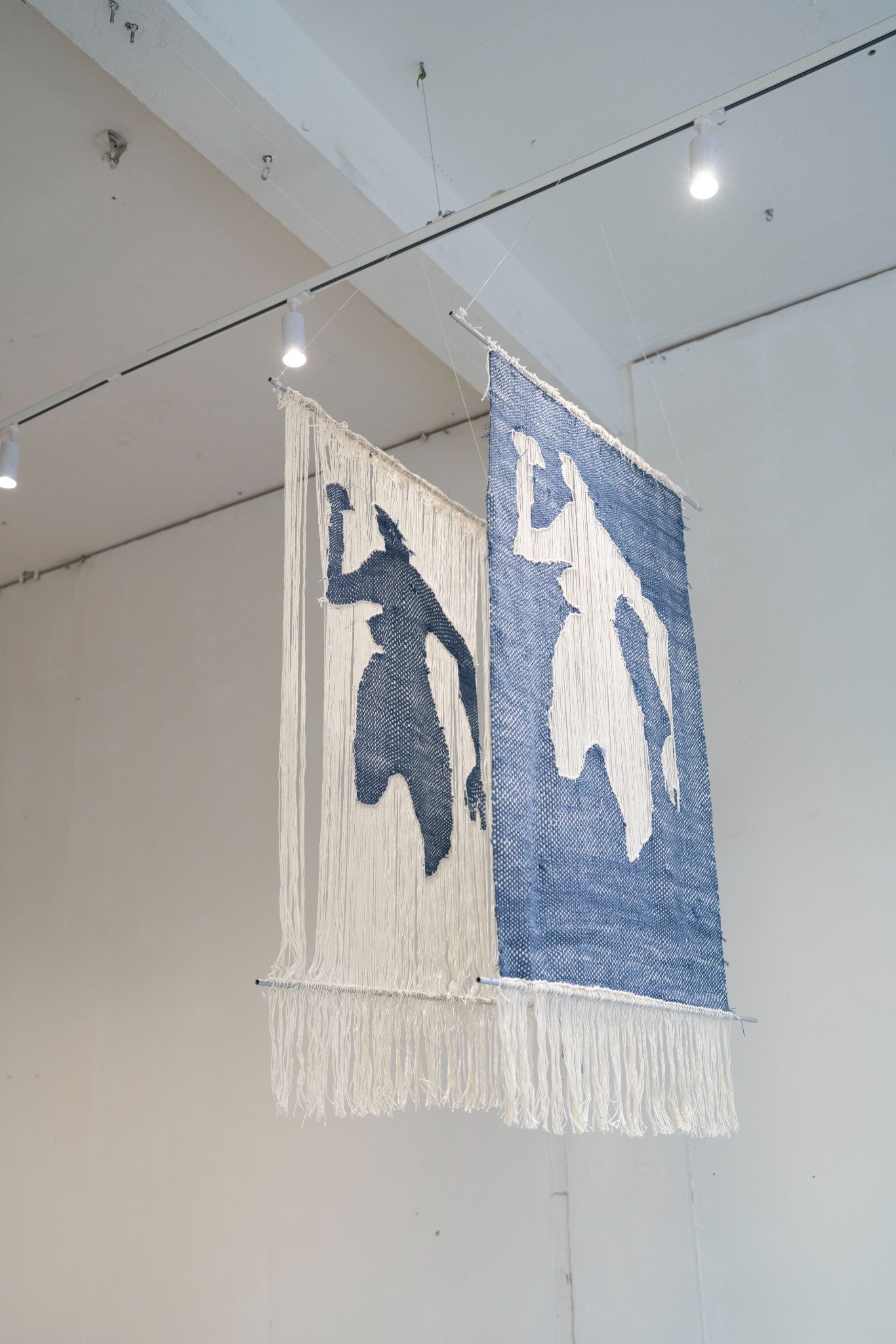
the muse is not present (2024) - a textile installation and performance. An open and theatrical weaving atelier for two female performers, inspired by a classical painter’s studio. Every 1,5h we performed a weaving model demonstration, like the act of painting a live model in painting. During the days of the festival, we wove self-portraits of our own silhouettes - the extremely slow opposite of the selfie or nude. We experimented with how a female form appears or disappears on the fabric. The muse is a female figure in art, almost always painted or created by a white male artist. What if the muse has walked out of her own frame? We explored how we, as women, want to create and shape the muse ourselves. Materials: wooden frames, various types of (secondhand) textiles. Credits video and photography: Nina Wilson
the muse is not present (2024)
the muse is not present (2024) - a textile installation and performance. An open and theatrical weaving atelier for two female performers, inspired by a classical painter’s studio. Every 1,5h we performed a weaving model demonstration, like the act of painting a live model in painting. During the days of the festival, we wove self-portraits of our own silhouettes - the extremely slow opposite of the selfie or nude. We experimented with how a female form appears or disappears on the fabric. The muse is a female figure in art, almost always painted or created by a white male artist. What if the muse has walked out of her own frame? We explored how we, as women, want to create and shape the muse ourselves. Materials: wooden frames, various types of (secondhand) textiles. Credits video and photography: Nina Wilson
the muse is not present (2024)
the muse is not present (2024) - a textile installation and performance. An open and theatrical weaving atelier for two female performers, inspired by a classical painter’s studio. Every 1,5h we performed a weaving model demonstration, like the act of painting a live model in painting. During the days of the festival, we wove self-portraits of our own silhouettes - the extremely slow opposite of the selfie or nude. We experimented with how a female form appears or disappears on the fabric. The muse is a female figure in art, almost always painted or created by a white male artist. What if the muse has walked out of her own frame? We explored how we, as women, want to create and shape the muse ourselves. Materials: wooden frames, various types of (secondhand) textiles. Credits video and photography: Nina Wilson
WEEF // gaze (2022)
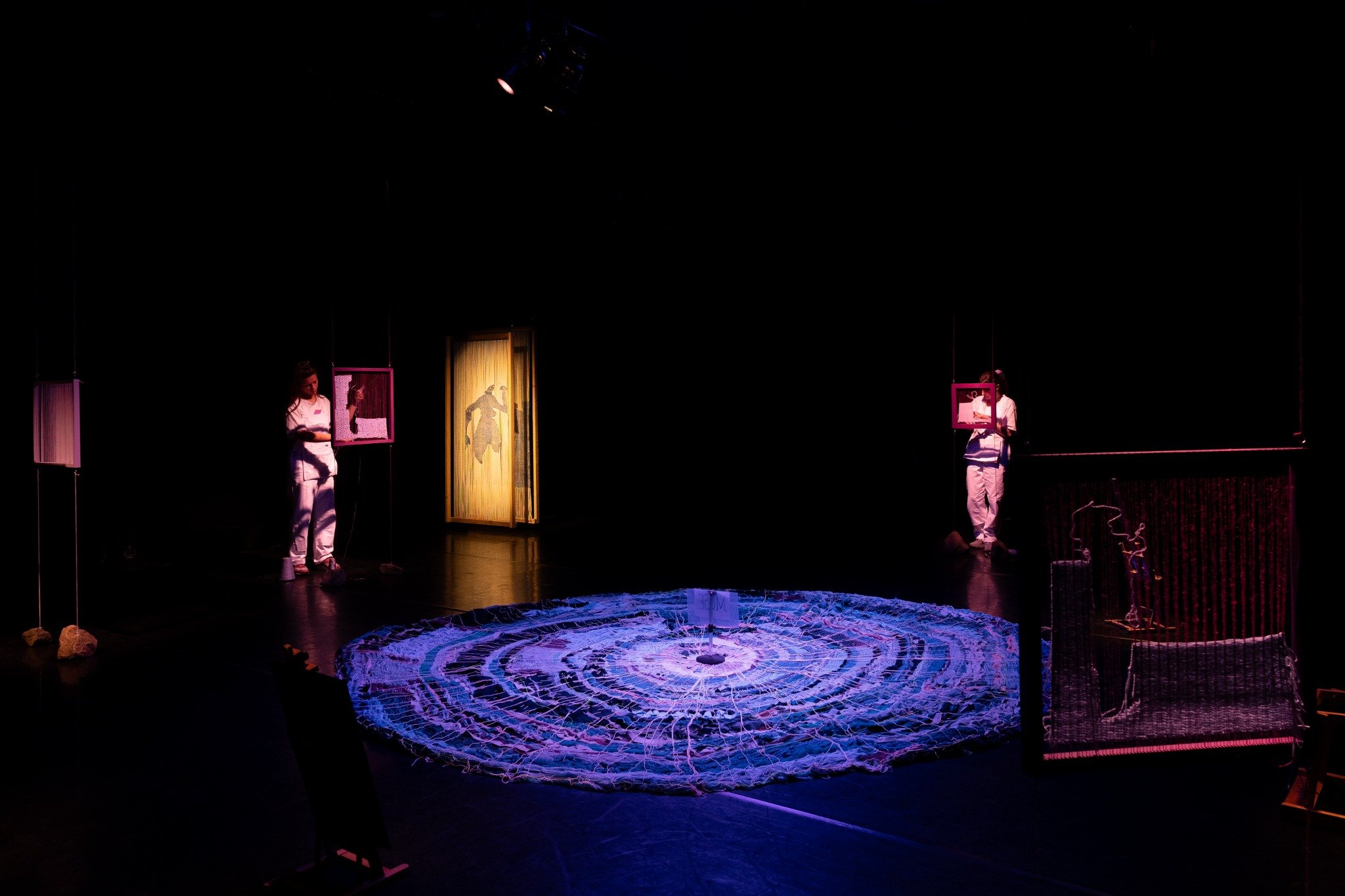
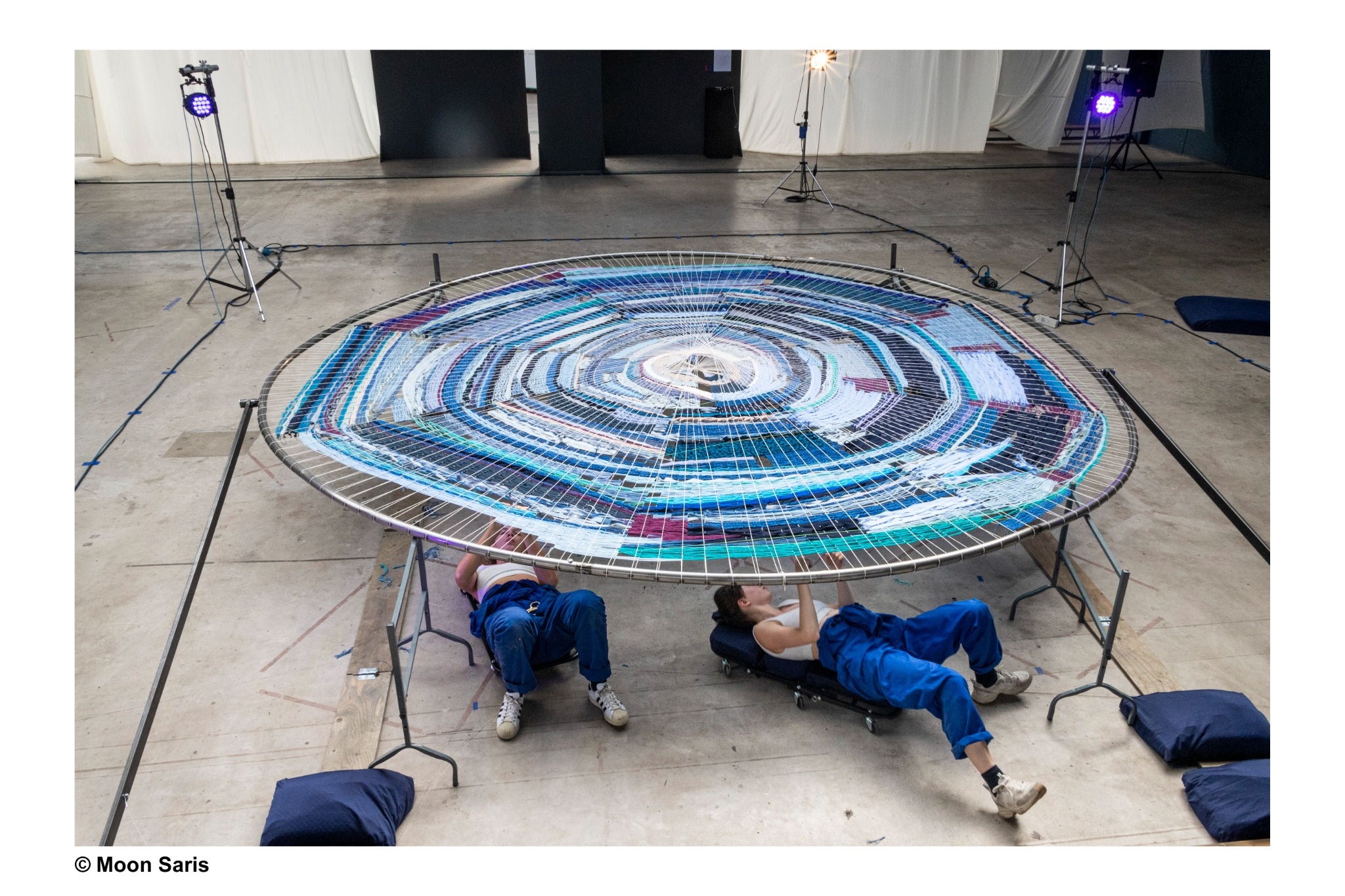
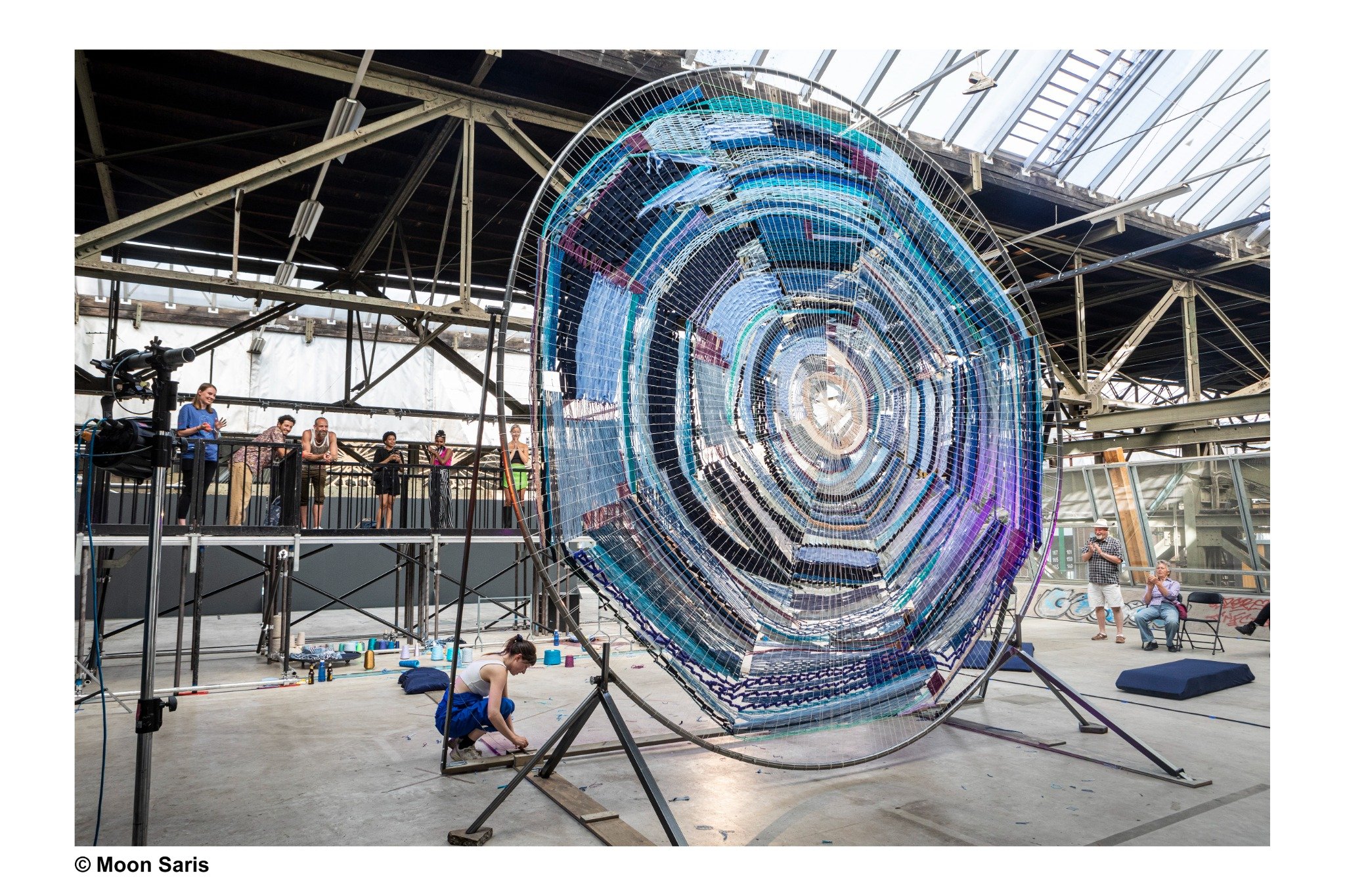
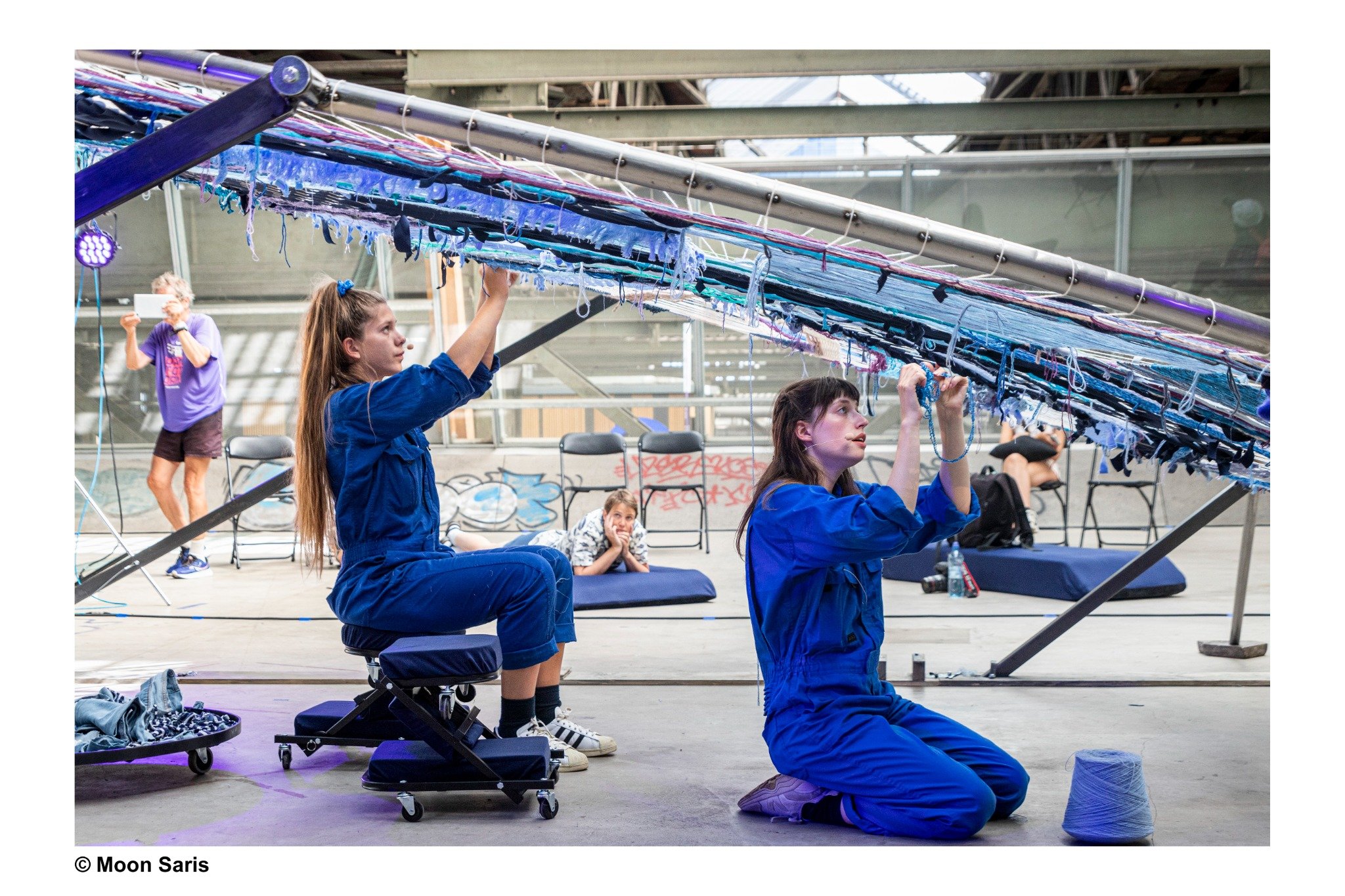
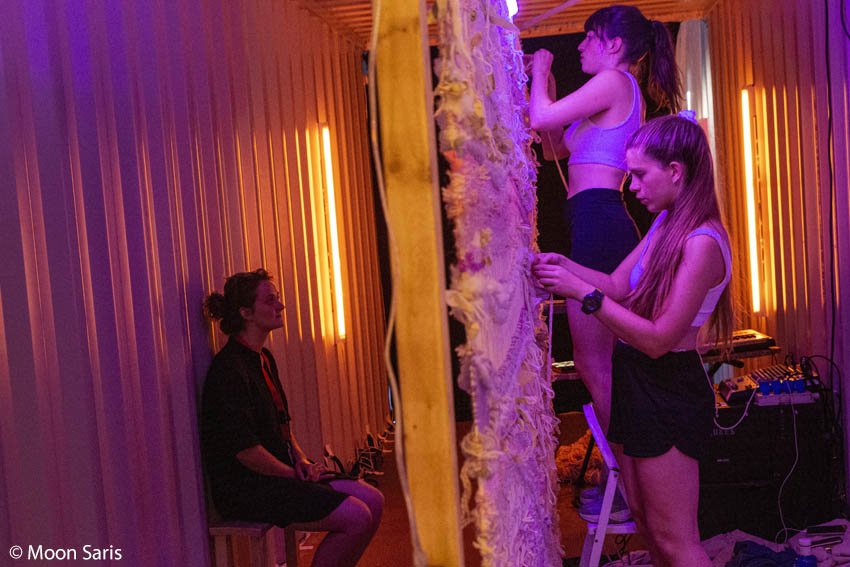
WEEF // gaze (2022) - a textile installation and performance (duration: 9 days). The loom (5m ø) could be placed by hand in 3 different positions: upright, half-tilted, and flat. Two performers are doing meticulous and laborious hand craft that demands a slow pace and patience. The concentration of the performers is felt in the space and challenges the audience to slow down and give into the repetitive motion of weaving. The meditative atmosphere of the space is heightened with sound and light. While weaving, the two performers dialogue and sing about the (fe)male gaze. The space should feel ambiguous, entrancing the audience by the meditative nature of the performance, while the audience questions which position they want to take to watch the performers work. They could walk, sit, lay, stand, or look down from a higher position. The outcome of this work is a big round tapestry called: Eighty-six hours of spinning around in our cycles Materials: secondhand cotton, linen and synthetic mix yarn, secondhand silk, donated blue jeans, old bedsheets, dark blue tablecloths, donated maternity clothes, gold metal yarn. Credits photography: Moon Saris
WEEF // gaze (2022)
WEEF // gaze (2022) - a textile installation and performance (duration: 9 days). The loom (5m ø) could be placed by hand in 3 different positions: upright, half-tilted, and flat. Two performers are doing meticulous and laborious hand craft that demands a slow pace and patience. The concentration of the performers is felt in the space and challenges the audience to slow down and give into the repetitive motion of weaving. The meditative atmosphere of the space is heightened with sound and light. While weaving, the two performers dialogue and sing about the (fe)male gaze. The space should feel ambiguous, entrancing the audience by the meditative nature of the performance, while the audience questions which position they want to take to watch the performers work. They could walk, sit, lay, stand, or look down from a higher position. The outcome of this work is a big round tapestry called: Eighty-six hours of spinning around in our cycles Materials: secondhand cotton, linen and synthetic mix yarn, secondhand silk, donated blue jeans, old bedsheets, dark blue tablecloths, donated maternity clothes, gold metal yarn. Credits photography: Moon Saris
WEEF // gaze (2022)
WEEF // gaze (2022) - a textile installation and performance (duration: 9 days). The loom (5m ø) could be placed by hand in 3 different positions: upright, half-tilted, and flat. Two performers are doing meticulous and laborious hand craft that demands a slow pace and patience. The concentration of the performers is felt in the space and challenges the audience to slow down and give into the repetitive motion of weaving. The meditative atmosphere of the space is heightened with sound and light. While weaving, the two performers dialogue and sing about the (fe)male gaze. The space should feel ambiguous, entrancing the audience by the meditative nature of the performance, while the audience questions which position they want to take to watch the performers work. They could walk, sit, lay, stand, or look down from a higher position. The outcome of this work is a big round tapestry called: Eighty-six hours of spinning around in our cycles Materials: secondhand cotton, linen and synthetic mix yarn, secondhand silk, donated blue jeans, old bedsheets, dark blue tablecloths, donated maternity clothes, gold metal yarn. Credits photography: Moon Saris
WEEF // raam (2021)
WEEF // raam (2021) - A 3 day durational pop-up installation at Showroom MaMA (Rotterdam). Credits video: Hélène Vrijdag
WEEF // raam (2021)
WEEF // raam (2021) - A 3 day durational pop-up installation at Showroom MaMA (Rotterdam). Credits photography: Jos Tobé
WEEF // raam (2021)
WEEF // raam (2021) - A 3 day durational pop-up installation at Showroom MaMA (Rotterdam). Credits photography: Jos Tobé
WEEF // race (2021)
WEEF // race (2021) - a textile installation and performance (duration: 9 days). In a 12-meter container we created a tunnel of slowing down, placed in the middle of a buzzing and fast-running festival centre. Inspired by the mythical weaving contest between Arachne and Athena, we made a quiet and meditative performance installation around a paradoxical concept - a race in slowing down. The audience could stay inside the container as long as they wanted, watching us weave and perform while listening to our mantras and audio voice-overs. The outcome of this work is a rectangular tapestry called: Sixty and a half hours of time goes by so slowly (2,00m x 3,20m). Materials: Secondhand cotton, bedsheets, pillowcases, clothing, wool, undefined yarn, with three batches of cotton and synthetic cotton dyed in avocado pits between 6 hours and 4 days. Credits video: Hélène Vrijdag
WEEF // race (2021)
WEEF // race (2021) - a textile installation and performance (duration: 9 days). In a 12-meter container we created a tunnel of slowing down, placed in the middle of a buzzing and fast-running festival centre. Inspired by the mythical weaving contest between Arachne and Athena, we made a quiet and meditative performance installation around a paradoxical concept - a race in slowing down. The audience could stay inside the container as long as they wanted, watching us weave and perform while listening to our mantras and audio voice-overs. The outcome of this work is a rectangular tapestry called: Sixty and a half hours of time goes by so slowly (2,00m x 3,20m). Materials: Secondhand cotton, bedsheets, pillowcases, clothing, wool, undefined yarn, with three batches of cotton and synthetic cotton dyed in avocado pits between 6 hours and 4 days. Credits photography: Anna van Kooij at Het Huis Utrecht
WEEF // race (2021)
WEEF // race (2021) - a textile installation and performance (duration: 9 days). In a 12-meter container we created a tunnel of slowing down, placed in the middle of a buzzing and fast-running festival centre. Inspired by the mythical weaving contest between Arachne and Athena, we made a quiet and meditative performance installation around a paradoxical concept - a race in slowing down. The audience could stay inside the container as long as they wanted, watching us weave and perform while listening to our mantras and audio voice-overs. The outcome of this work is a rectangular tapestry called: Sixty and a half hours of time goes by so slowly (2,00m x 3,20m). Materials: Secondhand cotton, bedsheets, pillowcases, clothing, wool, undefined yarn, with three batches of cotton and synthetic cotton dyed in avocado pits between 6 hours and 4 days. Credits photography: Moon Saris at Over het IJ Festival

WEEF // rave

Datum:
Locatie: TimeWindow
In samenwerking met: THE END HAS NO END - Time Window’s Final Festival

“You painted a naked woman because you enjoyed looking at her, you put a mirror in her hand and called the painting Vanity, thus moraly condemning the woman whose nakedness you had depicted for your own pleasure (...)” John Berger, Ways of Seeing (2008)

In the time span of the Paardenrave, we weave the portrait of a pole dancer. The extremely slow counterpart to the go-go dancer. We experiment with how a female form appears or disappears on the canvas.

Deze kunstenaar heeft nog geen toekenningen.