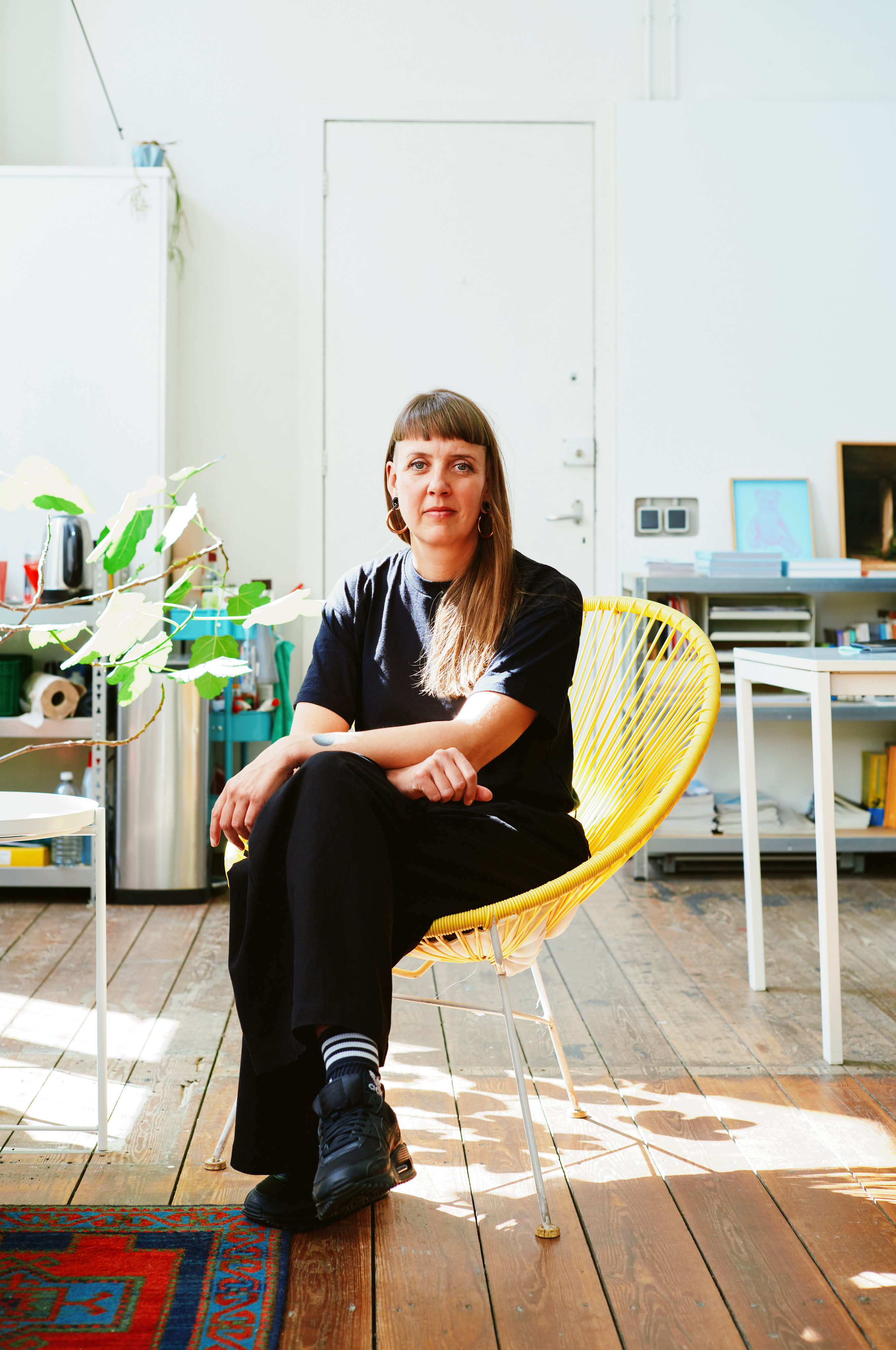
Angeniet Berkers

sociaal-maatschappelijk , mens , Geschiedenis , fotografie , Documentair

My work explores the intersections of history, trauma, and family, uncovering how personal and collective memories shape our present. Through extensive research, I weave together different visual languages, archival materials, text, and sound to translate complex stories into an accessible and empathetic whole. Before turning to photography, I worked for years as a sociotherapist, counseling veterans and refugees with complex PTSD caused by war and violence. My background in mental health care deeply informs my choice of subjects, approach, and working methods.

Integrity, honesty, and nuance are at the core of my projects. I often focus on stories that remain unspoken due to shame or guilt, uncovering layers of history that continue to shape the present. An essential part of my work is my personal reflection on both the subject matter and the people I portray. I examine my role as an outsider, as a photographer, and at times, the colonial implications of my position. By sharing my thoughts and emotions, I aim to create a dialogue that not only challenges the viewer’s frame of reference but also holds space for my own place within the narrative. Through this process, I explore the extremities of today’s society, prompting reflection on personal and collective biases.

Lebensborn
Lebensborn - On December 12, 1935, a program was started in Germany to provide the Third Reich with the new generation of leaders and SS officers: Lebensborn (“Source of Life”). Birth rates had dropped dramatically and something had to be done to prevent abortion. In several clinics across Germany, Norway, Belgium, France and Poland, women who met the requirements of the Aryan race could give birth to their children. Outside of Germany it was often the case that German soldiers had relationships with local women. SS officers were encouraged to reproduce as much as possible, including out of wedlock. The architect behind this plan, Heinrich Himmler, aimed to improve the “racial quality” of the new empire to be built on a National Socialist basis with blue-eyed, blond-haired and light-skinned children. When the program did not bring enough new Aryan souls, children with blonde hair and blue eyes were kidnapped from Eastern Europe and taken to German homes to be “Germanised”. After the war, the children from these homes and families were often stigmatised and sometimes mistreated or sexually abused. Many grew up with secrets; the past was not to be talked about. The Lebensborn homes were believed to be brothels or “stud farms” for SS men, as quite some (B)movies implied. None of these stories were true. The purpose of Lebensborn is so unreal and horrific that I believe it should never be forgotten. In view of a society that increasingly flirts with nationalism, I think it is important to document and tell these stories from the past. It remains an extreme example of a skewed sense of superiority. For this project I tracked down former Lebensborn children, now in their eighties, to interview and portray them. I conducted archival research and photographed relevant objects and documents to visualise the system behind the program. In addition, I visited several former Lebensborn homes in Germany, Norway and Austria. The surrounding landscapes became part of the project as well. These old trees and places were silent witnesses to what once took place there. The project resulted in the photobook Lebensborn. Birth Politics of the Third Reich, published in April 2024 by The Eriskay Connection and designed by Rob van Hoesel. The book was shortlisted for the Aperture Paris Photo First Book Award and the Historical Book Award at Les Rencontres d’Arles. The project has been exhibited at Kunsthal Rotterdam, Encontros da Imagem in Braga and PhEST. The work has been published in The Washington Post, NRC, de Volkskrant, Trouw, Frankfurter Allgemeine Zeitung, GEO and Katalog Journal. It received the second prize for the Dutch Storytelling Prize. The project was made possible with the support of the Mondriaan Fund, Fonds Anna Cornelis, Fotodok & Stichting Dialoog, CBK Rotterdam, Jaap Hartenfonds, Cultuurfonds, the Municipality of Rotterdam and Fonds Kwadraat.
Three Sisters - A job in the hospital, a nice car, a house to buy and being able to go on holiday: that is the future that Nilda Gonçalves Tavares envisioned from an early age. A completely normal life - but the man at her front door doesn't care. “You're in debt, aren't you?” he asks. Nilda wonders how the man knows, as if he can smell it. She doesn't answer. “One ride, just abroad”, he continues. “And you are debt-free again.” It is not the first time that Nilda has been put to the test, that summer day in 2007. You could almost call it the thread of her life. Together with her two sisters, she has been constantly tested over the past twenty years. Again and again they were hit hard by the crises that hit the Netherlands. Again and again they had to save themselves. The future that Nilda had in mind was getting further and further out of sight. On Vers Beton, you can read the compelling stories of Nilda, Dulce and Fatima. For Online magazine Vers Beton and local broadcaster OpenRotterdam, research journalist Adrian Estrada and I followed Nilda (45), Dulce (42) and Fatima (40) and their families in recent months: a family from Rotterdam who found themselves at the crossroads of three crises. We were allowed to visit them, talk to their children and reconstruct the setbacks of the past twenty years. Funnily enough, it wasn't a war or a deadly virus that damaged their lives the most. These were the officials of the Dutch tax authorities. by Adrian Estrada This project was funded by Fonds Bijzondere Journalistieke Projecten
Paradies - Paradies is a photographic project that I am developing along the Dutch - German border. The work emerged from a solo cycling journey tracing this line through rural areas, small towns and transitional landscapes. Traveling by bicycle created a deliberate slowdown, allowing for sustained attention to subtle shifts in terrain, atmosphere and spatial organization. Rather than focusing on official border crossings or visible markers, the project attends to how the border is embedded within the landscape itself. Agricultural fields, industrial edges, waterways, fences and forest paths form layered environments where regulation and organic growth coexist. In many places, the border is not spectacular or dramatic; it is implied through infrastructure, land use and quiet adjustments in space. Throughout the journey, I searched for a visual language that could translate this experience into images. The camera lingers on edges and thresholds: where asphalt turns into sand, where a fence interrupts an open field, where a drainage system redirects water. Some places suggest continuity across the line; others reveal subtle interruptions or friction. These are not presented as events, but as conditions that shape how the land is organized and inhabited. In the photographs, it is often unclear whether an image was made in the Netherlands or in Germany. The landscape does not visibly change at the border, and natural elements continue regardless of national divisions. This lack of distinction underlines how the border operates as a constructed framework rather than a visible rupture in the terrain. Working intuitively and at a slow pace, I allowed ambiguity to remain present in the images. The project raises a quiet question: how open is a border that appears almost invisible, and how often do we take such openness for granted? Paradies approaches the border as a spatial and experiential condition, highlighting that this freedom of movement is fragile and remarkable, and worth noticing and reflecting upon.Through attention to landscape and atmosphere, the work invites viewers to look closely at what often goes unnoticed and to consider the subtle ways borders influence experience. This work was exhibited in Brutus in 2022.
ECHO Dummy - On the 11th of april 2016, Attawapiskat, a small isolated town in Northern Ontario, Canada, was in the news around the world. On that day 11 people tried to commit suicide. Some of them were only 11 years old. Due to the Residential School System indigenous youth were taken away from their families for 10 months a year. It was a way of assimilating the youth to Western culture and Christian beliefs. Many children in the schools were neglected, harmed and didn’t get proper education. This resulted in a high rate of unemployment, intergenerational trauma, addiction, mental health problems and a high rate of suicides. Next to that many people in Attawapiskat live in overcrowded, substandard or condemned housing. ‘ECHO’ is a collaborative project that attempts to give Attawapiskat’s youth a voice and therefore attention to their life, while in the same time making critical remarks about the media’s portrayal of social minorities and about the consequences of our colonial past in the everyday life of indigenous kids. The project combines cold, empty and lonely landscapes with dark, warm and intimate family pictures. Next to that, drawings, writings and pictures of local kids show their actual thoughts and worries. This dummy was designed by SYB, shortlisted for the Book Dummy Award of Photo London and La Fabrica, the Luma Rencontres D'Arles and the Cortona on the Move Photo Book Prize.
In Limbo - In an old Amsterdam District Office over 140 illegal immigrants live together in the old offices on three separate floors. There is a womens floor and two mens floors.The group is a mixture of people originating from different countries such as Sudan and Ethiopia. Some of them are living in The Netherlands for over 15 years but after legalisation failed they couldn’t or wouldn’t go back to their original country. The group has been moving around Amsterdam from building to building due to evictions of these squatted buildings. This story was published in NRC

Lebensborn

Datum:
Locatie: Duitsland, Noorwegen, Oostenrijk, USA

In 1935 a program was started to provide the Third Reich with the new generation of leaders and SS-officers; Lebensborn (“Source of Life”). SS-officers were encouraged to reproduce as much as possible, including out of wedlock. In several clinics spread over Europe (unmarried) women, if they met the requirements of the Aryan race, could give birth to their children. The architect behind this plan, Heinrich Himmler, aimed to improve the ‘racial quality’ in the new empire to be built on.

https://angenietberkers.nl/projects/lebensborn

ECHO

Datum:
Locatie: Canada

On the 11th of april 2016, Attawapiskat, a small isolated town in Northern Ontario, Canada, was in the news around the world. On that day 11 people tried to commit suicide. Some of them were only 11 years old. Due to the Residential School System indigenous youth were taken away from their families for 10 months a year. It was a way of assimilating the youth to Western culture and Christian beliefs. Many children in the schools were neglected, harmed and didn’t get proper education.

https://angenietberkers.nl/projects/echo
Deze kunstenaar heeft nog geen toekenningen.