Eva Garibaldi

performance , installatie , Ecologie , Digitale technologie , cross-over , Artistiek onderzoek

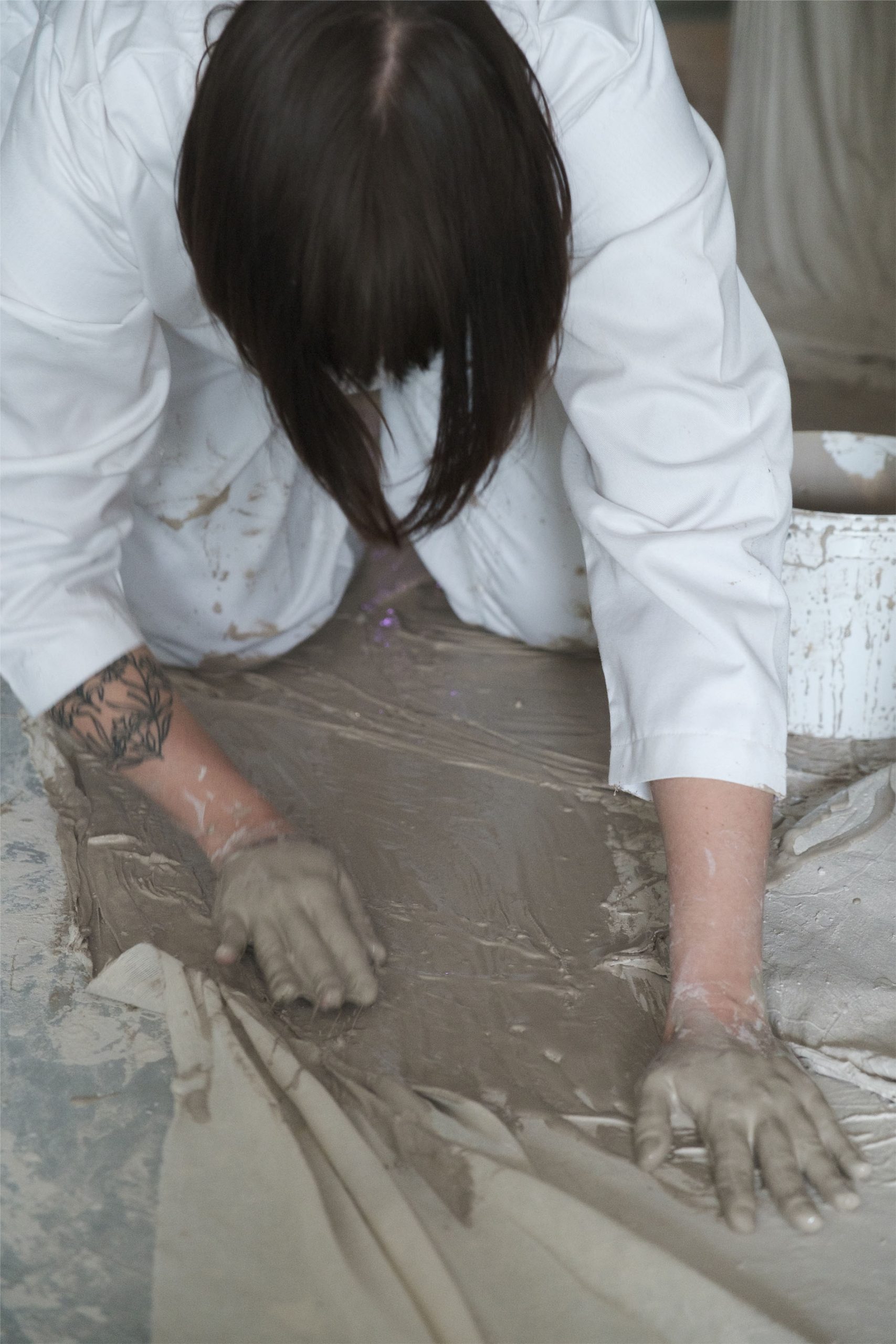
As a practitioner, Eva Garibaldi positions herself at the intersection of art, design, and research. Her practice is critical and multidisciplinary, engaging with topics focusing on environmental issues, the perception of landscape, and understanding the relationship between humans and nature through specific contexts. Recently, her focus has been on researching swamps and other amphibious landscapes as spaces where the perceived stability of the Earth collapses. Through her projects, she uncovers local vernacular stories to address broader issues related to ecological collapse. Research plays a pivotal role in her practice, often being more important than the outcome itself. Garibaldi collects unique stories through site-specific research and connects them to global issues, constantly working in the duality of global vs. local, universal vs. vernacular, and indigenous. She mainly uses spatial installation interlaced with multimedia such as video and sound as a storytelling device.
The Stones Only Appear To Be Non-Living
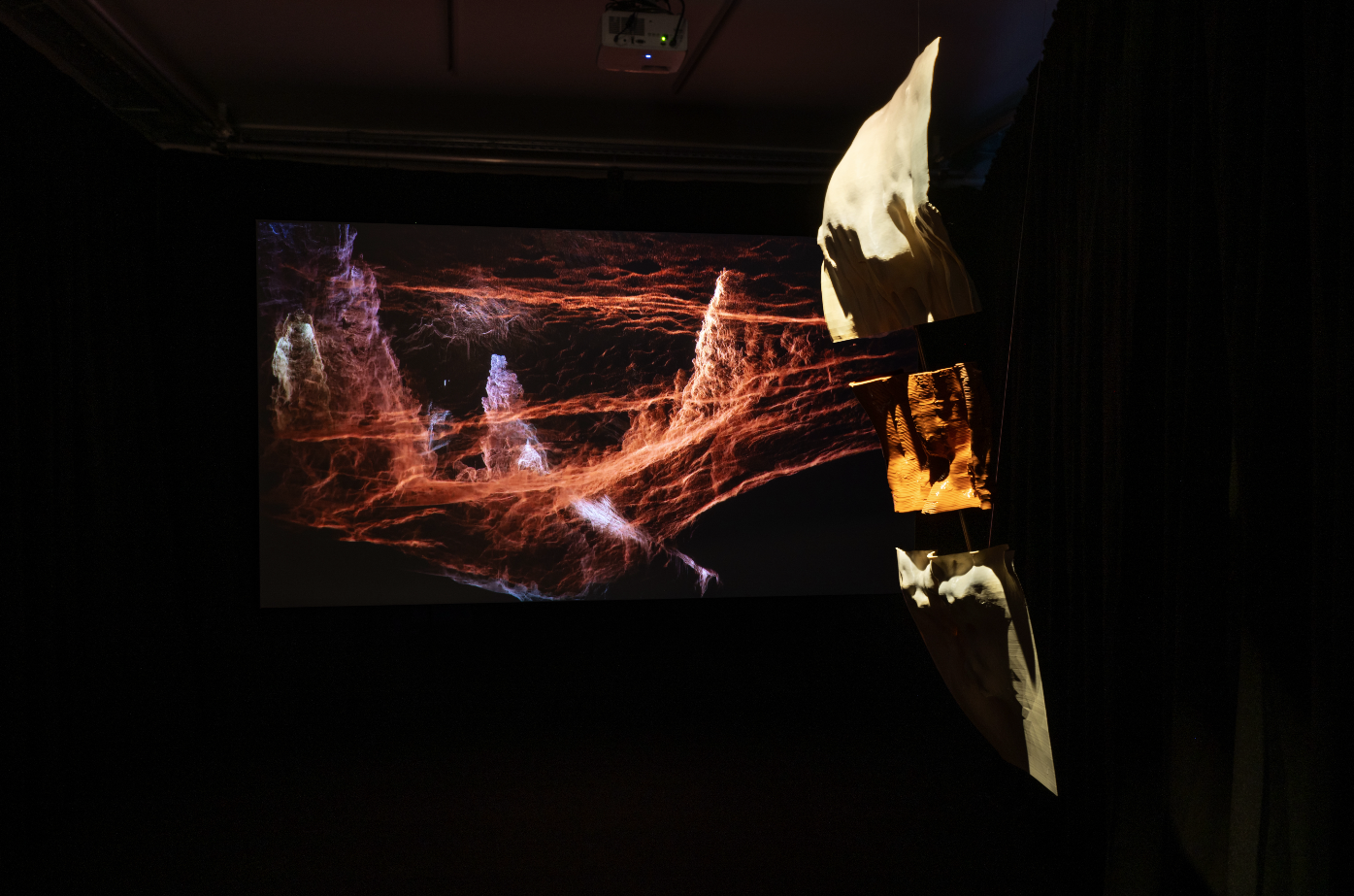
The Stones Only Appear To Be Non-Living - Countless drops carve underground cavities into a mass of limestone – rituals, graves, shelters at the gates to the underground – an explorer's descent into the dark mouth of a cave – smooth wet surfaces wind into the unknown depth – the flash of a magnesium strip – sediments, speleothems, draperies, columns, rimstone pools – pitons, carbide lamps, electricity, concrete – ultrasonic bat screeches – floods, alluvium, blowholes – the Reka River disappears into the underworld with deafening noise. In the project The Stones Only Appear To Be Non-Living, the duo Swamp_Matter explores the karstic system of water caves as a temporally and materially manifold depository of climate history. The immersive installation has been created based on a situated and embodied research of the Škocjan Caves and builds a speculative and multilayered setting of transformations and dimensions beyond the human, which actively produces new modes of openness to the world. In the framework of deep geological time, the apparently eternal, atmospherically stable and petrified cave is an environment of flux. As a primordial heterotopy that combines the opposites of the living and the non-living, the known and the unknown, permanence and transitions, the ancient past and a distant future, it represents a glitch in the history of appropriating natural environments – an unrecognizable, uneven and changeable area that resists clear boundaries and dividing lines, even to the surface. A zone of constant percolation into the depths, opening up ever new inaccessible areas, and a simultaneous constant accumulation of sediments and overground material is formed by the Reka River, which, in the installation, becomes a vessel for the heterochronic narrative of the underground. The passage between various dimensions of the river – from droplets to the ponder – is channeled by sound, which dissolves bodies and guides them underground. The researchers attempt to build an interface for interacting with the underground world beyond observation or reading using multiple – insufficient, partial, failed and contradictory – means of mediation. They thus articulate a new site that accepts the glitch in its entirety and establishes a channel for expressing the multitude of possible dimensions of an environment that actively opposes visibility, clarity, productivity and meaning. In the development of new procedures of localization, they combine organic, soil and technological elements – discrete series of data points, surface captures with photogrammetry, procedural (human and automated) reconstructions of deep-time sediments, casts of once stolen cave formations, models between the physical and the digital and projections of growth algorithms. Hyperlocalized and fragmented artifacts eroded the image of a non-living and permanent landscape, outlining a new, unknown and onto-epistemologically open terrain.
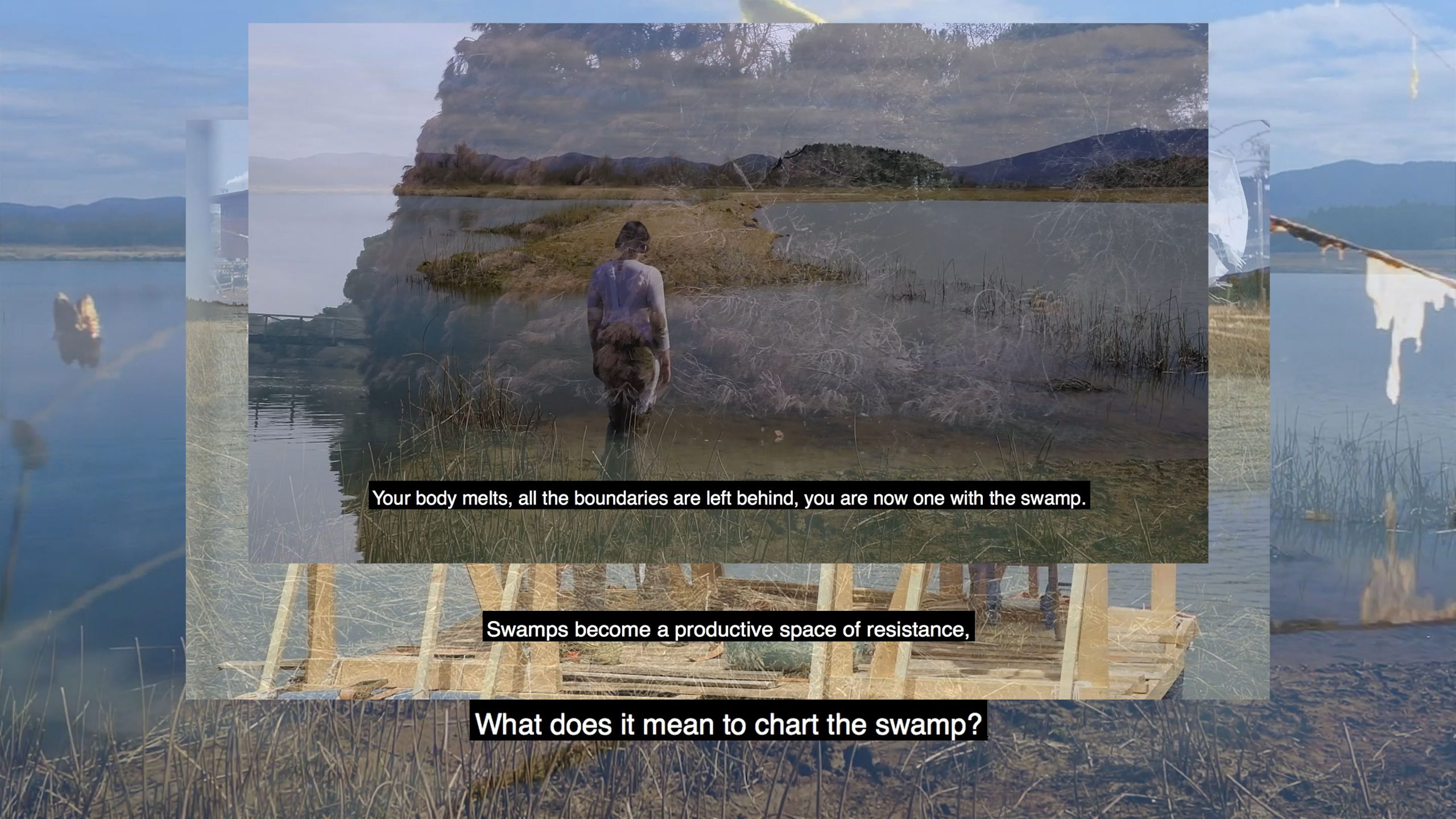
Shifting Ecologies: Swamps as Utopian Grounds - Shifting Ecologies: Swamps as Utopian Grounds, a collaboration with Matilde Stolfa, is a speculative project that takes the swamp as a starting point to question ecological, spatial, societal, and economic dynamics in a context of shifting and unstable realities. The project reimagines the swamp as a catalyst for weaving new narratives, myths, and legends exploring ancient beliefs, indigenous knowledge, and the dynamic nature of swamps. Neither land nor water, swamps are transitional grounds for biological and cultural diversity. They are crucial landscapes in mitigating climate change through carbon sequestration, coastal protection, and biodiversity conservation. As ever-morphing terrains they are a metaphor for current instabilities, becoming a fertile ground to blur binaries and dichotomies and embrace instability and fluidity as the condition of our time. Exploring the dynamic nature of swamps and the symbolic nature and political role of these ecosystems, the project addresses the complex and increasingly shifting conditions of our world. Swamps once considered wastelands, become terrains of resistance and possibility.
The Unstable Ground - The Unstable Ground takes as a starting point the site of Lake Cerknica, an intermittent karstic lake in Slovenia, to explore the ground as unstable and in constant flux, breaking the binary understanding of space. The project on one side critically employs archival, cartographic, photographic and text-based research methods, combining them with artistic research practices. The methodologies produce a dialogue between the different notions of unstable landscapes, which have historically often become spaces of friction between local knowledge and universal knowledge, rendering them contested grounds. The ground and, by consequence, space are understood as unstable and constantly moving; Therefore, they no longer appear static but begin to fluctuate. The terrestrial and the aquatic are no longer understood as binaries separate from each other but begin to form a hybrid temporal materiality in which one is submerged into an unresolved unstable cycle.
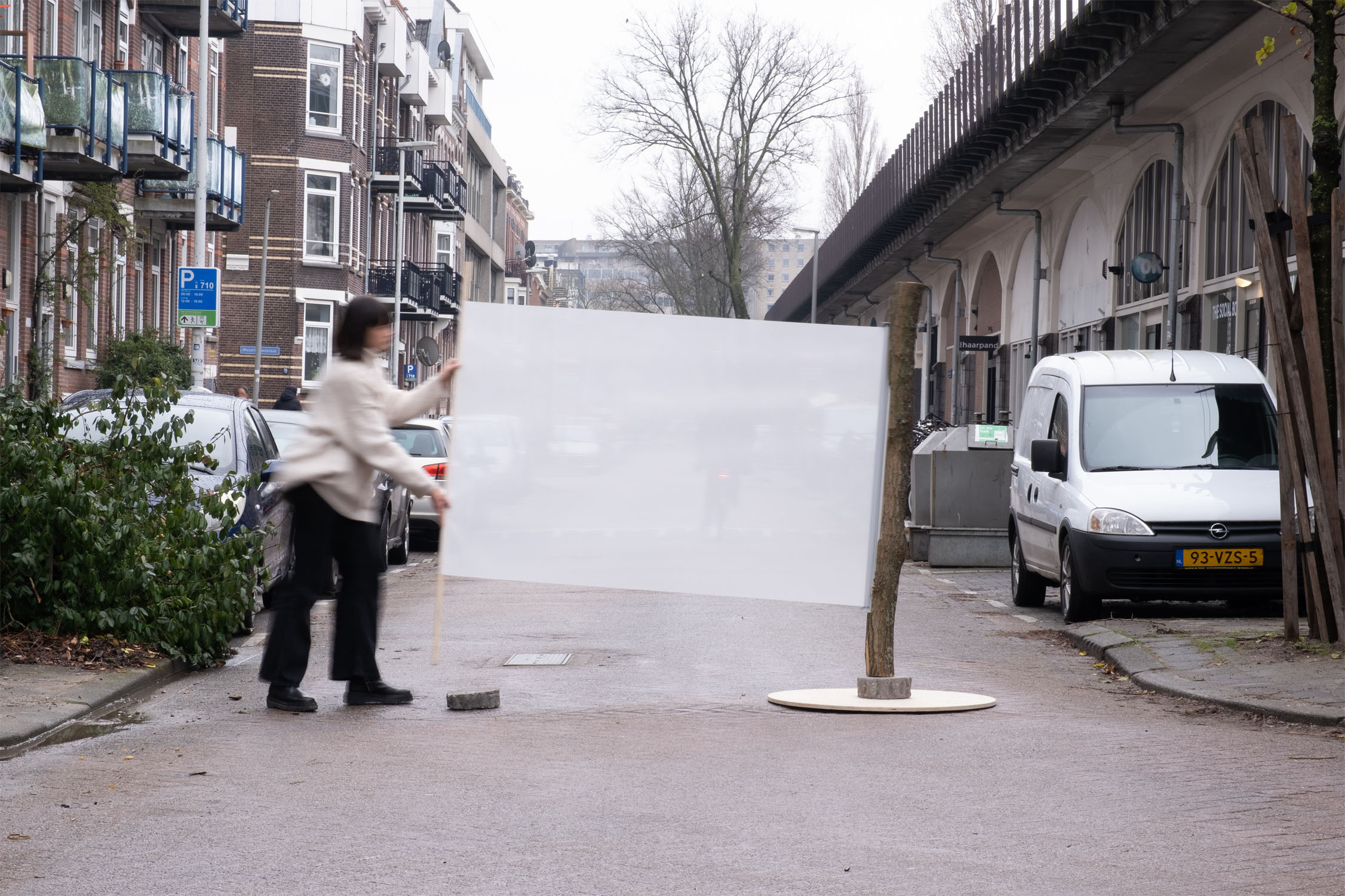
Tree as Archive - This project critically examines the spatialization of bureaucratic processes. The tree takes on the role of infrastructure when set into the urban space. In urban planning processes, it is assigned an economic value based on the services it performs, often being used in the process of gentrification. The practice of architecture and urban planning play a significant role in this, often leading to the displacement of communities. Tree as Archive is a proposition for a different kind of bollard infrastructure, enabling the citizen to disrupt the circulation of the urban space by pulling the installed fabric to create new spatial contexts and occupy the public space. It stands in the exact spots where the 19 cut trees stood. By that, it becomes the materialization of the resident's disagreement and protest against the new layout of the street, collecting stories of the movement that emerged with the cutting of trees. Because wood samples can be read by scientists as archives of everything that has happened to the tree, the same logic is applied to the installation. Tree as Archive, therefore becomes an archive of events that happened around the trees.

Salinarum

Datum:
Locatie: P74 Gallery, Institute P.A.R.A.S.I.T.E.

Fantastic Glitch Swamp

Datum:
Locatie: Kino Šiška
In samenwerking met: Kino Šiška Centre for Urban Culture

The Stones Only Appear To Be Non-Living

Datum:
Locatie: Aksioma Institute for Contemporary Art Ljubljana
In samenwerking met: Aksioma Institute for Contemporary Art Ljubljana, Skocjan Caves Public Service Agency

Shifting Ecologies: Swamps as Utopian Grounds

Datum:
Locatie: GarageCafe 2.3
In samenwerking met: Matilde Stolfa

Garage Café is a test-site-with-audience for experimenting, showing research projects, new collaborations, performances and all other types of artistic work. On Thursday the 5th of October Garage Café will open its doors again for presentations by Chiara Pitrola, Matilde Stolfa and Eva Garibaldi, Vivianne von Arx, Bernat Sanjuan,Ile Sen Ay Avec Toi and Toni Brell.

https://www.instagram.com/garagecaferotterdam/

Spatial Folders: Extraction - A Trans-Scalar Inquiry

Datum:
Locatie: Het Nieuwe Instituut
In samenwerking met: MIARD, Piet Zwart Institute

This publication is the first issue of Spatial Folders, a thematic periodical that is produced by the faculty of Master Interior Architecture: Research and Design (MIARD) program at Piet Zwart Institute, Willem de Kooning Academy in Rotterdam. It is composed of a selection of graduation theses alongside contributions by guest authors that focus on urgent socio-cultural, socio-political, and ecological issues that affect the (built) environment and its representation regimes.

https://miard.pzwart.nl/spatial-folders

The Pillnitz Chronotopes Tour

Datum:
Locatie: Design Campus, Kunstgewerbenmuseum
In samenwerking met: Leoni Fischer

What does it mean to curate a design project in the frame of Climate Change? What are our responsibilities as curators, researchers and designers? How can we participate in challenging old assumptions and build novel narratives that go beyond a purely Western human-centered understanding of the world? Curating Change proposes to look at curation as an act of care and activism, a process through which we can shape meaningful worldviews that take into consideration all beings.

https://designcampus.org/school/workshops/curating-change/

The River Knows

Datum:
Locatie: Zavod Atol / Ljudmila Lab / PifCamp
In samenwerking met: Ana Laura Richter

the project looks at the interplay and relationship between humans and the river's geological processes, reflecting on changing ecologies and raising awareness through speculation. a digital landscape is made using 3D scanning connected to arduino sensors placed in the landscape recording various parameters (in this case temp + humidity). this creates distortions and deformations within the digital landscape.

https://pif.camp/the-river-knows-by-duo-swamp_matter/

BIO27: Current Vernaculars, panel Supervernacular movement: New Generation of Designers - Issues of Local Communities and the Environment

Datum:
Locatie: Museum of Architecture
In samenwerking met: BIO27, Pekinpah

The round table will explore the relationship the younger generation of designers have towards sustainable design and vernacular practices as well as investigate the production process of the BIO27 teams. With: ⁠Vida Rucli (Robida.plus), Luka Pleskovič (Pjorkkala), Tamara Lašič Jurković (Futuring), Maruša Mazej (Garnitura), Rok Oblak (Krater), Žan Kobal, Eva Garibaldi, Janja Šušnjar, Pomelaj, Altan Jurca Avci

https://27.bio.si/si/program

Elena Candleholder

Datum:
Locatie: Salone Satelite

At the Salone Satellite of International Furniture Fair in Milan 2022, Mikser presents the winners of its signature competition Young Balkan Designers whose projects enhance human well-being by engaging all senses, addressing neglected needs, or introducing quite surprising and unexpected functionalities. Reflecting thoughts on circularity and regeneration of local Balkan skills and resources, Young Balkan Designers' solutions surpass dependency on massive industrial production.

https://ybd.mikser.rs/young-balkan-designers-at-salone-satellite-2022/

Paper + Bioplastic book

Datum:
In samenwerking met: Pekinpah / Institute for Design

The Paper + Bioplastic project is based on the principles of circular design and do-it-yourself methods. Introduced as a workshop and manual of the same name it provides users with simple recipes to prepare new materials. It resists the established and increasingly conflicted systems of consumer living by putting the power of environmental change in the hands of the end user.

https://www.pekinpah.com/evabioplastika

Paper + Bioplastic

Datum:
Locatie: Superstudio Piú

In the scenario, conceived already before the pandemic and presented at this year's Milano Design Week, all of our natural environments have been destroyed, and we now live in [Tunnel 29]. Taken together, the exhibited projects envision a post-industrial dystopia where life only persists in a closely controlled artificial environment, filled with DIY furniture from recycled plastics, invasive plant species and salvaged scrap metal, and where survivors grow their own food.

The Unstable Ground

Datum:
Locatie: Hofbogen
In samenwerking met: MIARD, Piet Zwart Institute

The Master Interior Architecture: Research + Design at Piet Zwart Institute invites you to The In-Between, an exhibition of the final projects by the 2021 graduates. The exhibition elucidates the depth of interdisciplinary practices within this year's MIARD MA candidates who present eleven installations that pose questions about the temporal quality of space and its reverberations in memory, document, and physical trace.

https://www.e-flux.com/announcements/398194/the-in-between/
Deze kunstenaar heeft nog geen toekenningen.