Jing He

sculptuur , Globalisering , Dekolonisatie , beeldhouwen , Artistiek onderzoek

My practice explores the often invisible structures that shape how we live, move, and relate—whether legal, social, or infrastructural. I see infrastructures not as neutral systems, but as living, political environments shaped by and shaping the bodies within them. I work across installation, moving image, writing, and collaborative processes. Many works grow from specific contexts: an archive, a regulation, a recurring image. I use fragments, reenactments, and embodied investigation to question normativity, identity, and control. Rather than giving answers, I build spaces of contradiction and negotiation. Some projects engage directly with migration and legal frameworks. Real-Integration (2021, with Qiaochu Guo) reimagined the Dutch civic integration exam through lived experiences of discrimination. Consensual Inequality (2018) and Normal the Space (2022) traced how immigrants are measured, welcomed, or disciplined through language, furniture, and design. Copying and cultural translation are also central to my work. In Tulip Pyramid – Copy and Identity (2016), I explored the tulip vase's transcontinental history to rethink copying as a generative act. This continues in Tulip Trust Tower 1.0 (2024), co-created with artists from different regions—each contributing a “floor” to a shared structure that holds both cohesion and difference. In Made According to a Carpenter's Square (2023), I examined how tools of measurement extend into bodily and social norms. From a porcelain mark to a geopolitical monument, I look for forms that can hold complexity without flattening it. Whether working alone or collectively, I aim to build frameworks that remain porous, unstable, and open to re-reading.
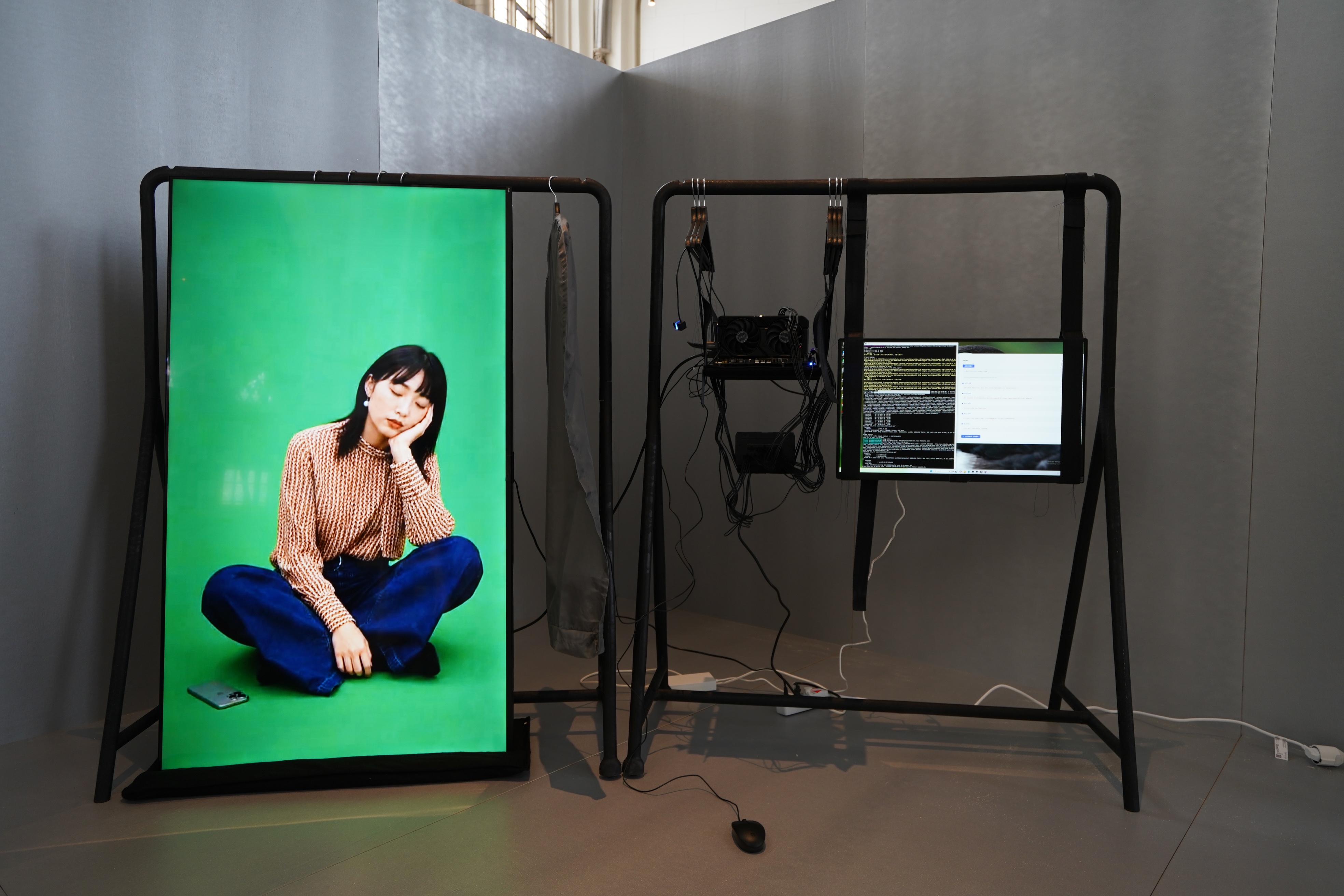
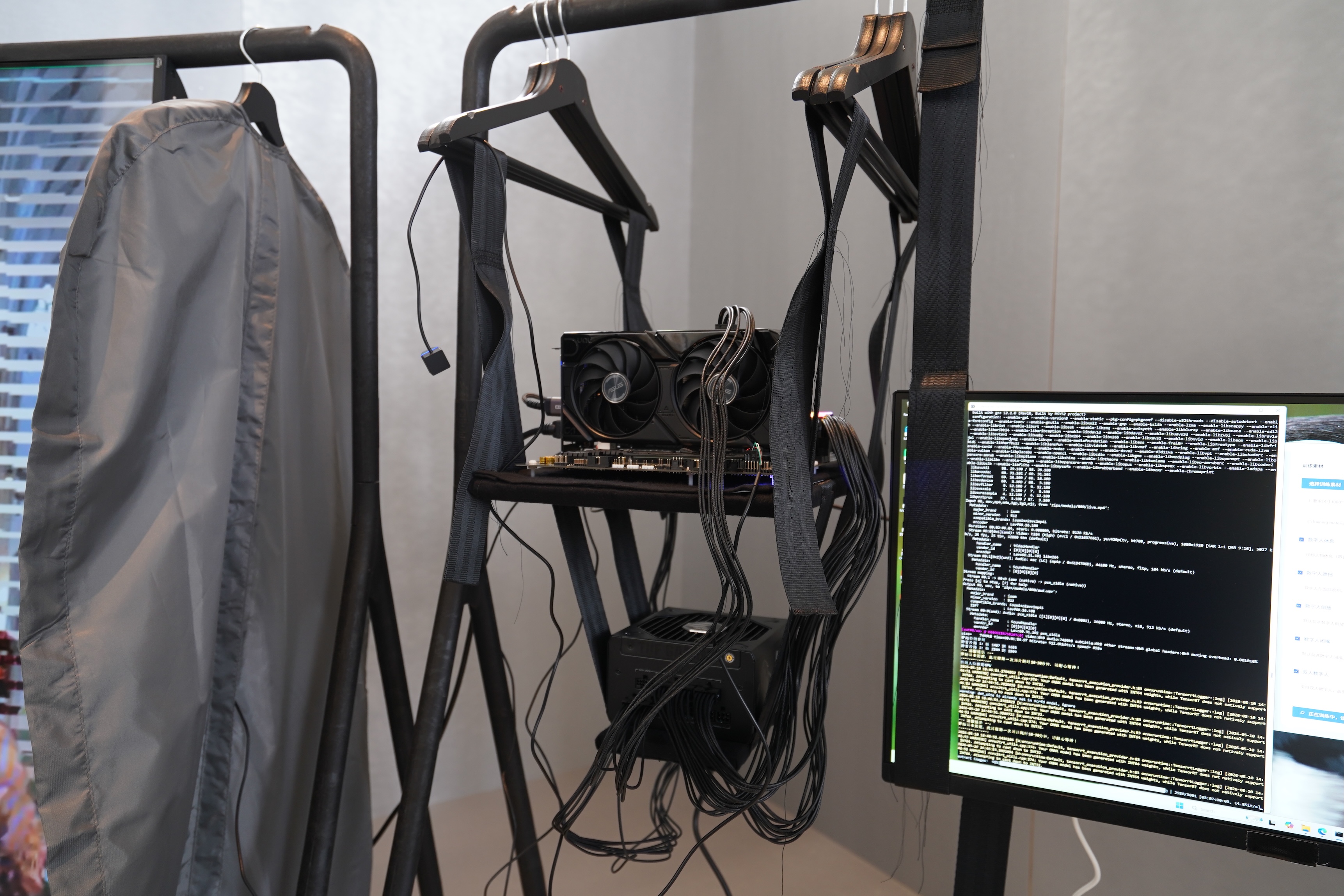
Livestreaming - Rest
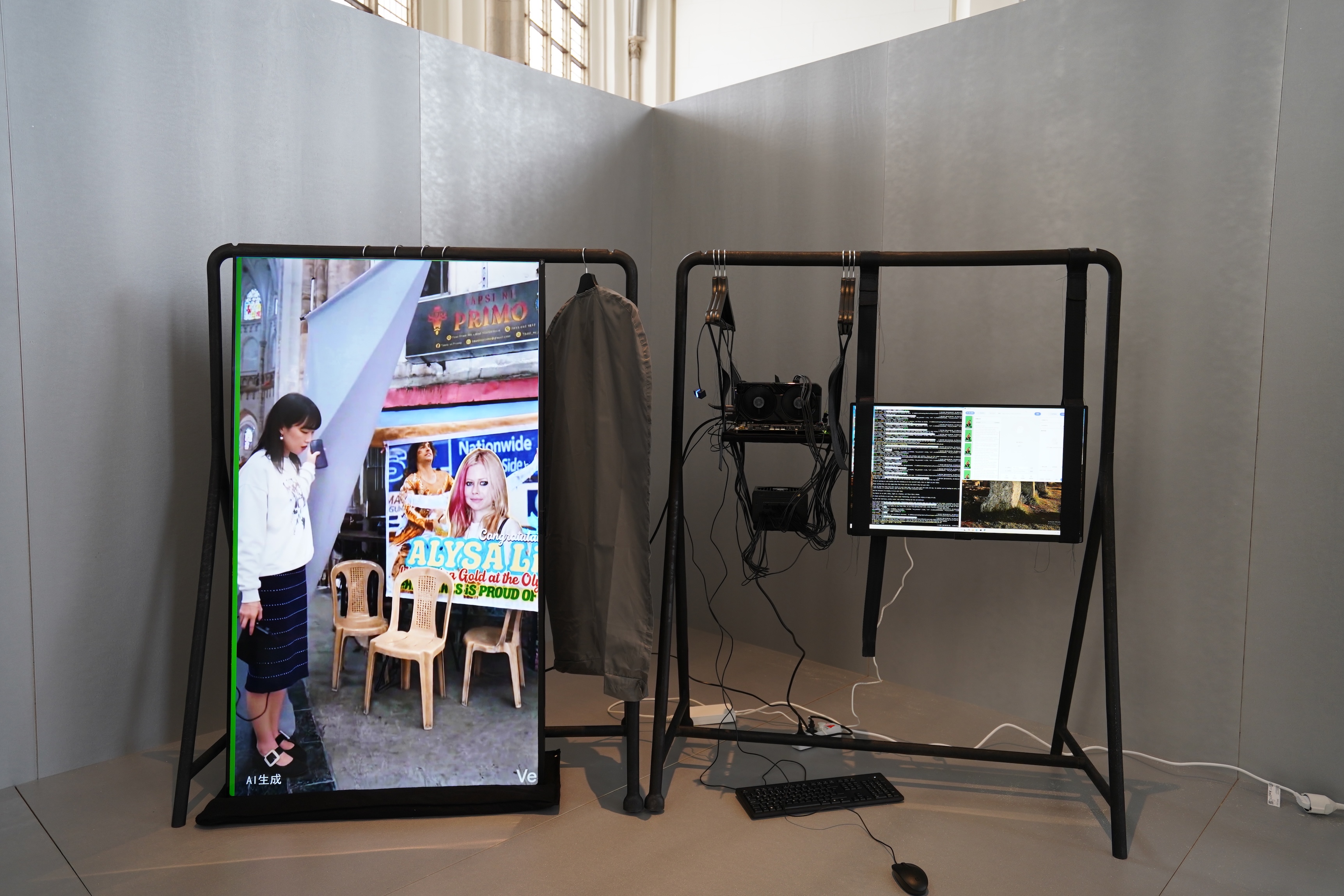
Livestreaming - Rest - The work follows a virtual livestream host whose stream continues running while she repeatedly rests, pauses, disappears from the frame, or takes naps. Through these extended moments of inactivity, the project explores the logic of technological replacement within AI livestreaming systems, and rest as a form of resistance against continuous productivity. The project also connects back to a work I made in 2018 at GEO- Design exhibition in the Van Abbemuseum, where I invited Chinese livestreamers to work inside the exhibition space while online audiences in China and museum visitors in the Netherlands watched each other across the screen. For this new project, I extracted audio and video data from that earlier work and used it to train an AI-generated virtual livestream host. The livestream also features tarps by LiFE DESiGN. @welife.design
Livestreaming - Rest
Livestreaming - Rest - This project uses AI livestreaming software developed by a small Chinese company. What interested me is that the software is actually not very “intelligent.” It mainly works by combining short video clips of a host with pre-written text, then automatically animating the mouth of a digital avatar to simulate livestreaming. In many ways, the system is designed against rest. Its promotional language suggests that digital humans can “rest,” but in reality I still had to upload my own footage of resting. The system’s real purpose is to keep the host speaking continuously, endlessly. It constantly tries to detect faces in the uploaded videos and animate the mouth so the avatar appears to be talking. If you look closely, even in the long resting scenes—when my digital host is intentionally silent and keeping her mouth closed—you can still notice tiny mouth movements and slight trembling. These are traces of the software continuously trying to force speech onto the character. This is also why, in the @welife.design footage, the faces printed on the tarps appear to speak.
Livestreaming - Rest
Livestreaming - Rest - documentation livestreaming video from youtube account:Need2RestOurEyes
Following a nonexistent person
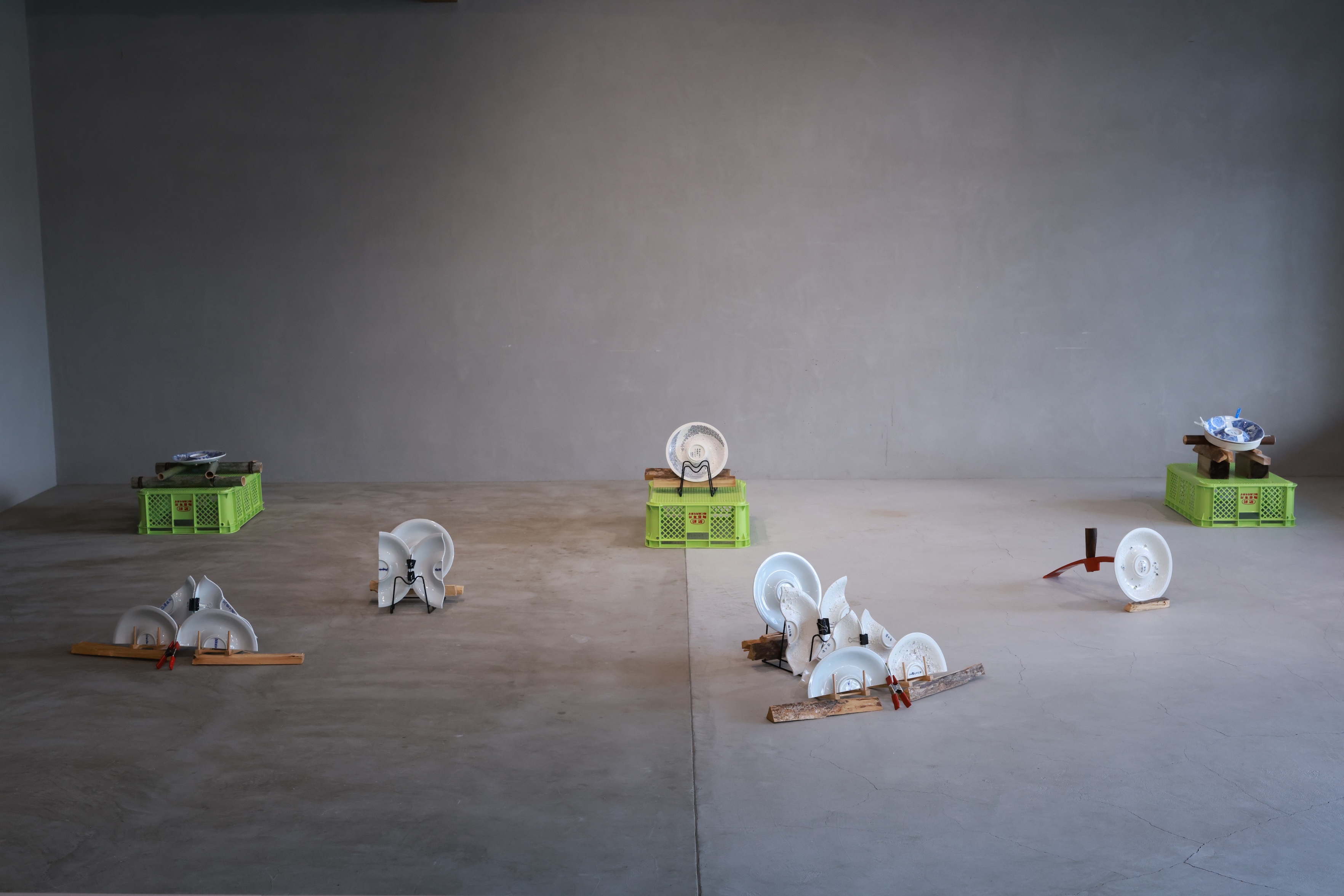
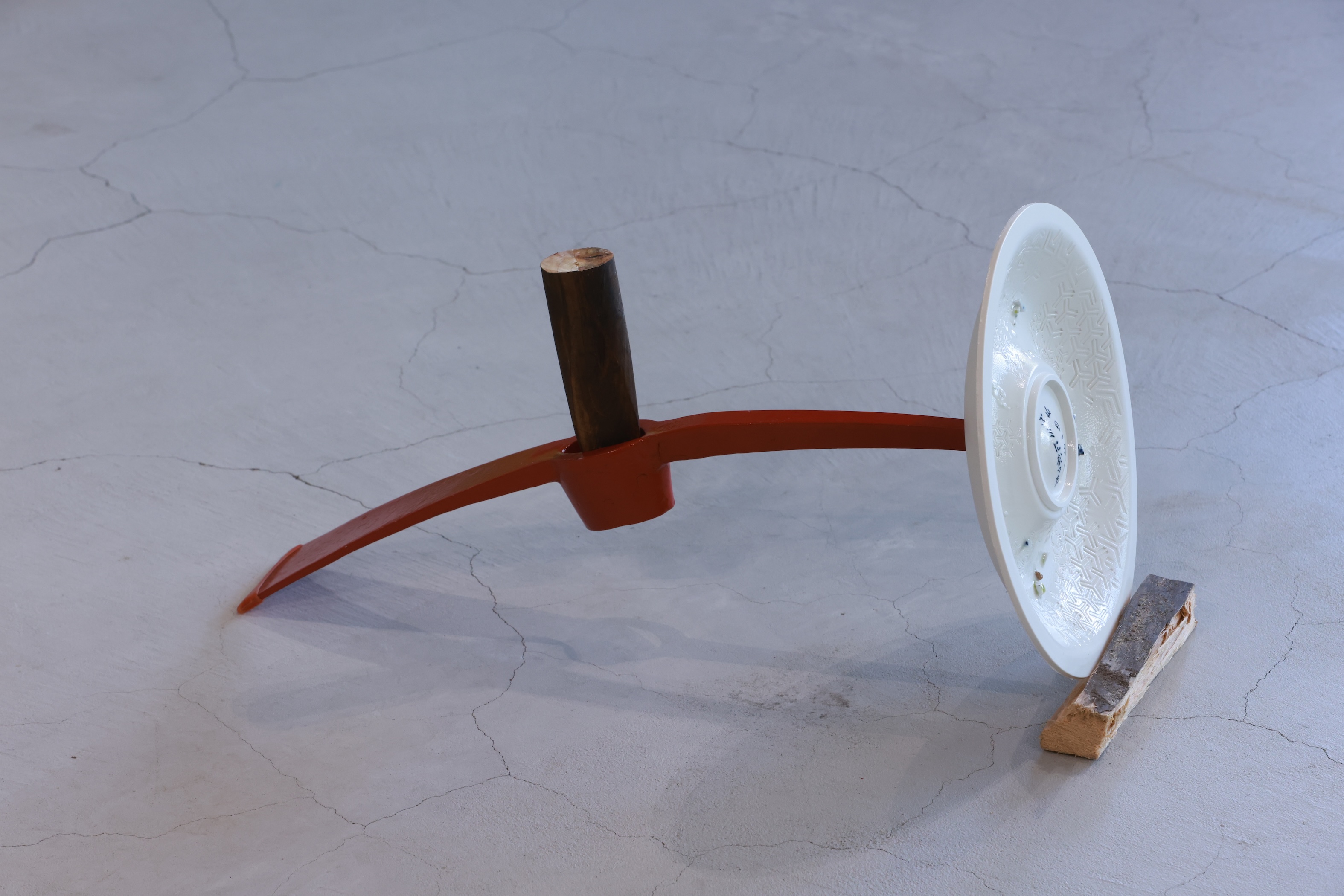
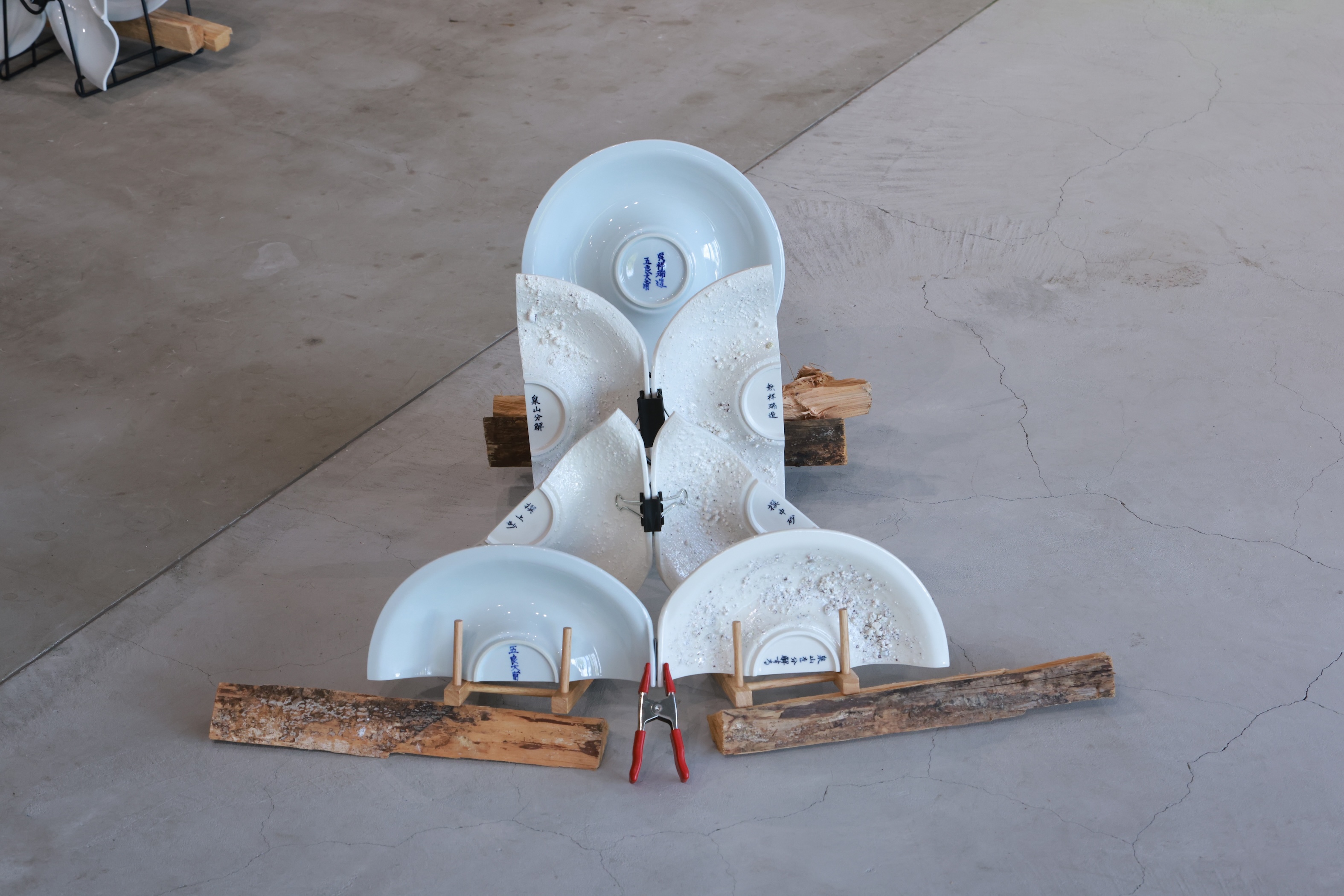
Following a nonexistent person - My project began with a name marked on 17th-century Japanese porcelain, thought to represent a historical figure. Yet, through research, I found that this person might remain unidentified. This absence became a lens for exploring not only the porcelain itself but also the broader forces that shaped its production. Porcelain, much like today’s advanced technologies, once symbolized power, wealth, and innovation. In the 17th century, it was a highly guarded craft that sparked wars, displaced skilled craftsmen, and mountains were transformed into mere resources - sources of clay, glaze materials, and fuel for kilns. This shift in perspective reflects a broader pattern of how technological progress often reshapes our relationship with nature. I draw parallels between historical porcelain production and modern industries, highlighting how the pursuit of innovation reshapes not only our geopolitical landscape but also our physical environment and cultural values. Collaborated with
: Nakao Shōzaburō (Master of underglaze blue painting)
 Exhibition: Arita Sera, Arita, JP Important Questions, UNION Pavilion, Gwangju Biennale, KR
Following a nonexistent person (details)
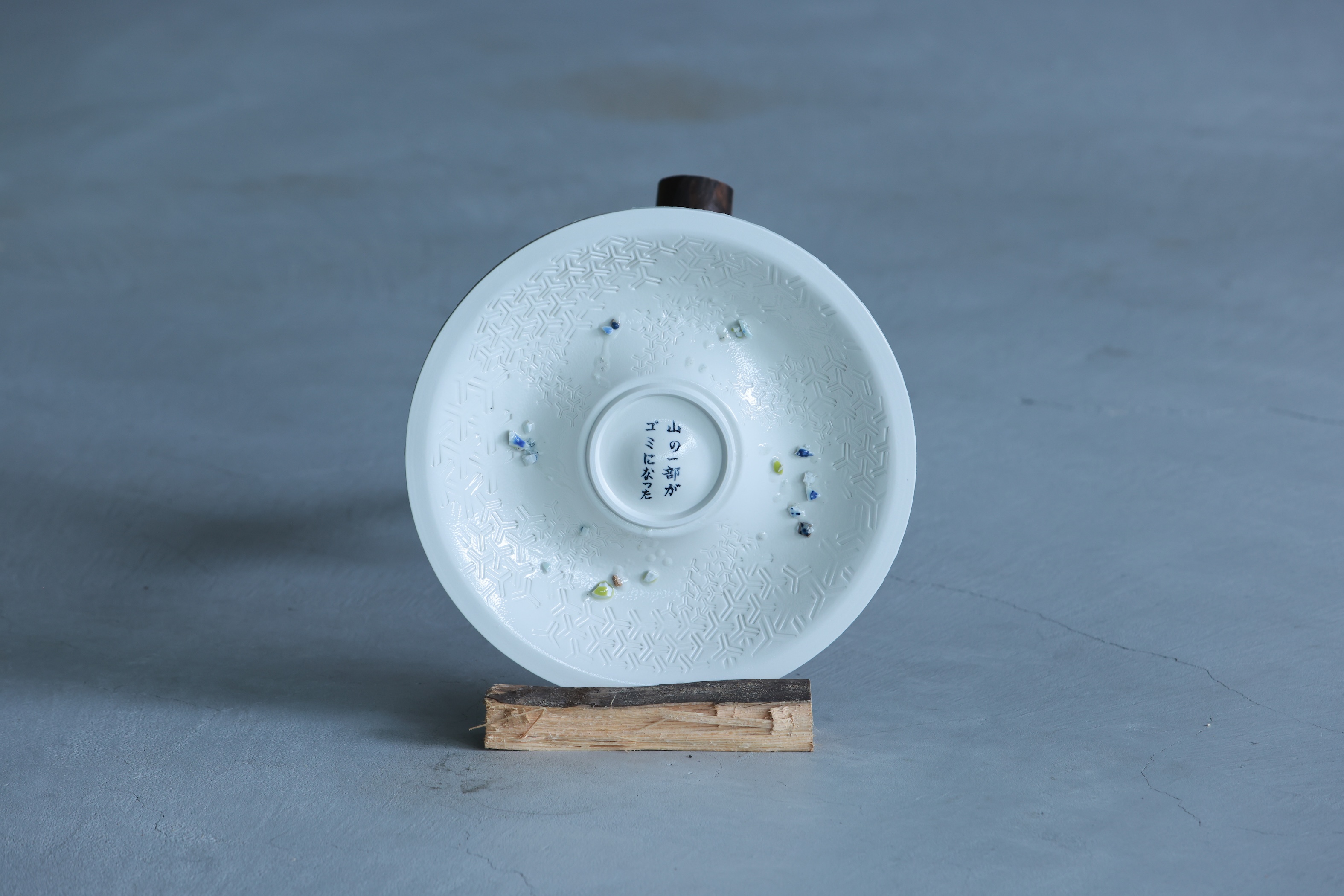
Following a nonexistent person (details) - "Part of mountain became trash. "
Following a nonexistent person
Following a nonexistent person (details) - "Part of mountain became trash."
Following a nonexistent person (details)
Following a nonexistent person (details) - My project began with a name marked on 17th-century Japanese porcelain, thought to represent a historical figure. Yet, through research, I found that this person might remain unidentified. This absence became a lens for exploring not only the porcelain itself but also the broader forces that shaped its production. Porcelain, much like today’s advanced technologies, once symbolized power, wealth, and innovation. In the 17th century, it was a highly guarded craft that sparked wars, displaced skilled craftsmen, and mountains were transformed into mere resources - sources of clay, glaze materials, and fuel for kilns. This shift in perspective reflects a broader pattern of how technological progress often reshapes our relationship with nature. I draw parallels between historical porcelain production and modern industries, highlighting how the pursuit of innovation reshapes not only our geopolitical landscape but also our physical environment and cultural values.
Jadeite
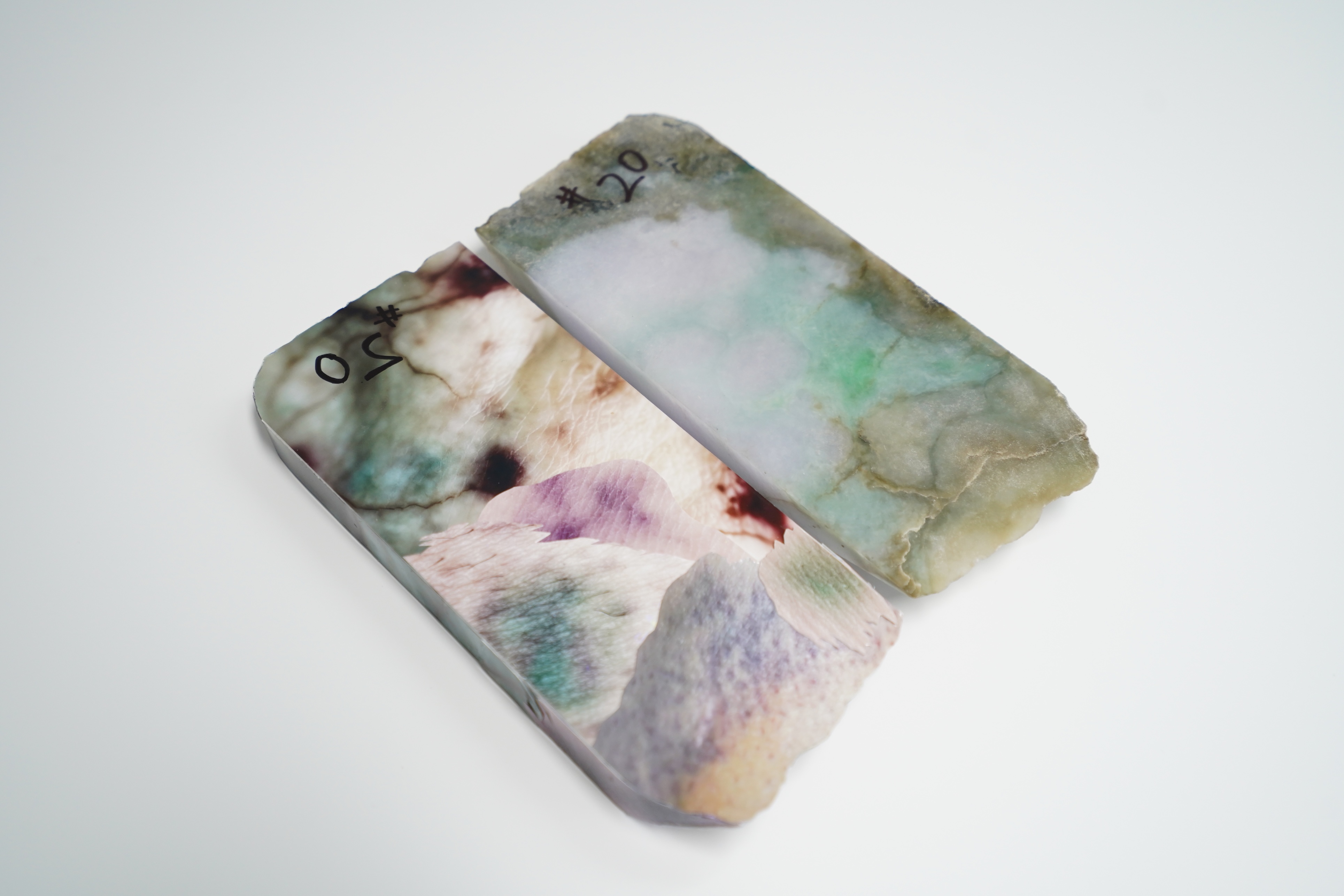
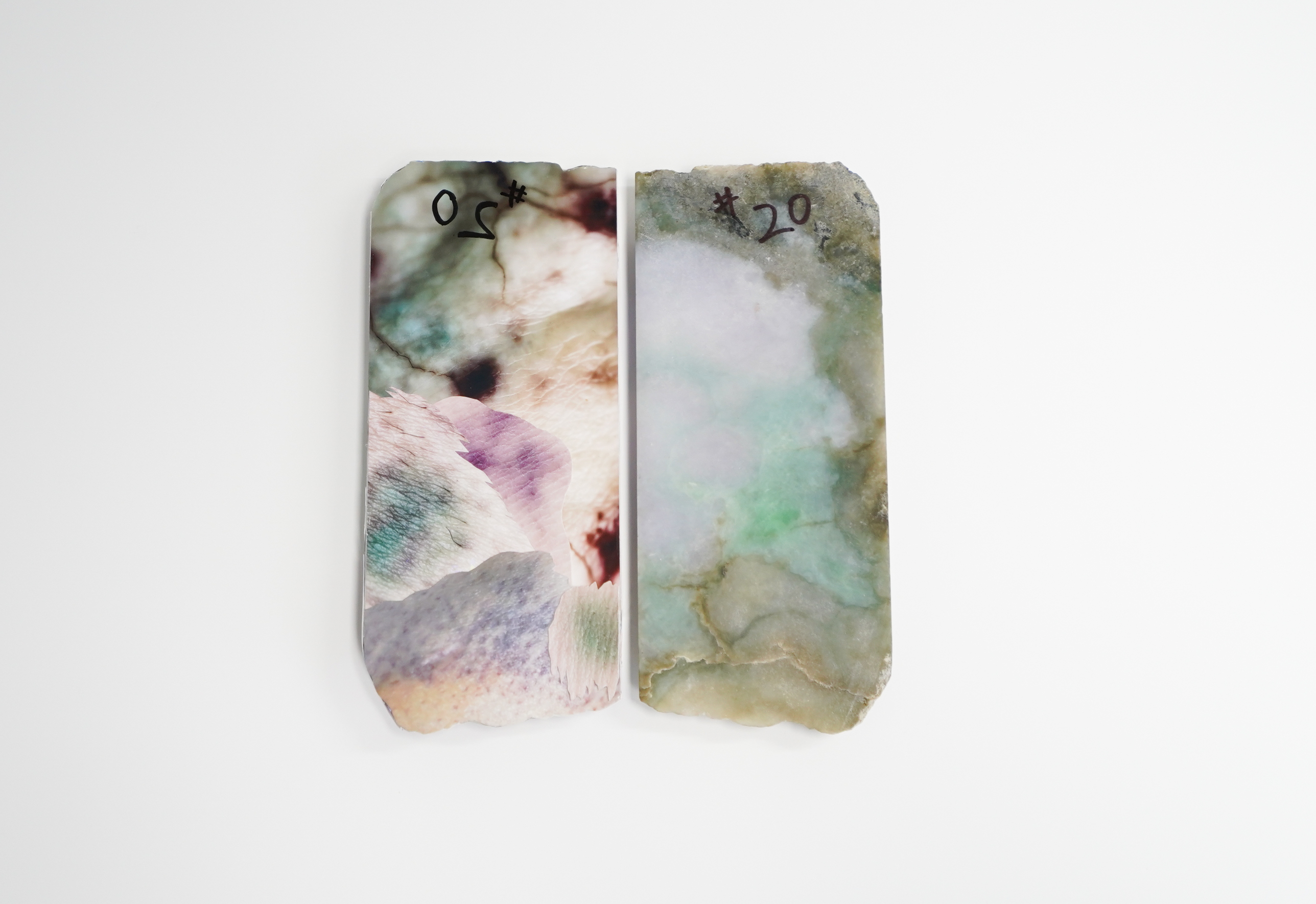
Jadeite - I grew up in Yunnan, a province in China that borders Myanmar. Yunnan is renowned for its close ties to jadeite culture. From an early age, I heard countless stories of pain and loss surrounding jadeite: some spent fortunes only to end up with counterfeits; others gambled everything on the hope that a stone might contain a hidden gem, only to lose everything. Behind the value of jadeite lies a complex web of human emotions—desires for wealth, power, and the violence that accompanies them. Along the China-Myanmar border, jadeite represents both dreams and suffering, its worth inseparable from its cost.
Jadeite
Jadeite - I grew up in Yunnan, a province in China that borders Myanmar. Yunnan is renowned for its close ties to jadeite culture. From an early age, I heard countless stories of pain and loss surrounding jadeite: some spent fortunes only to end up with counterfeits; others gambled everything on the hope that a stone might contain a hidden gem, only to lose everything. Behind the value of jadeite lies a complex web of human emotions—desires for wealth, power, and the violence that accompanies them. Along the China-Myanmar border, jadeite represents both dreams and suffering, its worth inseparable from its cost.
Tulip Tower 1.0
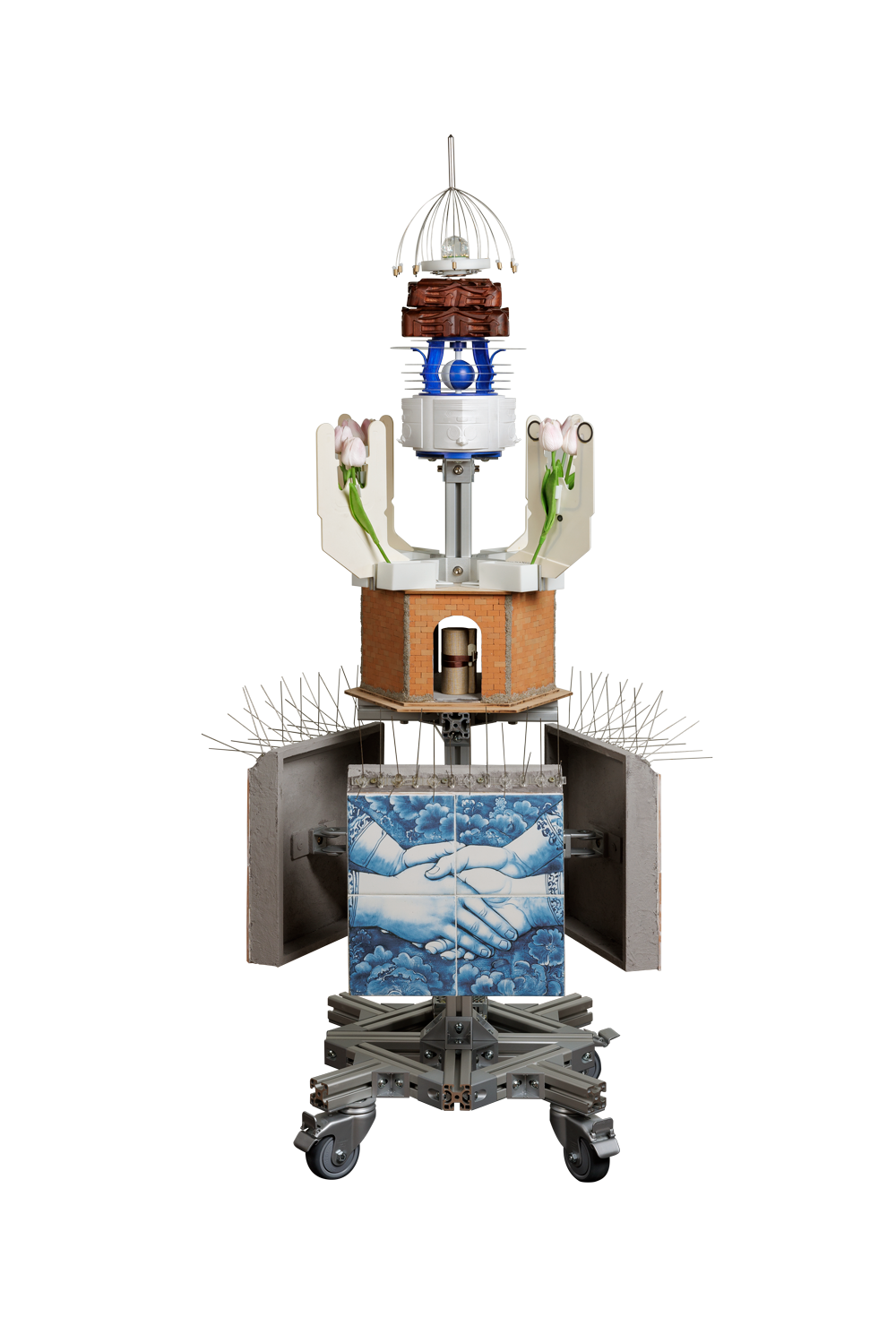
Tulip Tower 1.0 - Tulip Trust Collective Rongkai He, Jing He, Cheng Guo, Weiyi Li, Dawei Yang Guest Artist: Anusman ( Shuo Wang ) This work was created by six artists. It explores the structure of the Chinese pagoda, as well as that of their collaboration. Jing He, the initiator, has been fascinated by the tulip vase since 2016. Delft Blue tulip vases were "invented" in the 17th century by imitating blue and white porcelain and pagodas from China. For He, it's all about the interplay between copying and identity. Living in different places across China and Europe, the artists each made one of the tower's floors. During which they asked themselves the question "To what extent can we embrace each other's differences within a seemingly fixed structure? To what extent must we abide by the rules we have established? We are not a cohesive entity, but rather appear to be one through ongoing adjustments and discussions."
Consensual Inequality - Consensual Inequality is the phrase I made up to describe the agreement between the immigrant and the state. In reaction to the Dutch Prime Minister Mark Rutte’s open letter in 2017 to the public. In the letter, Rutte urged immigrants to either adapt to the value of the country (act normal) or leave. When this happened, I was preparing for the application documents for longer stay in the country, which required me to prove how good or successful I am as an artist. Inspired by this experience, I cut the letters WELKOM (welcome) from a IKEA doormat, rearranged them as the word NORMAAL (normal) in the same piece of fabric, and placed few envelopes of the tax office as the bottom layer, which can only be noticed by viewers when they get close enough to the floor. For Art Rotterdam 2018, I placed the transformed doormat alongside its IKEA original at the entry of the gallery booth for visitors to step over, and for them to contemplate the interplay between the two textual messages.
Real Integration - Collaborated with Qiaochu Guo Remaking the Dutch Integration Exam, but for a REAL world. This project aims to address discrimination and race/identity issues faced by Asians in the Netherlands by recreating the Dutch civic integration exam (inburgeringsexamen). The revised exam features 10 scenarios based on true stories from 23 contributors and presents multiple options for each scenario, with no set answer. The original exam focuses on teaching foreigners about Dutch rules and culture in daily life, such as visiting a patient in the hospital. However, it fails to acknowledge the reality of explicit and implicit discrimination that one may encounter in daily life.
Collective Memory #1
Attachment – Arch and Tongue - The archless modern 'Arc de Triomphe', where Kunming Contemporary Gallery situates, is accompanied by a colorful balloon dog in front of its facade, which is slightly different from Jeff Koons' original in its color combination and its stuck-out tongue. It is an appropriation of the famous example of artists appropriating commonplace objects. This installation combines the absence of the arch and the presence of the balloon dog together. Firstly, two spandrels are created to restore the curved shape of the original. Then a photo of the new building's facade, which is made of steel and glass, is taken, cut into appropriated shape and pasted directly onto the spandrels. On top of the restored arch there arrays some modified objects, which include a photo of the original Arc de Triomphe 'copied' directly from the Internet (with its watermark), a photo of the Kunming version taken by myself, two selfies of me in front the Kunming version and its fellow balloon dog, details of the Arc de Triomphe's spandrels, and the miniature of the balloon dog's tongue. This arrangement functions like a map laying out the intricate relationships between the original physical structure and its derivative, between the respective spectacles they create, and between their respective cultural indexicalities (or the losses of that).
Tulip Pyramid - Collaboration with Rongkai He ??? Cheng Guo ?? Weiyi Li ??? Dangdang Xing ??? Dawei Yang ??? These two tulip pyramids call for a revaluation of the often disparaged yet indispensable practice of copying in an ever more open and multicultural art scene. In China, the phenomenon of producing counterfeits of Western design has been criticised for its illegitimate profit in terms of copyright infringement, as well as its damaging effects on creating the unique ‘Chinese identity’. Being interested in the complicated relationship between copying and identity, I examined the history of the tulip pyramids of the Rijksmuseum. My research reveals to me the creative possibility brought by the intercultural copying between Chinese porcelain and its Dutch counterpart, despite the appropriation and the misinterpretation occurred during the process of cultural translation. Thereafter, I remade two tulip pyramids that show the role of copying in reshaping cultural identity and in disenchanting the absolute connection between originality and creativity. One was created in remote collaboration with five Chinese designers/artists/craftsmen, who live in different cities in China and Europe. We shared the authorship of the pyramid. The other pyramid is made to self-reflect over my own identity as an in-between of China and the Netherlands. Incorporating the iconic works of five well-known Dutch designers into my former school works, I questioned their influences over me; and more importantly, I reactivated the practice of copying as a creative method that would stimulate new forms and new contents of art.
Arches of the Triumph - In “Arches of the Triumph,” Jing He uses the architectural iconography of triumphal arches to create three speculative scenarios that critically examine the unpredictable forces of geopolitics. An animated “engine” presents a virtual map in which five existing arches—in Rome (Italy), New York. (U.S.), Paris (France), Pyongyang (North Korea) and Kunming (the artist’s hometown in China)— migrate and shift along with the earth’s tectonic movements to represent the convoluted mechanisms that produce historical events. The engine then generates three future monuments that emerge from its rifts: in Pyongyang, Sihanoukville (Cambodia) and Kunming. These new iterations of triumphal arches—a typology rooted in patriarchy, contested narratives and violence—bring into stark relief the surprise turns, overlooked details and once-implausibilities that are often the key drivers of history.
Arches of Triumph
Arches of Tiumph
Arches of Truimph
Arches of Triumph - Animation is collaborated with Shuran Ke

Datum:

Arches of the Triumph

Datum:
Locatie: MAAT Museum

X is Not a Small Country — Unraveling the Post-Global Era is an exhibition that explores our current post-global condition by observing the processes of de-globalization and geopolitical realignment at different scales – territories, cities, infrastructures, platforms, bodies and objects – that have, in many cases, been accelerated and distorted in rapidly-evolving cycles of flux and revision during the current pandemic.

https://www.maat.pt/en/exhibition/x-not-small-country
Deze kunstenaar heeft nog geen toekenningen.