Katarina Zdjelar

video , Taal , Audiovisueel , Artistiek onderzoek

Katarina Zdjelar grew up in Belgrade and is based in Rotterdam. Working mainly in the medium of video, her work explores the way one body encounters another as a site of resistance and possibility, pointing to the fragile agency of collective action in the present. Voice, music, sound and language have been the core interests throughout her practice. Her most recent works look at potentials and legacies of pacifist (proto) feminist practices, including that of Käthe Kollwitz and Dore Hoyer. Zdjelar holds an MA in Fine Art from the Piet Zwart Institute in Rotterdam, she is a graduate of the University of Arts Belgrade and has completed a two year residency at the Rijksakademie van beeldende kunsten in Amsterdam. Zdjelar represented Serbia at the 53rd Venice Biennale and has participated in numerous solo and group exhibitions internationally at such venues as 11th Berlin Biennale, Stedelijk Museum Bureau Amsterdam; Metropolitan Museum of Photography, Tokyo; Frieze Foundation, London; Casino Luxembourg; De Appel, Amsterdam, MAC
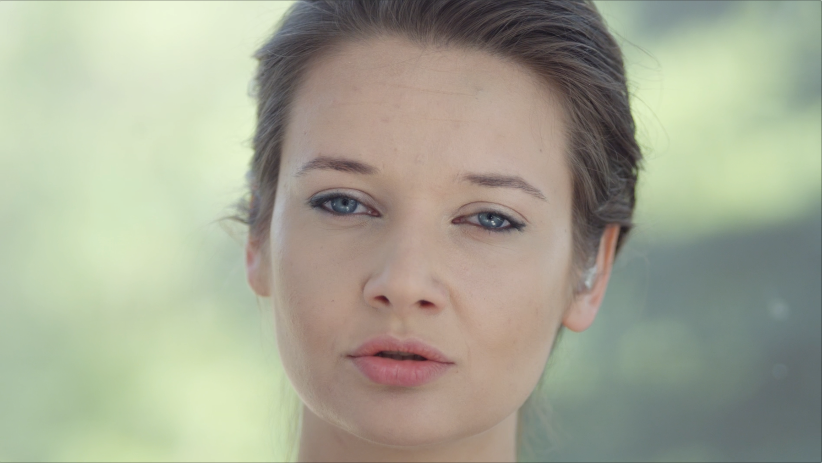
AAA (Mein Herz) - Recorded entirely in 1 take, 4 different compositions (simultaneously yet interchangeably) are performed as one by a young woman. With an intention of keeping the original style, tempo, rhythm of individual compositions intact, the performer takes a vocal walk through them. Oscillating between and clashing silence, music, sounds and words, there is a sense of continuity established on ruptures and breaks. The performer's face and her vocal cords become a site and a battlefield of these meetings, while each cut serves as an escape and an entry. Performance: Barbara Kinga Majewska Image: Mikolaj Syguda, Laurent Fluttert, Katarina Zdjelar Sound: Robert Migas, Ting Fung Cheung, Katarina Zdjelar Directed by Katarina Zdjelar More information here: https://www.katarinazdjelar.net/wp-content/uploads/Katarina-Zdjelar-Portfolio-2025-light-1.pdf
Gaze Is a Bridge
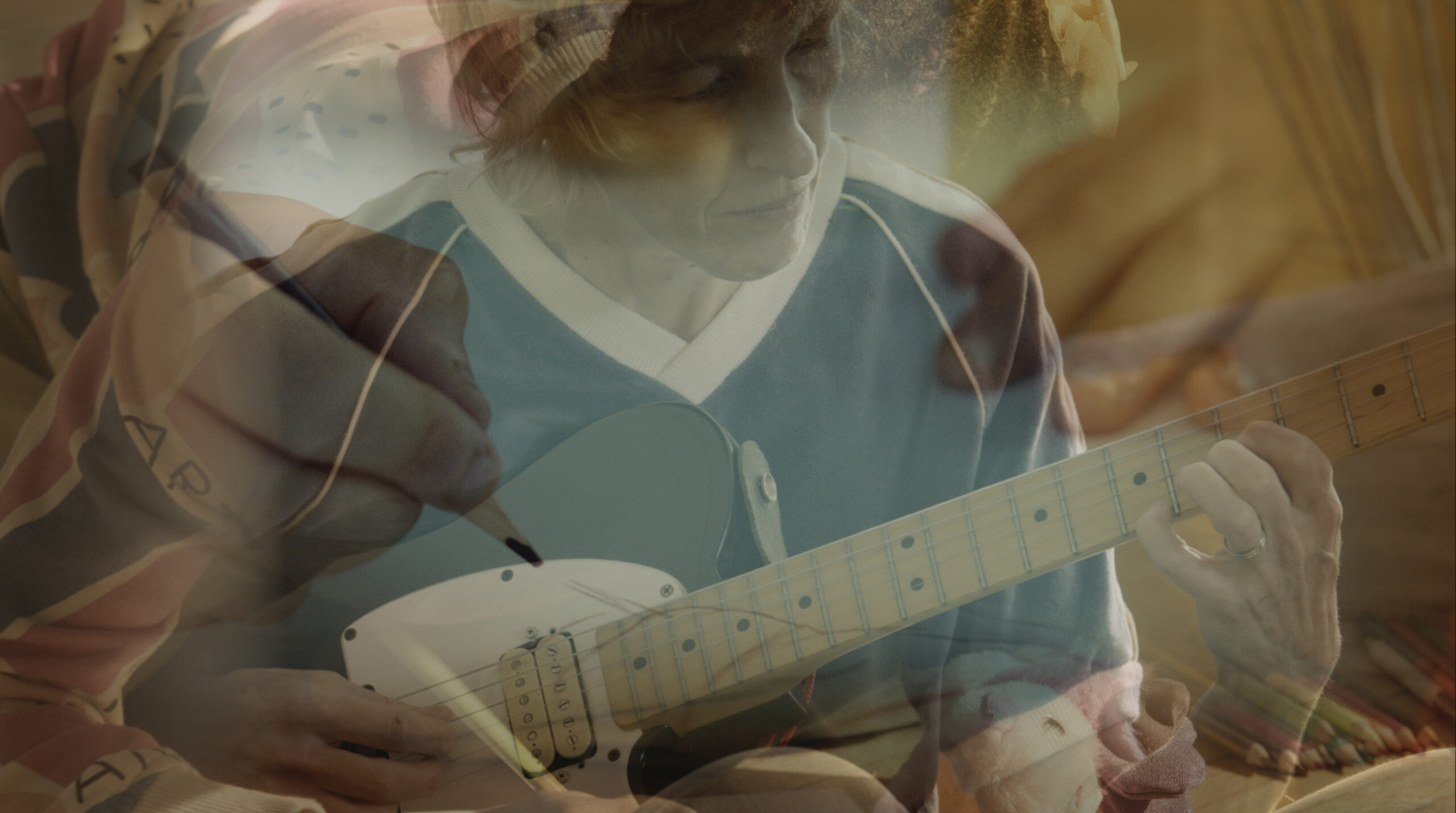
Gaze Is a Bridge - Katarina Zdjelar's sensitive film Gaze Is a Bridge is inspired by the painting Self-Portrait with Rifle (1912) by Nasta Rojc (1883 – 1964), one of Croatia's most important artists, as well as by the work and personal history of photographer and video artist Ana Opalić, her partner Martina Zvonić and their children Meri and Niru. Against the backdrop of the biographies of two women determined by the right to freedom, self-confidence and love, and set in two different eras almost a century apart, Zdjelar develops an emotional web of associations, figures and music, and opens up an open space for the gaze in the intimate atmosphere of home: a gaze that connects autobiographies, a gaze of understanding, but also a gaze that challenges us to reach out and cross the bridge between the known and the unknown, between the present and the past; a gaze to build a bridge of connection between us and them, me and you; a gaze to recognize ourselves in our fragility, alienation and vulnerability, in the struggle for personal positions and places that belong to us all. More information here: https://www.katarinazdjelar.net/wp-content/uploads/Katarina-Zdjelar-Portfolio-2025-light-1.pdf
Reading
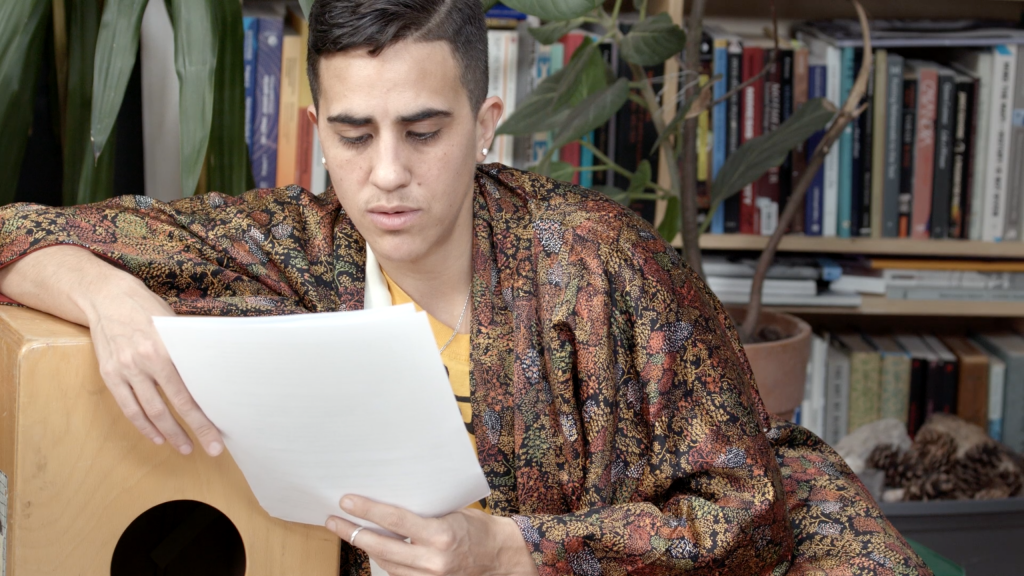
Reading "Europe, Where Have You Misplaced Love?" - Katarina Zdjelar often employs the rehearsal as a working method to explore the voice as a subject and substance. For this film she brought together four musicians for an improvisational interpretation of a text written by poet Athena Farrokhzad, Europe, Where Have You Misplaced Love?. The aim of the improvisation is not so much to arrive at a final performance, but rather to keep the range of possibilities open. One by one the musicians take control and then let it go again just before arriving at a common melody, at which point doubts or another voice steer the process in a different direction. It becomes a continuous search in which a multiplicity of interrelating voices coexists. This approach adds a layered interpretation to Farrokhzad's reflections: https://lithub. com/athena-farrokhzad-europe-where-have-you-misplaced-love/ More informationhere: https://www.katarinazdjelar.net/wp-content/uploads/Katarina-Zdjelar-Portfolio-2025-light-1.pdf
Becoming Alphabet
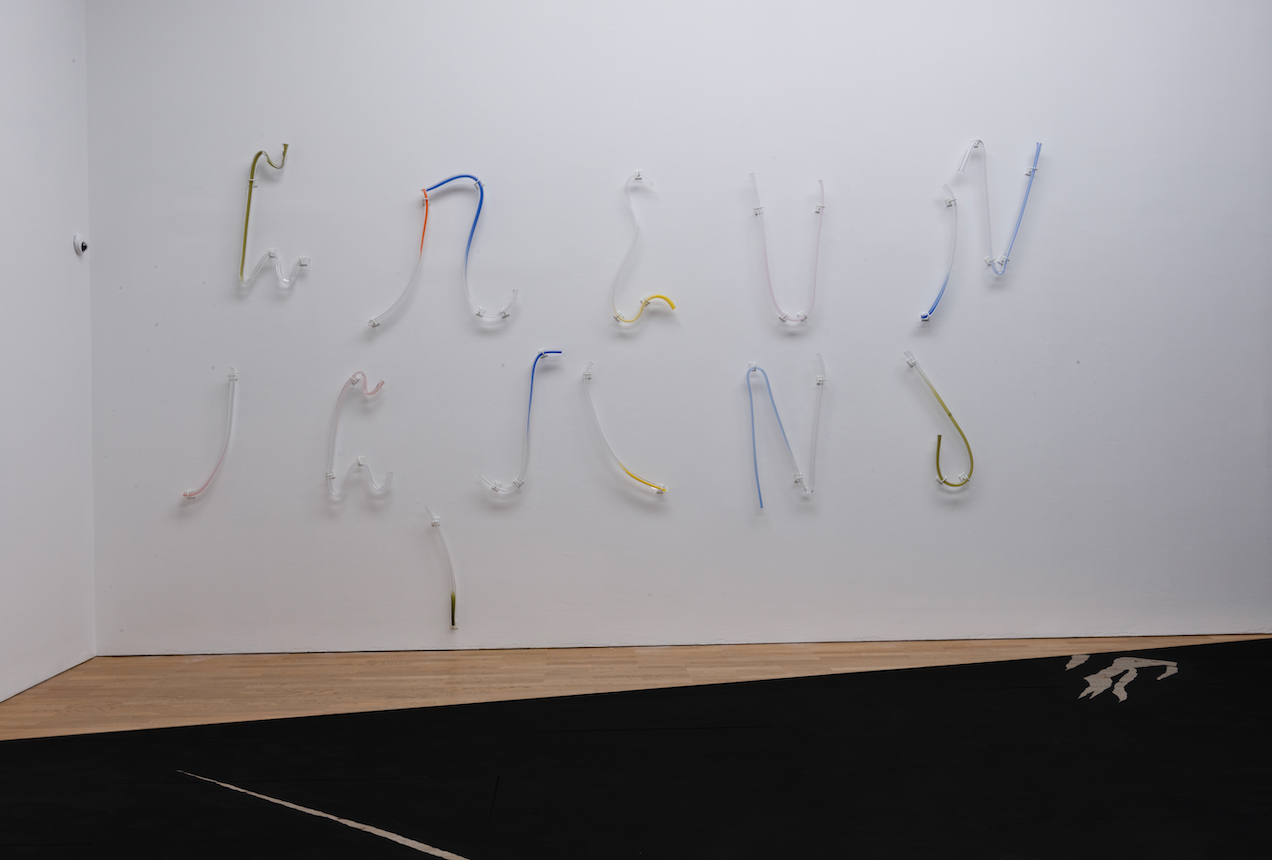
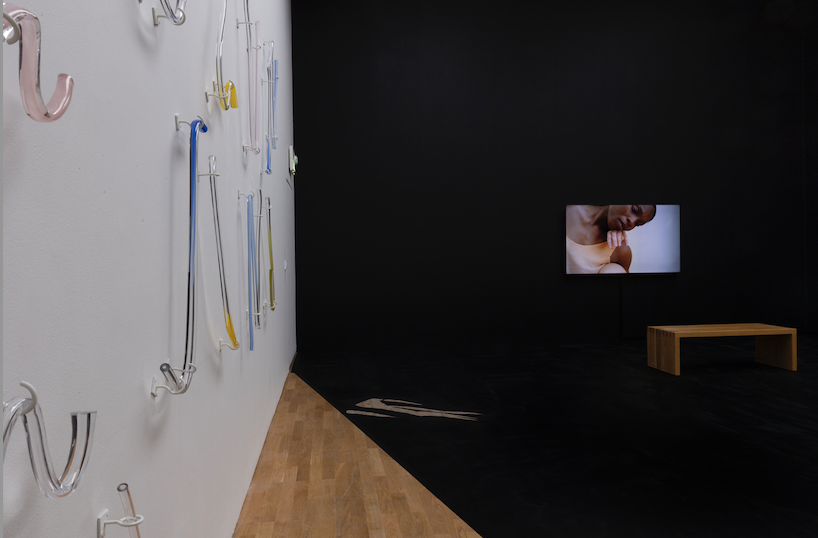
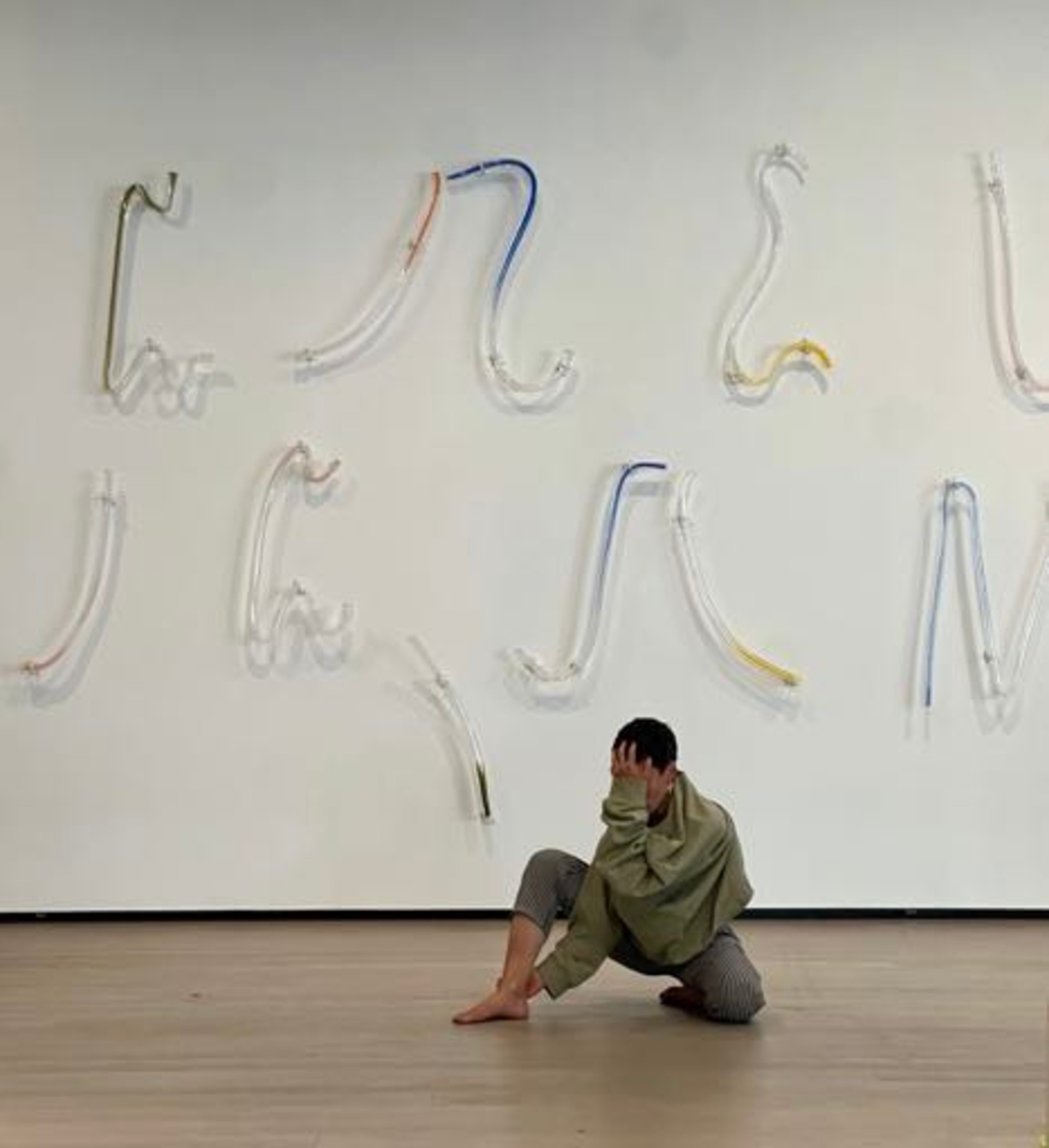
Becoming Alphabet - KATARINA ZDJELAR, Becoming Alphabet, 2021, mouth-blown glass, unique, variable dimensions The sinuous glass pieces in Becoming Alphabet evoke the sense of an alphabet being created or rediscovered—perhaps representing forgotten or unknown forms of expression. These forms resemble a dance or fragmented sentences composed of "orphan signs"—symbols or letters that stand alone or lack connection to established systems. In Zdjelar's Berlin Biennale installation of Becoming Alphabet, these glass tubes were placed in dialogue, as punctuation marks within videos and archival materials of Not A Pillar Not A Pile (Dance for Dore Hoyer) installation. Becoming Alphabet has been shown together with or independently from this work in different contexts and iterations. It invites viewers to imagine collective engagement in the "unknown," proposing this as an open-ended, speculative question about togetherness as something that is in the making. More information here: https://www.katarinazdjelar.net/wp-content/uploads/Katarina-Zdjelar-Portfolio-2025-light-1.pdf
Becoming Alphabet
Becoming Alphabet - KATARINA ZDJELAR, Becoming Alphabet, 2021, mouth-blown glass, unique, variable dimensions The sinuous glass pieces in Becoming Alphabet evoke the sense of an alphabet being created or rediscovered—perhaps representing forgotten or unknown forms of expression. These forms resemble a dance or fragmented sentences composed of "orphan signs"—symbols or letters that stand alone or lack connection to established systems. In Zdjelar's Berlin Biennale installation of Becoming Alphabet, these glass tubes were placed in dialogue, as punctuation marks within videos and archival materials of Not A Pillar Not A Pile (Dance for Dore Hoyer) installation. Becoming Alphabet has been shown together with or independently from this work in different contexts and iterations. It invites viewers to imagine collective engagement in the "unknown," proposing this as an open-ended, speculative question about togetherness as something that is in the making.
Not A Pillar Not A Pile (Dance for Kathe Kollwitz)
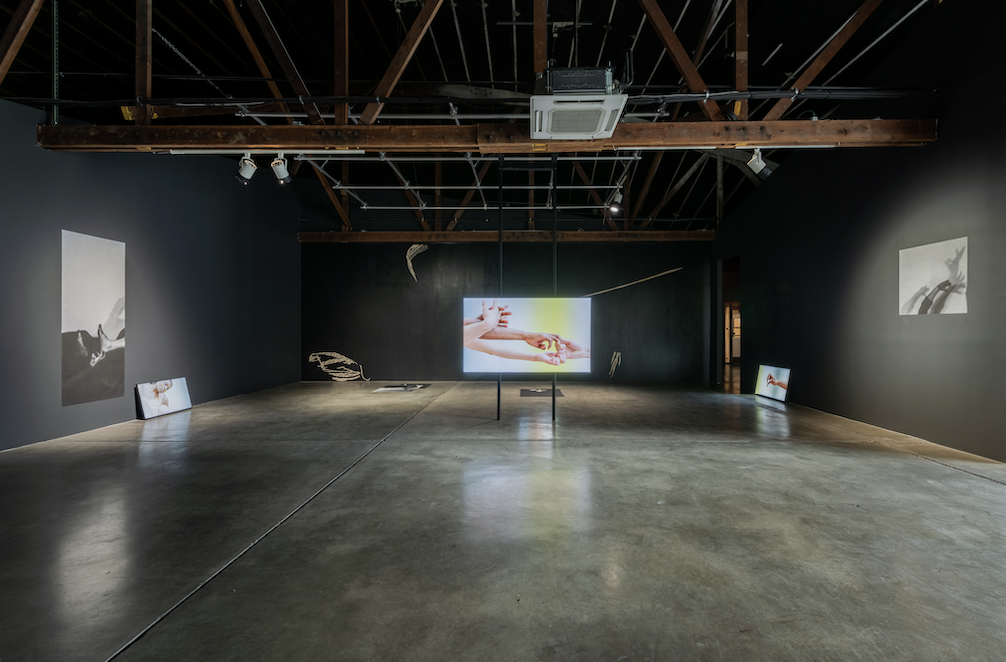
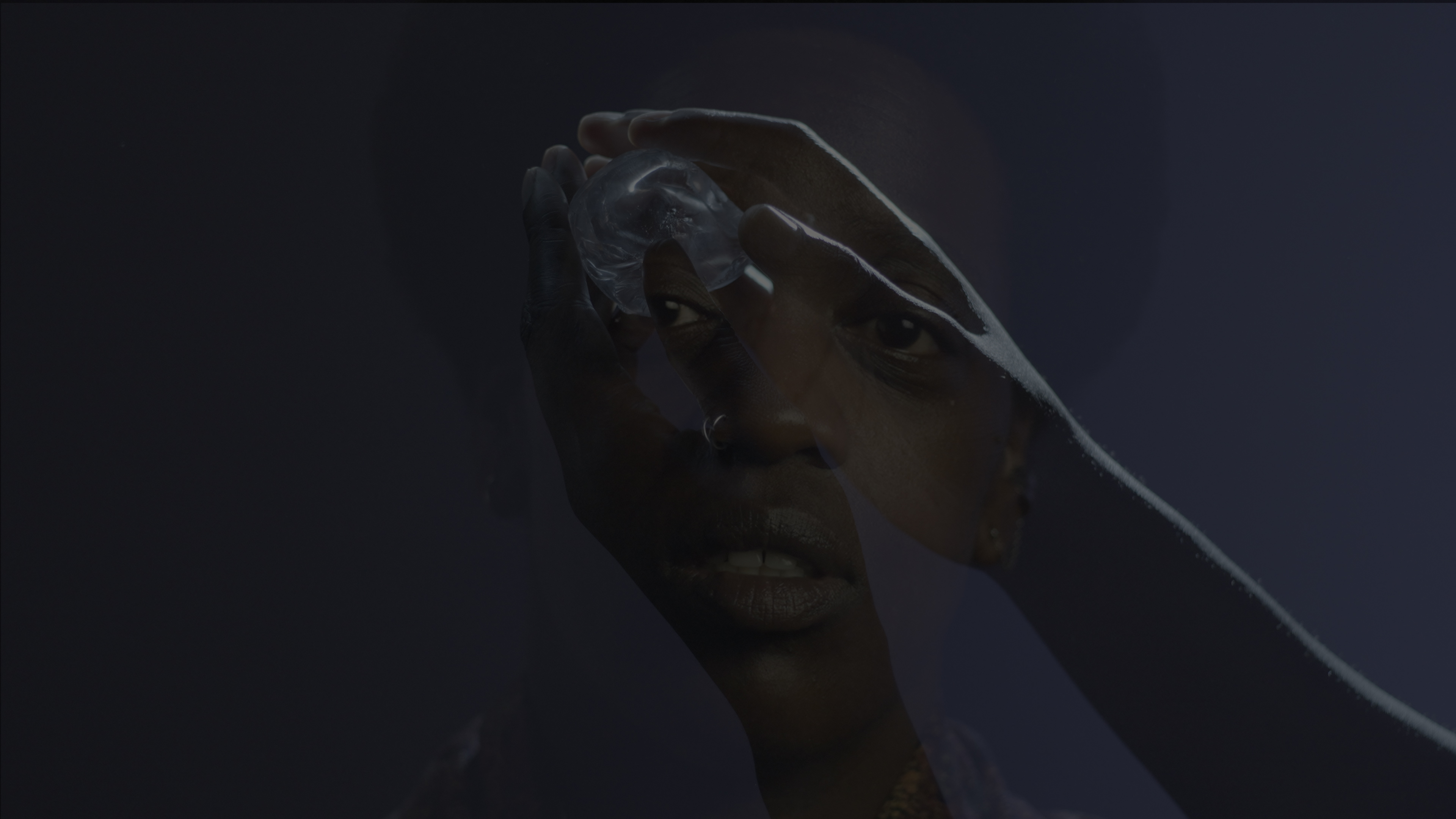
Not A Pillar Not A Pile (Dance for Kathe Kollwitz) - Not A Pillar Not A Pile is an ongoing work by Zdjelar, premiered in 2017 as a part of Prix de Rome exhibition. Inspired by archival documents from an all-women's dance studio founded in 1945 in post-war Dresden by Dore Hoyer, a choreographer and expressionist dancer, whose choreographies took the graphic works of artist Käthe Kollwitz as their departure point. Zdjelar's new film installation departs from this artistic meeting between Kollwitz and Hoyer as a manifestation of shared afnities with (proto)feminist pacifism, solidarity and collective transformation across the barriers of time, class and social difference. Drawing the past into the present, Zdjelar has gathered an international group of dancers and activists to create this cinematic work. Their costumes and the film set bear a pattern created by women workers of Pausa textile factory in Germany, whose anti-facist resistance resonates with that of Hoyer and of Kollwitz, whose graphic works are in turn echoed in the wood cut foor panels. In the resulting film installation one body encounters another as a site of resistance and possibility, pointing to the fragile agency of collective action in the present. More information here: https://www.katarinazdjelar.net/wp-content/uploads/Katarina-Zdjelar-Portfolio-2025-light-1.pdf
Becoming Alphabet, live activation
Becoming Alphabet, live activation - The sinuous glass pieces in Becoming Alphabet (2023-ongoing), evoke the sense of an alphabet being created or rediscovered – perhaps representing forgotten or unknown forms of expression. These forms resemble a dance or fragmented sentences composed of “orphan signs” – symbols or letters that stand alone or lack connection to established systems. It invites viewers to imagine collective engagement in the “unknown,” proposing this as an open- ended, speculative question about togetherness as something that is in the making.” As another formalisation of this work, the installation Becoming Alphabet functions too as a score and Zdjelar invites performers to engage with the work and its conceptual and material underpinnings. In the first iteration of it, at Garage Rotterdam in 2025, Zdjelar has collaborated with the artists Nina Hitz, Tisa World and Myriam Méret on their improvisation and performance on this piece.
Who Thought You Love?
Who Thought You Love? - Who Thought You Love? is a moving image work in development by Katarina Zdjelar, bringing together Damaris, Ildo Nanja and Raluca Croitoru to interpret and expand her poem of the same title through voice, music, speech and movement. Through rehearsal and improvisation, the poem’s singular “I” becomes a collective, polyphonic voice shaped by queer and migrant experiences. Informed by bell hooks’ writings on love, the project explores intimacy, belonging and solidarity across generations, asking how personal and collective histories inhabit our relationships. Performers rewrite and extend the poem made in dialogue with materials relating to anti-fascist and anti-colonial struggles, migration and sexual liberation. The resulting single-channel film will compose words, music, still and moving images into an exploration of love as an embodied practice of care and connection.

Katarina Zdjelar: Proximities, a rehearsal, an archive

Datum:
In samenwerking met: Oregon Contemporary

Proximities, a rehearsal, an archive will be the first solo exhibition of Katarina Zdjelar’s work in the US, an artist who represented her native Serbia at the 53rd Venice Biennale and has exhibited in galleries, museums, and biennials worldwide. Working mainly in the medium of video, Zdjelar explores the ways in which the potential for transformation and change are held in the body. Several of Zdjelar’s works revolve around forms of rehearsal, an open-ended space in which things are destabilize

https://www.oregoncontemporary.org/katarina-zdjelar
Deze kunstenaar heeft nog geen toekenningen.