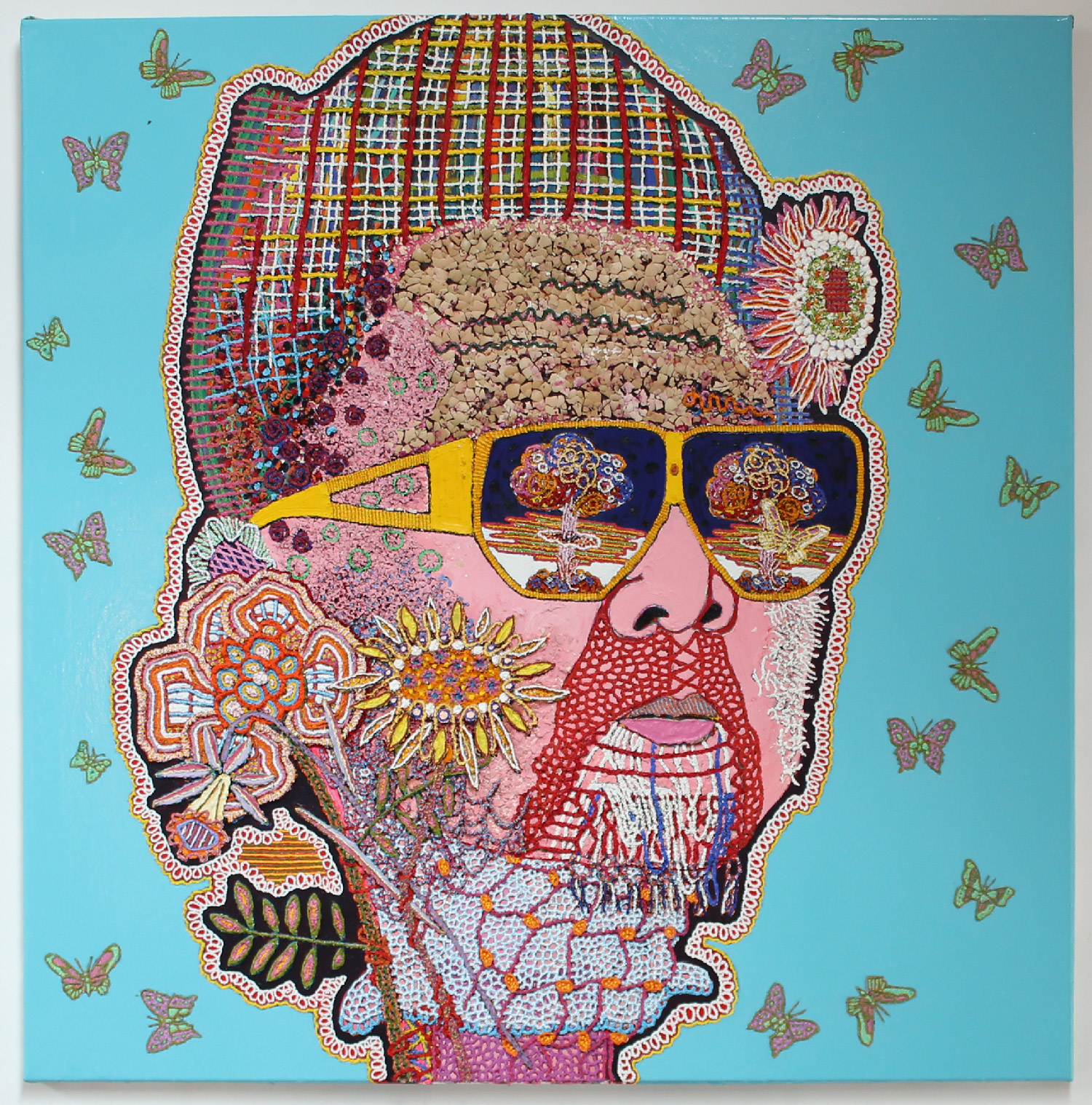
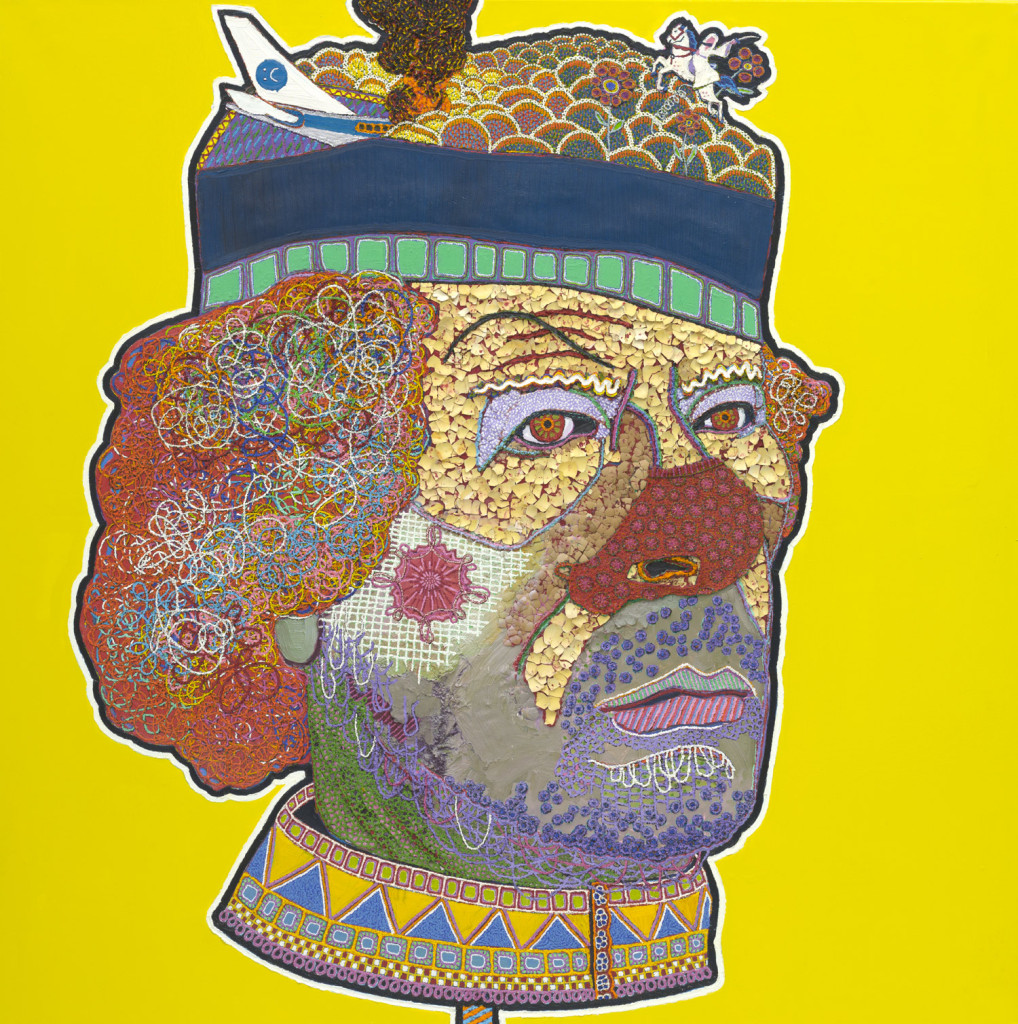
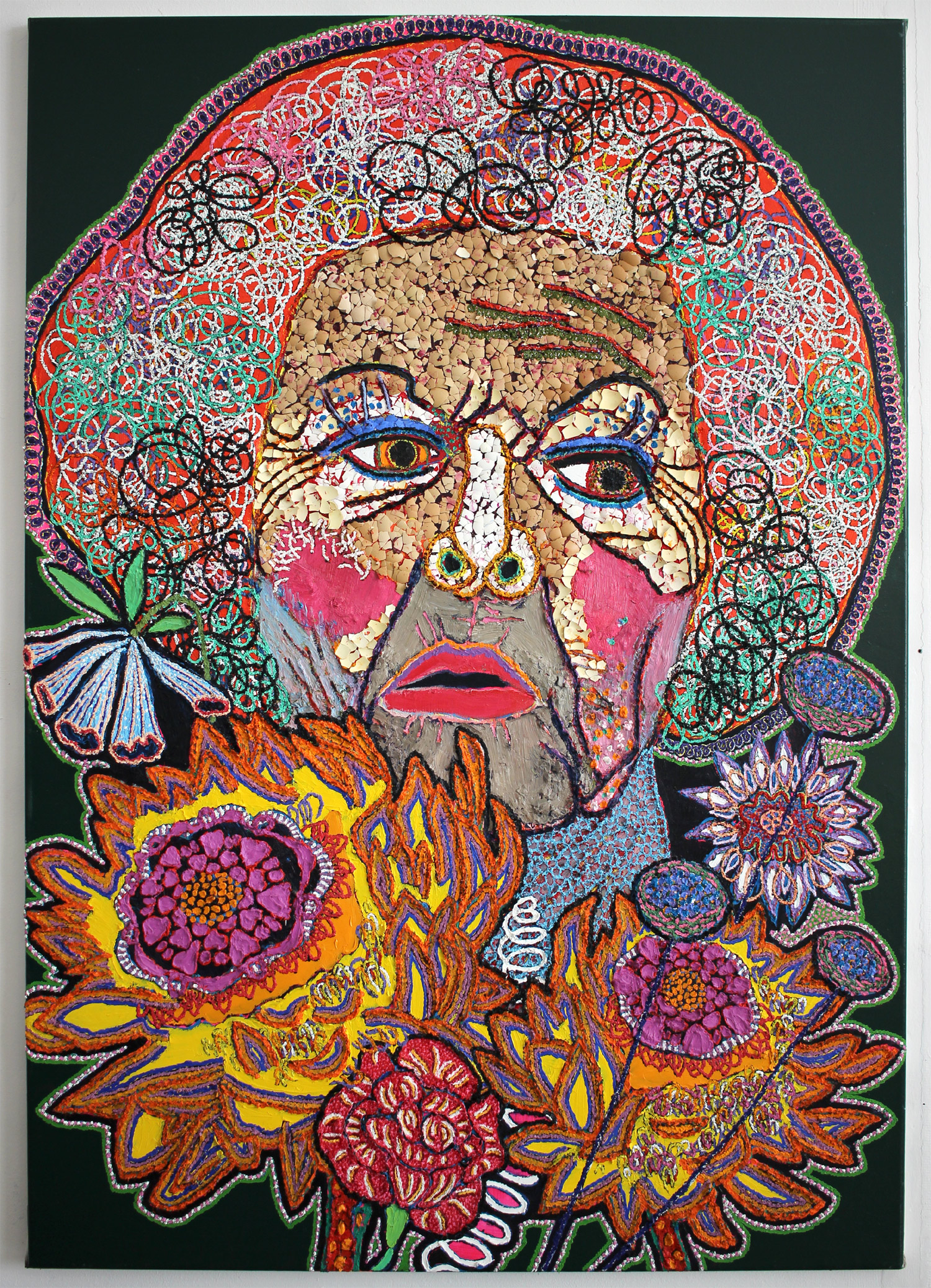
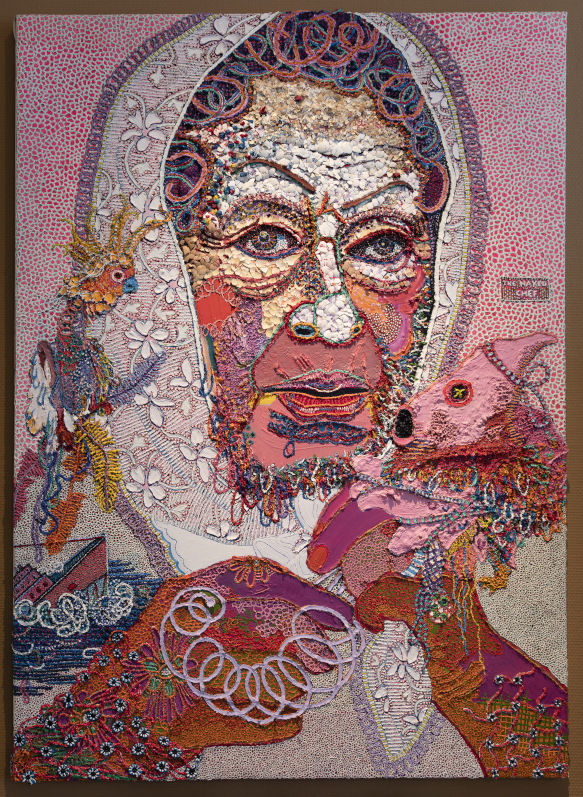
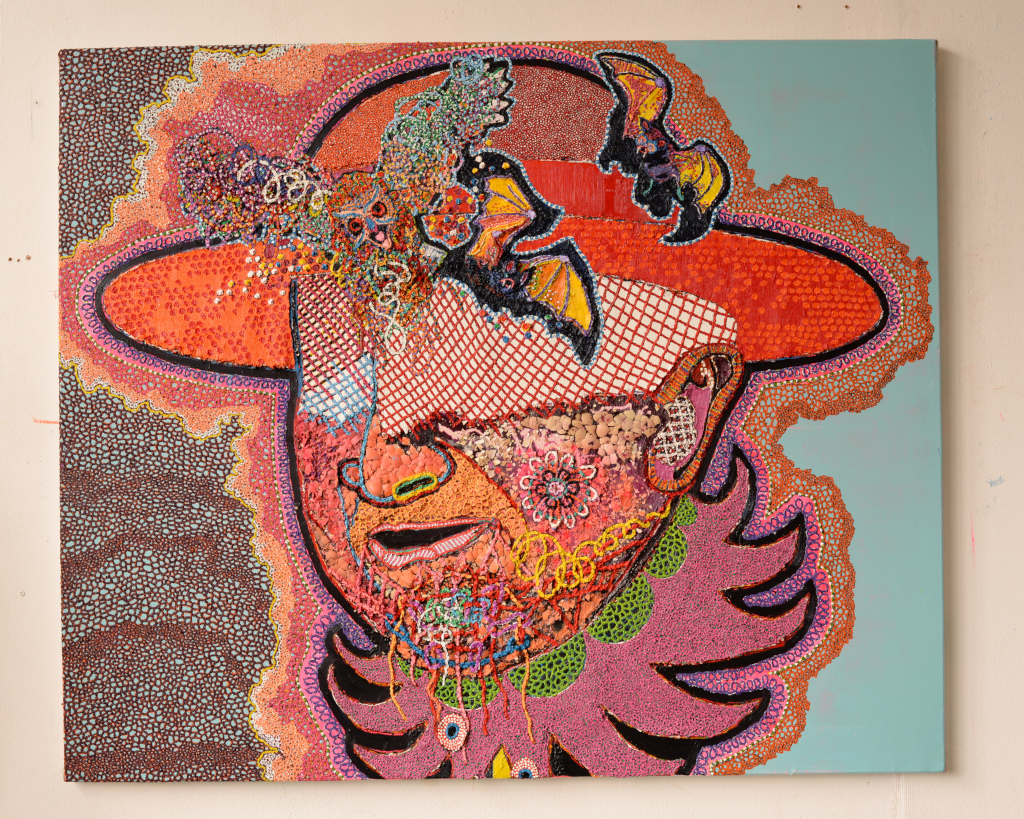
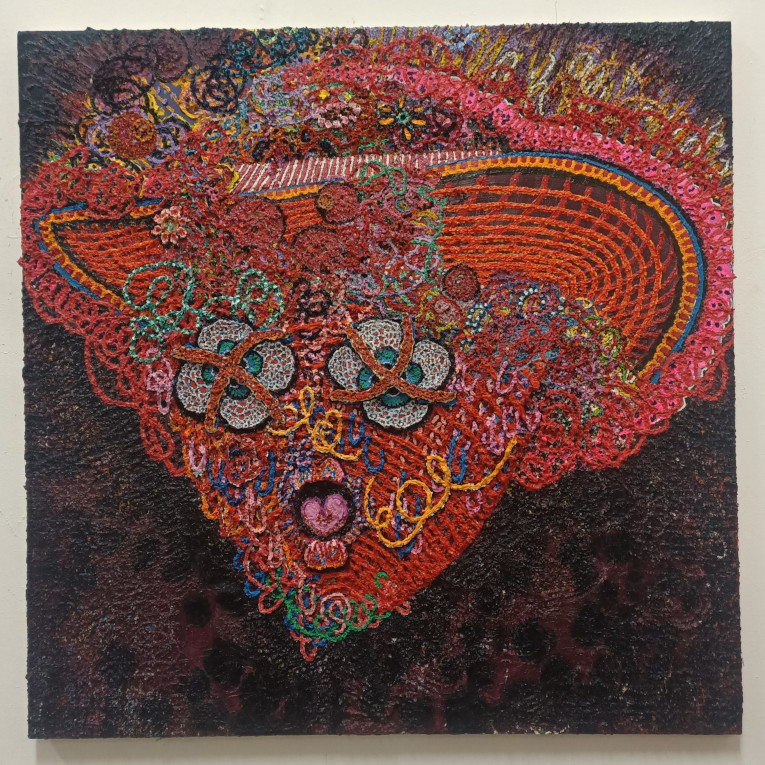
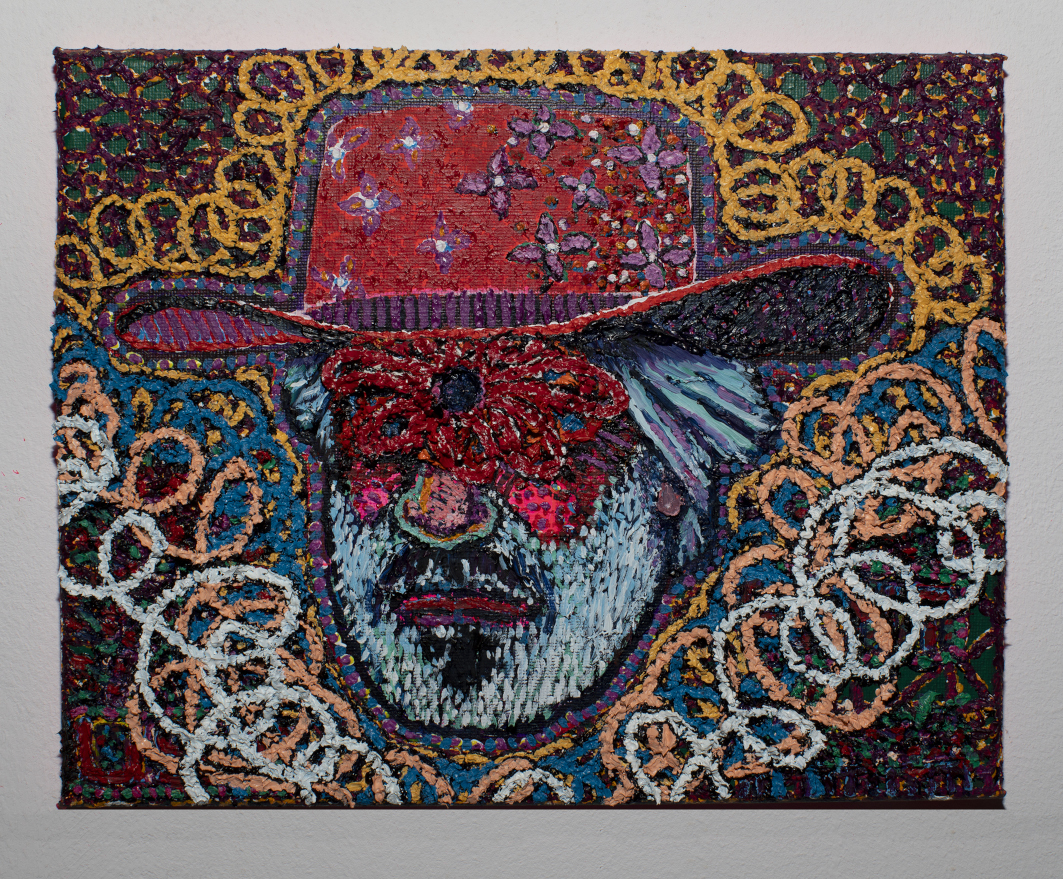
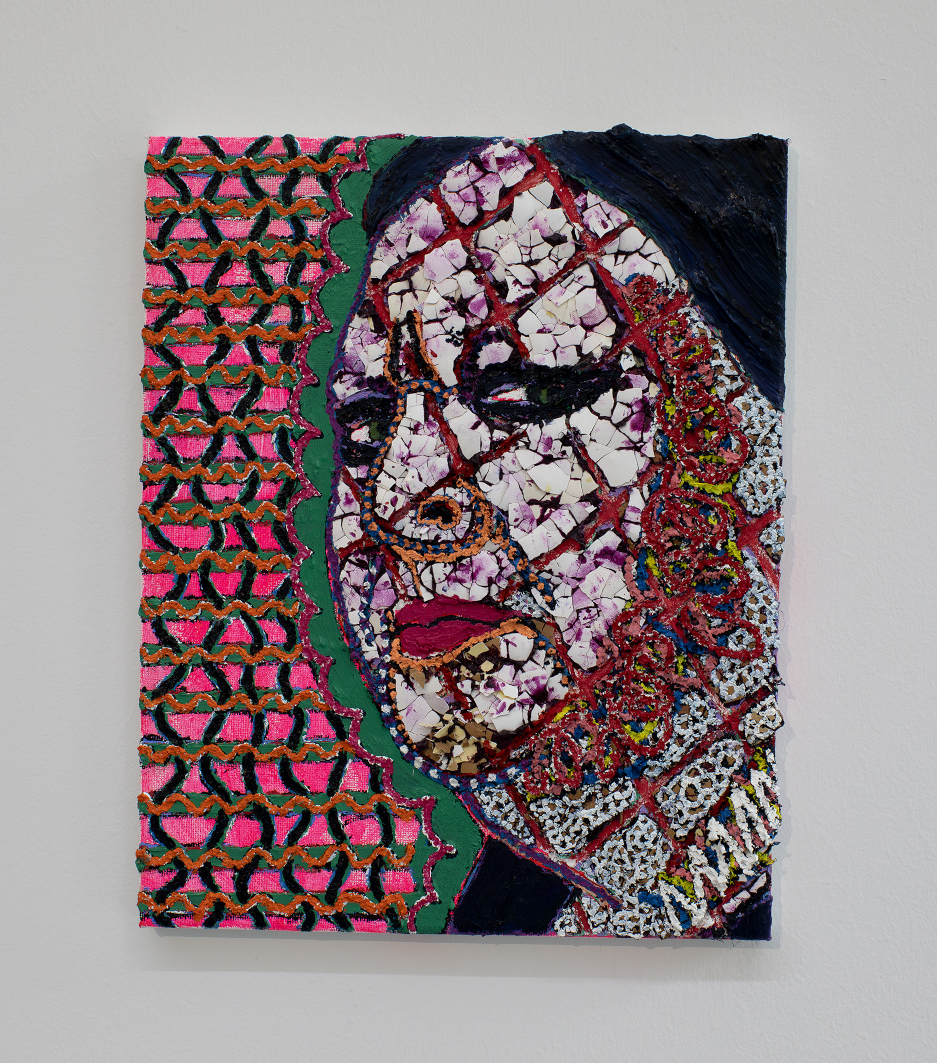
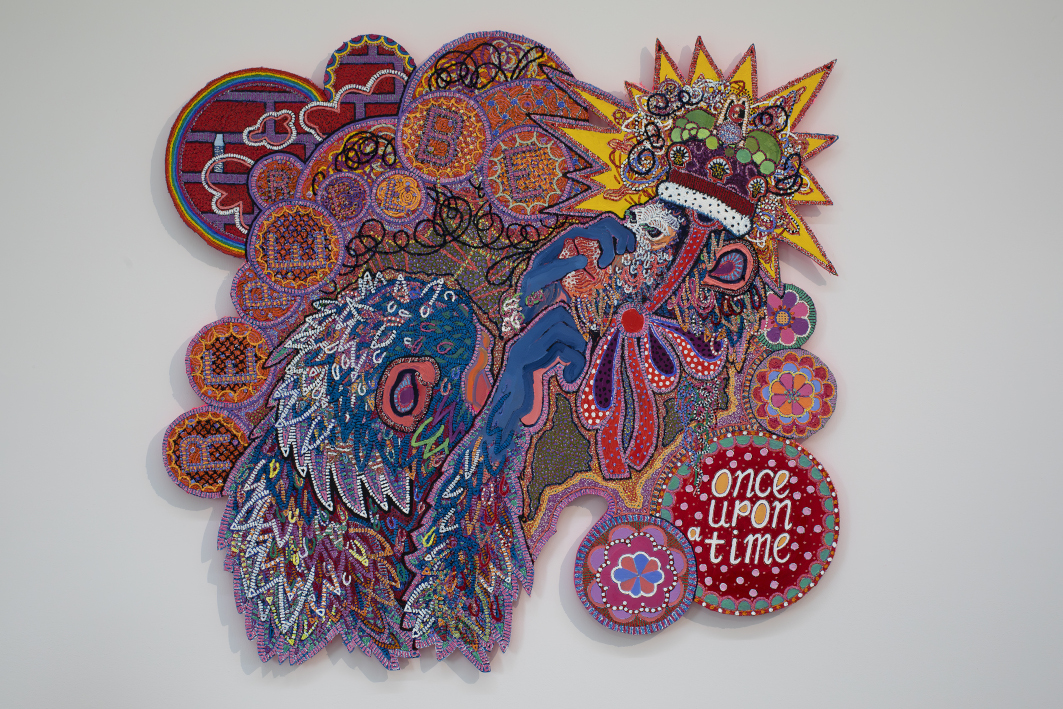
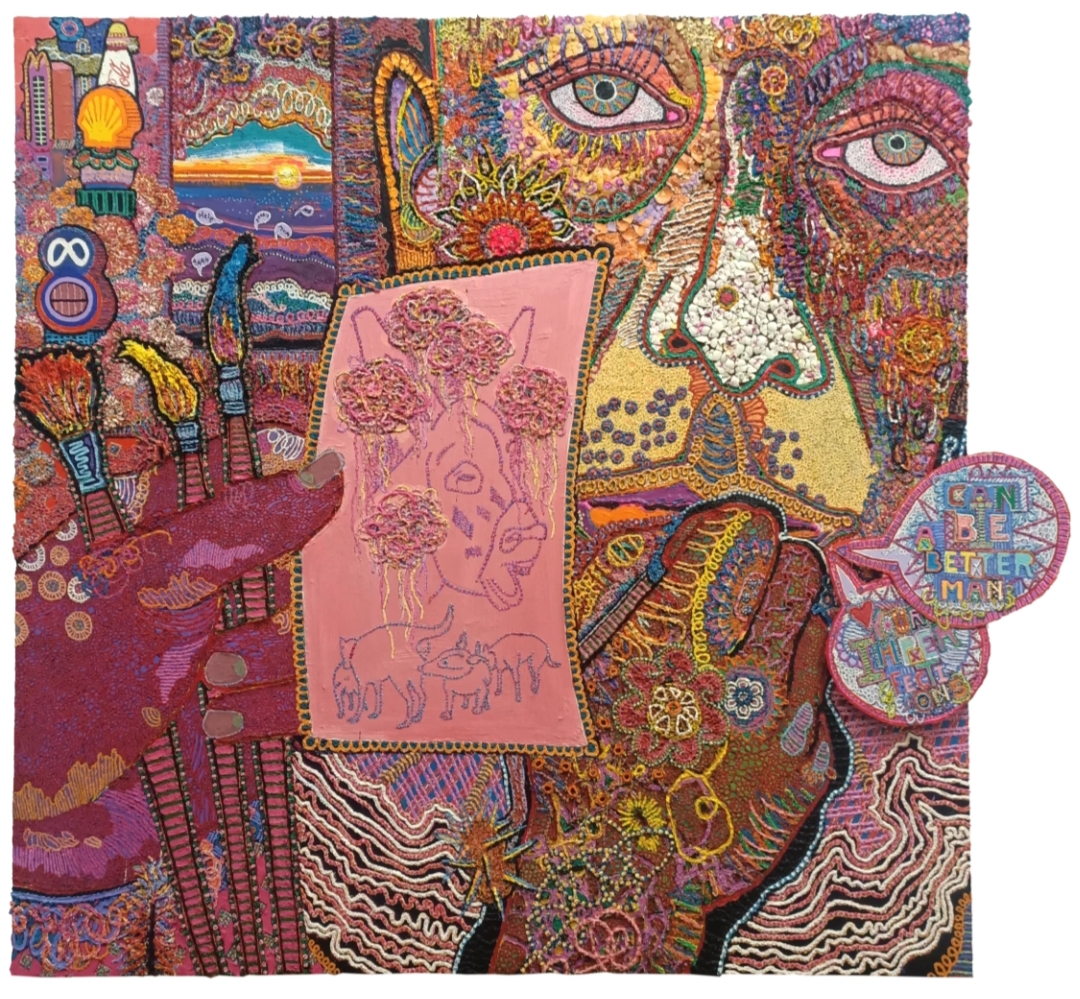
Peter H. W. Hoijmakers\r\nThe paintings of Peter Hoijmakers (Belfeld, 1968) are characterized by an abundance of baroque \r\nshapes, bright colors, and material experiments. Hoijmakers observes reality and thereby retrieves \r\nelements from religion, street and pop culture and processes it into an orgy of colors -and materials \r\non a monumental format.\r\nHis paintings largely about painting itself; about how to note, interpret and arrange things in the \r\nfield of tension between illusion, reality and the material.\r\nHoijmakers is trying to create contrasts and tension in his paintings by elements from different \r\n'worlds' and set them against each other.\r\nFor example by combinations of low and high culture versus expressive decorative etc. They all \r\nhave their own meaning in itself. Put together, he tries to transform them into a new logic.\r\nIn the perception of his paintings the use of materials play an important role.\r\nHis paintings are rather 'flat' painted. However, in their experience, they are quite physical.\r\nSome flat parts are made up of many layers - sometimes centimeters thick paint. He also uses \r\nconcrete materials such as textiles, egg shells etc. Which carry already an art historical meaning , \r\nbut Hoijmakers wants to add new meanings. Such as for example, with the egg shells; they tell \r\nsomething about the surface of the painting as well as about the vulnerability of the person depicted.\r\nPeter Hoijmakers tries to combine physical, painterly and psychological realities and hopes thereby\r\nto achieve transformations in the mind of the beholder.