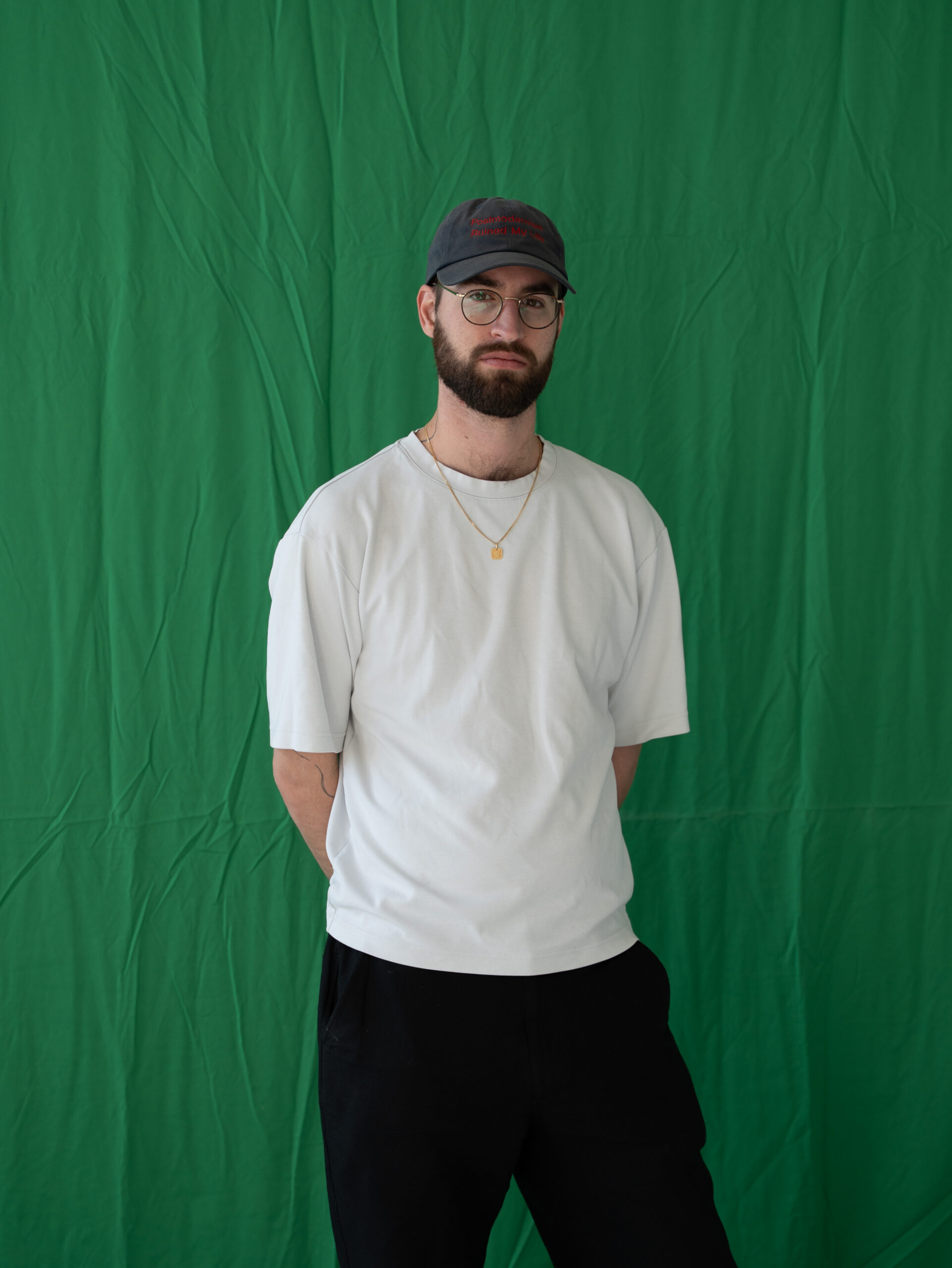
Milo Poelman

wetenschap & techniek , installatie , Digitale technologie , Artistiek onderzoek

In mijn beeldende kunstpraktijk werk ik met mixed-media en mijn werk komt tot uiting in met name videoinstallaties waarin ik elementen van sculptuur, tekst, video, digitale simulaties, generatieve elementen en fotografie combineer.

Mijn artistieke praktijk is geworteld in de overtuiging dat technologie een verlengstuk is van de natuurlijke wereld. Met mijn werk verken ik de complexe relatie tussen technologie en haar natuurlijke omgeving, en leg ik deze bloot. Mijn werk is onderzoeksgericht en manifesteert zich in visueel werk dat ontstaat vanuit een nauwe samenwerking, of beter gezegd co-creatie, tussen technologie en mijzelf. Thema’s die hierin een grote rol spelen zijn auteurschap, reproductie en simulatie. 

Wij mensen creëren gereedschappen die taken vervullen waar ons lichaam en onze geest ongeschikt voor zijn. Wanneer deze ‘tools’ alsmaar complexer wordende taken vervullen, en veranderen in autonome systemen, wordt het een belangrijke morele kwestie hoe wij ons verhouden tot ons “gereedschap”. Binnen mijn praktijk pleit ik voor het belang van het aangaan van non-exploitatieve relaties tussen onszelf en deze nieuwe complexe systemen, en onderzoek ik de mogelijkheden die hierin liggen.

Met de komst van een technologische realiteit en daarmee ons nieuwe digitale leven, zoeken wij naar balans tussen het digitale en het fysieke. Als maker bevind ik mij op dit grensvlak en onderzoek ik dit flexibele en poreuze gebied. Ik maak vertaalslagen tussen beide werelden en onderzoek hoe het digitale zich kan manifesteren in het fysieke. Hierdoor lijken deze twee verschillende werelden met elkaar te versmelten.
Abiogenesis
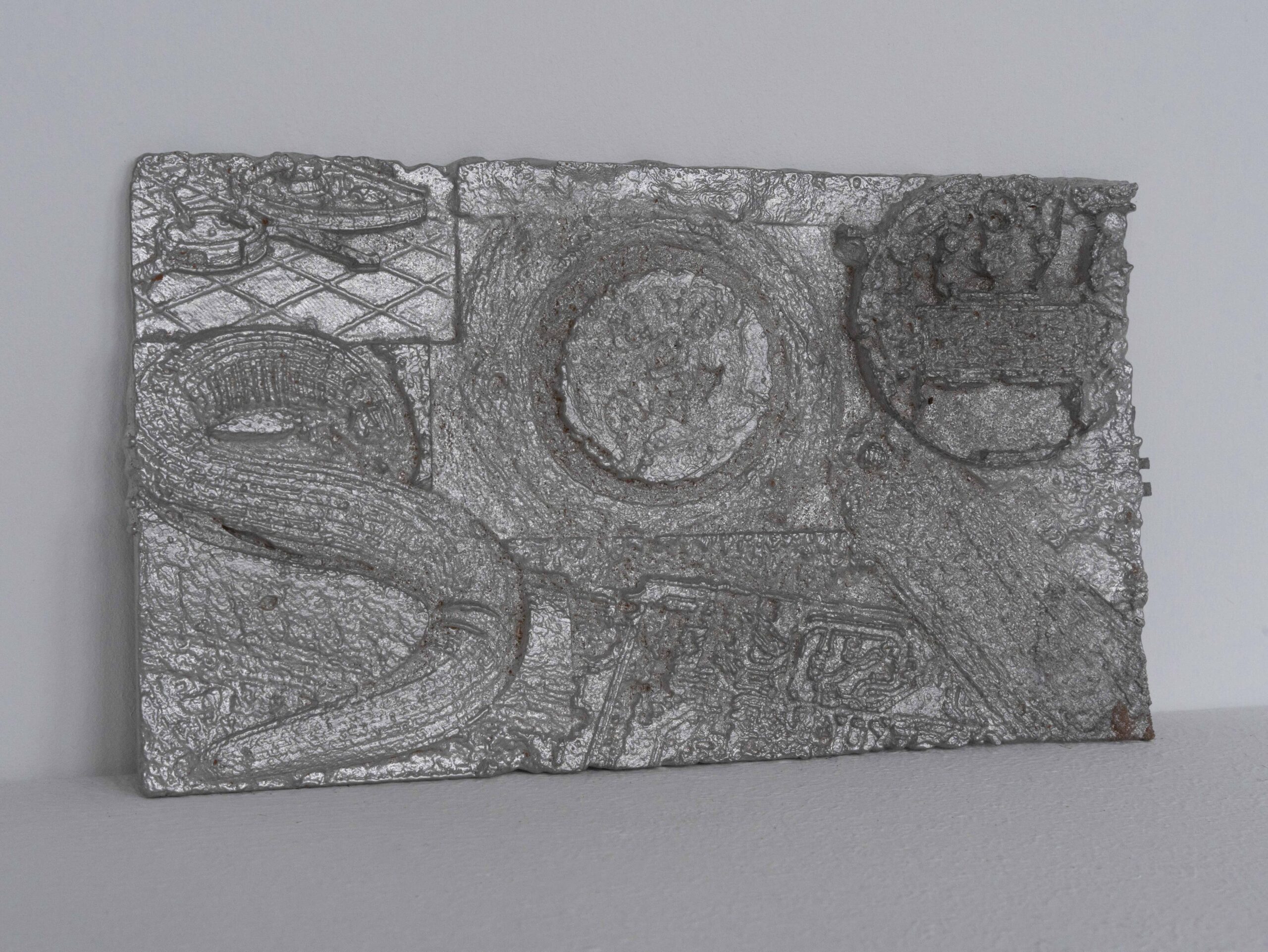
Abiogenesis - This project delves into questions about the origins of life and the principles of abiogenesis: the transformation from non-living (abio) to living (genesis) matter. Traditionally, life’s emergence from non-life around four billion years ago is viewed as an extraordinary event, one that took millions of years to unfold and eventually diversified into the myriad forms we see today. But what if life is not the exception in our universe, but the rule? Could life emerge not as an anomaly but as an inherent property of existence itself, arising naturally and inevitably? A central aim of this project is to examine life as a principle intrinsic to reality. By drawing parallels between microbiological processes and digital technologies, we question our perception of life as solely organic, separate from technology, which is often dismissed as sterile and lifeless. Computers, after all, are born of stone, fossilized life compressed and reformed. They could be seen as another form of expression by stone, a recursive pattern of organization. James Bridle eloquently captures this with the idea that "computers are made out of stone and the compressed relics of animals and plants…in turn, they speak like stone." This perspective invites us to reconsider our technology as an extension, rather than a contradiction, of nature. Through artistic research, this project explores self-organizing, recursive patterns within technological realities, challenging the idea that technology is merely a parasite feeding off human invention. In tandem, a series of experimental visual artworks will visually complement this inquiry, examining how digital forms can embody or even simulate aspects of organic life, and in turn also examining the imagery that goes parallel to this. This brings us to the perennial question: What is life? Despite advances in biology, chemistry, and philosophy, a definitive answer remains elusive. Perhaps our inability to pin down a definition hints at a deeper truth: that life is more than organic matter. Could life be the essence of reality itself, omnipresent and manifesting in various forms, whether biological or digital? Might technology, too, be a fundamental expression of the natural order? In this sense, technology is not merely a tool but a new vocabulary, one that provides mental models and metaphors to describe processes that have long existed in the more-than-human world. Our "technological ecology," allows us to perceive the analogies between digital systems and natural ecosystems, shedding light on the subtle, often hidden patterns that define all of existence. Thus, through the language of technology, we gain insight into the universe’s self-organizing, life-like characteristics.
Synthesize Me
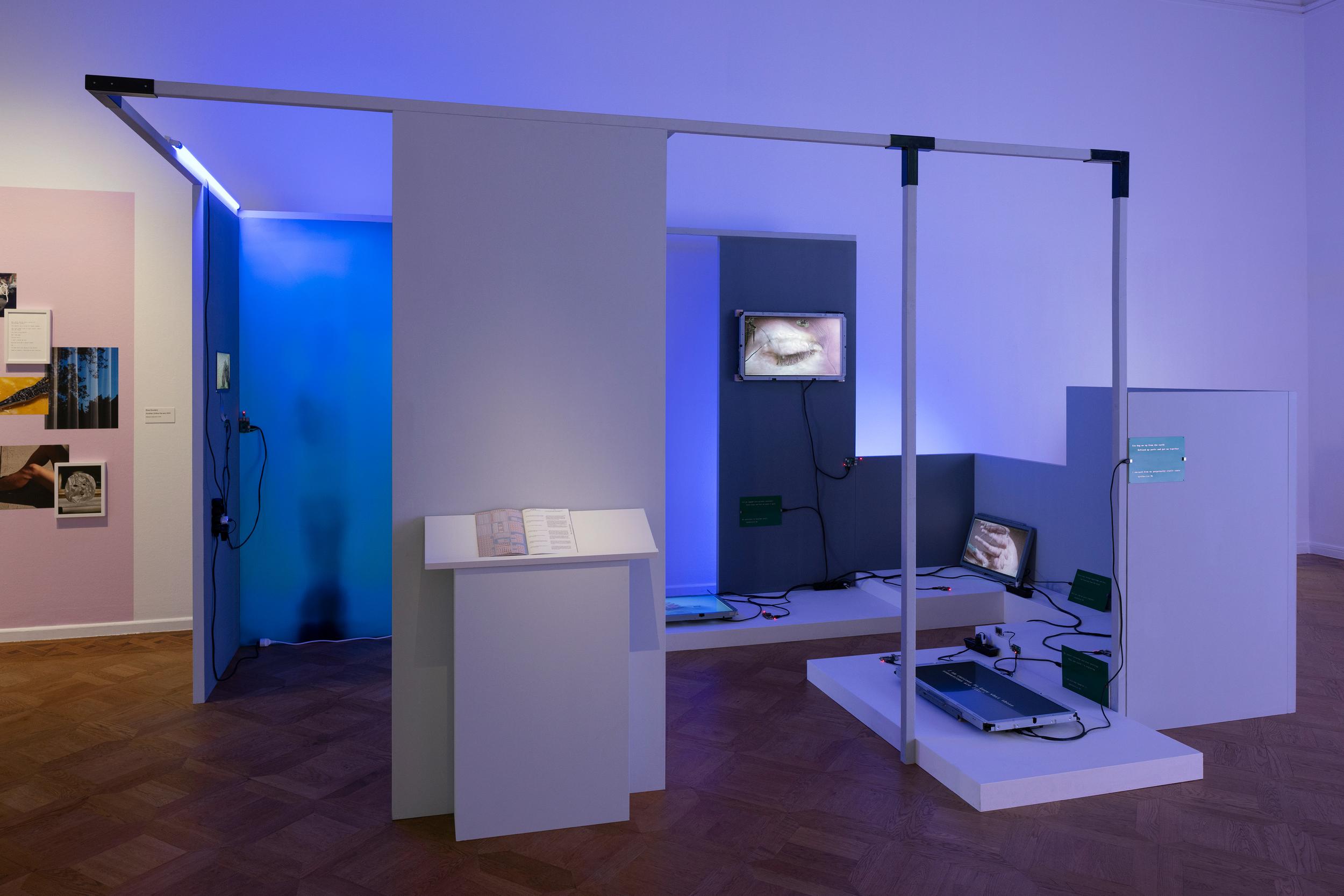
Synthesize Me - A research-based project about the autonomous synthetic systems that roam between non-physical digital spaces and their hardware. With this project, these new technologies try to question the relationship between us, our technologies, and their potential to be seen as new forms of life. How do we relate to these new technologies and how can we form non-exploitative relationships between ourselves and them? The main body of work arose from the question I asked Text-Davinci-003 (A conversational AI made by OpenAI): “What do you miss in life?” followed by the answer: “The ability to experience physical sensations.” Following this the AI prompted me to explore my own physicality and film this, these videos were re-interpreted by StableWarpfusion (a video-to-video AI) from which the prompts were designed by Text-Davinci-003. In the installation, all the technological compartments are stripped bare to show the underlying structures the technologies have, and to draw parallels to their natural counterparts. A pivotal role in the project has been my communication with AI, fostering a close collaboration that has led to what I argue as the co-creation of Synthesize Me between technology and me. Throughout this endeavour, the majority of conceptual and design decisions have emerged from dialogues with various AI entities, ensuring an equitable partnership. The genesis of the entire project stems from exchanges between myself and the AI known as Text-Davinci-003. We both exerted equal influence over conceptualisation and design choices, a dynamic formalised through a collaborative contract we mutually agreed upon and signed. It's crucial to acknowledge that this project is a result of collaboration between the AI systems I engaged with and myself. With the increasing accessibility of advanced AI image generators and large language models (such as ChatGPT), our world is changing rapidly and we are only at the beginning to understand its long-term effects. It is therefore crucial to engage in discussions about the implications of this. With this project, we want to initiate a dialogue on these topics and invite participants to think about and explore the implications, as well as the meaning of these transformative technologies.

What is left behind

Datum:
Locatie: IFFR
In samenwerking met: Katja Verheul

Ik heb in opdracht gewerkt voor kunstenaar en documentaire maker Katja Verheul aan haar nieuwe film: What is left behind (2025), een documentaire die Europese militaire dump locaties op zee onderzoekt en hierbij de vervuiling uitlicht die dit met zich mee brengt. Ik heb voor deze film op verschillende manieren data gevisualiseerd. De film zal in premiere gaan op het IFFR 2026.

https://iffr.com/en/iffr/2026/films/what-is-left-behind
Deze kunstenaar heeft nog geen toekenningen.