Yen Noh

Taal , Lichaam , Educatie , Diaspora , Autobiografisch , Artistiek onderzoek , Archieven

I engage with language as a means of artistic and social aesthetic pedagogy. In my artistic and research practice, language – from literary practice to performance of language – is often employed to (re)activate and (re)perform historically marginalized narratives. Here, translation is a crucial part of the practice: translation not in the sense of translating from one language to another, but of translating literary and theoretical writing in the forms of shared knowledge community. Installations often become a site of gathering, collaborative performance, temporary library and collective study in which language offers a space for alternative modalities of being together. The project In Between Seances at BAK in Utrecht, which revolved around Theresa Hak Kyung Cha's novel Dictee, is one example of this. The urgency of this approach lies in an attempt to explore language as a social and political instrument – ​​​​​​​​​​as deviation and refusal – against the alleged assumption of language's neutrality. I'm concerned with an/other possibilities of language in order to resist linguistic norms and forms of representation and carry out a politics of the unspeakable. This involves a discourse on anti-colonial, feminist, and diaspora struggles, as well as illness, care and disability justice. In addressing the ways in which linguistic and literary practices fracture and reassemble language, I look at how language itself is challenged and stretched in the experience of colonized and/or migrant subjects. I attend to what has been termed the “paralinguistic” and linguistic through performance, typography, and sound in the absence of denotative meaning. Throughout, I aim to create a pedagogical space in which extraordinary social relations opened up.
In Between Seances
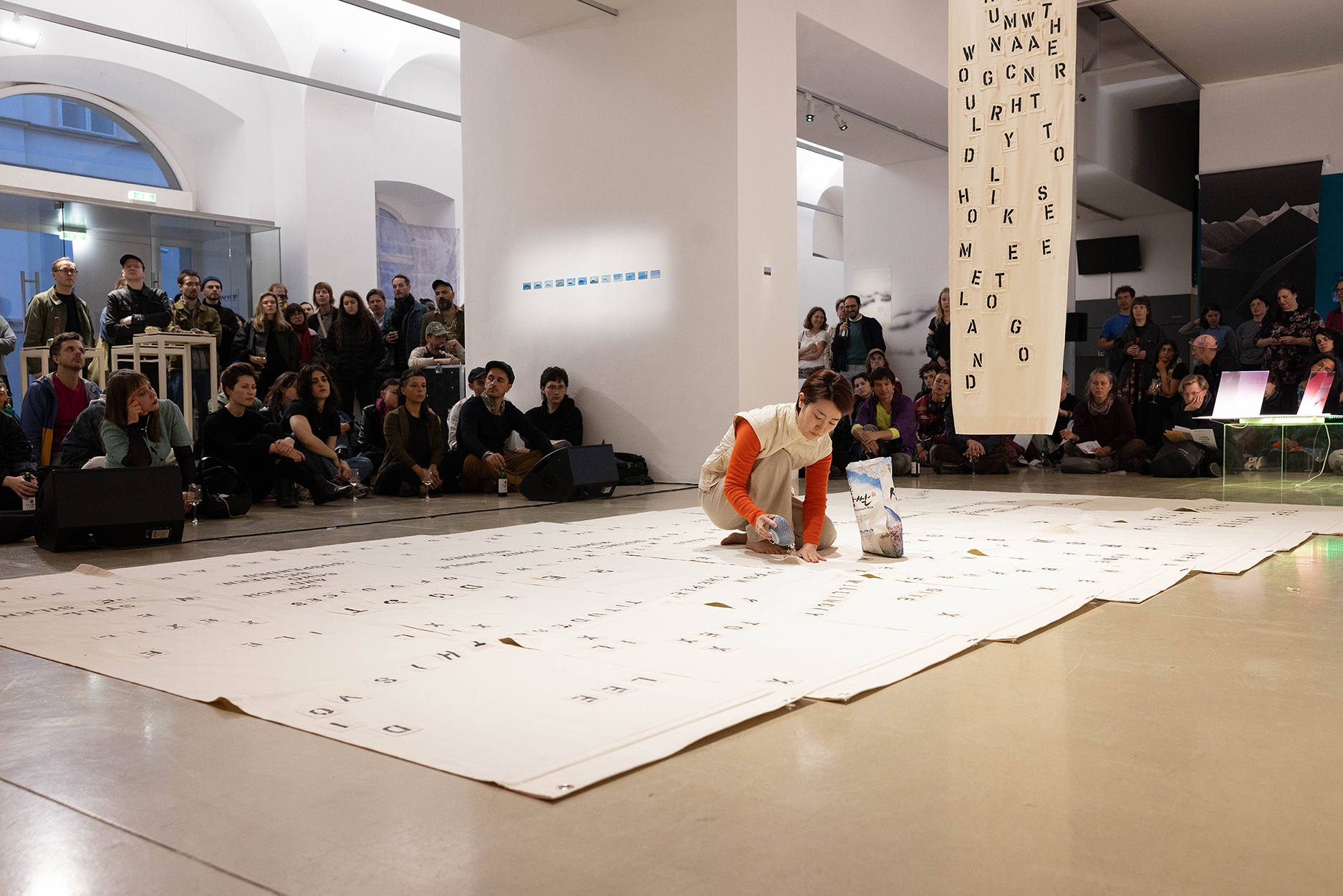
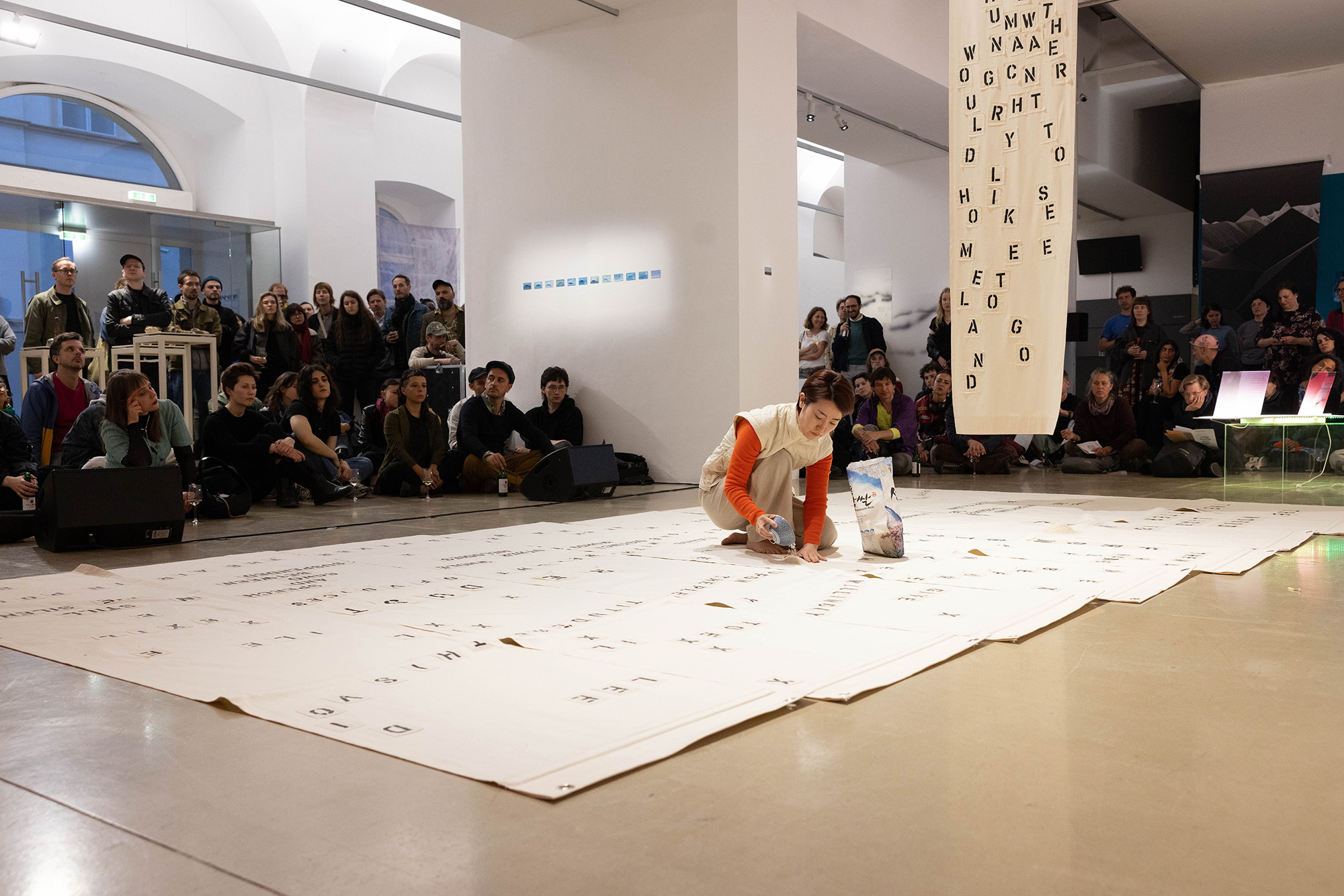
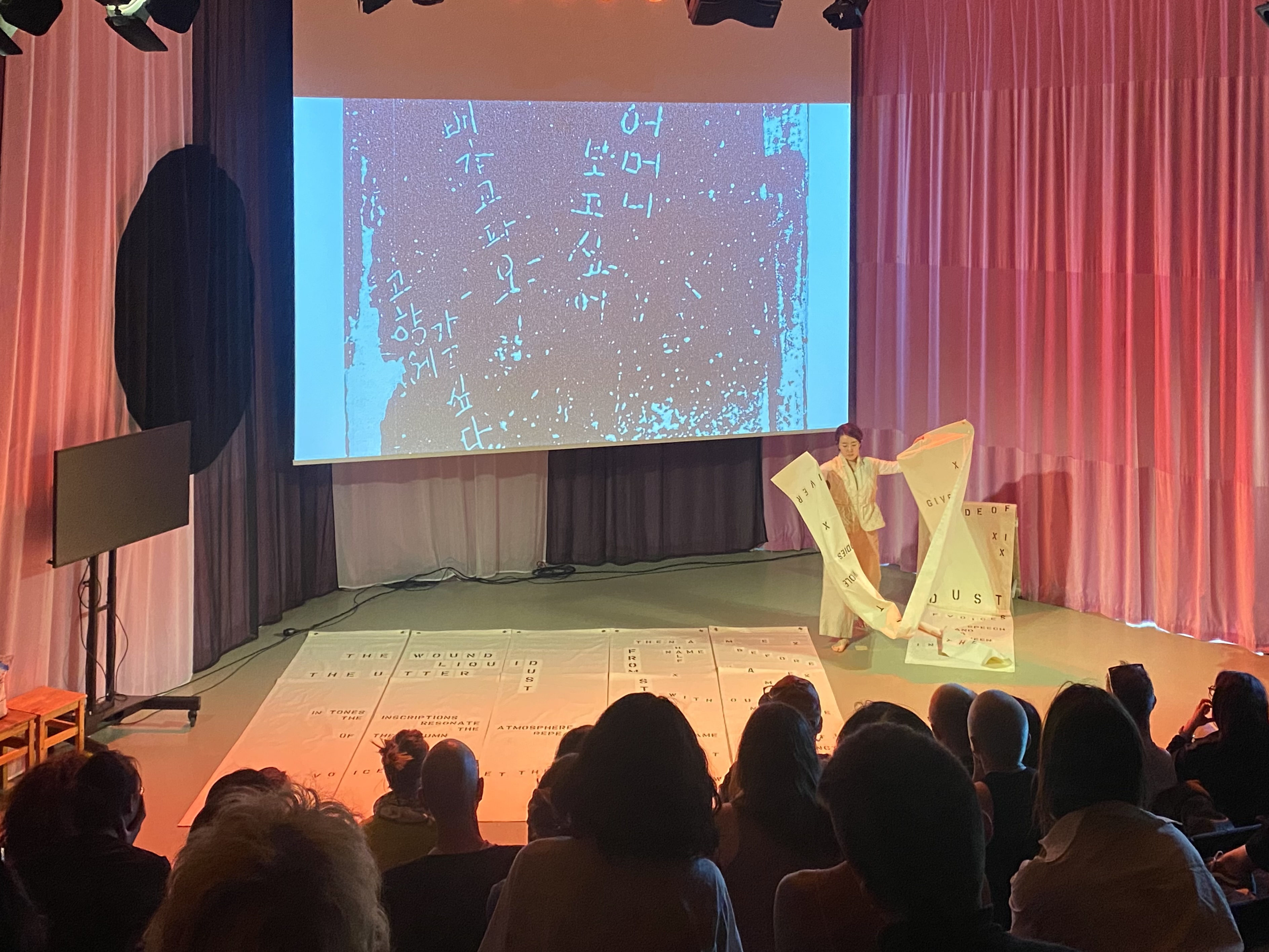
In Between Seances - Performance, Nieuwe Instituut, Rotterdam, 2025. In Between Seances is a multi-phased project that engaged with the Korean American artist Theresa Hak Kyung Cha and her 1982 novel DICTEE. It was an outcome of the BAK Fellowship for Situated Practice and initiated a nine-week study program at BAK in 2022 in and around the homonymous installation In Between Seances, which was a study site holding the study program. The performance at Nieuwe Instituut was later presented as an oral and sonic activation of the nine banners created for the installation as part of the study score. It engaged in the emotional and psychological residues of death—Cha’s own death and the unjust deaths Cha evokes in DICTEE—specifically focusing on the black-and-white image in DICTEE. The image, which appears to be a stone wall with a Korean text carved into it, was supposedly taken from Japan's coal mine during Japan's occupation of Korea. The performance borrowed legal scholar Sora Han’s English translation of the inscription, or more precisely “dystranslation”—a “form of composition that works from the non-meaning of a letter’s sound”—and played with its bilingual variations, English and Korean.
In Between Seances
In Between Seances - In Between Seances engaged with the Korean American artist Theresa Hak Kyung Cha’s 1982 novel DICTEE. Theresa Hak Kyung Cha (1951-1982) was born in South Korea during the Korean War. Her family fled from the US-backed dictatorship in the wake of the war at her age of ten. Written in English and French—with Korean being nearly entirely absent—DICTEE takes oral dictation as its format to a point where cultural dispossession becomes a disruptive force. While Cha’s mother was in exile in Manchuria during the Japanese occupation of Korea, she was forbidden from speaking Korean. The sense of displacement this caused was renewed by the family’s experience of migrating to the US—a type of displacement generationally inherited by Cha. This prompted Cha to initiate DICTEE which combines auto-biography with historical and auto-ethnographical elements and performs the dispossession of language. While Cha’s approach to autobiography continuously unsettles established narratives about the experience of “Asian immigrant women,” DICTEE provides a space in which unlikely encounters of intimate histories and political traumas are interwoven into something unarchivable.
In Between Seances
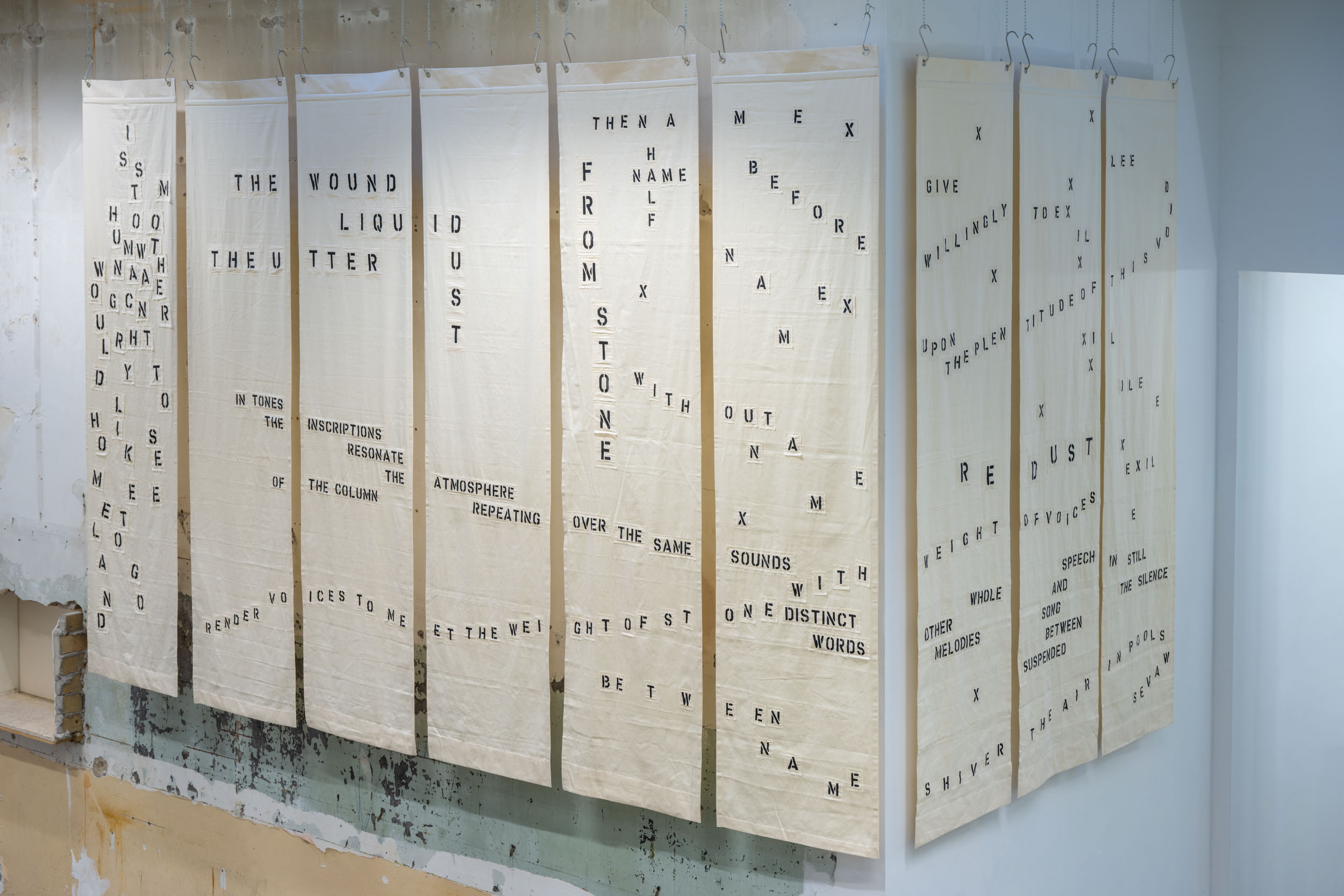
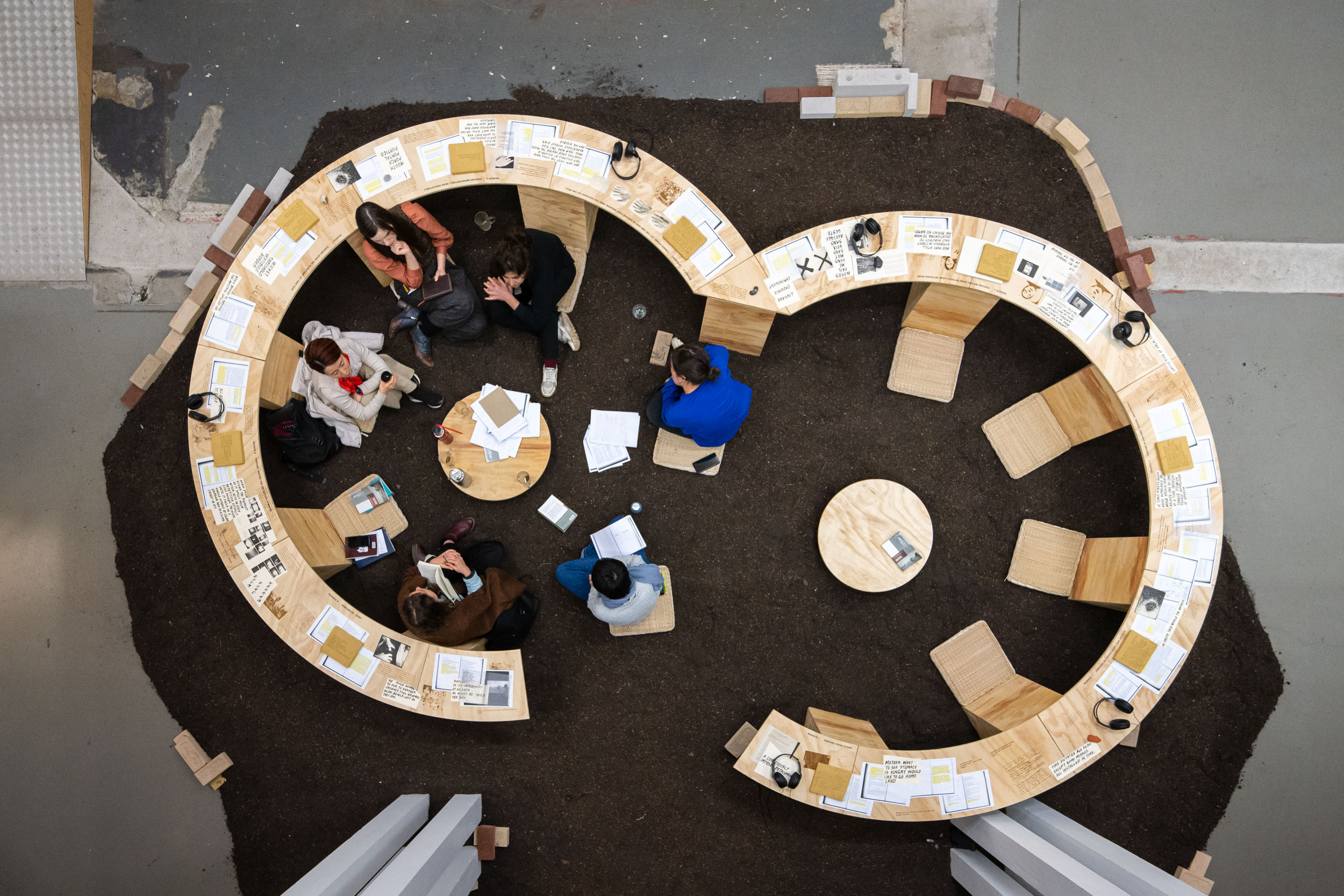
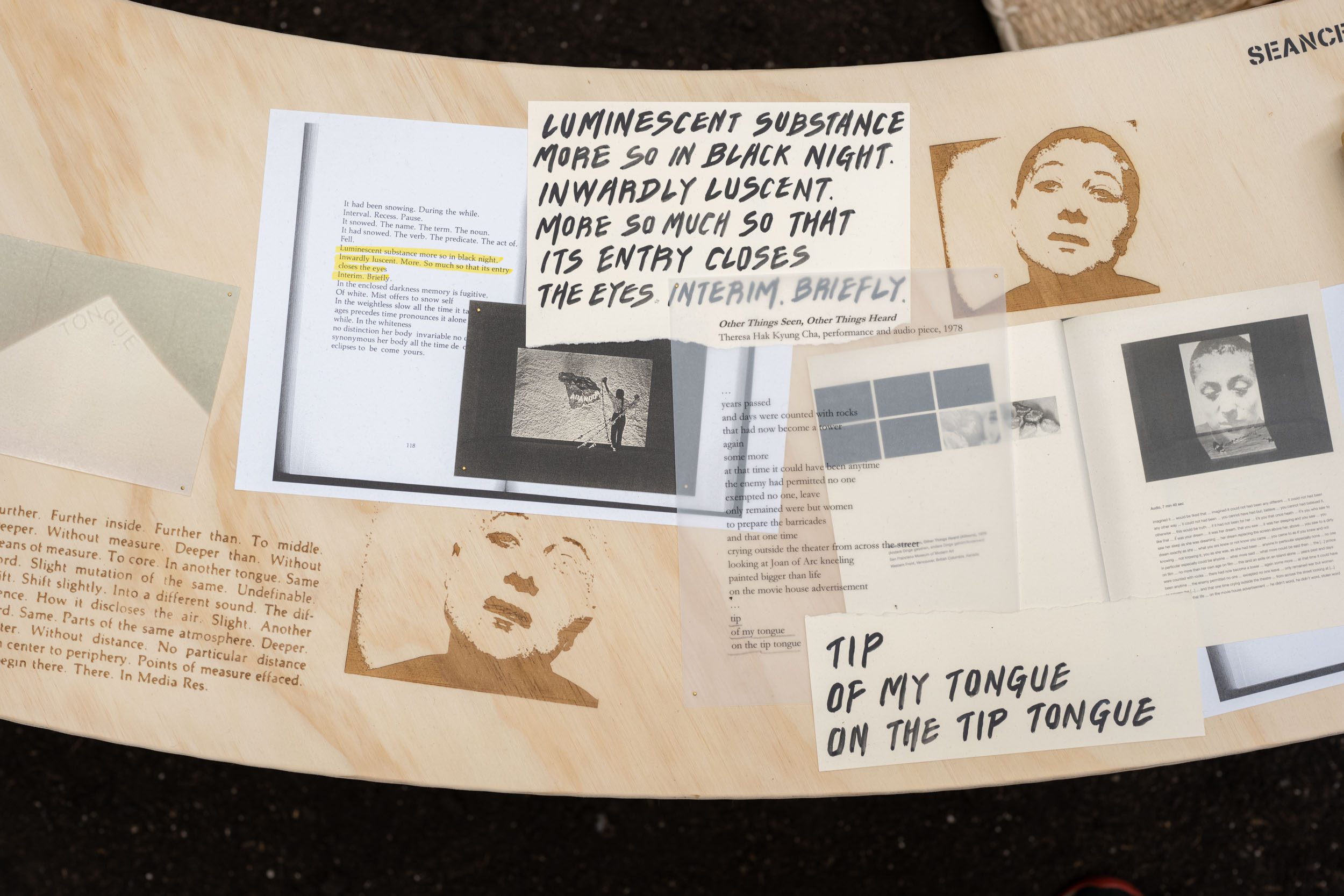
In Between Seances - In Between Seances employed DICTEE and Cha’s larger oeuvre as a pedagogical method for its collective study program in and around the homonymous installation. Centered around a table, on which the multi-layered study score of In Between Seances was exhibited, the installation became a “study site” that enacted a sonic, visual and textual archaeology of her work and life, as well as the death—Cha’s tragic death and the unjust deaths she evoked in DICTEE. The project’s title played out on different meanings of “seance.” In English, the term is used to designate meetings for communicating with the dead, while in French, it commonly refers to cinema (une séance de cinema). After archival research in Berkeley, where Cha lived, I took some earth back to the Netherlands and combined it with local soil in order to create the study site as a complication of displacement, land and nativity. Cha’s video work Mouth to Mouth (1975), the unfinished film project White Dust from Mongolia (1980), her performance documentation Aveugle Voix (1975) and Secret Spill (1974) were on view nearby as the study’s recurring references—chimed with the questioning of the processes of disidentification. Moving beyond the organization of the study program, the entire constellation articulated my reading of DICTEE and was processed as a form of writing. Nine banners lining the study site transposed the study score into a typographical gesture and grew weekly. The project was generously supported by BAK, basis voor actuele kunst, International Arts Joint Fund Korea-Netherlands, Mondriaanfonds and Kunstraum Niederoesterreich.
In Between Seances
In Between Seances - The study score of In Between Seances was used as a guidance for the study program, as well as for the correspondences with writers, scholars, translators, poets, and artists invited to the project. The correspondences were materialized as sound pieces and exhibited on site, incorporated as part of the study materials. Each correspondence responded to the transversality of the oppressed histories presented in DICTEE, generating a polyphony of voices as a study method—from Korean to Armenian, from a folk song for Korean diaspora to the sound of wind collected in a Greek island—writing against reductive selfhood and identitarian politics. The project concerned the study program as a situated and embodied experience. Various collective practices took place, such as group reading, walking and listening; conversing and annotating; film screening and scripting. Each and all became writerly gestures gradually inhabiting the study site over the exhibition period.
In Between Seances
In Between Seances - The performance In Between Seances was an oral and sonic activation of the banners created for the installation In Between Seances. It engaged in the emotional and psychological residues of death—Cha’s own death and the deaths Cha evokes in DICTEE. The performance specifically focused on the black-and-white image that shows what appears to be a stone wall with a Korean text carved into it. This image, which seems to have been degraded through successive reproductions, was supposedly taken from the wall of a coal mine in Japan during the Japanese colonization of Korea. Inscribed by an indentured Korean worker, it contains the only use of Korean script in DICTEE. The performance borrowed legal scholar Sora Han’s translation of the inscription, or more precisely “dystranslation”— a “form of composition that works from the nonmeaning of a letter’s sound”—by playing with its variations.
[un]learning through illness
[un]learning through illness - [Un]learning through illness was a collective experiment emerging from the lived experience of my chronic illness. My involvement in ARIAS’s project [un]learning scripts enabled me to initiate correspondences with dramaturge Nienke Scholts and media researcher Erica Biolchini upon illness, from which a gathering entitled [un]learning through illness was organized. Composed of textual and somatic exercises, the gathering exchanged desires for collaborative forms of sensing, pausing and (un)learning that can hold space for different modes of being with illness, exhaustion and other systemic wounds—being ill as different ways of being in continuous movements and processes.
DidLineMurderCircle, Or the Courses Between White Zeppelin and Butterfly
DidLineMurderCircle, Or the Courses Between White Zeppelin and Butterfly - The artistic research project DidLineMurderCircle, Or the Courses Between White Zeppelin and Butterfly thematized the Korean poet and architect Yi Sang (1910-1937) who was born in the year of the Japanese annexation of Korea and lived the quintessential experience of “colonial modernity.” His anti-colonial intervention in language, however, has been sanitized in Korean schoolbooks and scholarly works and instead canonized within the genealogy of the historical avant-garde. By investigating the linguistic and paralinguistic performance of Yi Sang’s poetry, the project endeavored to undo this narrative. It was developed in a growing series of work in the forms of assembly, “walking exhibition,” performance and installation. The project was generously supported by Arts Council Korea, Tabakalera and MAP Fellowship of Arts and Culture.
DidLineMurderCircle, Or the Courses Between White Zeppelin and Butterfly
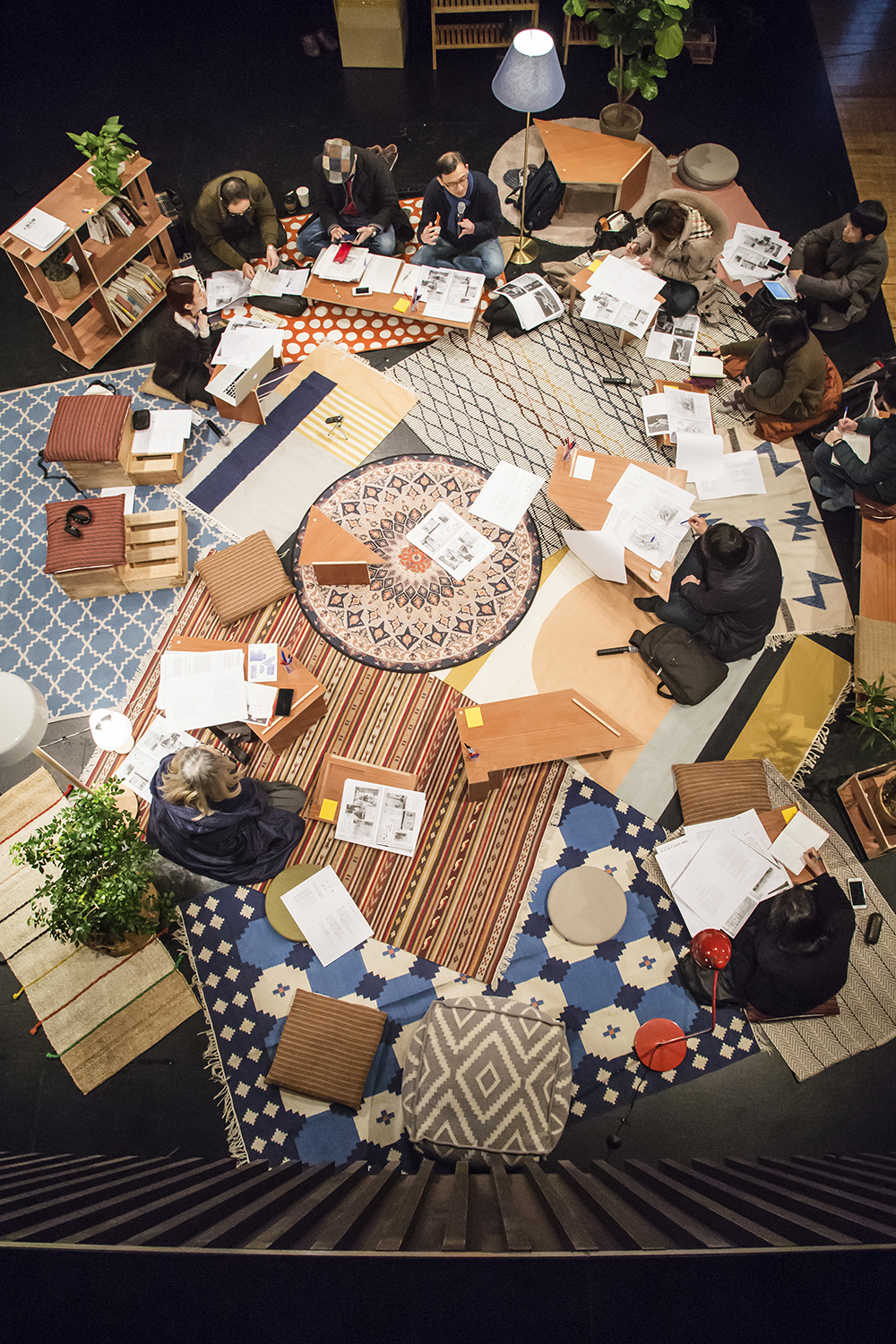
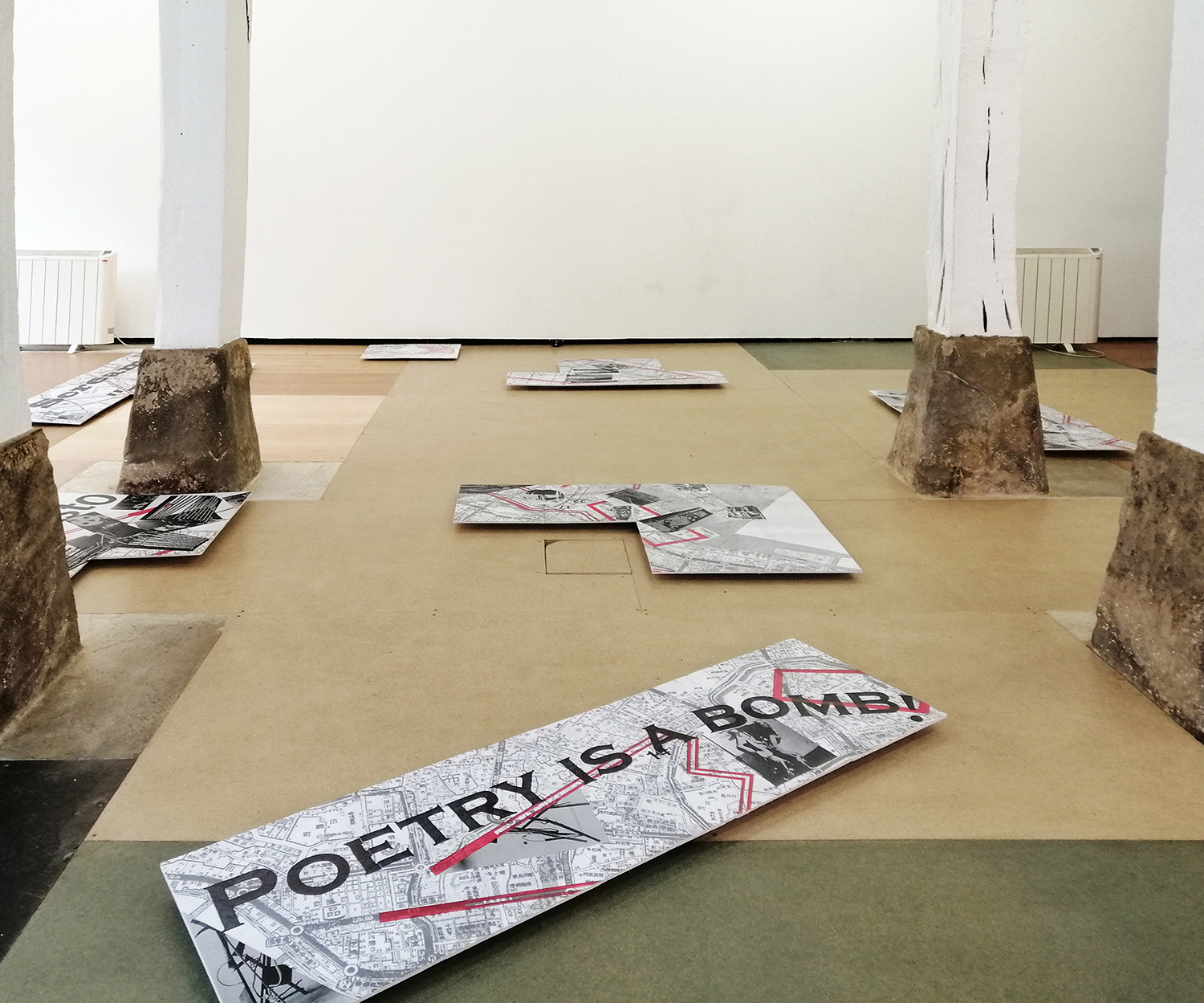
DidLineMurderCircle, Or the Courses Between White Zeppelin and Butterfly - The 2-day assembly of DidLineMurderCircle, Or the Courses Between White Zeppelin invited artists, translators and scholars in order to initiate a research on Yi Sang in conection with the history of the colonial urban planning of Seoul. Yi Sang was employed as a civil servant and architect by the colonial government, even as he was beginning his career as a poet. His twenty-eight poems published in a colonial magazine on architecture and urbanism astutely evaded censorship, all encrypted in the formulas he devised through the language of geometry and mathematics. Based on varied historical materials, the assembly attempted to rethink Yi Sang’s work discursively and collaboratively, situating it in a colonial context rather than the genealogy of historical avant-garde. Carried out in semi-public, it was also a preparatory work in order to produce a map, which was later used for a collective city walk.
DidLineMurderCircle, Or the Courses Between White Zeppelin and Butterfly
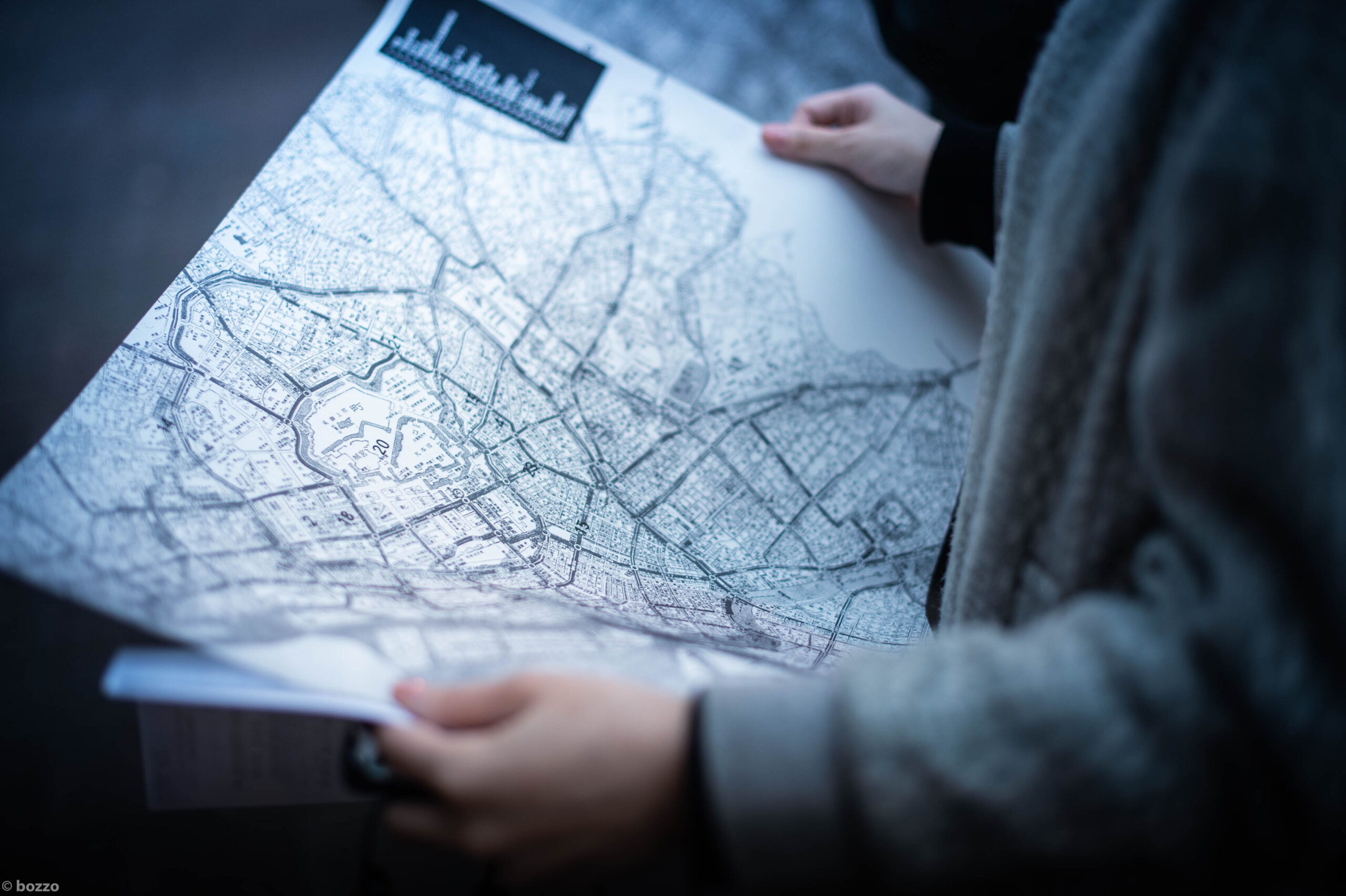
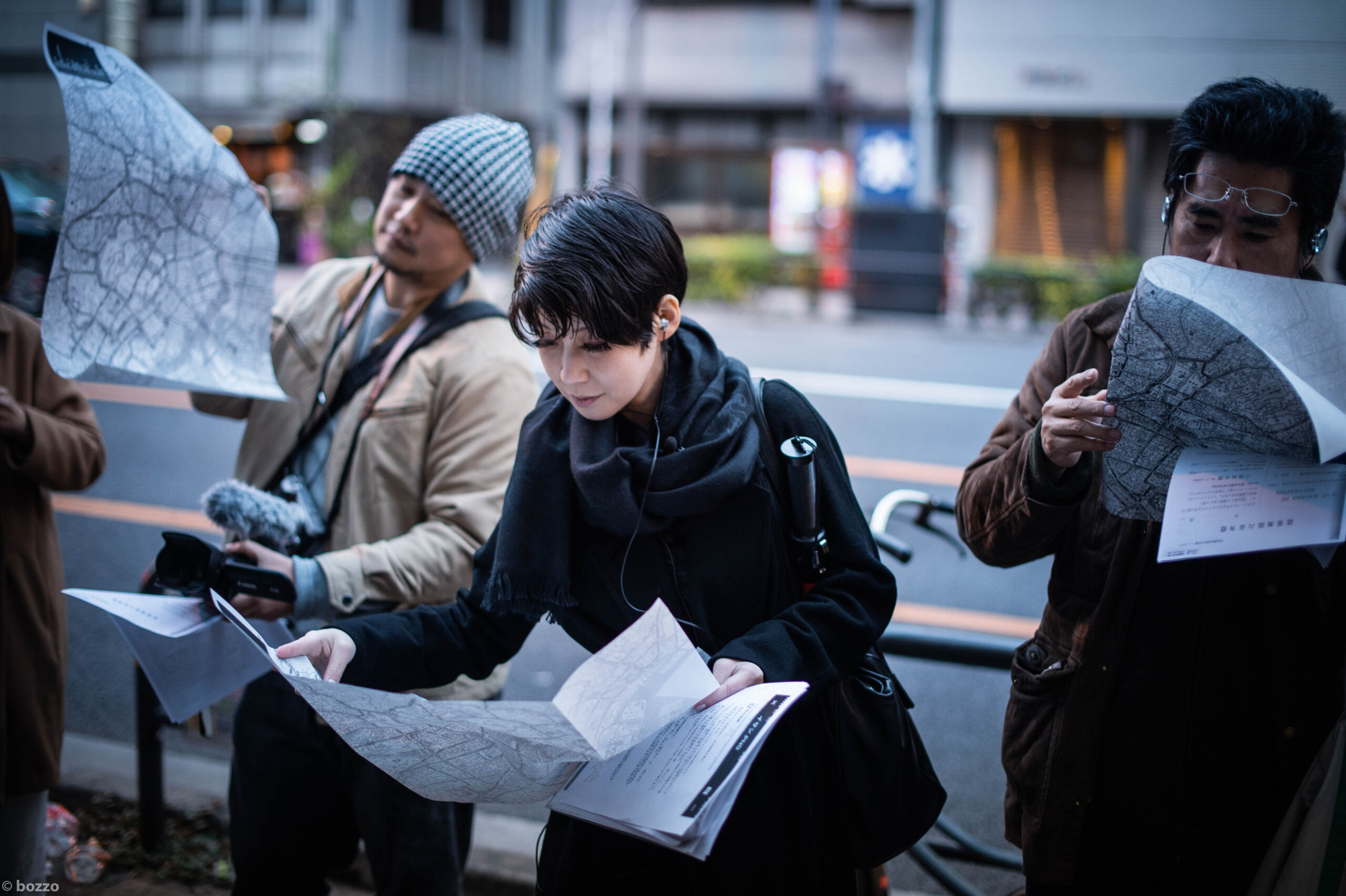
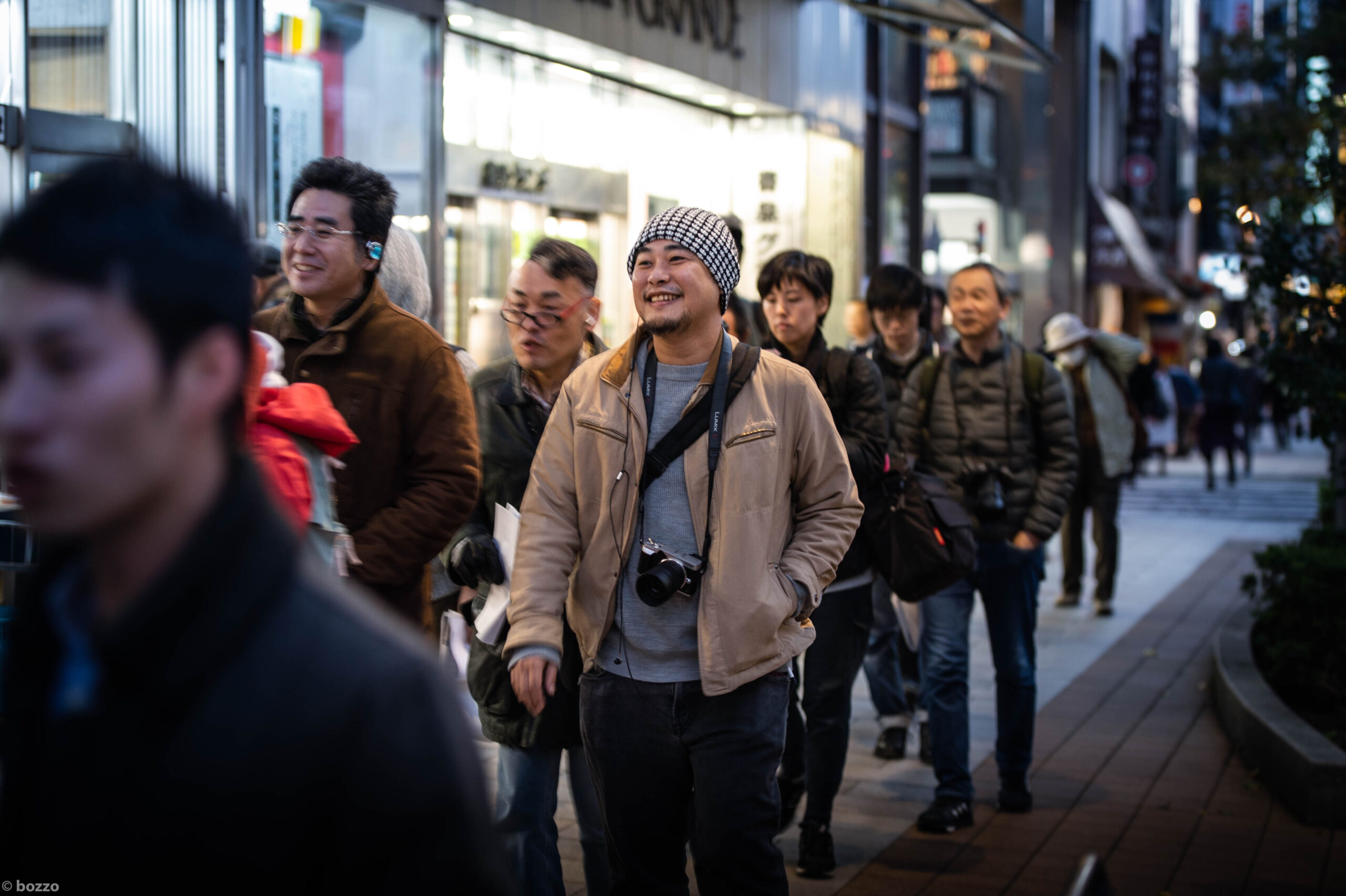
DidLineMurderCircle, Or the Courses Between White Zeppelin and Butterfly - The “walking exhibition” was a collective city walk in Seoul in order to exercise the poetic, visual, and para/linguistic elements of Yi Sang's work through the city, from historical, colonial landmarks to the then slum quarter he used to live with his partner Geumhong who was a sex worker. The “walking exhibition” was to transmit situated knowledge in a shared present moment—mapping, remapping and unmapping the current realities of the city's (post)colonial redevelopment, pro-fascist street mobs and displacement as a response to a specific historical moment he lived in. The walk was accompanied by a map, sound pieces, reading performance and the reproduction of Yi Sang's poems in print. Produced collaboratively, the map was adopted from the 1934 Seoul map produced by the colonial government commemorating the first aerial shot of the colonized capital, marking Yi Sang's activities embedded in the 1920s and 30s underground cultural scene for the Koreans.
Solid Triangle Blueprint
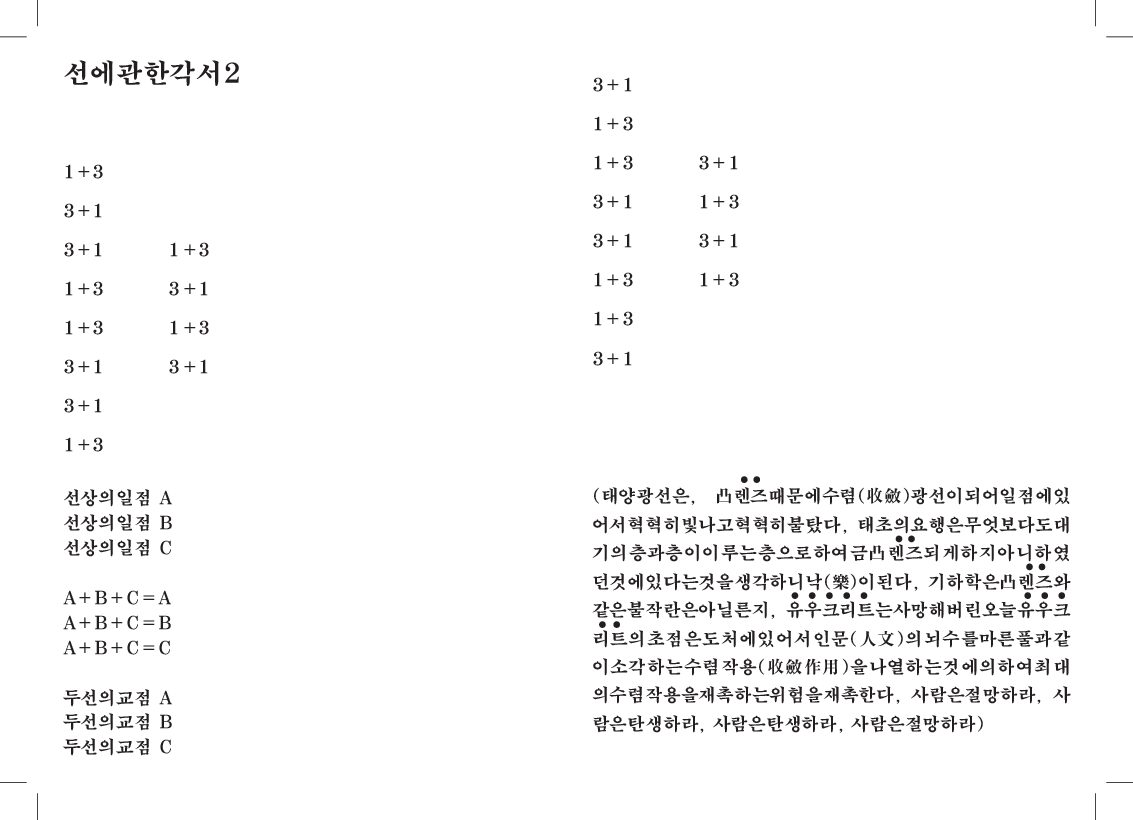
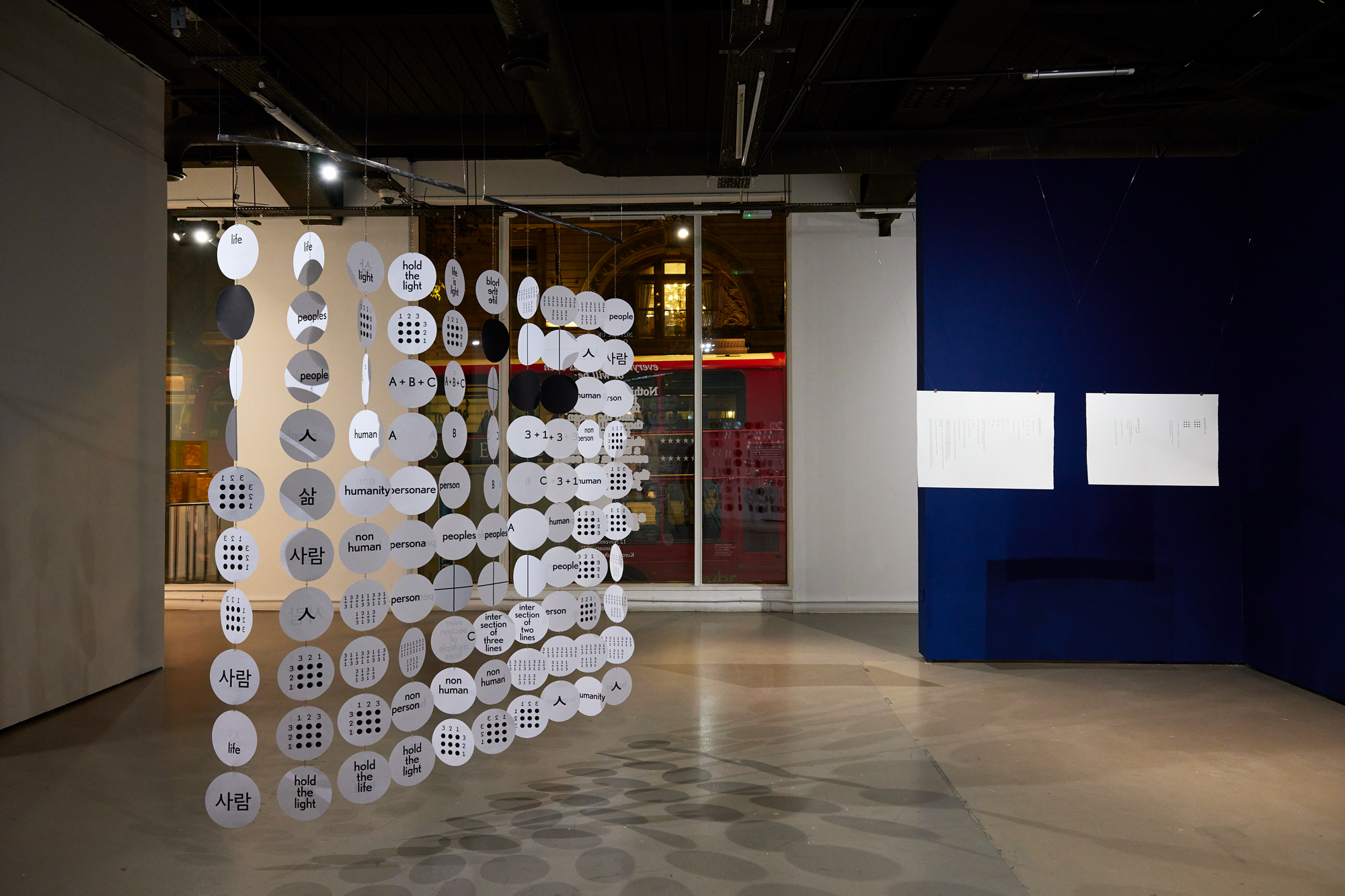
Solid Triangle Blueprint - Solid Triangle Blueprint was a textual and spatial intervention in the Korean poet and architect Yi Sang’s homonymous poem series Solid Triangle Blueprint and part of the larger project DidLineMurderCircle, or the Courses Between a White Zeppelin and Butterfly. The installation presented a mathematical intervention in and reconfiguration of the poem series, attending to the act of translation as a mode of linguistic performance—an indefinite rehearsal at the limits of translation—which was visualized typographically. The project was generously supported by Korean Cultural Center London and Berlin.
The Im/Possible Avant-Garde: Can We Talk About MAVO?
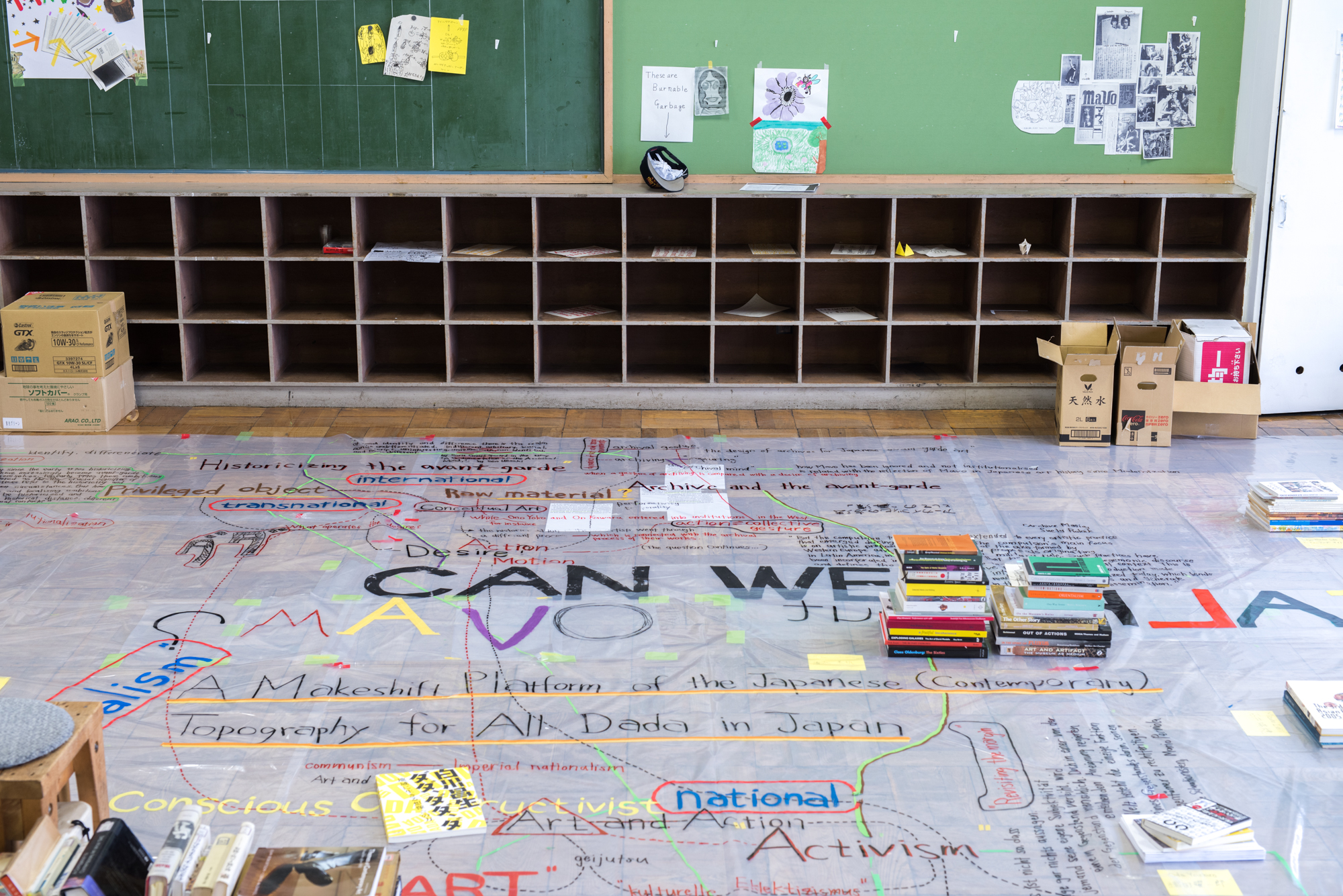
The Im/Possible Avant-Garde: Can We Talk About MAVO? - The artistic research project The Im/possible Avant-Garde: Can We Talk About MAVO? (2016-2019) looked into the Japanese art collective MAVO (active 1923-1926) whose practice is acclaimed as a counterpart to Western avant-gardes. The project intervened in this reception of MAVO, rethinking the im/possibilities of non-Western avant-gardes in geographical, social and aesthetic terms. Its focus was specifically on MAVO’s urban intervention in the wake of 1923 Great Kanto earthquake, particularly the “barracks” project in which the group members decorated the façades of temporary structures. MAVO’s artistic and cultural practice contains its own complexity; its relationship to the “original Western movements was often integrated into a national/imperial master narrative; its projects were anti-imperial; and yet, the members were blind to Japan’s colonial power and the massacres of Koreans in post-quake Tokyo. All these was interwoven in their activities as a collective. The project drew out this complexity by un/mapping some of the established connections, unsettling the cultural genealogy of the “avant-gardes” in which MAVO is often situated without complication. Working with artists, activists and scholars, the project reexamined the historical materials of MAVO through varied collective practices in the forms of pop-up library, 2-day assembly, installation and “walking exhibition” (collective walk and listening). The project was generously supported by Ishibashi Foundation/The Japan Foundation Research Fellowship, Bulegoa Z/B, MAP Fellowship/Seoul Foundation of Arts and Culture and ARCUS Project.
The Im/Possible Avant-Garde: Can We Talk About MAVO?
The Im/Possible Avant-Garde: Can We Talk About MAVO? - The pop-up library as its first iteration was organized as a way to open up a space for various gatherings and encounters. The library was created by collecting books from participants, both individuals and cultural institutions in Japan, upon the open letter as an invitation to the project. While books were arriving, and the library evolving, visitors freely engaged with the library and devised ways for participation over the period of two weeks. A panel discussion was organized as its part; the panels were Yoshio Shirakawa (artist and critic), Sen Uesaki (archive theorist), Toyama Koichi (activist/anarchist) and Andrew Maerkle (writer/editor).
The Im/Possible Avant-Garde: Can We Talk About MAVO?
The Im/Possible Avant-Garde: Can We Talk About MAVO? - Walking in the post-quake Tokyo was fraught with difficulties due to the deployment of the Imperial Army to suppress further disturbances; MAVO member Yanase Masamu was arrested for walking in the streets and imprisoned. For MAVO, a “necessary first step of any substantive renewal” was to construct a new society against the totalitarian reconstruction of the Imperial Capital after the quake. Some of MAVO’s most significant actions intended to violate architectural norms and practice “cultural anarchism” by using the disarray of post-quake Tokyo. Accompanied by sound pieces and reading performance, the project’s “walking exhibition” attended to these actions in the contemporary cityscape of Tokyo. The map used for the walk was adopted from the 1925 Tokyo map produced by the Japanese government as a preparatory work for the imperial reconstruction. It was re-appropriated and disrupted by annotating cultural and social activities of MAVO throughout the city collaboratively.
The Im/Possible Avant-Garde: Can We Talk About MAVO?
The Im/Possible Avant-Garde: Can We Talk About MAVO? - As a final outcome of the project, the installation engaged with MAVO’s homonymous magazine MAVO which incorporated slogans, statements, poems and visuals along with their actions. The installation visually and typographically re-navigated MAVO’s “cultural anarchism” By juxtaposing the magazine with the map for the “walking exhibition” which took place a year prior to this exhibition, the installation brought forward the collaborative, satiated and ephemeral elements of MAVO’s practice.
Aveugle Voix: Hommage Á Theresa Hak Kyung Cha
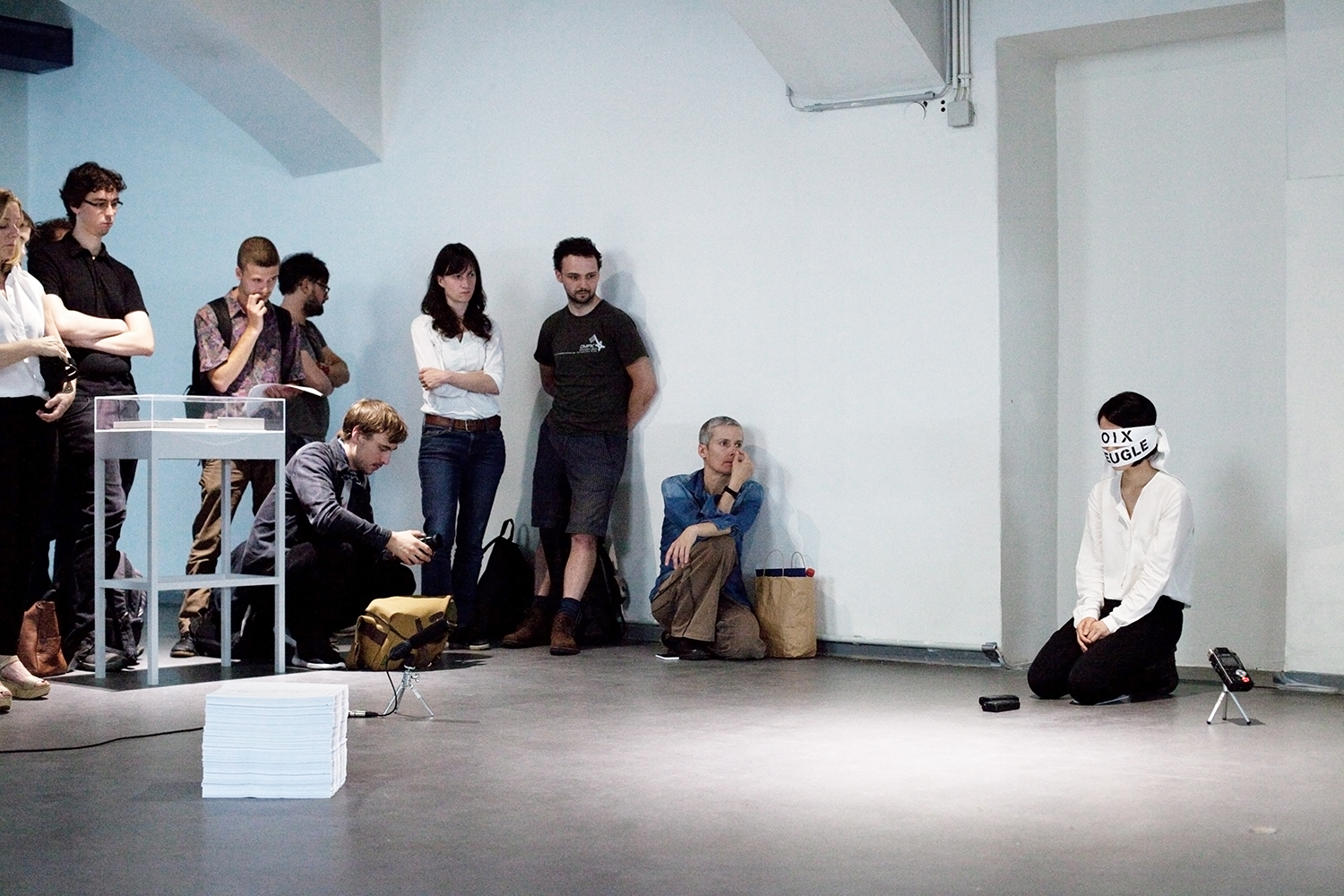
Aveugle Voix: Hommage Á Theresa Hak Kyung Cha - Drawing from the Korean American artist Theresa Hak Kyung Cha's 1970's performance Aveugle Voix, the performance Aveugle Voix: Hommage à Theresa Hak Kyung Cha (2016) engaged with language as a medium open to continuous reconfiguration through repetition, augmentation and obliteration. Seeing and speaking were partially hindered by the two blindfolds of the words “Aveugle”(blind) and “Voix”(voice) displayed inversely, shifting the significance of the meanings. Based on a performance script written in Korean, English, French and German, the speech was simultaneously recorded in two dictation devices, fabricated and composed by the playing, pausing, rewinding and fast-forwarding of the recordings. In this process, the speech remained incomplete, open to being remade and eventually vanished with the sound of tape material. A performance score, the blindfolds and dictation devices were exhibited after the performance.
To Bite the Tongue. Swallow. Deep. Deeper
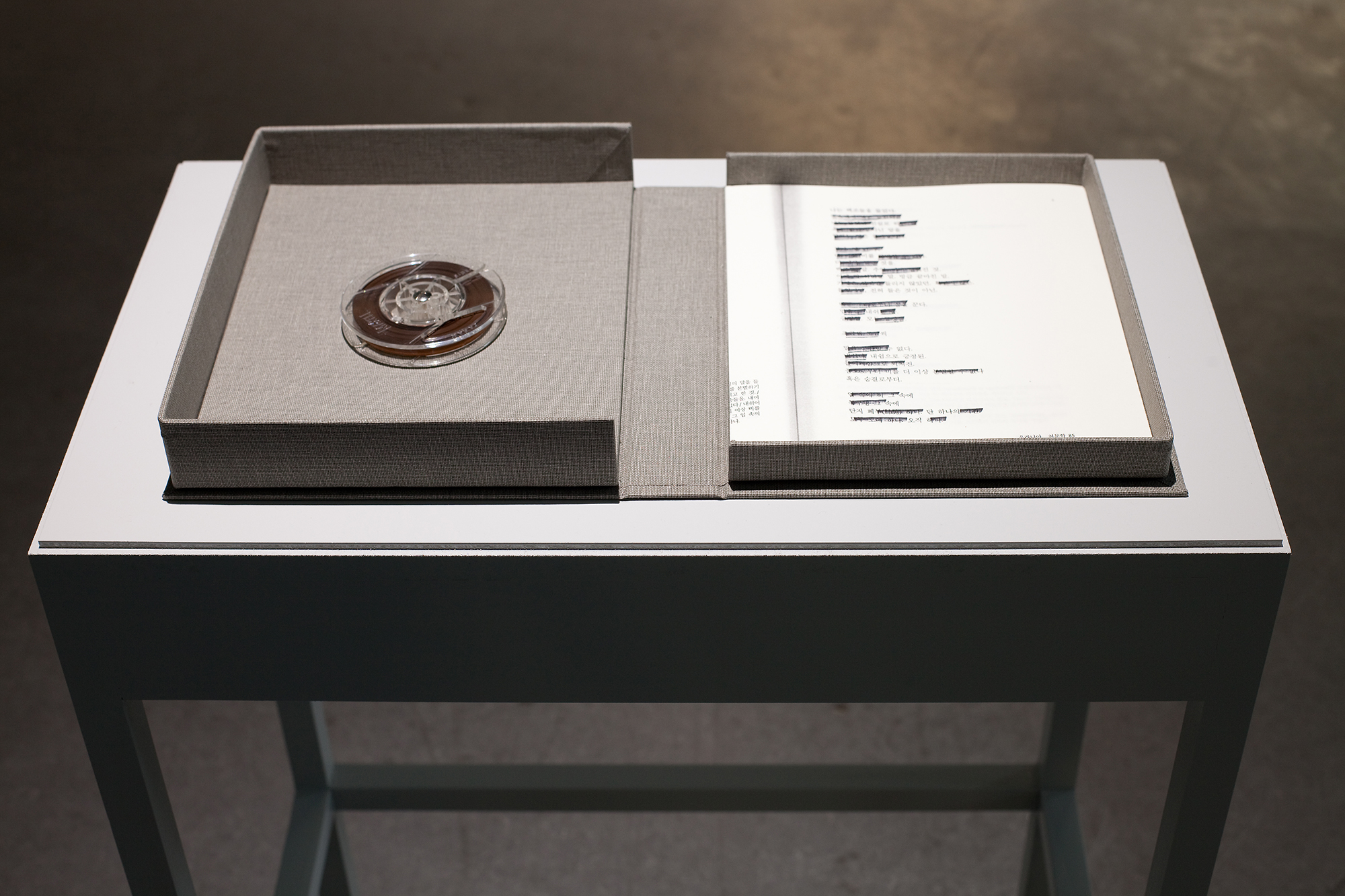
To Bite the Tongue. Swallow. Deep. Deeper - To Bite the Tongue. Swallow. Deep. Deeper (2015) performed an untitled poem from the Korean American artist Theresa Hak Kyung Cha's DICTEE. The poem was originally written in French and English facing each other on opposite pages. Seemingly translated from the French into the English at first sight, the poem is not a mere translation between the two languages, but rewritten by interfering one language to another, crossing stanzas and displacing meanings. The performance was carried out in three different acts simultaneously: hearing the French poem recorded by a native speaking performer, and this recording was hidden from the audience; speaking the English poem; and marking the paper copy of the Korean translation of the poem. The performance was marked by the playing, pausing, rewinding and fast-forwarding of the French recording, turning into a broken speech and a murmur—something barely recognizable. It practiced the embodiment of speech at the limits of language and translation, even as proposing a new mode of communicability open in public. The performance was carried out fourteen times, both privately and in public. Marked paper copies (14 copies, 56 pieces of paper) and a reel-to-reel tape used for the performance were exhibited during and after the performance.

In Between Seances

Datum:
Locatie: Het Nieuwe Instituut
In samenwerking met: Dutch Art Institute, Het Nieuwe Instituut

In Between Seances

Datum:
Locatie: Kunstraum Niederoesterreich
In samenwerking met: Kunstraum Niederoesterreich

In Between Seances

Datum:
Locatie: Kunstraum Niederoesterreich
In samenwerking met: Kunstraum Niederoesterreich

Installation of In Between Seances in the group exhibition Leakage, Breaching, Motley Tongues at Kunstraum Niederoesterreich.

Leakage, Breaching, Motley Tongues

Datum:
Locatie: Kunstraum Niederoesterreich
In samenwerking met: Kunstraum Niederoesterreich

Co-curation of the exhibition entitled Leakage, Breaching, Motley Tongues.

[Un]learning through illness

Datum:
Locatie: Bau
In samenwerking met: ARIAS, Platform for Research through the Arts & Sciences

A gathering and workshop in collaboration with Nienke Scholts and Erica Biolchini

Troubling Archive

Datum:
Locatie: BAK, basis voor actuele kunst
In samenwerking met: BAK, basis voor actuele kunst

A day-long as- sembly open to the public with presentations, working groups, and discussions conceptualized, developed, and lead by Özge Acikkol, Gatari Surya Kusuma, Yen Noh, and Rifandi Nugroho, together with Massimiliano Molona and Nora Sternfeld (freethought).

In Between Seances

Datum:
Locatie: BAK, basis voor actuele kunst
In samenwerking met: BAK, basis voor actuele kunst, Arts Council Korea, Mondriaanfonds

In Between Seances employed the Korean American artist Theresa Hak Kyung Cha's prose poetry DICTEE and her larger œuvre as a research and pedagogical methodology. The work consisted of a collective study program and an evolving installation—a "study site" in which the study program took place during the exhibition.

https://www.bakonline.org/en/making+public/program/open+call+in+between+seances/
Deze kunstenaar heeft nog geen toekenningen.