Yunjoo Kwak

Globalisering , Geschiedenis , film , Experimenteel , Documentair , Digitale technologie , Dekolonisatie , cross-over , Audiovisueel , Artistiek onderzoek , Archieven

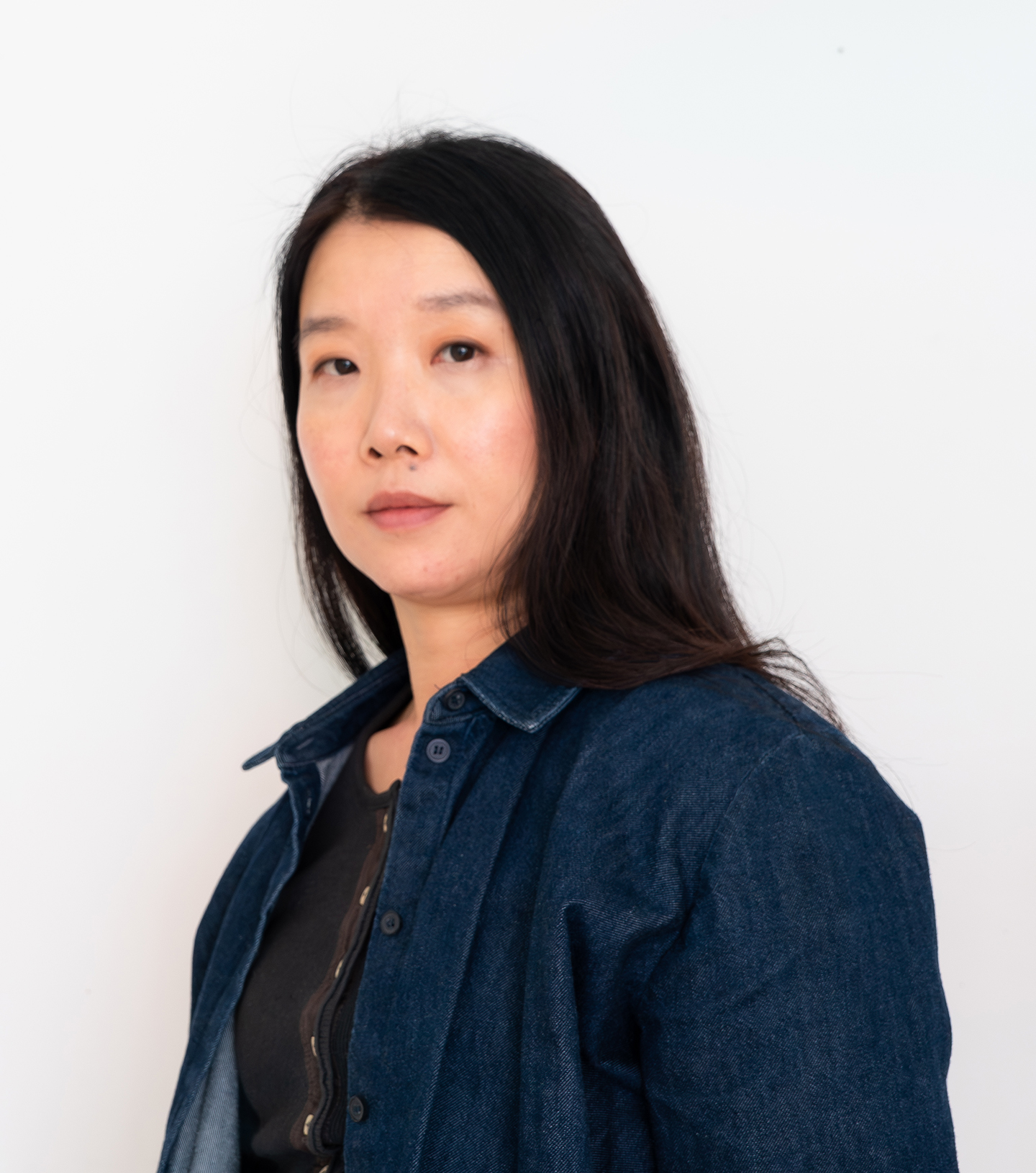
My practice is research-based and process-oriented, and often develops through the social and spiritual engagement with others and their communities. My projects have been focusing on a range of projects from across different geographic locations and situations with the disciplines of moving image, 3D animation, photography, digital montage and the archiving. Through the process of filmmaking I investigate the intersections of architecture, colonial history and trauma. I am particularly interested in the framework of colonialism, specifically how the remnants of colonialism and the notion of silence as a form of violence—shaped by Cold War ideology and Western militarism—have been imposed upon everyday society and life. My filmmaking process involves gathering archives, documents, images and sounds, testimonies, arguments, dialogues, and memories including personal engagement with different disciplines. My roles in the process continually shift—from anthropologist to historian to journalist to detector to assistant—which allows different narratives to emerge and take shape. Imaginative engagement with that which has been rendered invisible is also fundamental to my artistic practice.
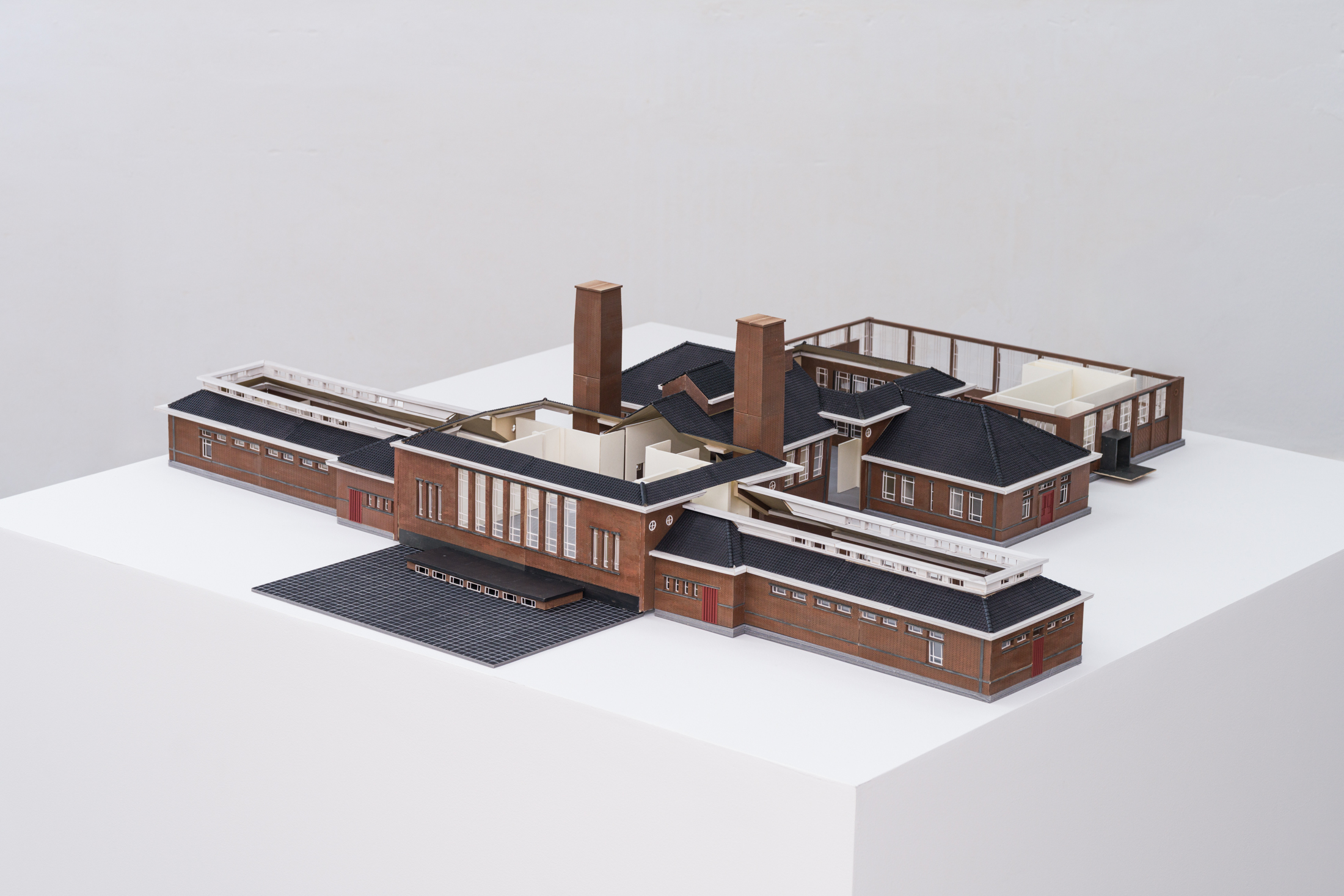
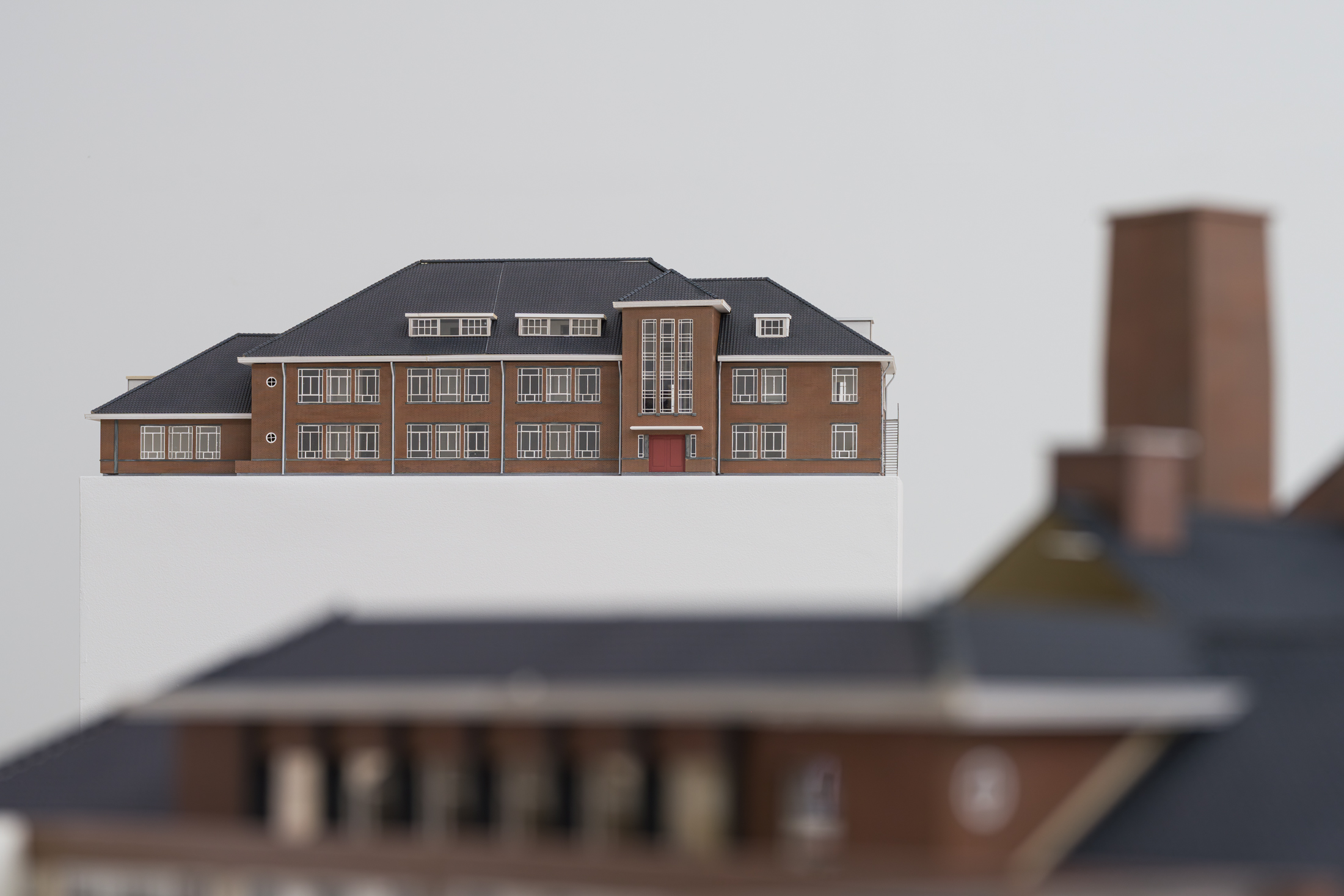
Generaal de Bons Barracks, Building H, 2026, 1:50 scale architectural model
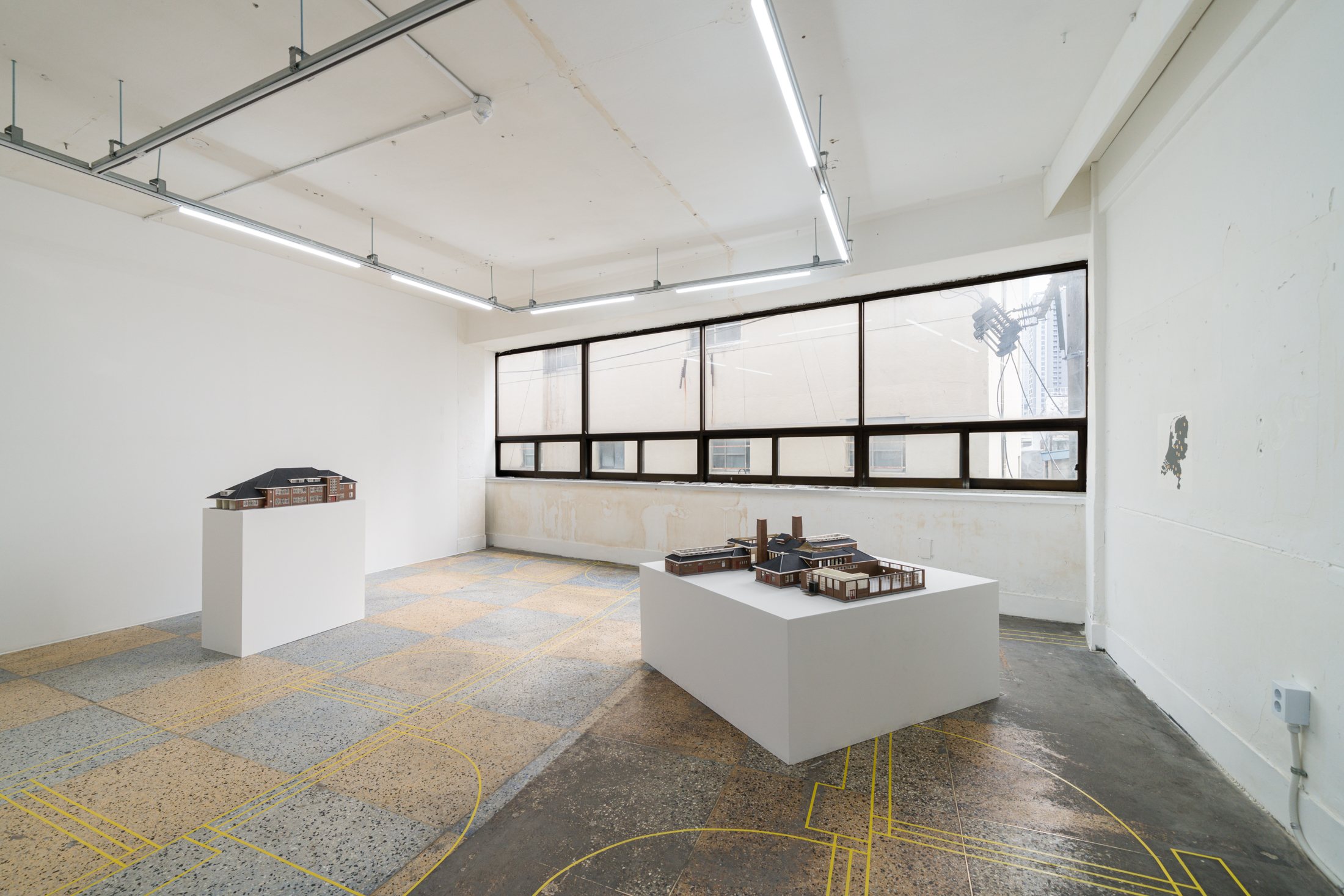
Generaal de Bons Barracks, Building H, 2026, 1:50 scale architectural model, 3D printed, 2026 - Installation view: Generaal de Bons Barracks, Building H, Alternative Space LOOP, Seoul 1:50 scale architectural maquette, 3D-printed, acrylic paint, 90 × 110 × 135 cm, 2026 The artist constructed a 1:50 architectural model of Building E, tracing its transformation from a military facility into a refugee shelter and, most recently, a senior living complex currently under construction. The miniature allows visitors to take in the overall structure of the site and encounter its layered history at a glance. By physically moving through the full-scale floor plan, visitors can also sense the scale and density of the space, activating the site's historical trajectories through their own bodies. Through this juxtaposition of miniature and full-scale reconstruction, the artist invites viewers to physically experience and imagine how different histories—war, colonialism, the Cold War, and displacement—accumulate within a single site, resurface, and continue to shape the present.
Generaal de Bons Barracks, Building E, 2026, 1:50 scale model
Generaal de Bons Barracks, Building E, 2026, 1:50 scale architectural model, 3D printed, 2026 - Installation view: Generaal de Bons Barracks, Building E, Alternative Space LOOP, Seoul 1:50 scale architectural maquette, 3D-printed, acrylic paint, 30 × 34 × 100 cm, 2026
The Chronicle of Boost Barracks
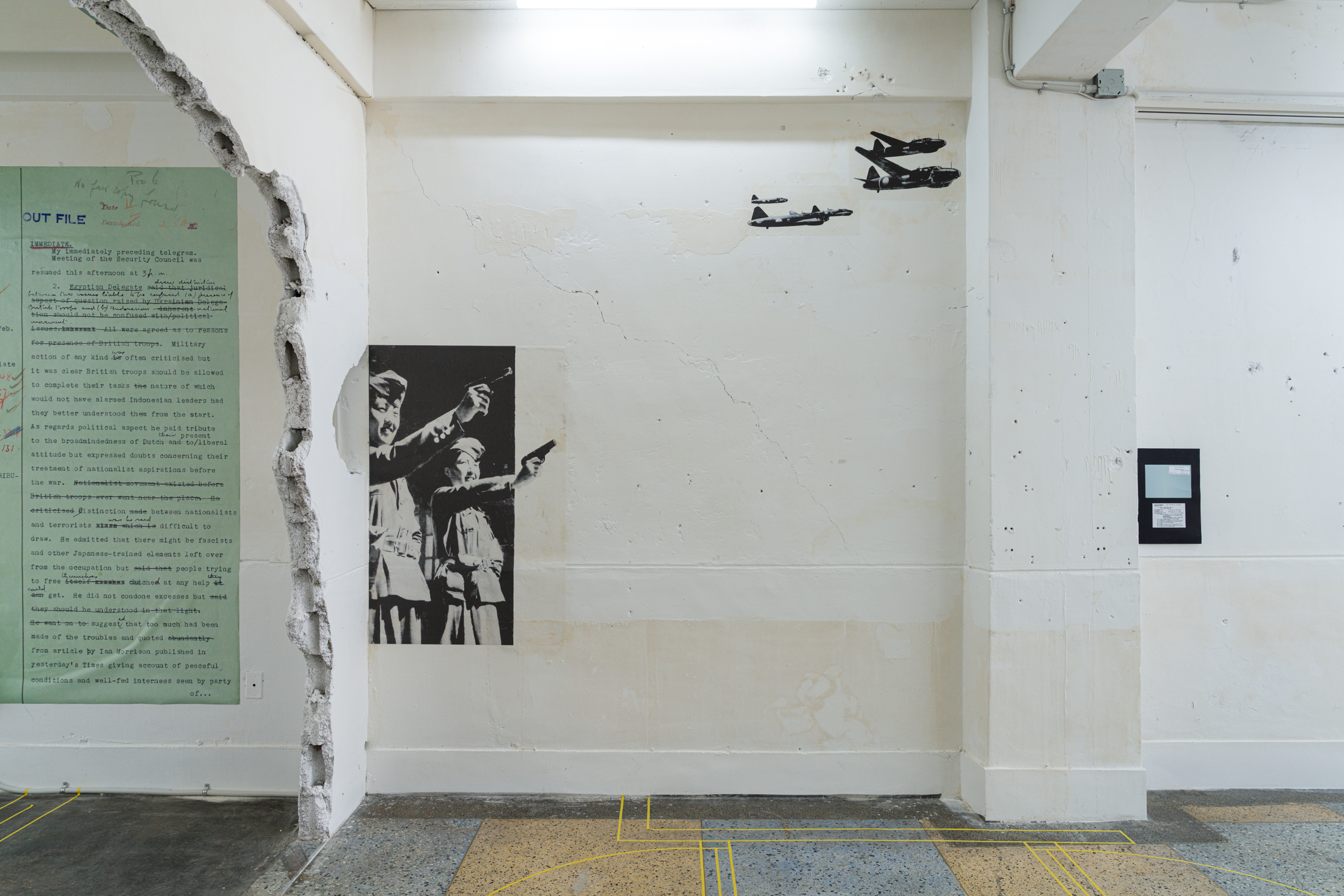
The Chronicle of Boost Barracks_installation view, Alternative Space Loop, Seoul, 2026 - (Left) Telegram image of a UN Security Council document concerning the Police Action in Indonesia, 1947, digitally printed and glued on the wall (Middle) images from the Japanese propaganda magazine Jawa Baru, 1943, printed on rice paper and installed on the wall (Right) logbook of Ms.Evertsen between 1948 - 1951, digital print and glued on the wall
The Chronicle of Boost Barracks
The Chronicle of Boost Barracks_installation view, Alternative Space Loop, Seoul, 2026 - The artist constructed a 1:50 architectural model of Building E, tracing its transformation from a military facility into a refugee shelter and, most recently, a senior living complex currently under construction. The miniature allows visitors to take in the overall structure of the site and encounter its layered history at a glance. By physically moving through the full-scale floor plan, visitors can also sense the scale and density of the space, activating the site's historical trajectories through their own bodies. Through this juxtaposition of miniature and full-scale reconstruction, the artist invites viewers to physically experience and imagine how different histories—war, colonialism, the Cold War, and displacement—accumulate within a single site, resurface, and continue to shape the present.
The Chronicle of Boost Barracks
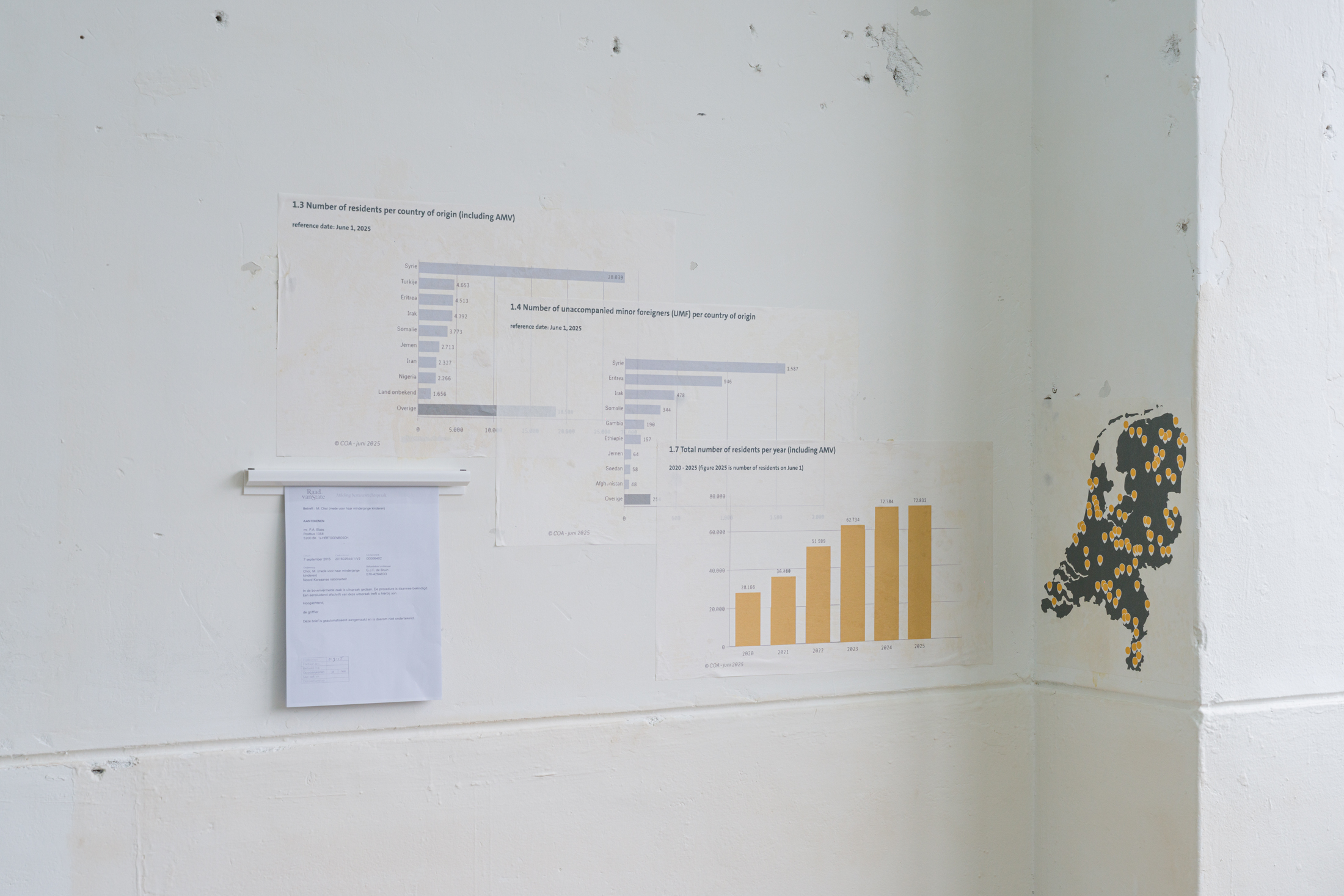
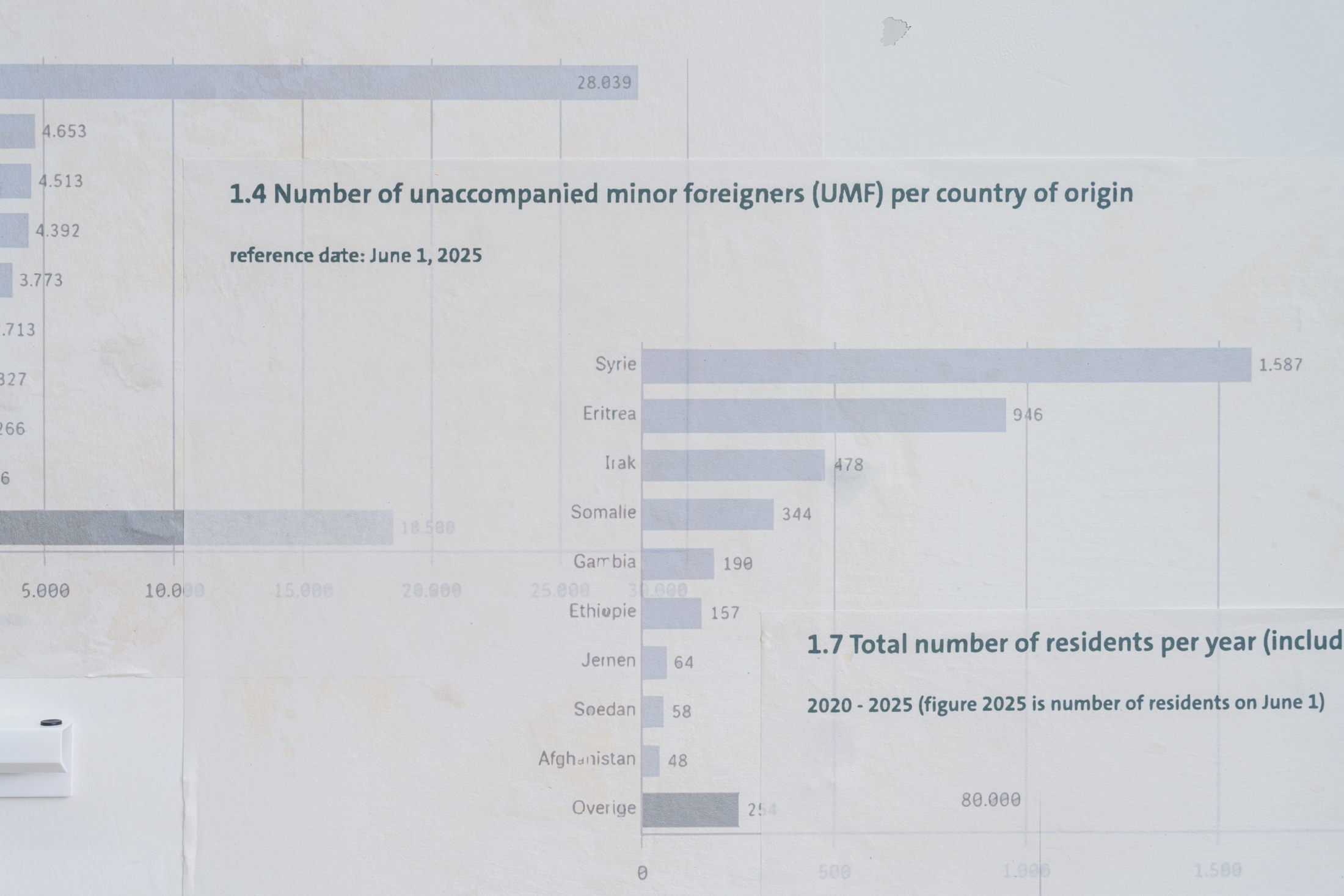
The Chronicle of Boost Barracks - (Left) Rejection letter issued by Dutch court to Choi, a North Korean refugee, from a private collection (Middle) Graphic showing the number of asylum seekers in the Netherlands, source: COA (Centraal Orgaan Opvang Asielzoekers) (Right) Graphic showing the locations of asylum seekers centers in the Netherlands on the map, sources: COA
The Chronicle of Boost Barracks
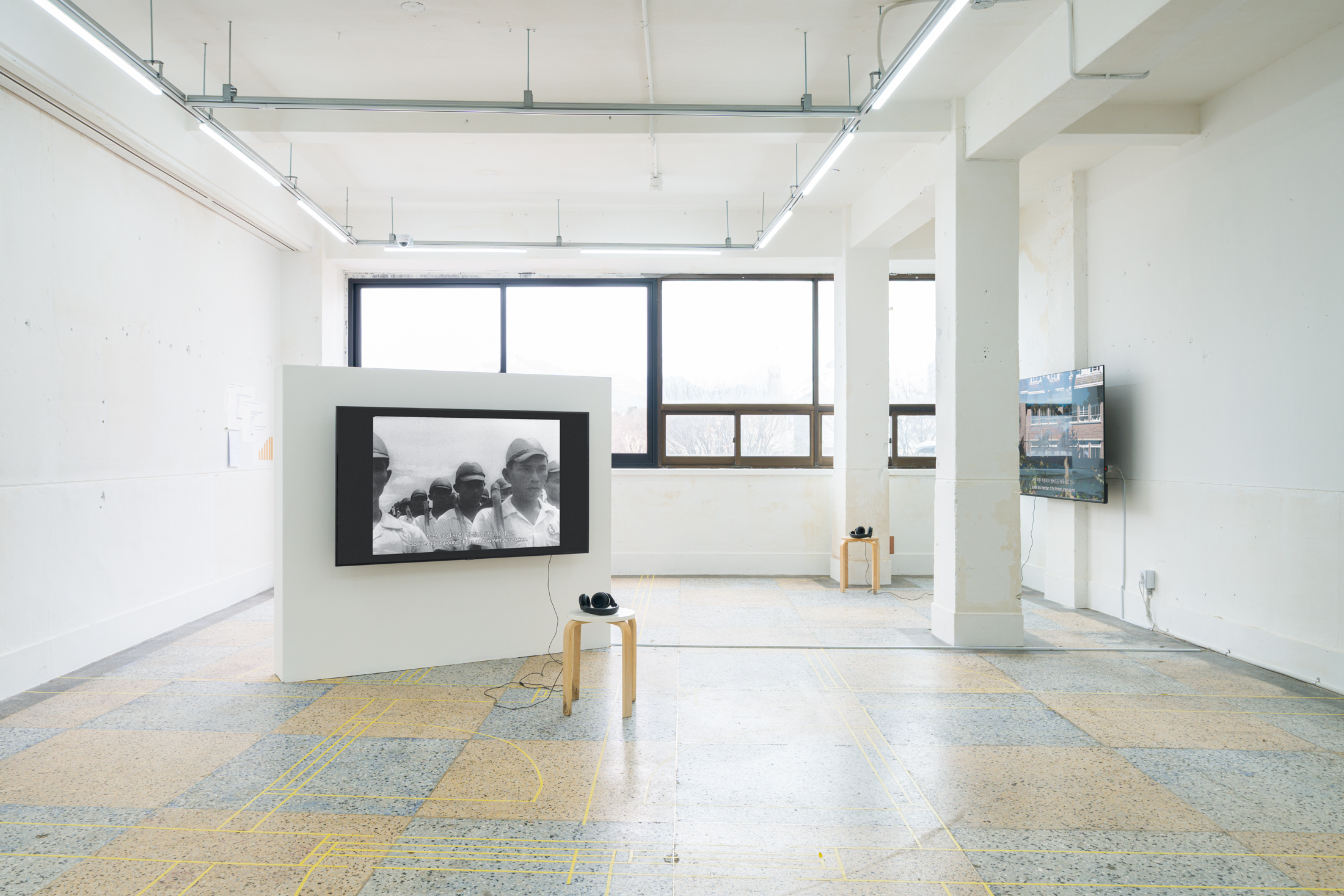
The Chronicle of Boost Barracks _installation view, Alternative Space Loop, Seoul, 2026
The Chronicle of Boost Barracks
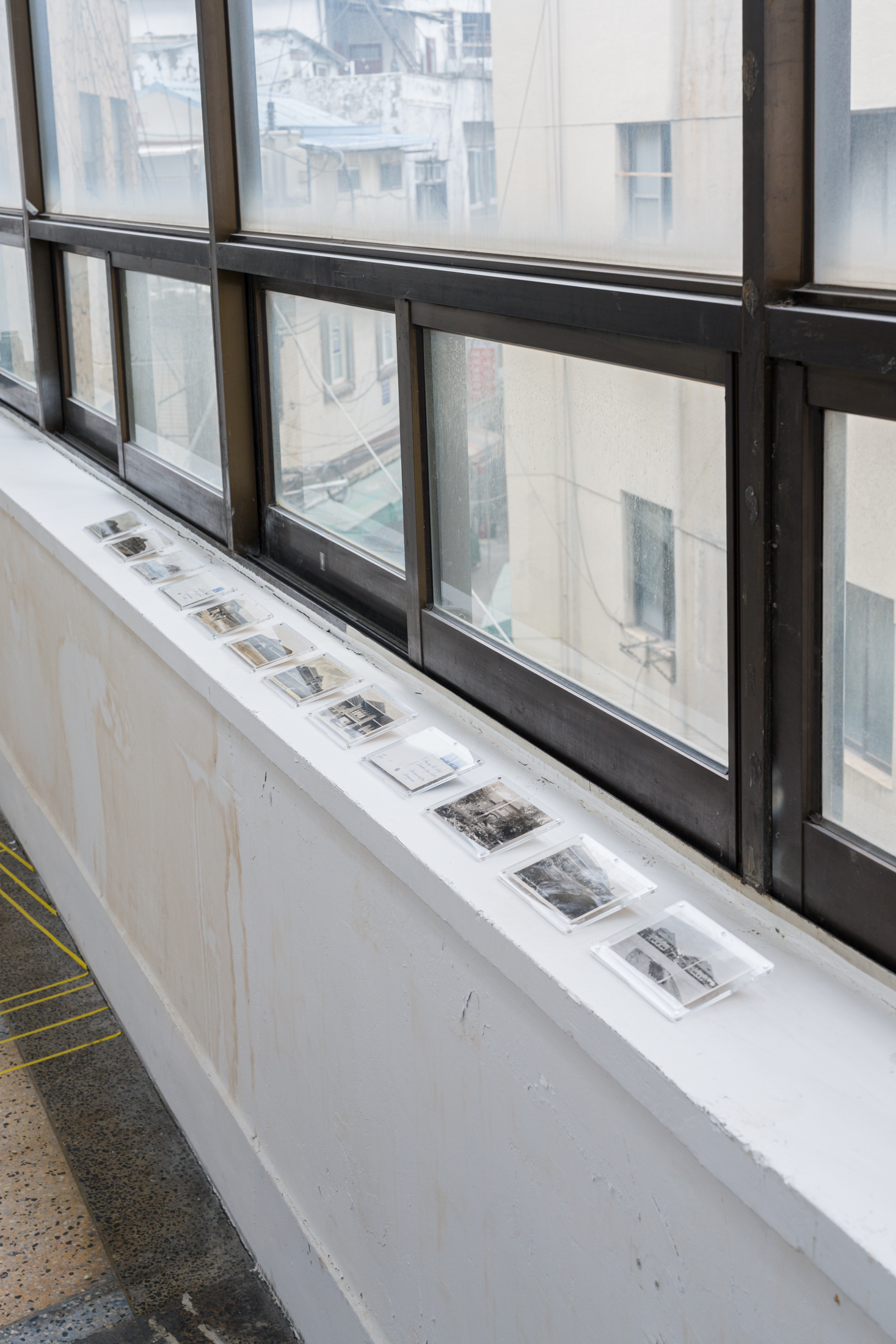
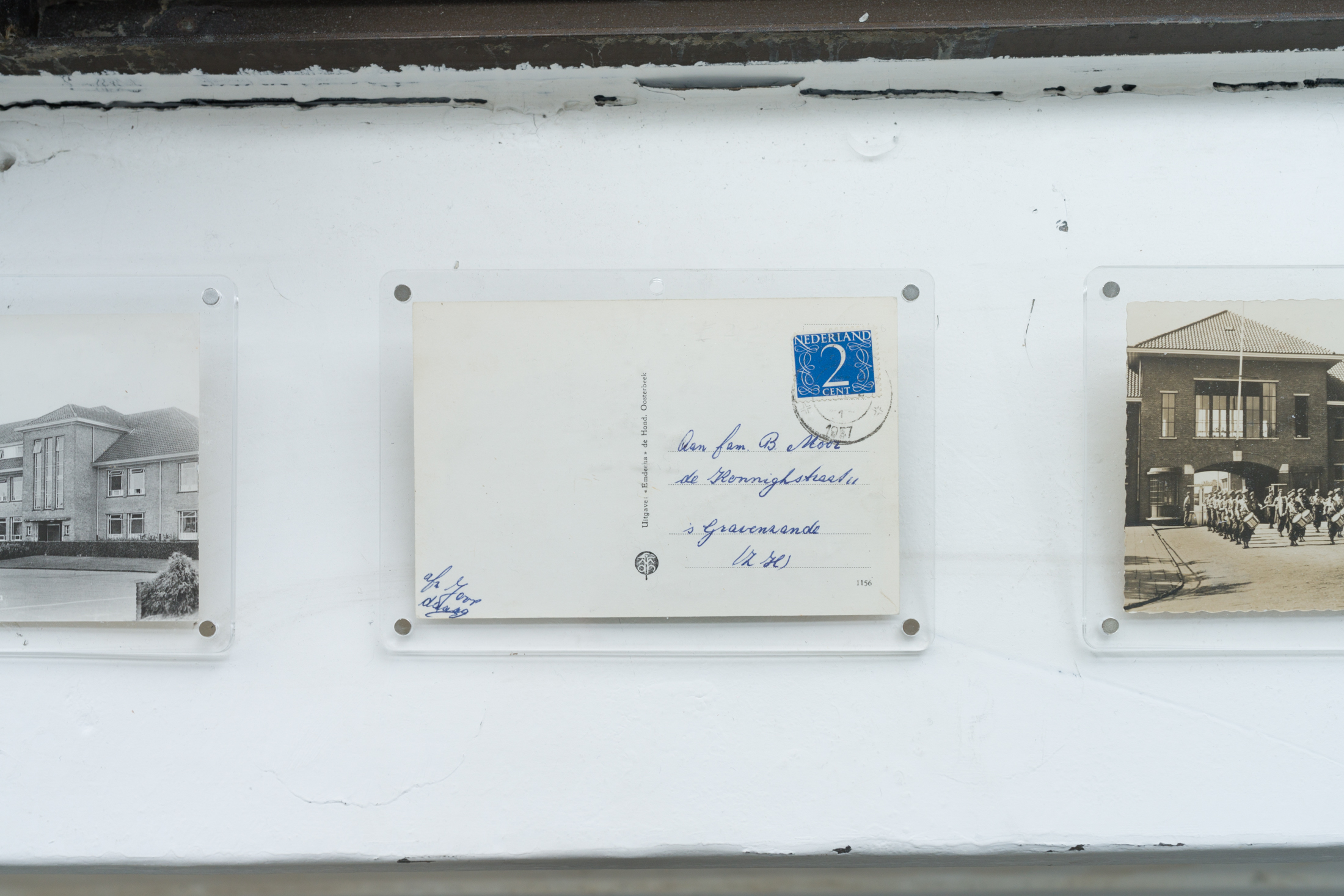
The Chronicle of Boost Barracks - Old postcard series of Boost Barracks, 2017 — 2022, installation view, Alternative Space LOOP, Seoul, 2026
The Chronicle of Boost Barracks, solo show, Alternative Space Loop, Seoul, 27 Feb-30 Mar 2026
The Chronicle of Boost Barracks
The Chronicle of Boost Barracks, solo exhibition, Alternative Space Loop, Seoul, 27 Feb-30 Marc 2026
The Chronicle of Boost Barracks, solo show, Alternative Space Loop, Seoul, 27 Feb-30 Mar 2026
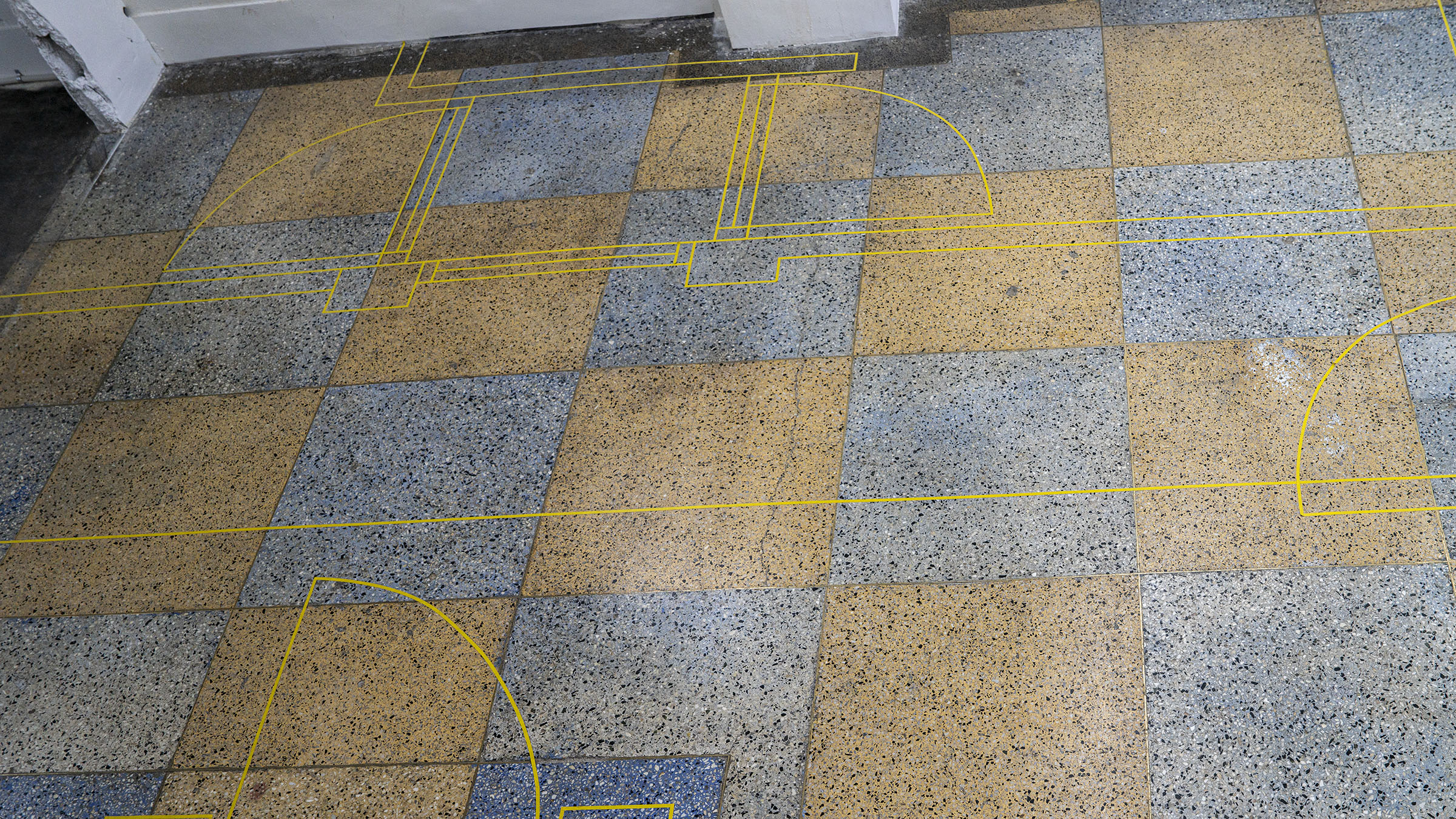
The Chronicle of Boost Barracks, solo show, Alternative Space Loop, Seoul, 27 Feb-30 Mar 2026 - The artist constructed a 1:50 architectural model of Building E, tracing its transformation from a military facility into a refugee shelter and, most recently, a senior living complex currently under construction. She also recreated the second-floor space—once used as actual accommodation and bearing the traces of these successive transformations—at a 1:1 scale on the exhibition floor using architectural drawing tape. The miniature allows visitors to take in the overall structure of the site and encounter its layered history at a glance. By physically moving through the full-scale floor plan, visitors can also sense the scale and density of the space, activating the site's historical trajectories through their own bodies. Through this juxtaposition of miniature and full-scale reconstruction, the artist invites viewers to physically experience and imagine how different histories—war, colonialism, the Cold War, and displacement—accumulate within a single site, resurface, and continue to shape the present.
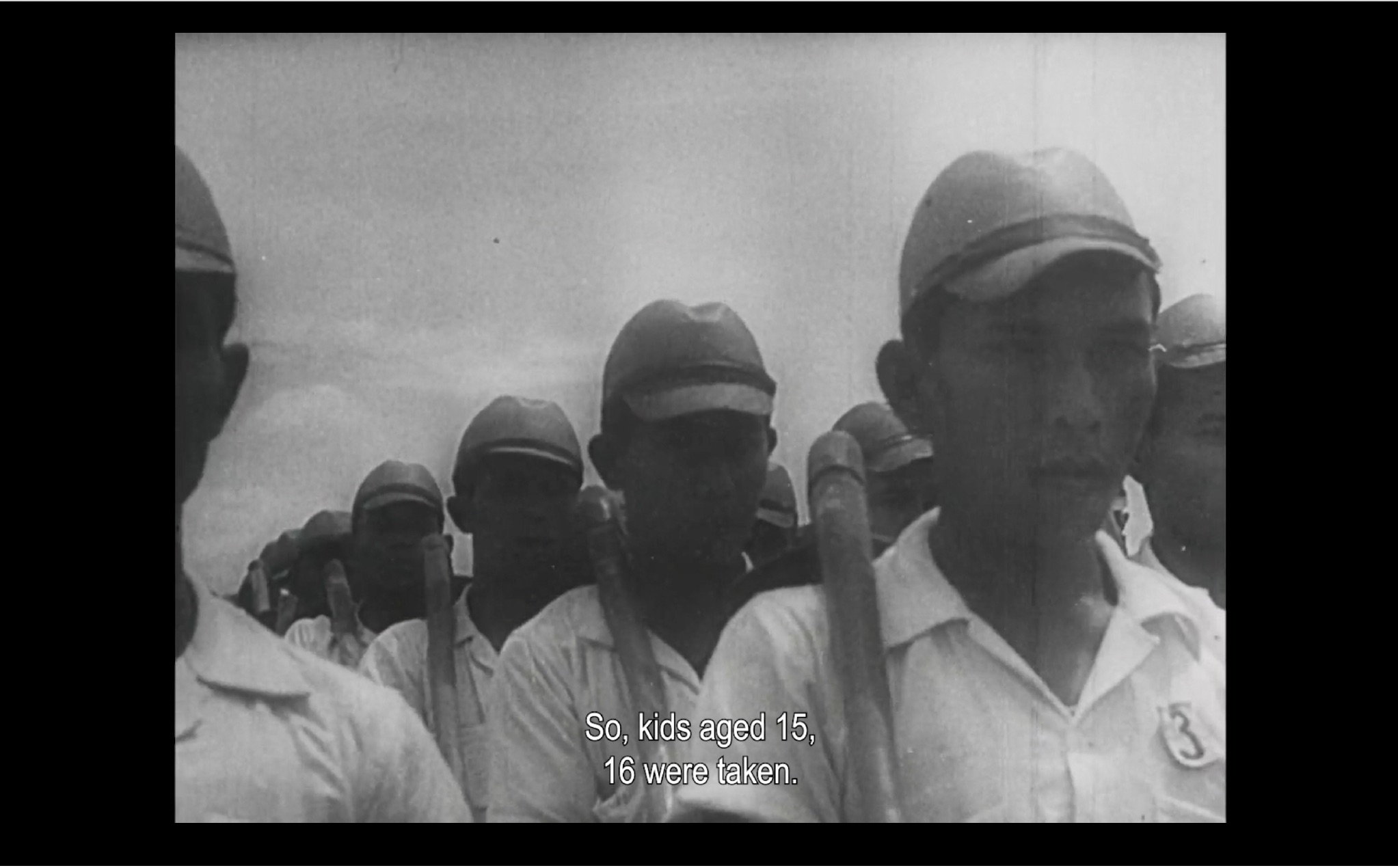
Interview — Amad, 7:40mins, HD, color, B&W, sound, 2019 — 2025
Interview — Amad, 7:40mins, HD, color, B&W, sound, 2019 — 2025 - Amad, born in Surabaya in 1929, under the Dutch colonial rule, was conscripted as a Heiho auxiliary soldier under Japanese command during the occupation of Indonesia (1943–1945). I met him at a memorial ceremony at the Dutch war cemetery in Surabaya and interviewed him at his home in May 2018, with Anitha Silvia interpreting. After returning to the Netherlands, I discovered archival Japanese wartime propaganda films seized by Dutch authorities after Japan’s surrender. Made public in 2020 following research by Beeld en Geluid at NHK’s request, this footage was edited together with Amad’s testimony and footage of the memorial ceremony. LINK: https://vimeo.com/1233313861/84e76ca3da?share=copy&fl=sv&fe=ci
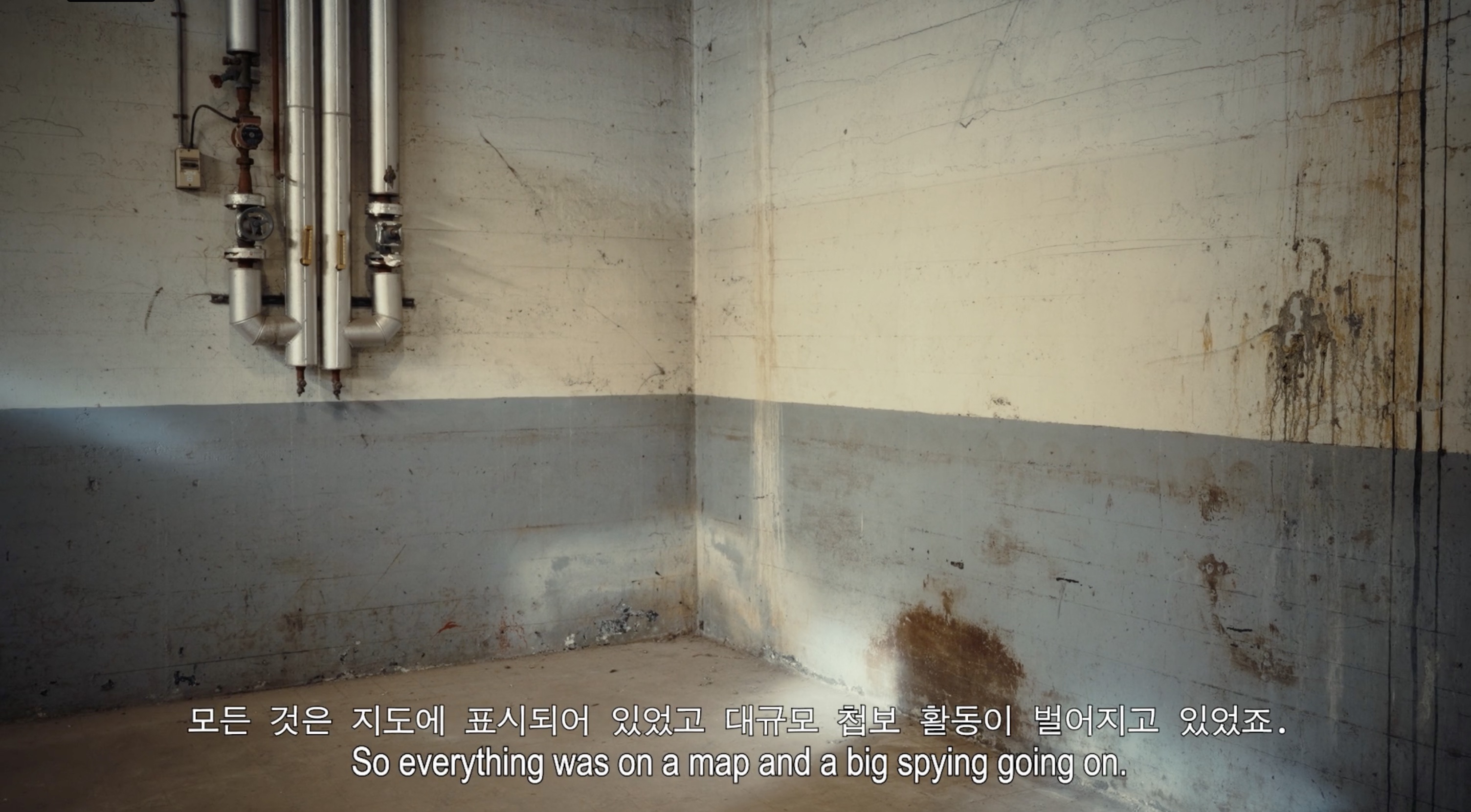
Interview — Peter, film still cut, 4K, 4mins, color, sound, 2017 — 2025
Interview — Peter, 4K, 4mins, color, sound, 2017 — 2025 - Peter, a Dutch military veteran, was born in 1957 in the small village of Eefde and was conscripted under the law at the time. He served for 24 months at Detmerskazerne, one of the Boost Barracks, where he specialised in radio interception and telegraphy—a skill that later became a lifelong hobby in amateur radio. I met Peter by chance in 2017 while filming the barracks and its surroundings. My presence, an Asian woman wandering through a quiet Dutch village with a camera, must have seemed unusual. He approached me and asked, “Do you know what this building is?” I answered as best I could, and my knowledge surprised him. He invited me to his home and agreed to a filmed interview, in which he shared memories of his work intercepting radio transmissions during the Cold War. LINK: https://vimeo.com/1233314817/9ed3c44e11?share=copy&fl=sv&fe=ci
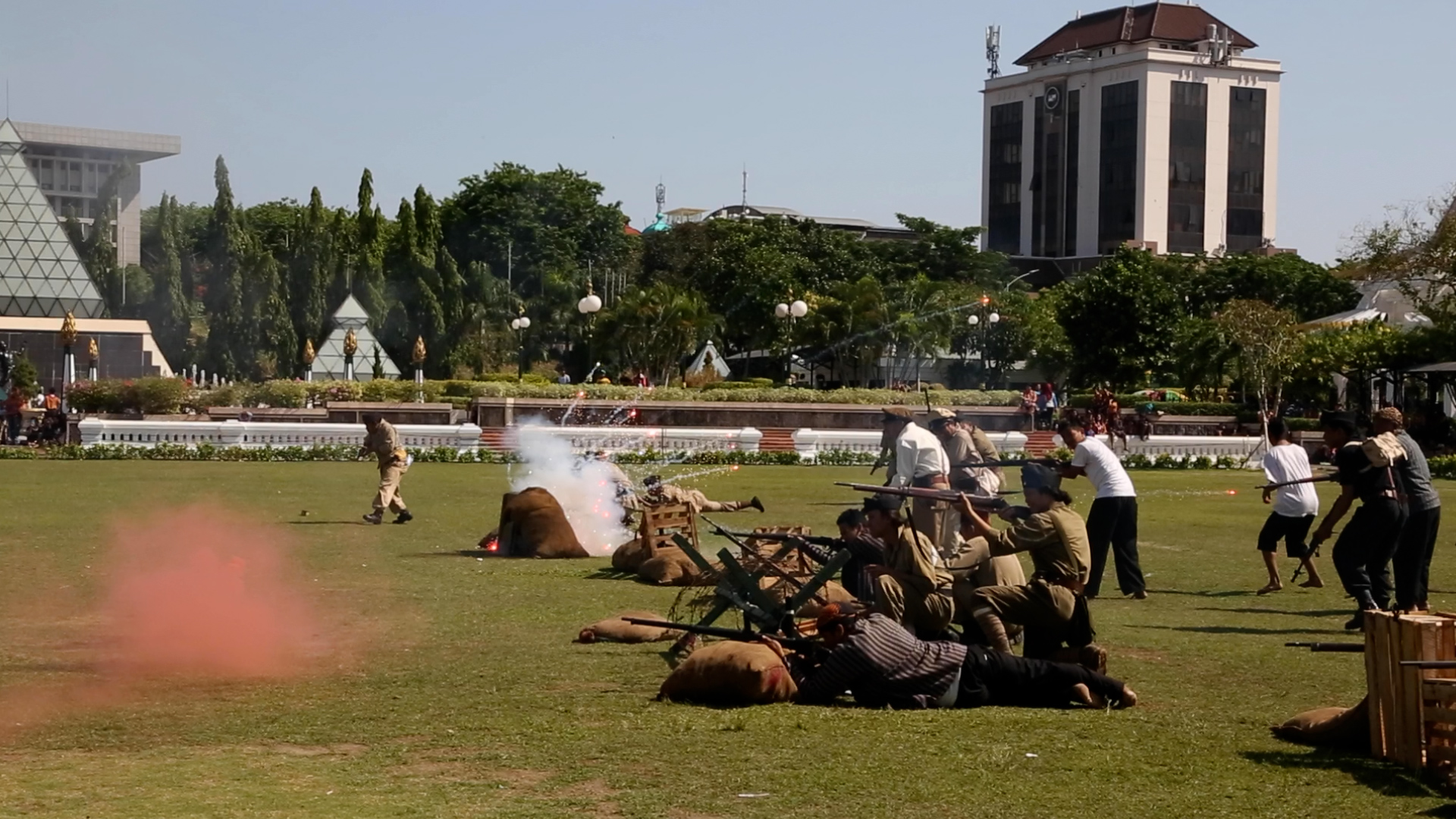
Holy Territory, film still cuts, 16mins, HD, color, B&W, sound, 2019 — 2026
Holy Territory, 16mins, HD, color, B&W, sound, 2019 — 2026 - Holy Territory is an epic performance I witnessed in Surabaya in 2019. Staged monthly by the Roodebrug Surabaya community as part of its activities, this historical re-enactment takes place at Tugu Pahlawan, a landmark in the city centre built on the site of the former Dutch Supreme Court, destroyed during the Battle of Surabaya. The performance commemorates Indonesian independence while also educating the public about the battle, in which Indonesian fighters resisted the return of Dutch colonial rule after Japan’s defeat and the Dutch military operations euphemistically described as “police actions.” (Half of the Boost Barracks were used in these operations.) As a ritual of living memory, the performance transforms this public space into a theatre where past and present collide. It summons the ghosts of Japanese, British, and Dutch forces through gunfire, smoke, uniforms, and the moving bodies of performers. Living citizens re-enact the violence of colonial war, compressing historical time into a shared present. LINK: https://vimeo.com/1233315738/29c11dfcf4?share=copy&fl=sv&fe=ci
Becoming Stones, solo exhibition, with the rubbles of old palaces, Berlin 28 June - 26 July 2024
Becoming Stones, solo exhibition, with the rubbles of old palaces, Berlin 28 June - 26 July 2024 - Yunjoo Kwak’s solo exhibition “Becoming Stones” looks at the process of spiritual recovery in the aftermath of the 4.3 massacre through a series of Jeju shamanic rituals. These practices have become a way to process trauma through generations, a means to break the silence of political oppression, and a way through which to survive life. This project attempts to shift shamanic discourse into the wider public realm by sharing their ongoing practice. During these rituals, the Jeju myth’s 18,000 spirits and the life stories of the people who died in 1948 come together to weave a history of their sorrow and violence, enabling the processing of trauma. The physical, psychic, and emotional impacts of trauma go beyond the limits of the dominant historical archive and its knowledge. Through the documentary’s images, one can hear the ancestors speak through the body of the Simbang. In what ways can tragedy and a history of violence be transformed into life-giving forces of healing?
Table for Yeom One (念願): to the god of the boiler room, Gimnyeong, 70 x 50cm, digital C-print, 2024
Table for Yeom One (念願): to the god of the boiler room, Gimnyeong, 70 x 50cm, digital C-print, 2024 - In Korean, 염원 (念願: Yeom One) is untranslatable into English. It encapsulates a profound sentiment, surpassing mere desires, wishes, or hopes. It embodies a fervent longing, deeply rooted in the psyche, shaping one's perception and actions. This concept is particularly resonant among the islanders of Jeju, reflecting their reverence for the Goddess of the sea and wind. On Jeju Island, this reverence manifests in approximately 40 shamanic rituals held across coastal villages from New Year's Day until the end of February in the lunar calendar. The Jeju Special Self Governing Province financially supports these rituals as it’s their living tradition. The production of these rituals involves the participation of Haenyeo, the diving women of Jeju and various setting of the table to the Goddess. These visual portrayals of different set of tables by different simbang (Jeju shamans) manifests the intimate connection between the people of Jeju, their spiritual beliefs and the nature. It a poignant testament to their unwavering devotion and the enduring legacy of their cultural heritage.
Table for Yeom One by Simbang Oh Yonggbu, Gosung-ri, Seogwipo-si, 2024, digital c print, 50x70cm - In Korean, 염원 (念願: Yeom One) is untranslatable into English. It encapsulates a profound sentiment, surpassing mere desires, wishes, or hopes. It embodies a fervent longing, deeply rooted in the psyche, shaping one's perception and actions. This concept is particularly resonant among the islanders of Jeju, reflecting their reverence for the Goddess of the sea and wind. On Jeju Island, this reverence manifests in approximately 40 shamanic rituals held across coastal villages from New Year's Day until the end of February in the lunar calendar. The Jeju Special Self Governing Province financially supports these rituals as it’s their living tradition. The production of these rituals involves the participation of Haenyeo, the diving women of Jeju and various setting of the table to the Goddess. These visual portrayals of different set of tables by different simbang (Jeju shamans) manifests the intimate connection between the people of Jeju, their spiritual beliefs and the nature. It a poignant testament to their unwavering devotion and the enduring legacy of their cultural heritage.
Simbang, 08min 50sec of 60mins
Simbang, 08min 50sec of 60mins - The feature film Simbang explores the process of spiritual recovery in the aftermath of the 4.3 Massacre by combining found footage taken by American military forces during the massacre with documentation of rituals held at various locations across the island. On Jeju island, “심방” (Simbang; 神房) refers to a shaman. “神” (sim) means spirit, and “房” (bang) means space or room, translating directly into a spirit room or spirit space, thereby evoking a spatial aspect of their beings in connection to the unseen world, yet powerfully sensible through the ritual. The camera follows all steps of the ritual; calling forth gods and spirits, welcoming them both on land and underwater, serving them with offerings, playing music and dancing, communicating with them, purging evil energies from the spirit and clients, and sending the spirits away back to their realm. During these rituals, the Jeju myth’s 18,000 gods and the life stories of the people who died in 1948 come together to weave a history of their sorrow and violence, enabling the processing of trauma. The physical, psychic, and emotional impacts of trauma go beyond the limits of the dominant historical archive and its knowledge.
Stone of Fury - A short 3D animation, Stone of Fury offers a meditative imagination of the life and death of the victims of 4.3 incident in 1948, Jeju Island, South Korea. The unrealistic, yet enigmatic shapes and movement of smoke and fire is a process of ritualisation for the imagination to flourish and expand beyond the unspoken narratives. Utilising LiDAR scanning of the stone tower from Jeju, I created a 3D simulation to ritualise the movement of the smokes and fires.
FILM: Only The Ports Are Loyal To Us, 16mins, 2020 - Only the Ports Are Loyal to Us reflects on the colonial history and the port ecology that connects two port cities: Amsterdam and Surabaya. The work is a journey through archival and contemporary images of each place, through which colonial legacies on both continents are revealed. The film footage is varied, including engraved prints of colonial ships from the 17th century, floor plans of warehouses along the IJ, and a slideshow of the ship Jan Pieterszoon Coen departing from Amsterdam and docking at the port of Tanjung Perak in Surabaya. The film invites viewers to float through a dark space, which is constructed with archival images that are now obsolete. LINK: https://vimeo.com/1122739971?fl=tl&fe=ec&share=copy
The Boost Barracks_vintage postcard collection, 2016 - work in progress - Research summary: In the 11 months before World War II, 18 military barracks were rapidly constructed. Located along the Southeastern border of the Netherlands, these barracks were designed by Dutch architect and military serviceman, General August Gerard Marie Boost (1900 - 1985). The barracks were constructed due to the threat of war from Germany that resulted in a change in military service 1938. After the war ended, the utility and purpose of these barracks kept changing, running parallel to historical events of world warfare. Immediately after the war, Dutch military forces were deployed to the Dutch East Indies from these barracks during the Indonesian struggle for independence. Subsequently, from 1950 to 1953, the Netherlands Detachment United Nation unit was established and sent from these same barracks to fight in the Korean War. In 1960, the Infantry Security Company (RvH) was stationed in the barracks during the Cold War. Many other changes occurred; in more recent times, the Dutch army was deployed to the Bosnian War, Iraq War and Afghanistan War in 1991. Since the 1990s, a significant and perhaps apropos change began to take place — almost half of these military barracks were transformed into Asylum seekers' centers. I have been collecting 18 postcards of the 18 barracks since 2016 through different platforms such as Marktplaats, personal website, etc. As an image, the postcard is not innocent. It monumentalizes the building, erasing the lives, conflicts, and traumas that passed through it. It frames the barracks as a civic landmark rather than a contested site.
FILM: The Defectors, 2017, 30mins, color, sound, HD - The film is comprised of several stories of North Korean refugees residing in the Netherlands, as told by a Dutch activist, a Dutch professor on Korean studies, North Korean refugees and many others in the course of developing the project. By re-narrating the intricate history of the buildings and having dialogues with the three protagonists, I attempt to open different point of view with a new way of critical thinking on the entangled history through the cinematic endeavour.
Indexical Archives, 2017, photomontage, inkjet print, installation view, Rujak Center for Urban Studies, Jakarta - The images were collected throughout the course of developing the research of The Boost Barracks. In this photomontage, a set of vintage post cards with The Boost Barrack produced circa the 1950s to 1970s act as pixels and historical evidence/ reference. I then compiled images of the relevant historical events surrounding each postcard/ barrack. These images are scaled up or down in reference to the pixels. This constellation of images and text offer an expanded and overlapping narrative of the history of The Boost Barracks. I subtly play around with the images to bring together fragmented accounts of the biography the boost barracks. The fragments are such as floor plan of each different buildings, vintage postcards of barracks, image of NATO meeting, Dutch soldier’s UN mission during the Korean War, inside of the current building which transformed into asylum seeker’s center, etc.
SLAUERHOFFSTRAAT, READING ROOM PROJECT, 2018 - SLAUERHOFFSTRAAT is conceived by Yunjoo Kwak based on her long-term research project "Unfinished Odyssey" since 2015. The project investigates the history of Dutch military architecture by reflecting upon the world’s military conflict, colonialism, migration and geo-political narratives between the Netherlands and Indonesia. Together with her artist, musician, writer friends and participants read and talked on the Dutch poet and novelist Jan Jacob Slauerhoff (1898-1936) at her house located in Amsterdam Nieuwe West, Slauerhoffstraat.

Yiya Hong: The Art of Metamorphosis 허끄곡 모닥치곡 이야홍 2026 5th Jeju Biennale, Jeju Island,

Datum:
https://www.jejubiennale.org/

Vibrating Edges: radical cinema and images in movement 8th Transdisciplinary Summer School at West Den Haag

Datum:
Locatie: West Den Haag
In samenwerking met: West Den Haag
https://www.westdenhaag.nl/exhibitions/26_08_Summer_School

The Boost Barracks, solo show, Alternative Space Loop, Seoul

Datum:
http://altspaceloop.com/exhibitions/the-chronicle-of-boost-barracks

Underdeveloped #2, Garage Rotterdam

Datum:
Locatie: Garage Rotterdam

Becoming Stones, solo show

Datum:
Locatie: with the rubbles of old palaces
In samenwerking met: with the rubbles of old palaces

Yunjoo Kwak’s solo exhibition “Becoming Stones” looks at the process of spiritual recovery in the aftermath of the 4.3 massacre through a series of Jeju shamanic rituals. These practices have become a way to process trauma through generations, a means to break the silence of political oppression, and a way through which to survive life. This project attempts to shift shamanic discourse into the wider public realm by sharing their ongoing practice.

https://www.withtherubbles.org/projects/becoming-stones

Refresh Amsterdam

Datum:
Locatie: Amsterdam Museum

Refresh Amsterdam is a collaborative project on urban culture with work by contemporary makers, on display in our museum and at various locations in the city. The theme of this first edition is 'Sense of place'. Refresh Amsterdam is a biannual manifestation about Amsterdam city culture. This first edition is organized together with cultural organizations across Amsterdam: De Appel, CBK Zuidoost, Compagnietheater, OSCAM, Rijksakademie van Beeldende Kunsten, SEXYLAND and The Black Archives.

https://refresh.amsterdam/en/kunstenaars/yunjoo-kwak/

Only The Ports Are Loyal To Us, solo show

Datum:
Locatie: C2O Library & Collabtive

The port of Tanjung Perak was an important gate for the colonial government with shipping services. In Amsterdam, the Java Island was created at the end of the 19th century by dredging water, and used for loading with goods arriving from Indonesia. The stories linking the island and the port, different geographies and time travels, suggests ways of looking and thinking through the past and present, and that how the colony and metropole have influenced with each other.

Deze kunstenaar heeft nog geen toekenningen.