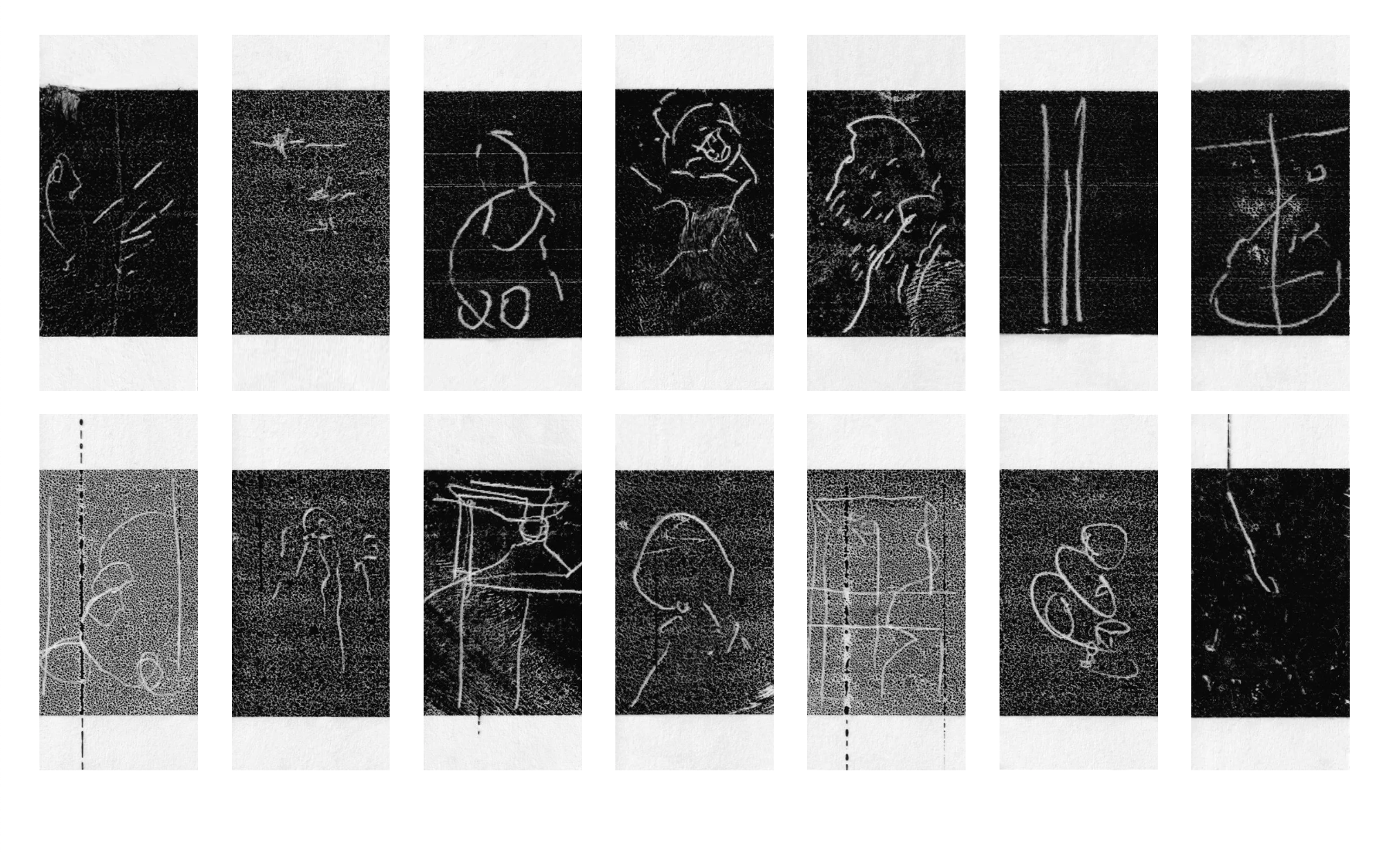
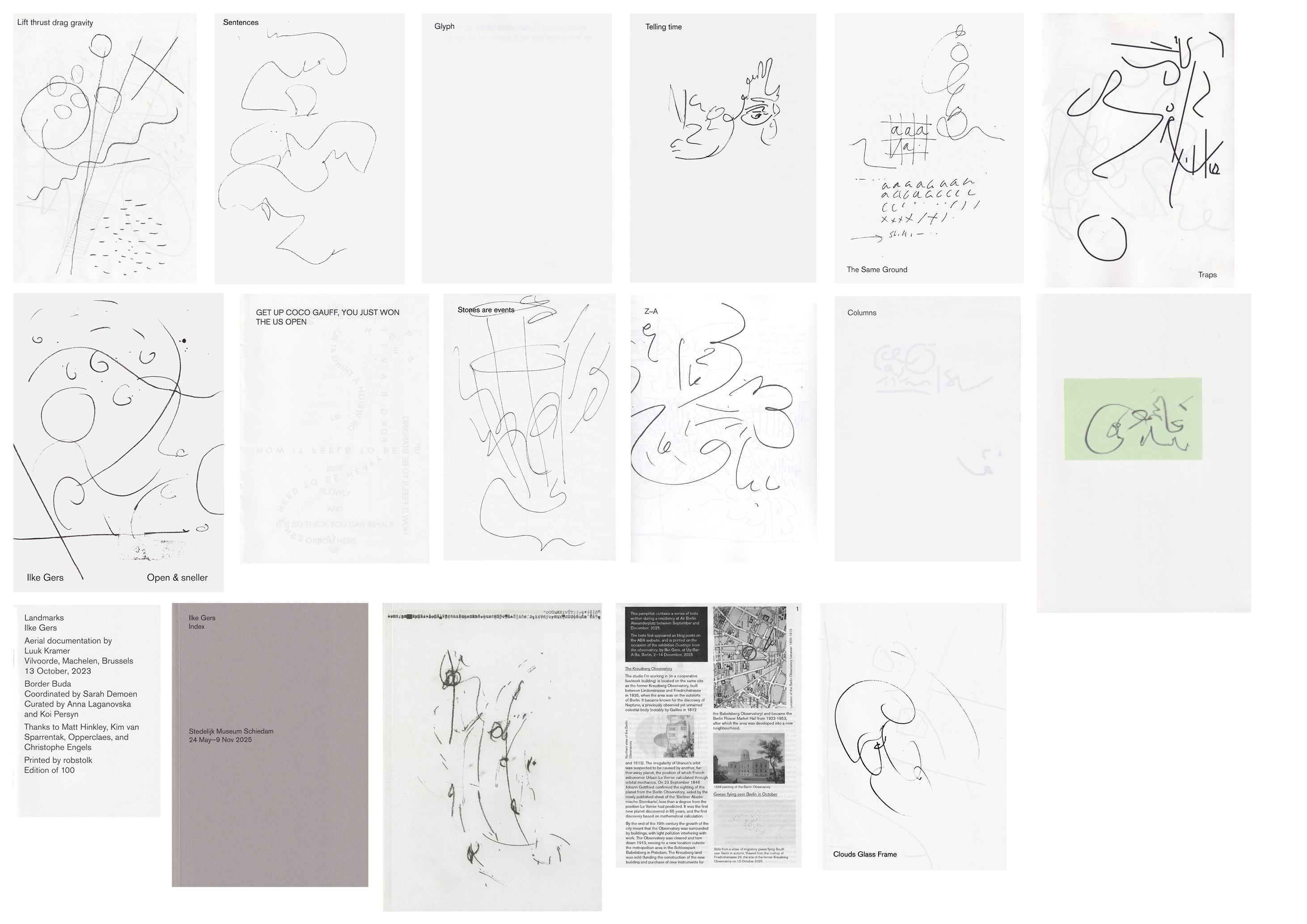
I am a visual artist from Aotearoa New Zealand, based in Rotterdam. I work between drawing and text, and with print and publishing, to explore the relationship between the body and the visual and material manifestation of language. My interests revolve around investigating the possibilities for expression and agency within the mechanised structures through which language, movement and perception are produced.
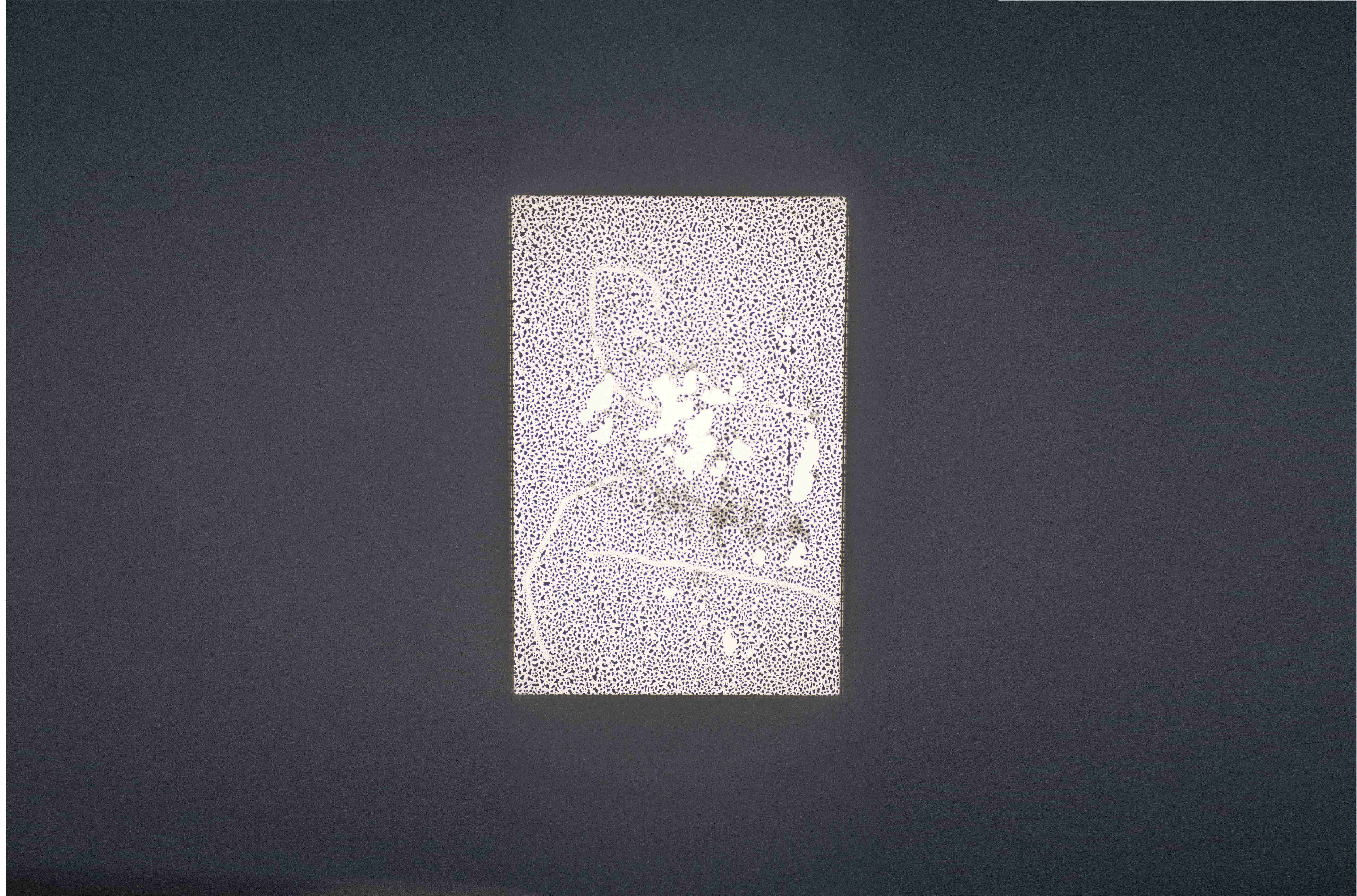
This often involves making subjective registrations of specific aspects of sites, situations or contexts, through open-ended processes that interrogate the existing structures and conditions that are produced and maintained by the context itself. While experimenting with everyday and industrial materials, tools and processes intended to mechanise, organise, divide, and circulate, my work implicates the body and its idiosyncrasies, allowing for friction, irregularity, improvisation and change over time.
Moving Backwards to Go Forward
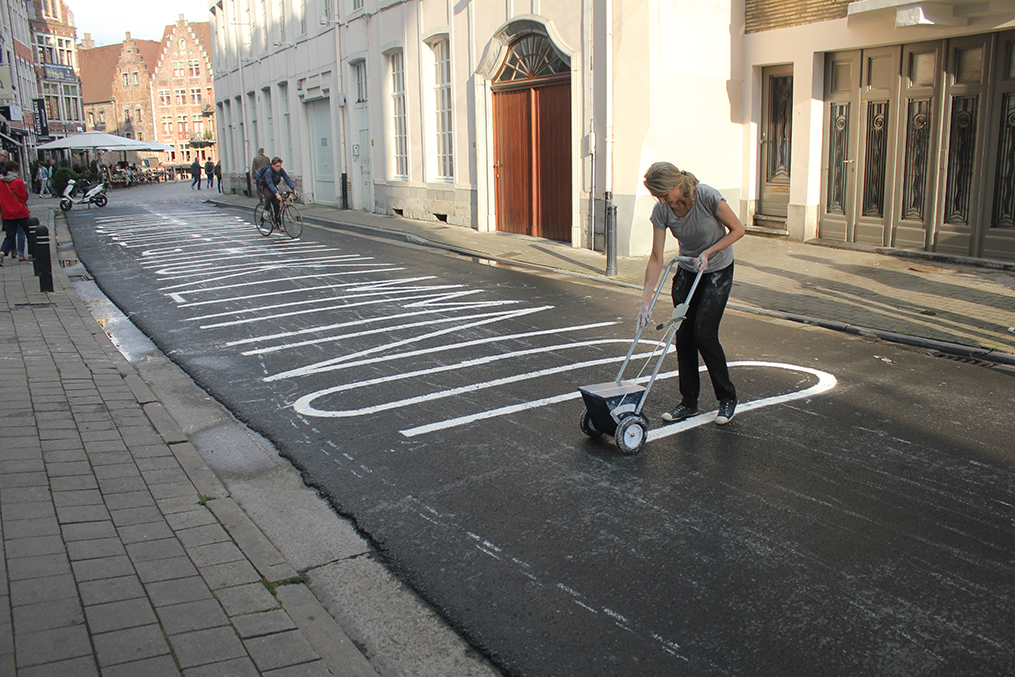
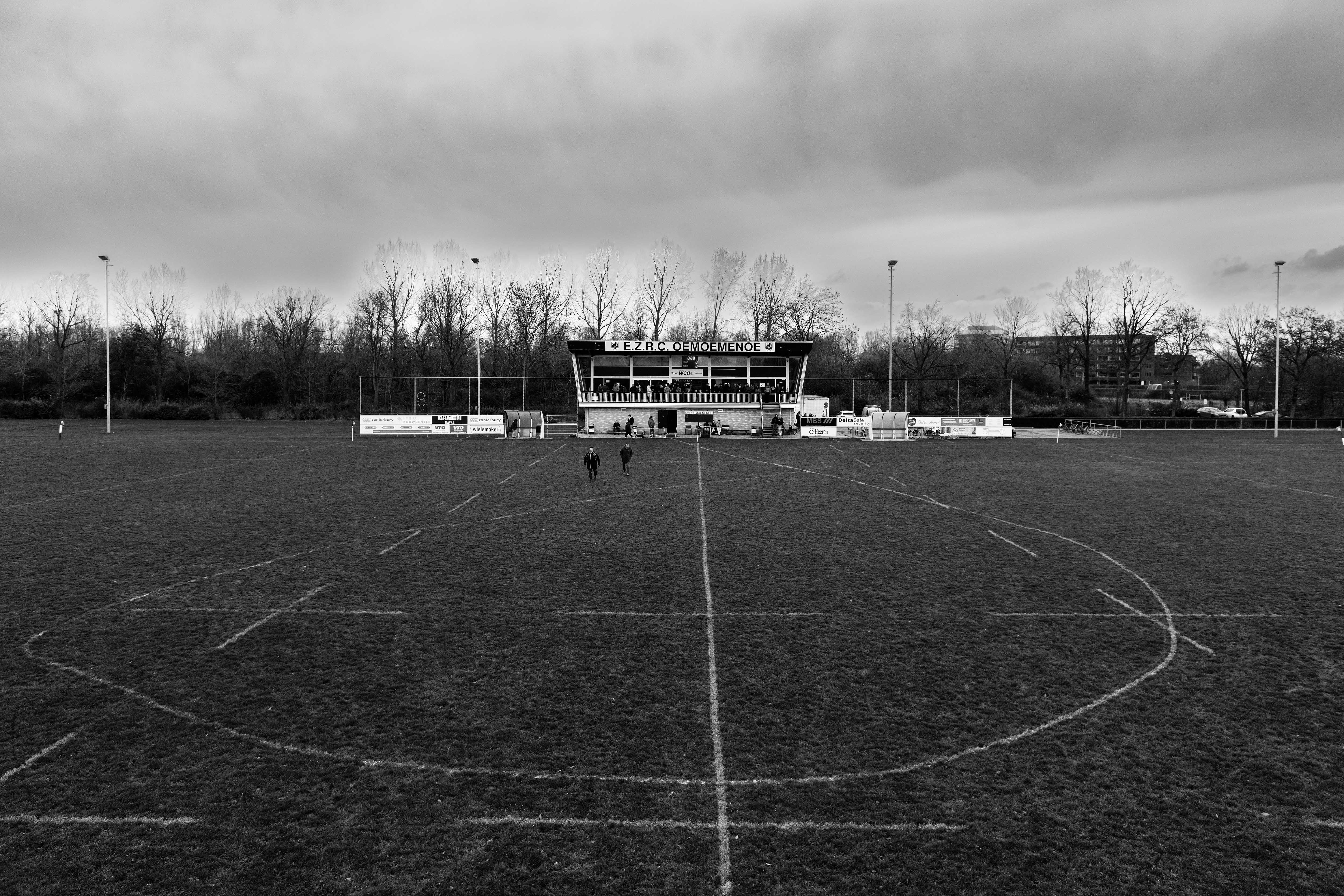
Moving Backwards to Go Forwards is an action during which I draw a chalk loop directly onto the field before Middelburg rugby club Oemoemenoe’s final game of the season. Oemoemenoe is a local colloquial expression that compresses the dutch phrase ‘Hoe moeten we nu’, which translates to something like ‘What do we do now’ or ‘Where to from here’. It is also the title of Vleeshal’s Local Nomadic programme, for which I was invited to make an intervention that brings exhibitions out of the art space
Landmarks
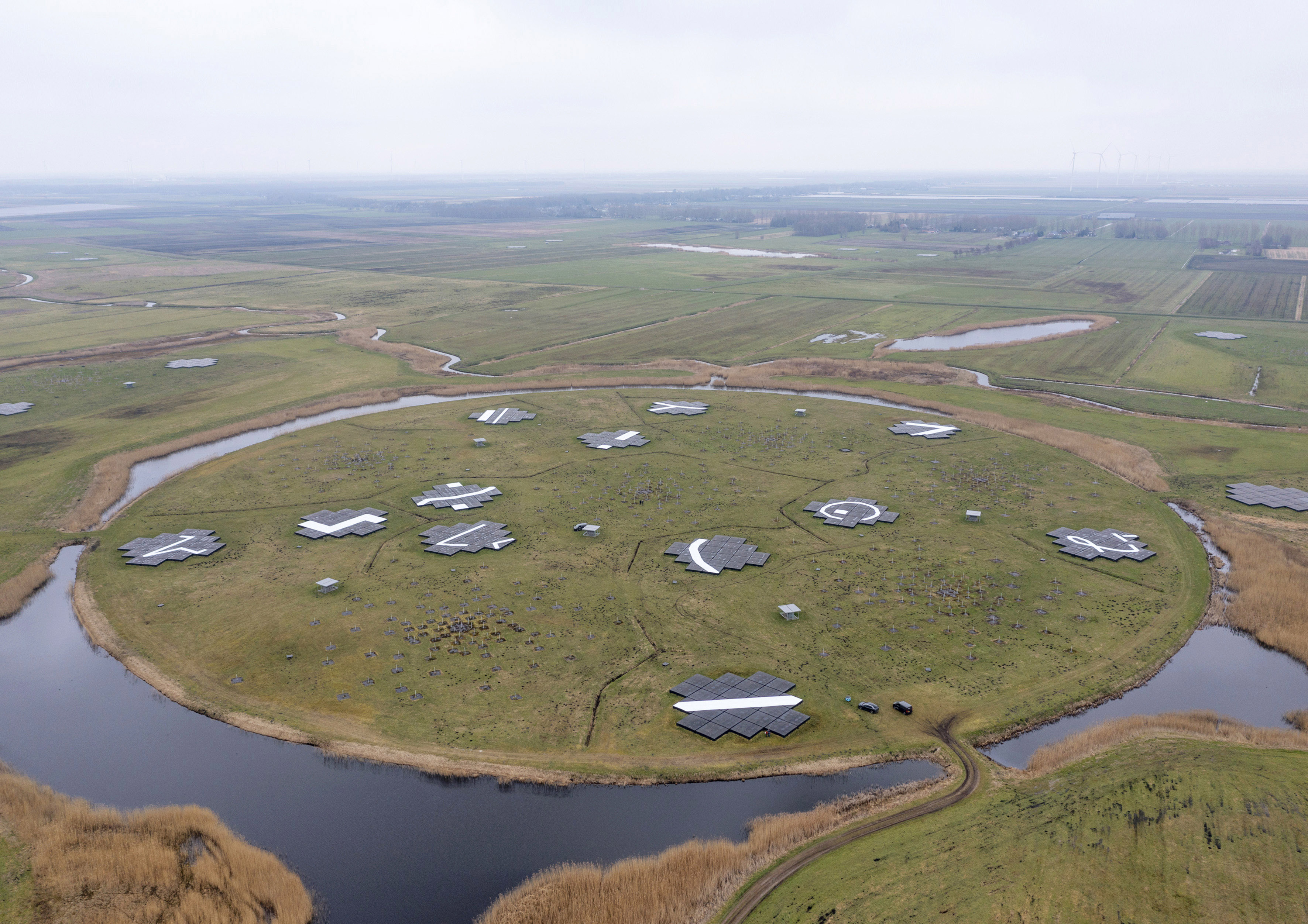
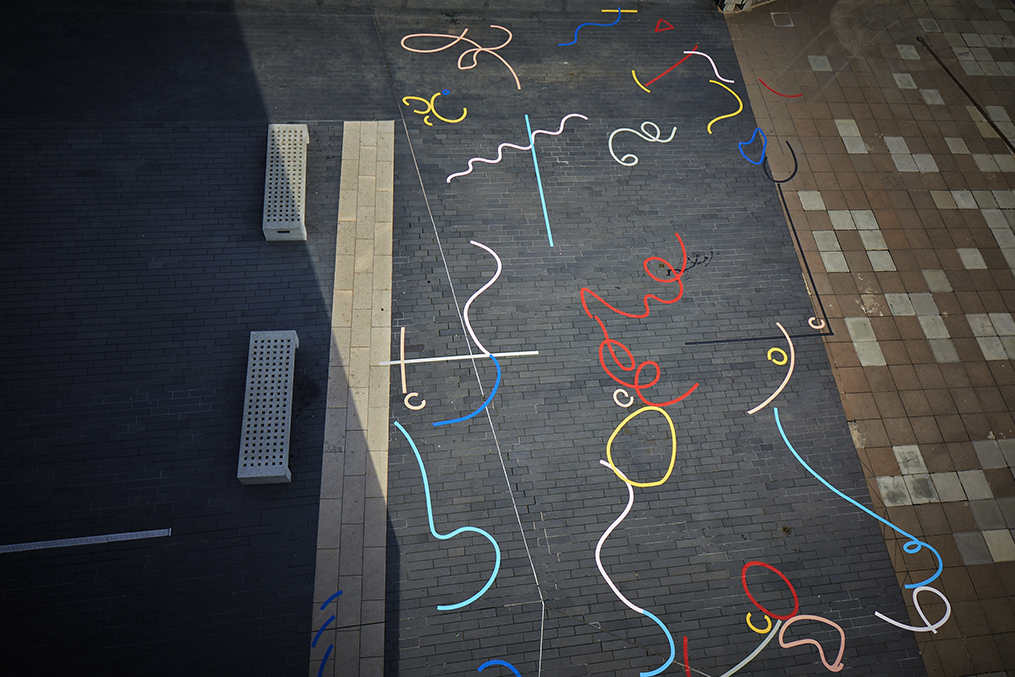
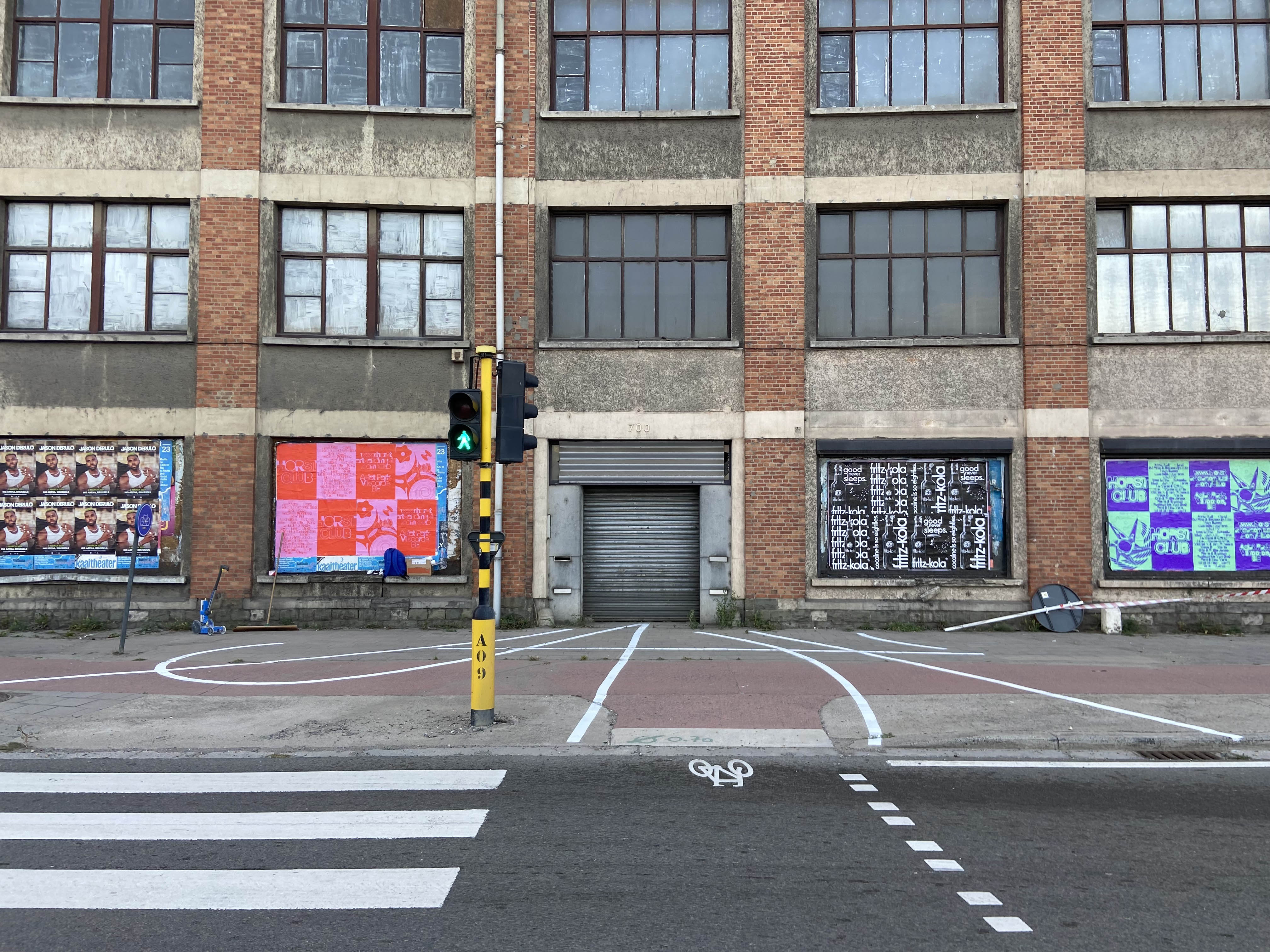
Nine ground markings that span the industrial gray zone of Buda crossing over the municipal boundaries and borders of Vilvoorde, Brussels, Machelen. The drawings shape a route that can be the starting point for a new way to navigate, embody, and draw together different locations in the area. Each spot is chosen to mark locations of interest or significance, and marked by gestures that relate to the location itself, while allowing the drawings to fit together in a sentence.
The Same Ground
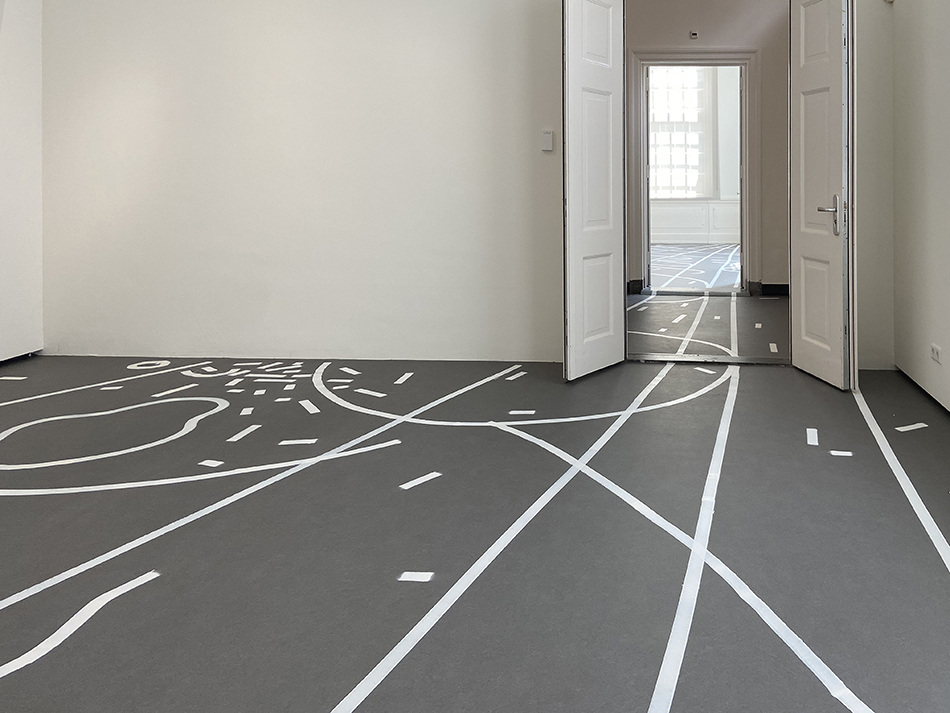
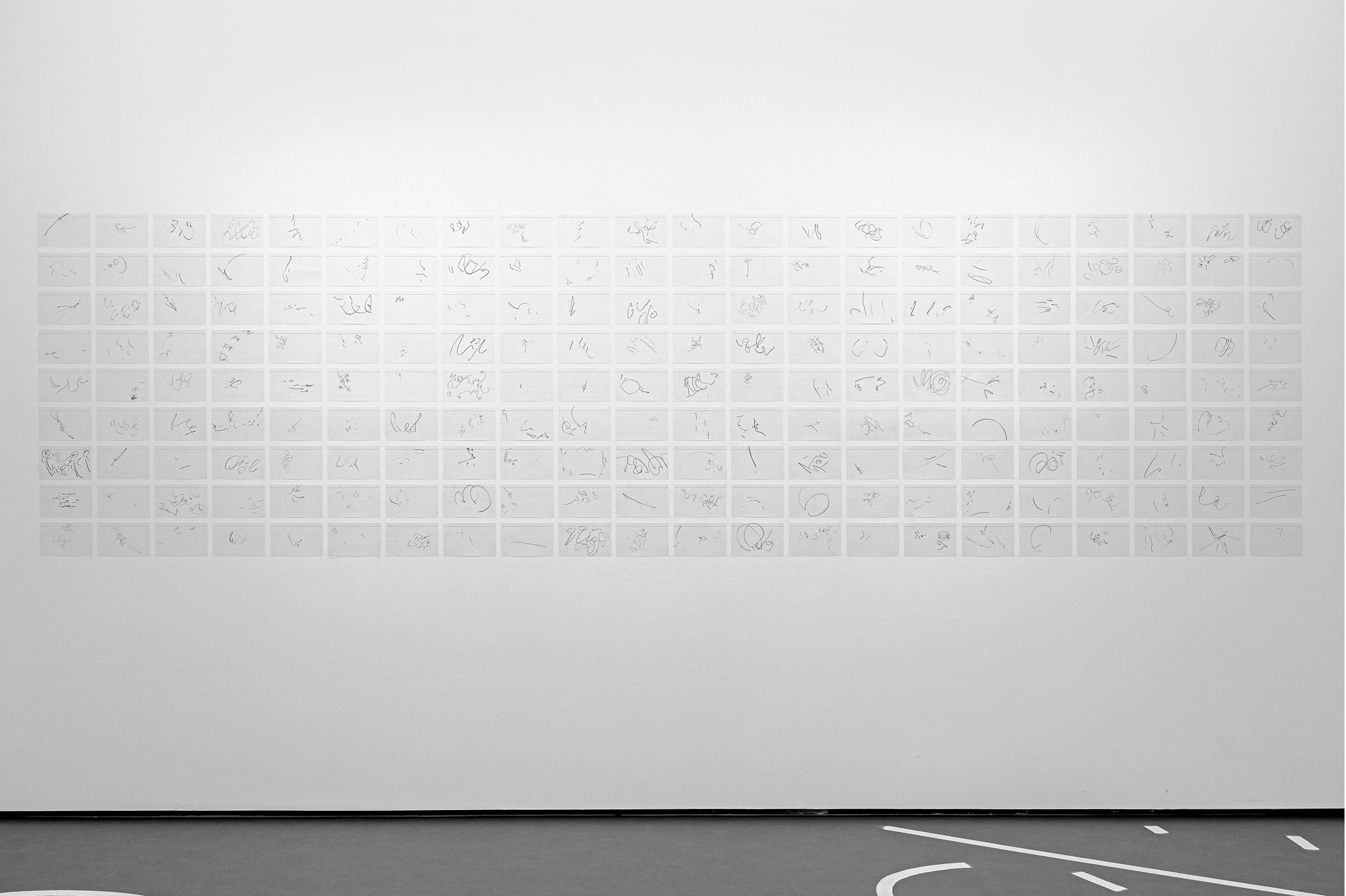
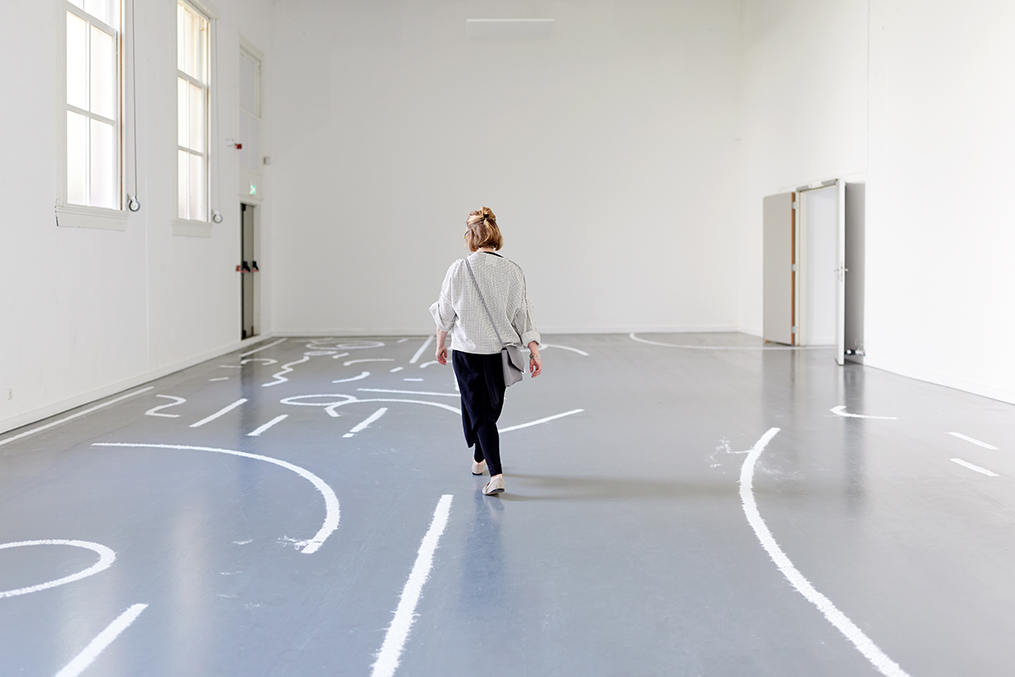
Vinyl floor work running through the exhibition and public spaces of Tabakalera. Commissioned along with a selection of works from the collection of the Bilbao Fine Arts Museum, it functions as a temporal floor score, shifting between language and gesture. With no fixed orientation or direction, the work extends the exhibition through the buildings' walls and corridors, and requires movement to be viewed or read. It breaks in and out of grids and order, suggesting slippages in linear structures
Street Games
A composition of re-imagined street games, around the buildings of Southbank Centre. The project is based in the history of improvised and made up games, particularly by kids in urban neighborhoods without designated parks, forced to play in the street––implicating city planning and gentrification. I devised different compositions that reference existing street games such as hop scotch, ball games, and a local historical dance called The Lambeth Walk; a working class walking dance from the 1930s
Desire Lines
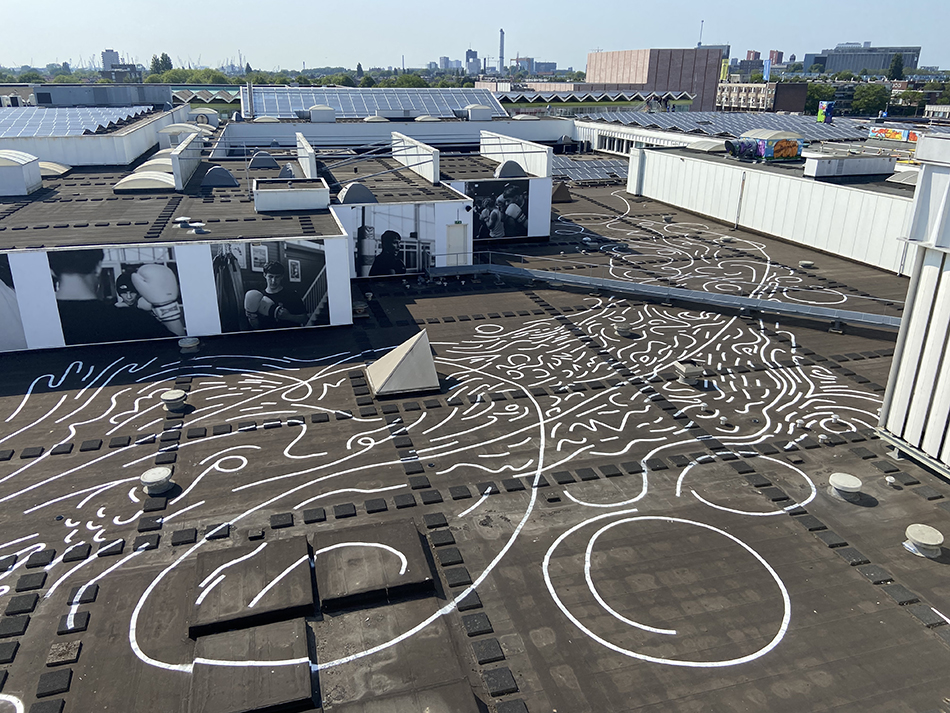
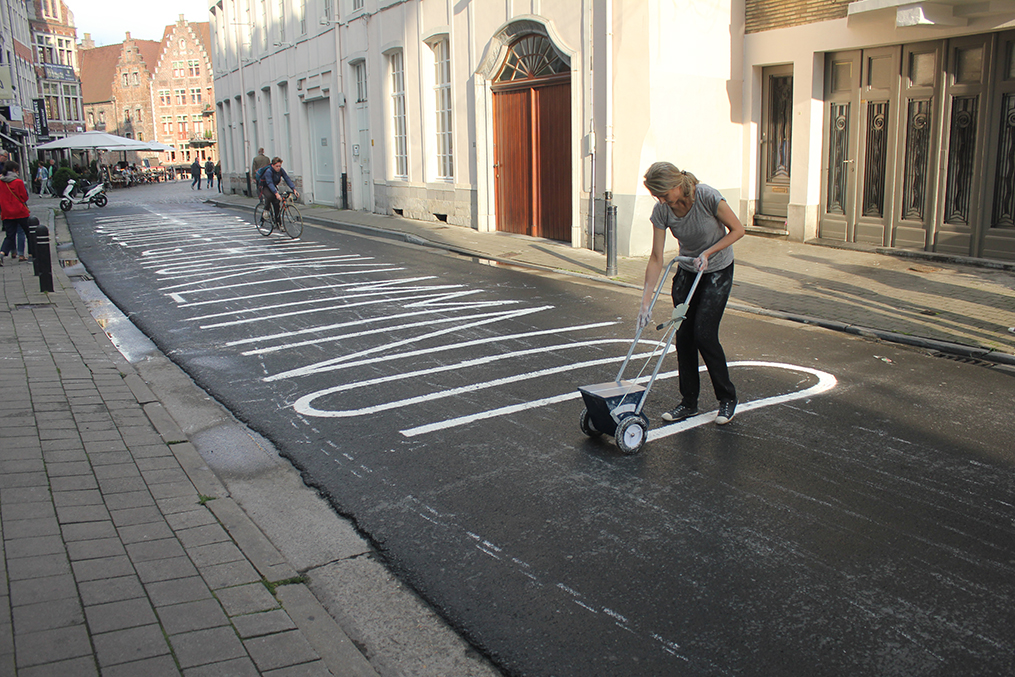
A site specific work in which chalk lines, curves and shapes connect the various spaces that make up NDSM Werf. These markings act like a language or mark-making system, made in response to the use and rhythms of the area. The markings in turn affect how the space is used, as pedestrians, bikes and cars respond to the non-directional, non-instructional markings, referring to 'desire lines' as informal pathways created through the intuitive use of a space over time.
Postscript
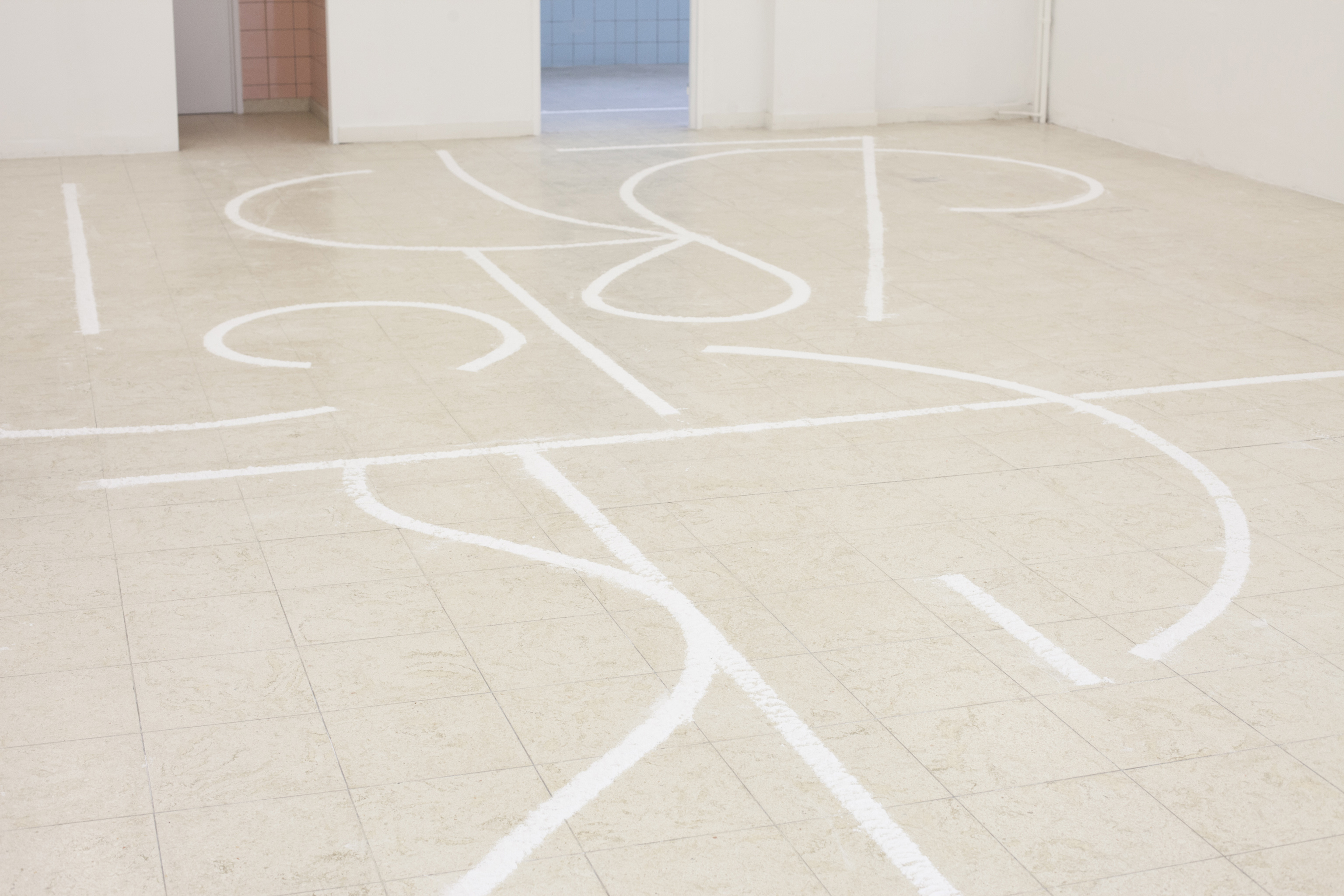
For eight consecutive days, I made a new chalk marking each day with a chalk marker as a performative action. The drawings respond to the environment of the exhibition space, including its history, architecture, and neighborhood, as well as the audience present. This includes references to road markings, letter shapes, parts of letter shapes and choreographic 'scripts' as a kind of mapping of space and reflection of its temporality.