Ilke Gers

tekenen , Taal , publieke ruimte , Lichaam , interactief , installatie , Experimenteel , Conceptueel , Artistiek onderzoek , Abstract

I am a visual artist from Aotearoa New Zealand, based in Rotterdam. I work between drawing and text, and with print and publishing, to explore the relationship between the body and the visual and material manifestation of language. My interests revolve around investigating the possibilities for expression and agency within the mechanised structures through which language, movement and perception are produced.

This often involves making subjective registrations of specific aspects of sites, situations or contexts, through open-ended processes that interrogate the existing structures and conditions that are produced and maintained by the context itself. While experimenting with everyday and industrial materials, tools and processes intended to mechanise, organise, divide, and circulate, my work implicates the body and its idiosyncrasies, allowing for friction, irregularity, improvisation and change over time.
Projections from the Observatory, Takes on Transparency, A Tale of A Tub, Rotterdam, 2026
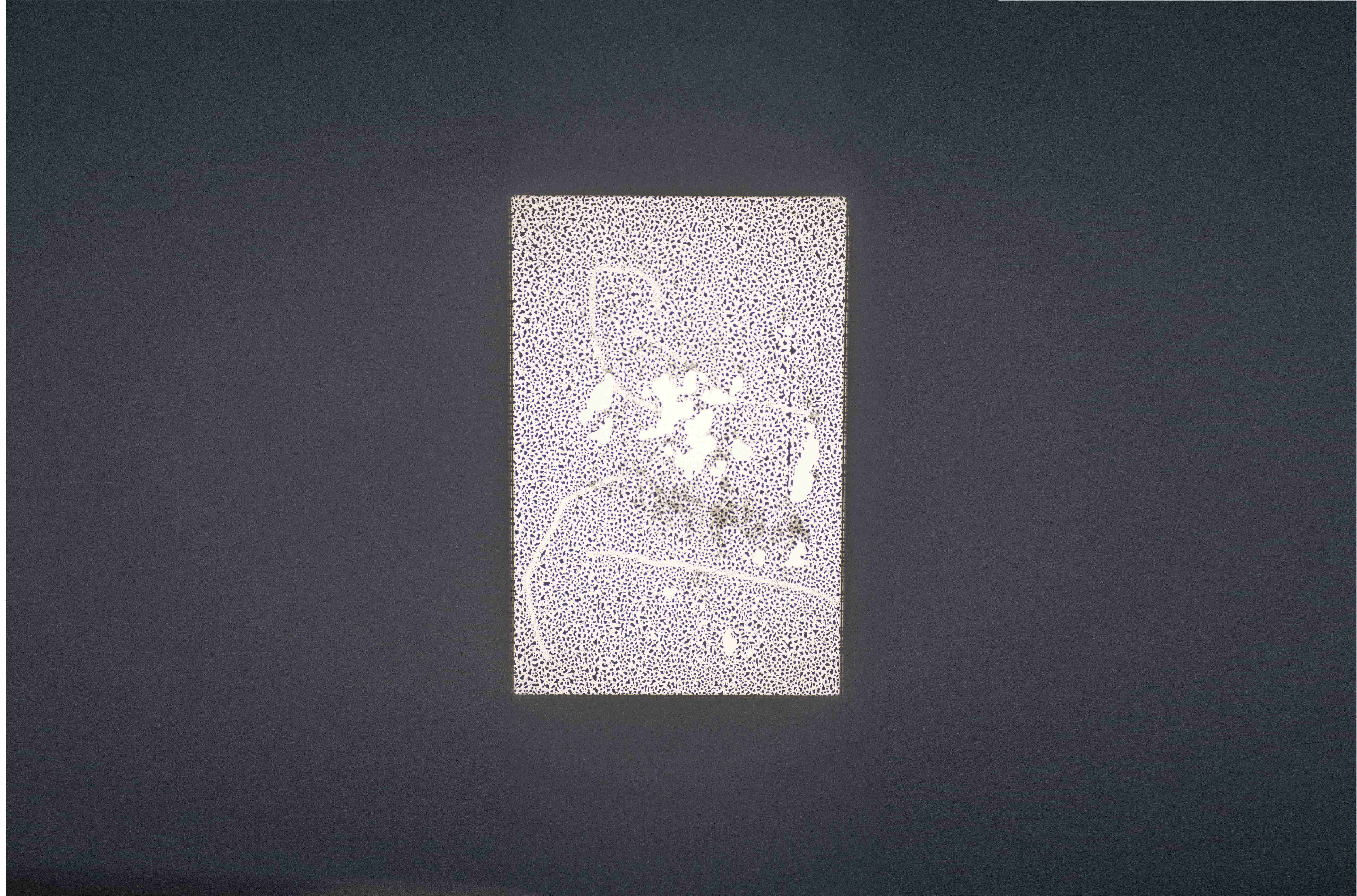
Projections from the Observatory, Takes on Transparency, A Tale of A Tub, Rotterdam, 2026 - Installation view of (one of 25) 35 mm slide projections or inkjet prints on polyvinyl, 21.0 × 29.7 cm. This work consists of a slide projection of drawings made as subjective recordings, developed from rubbings and electrostatic dust prints, made on the site of the former Kreuzberg Astronomical Observatory. The graphite drawings on A4 paper are projected after reproducing them as prints, using a process that registers aspects of their reproduction. The drawings are scanned, inverted, scaled down, and printed on transparencies with an inkjet printer—leaving the mechanical shifts and streaks of ink on the non-porous surface—and the wet reproductions responsive to their environment, exposed to dust, handling and humidity. The work explores the position of the observatory as a physical space from which meaning is projected. What is observed is shaped by specific tools and processes, and the context from which observations are made. By scaling the projections of the drawings back to the same size of the original drawings, the traces of mechanical and physical manipulation of the images are enlarged in relation to the drawings themselves, foregrounding the way in which reproduction and visualization techniques imprint existing situations and structures. The initial drawings and slides were made over four months in this location loaded with the scientific rationality of observation (The Kreuzberg Observatory is famous for being the location from which Neptune was discovered through mathematical calculation). This is the second iteration of the work, attempting to address the supposed rational neutrality of scientific, optical and ballistic image technologies embedded in contemporary visual representation systems. The methods and processes of the production and presentation of the drawings mean that the work is not stable. The prints on slides wear down over time from the heat of the projector light passing through them, presenting a continuously disintegrating projected view.
Dustings from the observatory, Uq-Bar-A-Ba, Berlin, 2025
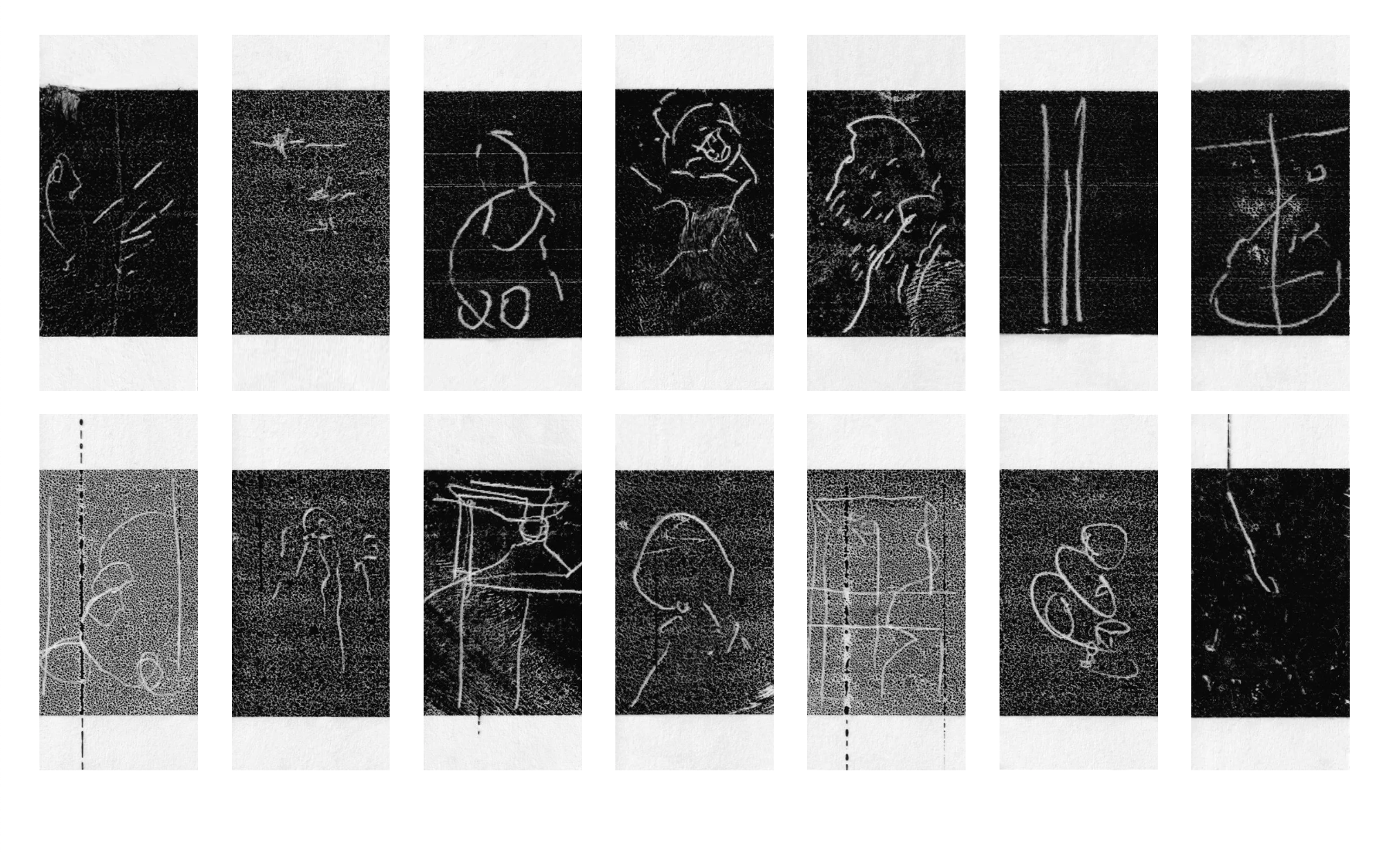
Dustings from the observatory, Uq-Bar-A-Ba, Berlin, 2025 - A series of 14 prints on transparencies with the potential to be projected as 35 mm slides. The prints are made from scaled down and inverted graphite drawings on A4 paper, made during a residency in a studio that stands in the same location as a former Kreuzberg Observatory, known for being the site from which Neptune was discovered by mathematical calculation (while the original observatory building doesn't exist today, the surrounding area is still celebrated as a space of scientific rationality, with mathematical Bessel functions engraved in the concrete pathways of a small park on the site, named after the astronomer William Bessel). The drawings are gestural markings that relate to language marks in relation to the conditions in which they are made, developed from rubbings and dust prints made at the site of the former observatory. The prints are made with an inkjet printer on a surface that stays wet, allowing shifts and streaks of the mechanical printing process to become visible. Along with this, studio dust—attracted to the transparencies that became static as they rubbed against each during transport—mixes with the ink, and the ink is repelled by oil left from skin where the sheets were handled.
Ilke Gers, Once carried by air, BOLD & GRITTY, Stedelijk Museum Schiedam, 2025
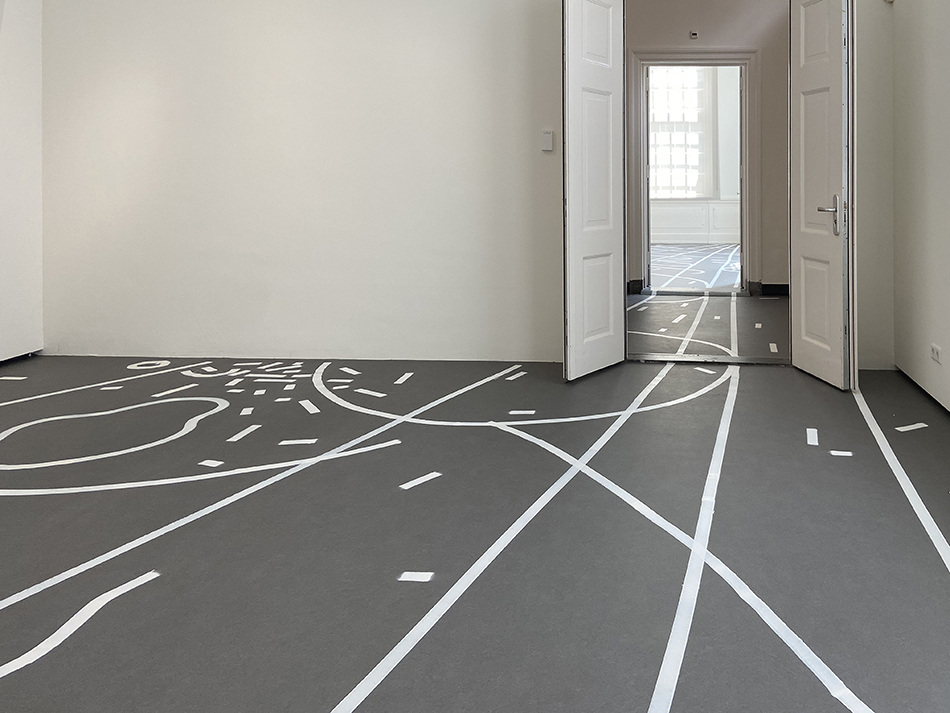
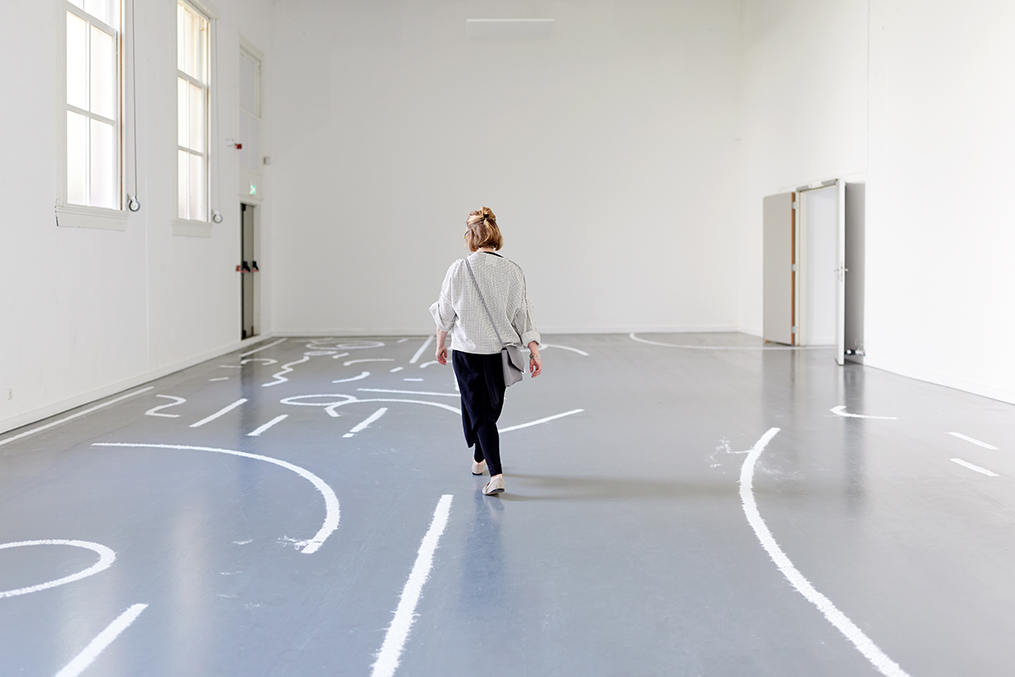
Ilke Gers, Once carried by air, BOLD & GRITTY, Stedelijk Museum Schiedam, 2025 - The ground work leaks through the walls of three spaces of the museum, tracing the movement of light, dust, smoke and soot through the history of the building and the city of Schiedam. Initially planned as an outdoor work in the symmetrical courtyard of the neoclassical building, a test marking outside the building sets up a ground work that plays out on the ground floor of the right wing of the former guesthouse. Through the duration of the exhibition, the white aerosol paint markings collect dust from the air and dirt from viewers' footsteps, reflecting the way Schiedam itself was covered in soot from the Jenever distilleries it was known for in the 18th and 19th centuries.
Index, BOLD & GRITTY, Stedelijk Museum Schiedam, 2025
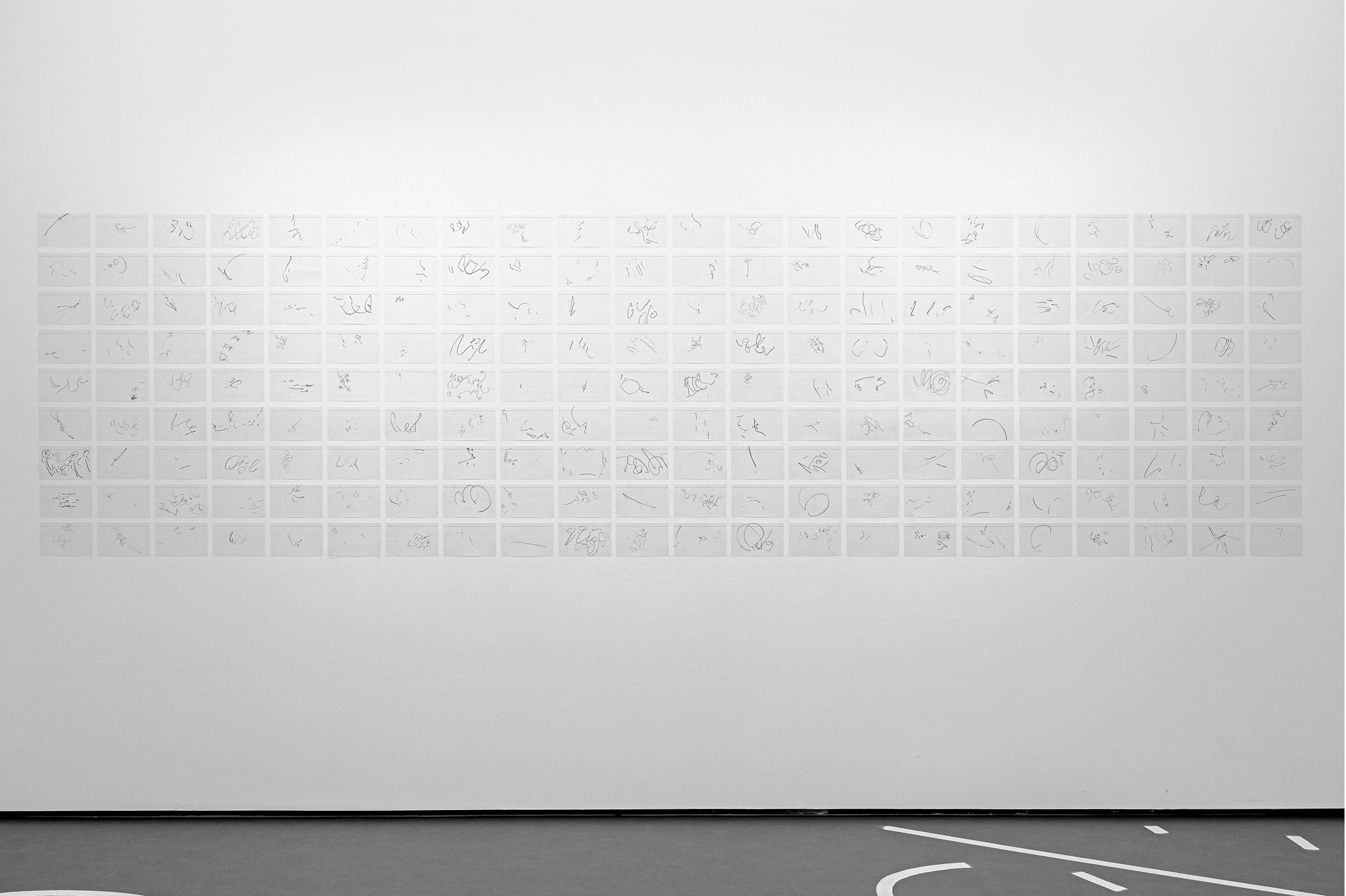
Index, BOLD & GRITTY, Stedelijk Museum Schiedam, 2025 - Index (graphite on card, 20.4 × 12.8 cm each) is a continuous register of gestures, made in graphite on archival record cards. It explores the boundaries of movements and marks possible within the regimented, ruled structure of the cards. The work expands from ground markings, made in public spaces, museums and galleries. Responding to their context and situation, ground markings are made by moving over the ground with rudimentary mark making machines (like chalk line markers), tracing the movements of the body as it explores the tensions and potentials specific to its environment. The card drawings retain the same energy as the ground works, with improvised movements that develop as a kind of vocabulary that is part of ground markings. Presented in different arrangements each time they are shown, the drawings resist the implied organizational system and linearity of text moving from left to right across the page. Between writing and drawing, glyphs and bodily gestures, the marks actively spill over edges, scratch and puncture cards, smudge lines and repeat movements, suggesting an open ended range of expressions.
If the Universe Were Watching, Time Horizons, Into Nature outdoor biennial, Drenthe, 2023
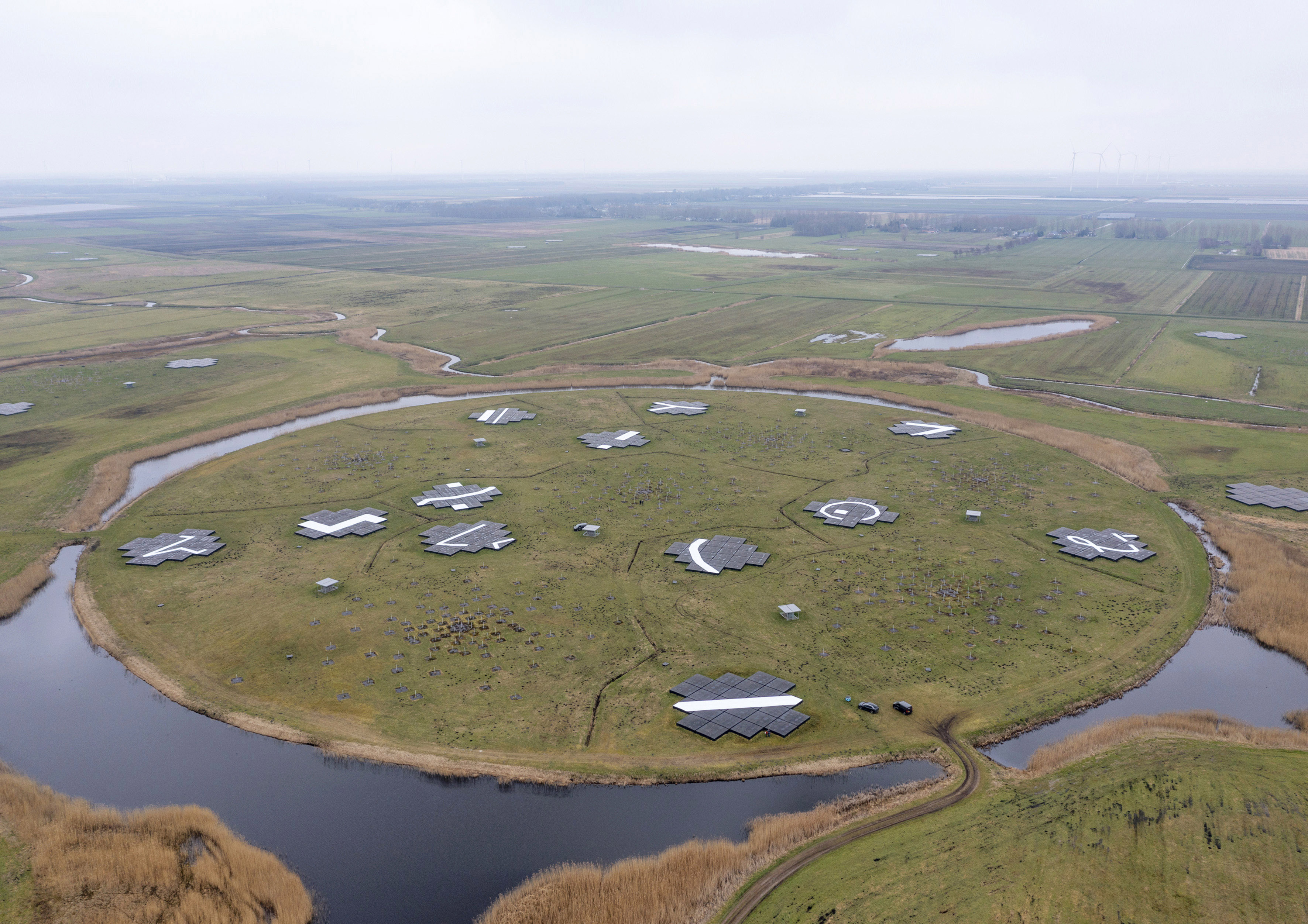
If the Universe Were Watching, Time Horizons, Into Nature outdoor biennial, Drenthe, 2023 - If the Universe Were Watching is an installation on top of the center of the world's largest low frequency telescope, LOFAR (Low-Frequency Array). Distributed through the Netherlands and Europe, the center of the telescope, referred to as the core or Superterp, is located on a circular island (or 'terp' in Dutch), situated between Exloo and Buinen in Drenthe, the Netherlands. The core covers a total area of ​​250 x 250m, containing 12 antenna units of 30 x 30m. Each unit is made up of 5 x 5m squares, covered in polystyrene and wrapped in tarpaulin to protect the measuring instruments, just knee hight off the ground. The installation, made of white vinyl, is placed on top of the tarpaulin covering the telescope. Each of the twelve antenna units in the Superterp has its own markings, which together make up an image that can be read from above. Because the site is inaccessible to the public, the work is documented by drone and satellite images to be visible on google maps for the duration of the biennale, along with being presented as postcards.
Z––A  (Zuid––Al het andere), Rotterdamse Dakendagen, Bovenop Zuid, Zuidplein rooftop, 2023
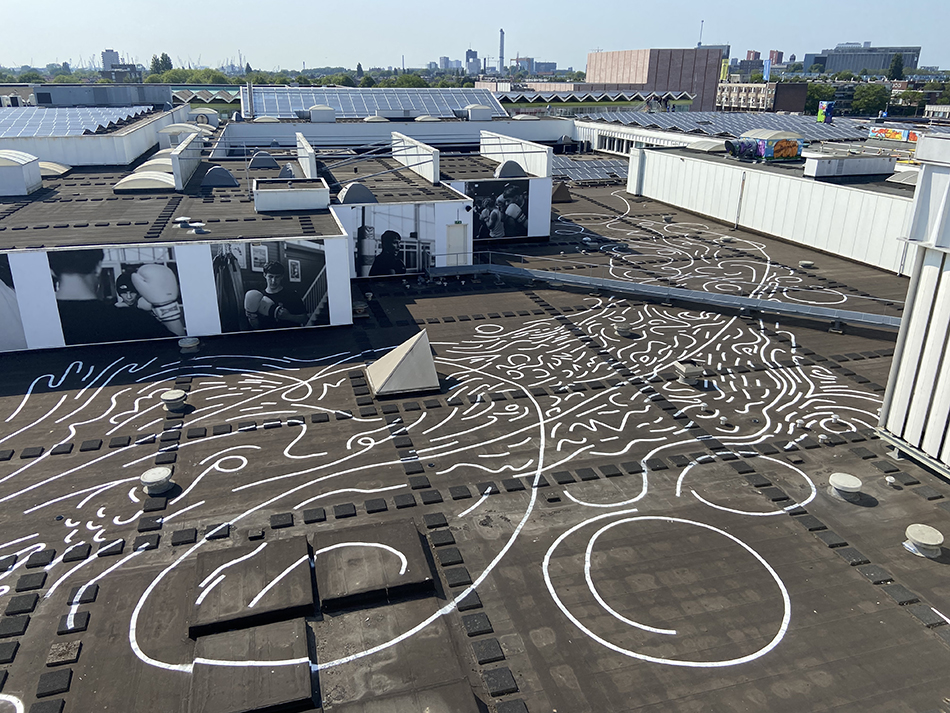
Z––A (Zuid––Al het andere), Rotterdamse Dakendagen, Bovenop Zuid, Zuidplein rooftop, 2023 - The Maas river is added to the horizon, viewed from the Zuidplein rooftop. The Maas, which divides the South (Zuid) of Rotterdam from the rest of the city, is not just a geographic boundary between the center and the South, but also a psychological barrier. While the South of the city is chronically neglected by city policies, with evictions and ongoing gentrification affecting long-term residents, there are anecdotes of city councilors having never crossed the Maas. By adding the Maas to the horizon, the river takes its place alongside the other landmarks already visible from the Zuidplein rooftop. Along with Rotterdam icons; the Euromast, Harbour, Maassilo, Delftshaven and Het Park, it completes the picture of the city, but turns around the direction from where the city is usually read—positioning the viewer to take a new perspective from Zuid to all the rest. This project was documented from the audience viewing point on a rooftop behind the work, making up part of the pedestrian walkway built for the Dakendagen project. This precise viewing location, which turns around the usual viewpoint of the city, is part of the conceptual frame of the project, with the photo documentation taking on the audience point of view.
Open & Sneller, TENT, Rotterdam, 2022
Open & Sneller, TENT, Rotterdam, 2022 - Chalk drawings for TENT, Rotterdam, formerly a school for girls and technical education. Testing the relationship between reading, writing, movement and time, the drawings expand from the history of the building to the city – where the title 'Open and faster', an improvised hand-written sign for bypassing a construction site blocking a cycling path – has been found. A raw building material in unfixed state, the chalk reflects on the upsurge of construction in Rotterdam over the last years, and shows the movement of visitors through the space, as the markings gradually spread and disintegrate through the duration of the exhibition.
Street Games, Hayward Gallery at Southbank Centre, London, 2021
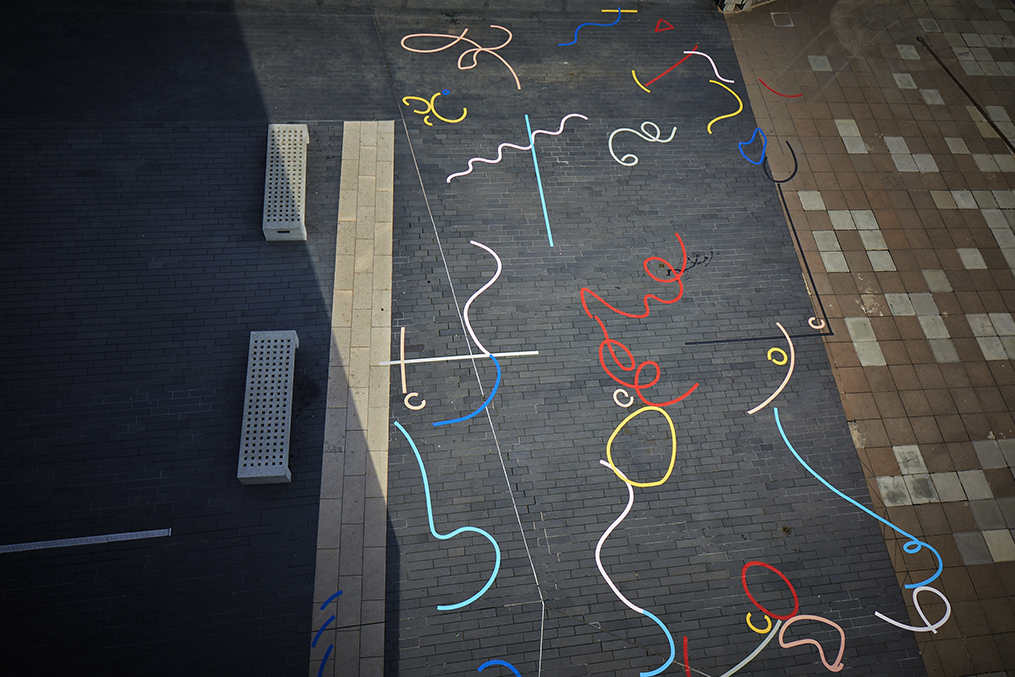
Street Games, Hayward Gallery at Southbank Centre, London, 2021 - A composition of re-imagined street games, around the buildings of Southbank Centre. The project is based in the history of improvised and made up games, particularly by kids in urban neighborhoods without designated parks, forced to play in the street––implicating city planning and gentrification. I devised different compositions that reference existing street games such as hop scotch, ball games, and a local historical dance called The Lambeth Walk; a working class walking dance from the 1930's. Simple instructions are given as starting points for games and movements that are open-ended, with uneven ground markings leaving space for players to make up rules as they go. Games are non-linear, asymmetrical and expansive, with organic lines crossing over architectural spaces, allowing the Southbank site to be experienced and viewed from various perspectives. This view is from the Queen Elizabeth Hall balcony over one section of the work.
ABCs, Design Museum Ghent, 2017
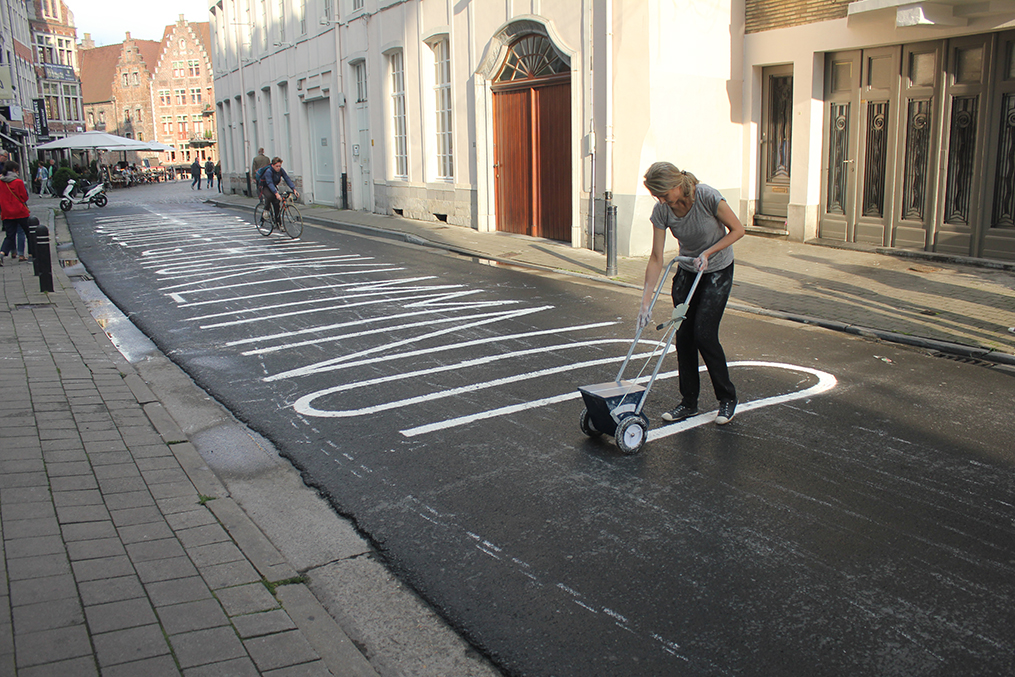
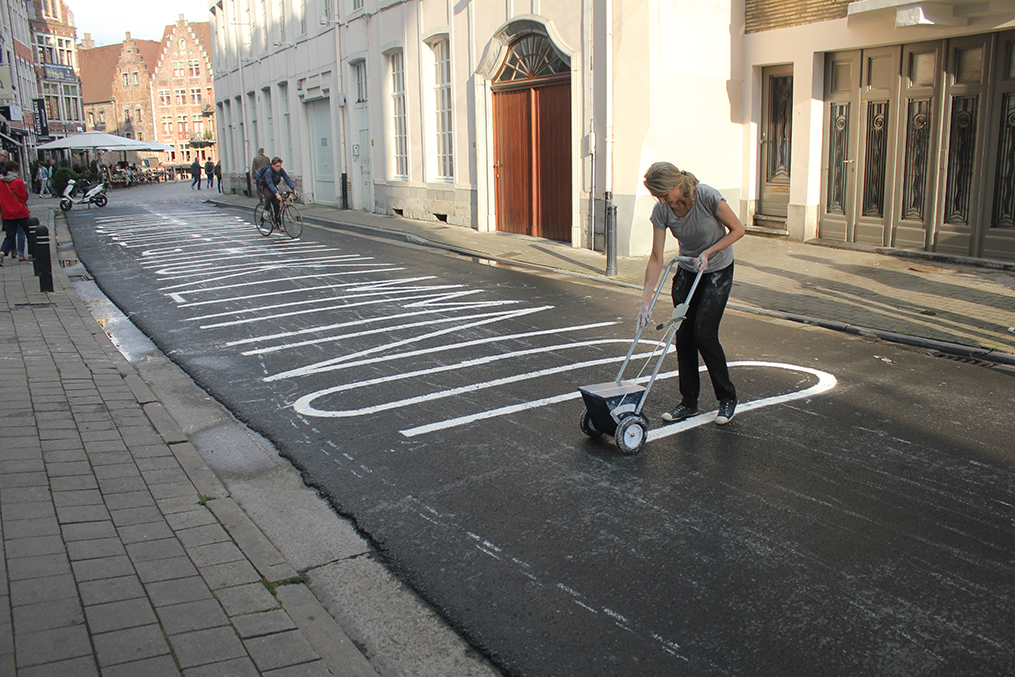
ABCs, Design Museum Ghent, 2017 - The alphabet is written in chalk with a sports field line marker on the road in front of the Design museum Gent - an in-between space between private and public. The performance is based on road 'screed' marking, a technique used for the freehand lettering of official signs and warnings on roads. As a kind of 'writing with the body', the idiosyncrasies of human shaped letters become part of the alphabet as a holder of language. Misshapen letters remain and are repeated, so that it becomes a 'test' alphabet, placing the focus on the body within a designed system of language to which it tries to adapt through movement.
Sections, publications of various sizes and editions, with various co-publishers, 2021–ongoing
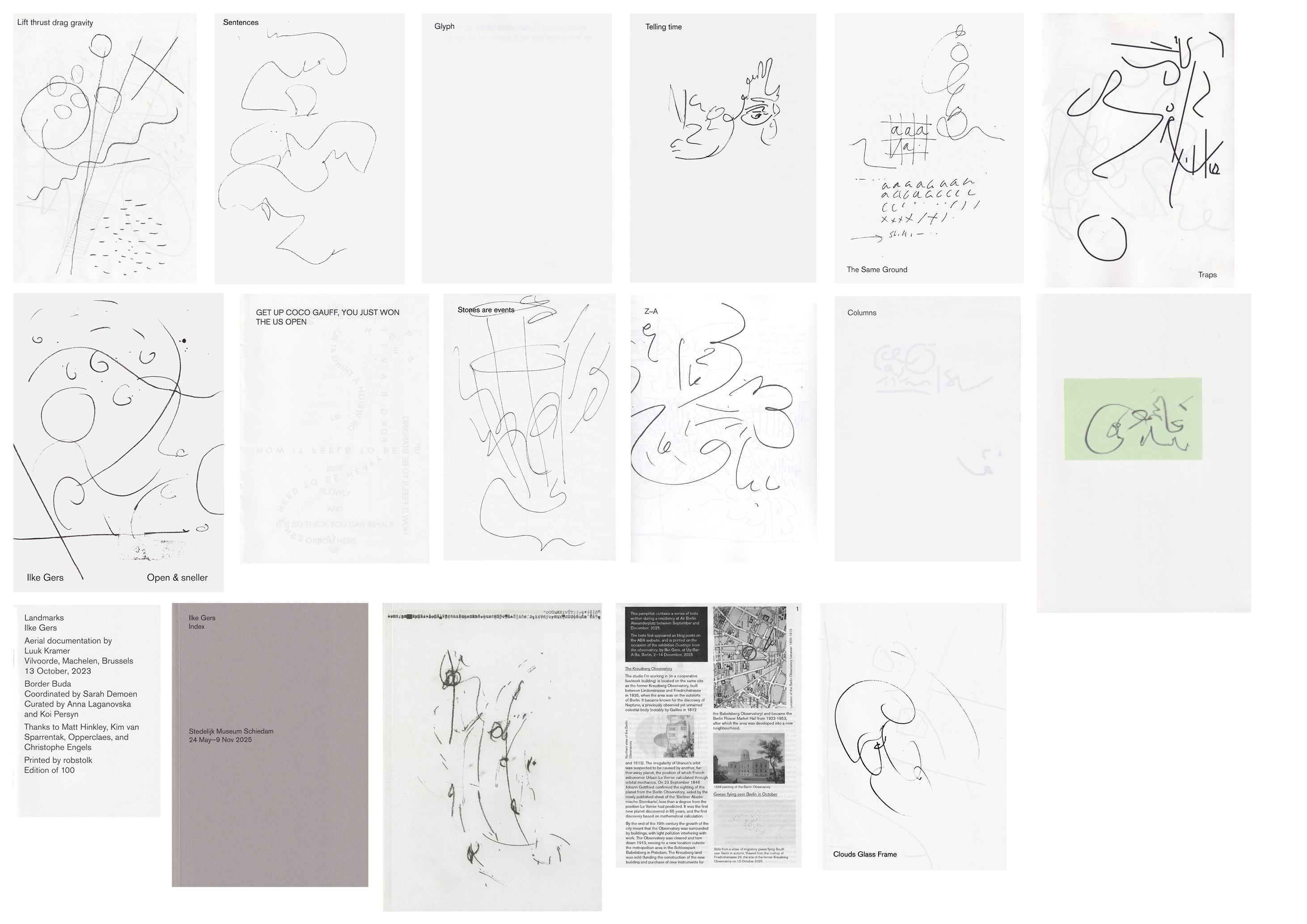
Sections, publications of various sizes and editions, with various co-publishers, 2021–ongoing - Booklets made along with exhibitions, published and distributed in collaboration with the hosting or commissioning organisations or institutions. The publications give additional information about my work, expanding to different audiences over time, circulating in different speeds to temporary installations and periodic exhibitions of work. Ranging in format and edition, depending on the scope of each project, the booklets are distributed at openings, events, and through the online and physical bookshops, webshops of the partnering organisations as well as my own website.

Moving Backwards to Go Forward

Datum:
Locatie: Vleeshal
In samenwerking met: Vleeshal

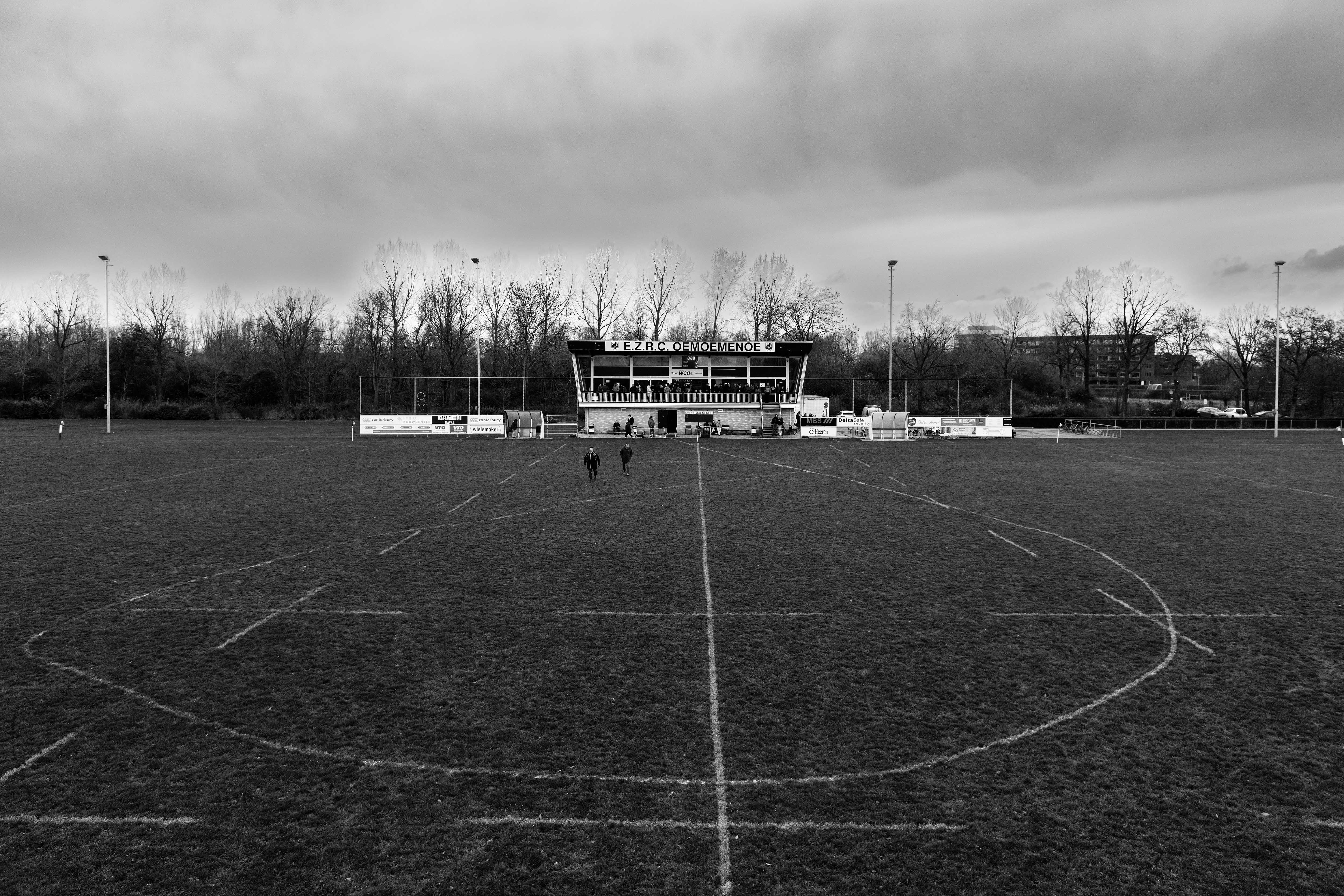
Moving Backwards to Go Forwards is an action during which I draw a chalk loop directly onto the field before Middelburg rugby club Oemoemenoe’s final game of the season. Oemoemenoe is a local colloquial expression that compresses the dutch phrase ‘Hoe moeten we nu’, which translates to something like ‘What do we do now’ or ‘Where to from here’. It is also the title of Vleeshal’s Local Nomadic programme, for which I was invited to make an intervention that brings exhibitions out of the art space
https://ilkegers.info/work/moving-backwards-to-go-forward-2023

Landmarks

Datum:
Locatie: Buda,
In samenwerking met: Border Buda

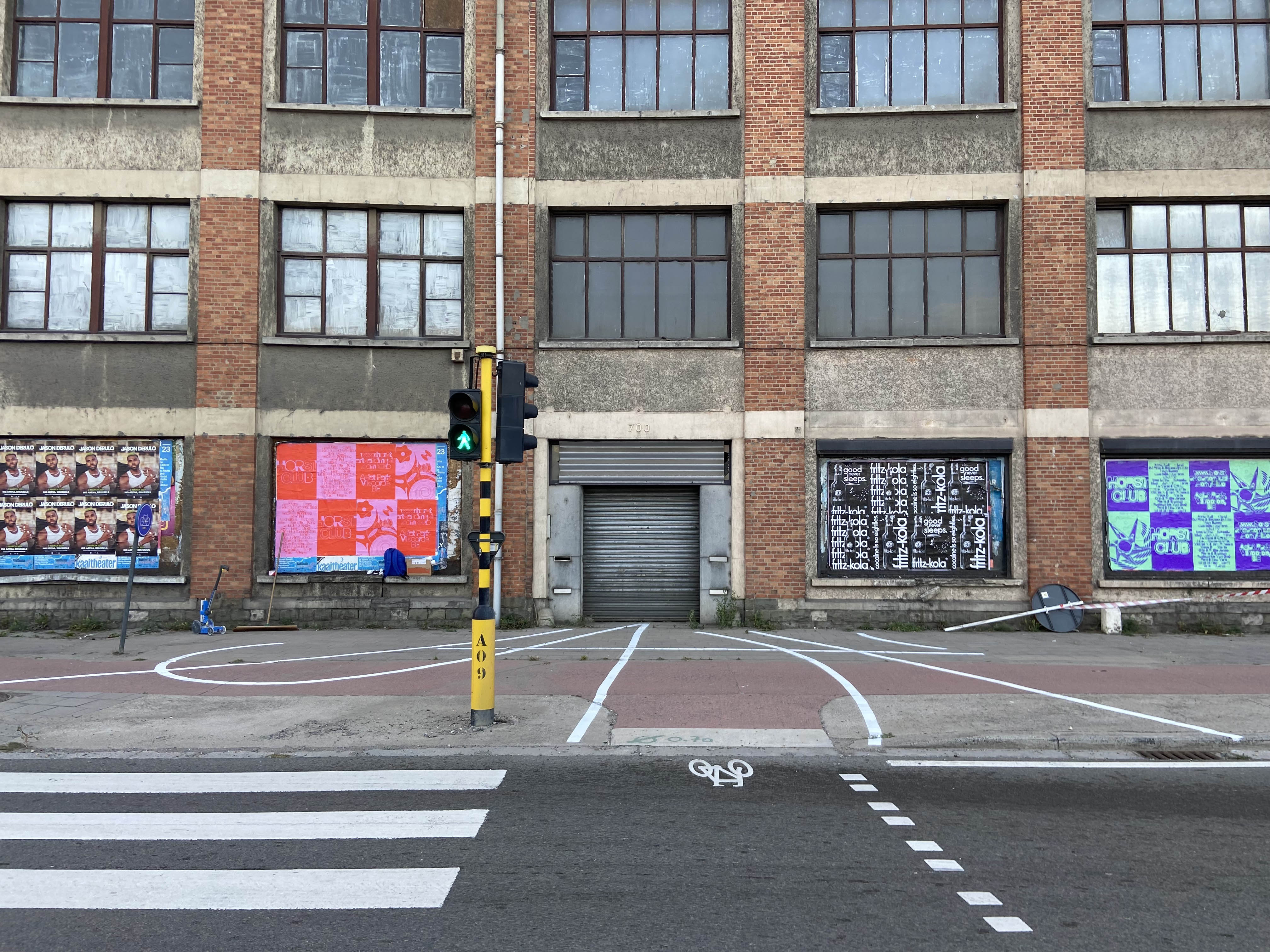
Nine ground markings that span the industrial gray zone of Buda crossing over the municipal boundaries and borders of Vilvoorde, Brussels, Machelen. The drawings shape a route that can be the starting point for a new way to navigate, embody, and draw together different locations in the area. Each spot is chosen to mark locations of interest or significance, and marked by gestures that relate to the location itself, while allowing the drawings to fit together in a sentence.

https://ilkegers.info/work/landmarks-2023

The Same Ground

Datum:
Locatie: TABAKALERA
In samenwerking met: TABAKALERA

Vinyl floor work running through the exhibition and public spaces of Tabakalera. Commissioned along with a selection of works from the collection of the Bilbao Fine Arts Museum, it functions as a temporal floor score, shifting between language and gesture. With no fixed orientation or direction, the work extends the exhibition through the buildings' walls and corridors, and requires movement to be viewed or read. It breaks in and out of grids and order, suggesting slippages in linear structures

https://ilkegers.info/work/the-same-ground-2023

Street Games

Datum:
Locatie: Southbank Centre
In samenwerking met: Hayward Gallery at Southbank Centre

A composition of re-imagined street games, around the buildings of Southbank Centre. The project is based in the history of improvised and made up games, particularly by kids in urban neighborhoods without designated parks, forced to play in the street––implicating city planning and gentrification. I devised different compositions that reference existing street games such as hop scotch, ball games, and a local historical dance called The Lambeth Walk; a working class walking dance from the 1930s

https://www.youtube.com/watch?v=nIN8c5174nY

Desire Lines

Datum:
Locatie: NDSM-Werf
In samenwerking met: NDSM-Werf

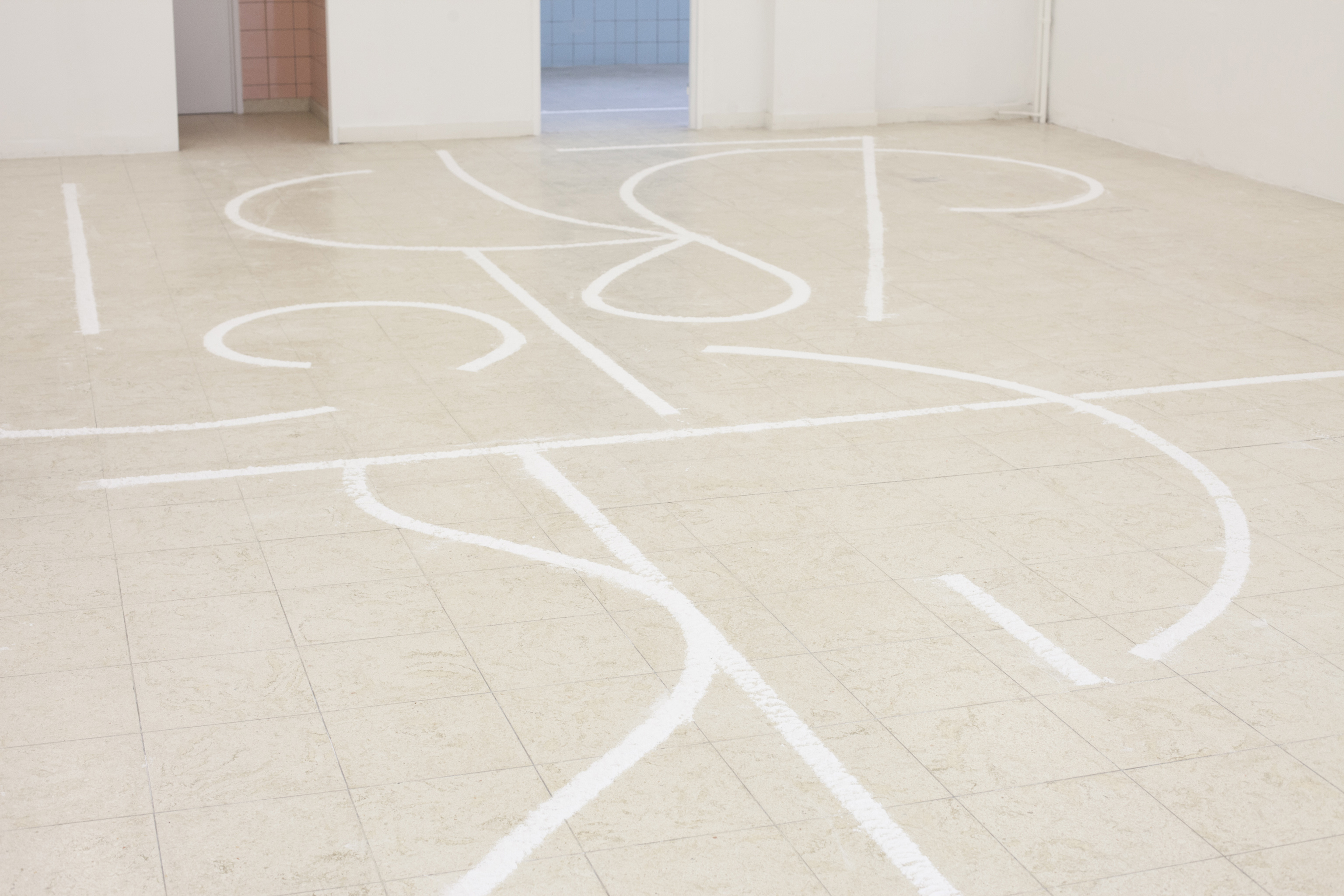
A site specific work in which chalk lines, curves and shapes connect the various spaces that make up NDSM Werf. These markings act like a language or mark-making system, made in response to the use and rhythms of the area. The markings in turn affect how the space is used, as pedestrians, bikes and cars respond to the non-directional, non-instructional markings, referring to 'desire lines' as informal pathways created through the intuitive use of a space over time.
https://www.ndsm.nl/en/location/desire-lines-2020-by-ilke-gers/

Postscript

Datum:
Locatie: LLS Paleis

For eight consecutive days, I made a new chalk marking each day with a chalk marker as a performative action. The drawings respond to the environment of the exhibition space, including its history, architecture, and neighborhood, as well as the audience present. This includes references to road markings, letter shapes, parts of letter shapes and choreographic 'scripts' as a kind of mapping of space and reflection of its temporality.

https://ilkegers.info/work/postscript-2020